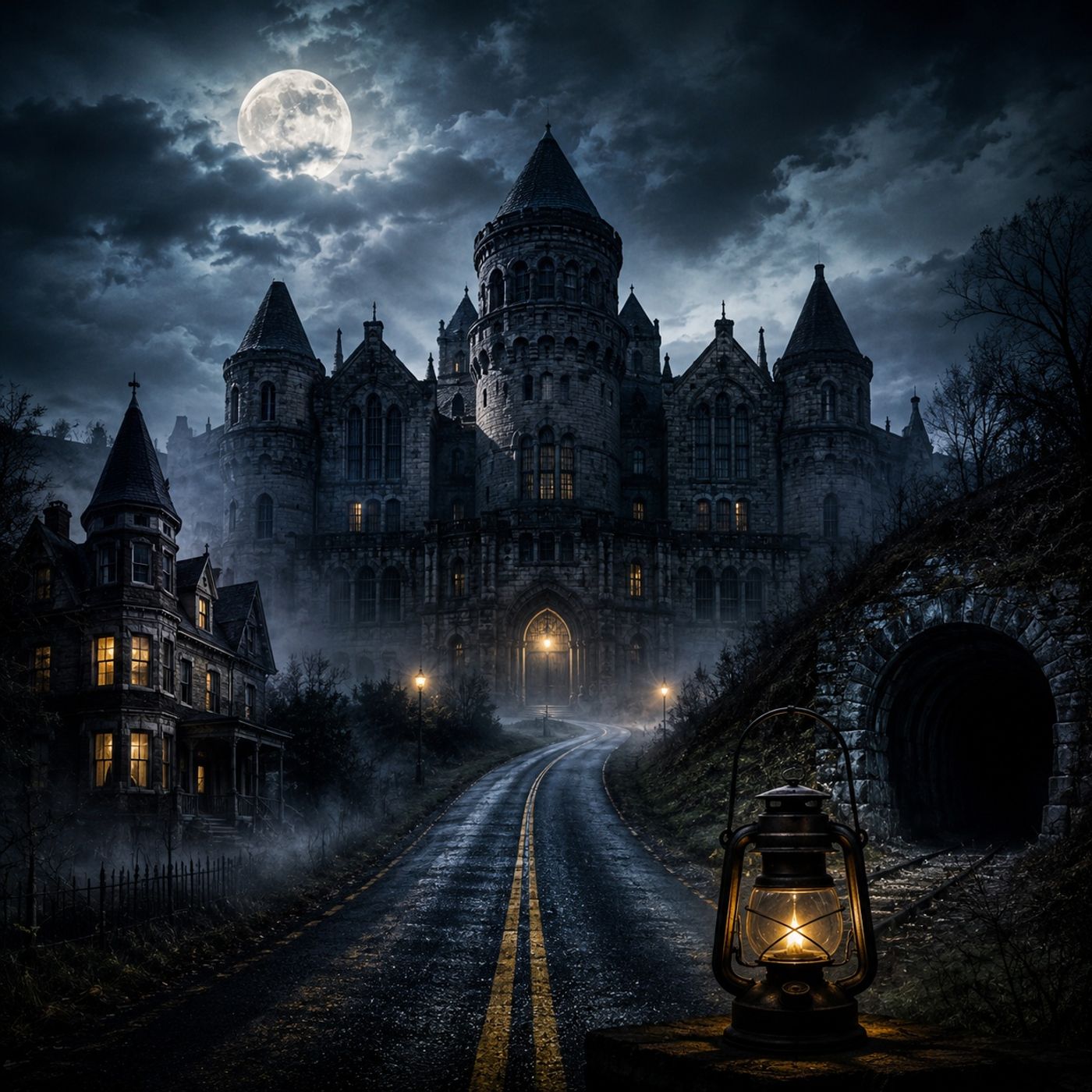
Beyond Shawshank: The Real Ghosts of the Ohio State Reformatory
Welcome fellow seekers of the strange and unusual! In our latest episode of Thursday Thrills, we took a deep dive into the eerie folklore and paranormal tourism landscape of Ohio, and one location, in particular, loomed large in our discussion: the Ohio State Reformatory. While its cinematic fame from "The Shawshank Redemption" is undeniable, the true stories and alleged hauntings of this imposing Gothic structure are far more chilling than anything Hollywood could conjure. In this post, we're going to go beyond the silver screen and explore the very real history, the documented paranormal activity, and the captivating allure that makes the Ohio State Reformatory a prime destination for ghost hunters and the morbidly curious alike. If you haven't had a chance to listen yet, you can catch up on the episode right here. Now, let's step through those imposing gates and uncover the spectral secrets within.
The Infamous Cell Blocks: History of the Ohio State Reformatory
To understand the ghosts, we must first understand the living – and in the case of the Ohio State Reformatory, the history is as grim as the architecture. Construction began in 1886, with the intent of creating a prison that would reform rather than merely punish. The prevailing philosophy of the time was rehabilitation, a stark contrast to the harsh realities that would soon define its existence. The massive, castle-like structure, designed by famed architect Levi T. Scofield, was meant to inspire awe and reflection, a Gothic masterpiece intended to house and mold young, wayward men. However, this utopian vision quickly crumbled under the weight of overcrowding, underfunding, and the inherent challenges of managing a large population of incarcerated youth.
Opened in 1896, the Reformatory initially housed 150 inmates, but by the mid-20th century, it was bursting at the seams, holding more than double its intended capacity. This overcrowding led to deplorable living conditions, rampant disease, and an environment ripe for violence and despair. The prison was designed with a unique, radiating cell block system, with officers' quarters at the center, allowing them to oversee multiple wings. While architecturally impressive, this design also meant that a single fire could potentially engulf the entire structure, a fear that would later prove tragically prescient. The prison served inmates between the ages of 10 and 21, and the stories that emerged from within these walls are a testament to the dark side of the American justice system.
Over its 99 years of operation, the Ohio State Reformatory witnessed unimaginable hardship. Inmates endured solitary confinement, brutal punishments, and the constant specter of death. It's estimated that over 200,000 men passed through its gates, and tragically, many met their end within its confines, whether from disease, violence, suicide, or execution. The sheer volume of human suffering and despair that permeated these walls over nearly a century has left an indelible mark, a psychological and spiritual residue that many believe continues to linger long after the last inmate departed.
Beyond 'Shawshank': The Real Stories of Hardship and Tragedy
While "The Shawshank Redemption" brought the Ohio State Reformatory to international fame, it's crucial to remember that the film is a fictional narrative. The true stories emanating from the Reformatory are often far more mundane, yet no less heartbreaking. These are not tales of heroic escapes or profound friendships forged in the crucible of adversity, but rather narratives of broken systems, lost youth, and the crushing weight of despair. Many of the young men incarcerated here were not hardened criminals, but rather victims of circumstance, societal neglect, or minor offenses that escalated into life-altering sentences.
The Reformatory housed inmates for a variety of offenses, from petty theft to more serious crimes. The rehabilitation aspect, which was the initial driving force behind its design, often took a backseat to the sheer logistical challenge of managing such a large population. Inmates endured a regimented, often harsh, daily routine. They worked in various workshops within the prison, producing goods that helped sustain the institution. Education was provided, but its effectiveness was often hampered by the overwhelming environment and the students' varied backgrounds and levels of prior schooling.
The stories of abuse and mistreatment are not uncommon in the history of prisons, and the Ohio State Reformatory is no exception. Accounts of physical and psychological abuse by guards, as well as violence between inmates, are documented. The lack of adequate medical care led to the spread of diseases like tuberculosis, which claimed many lives within the prison walls. The constant cycle of overcrowding and limited resources created a breeding ground for despair, and for many, the Reformatory was not a place of reform, but a place where their lives were effectively over, their futures extinguished before they truly had a chance to begin.
The sheer number of deaths within the Reformatory is a grim statistic that fuels many of the paranormal claims. While some deaths were natural, others were the result of violence, suicide, or accidents. Each of these souls, whose lives were cut short under such tragic circumstances, is said to have left a piece of their essence behind, their anguish and unresolved issues echoing through the empty corridors.
Echoes in the Halls: Documented Paranormal Activity
It is this profound history of hardship and tragedy that forms the bedrock of the Ohio State Reformatory's reputation as a paranormal hotspot. Numerous paranormal investigation teams and individuals have spent time within its walls, documenting a wide array of unexplained phenomena. These accounts range from disembodied voices and footsteps to apparitions, unexplained temperature drops, and the feeling of being watched.
One of the most frequently reported phenomena is the sound of unexplained noises. Visitors and investigators alike have reported hearing guards' whistles, the clang of cell doors slamming shut, disembodied conversations, and even the cries of children. The sheer vastness of the prison, with its echoing cell blocks and cavernous halls, provides a perfect acoustic environment for such sounds to carry and amplify, leading some to question whether they are simply echoes of the past or something more substantial.
Apparitions are also a common report. Witnesses have described seeing shadowy figures darting down corridors, fleeting glimpses of human-like forms in cells, and even full-bodied apparitions. These sightings are often attributed to former inmates, guards, or even staff members who may have died at the institution. The emotional residue left behind by intense human experiences, particularly those involving fear, sadness, and anger, is a concept often explored in paranormal research, and the Reformatory certainly has no shortage of such emotions embedded within its very structure.
Beyond auditory and visual phenomena, investigators have also reported significant unexplained environmental changes. These include drastic and localized drops in temperature, often referred to as "cold spots," which are frequently interpreted as the presence of a non-corporeal entity. Electronic voice phenomena (EVP) has also been captured, with investigators recording unexplained voices and sounds on their audio equipment that were not audible to the human ear at the time of recording. These EVPs are often interpreted as messages or interactions from the spirit world, offering glimpses into the lives and experiences of those who once inhabited the Reformatory.
The sheer volume of consistent reports from various individuals and groups, often in different areas of the prison and at different times, lends a degree of credibility to the paranormal claims. While skepticism is always healthy when dealing with the unexplained, the sheer breadth and depth of the reported experiences at the Ohio State Reformatory suggest that there is indeed something more than just an old, abandoned building at play.
The Haunting Hotspots: Where Ghosts Are Said to Roam
Within the sprawling complex of the Ohio State Reformatory, certain areas are considered particularly active and notorious for their paranormal occurrences. These "hotspots" are often the focus of paranormal investigations and are said to be the locations where the veil between the living and the dead is thinnest.
The administration building, with its imposing Gothic facade, is often the first place visitors encounter. It's here that many of the early records were kept and where the warden and his staff would have overseen the daily operations. Reports from this area include feelings of being watched, sudden temperature drops, and disembodied voices. Some believe the spirits of former administrators or even inmates who sought audience with them still linger.
The infamous Warden's Office is another area of significant activity. It's said that the spirit of Warden Glatfelter, who oversaw the prison during some of its most difficult years, still roams these halls. Visitors have reported hearing his footsteps, feeling a stern presence, and even experiencing the sensation of being reprimanded. The weight of his responsibility and the harsh decisions he had to make may have bound his spirit to this place.
Perhaps the most well-known and active area is the solitary confinement wing, often referred to as "The Hole." These small, dark cells were used for punishment, and the despair and torment experienced by inmates confined there are said to have left a powerful energetic imprint. Visitors often report feeling overwhelming sadness, fear, and the sensation of being suffocated. Voices have been heard emanating from these cells, and apparitions have been seen by investigators. The sheer misery associated with these tiny confines makes it a prime location for paranormal activity.
The chapel, intended as a place of solace and spiritual guidance, is also reported to be a site of paranormal activity. Ironically, many believe it's now haunted by spirits who found little solace in life. Visitors have reported hearing organ music, whispers, and even seeing apparitions in religious attire. The contrast between its intended purpose and the alleged spectral activity adds another layer of eerie fascination to this location.
Finally, the infamous "S-Block" or the newer cell blocks are also considered active. These areas saw the brunt of the overcrowding and the associated violence. The sheer number of inmates who lived and died in these cramped cells means there is a vast potential for residual hauntings and intelligent hauntings from those who met a violent end or suffered immensely.
Ghost Hunters and Paranormal Tourists: Why the Reformatory is a Prime Destination
The Ohio State Reformatory's allure for ghost hunters and paranormal tourists is multifaceted. Firstly, its sheer size and imposing architecture create an inherently atmospheric and intimidating environment, even without any paranormal activity. The Gothic design, the crumbling brickwork, and the echoes of a dark past all contribute to a sense of unease and intrigue.
Secondly, the extensive documented history of hardship and tragedy provides a compelling narrative for paranormal investigators. The sheer volume of human suffering that occurred within its walls offers a rich tapestry of potential spiritual unrest. Unlike many other reportedly haunted locations, the Reformatory has a tangible, well-documented history of human lives lived and lost under extreme conditions. This provides investigators with a framework for understanding the types of entities they might encounter and the potential reasons for their lingering presence.
Thirdly, the Reformatory actively embraces its haunted reputation. It offers regular public tours, including overnight ghost hunts and paranormal investigations. This accessibility makes it a prime destination for both seasoned paranormal enthusiasts and curious newcomers. The opportunity to explore the vast complex, often at night and with guided paranormal activities, is a significant draw. This commercialization, while debated by some purists, has undoubtedly contributed to the Reformatory's status as a paranormal mecca.
The desire to connect with the unknown, to explore the boundaries of life and death, and to experience a tangible piece of history that transcends the ordinary are all powerful motivators for those who visit the Reformatory seeking a supernatural encounter. It offers a unique blend of historical significance, architectural grandeur, and a reputation for genuine paranormal activity, making it an irresistible destination for anyone drawn to the macabre and the mysterious.
Fact vs. Fiction: Separating Hollywood Magic from Supernatural Encounters
It's essential to distinguish between the fictional portrayal of the Ohio State Reformatory in "The Shawshank Redemption" and the documented paranormal claims associated with the actual location. The film, while a masterpiece of storytelling, took creative liberties to craft its narrative. The gritty realism of the prison environment in the movie is certainly based on the Reformatory's historical context, but the specific events and characters are fictional.
The paranormal activity reported at the Reformatory is attributed to the residual energy and potential intelligent hauntings of the actual individuals who lived and died there. These are not characters created for a screenplay, but rather the echoes of real lives, real suffering, and real deaths. While Hollywood can conjure dramatic scenes, the alleged hauntings are believed to be an organic byproduct of the intense human experiences that took place within the prison's walls.
When exploring the Reformatory, it's important to approach it with a critical mind. Hollywood magic can create a sense of dread and atmosphere, but the true paranormal experiences are said to be subtler, more personal, and often more unsettling. The feeling of a cold touch, a disembodied whisper, or a fleeting shadow can be far more chilling than any on-screen jump scare. Separating the cinematic portrayal from the actual history and alleged hauntings allows for a more authentic and profound engagement with the Reformatory's spectral reputation.
Many paranormal investigators strive to document evidence objectively, seeking verifiable phenomena rather than relying on staged events or dramatic interpretations. While the line between a vivid imagination and genuine paranormal activity can sometimes be blurred, the consistent nature of reports from different individuals and the evidence gathered by professional paranormal teams lend credence to the idea that something beyond the ordinary is occurring within the Ohio State Reformatory.
Visiting the Reformatory: A Guide for the Brave
For those inspired by our discussion and eager to experience the chills of the Ohio State Reformatory firsthand, planning is key. The Reformatory is a preserved historical site and is open for public tours, as well as special paranormal events. It's crucial to check their official website for the most up-to-date information on tour availability, pricing, and special events.
When visiting, be prepared for an immersive experience. The building is vast, and many areas are unheated and unlit, especially during nighttime tours or ghost hunts. Wear comfortable, sturdy shoes, as you'll be doing a lot of walking on uneven surfaces. Dress in layers, as temperatures can fluctuate significantly within the building, and bring a flashlight. It's also advisable to bring a camera and, if you're interested in paranormal investigation, a voice recorder or EMF meter, though many tours provide some of this equipment.
Respect for the site and its history is paramount. Remember that this was a place of significant human suffering, and while it is now a tourist attraction, it should be treated with a degree of solemnity. Follow the instructions of your guides and do not stray from designated areas. For those participating in overnight ghost hunts, be prepared for a long night of exploration and potential paranormal activity. It's an experience that requires patience, an open mind, and a healthy dose of courage.
Some tips for a successful and safe visit include:
- Book in advance: Tours and especially overnight events can sell out quickly.
- Check the weather: The Reformatory is not climate-controlled, so be prepared for the elements.
- Go with a group: It's always safer and more enjoyable to explore with others.
- Manage your expectations: While paranormal activity is reported, it's not guaranteed on every visit. Enjoy the history and atmosphere regardless.
- Stay hydrated and bring snacks: Especially for longer tours or overnight events.
The Ohio State Reformatory offers a unique opportunity to step back in time and confront the darker aspects of history, with the tantalizing possibility of encountering its spectral inhabitants. It's an adventure for the brave, the curious, and anyone who dares to peer into the shadows of the past.
Conclusion: The Enduring Mystery of the Ohio State Reformatory
As we conclude our deep dive into the Ohio State Reformatory, it's clear that this imposing structure is far more than just a backdrop for a Hollywood blockbuster. It is a place steeped in a complex and often tragic history, a history that has undeniably left its mark, both on the building and, many believe, on the very fabric of its existence. The stories of hardship, despair, and the sheer volume of human lives that passed through its gates contribute to an atmosphere that is palpable, even to the most skeptical visitor.
The documented paranormal activity, from unexplained sounds and apparitions to temperature fluctuations and captured EVPs, suggests that the Reformatory continues to hold onto its past in ways that defy simple explanation. Whether you believe in ghosts or not, the sheer weight of human experience within its walls creates a profound sense of resonance, a palpable sense of lives lived and lost under extreme circumstances. The Ohio State Reformatory serves as a stark reminder of the complexities of the human condition, the failings of systems, and the enduring power of the human spirit – and perhaps, in some cases, the lingering echoes of those who are no longer with us.
This exploration of the Reformatory directly ties into our latest Thursday Thrills episode, where we uncover more chilling folklore and paranormal tourism hotspots across Ohio. The Reformatory stands as a prime example of how history, cinema, and the supernatural can converge to create truly captivating and spine-tingling destinations. So, whether you're a seasoned ghost hunter or simply fascinated by the macabre, the Ohio State Reformatory offers an unforgettable journey into the heart of a haunting legacy. We hope this blog post has shed some light on the real stories behind the movie magic and the enduring mystery that makes this iconic institution a beacon for those who seek the unexplained.