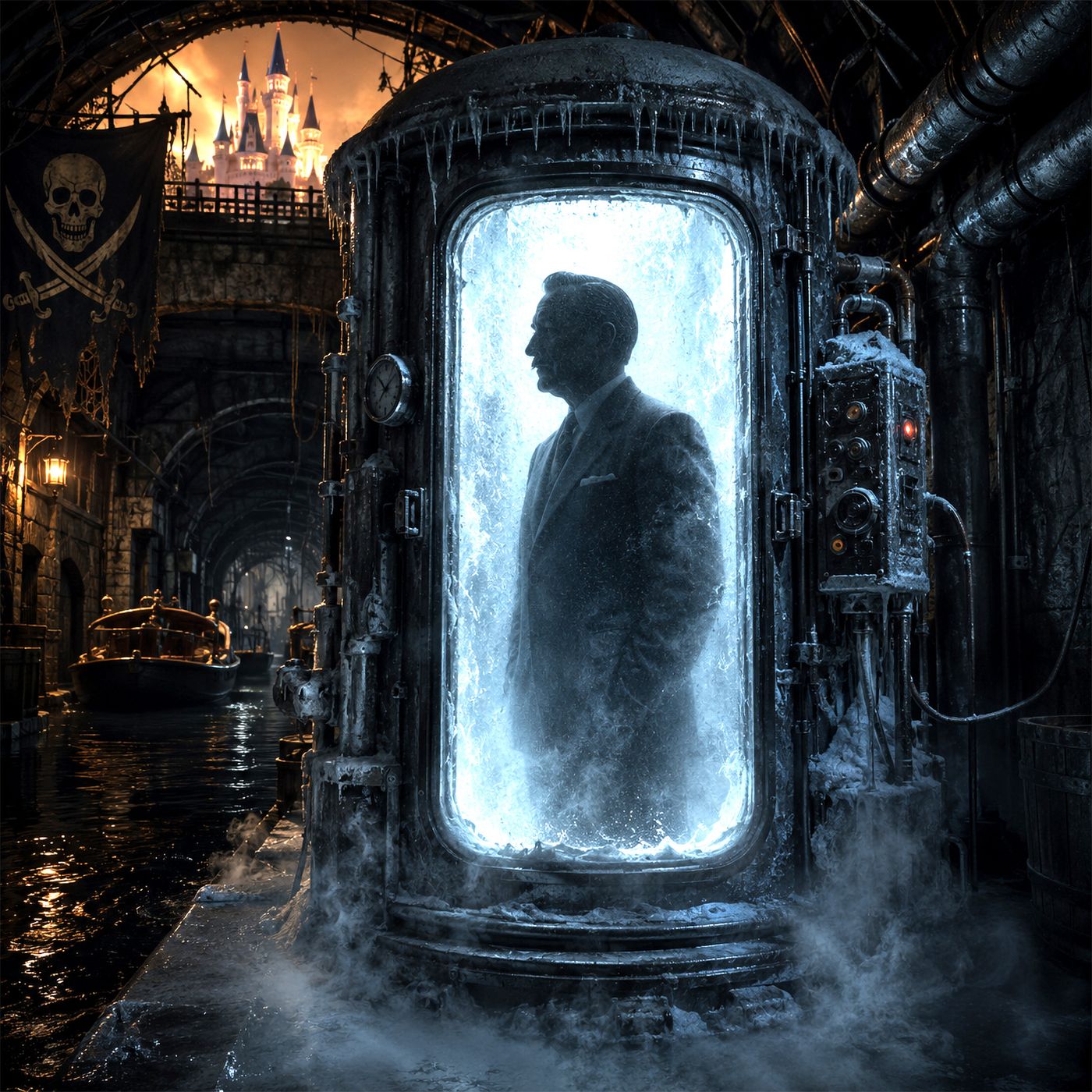
The Mechanical Walt: Audio-Animatronics as Disneyland's Cryogenic Chamber
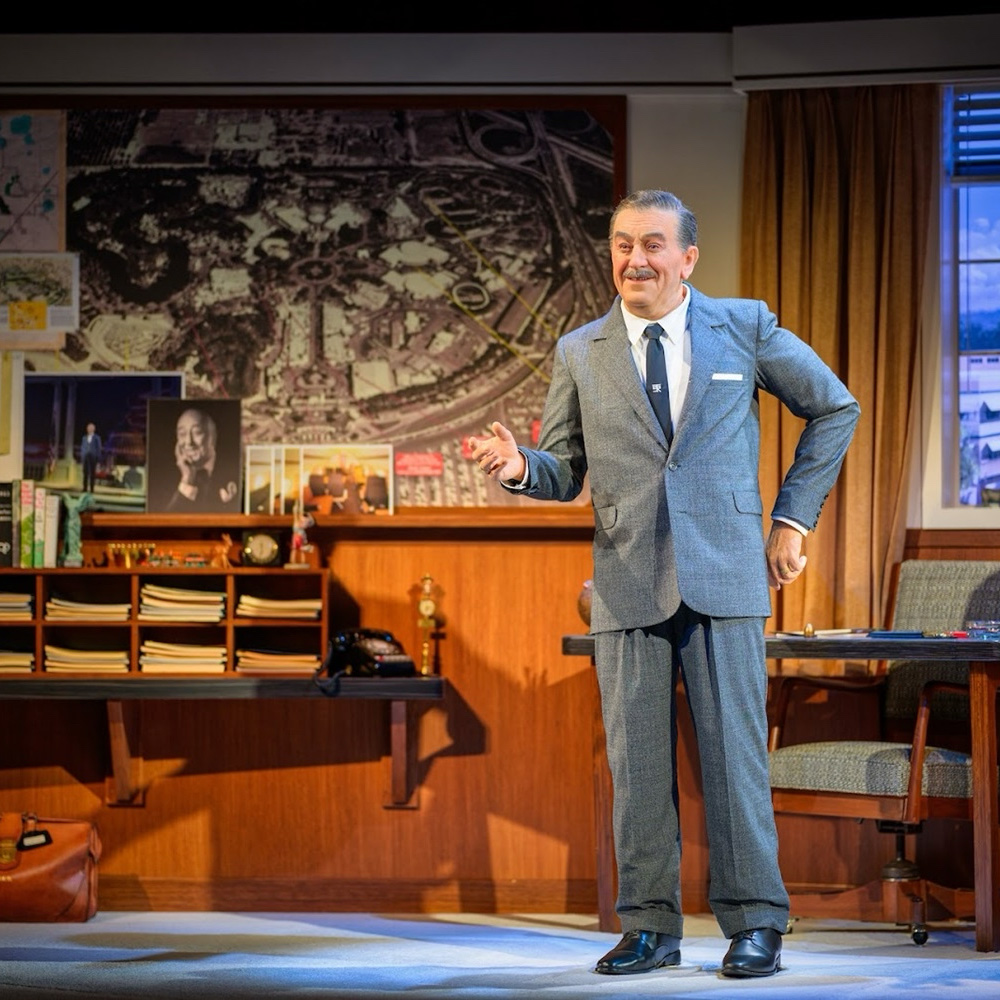
Beyond the frozen body myth, what if Walt Disney's true 'preservation' is found not in ice, but in the uncanny lifelikeness of Disneyland's Audio-Animatronics? Explore how these marvels became Walt's enduring echo, a chillingly advanced form of legacy.
Key Takeaways
- Disneyland's Audio-Animatronics represent a unique, mechanical form of Walt Disney's preservation, creating an illusion of his continued presence.
- The development of Audio-Animatronics coincided with the cryonics craze, adding a layer of perceived scientific possibility to the idea of Walt's 'immortality'.
- The uncanny valley effect in some animatronics blurs the line between human and machine, mirroring the legend of a preserved Walt.
- Walt's personal involvement in the development of early Audio-Animatronics signifies a deliberate attempt to imbue them with his own persona and spirit.
- These figures serve as tangible, animated effigies, allowing Walt's audience to interact with a semblance of him long after his passing.
The Uncanny Echo of Walt in Audio-Animatronics
The persistent urban legend of Walt Disney being cryogenically frozen, though definitively debunked, taps into a profound human desire to defy mortality, especially for figures we revere. While the literal interpretation of a preserved Walt in icy slumber remains science fiction, Disneyland itself offers a more complex and arguably more unsettling manifestation of this wish. The park isn't just a collection of rides and attractions; it's a meticulously crafted environment designed to preserve and perpetuate Walt's vision. Within this carefully constructed world, one particular element stands out as a unique form of his 'preservation': the Audio-Animatronics.
These sophisticated figures, designed to move and speak with remarkable realism, were more than just technological marvels for their time. They represented a deliberate effort to bring Walt's imagination to life in a tangible, interactive way. Consider the initial Audio-Animatronics that debuted in the early 1960s. These weren't abstract characters; they were often figures from Walt's own stories, brought to life with an unprecedented level of detail. This focus on lifelike representation, particularly when applied to characters or even subtle nods to Walt himself, began to create an uncanny illusion of his continued presence within his park. It's as if Walt, through his creations, found a way to animate his own spirit, making himself a living, breathing (albeit mechanical) part of the Disneyland experience long after his physical form had passed.
The Cryonics Craze and Mechanical Immortality
The 1960s, the very era in which Walt Disney passed away and the cryogenic freezing myth took root, was also a period of burgeoning interest in cryonics. Companies like the Cryonics Society of America were actively promoting the idea of freezing bodies in the hope of future revival. This cultural backdrop lent a veneer of plausibility, however misguided, to the idea of Walt's preservation. Simultaneously, Walt Disney Imagineering was pushing the boundaries of robotics and animation with the development of Audio-Animatronics. This technological advancement, born from Walt's own vision for lifelike storytelling, inadvertently mirrored the cryonics narrative.
The public, perhaps influenced by the sensationalism of cryonics and the increasing realism of the park's mechanical inhabitants, could easily draw parallels. The idea that Walt might be 'preserved'—not necessarily in ice, but in a way that allowed his 'essence' to persist—began to merge with the emerging capabilities of Audio-Animatronics. Imagine standing before Abraham Lincoln, brought to life with astonishing detail, or the charismatic pirates singing their shanties. These were not static mannequins; they were characters that moved, spoke, and engaged. If Walt was deeply involved in their creation, as he was, it's not a stretch to see these figures as extensions of his own will and personality. They became the mechanical vessels for his enduring creative power, a stark contrast to the icy slumber proposed by cryonics, but equally potent in its suggestion of overcoming death.
Crossing the Uncanny Valley into Walt's Presence
The concept of the 'uncanny valley' describes the unsettling feeling humans experience when encountering robots or animated figures that are almost, but not quite, human. Early Audio-Animatronics, with their jerky movements and sometimes vacant stares, often skirted the edges of this valley. However, their very imperfection contributed to the mystique. They were lifelike enough to be recognizable, yet artificial enough to be distinct. This created a unique psychological effect: a sense that something *human* was present, but mediated through a mechanical form.
For Disneyland, this translated into a subtle, persistent sense of Walt's continued presence. When guests encountered figures that embodied the spirit of Walt's storytelling – whether it was the jovial pirates, the charming characters of Fantasyland, or even the carefully crafted historical figures like Lincoln – they were interacting with creations that Walt himself had a hand in bringing to life. The technology allowed these figures to 'perform,' to embody characters and narratives that were deeply personal to Walt. In a way, these Audio-Animatronics became animated portraits, imbued with the creative energy of their creator. They offered a more accessible, interactive, and ultimately more 'alive' form of preservation than the sterile, unproven promise of cryogenics. They allowed Walt to continue to 'speak' and 'act' through his creations, making the park his enduring, mechanical stage.
Legacy Through Animation, Not Ice
The debate around Walt Disney's alleged cryogenic freezing often focuses on the physical body. However, the true testament to his enduring legacy lies not in the possibility of thawing a frozen corpse, but in the vibrant, animated world he meticulously designed. Disneyland, particularly through its pioneering use of Audio-Animatronics, serves as a far more tangible and accessible 'cryogenic chamber' for his spirit and vision. These mechanical marvels were not just entertainment; they were vehicles for storytelling, for embodying characters, and for bringing to life the very essence of what Walt Disney wanted to share with the world.
The development of Audio-Animatronics, a passion project for Walt, allowed him to imbue his creations with a sense of personality and life previously unseen. Each moving figure, each spoken line, was a deliberate choice, a stroke of his imaginative genius made manifest through technology. When the legend of cryogenic freezing gained traction, fueled by the era's fascination with the unknown and the promise of scientific salvation, it perhaps overshadowed the very real, and arguably more profound, way Walt achieved a form of immortality: through his art and his meticulously crafted mechanical storytellers. These figures continue to perform, to captivate, and to embody the magic Walt envisioned, offering a perpetual echo of his creative force that is far more enduring than any frozen state.
For a deeper dive into the mysteries and legends surrounding Walt Disney and his iconic park, listen to the full episode of Weekly Spooky: Was Walt Disney Cryogenically Frozen? The Disneyland Urban Legend.
Frequently Asked Questions
Q: Did Walt Disney really want to be cryogenically frozen?
A: While the urban legend persists, there is no credible evidence to suggest Walt Disney explicitly requested or planned for his body to be cryogenically frozen. His daughter, Diane Disney Miller, has publicly stated that he never expressed such a wish.
Q: How did Audio-Animatronics differ from earlier forms of animation?
A: Earlier animation involved 2D drawings or static figures. Audio-Animatronics were the first to bring multiple, complex movements and synchronized audio to three-dimensional figures, creating a remarkably lifelike performance.
Q: Were Audio-Animatronics directly inspired by the idea of cryogenics?
A: No, the development of Audio-Animatronics predates the widespread legend of Walt's cryogenic freezing. They were driven by Walt's desire for more engaging and lifelike storytelling within his theme park.
Q: What is the 'uncanny valley' in relation to animatronics?
A: The uncanny valley is a concept where robots or animated figures that appear very human-like, but not perfectly so, evoke feelings of unease or revulsion in observers.
Q: Can Audio-Animatronics truly preserve Walt Disney's legacy?
A: While they don't preserve his physical being, Audio-Animatronics serve as enduring manifestations of Walt's creative vision, allowing his storytelling and pioneering spirit to continue to engage audiences in a dynamic, lifelike manner.
Beyond the Blind Spots: How Camera Limitations Hampered the Brian Shaffer Investigation