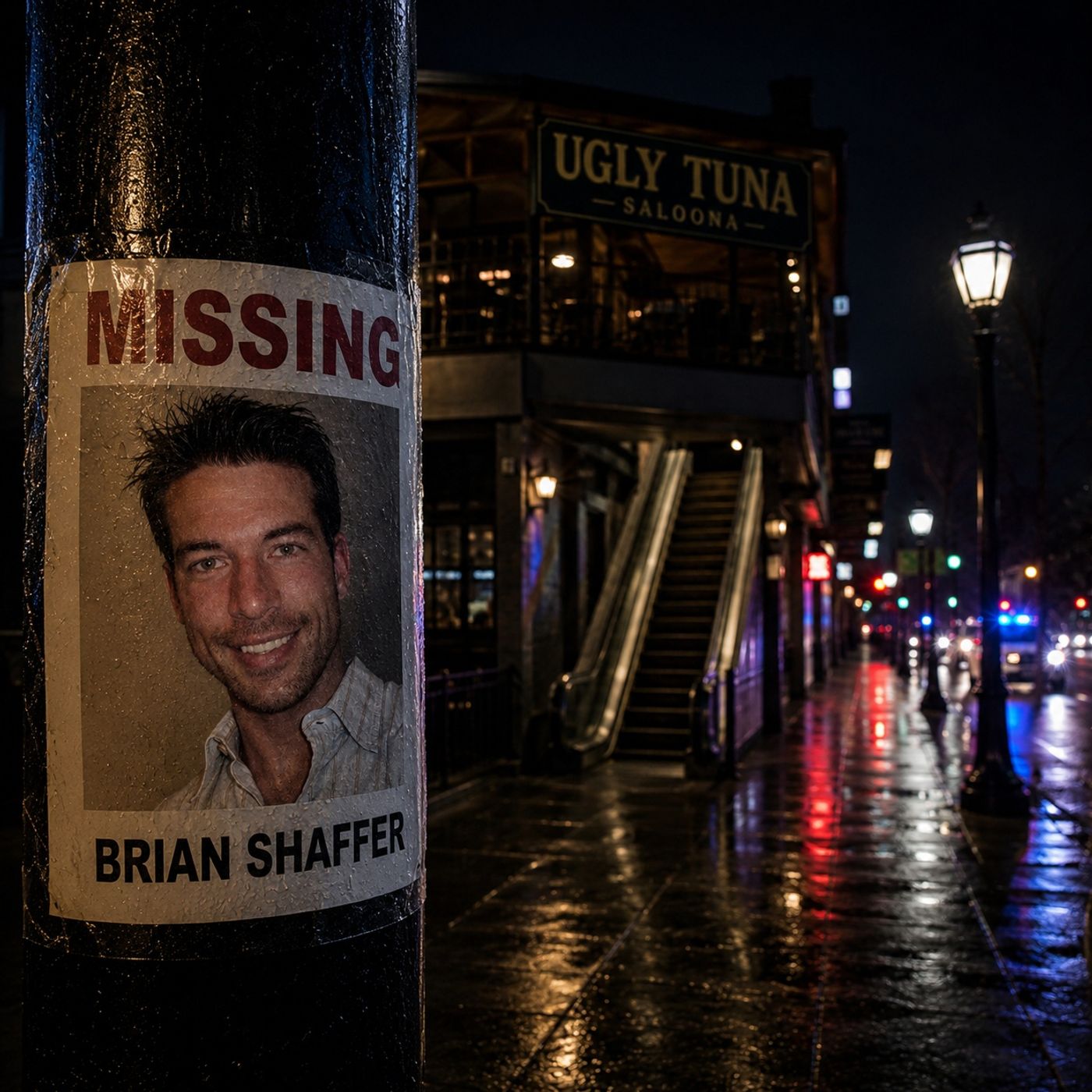
Beyond the Blind Spots: How Camera Limitations Hampered the Brian Shaffer Investigation
The disappearance of Brian Shaffer from the Ugly Tuna Saloona remains a chilling enigma, largely because crucial moments were shrouded in obscurity. The failure of surveillance cameras to capture his exit highlights a critical investigative hurdle: the limitations imposed by 'blind spots' in bar security systems, a challenge amplified by the technology of 2006.
Key Takeaways
- The strategically placed cameras in the Ugly Tuna Saloona, typical for the era, inevitably created significant blind spots.
- These unmonitored areas are a central reason why definitive proof of Brian Shaffer's departure from the bar is absent.
- Understanding the specific angles and coverage gaps of the 2006 security system is paramount to grasping the investigative difficulties.
- The investigation into Brian Shaffer's vanishing is severely hampered by the inability to confirm his movements beyond known camera views.
- Focusing on these camera blind spots offers a unique lens through which to re-examine the enduring mystery.
The Ugliness of Limited Surveillance in 2006
On April 1, 2006, Brian Shaffer, an Ohio State medical student, was last seen on surveillance footage inside the Ugly Tuna Saloona. While the cameras documented his presence and interactions with friends, the critical transition from within the bar to the exterior world is conspicuously absent from the record. The footage shows him near the main entrance, even turning away from a camera's gaze, but it never provides a clear, undeniable image of him exiting the establishment. This absence of visual confirmation is not a mere footnote; it's the very core of the enduring mystery surrounding his disappearance. Investigators have meticulously analyzed the available footage, yet the inherent limitations of the security system at the time present a formidable barrier to understanding what truly happened after Shaffer was last seen.
To truly appreciate the challenges faced by investigators, it's vital to understand the state of security camera technology in 2006. In an era before ubiquitous, high-definition, and wide-angle surveillance systems, bars and entertainment venues like the Ugly Tuna Saloona typically employed cameras that were far less sophisticated. These systems were often characterized by lower resolutions, fixed camera positions offering limited fields of view, and potentially restrictive recording capabilities. Their primary purpose was to monitor general activity in high-traffic zones – entrances, exits, and main seating areas – rather than to provide exhaustive, room-by-room coverage. This practical reality inevitably resulted in significant 'blind spots': areas within the venue that were simply not within the cameras' line of sight, leaving them unmonitored and unaccounted for in the digital record.
Mapping the Invisible Territory of the Ugly Tuna
When considering the physical layout of the Ugly Tuna Saloona and the probable placement of its security cameras in 2006, it becomes clearer how blind spots could have facilitated a disappearance. Bars of this nature often have multiple entrances and exits, service corridors, restrooms, and staff-only areas that might not have been adequately covered by the main surveillance system. Imagine the camera angles: one might point down the main bar area, another towards the entrance door. But what about the area directly to the left of the bar, or the alcove leading to the restrooms? These were prime candidates for being unmonitored zones. If Shaffer, for whatever reason, moved through one of these blind spots, he could have potentially left the bar or even the South Campus Gateway complex without ever registering on camera.
The lack of comprehensive coverage means that investigators cannot definitively rule out various scenarios that might have unfolded within these unobserved spaces. Did Shaffer leave willingly through a less-monitored exit? Was he met by someone in an area unseen by the cameras? Did an altercation occur in a blind spot that led to his incapacitation or removal from the premises? Without visual evidence from these critical blind spots, these questions remain open, leaving investigators with frustratingly incomplete information. The limited perspective offered by the cameras forces a reliance on witness testimonies, which can be unreliable, especially in a crowded and potentially chaotic environment like a bar on a weekend night.
The Technological Gap and Investigative Dead Ends
The investigation into Brian Shaffer’s disappearance is a stark illustration of how technological limitations can create significant roadblocks. In 2006, the expectation for video surveillance was vastly different from today. The cameras likely recorded in lower resolutions, making it difficult to identify individuals clearly or to discern subtle movements. Furthermore, the field of view for each camera was likely narrow and fixed. This means that a person could easily step just outside the frame or move behind an object that obstructed the camera's view, effectively vanishing from the digital record.
Consider the implications: If Brian Shaffer was, for example, incapacitated and moved by someone into an adjacent hallway or a service area just outside the main camera's view, the footage would simply show him near the entrance, and then… nothing. The cameras would not capture his assailant or his subsequent movement. This technological gap provides fertile ground for speculation but offers little concrete evidence. The blind spots effectively create voids in the narrative, allowing for numerous theories to flourish without the means to conclusively prove or disprove them. The absence of evidence in these unmonitored areas is, ironically, the most significant piece of evidence in the case, highlighting the critical role that comprehensive surveillance plays in modern investigations.
Lessons Learned and Lingering Questions
The Brian Shaffer case serves as a potent reminder of the importance of thorough and comprehensive surveillance, especially in public venues. The blind spots at the Ugly Tuna Saloona, while perhaps not intentionally exploited, became a critical factor in the inability to trace Shaffer's movements after his last confirmed sighting. This case underscores the evolution of surveillance technology and how a lack of foresight regarding camera placement and coverage can have profound consequences for investigations. The theories surrounding Shaffer's disappearance—ranging from foul play to voluntary disappearance—are all, to some extent, enabled by the gaps in the visual record.
For nearly two decades, the mystery has persisted, fueled by the very limitations of the security system that was meant to deter crime and ensure safety. The investigation has been hampered not by a lack of effort, but by a fundamental lack of observable data in key areas. The blind spots are not just physical spaces; they are metaphorical voids in our understanding of what happened to Brian Shaffer. Until further information surfaces, the case will likely remain a haunting example of how even in seemingly monitored environments, critical moments can remain unseen and unexplained, leaving behind a trail of unanswered questions and a family desperately seeking closure.
If you want to delve deeper into the unsettling details of this case and the investigative challenges presented by limited surveillance, be sure to listen to the Terrifying & True | Brian Shaffer: True Crime Mystery & Bar Disappearance Horror episode on Weekly Spooky.
Frequently Asked Questions
Q: Were there any other witnesses besides the camera footage?
A: While the camera footage is the last known visual evidence of Brian Shaffer, investigators relied on witness testimonies from friends who were with him at the Ugly Tuna Saloona and other patrons. However, in a crowded bar, witness accounts can be fragmented and sometimes contradictory, making them less definitive than clear video evidence.
Q: Could Brian Shaffer have left through a different entrance unseen?
A: Yes, this is a significant possibility due to the camera blind spots. The Ugly Tuna Saloona, like many bars, likely had multiple access points and less monitored areas that would not have been covered by the primary security cameras, allowing for an unrecorded departure.
Q: How did the technology of 2006 affect the investigation?
A: The surveillance technology of 2006 was less sophisticated than today's systems. Cameras had lower resolutions, narrower fields of view, and less advanced recording capabilities. This meant that areas not directly in a camera's frame were completely unmonitored, and even in-frame footage could be unclear, significantly hindering investigators' ability to track movements definitively.
Q: Why is the lack of footage of Shaffer leaving so critical?
A: The absence of clear video evidence showing Brian Shaffer exiting the bar is critical because it leaves a void in the timeline of his disappearance. Without confirmation of his departure from the venue, it becomes impossible to definitively state where he went next, opening the door to numerous unresolved theories.

The Mechanical Walt: Audio-Animatronics as Disneyland's Cryogenic Chamber