


 Apple Podcasts

 Spotify

 Spreaker

 Audible

 Castro

 RSS Feed

 iHeartRadio
Terrifying & True | John List: The Family Killer Who Hid for 17 Years
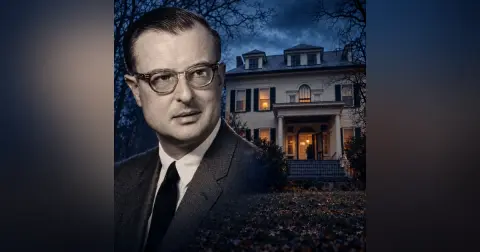

John List murdered five members of his family at Breeze Knoll in Westfield, New Jersey, on November 9, 1971—then built a second life as Robert Clark. This true crime episode follows his written confession, 17 years as a fugitive and the viewer tip that helped end the manhunt after America's Most Wanted aired his case. Archival interviews and broadcast audio bring the investigation into focus, alongside the lives of Helen, Alma, Patricia, John Jr. and Frederick.
Narrated by Henrique Couto.
How did a killer who signed his own confession stay hidden so long? We're telling that story tonight.
Bonus episodes & support: https://weeklyspooky.com/join
More scary stories: https://weeklyspooky.com/
Story submissions: WeeklySpooky@gmail.com
0:01 John List killed five members of his family, then disappeared into an ordinary life. He worked, attended church, and married again. For more than 17 years, he escaped capture. Then a television broadcast reached someone who already had a reason to suspect him. What you are about to hear is believed to be real. Based on witness accounts, testimonies, and public record, this is Terrifying and True.
0:51 Music was still playing when police entered Breeze Knoll. Behind a ballroom curtain lay four bodies. Upstairs was a fifth. The killer had left instructions for their discovery, but he had given himself four weeks to become someone else entirely. On December 7th, 1971, friends of 16-year-old Patricia List were waiting outside her family's house in Westfield, New Jersey. She had stopped turning up for her theater group. Weeks had passed without anyone hearing from her. A neighbor had noticed other changes. Light bulbs were burning out without being replaced.
1:43 The family dog was no longer around. He was worried about the elderly woman who lived on the third floor. The children were supposed to be away. Her father had made calls, written notes, and given people reasons to wait until after Thanksgiving. By December, those explanations had worn thin. Inside, John List had prepared a different explanation. A note on his desk began with three words. To the finder. It directed whoever came looking toward the authorities and the papers he had left behind. Finding out who killed this family would take very little detective work. Finding the man himself would consume years. How could someone leave so much evidence behind and still walk into a second life? The answer begins before the notes and the empty driveway. When Breeze Knoll was home to people whose lives reached far beyond its walls. We're telling that story tonight. Before Breeze Knoll
3:15 became a crime scene, it was a family address. The Lists arrived in Westfield in 1965. The house had a name, a ballroom, and enough space for three generations. John Emil List had an accounting background and a bank position. His wife was Helen. Their children were Patricia, usually called Patty, John Frederick, whom we'll call John Jr., and Frederick, or Fred. John's mother, Alma, helped provide the down payment. She moved into separate quarters on the third floor. Helen also had a daughter from her first marriage, Brenda, who was grown and living elsewhere by 1971. Helen's mother lived in North Carolina.
4:10 Her sister had a family of her own. Beyond the people sharing this address was a wider family whose lives would also be changed by what happened here the house had room for Alma without requiring her to share every part of the younger family's day a staircase connected the floors downstairs were the dining room the pantry the living room and farther back the ballroom an elaborate address still had a back entrance through which children could arrive with their school things There's a family photograph from that year.
4:52 All five members of the younger household are together. The parents, their daughter, their two sons. In the school portraits that also survive, the children appear separately. Three faces, three young people, three lives that reached beyond the rooms their father had purchased. Patty found a place in theater. Her drama group brought her into contact with people who expected to see her at rehearsals and noticed when she was missing. That connection would become crucial. Long before those friends had reason to call the police, they knew her as someone who belonged on stage. Her brothers had their own circles. Rick Bader later remembered Monopoly and Risk with Fred. John Jr. played soccer and Both boys were scouts. Another visitor, Ed Saradaki, remembered Helen defending Fred when his father reprimanded him at dinner.
5:58 John's demands did not go unchallenged at the table. Outside the house, practical arrangements connected the family to other people. List shared the school carpool with Barbara Bader, the milkman Herbert Argast, knew the household well enough to bring deliveries inside and put them directly in the refrigerator. An ordinary note from Helen could tell him what was needed next. Those small points of contact would eventually become evidence. For years, they were simply how a family got through the week. John himself had come from Bay City, Michigan, born in 1925, He served in the Army during the Second World War and studied accounting at the University of Michigan afterward. He married Helen in 1951, during another period of military service.
6:57 Their children were born during the Michigan years. Later, his work for Xerox took his family to the Rochester area in New York. The bank job and the move to Westfield were further steps in that professional life. Here was a man who understood accounts and financial obligations. The difficulty was not that he had no qualifications. It was that jobs he obtained did not keep him employed for long. He lost the bank position in 1966. For months afterward, a later investigation found he concealed the loss by leaving home as if he were still working. spending his days at the train station. The routine continued without the salary.
7:49 By April 1968, when Helen's sister, Betty Jean Seifert, visited, other strains were visible. She later testified that Helen spent much of the visit in bed. Her sister's condition worried her, and the house was in need of repairs. The mansion had not insulated the family from illness, or the cost of maintaining it. Betty Jean remembered medicines, peanut butter, and peanuts crowded onto the bedside table. Her visit brought her past the imposing exterior and into the room where her sister was spending so much of her time. During a visit in 1968, Betty Jean's husband, Gene, had a conversation with List about a different collection in the house. his crime books. At the eventual trial, Jean recalled List's particular fascination with unsolved mysteries. Religion remained another constant. List had taught Sunday school and belonged to the Lutheran Church of the Redeemer. The minister who had known him during the Rochester years, Edward Sarisky, remembered a man well-versed in doctrine.
9:07 Yet Sarisky later testified that List had struggled to translate that knowledge into daily life. List would eventually claim that killing his children could save their souls. His church had taught him no such thing. That was the explanation he chose for himself. There was more employment after the bank. There were attempts to recover. But there were also more loans against Breeze Knoll. A contemporary account would describe the original $ 40, 000 mortgage and two smaller mortgages taken out afterward.
9:48 The house that had announced the family's arrival was becoming harder to keep. Meanwhile, Patty's theater group still had rehearsals. Her brothers still needed robbing. The milk still arrived. The household kept moving while John's finances fell apart. He had already demonstrated that he could hide a professional collapse behind a daily routine. Now the debts were following him home. The next job did not restore lasting security. By 1969, another accounting position had ended when the work moved away.
10:28 List turned to selling insurance. The commissions did not solve the household's problems. Behind the impressive address was a financial situation that could no longer be sustained by the appearance of employment. The mortgage obligations continued. Two of those accounts would later appear in a court's findings, with no payment recorded after November 1st, 1971. The borrowed money had bought time, but the bills were still coming. Helen's illness had also become severe. A neurologist who reviewed her medical records would describe damage affecting her brain as well as her eyesight.
11:14 She sometimes stayed in bed because... She feared falling, yet could still seem perfectly capable during a casual encounter. A visitor's brief conversation did not necessarily reveal how much help she required. Helen desperately needed medical care. Years later, her illness would be offered in a courtroom as part of her husband's defense for killing her. Patty had begun telling friends she was afraid of him. Rhonda Conway recalled that fear years later. Ed Saradocchi remembered Patty saying her father had asked whether the children wanted burial or cremation. That was no longer a disagreement about acting or church attendance.
12:13 It was a father introducing his children's death into a conversation about their futures. Yet October also contained a Halloween party. Chris Day remembered List allowing Patty to host one and helping them clean up afterward. Normal family moments had not simply stopped. Outside the house, people saw pieces of the trouble. Patty's friends heard her fears. Relatives saw how ill Helen was. The lenders saw missed payments. A firearms application was already on file before November 9th. That document would become important in a way its maker had not intended. Long after List had discarded his name, investigators would still have a record created while he was using it. In the letter he later left behind, he said he had first intended to kill the family, On All Saints Day, November 1st, he blamed the postponement on travel arrangements. Even in his own explanation, planning the deaths and planning the escape were entangled.
13:31 The dates passed, the family remained alive for another eight days. His later explanation would connect the threat of poverty to the threat of losing their faith. He objected to Helen's wish to leave the church roles and feared what an acting career might mean for Patty. He was turning choices the others might make into reasons they should not be allowed to make any more choices at all. Patty could rehearse a role, spend time with friends, and hope for another production. Her father was choosing a date. Tuesday. November 9th arrived. Thanksgiving was still ahead. Before it came, List would arrange for people to believe the family was away until after the holiday. For now, it was a school day, and the children left the house. Helen and Alma remained there with him. The sequence reconstructed in court begins at about 9 in the morning. Helen was sitting at the breakfast table when John shot her from behind. He then went upstairs to the quarters where his mother lived. The appellate court's account describes John and Alma walking into the third floor kitchen. He shot her there. He left her upstairs and returned to the first floor. When investigators eventually
15:05 searched those rooms, they found toast everywhere. The prosecutor mentioned it to reporters in the first days of the case as a clue that the violence had begun in the morning. In Alma's quarters, a trace of breakfast had outlasted her own life. In a few movements throughout the house, the two adult women were dead. The floors of Breeze Knoll now separated two parts of the crime. Alma remained in her quarters... Helen's body was moved into the ballroom. The rooms that had allowed three generations to live together had become places in which John could keep their deaths apart while he continued with the day. He cleaned up, and then he ate lunch. In a 2002 prison interview, ABC's Connie Chung asked him about that meal.
16:07 You ate lunch in the kitchen where you had shot your wife in cold blood? That's correct. How could you? I was hungry. It was. Just the way it was. The cleanup would leave evidence of its own. Police photographs show mops in the laundry room sink and bags of soiled towels in the pantry. He had not made the violence simply disappear. He had moved its traces out of his way into the same working rooms the family used every day. Lunch had separated the murders of the two women from the killings still to come. There was time between them, time to stop, to leave, to tell someone what he had done. The next actions were not a surrender or a call for help. He went out to conduct business. There were bonds to redeem, checks to cash, mail to stop. The afternoon still included contact with people who would know him as a customer rather than a killer. Inside, Helen could no longer answer a question. Alma could no longer come downstairs. Outside, John could still walk into an office.
17:35 and request an ordinary service. Nobody behind a counter had the view a future police officer would have. Through the ballroom curtain, the children's school day had not ended when their mother and grandmother died. They would have to return to a home whose meaning had changed without their knowledge. One time survives with unusual precision. 137 in the afternoon. At that minute on November 9th, List was at his safe deposit box. The bank's records would still be there when investigators came looking. The court's account also describes roughly $ 2, 000 in savings bonds redeemed, checks cashed, and a visit to the post office to stop mail for himself and Alma.
18:34 While two bodies- lay motionless at home, he was arranging which ordinary services would cease to reach the house. It was not a perfect erasure. Checking account activity continued to leave traces after the date of the killings. His movements were recoverable. The advantage he gained was time. Nobody outside the family yet knew those movements needed to be investigated. Later that afternoon, according to the court's reconstruction, he collected Patty and took her home. He shot her there. He then collected Fred and killed him after bringing him home.
19:21 Patty was 16. Fred was just 13. The remaining child was 15-year-old John Jr. A mother involved in the carpool later testified that she had brought him home When the boy returned, his father was there. John Jr. was killed last. Evidence described repeated gunfire and a struggle. Lists later claim that his victim had been spared suffering cannot be accepted as the truth of their final moments. He moved the children's bodies into the ballroom with Helen. Alma remained on the third floor. Five people who had lived in the house were now dead inside it. John was the only member of the household who could still use the telephone, answer a letter, or explain an absence. With five people dead inside Bree's Knoll, John List began managing the family's absence.
20:34 The court records described calls and notes excusing the children from school and other activities, arranging his absence from work, and stopping deliveries. Their supposed trip would carry them beyond Thanksgiving. A family's disappearance could be made to resemble a temporary interruption if everyone expecting a particular person received a plausible reason to wait. At the eventual trial, the milkman remembered something distinctive about his note. It was neatly written on lined paper, unlike the scraps Helen ordinarily used. Another witness recalled taking an evening phone message canceling the next school pickup.
21:26 List said the family was traveling to visit a sick grandmother in North Carolina. He also contacted his pastor. In reporting published just after the bodies were discovered, the minister recalled a call on November 9th or 10th in which List claimed his wife and children had been put on a plane to North Carolina. Later visits to the house produced no answer. Inside, List left a very different account. He wrote to relatives and prepared instructions about the family's affairs, including their funerals. For his pastor, he left five pages admitting the killings and explaining them in his own words.
22:16 The letter was dated November 9th. Money and religion ran through his explanation. He wrote about the family's financial condition and his fear that the children were drifting away from Christianity. He cast the killing of Alma as sparing her the shock of learning what he had done to the others. He also acknowledged that an explanation could not make his actions right. The letter was placed in an unsealed file folder. Other papers lay with it, including financial documents, instructions on the furniture directed a future visitor toward the Relevant drawers, guns, and ammunition were left behind, identified by another note. After supper, the court's chronology says he went to bed. The following morning, he packed belongings and sent some of them ahead by railway express. Then he drove to Kennedy Airport. He left his car in long-term parking with identifying documents and keys inside it. The parking voucher would establish November 10th as his arrival date. An airport offered the prospect of a departure to almost anywhere. It also offered investigators a question that would take effort to answer. Which flight had he taken?
23:49 But the car was not proof that he had boarded a plane. He returned to New York City by public transportation. and began a roundabout journey that would end in Colorado. He had left the car where it suggested one kind of escape, while in reality he took another. Back in Westfield, the school excuses and delivery cancellations remained in effect. The letters waited in their folder. Nobody was coming downstairs to turn off the music, and the man who had specified what others should do with the remains of his old life, was already traveling toward a place where he could introduce himself again. Thanksgiving came and went. The explanation for the family's absence had given people a reason to not expect them.
24:48 It could not keep giving that reason forever. A holiday trip should eventually end. A student should return Someone should answer the door. At Bree's Knoll, a neighbor was watching the lights go out. Dr. William Cunick lived nearby. When police spoke with him on December 7th, he described bulbs burning out without anyone replacing them. The dog had disappeared from view. He was particularly concerned about Alma living on the third floor. Patty's absence had also brought two people from her theater circle to the police. Edwin Ileano and Barbara Sheridan had not seen or heard from her for weeks.
25:38 That afternoon, they contacted headquarters. By evening, a police captain was speaking with Cunick, trying to establish what had been happening at the house. Later, Cunick's wife reported that a white Pontiac had returned to the driveway The car had been seen there before. When officers arrived at 9.30, they found Sheridan and Ileano, but not a returning member of the List family. Friends and neighbors were now gathered around the same unanswered question. An officer found the unlatched window adjoining the porch. He entered the dining room, followed by his partners. Sheridan and Ileano came inside after the police.
26:27 The first floor was dark enough to require a flashlight. The music still came through the intercom. In the pantry, the officers saw what appeared to be dried blood. Ileano led them toward the living room and drew back the large drape at the ballroom entrance. The flashlight. The flashlight reached four bodies. Their faces were obscured. The search had begun as an effort to find out why nobody was answering. Now more police were summoned, and the rest of the house had to be searched. On the third floor, they found Alma. Exactly four weeks had passed since November 9th.
27:16 The house contained five murder victims and an absent father. In the den, the investigators encountered the system of notes he had prepared. One asked the finder to contact the authorities. Another identified the drawer containing weapons. Labels on the filing cabinets named the people who were supposed to take responsibility for the papers inside. The desk was forced open. Keys from it gave access to the files. The police did not have to guess... who had killed the family. In the folder for his pastor, List had left a confession in his own writing. They also had a date, November 9th.
28:04 The missing family's last day could be checked against the calls, school arrangements, financial transactions, and other traces outside the house. Those pieces began to fit together in a way they could not have done for the milkman, or a boy answering the telephone. Each had encountered one ordinary request. Investigators could place those requests beside five deaths. List had successfully delayed the discovery. He had not made the crime look like an accident, and he had not left an unknown intruder as the obvious explanation. The central question was already changing.
28:52 Where had he gone? Three days after the police entered Bree's Knoll, his car was located at Kennedy Airport. The voucher placed it there on November 10th. The car still contained the documents bearing his name. Investigators had reached a place where the man they wanted had stopped using a readily identifiable possession. Police checked airline passenger lists. List had left his car at an airport, then taken public transportation back into the city. The car pointed toward a flight he had never taken. Meanwhile, the community had to bury the people whose absence had concealed his escape. The funeral was held on December 11th. Helen's mother attended. Helen and the children were buried in New Jersey. Arrangements were made for Alma to return to Michigan. The family's separation continued, after death, in practical decisions that someone other than John now had to carry out. The pastor appealed publicly for List to make contact. That appeal was directed at a man who had written an extensive explanation to a minister, but had not remained to face the people who received it.
30:26 He did not come back. The house stayed behind as the largest physical reminder of the crime. It had held the bodies for a month. Now it held the association with them. Whether a person passing it knew the children, had read a newspaper, or simply knew which house everyone was talking about. Then in August 1972, it burned. The contemporary account gives the cause as Undetermined, the building was gone. The case was not. For Westfield Police Chief James Moran, the search became something he carried with him. A later account described him keeping List's FBI flyer in his pocket for more than 60 years. Any conversation might bring him to someone who had a useful lead, and he wanted the picture available. That is a different measure of a long investigation from a stack of case files. The chief would retire before List was caught. The man on the flyer remained someone he wanted found. Police still had the evidence collected inside. The confession, the financial records, the car, and the identity of the missing man. None of those things supplied his current address. A person can be well
31:58 documented in one place and almost invisible to that place's investigators somewhere else. As the search continued, another difficulty grew alongside it. The surviving pictures showed John List at an earlier point in his life. Whoever was living under another name was growing older. The face on a wanted notice could remain unchanged while the face a neighbor saw every day, did not. That problem would eventually produce one of the most famous images in American criminal investigation. First, though, the man in those pictures had to become somebody else's neighbor.
32:44 And while Westfield was searching for John List, he had already begun supplying a different name on forms in Denver. On November 22, 1971, a man using the name Robert P. Clark applied for a social security card. The address he supplied was a motel in Denver. In New Jersey, the List family had not yet been found. In Colorado, their killer was putting another name into circulation. His new life began again. considerably below the professional standing he had wanted to preserve in Westfield. He worked as a cook. An accountant with an advanced education was earning his living in a kitchen under a name that concealed the reason he had come West. That change is especially important because of the explanations he had left behind. He had described his family's future as intolerable. Yet, for himself, he accepted a different job, a different home and the task of starting again.
33:59 Losing his former position did not make his own continued life impossible. The later court record describes the precautions he took. He altered his appearance periodically, avoided trouble and kept away from situations he believed might require fingerprints. Even a parking ticket was something he wanted to avoid. This was not an uninterrupted succession of narrow escapes like you might see on a TV show. His method depended on keeping encounters with authority uneventful or preventing them altogether. The less there was to investigate about Robert Clark, the less chance anyone had of discovering John List, beneath the facade. A passport was a particular concern because, according to the court's account, he thought applying for one would expose his fingerprints. That limited the sort of new life he could safely construct.
35:07 He was not simply free to travel wherever he pleased, a procedure most people would treat as routine could bring his identities together. He stayed in the United States earning a living and taking care not to supply an obvious reason for someone to look more closely. As the years passed, the former accountant returned to accounting. By the middle of the 1970s, he was working as a tax preparer for H & R Block and had joined a Lutheran congregation in Denver. The man in the wanted photograph had not discarded every recognizable part of himself. His professional skills were useful.
35:54 His religion remained part of his life. He changed the name attached to those things while continuing to move within a world he understood. That made his concealment less like a permanent disguise and more like a carefully incomplete introduction. People could learn real things about him without learning the thing that would change everything else. They could know his work. They could know him through church. They could have good reasons to expect him at a particular place on a particular day. None of that required knowing what he had done in a house 2,000 miles away. In 1997, at a church picnic, he met Dolores Miller. Their acquaintance developed into a relationship, and in 1985, they married at her mother's home in Maryland. There was no hurried wedding immediately after the escape. Years stood between their first meeting and their marriage. Dolores had known the person called Bob over a substantial part of her life. When the truth emerged...
37:13 It would collide with accumulated experience, not merely a stranger's convincing story. Dolores would later say she had not known of his past. Her public disbelief after his arrest is not necessarily evidence that she knowingly helped him evade the police. At a news conference a week after the arrest, Dolores said she had visited him in jail, but had not discussed the case with him. She still did not believe her husband was John List. She wanted reporters to stop calling her and her family. Years before that arrest, the marriage had brought him into the orbit of a neighbor named Wanda Flannery. Journalist Joe Sharkey later interviewed Flannery. She had grown friendly with Dolores, but she disliked and distrusted Bob.
38:18 For the moment, however, the neighbor's unease had not produced an arrest. The name Robert Clark continued to work. Nor had starting over guaranteed professional security. Contemporary reporting described renewed financial difficulties. His next substantial move was connected to work. In 1988, he relocated to the Richmond area, where he again found employment in accounting. He and Dolores made their home in Midlothian, Virginia. The years in Colorado were now part of the history people knew about Bob Clark. The false identity had acquired something its first Social Security application could not provide other people who had known him for years.
39:13 Before moving into the couple's home, he rented a room from a man named Wallace Parsons. Parsons became his friend. The move had supplied another person who knew the accountant by the name he offered, without knowing why. he needed it. There is a particularly uncomfortable answer to the question of why he didn't surrender during all that time. After his capture, psychiatrist Stephen Simring asked him about the years away. Simring later testified that List had initially expected to be caught. When capture did not come, he continued with the life he had built. Why not confess to someone? Why not turn himself in? According to Simring's testimony, List answered, quote, I was enjoying my life. The psychiatrist also recounted List saying that, with time, He no longer thought about the deaths every day. Anniversaries would bring them back to him, though.
40:23 The people who had buried Helen, Alma, and the children had received no corresponding new beginning. They still didn't know where the father had gone. His absence remained an unresolved part of their lives, while his presence became an ordinary part of other people's. By the spring of 1989, he had survived more than 17 years under the borrowed name. He had employment, a marriage, and a home in another state. But the move to Virginia had not erased the acquaintances he left behind in Colorado. One of them already had reason to look twice at his face. A wanted photograph has a problem that fingerprints do not. The person in it keeps getting older. John List had been 46 when he killed his family. Anyone searching for him in the late 1980s had to account for the years that had passed.
41:28 A stranger might know the man standing beside them and still fail to recognize the younger face in a newspaper. Investigators had been working on that problem well before the television program entered the story. In 1983, Union County Investigator Edward Johnson asked the New Jersey State Police for a drawing of how List might have aged. Sergeant Louis Trowbridge worked from the available photographs and produced an older face. His drawing circulated beyond police offices and eventually appeared in a supermarket publication. The FBI also developed an age-enhanced image.
42:15 Its laboratory account describes a 1987 request from the Newark office, answered with newly acquired computer equipment. Specialists could combine and retouch photographs to suggest changes that time might have made. The investigators had no current photograph of List. The artists had to work from the younger man's photos, adding the lines, weight, or size. Hair loss the years might have brought, but even the best likeness needed to reach someone who knew the man behind it. In Colorado, an earlier published image had reached exactly such a person. Wanda Flannery thought the man in the story resembled Bob Clark. She brought her suspicion to Dolores. The possibility was raised, then left unresolved.
43:12 No arrest followed that first recognition. Accounts differ over the exact publication and timing. What remains consistent across the official histories and Flannery's later interviews is the important part. She had associated her neighbor with John List before the famous television bust appeared. By 1989, investigators were pursuing another way to reach the public. America's Most Wanted could present the cases to viewers who would never encounter a police bulletin. Its format paired a reconstruction of a crime with an invitation to send information about the person being sought. For that broadcast, forensic sculptor Frank Bender... made a three-dimensional age-progressed likeness of List. The state police's own report says an updated Trowbridge drawing was supplied to the sculptor. The bust belonged to a longer attempt to make a changing face recognizable, not a discovery that happened in some kind of isolated invention.
44:28 On television, viewers could compare the sculpted face with someone they knew, On Sunday, May 21st, 1989, the segment aired. Here is John Walsh in the original broadcast, preserved in a later ABC News report. The suspect, John List, is accused of murdering his family 17 years ago. List was among the viewers. In the 2003 American Justice program, To Save Their Souls, he recalled what reached his television in Virginia. I saw the tail end of it. I saw that it was about me and I saw the bust that they had. I was surprised at how accurate it was.
45:14 I didn't realize that they had that technology. In Colorado, Flannery watched the case that had already disturbed her. Bob and Dolores were now living in Virginia, but distance had not removed them from her memory. She also had something much more useful than a vague suspicion about which part of the country he might be in. She could supply their new address. The broadcast gave Flannery another chance to act on her suspicion and a way to pass it along to investigators. According to the FBI's account, she asked her son-in-law to call. Sharkey later reported that Flannery...
46:00 Didn't think the bust looked much like Bob at all. Other accounts gave the likeness more credit. Either way, she had a name and an address. Hundreds of people called after that broadcast. Among those calls was the tip from Flannery's family. The information from Colorado pointed to a specific man living in the Richmond area, known as Robert Clark. Federal agents followed it. On June 1st, 11 days after the broadcast, they arrested him at the accounting office where he worked. After 17 years of searching, agents found him at work in the professional life he had rebuilt for himself.
46:55 He denied that he was John List, His denial would have to survive a fingerprint comparison. His face had aged, his prints, though, had not. Contemporary authorities cited his military records. The FBI laboratory's later account identified another source. The gun permit application list had submitted roughly a month before the murders. A form he had filled out before the killings. were prints that could be compared with the man now calling himself Robert Clark. His new name had accompanied him through jobs, church, acquaintances, marriage, and another cross-country move. Each of those settings had allowed him to introduce himself again. The fingerprint comparison did not require such an introduction. Robert Clark could deny being the man in the photograph, but he could not make the prints belong to somebody else. Even with his fingerprints identified, he continued to call himself Robert Clark. He waived extradition and was returned to New Jersey in June of 1989.
48:10 The following month, at a hearing in a crowded courtroom, his attorney entered the plea using the identity he had maintained for years. Quote, My client, Robert P. Clark, pleads not guilty. Judge William Wertheimer set bail at $ 5 million. The old indictment was no longer directed at a missing man. Its charges were being read with a defendant standing before the court. But the name was still being contested. For the defense, proving identity was the state's responsibility. regardless of what officials had told reporters. List's refusal to acknowledge it prolonged that part of the case into the pre-trial proceedings, when he finally admitted who he was. The trial would turn on a different question. His lawyers acknowledged that he had killed his family, but argued that his mental condition prevented the criminal responsibility that the prosecution sought to establish.
49:23 He could not be sentenced to death for these crimes. The capital punishment law in place by the time he returned to New Jersey did not make that penalty available for murders committed in 1971. A conviction could instead put the rest of his life in prison. Prospective jurors were asked about the newspaper stories and America's Most Wanted. The court needed people who could hear the evidence without having already decided the case. The defense asked to move the trial out of Union County. The judge kept it there after questioning prospective jurors about whether they could set what they had heard aside. Then, there was the letter. The defense first challenged how police had obtained the evidence inside Breeze Knoll. They had entered without a search warrant, then opened the desk and files. If that search violated List's rights, crucial evidence could be excluded. The judge considered the house List had left the instructions for whoever found it, and his years away under another name. He ruled that List had abandoned the property. The court also found that the bodies and papers would inevitably have been discovered. The evidence stayed.
50:53 List had written to his pastor after the killings. His defense argued that the communication should be protected by the confidentiality associated with speaking to a minister. He had left the letter in the house alongside financial papers. His other notes told whoever found them where to look. He had arranged for the contents of his desk to be discovered. The courts concluded that he had not left the letter with a reasonable expectation that only the minister would read it. It could be used as evidence. Both sides would use those same pages to tell very different stories about the man who wrote them. Defense psychiatrist Sheldon Miller described a man overwhelmed by pressures he could not resolve. Medical testimony about Helen's deteriorating condition became part of that argument, along with List's financial failures and rigid sense of duty. Prosecution psychiatrist Stephen Simring disagreed. He testified that List understood what he was doing and knew it was wrong. List himself did not take the witness stand during the trial. In closing, defense attorney Elijah Miller pointed to the meticulous arrangements as signs of disordered thinking. Prosecutor Eleanor Clark argued that the
52:26 arrangements demonstrated deliberate action and that the explanations List left behind served his own interests. The same notes that delayed discovery were now being examined in a courtroom. The orderly instructions no longer controlled what happened next. Jurors would determine what they meant. Deliberations began on April 11th, 1990, and continued the next morning, then ended with guilty verdicts on all five counts of first-degree murder. On May 1, 1990, List stood before Wertheimer for sentencing. He read a statement to the court.
53:12 I remain truly sorry for the tragedy that happened in 1971. I feel that due to my mental state at the time, I was unaccountable for what happened. Wertheimer imposed five consecutive life terms, List appealed the five consecutive life sentences, and in 1993, the appellate court upheld them. The judges treated the murders as separate acts against five successive victims, Alma, Helen, Patricia, John, and Frederick, five people, each with a life he had ended. List remained in prison.
53:59 In 2002, he again expressed regret, yet still hoped for reunion with his family in heaven. He died in custody in 2008, aged 82. The man who disappeared had finally reached the end of his own life. The children remained 13, 15, and 16 in the record of their deaths. there is another surviving piece of paper worth putting beside the confession, the wanted notices, and the court decisions. When reporters revisited the case decades later, Chris Day, who had dated Patty, still had a playbill from little Abner. They had both been in the musical. She had signed his copy. It belongs to a teenager who had been in a show with Someone she cared about. Her father left pages explaining her death, but on the playbill, she left two words from her life. Love, Pat.
55:13 Terrifying and true is narrated by Enrique Couto it's executive produced by Rob Fields and bobbletopia.com and produced by Dan Wilder with original theme music by Ray Mattis if you have a story you think we should cover on terrifying and true send us an email at weekly spooky at gmail.com and if you want to support us for as little as one dollar a month go to weekly spooky.com slash join your support for as little as one dollar a month keeps the show going And speaking of, I want to say an extra special thank you to our Patreon podcast boosters, folks who pay a little bit more to hear their name at the end of the show. And they are Johnny Nix, Kate and Lulu, Jessica Fuller, Mike Eshkewi, Jenny Green, Amber Hansford, Karen Wemet, Jack Kerr, and Craig Cohen.
55:58 Thank you all so much, and thank you for listening. We'll see you all right here next time on Terrifying and True.
