


 Apple Podcasts

 Spotify

 Spreaker

 Audible

 Castro

 RSS Feed

 iHeartRadio
Terrifying & True | The Great Thanksgiving Day Disaster: Football Fans Above a Furnace
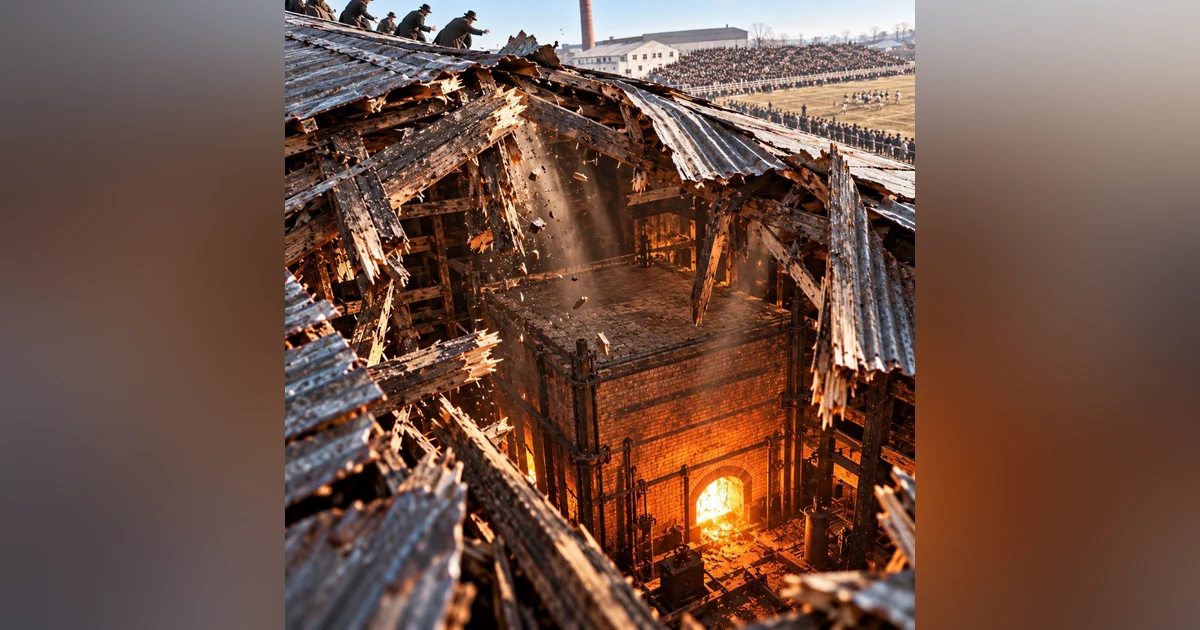
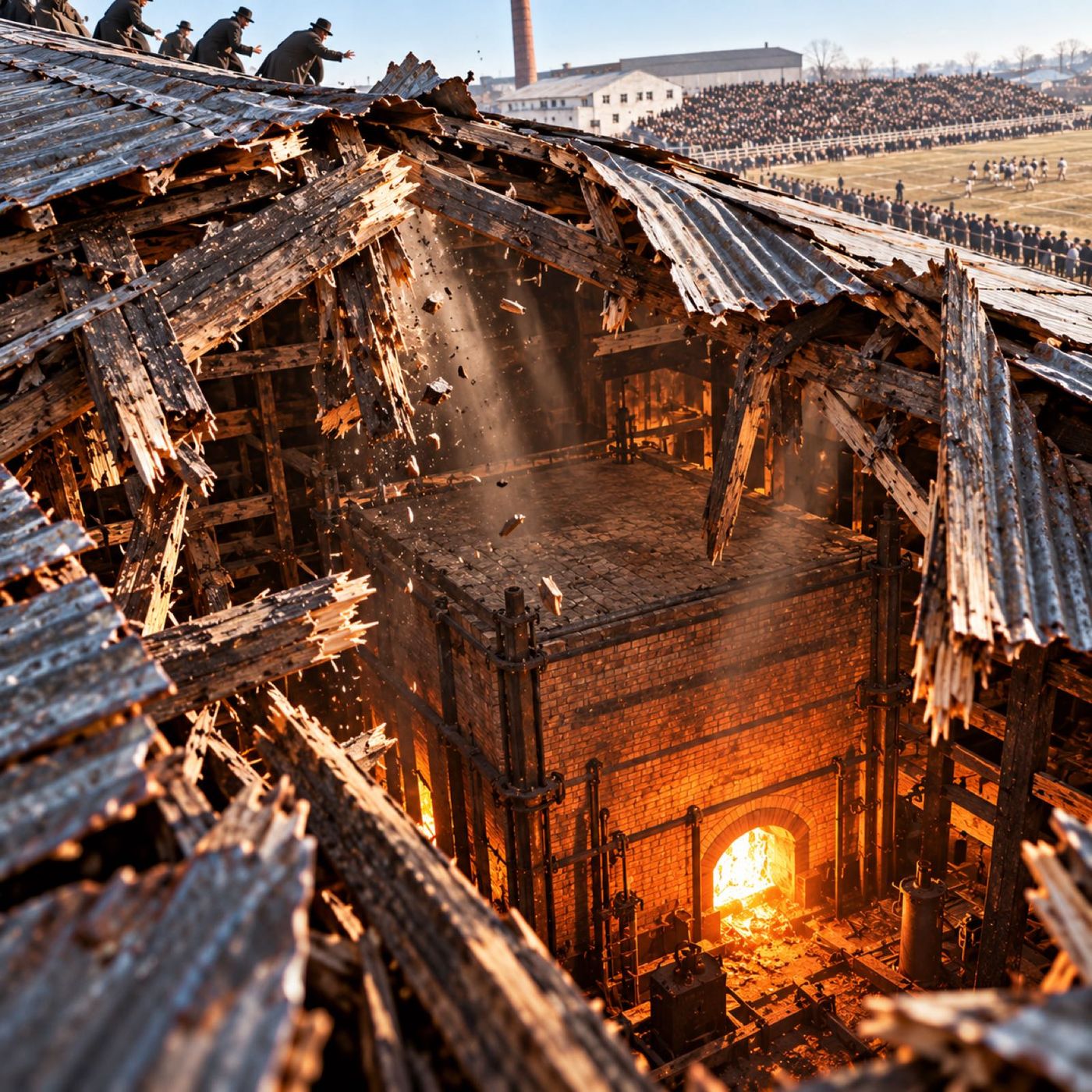
San Francisco's Great Thanksgiving Day Disaster began with a view of the 1900 Stanford–California football game. Men and boys crowded onto a glassworks roof above a burning furnace. When it collapsed, workers raced to rescue the injured while the match went on. This historical true story follows the rescue, the families searching hospital wards and an inquest that blamed the dead. Twenty-three people eventually died.
Narrated by Henrique Couto.
How did a Thanksgiving afternoon of football become a catastrophe—and who was held responsible? We're telling that story tonight.
Bonus episodes & support: https://weeklyspooky.com/join
More scary stories: https://weeklyspooky.com/
Story submissions: WeeklySpooky@gmail.com
0:01 They climbed onto a factory roof to watch football. Beneath them, a furnace was already burning. When the roof gave way, surviving the fall was only the beginning. Outside, the game continued. Inside, workers struggled to bring people out alive. What you are about to hear is believed to be real. Based on witness accounts, testimonies, and public record, this is Terrifying and True.
0:50 The jury needed half an hour. A boy was dead. A factory roof had collapsed, and calls for police help were disputed. The verdict said nobody else was responsible. How had a Thanksgiving football game ended with children being blamed? On November 29, 1900, thousands of people gathered in San Francisco's Mission District for the annual game between Stanford and California. The grandstands were packed, college bands competed with one another, and supporters cheered. filled the grounds with their team's colors.
1:35 Next door stood a new glassworks. From its roof, people could see the football field without passing through the ticket gates. Men and boys climbed toward that view. Beneath them, workers were tending a furnace whose fires had been burning for days. When the grounded structure gave way, the emergency began on several levels at once- People lay on the hot furnace and the floor around it. Others clung to broken timbers overhead. Getting someone out of the building would not necessarily mean saving their life. The rescue would spread into hospital corridors, family homes, and streets where people searched for children who had not returned. Then came the questions about How so many spectators had reached the roof, who had tried to stop them, and why help had not arrived before it fell.
2:39 San Francisco would have two stories about that afternoon's game. One would end at the final whistle. The other would continue for years. And we're telling that story here tonight. The colors were already everywhere. Cardinal red for Stanford, blue and gold for California. In the bleachers, Stanford supporters wore red caps in the floppy Tam O'Shanter style. Across from them, Berkeley's supporters had hats made in their own college colors.
3:28 Beyond those organized sections, the colors mingled through a crowd that filled the seats and packed the standing room. The San Francisco Calls account of the afternoon describes two college brass bands trying to drown each other out. Students answered songs with cheers. Each team received its own welcome as the players came on to the field. This was not a small gathering of classmates. It was a major city spectacle. Thousands of people had converged on the football grounds near 16th and Folsom Streets in the Mission District for the annual Stanford-California game. Thanksgiving in 1900 fell on November 29th.
4:20 For the people going to the game, the holiday offered something that could be shared far beyond a dinner table. An afternoon belonging to one side or the other, with enough noise to make that choice impossible. unmistakable. By two o'clock, the call reported, the grounds already looked full. People were still coming through the entrances, but there was another crowd forming outside the enclosure. Next to the football grounds stood the new plant for the San Francisco and Pacific Glassworks. Construction had begun only about three months earlier. The business was preparing to move into a much Larger operation, its existing factory employed hundreds of people, and the new works promised room for many more. Glass production at the new plant was expected to begin during the following week. That didn't mean the building was cold or empty on Thanksgiving.
5:29 The first furnace fires had been lit about ten days before. Workers were already tending the heat that the manufacturing process required. Below the roof sat a substantial enclosed furnace, with molten glass inside it and a hot brick surface above. The industrial work and the holiday entertainment were close neighbors. They had not been designed to occupy the same space. From the factory's roof, however, the football field, was visible that made the building attractive for a reason that had nothing to do with glass an elevated place outside the grounds offered a way to watch the game without entering through its ticket gates men and boys began getting onto the factory property and climbing toward that view how they got there would soon become a bitterly important question Superintendent James H.
6:34 Davis later issued a signed statement describing the arrival of the crowd. He said the property was surrounded by high wooden fencing with barbed wire along part of it. According to Davis, people climbed over, used a neighboring pile of lumber to reach the top, and broke through a section of fence. Others crawled through holes beneath it, He said he and employees tried to stop them, but the crowd brushed past their resistance. Davis also described people trying to force their way through the building's doors. Employees drove them back and barred those entrances. Closing a door was something the workers could do. Keeping an entire property clear as people entered by different routes was proving much harder. Davis was describing these events after the disaster. Other witnesses would later complicate his account of how the crowd had entered.
7:42 Whatever their route onto the property, people had reached the factory buildings. More and more were gathering above the furnaces. These were not simply a few men resting on a solid wall. The main roof had a raised ventilator running along it. a narrow, elevated structure intended to let heat escape. Its covering was corrugated metal. From outside, it offered an even higher place to watch the game. Underneath, it depended on supports that had never been intended to carry a dense crowd of spectators. People occupied that raised section as well as the larger roofs around it. The estimates varied enormously.
8:34 Davis put hundreds on the ventilator alone. The accounts disagreed too sharply to give us an exact total, but each person who climbed onto that raised section added weight to a structure meant to cover an opening. It had become an improvised grandstand. There were no rows of seats up there or spectator aisles built into the metal covering The extra height that improved the view also placed the crowd directly above the furnace room. Below, workers continued tending the plant. At the football grounds, the players took their positions. California's captain had lost the coin toss. Stanford chose to defend the north goal. The opening kick sent the ball into Stanford territory. An early penalty brought another kickoff and the contest settled into the collisions and short advances of the game as it was played at that time. California began pressing Stanford back. The blue and gold side had reasons to cheer. Stanford's defenders had to keep stopping attacks near their own goal. For a spectator concentrating on the field, the important movement was happening down there. A runner stopped, a line giving ground, the ball carried closer to the
10:06 goal posts. Up on the glassworks, watching meant standing on the same roof as everyone else who wanted that view. Employees had seen the crowd coming, and tried to keep it out. Later, the inquiry would try to trace their requests for police help, who received a call, who passed it along, and why no officers reached the right place in time to clear the roof. But none of that had emptied the ventilator. The call described builders' ladders used to reach the roof, along with an insecure plank from a neighboring building still under construction. These were routes into a construction site, not a public entrance of some sort.
10:54 Yet they were carrying spectators toward the factory roof, where the crowd was already standing. They had the field in front of them and the roof beneath their feet. Then the roof moved. The crowded section broke downward, taking its covering and its spectators into the building below. for the workers beside the furnace, the danger had just come through the ceiling. Charles Yachts was looking into the furnace when the people above him began to fall. He was one of the men tending to it that afternoon. This work had put him directly beneath the roof that spectators had chosen for their grandstand. According to the next morning's San Francisco call, he sprang backwards just in time to avoid being struck. People landed around him. Others landed on the furnace itself. The collapse did not send everyone to the same place. A few feet of position, a timber within reach, another body underneath. could separate someone who walked away from someone who would never leave the hospital. Thirteen-year-old Harold Palmer had gone toward the game with his younger brother Leo
12:27 and another boy. Harold made it onto the roof. Leo did not. Afterward, Harold told a reporter with his family present that he had fallen onto a pile of rubbish. His injury was a sprained arm. Elsewhere, a falling man found something to hold. Thomas Hannon, newly arrived in the city, had followed other spectators toward the glassworks. He later told a doctor that he fell across a supporting timber and held on. From there he could see rescuers working below. He estimated that he remained suspended for 20 minutes, although that was his recollection of an ordeal. and not something he'd written down in the moment. Eventually, he lost his hold.
13:20 He said he landed on bodies, recovered enough to get up, and hurried away. Only after reaching his room did he discover that his right foot was useless. The following day, he sought treatment for a dislocated ankle. For others, there was no timber to catch and no fortunate landing. They had struck the floor or the structures around the furnace with injuries that left them unable to move themselves out of danger. And the furnace could not simply be made safe by turning a handle. Some accounts describe victims falling straight into molten glass. The call's report from the factory gives a different picture. The brick covering over the furnace held.
14:11 The glass remained enclosed beneath it. People had landed on that hot exterior or fallen beside the furnace within reach of the oil-fed flames. That covering had prevented an even worse catastrophe. It had not provided a safe place to land, however. Yachts moved toward a victim lying near the flame. The paper described him taking hold of the person's clothing, and dragging the body over an iron guard onto the sanded floor. Around the furnace, bands and braces that normally belonged to the machinery had become obstacles between the fallen spectators and the people trying to reach them. The first task was getting people clear. There was no time to carry each one gently through an unobstructed doorway. The people needing help lay among the damaged structures with more victims above them and others beneath them. Yachts was not alone. Clarence Jeter, Tom Simmons, Tom Hallinan, and William Burke joined the effort.
15:25 The call named all five furnace tenders. These were men who had come to work around a furnace, on Thanksgiving no less, suddenly required to extract injured strangers from it. The furnace blast was shut off. That removed the direct flames as one of the dangers. It did not remove the heat already held in by the furnace. People still had to be pulled away, and the workers continued until the victims had been removed to safety. Help was also coming from above. Joseph Gumper had been on the roof and escaped the fall. He hurried down into the building and began helping. In his account to the call, he described more than 50 people lying among the wreckage when he arrived, an estimate made in the middle of an emergency.
16:21 He said he pulled victims from the furnace top and kept assisting until police ordered him and the others back. He also described people who had caught a broken beam. It bent under their weight. Holding on to it did not mean the danger had passed. The thing supporting them could fail next. Not everyone hanging above the floor would have to let go. Police officer Hayes reached the factory, found men clinging to a broken rafter, and got a ladder. With help from employees, he brought them down. Another officer, Tillman, carried two injured boys from a dangerous perch, took them downstairs to a patrol wagon, and went back for more.
17:11 The rescue now ran in several directions at once. Workers were clearing the furnace. Other men were reaching those still stranded overhead. The injured who could move were finding their own ways out, while those who could not had to wait for somebody to find them. One young survivor who would not give his address even to the surgeons described the waiting. He remembered falling, feeling heat and then losing consciousness. When he came around, he was on the ground. His head hurt. He could turn onto his side but couldn't stand.
17:53 Beside him was a dead man. He said he kept calling until police carried him to an ambulance. His account left unanswered how he had been moved clear of the heat or who had helped him. He could remember the fall and describe where he woke up. The part between those moments was missing, even from the person who had lived through it. Yachts who had remained on his feet described a different kind of confusion. When a reporter asked him what had happened, he said the details were clouded. He feared they would return at night, when he would most want to forget them. He had been close enough to act, but that didn't mean that it was all neat and tidy in his mind, or that the event had an orderly beginning and end. Outside, a fire alarm had brought in more help. Inside, the dead were being separated from the living. Injured people were moved into an adjoining furnace room, away from the most dangerous part of the scene. But a person carried clear of the furnace and was not necessarily a person who would survive. Some had broken limbs. Others had head injuries or damage inside their bodies that no bystander could assess. Getting them out of the wreckage was only the first part of the rescue.
19:27 They needed surgeons, available hospital beds, and transport to carry them through the city. Now someone had to decide where they could go. Dr. Edwin Bunnell had been at the football game, the city's chief emergency surgeon made a practice of attending large gatherings because accidents could happen there. This time, when he heard the crash, he left the contest with David Wolfe, secretary of the city and county hospital, and ran toward the glassworks. Bunnell later described finding victims around the furnace and on top of it, He sent Wolf to telephone the emergency hospital. Then he began turning a crowded rescue scene into a system for getting people desperately needed treatment. First, he needed room to work. People who had come to help were mixing with people who had come to look. Bunnell had police clear those who were not needed. He examined the injured, decided who required immediate attention, and directed the vehicles arriving outside. There were ambulances and police patrol wagons. There were also express wagons, private carriages, and butcher carts. Whatever had wheels and could carry someone
20:57 became part of the response. One unidentified man arrived with a white horse and a light buggy. The call reported he carried one or two injured people at a time to a hospital, or, when they preferred it, to their homes, then returned. for another load. A boy of about 17, Charles Ridgeway, helped people into carriages and made trips between hospitals and homes. Glassworks employees Al Murphy and Patrick Hughes found Chris Peterson injured in a corner, carried him to a wagon, and sent him home. The destinations were already spreading across the city. That helped distribute patients, but It also meant that families looking for someone could not assume there was one place to find them. Bunnell was making another calculation. How many patients could each hospital possibly take?
21:59 He had water brought so faces and arms could be cleaned while transport was being arranged. He directed the cases that could benefit from medical help toward the hospitals. Other officers separated the dead so that vehicles and beds needed by living patients would not be occupied by bodies. At the Southern Pacific Hospital, Dr. George Ogden received an early warning from a wounded young man who rang the front bell and asked for a doctor. Ogden called the hospital staff. After his wounds were dressed, the visitor said that he had friends lying on the oven and needed to go back for them. He left without giving his name. More physicians arrived and nurses prepared to receive the wagons. Soon the injured were filling the available rooms, and treatment had to extend into the hall. Injured boys were laid along the hall and in rooms throughout the building while staff treated them. Relatives crowded the entrance, asking about children who had not come home. Police had to open a passage so patients could be carried through. Inside were men already recovering from other illnesses and injuries, railroad workers who had been patients before Thanksgiving afternoon. It was described as them
23:31 coming downstairs on crutches, each carrying a pillow from his room to put beneath an injured boy's head. That was something they could give immediately. Maybe not a diagnosis or a spare operating room, but a pillow taken from one patient's bed and brought to another, lying on the floor. Elsewhere, nurses were moving between beds while surgeons worked. At the receiving hospital, Rose Kane, Mrs. Sweat and Miss Hart attended the patients. Doctors treated wounds and operated on the most serious cases. Relatives were allowed inside to sit with the injured.
24:18 The merely curious were kept out. It was reported that within an hour, the hospitals receiving the injured had filled their spare beds. The receiving hospital alone treated 15 cases, five of them Very serious. Patients whose wounds had been dressed still needed a way home. The railway hospital's chief surgeon complained about delays getting ambulances back for them. Not every boy could tell the staff who he was. Virgil Newby and Hector McNeil arrived unconscious. Both had severe head injuries.
25:00 Neither carried a letter that identified him. Newby's father, Frank, reached the hospital before his son had died. His mother did not arrive in time. McNeil's uncle recognized him by chance while visiting the hospital and went to get the boy's mother. She had recently been widowed. Hector was her only son. According to the newspaper, she had given him a dollar to attend the game. He had gone onto the roof instead. Now she knelt beside his bed, kissing him and trying to bring him back to consciousness. He had reached the hospital. She had found him. He still couldn't answer her. The emergency had drawn Banal away from the football grounds. Back at the field, the match had continued.
25:56 With about three minutes left, neither side had scored. Stanford's William Trager stepped back for a place kick. The ball went over the crossbar, worth five points under the rules of the time. Stanford won, five to nothing. Supporters poured onto the field and lifted players onto their shoulders. After that celebration, a procession formed. The team riding in an omnibus, the band following, and the students winding along Market Street toward the Palace Hotel. Halftime spectators were unaware of the nearby tragedy. News had traveled unevenly. Some people from the game had already been helping with the rescue. Now the victors were arriving at their hotel, while families elsewhere were still trying to discover which hospital held a missing child.
26:58 At the morgue, the emergency had outgrown the old quarters. The coroner's staff opened the new building on Dunbar Alley as well. Here, finding a missing family member meant identifying one of the bodies brought in from the factory. People waited in the surrounding streets while wagons arrived. Some bodies could be identified by papers. Others required a relative or friend to come inside and look. The effects taken from the dead were recorded. Hats collected at the factory were brought into official custody. Objects that had accompanied people to an afternoon's entertainment now belonged to the work of finding their names. Evening did not bring everyone home or settle every search. At the receiving hospital, people kept arriving to ask about missing children. Some came to visit someone already found.
28:03 Others were still moving through the city without an answer. Hector McNeil died shortly after midnight. In other wards, parents remained beside children whose injuries had not yet proved fatal. Surgeons could treat them, watch them, and offer an assessment, but they couldn't promise which of those beds would be empty come morning. Thanksgiving was over. The waiting was not. On Sunday, December 2nd, the funeral processions began at nine in the morning. They continued until four in the afternoon.
28:52 According to the San Francisco Call, there was no point in those seven hours when a procession for one of the Glassworks' victims could not be seen making its way toward a cemetery. Nine people were buried that day. At St. Boniface Church, the street filled before William Valencia's hearse had arrived. People stood aside to let it pass. Flowers covered his casket, offerings from his friends and the people who had worked beside him. Men from the railroad shops served as honorary pallbearers. The men who carried the casket came from the shop where William had worked. The roof had held a crowd.
29:39 The funeral's to show just how many other places that crowd had belonged. At an undertaking parlor on Mission Street, employees of Nathan Dorman and Company gathered for Robert Miller. He was 15. Three years earlier, Mrs. Milton Campbell, had taken him from the Protestant orphan asylum and brought him into her household. He had continued living with the family after finding his job. His employer paid for the funeral. His fellow cash boys carried him. They were children with responsibilities, people whose absence would be noticed in a classroom, across a counter, at a workbench. their colleagues and classmates were now performing the last service they could do for them.
30:35 At the home of Charles Henry Cummings, a large arrangement of pink and white roses came from the Southern Pacific office, where he had worked. At William Henry Eckfeldt's funeral, flowers arrived from his schoolmates and teachers, pupils from the Peabody and Marshall Primary Schools attended. Lawrence Meal's service took place at his family's home on 23rd Street. He was nine years old, the youngest of the dead, and the only son of Marion Meal, a substitute teacher in the public schools. Children filled the street outside. His playmates served as pallbearers.
31:19 The service was held in the parlor. Afterward, the casket was carried out, through the waiting boys and girls. Beyond the procession routes, people were still dying. At 11.30 that morning, 13-year-old Ellery Crandall died at St. Luke's Hospital. He had worked as a messenger for S.N. Wood & Company for about four months. His employers trusted him with substantial sums of money. After the collapse, they had arranged his hospital care and assumed the expense. They would also pay for his funeral. His fellow employees began collecting money for a headstone.
32:06 Ellery's father arrived two hours after his death. Later that afternoon, Eben Pearson Tice died at his home on Alabama Street. He was 39. a laborer employed by the Haslett Warehouse Company. He lived only a block from the glassworks. The call reported that he had joined people on the roof after seeing the crowd gather. Tice left a wife and two children. The older child was two. By Monday morning, the newspaper's count had reached 21. That number did not stay fixed throughout the day, Fred Lilly had undergone an operation on Saturday.
32:54 On Monday evening at 6.30, he died at the City and County Hospital. His father, a New York merchant, was on his way to San Francisco. He had started west after hearing of his son's injuries. Twenty-two were now dead. Yet even as one family's hope ended, another patient's condition seemed to improve. Thomas Pedler had survived an operation for his spinal injury. Tuesday's call reported that he was getting along fairly well and beginning to feel the procedure's beneficial effects.
33:35 The same report carried a different kind of arrival at the morgue. Annie Howey had come from Sacramento, where she worked in a hotel laundry. She had seen her son Eddie's name among the injured. She asked whether he was there. He wasn't. Eddie was at his aunt's house. His broken arm was healing. Annie burst into tears when she heard the morgue's matron gave her car fare so she could go to him. After the funeral processions came a different gathering. On Wednesday evening, relatives of the victims were among the people filling a courthouse in the Hall of Justice. They had come for the inquest to hear witnesses questioned about what had happened at the Glassworks. Justice of Peace Barry presided because the coroner was ill. An assistant district attorney helped question the witnesses. The Glassworks had had an attorney present as well. Superintendent J.H. Davis described his efforts to keep people out. He had anticipated trouble and ordered that no one be admitted. When boards were broken out of the fence, he had a worker repair them. More boards were broken. Men and boys kept entering. He testified that
35:05 he had threatened intruders with an iron bar, but they simply went right past him. Only six or seven employees were on the premises. He had sent for police, but the gates had not been closed to everyone. A watchman said he had led about a dozen people through with signed papers from the warehouse man. Those passes admitted them to the factory, he explained, but not to the roof. Another watchman had admitted two women and three men with cards without checking the signature. The warehouse man described a telephone call to the chief's office, a connection to the 17th Street station, and instructions to find the lieutenant at the football grounds. He went looking for that officer, but couldn't find him. He placed the first call half an hour before the collapse. These were the minutes the inquiry had to account for. The boards being repaired, the people finding another entrance. the request moving from one place to another while the roof continued filling. Barry pressed Davis about the danger above the furnace. The superintendent acknowledged that the roof had not been built to carry an additional load.
36:31 Had he sent anyone up to warn the people already there? He hadn't. He said he had been occupied trying to prevent more people from entering. Six witnesses testified that evening. The inquiry adjourned until the next morning. Still to come were the police officers and the people who had been on the roof themselves. When the inquest resumed on Thursday, December 6th, one of the witnesses was 13-year-old Harold Palmer, His wrist was bandaged. His arm was in a sling.
37:16 He had climbed the Harrison Street fence with other boys, including Willie Rothenstein, who had been killed. A man at the foot of a ladder stopped Harold from climbing. Harold found another way up. He fell when the roof gave way. He thought a pile of engine rags had helped him survive. The questions turned to money. For days, investigators had been trying to establish whether someone had charged admission to the Glassworks roof. By Tuesday, the call reported that detectives had interviewed more than 200 people without finding anyone who admitted to paying. Now Harold described something he said he had witnessed.
38:03 A man asked the person guarding the ladder what it would cost to go up. Harold said he saw Ten cents change hands. The man was allowed to climb. Other testimony pointed in the opposite direction. Architect J.J. Ford had offered money to a watchman for himself and his friends and been refused. A business college student said both a watchman and Superintendent Davis had refused him admission. Another witness had heard Davis ordering trespassers away. Harold also described bigger boys forcing the man at the ladder to let them pass. Refusal, force, and an alleged payment all appeared in the testimony. They didn't establish one uniform experience for everyone entering the premises, which is a problem in a court of law. Attorney Percy Fuller supplied another example. He had been unable to get into the football grounds because he had not bought a ticket in advance. He followed the crowd into the glassworks.
39:15 He said he saw no watchmen warning people away or trying to stop them. Fuller had been sitting at the edge of the ventilator. When it collapsed, he held on and escaped the fall. Then the officer... gave their accounts of the calls for help. At the central station, Officer William Callanan said he had received a telephone request around two o'clock and another shortly before the collapse. Each time, he connected the caller to the 17th Street Station. At that station, the sergeant said he received no messages before the disaster. Another officer said the same. Both described bad telephone service. The sergeant remembered a request for police and ambulances, but that came afterward. Mounted Officer Charles Shore said a Glassworks employee approached him about Five minutes before the collapse, asking for help driving the crowd away, Shore asked whether admission was being charged. The employee indignantly denied it. Shore went to find his sergeant. The roof fell before police acted.
40:35 The lieutenant commanding the football detail testified that 40 officers were inside the grounds at the football management's expense. Mounted officers and other policemen were outside. He said no request from the glassworks had reached him until Shore came looking for help. The testimony described available officers, attempted calls and an appeal that arrived too late. It also left a gap between the central station where calls were remembered and the station where no one recalled receiving them. At noon, the inquiry ended. After half an hour of deliberation, the jury returned its verdict. The published finding named 16-year-old Dante Monaco, schoolboy resident of Dolores Street, dead from a skull fracture after the ventilator had broke. It declared that he had been there against the superintendent's orders and resistance. Then came the sentence that would define the official response. Quote, No one can be held responsible for his death other than himself.
41:48 His death was accidental. Identical findings were returned in 17 other cases. Four additional deaths still awaited inquests before a different jury. From these 18 deaths, the coroner's jury placed the blame on the victims and cleared the police and factory employees of wrongdoing. That was its verdict. the witnesses still disagreed about who had been allowed in and whether the requests for police help had reached their destination. Two days later, the call took the verdict into its editorial columns.
42:28 Under the title, School Discipline, it argued that the disaster demonstrated a need to teach children greater respect for property and authority. The paper that had described classmates carrying caskets was now proposing school discipline as a way to prevent another catastrophe. Other responses were more immediate and practical. Employers paid hospital and funeral bills. Workmates contributed toward a grave marker. On December 10th, the call announced a football benefit between the Monarchs and the Olympias for an injured survivor. The notice described a game planned for the following Sunday, The jury had needed half an hour to reach a finding.
43:17 Recovery had no such timetable. Thomas Pedler, the patient whose condition had briefly sounded more hopeful, remained part of that unfinished aftermath. On April 21st, 1904, it was reported that he was near death at the City and County Hospital. Both legs had been amputated above the knees. He died that day, more than three years after the roof collapsed. He was 28. His death brought the eventual toll to 23. That final number contains people who died before help could reach them, people whose families waited through days of treatment, and a man who lived with the consequences for years.
44:09 Thanksgiving afternoon had become... a different length of time for each household. Writing in 2015, Sam Scott described Cornelius McMahon's grave at Holy Cross Cemetery for Stanford Magazine. The 12-year-old's marker was a small stone cross. Its lettering was so worn that the boy's name appeared only in the light. A name almost lost on a marker, a name still legible, in a newspaper. Those old pages preserve more than the destruction. They preserve a mother being given car fare to reach her surviving son, cash boys carrying a colleague's casket, school children filling a street outside a nine-year-old's home. The people on the roof had gone there to see a football game.
45:08 The people who came afterward to hospital wards, to the courtroom, to the funerals, knew them from somewhere else. They were the ones who had been waiting for them to come home. Terrifying and True is narrated by Enrique Couto. It's executive produced by Rob Fields and bobbletopia.com and produced by Dan Wilder with original theme music by Ray Mattis. If you have a story you think we should cover on Terrifying and True, send us an email at weeklyspooky at gmail.com. And if you want to support us for as little as $ 1 a month, go to weeklyspooky.com slash join.
45:50 Your support for as little as $ 1 a month keeps. The show going. And speaking of, I want to say an extra special thank you to our Patreon podcast boosters, folks who pay a little bit more to hear their name at the end of the show. And they are Johnny Nix, Kate and Lulu, Jessica Fuller, Mike Eshkewi, Jenny Green, Amber Hansford, Karen Wemet, Jack Kerr, and Craig Cohen. Thank you all so much, and thank you for listening. We'll see you all right here next time on Terrifying and True.
