


 Apple Podcasts

 Spotify

 Spreaker

 Audible

 Castro

 RSS Feed

 iHeartRadio
When Darkness Calls: 7 True Crime Stories of Stalkers, Scams & Murder
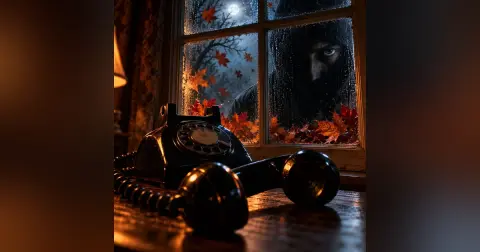
An anonymous letter writer targets a town. A psychiatrist takes over his patient’s life. When Darkness Calls explores seven true crime stories of stalking, scams and murder from Terrifying & True: the Circleville Letters, Dan Rather’s “What’s the Frequency, Kenneth?” attack, Thierry Tilly’s con, Marty Markowitz’s exploitation, Brian Barrett’s murder, Dorothy Jane Scott’s unsolved case and the Gardner Museum heist.
Narrated by Henrique Couto. Thierry Tilly segment written by Morgan Moore.
After Dorothy vanishes, the calls keep coming. Who is on the line? We're telling that story tonight.
Bonus episodes & support: https://weeklyspooky.com/join
More scary stories: https://weeklyspooky.com/
Story submissions: WeeklySpooky@gmail.com
0:00 Tonight, two men in police uniforms arrive at a Boston museum. It's March 18th, 1999. A guard lets them inside. By morning, 13 works of art are gone. The uniforms help them gain entry. The men wearing them were thieves. That uneasy distance between appearance and intention runs through the seven stories we're sharing tonight. In Circleville, anonymous letters turn private lives into public accusations. On a New York street, an attack on Dan Rather leaves behind a question stranger than any explanation.
0:45 In France, Terry Tilley uses an elaborate conspiracy to draw a family into his control. For Marty Markowitz, the person entrusted with helping him gradually takes over his entire life For Brian Barrett, deception unfolding through online identities ends in a murder he did nothing to deserve. And in California, Dorothy Jane Scott disappears while an unidentified voice continues to intrude on her family's search for answers. As the November evening settles outside, we return to the recorded accounts behind these cases. Some lead to convictions... others leave crucial questions open.
1:33 We'll examine what happened, what can be verified, and why these encounters still trouble us. Just how much danger can hide behind an ordinary introduction? We're telling that story here tonight, and make sure you're subscribed for brand new terrifying and true stories every single Monday. Now let's begin with the Circleville Letters. Circleville, Ohio was a typical small American town when letters began to arrive, revealing the locals' dark secrets through the mail. The Circleville letters are a result of divorce, murder, attempted murder, false imprisonment, police cover-ups, and overall, one big mystery.
2:29 No one has known the identities of the Circleville letter writer since 1976. Circleville, Ohio, located approximately 25 miles south of the state's capital, Columbus, is home to approximately 14,000 people, Ohio Christian University, and is best known for the Circleville Pumpkin Show, which has been held every year since 1903. No one ever suspected such a small town to be full of so many secrets. Mary Gillespie, the local school bus driver, received a postmarked letter from Columbus with no return address in the summer of 1976. The letter accused Mary of having an affair with Gordon Massey, the school superintendent, which she denied. The writer informed Mary that he or she had been watching her home, as well as her husband and children, for some time and demanded that she end the affair. According to the letter, it said, Ron Gillespie also received a letter saying Mary was in danger
4:01 if he did not stop the affair. According to the letter, The letters were revealed to Mary and Ron Gillespie's close family members. They informed Karen, Ron's sister, her husband, Paul Fresher, and Paul's sister. Paul worked at a local factory and was once a prison guard who survived a 30-hour hostage situation at the Ohio State Penitentiary in 1968. The five got together to talk about the suspects. Mary claimed that it was David Longberry, a bus driver, who was romantically interested in her, and she was not. and that David became resentful of her. They decided that Paul Fresher would write David a letter in which he stated that he was aware that David was threatening the Gillespies. And then the letters stopped. August 19, 1977. Ron Gillespie received a phone call that enraged him. No one knows what the call was about. he took out his gun and informed his children that he was going to speak with the person who was sending the letters. Ron Gillespie was discovered
5:34 dead after crashing his truck into a tree. A bullet was missing from his gun, indicating that he fired it before he died. There was no bullet casing found at the scene, and Ron's blood alcohol content was. 16, which was twice the legal limit. His friends and family were shocked to learn of his death because Ron was not a heavy drinker. So many people began to speculate that his death was a police cover-up, that something more serious occurred and they simply ruled it as drunk driving. Sheriff Radcliffe stated that he initially suspected foul play, but after the suspects, who were not identified, passed a polygraph test, they concluded Ron died as a result of a drunk driving accident. It should be mentioned polygraph tests are notoriously inconsistent and inaccurate and are not admissible in a court of law. Following Ron's death, letters began to arrive, this time claiming that Sheriff Radcliffe was involved in some sort of cover-up with Ron's death and that Mary and Gordon Massey were to blame. Mary admitted to having an affair with George Massey after Ron's death, but she claimed it began after the letters began to arrive. On February 7, 1983, Mary was driving her usual bus route when she noticed
7:07 signs posted along the road. According to the signs, they accused George Massey of raping the Gillespie's 12-year-old daughter. Mary stopped the bus and tore down the sign, when she was almost killed. The sign was a booby trap, set up to shoot whoever took it down. The serial numbers on the firearm were scratched off, but the lab was able to read them, and the gun was registered to Mary's brother-in-law, Paul Fresher. Paul denied having anything to do with the trap, saying, quote, I admitted the gun was mine, but I hadn't seen it for a long time. I had no reason to check up on it or anything, and I don't know when it had come up missing.
7:55 I really don't know what happened to it, and I told them that, and that's the truth, and that's how it was. Paul claimed the gun had been stolen, but never reported it stolen. He was then asked to provide handwriting samples for comparison to the Circleville letters. The test was not standard. Instead, Paul copied one of the letters rather than writing a sentence in his own handwriting. and comparing the two. After that, Paul Fresher was arrested and charged with attempted murder. His trial began on October 24, 1983, and while he was never charged with writing the letters, they were brought up in court. A handwriting expert testified that Paul was indeed the Circleville letter writer. Mary testified that she suspected Paul was the writer because his wife Karen came to her, with the same suspicions. Paul's boss also testified that when the booby trap was discovered, he was not at work that day. For the majority of that day, Paul had a solid alibi, but he never took the stand in his own defense, which would only hurt him in the end. Paul was found guilty of attempted murder and sentenced to 7 to 25 years in prison.
9:16 One can only hope that now that Paul is incarcerated, the letters will stop. The mystery in Circleville, however, was far from over. The letters still kept arriving. Paul received a letter from the Circleville writer stating, Now when are you going to believe you aren't going to get out of there? I told you two years ago, when we set them up, they stay set up. Don't you listen at all? Paul was in solitary confinement, where he had no access to anything, but the letters kept coming. Even though Paul was in prison in Lima, Ohio, and the letters were postmarked from Columbus. The police searched Paul's cell and discovered nothing that would indicate he wrote the letters.
10:06 The secrets in the new letters were far worse. According to one letter, Roger Klein, the prosecutor in Paul's trial, murdered a pregnant schoolteacher. The writer stated that unless Roger Klein admitted to killing the woman and her unborn child, they would dig up the victim's graves and mail the bones to the police. Paul was denied parole in 1990 after serving seven years in prison because the board believed he was still the Circleville letter writer. Paul Fresher was released on parole in May 1994 after serving 10 years in prison and claiming he had nothing to do with the letters. or the attempted murder. The enigma that is the Circleville letters was featured on an episode of Unsolved Mysteries, after which they received a letter that read, The episode was still aired on November 11, 1994. the sheriff and Mary Gillespie declined to be interviewed for the story. And that is the last of the Circleville Rider. According to rumors, Roger Klein, the prosecutor in Paul's trial, was having an affair with the schoolteacher and was the father of the unborn child. And her death is still a mystery. In
11:38 December 1993, Dr. Ray Carroll said, the coroner who performed Ron Gillespie's autopsy, was exposed in the letter for being a pedophile. He was then charged with 12 counts of gross immorality, sex crimes, corruption of a minor, pornography, obscenity, and indecent exposure. David Longberry, the bus driver Mary suspected of being the writer, raped an 11-year-old girl in 1999, went on the run, and died by suicide. With so many secrets exposed in the small town, there are numerous theories as to who the Circleville writer could be. Some still suspect bus driver David Longberry, while others suspect Paul Freshour.
12:28 Or Karen Fresher, who was going through a divorce and could use Paul's gun to frame him. Since the first letter was targeted at Mary and Gordon Massey to end their affair, some letters were signed with a W, leading some to suspect it was William Massey, Gordon Massey's son. Others thought it was Mary Gillespie, and many wondered how she knew where to stop the bus and pull down the one sign that was a booby trap, and how she didn't get hurt if it caught her off guard. She admitted to having an affair with Gordon Massey after her husband passed away. But some question whether she would have put up signs claiming her 12-year-old daughter had been raped.
13:16 Many people still believe Paul is the writer. He still maintained his innocence up until his death in 2012. Nobody knows who the Circleville writer could be, whether it was one of the suspects or another resident. People are still curious about who wrote the letters. Was Ron's death an accident or a murder? And who created the booby trap? Many people speculated that perhaps everyone began airing out secrets and that there was no single person behind all of the letters. Since 1993, no one has heard from the Circleville writer and the last letter they ever sent was to Unsolved Mysteries. The mystery of Kenneth. What is the frequency?
14:19 It's a pretty catchy song, right? Well, this song by the band R.E.M. made quite an appearance in the music industry upon its release on their album, Monster. Unlike most singles or albums produced, these lyrics have a story to them. a story which easily became pretty famous and infamous in popular culture, but was more of a once-in-a-lifetime nightmare for the one who went through the ordeal, Mr. Dan Rather. Dan Rather is a journalist, analyst, and former national nightly news anchor from the United States of America. When his reporting during Hurricane Carla in September of 1961 helped save hundreds of lives, Rather, who started his career in Texas, gained national recognition. From 2006 to 2013, Rather aired Dan Rather Reports, an investigative news program in the vein of 60 Minutes, on the cable network AXIS TV, formerly known as HDNet. For AXIS TV, he also hosts a number of other programs, such as The Big Interview with Dan Rather and Dan Rather Presents, where he conducts in-depth interviews with singers and other entertainers. Dan Rather Presents offers in-depth reporting on a range of issues, such as adoption and
15:50 mental health care. While all of these achievements were milestones in his career, Something entirely unexpected got him to go viral even before the internet. So much so that his story became a common reference and, in many cases, a joke amongst the masses. On the evening of October 4th, 1986, CBS anchorman Dan Rather was traveling back to his apartment down Park Avenue in New York City at around 11 p.m. Two nicely dressed men were following Rather to his building in the dark night. When Rather finally got close to his building, one of the two men came closer to him and asked him, What is the frequency, Kenneth? Perplexed, Rather replied by saying that the men must have mistaken him for someone else. That's when the culprit started kicking and hitting the anchorman violently while repeatedly asking, the bizarre question.
16:54 Rather cried for help while the men assaulted him, but then the building's doorman arrived to help. Naturally, the two assailants ran away and escaped the crime scene. Later, when the news broke out and Rather narrated the story to the media, no one wanted to believe him. The assault might have been believable, but the question that the culprits kept repeating sounded made up. It was only after the doorman confirmed the story that police and other media houses started taking things seriously. But even so, upon inquiries and notices, no one was found guilty and the case was left hanging for years. Interestingly, nothing of the sort happened again in the future, and it was judged as clearly not an assassination attempt. All the years that the case remained unsolved, Kenneth What Is The Frequency became a phenomena in pop culture, having the phrase be featured in a scene from Daniel Clow's graphic novel Like a Velvet Glove Cast in Iron.
18:01 Kenneth What's The Frequency is the title of the first song on Game Theory's Lolita Nation album from 1987. On their album Monster from 1994, the band REM included the song What's The Frequency, Kenneth? But that's not all. During a sound check for a performance at New York City's Madison Square Garden, the anchorman actually performed with R.E.M. The performance was captured and aired the following night on The Late Show with David Letterman. On Wednesday, the Daily News broke the story of the unsolved mystery of the attack on Dan Rather. The person who kicked and beat Mr.
18:42 Rather appears to be the same person who fatally shot an NBC stagehand outside of Rockefeller Center. in 1994, according to Mr. Rather and law enforcement. According to Dr. Park Dietz, a forensic psychiatrist who interviewed William Tager after shooting 33-year-old stagehand Campbell Theron Montgomery, both incidents were motivated by mistrust and suspicion of the media. Mr. Tager, who is currently serving a 12- to 25-year sentence for manslaughter, thought that messages were being broadcast to him directly on the evening news, according to Dr. Dietz, who stated this in a telephone interview.
19:26 John Esposito, the attorney of Mr. Tager, had stated on record that he was not certain his client had assaulted Mr. Rather. The five-year statute of limitations prevented the police from looking into the attack on Dan Rather, even though Mr. Tager claimed responsibility for it when he was apprehended for the fatal shooting. Dr. Dietz, however, was interested in finding out if Mr. Tager was telling the truth regarding the assault on Dan Rather on the Upper East Side. So, he got in touch with Mr. Rather to check of his recollections on the crime to see if they were consistent with those of Mr. Tager. Both Mr. Rather and Mr.
20:07 Tager remembered the same specifics about the building where a portion of the attack took place, according to Dr. Dietz. Mr. Rather recognized Mr. Tager as his assailant after looking at pictures of Mr. Tager that the Daily News had given him. Following the attack in 1986, Mr. Rather's detractors cited both the attack and a second event in which he stormed off the set, and cost the network valuable airtime as evidence that he was losing his cool. Now that the culprit was caught and the victim had recognized him, you must be thinking it's a happy ending to an odd pop culture story, but there's even more to it. Tager told a doctor that he was a time traveler from a parallel universe in the year 2265. giving his tale a bit of a science fiction twist. The man had the nerve to claim that he was a volunteer test pilot in a risky time travel project and was a felon in the future. He would often claim that his sentence would be vacated and he would be freed if he was successful in his mission. Of course, these are the crimes he had committed in the future, not in the present day or past now. I know, right? Time travel...
21:32 It makes me dizzy, gives me a little bit of a headache, but I digress. Tager further admitted while being interrogated that he had attacked Dan Rather because he thought Mr. Rather was Kenneth Burroughs, the vice president of his imagined future. But we're not done here. There's still yet another thrilling subplot. Paul Limbert Ullman speculated about the occurrence in a column for Harper's Magazine in 2001. Allman had found a reoccurring character named Kenneth, and the phrase, what's the frequency, in the works of postmodern fiction author Donald Barthelm. Both Rather and Barthelm were young men who worked as journalists. They were both from Texas, Houston to be specific, and were the same age. Allman believed it to be plausible to speculate that their paths may have intersected. Furthermore, Rather is reminiscent of the character Lather, a pretentious editor who appears in one of Barthelm's books. Barthelm passed away in 1989, and his brother Frederick, a writer as well, has declined to discuss any relationship to the attack on Dan Rather.
22:49 There was also the possibility that Rather had made up or misheard his attacker's statements. This was a newsreader after all, famous for his outrageous comparisons and descriptions of that became known as Ratherisms. Typical phrases include, this thing is as tight as the rusted lug nuts on a 55 Ford, and you would sooner find a tall talking broccoli stick to offer to mow your lawn for free. Back in 2010, Tager was released from the prison on good behavior, but he was to be monitored by parole officers and mental health caretakers, considering the man came up with his time traveler story. For the most part, it seems like a case of a madman creating chaos, and he somehow ended up targeting a media personality, and became big and bold in the headlines. However, many conspiracy theories counter the attack's circumstances and claim that Rather had done this deliberately, as a publicity stunt, because... In all honesty, the man did get quite a bit of attention from the media, and Tegger's absurd story just added to the narrative. All Things Considered, either of the parties, is a pretty good storyteller. Coming back to the song that made this story even more sensational, on September 5th, 1994, the song, which was the album's debut single, was made available to the public. Its highest
24:21 positions were number two in Canada, number four in New Zealand, and number nine on the UK singles charts. It also reached number 21 on the US Billboard Hot 100. It spent four weeks as the number one song in Iceland. It was the first song to ever enter at the top of the Billboard Modern Rock Tracks chart. What's the Frequency Kenneth was included on R.E.M. 's compilation albums Part Lies, Part Heart, Part Truth, Part Garbage... in 2011, and In Time, the best of R.E.M., in 2003, with it being the only track from Monster to appear on either. The song was one of the band's most played at live performances and was heard at every stop on their 2008 Accelerate Tour.
25:10 What's the Frequency, Kenneth, is a powerful song, but according to Cashbox's Steve Bolton, quote, It isn't as much of a single as it is the opening track to the most highly-awaited album of the autumn. That front, its resounding triumph. Before Michael Stipe's distinctive vocals enter the tune, the song actually erupts onto the airwaves with a modernized rendition of traditional guitar rock. The song continues on from that point in a variety of rock tempos without ever losing the enthusiasm it had before. According to Chuck Campbell of the Knoxville News Sentinel, the, quote, powerful but not grungy guitar by Buck is the focal point of the satisfying debut single.
25:58 The song itself isn't a narration of the incident, nor has it attempted to solve the mystery of the case. Just the question, what's the frequency, Kenneth, has been used by the band to create some rhymes in the song here and there. According to Alan Jones of Music Week, it is, quote, the most straightforward rock song the group has done in years, a full-throttle oral assault, and very intense, with bonus live tracks this one will sell. Paul Evans of Rolling Stone called it REM's toughest single, and Howard Hampton of Spin said that it, quote, lifts its catchphrase from the Dadaist mugger who attacked Dan Rather a few years back. Who knew someone could become a milestone in popular culture by getting beaten up by a madman? It just goes to show you, truly, there is no business like show business. Like no business I know. The Conspiracy Con Man, Terry Tilley. chances are somebody has at one point or another conned you out of something. Whether it be related to money, food, fame, a romantic partner, or anything else you hold in any kind of positive regard, think back to when you were a child and a classmate or neighbor told you that they would give you
27:29 something they claimed was more interesting or special for, say, a rare trading card or video game or even a toy that you possessed. You took the trade only to later find out that it was in fact all a ruse for the said friend to cheat you out of something you considered valuable. That, my friends, is a con. Cons are something done every day, all around the globe. Quite a few people will cite things such as holidays as cons, and there are those who will state that anything or everything a particular government does is a con. People who specialize in conning others are known as con artists, or simply as a con man. The term coming from the shortening of confidence to con, as it is usually those who exude confidence that make the best con artists.
28:22 Our terrifying tale today is about a con man, one of the most notable and possibly the best. We have to go to France and England today just for this story, but it is a trip well worth taking for an intriguing and hypnotically diabolical scheme such as this, one that includes embezzlement and even torture. This is the story of Terry Tilly and Howie Kahn, the Davidrines family. The story begins in the year 2000 and with the French family Davidrines. The de Vedrines family is an aristocratic family that was established in Agencies. Guilhermet de Vedrines, who was born in 1912, had three children, Felipe, Jelaine, and Charles Henry de Vedrines.
29:10 Felipe worked for an oil company. At the time of the event, he was in his 60s and lived with his wife, Brigitte Leroy-Martin. Jelaine was running a secretarial school in Paris. She was married to an economic journalist with two children. Charles Henry was an obstetrician in Bordeaux and married to Christine, a documentarian by profession. They lived in their ancestral chateau, Montflanking. As for the master conman named Terry Tillerson... he was born in Boise, Columbus, which is northwest of Paris. By all accounts, he led a normal life and even married a model. However, he was never able to live his dream of becoming a lawyer as he dropped out shortly after enrolling. It was Ghislaine who first met with Tilley. She gave him a job as a deputy director. Eventually, he became her right hand, and she introduced him to the rest of the family. She shared every detail about them and their property with Tilly.
30:11 After winning the hearts of other family members, he offered to become their financial advisor. Tilly presented himself as a descendant of the Austro-Hungarian Habsburg nobility and claimed that his communist grandmother had salons with former socialist president François Mitterrand. And they all, of course, believed him. But once he earned their trust and became their right hand, Tilly set to work with his plan for taking advantage of his new so-called friends. Tilly claimed that the de Vadrines were soon to become the victims of conspiracies. In September of 2001, he persuaded 11 members of the group to seek refuge in their family castle in Montflacquine for their safety. Jean Marquin, Ghislaine's husband, was left out by their relatives whom Tilly revealed to be a partner of their enemies. The eleven family members included Goulamay, the matriarch, who was 88 years old at the time, her three children, two sons and one daughter, two daughters-in-law and five grandchildren. As per Tilly's script, Ghislaine and her family's lives might be in danger. He convinced them that the Freemasons were focused on getting their land.
31:26 Tilly appeared to have some knowledge of the dark side, and when they asked him about the field he had worked in before, he answered with one palm raised, Do not inquire. I cannot discuss. The neighbors of the Devadrin's family said they were living a pretty normal life before they met with Tilly. They were a respected family and greatly liked as well. It was in the middle of 2001, however, when the 11 members cut their ties with all of their friends and other family. The Vadrines began shunning everyone in their lives, even their spouses and children. On January 4th, 2002, a neighbor came to see what was wrong. They didn't open the door. She looked through the window and saw them all, sitting, motionless in the dark. No one was allowed to visit their house. If someone tried to enter through the gate, they started shouting and even attacked some visitors.
32:24 Since all the Vadrin's family quit their jobs, they stopped paying taxes. In 2003, the tax authority seized their property's furniture. Tilly managed to convince the family to sign over all of their property to him. But after 2001, Tilly had been missing in actions. He was giving them orders from a distance, and they all became puppets in his hands. Ghislaine's husband, Jean Marchand, was the only one in the family who was able to get out of the trap. Jean had found an email from Tilly de Ghislaine that included the following instructions. Throw the glove and flowers his way to inform him that these are indications that his network is evil, and give him 30 minutes to pack.
33:14 He tried to alert the authorities, but the Vedrines kicked him out of the castle for his attempts at freeing them. When Tilly ran into significant legal problems in France, he began shifting his base to England. Tilly then had each member of the family move to his home in Oxford, one by one, starting in 2006. Felipe de Vedrines and his wife Brigitte Leroux-Martin left the family in February 2008, Tilly forced the other nine Vadrines to move to Oxford. Tilly's family and the Vadrines were living together there. The aristocrats were now penniless. Christine worked as a caterer salesperson, and Charles Henry, the former obstetrician, had to work as a gardener, and their salaries went directly into Tilly's account.
34:08 Yet of all that was done to the Vadrines, The most serious was the physical abuse of Christine, the wife of Charles Henry. Tilly convinced the Vedrines that Christine was hiding treasure from them. One of the family members tied her to a stool for two weeks and prevented her from sleeping. With the help of her employer, Robert Pogge, Christine was able to leave Oxford. He listened to her entire story of torture and the endless list of family possessions that had been lost. In March of 2009, she arrived in Bordeaux and met with lawyer Daniel Picotin, where she told her story. Terry Tilley's good fortune was about to end. He became a target after Christine's testimony, and the French government brought charges against him in response to claims of torture and abuse. When Tilly traveled to Zurich on October 21, 2009, he was arrested, and the events that followed quickly brought the Vedrines' family back together. Tilly was prosecuted by the French justice system in Bordeaux for fraud, abuse, kidnapping, and torture. Explaining the verdict, the court said Tilly had created a state of submission amongst his victims, encouraging, quote, group paranoia and mental destabilization. In 2012, he received an eight-year prison term and was ordered to compensate his victims.
35:40 Jacques Gonzalez, his accomplice, was sentenced to four years in prison. Tilly's sentence was extended to ten years following an appeal in 2013. Charles Henry de Vedrines would later say that, quote, he stole ten years of our lives, but he did more than that. He destroyed everything along the way. And there you have it, a man with a hypnotically tight grip on a family that slowly turned against their friends, associates, and eventually each other, but looked to this man for trust only for it to later be revealed that it was he who had conspired against them. Truly a diabolical act if there ever was one made even more so by the fact that the con artist had began formulating how to do it all since watching a made-for-television movie.
36:35 that featured a similar plot. While they had to live in social housing for some time, Charles and Christine were able to get their lives back on track, as were the other members of the Vadrin's family. They were even able to reconnect with one another and put their distrust of one another into the past. Tilly, however, will always be a dark specter in their lives. His ten years are up, and unless he's learned better, he might just be on the prowl if not already playing another family, like a fiddle. So when in doubt, trust those you know well, especially when it comes to your finances or any other prized possessions. After all, you wouldn't want to be a victim of a guru spending all of their time lying and conning you out of everything, would you?
37:36 Marty Markowitz, The Shrink Next Door. Allow me to tell you a story from New York City, a place where dreams are chased, but sometimes, hidden under those bright city lights, some tales are both surprising and a bit unsettling. This is one such story about a man named Marty Markowitz and his psychiatrist, Dr. Isaac Hershkoff. Together, their story explores the themes of misplaced power, vulnerability, and the unexpected twists life can throw at us. Marty was a businessman with a big heart, known for his successful endeavors. Yet, like many of us, he faced tough times balancing work pressures and family issues, especially dealing with the loss of his parents and disputes and over the family business and the fabric industry. In search of guidance in 1981, Marty crossed paths with a psychiatrist named Ike. Marty saw in Ike a trustworthy advisor, someone who could help him through these tough patches. But his hope led him down an unexpected journey, far from the normal bounds of a patient-doctor relationship. Ike had a charm that Marty was drawn to. appearing kind and supportive at first, before long Ike had woven himself
39:10 into every aspect of Marty's life, acting not just as his psychiatrist, but as his friend. They shared meals and attended events together, and Ike was even a part of Marty's family gatherings. Marty found himself relying on Ike for advice on almost everything. far beyond just matters of mental health. This shift in their relationship was gradual, yet intentional. Over the next 30 years, Ike manipulated his position, making decisions for Marty that isolated him from his family and increased his dependence on on Ike. Marty was convinced by Ike to cut off so-called toxic family members and allowed Ike to get involved in his financial matters. But perhaps the most audacious move was when Ike started using Marty's Hamptons house for lavish personal parties, acting as if he owned the place himself. What had begun as a simple search for guidance unraveled into a much, much darker reality. This story is a cautionary tale about how a professional relationship meant to provide care and protection can deviate so far from its intended course. This remarkable story caught so much attention that it even turned into a show on Apple TV called The Shrink Next Door. The tale originally came
40:43 to light through a podcast with the same name. This podcast dived deep into the life changes Marty Markowitz went through and his long fight to reclaim his life. The man behind this podcast is Joe Nocera, a writer for Bloomberg, who decided to share this story after a personal encounter with both Marty Markowitz and Dr. Ike. His curiosity was piqued when he moved into a house right next to Marty's in the Hamptons. This proximity provided a unique vantage point to peel back the layers of Marty's tormented experience. As Nocera dug deeper, he uncovered a story that was as incredible as it was distressing. Marty, a wealthy businessman due to his family's venture associated Fabrics Corporation, found himself ensnared by the very person he trusted to help him, his psychiatrist, Dr. Ike Hershkoff. Dr. Ike Hershkoff, an individual whose flamboyant behavior and obsession with high status were starkly evident, seized his influential position to direct Marty's personal and financial decisions.
41:57 As the years passed, Dr. Ike's manipulation deepened, isolating Marty from his loved ones, positioning himself as the president of Marty's company, and launching a charity foundation primarily funded by Marty's resources. This was not just a betrayal of the doctor-patient trust, but a masterclass in manipulation. The gravity of this manipulation came to the foreground in a July 2021 interview with Marty. He revealed the depth of his entanglement in which he described it as the cult of Ike.
42:38 Marty painted a vivid picture of his life under Dr. Ike's influence. From transcribing sessions to attending meticulously orchestrated parties, he recollected how his pursuit of romantic relationships was systematically sabotaged by Dr. Ike, who painted everyone around Marty as adversaries out to exploit him. Ike was so convincing that he got Marty to change his will. He made Marty sign over everything he had to a group called the Yeren Foundation. And imagine who was running this foundation. Ike and his wife, Rebecca. It's like something out of a movie, but for Marty, it was all too real. Circumstances got even wilder when Marty gave Ike access to his Swiss bank account, which was no small feat. We're talking about almost a million dollars in cash here. And just when you thought it couldn't get any more bizarre... Marty changed his will again in 1991. This time, everything was to go to Rebecca if he passed away, and Ike was given power of attorney, which means Ike had control over all of Marty's decisions. All the while, Ike was playing an entirely other game. He was busy telling Marty that anyone he dated was only after his money. Can you imagine?
44:13 Marty later said that no one in his family shook him back to reality, even after their repeated attempts to tell him he was being fooled. The total damage, Marty thinks he lost around $ 4 million because of Ike. That includes around $ 2. 8 million in payments for therapy and around $ 1. 5 million in a bad investment, a Ponzi scheme no less. The moment of truth came in 2010 after Marty had surgery for a hernia. That's when everything started to click and he realized just how deep he was in Ike's trap.
44:54 It's a story that might leave you thinking twice about who you trust. So the plot thickens in this eerie tale as Marty falls deeper into the psychological maze crafted by his therapist, Dr. Ike. But money isn't the only casualty in this harrowing story. Family ties fray and break under the strain. Marty's sister, Phyllis Shapiro, who also put her time and loyalty into the family fabric business, grows wary as she notices her brother isn't calling the shots anymore. She even visits Dr. Ike herself. But alarm bells ring, and she finds herself not trusting the man who's slowly taking over. her brother's life. Things between the siblings take a sour turn. Marty, under Dr. Ike's influence, starts to see his sister as a slacker, a mere thorn in his side at the company. The tension builds until she can't stand it any longer, and she leaves. With her exit, the once close brother and sister stopped talking altogether. In a desperate move to reconnect, Marty's sister does something absolutely drastic.
46:14 She steals from him. But instead of mending fences, Dr. Ike fans the flames, urging Marty to sever ties with her completely. And so, another bridge is burnt, and they wouldn't exchange a word for many years to come. As Marty looks back on those years, he realizes just how much he's been ensnared. It wasn't just about money or the business. It was about his will, about having the agency to make his own choices. Dr. Ike's grip on him was so tight because Marty felt cornered with no other way out. The manipulation was so blatant that one would have to be willfully blind not to see it.
47:00 And yet, for a very long time, Marty simply couldn't. It's only now, after finally breaking away, that Marty faces the daunting task of piecing his life back together, salvaging what he can from the wreckage left by years of control and deception. The real struggle lies not in the enormity of what was taken, but in the silent, painstaking efforts to rebuild a life that was once his own. The culmination of our tale comes with a surprising twist. the liberation of Marty and the unmasking of Dr. Ike.
47:43 After years of deception, a somewhat innocuous event served as the trigger for Marty's big awakening. He underwent surgery and noticed that during his recovery, Dr. Ike, who was practically his only companion by then, hadn't bothered to check on him. This sparked in Marty a realization that perhaps their relationship wasn't a real friendship at all. Marty bore years of manipulation, endured unending tasks that Dr. Ike dumped on him, and watched as his wealth dwindled, trusting that Dr. Ike had his interests at heart. But this silence after his surgery forced Marty into an introspection. Quote, It was as if all the disappointments and all the rage that had been bottled up came surging out, Marty recalls. With newfound resolve and the subtle support from some employees addressed by Dr.
48:40 Ike under a different name, Marty decided enough was enough. He cut all ties with Dr. Ike with a firm letter making it clear that he no longer required Ike's services. Although Ike tried to dissuade him and warned him of dire consequences, Marty stayed resolute, reclaiming his home and his life. and eventually working towards reinstating the bond with his long estranged sister. In the next chapter of Marty's life, we find him rekindling long lost family connections and setting off on adventures that seemed a distant dream during his darker days.
49:22 After severing ties with the therapist who had overshadowed his life for three decades, Marty reached out to his sister Phyllis. Their bond, once severed and left to wither for 27 years by the manipulations of a trusted professional, began to heal and grow strong once more. Together, Marty and Phyllis reclaim more than just familial ties. They take back the Hamptons estate that had slipped from Marty's control and embark on a journey across China and Italy. These travels became not just explorations of distant lands, but a reclamation of Marty's path, untethered from the strings once pulled by another.
50:08 In 2012, Marty took a stand not just for himself, but for others who may have suffered silently. He filed a grievance against the psychiatrist with the New York State Department of Health. His action sparks a lengthy probe, extended over years, into practices that had gone unquestioned for far too long. Finally, in a move that must have brought a sense of closure to Marty, the investigation culminated in 2019 with the revocation of the psychiatrist's medical license. Marty's life took on new hues. With his fabric business concluded, he stepped into retirement with an eagerness for life's next chapter, planning to weave through the landscapes of Thailand with his girlfriend, signaling a future Marty could look forward to with optimism.
51:01 Reflecting on the journey, the years of shadow followed by a decade of seeking justice, Marty shares a simple truth. He's now living a life filled with joy and freedom previously unknown to him. His story is a testimony to the fact that even after the most prolonged night, dawn does break, bringing light and hope for renewed beginnings. But now let's take a look at the elephant in the room. Ike Hirschkopf. Where is he now? The tale takes a dark turn with Isaac Ike Hershkoff, a once-trusted psychiatrist whose career came crashing down in a storm of controversy. The unraveling began not with a bang, but with Marty Markowitz's bold step to erase Ike and his family from his will in 2010. For years, the truth lay dormant until the explosive revelations of the Shrink Next Door podcast in 2019 caught the public's attention. In April of 2021, the climax of Ike's professional saga came to fruition. The New York State Department of Health made a decisive move, demanding Ike to surrender his medical license. The charges against him were severe and numerous. Gross incompetence, undue influence, fraudulent practices, gross negligence, and a profound lack of moral fiber. 16
52:35 Counts of professional misconduct in total. Ike, however, did not accept these findings quietly. He vehemently denied all accusations and, speaking to the New York Times in November, announced his intention to challenge the verdict. Nevertheless, his efforts to clear his name were thwarted. Bloomberg reported that his appeal to overturn the charges was unsuccessful, marking a significant setback to the former doctor. After living in the shadow of Ike for so long, Marty's life took a modest turn for the better. Without Ike's meddling, his life flourished with experiences and delight, and he restored the familial link with his sister that Ike had chipped away at. As his career took a nosedive, Ike had no choice but to face the music. His medical license and reputation were both tarnished when his appeal was denied. Regardless, Ike who felt mistreated, could not perceive anybody else but himself as the protagonist of his narrative. The world watched as their convoluted tale became a hit TV show, serving as a sobering reminder of how vulnerable we are to abuse of trust and how difficult it is to resist. At the end of the day, Marty's narrative serves as a potent reminder that it's never too late to climb out of a pit to and find joy again, while Ike's downfall shows us
54:08 that our choices have an impact, and that sometimes justice is served. The Murder of Brian Barrett Friday, September 15th, 2006. The second shift is ending at Dynabraid Corporation in Clarence, New York, east of Buffalo. At 10.16 p.m., 22-year-old Brian Barrett punches out. He's spent most of the day moving between college classes and the factory job that helps him pay for them. Now he walks into an isolated section of the employee parking lot. opens the door of his white pickup truck, and gets behind the wheel. Three shots tear through the driver's side window. Investigators will later identify the likely weapon as a. 30 caliber carbine. The gunfire strikes Brian in the neck, jaw, and arm. He has no meaningful chance to escape. The attack suggests the shooter knew where his truck was parked, knew when his shift ended and came close enough to make certain the ambush would be fatal. Then the shooter leaves Brian in the
55:41 cab and disappears. Just before midnight, an instant message appears on the computer of a young woman in West Virginia. It comes from one of Brian's co-workers, a much older man named Thomas Montgomery. Quote, You waiting for your BF? The boyfriend is Brian. By the time that message is sent, Brian can't answer anymore. His body will remain in that truck until Sunday when a co-worker notices the vehicle still sitting in the lot. Detectives will find no robbery, no random quarrel, and no mystery enemy from Brian's past. Instead, they'll find online conversations, invented identities, a missing rifle, a peach pit carrying DNA, and a jealousy that had been typed out almost line by line before it became murder.
56:50 The woman at the center of those conversations called herself Jessie. Brian believed she was an 18-year-old high school student. Thomas believed the same thing, but the girl in the photographs had never spoken to either man. Of the three people trapped in the online rivalry, Brian was the only one who hadn't concealed his face, age, or real life from the person he dated. Before his name became attached to phrases like Internet Love Triangle, and Chat Room Murder. Brian Barrett was a son, a brother, a student, a friend, and a coach. He grew up in western New York, attended Star Point High School, and stood out in baseball and soccer. The adults who coached and taught him remembered more than just athletic ability. They remembered his character Tom Sarkovics, Brian's former baseball coach and Starpoint's athletic director, described him in the simplest terms possible. Quote, he was just a nice kid, a gentleman. That's important because the sensational version of this case often rushes past Brian to get to
58:20 the twist. He was 22 years old. studying at Buffalo State College to become an industrial arts teacher, the kind of teacher who could show students how to build, repair, solve problems, and take pride in work done with their own hands. Paying for that future required a punishing routine. Brian's father later described weekdays that began around 6.30 in the morning, ran through college classes until about 3, then continued at Dynabraid until ten o'clock at night. The factory job was not his destination, it was how he was trying to reach one. Outside school and work, his life was ordinary in the best way. sense. He met friends for wings, beer, and pool. On Sundays, he volunteered as a little league coach and also helped his father coach soccer.
59:22 There is a temptation in true crime to polish every victim into perfection as though a person must be flawless before their death can be treated as an outrage. Brian didn't need that. He joked, he flirted online, made immature choices and sometimes underestimated danger. None of that diminishes what was stolen from him. If anything, it makes him recognizable. A young man still learning while already giving his time to children and working toward a life in the classroom.
1:00:03 At Dynabraid, Brian was one of the younger employees. Thomas Montgomery had worked there for approximately 12 years. He was old enough to be Brian's father, but the two men were friendly enough to play poker together and cross paths in online games. In the factory, there was nothing remarkable about that connection. Online, Brian used the screen name Beefcake1572. It was playful, but the person behind it was largely who he said he was, a 22-year-old college student in western New York. He wasn't inventing a military career, borrowing another person's face, or pretending to be a teenager. Thomas Montgomery, on the other hand, was doing all three. By spring of 2005, Thomas had created the screen name Marine Sniper.
1:01:03 Behind it, he began erasing nearly three decades from his life and building an imaginary young man named Tommy. Someone stronger, braver, more exciting, and more desirable than Thomas believed himself to be. Thomas was 45 years old, a former Marine. a machinist, a husband of 16 years, and the father of two daughters. He took his children to swim practice, played cards with co-workers, walked the family dog, and went to the same factory he had worked at for more than a decade. Nothing about that life was imaginary. But Thomas appeared to experience it as confinement. On the gaming site Pogo, Marine Sniper could be someone else. Thomas used a photograph from Marine Boot Camp, taken roughly 30 years earlier, and presented it as current. He told other users he was an 18-year-old Marine named Tommy, bound for Iraq and trained as a sniper.
1:02:17 Military records later obtained by ABC News showed that Thomas had served for six years in and qualified as a sharpshooter, but had not trained as a sniper and had not seen combat. The lie did not remain a false age attached to an old picture. Thomas built Tommy a history, a personality, a body, emotional wounds, military adventures, and a future. When maintaining the role became difficult... he invented another character, Tommy's father, Tom Sr. Thomas could then write as both the young Marine and the older man, supposedly passing messages and packages to him. In May of 2005, Marine Sniper began corresponding with a user called TallHotBlonde. She presented herself as Jessie, a West Virginia high school student who was 17 and approaching 18. Her photographs showed a smiling, athletic blonde.
1:03:29 Her messages described softball, school, family frustrations, and the emotional turbulence of being a teenager. Thomas later said he initially justified the deception by telling himself they would never meet. But distance made the lie safe, and that safety allowed it to grow. Tommy and Jesse exchanged instant messages, telephone calls, gifts, letters, videos, and intimate photographs. Packages arrived at Thomas' real home, carrying symbols meant for the imaginary marine. Each object moved the fantasy farther into the physical world, and each new piece of the relationship required Thomas to protect the identity he had made. In a recorded interview years later, he described the result with unusual clarity. Quote, it became more real to me than real life. Thomas also compared the daily contact to a drug. That language didn't excuse him. but it revealed how completely he had surrendered responsibility for his choices.
1:04:56 He repeatedly chose the fantasy, reinforced it, and punished anyone who threatened it. By late 2005, he was talking at work about leaving his family for Jesse. At home, he spent long hours at the computer and pushed away the people who actually knew him. On a pad at work, he wrote that on January 2, 2006, 46-year-old Thomas Montgomery would cease to exist and be replaced by an 18-year-old battle-scarred Marine moving to West Virginia. The date came. Nothing changed.
1:05:42 His body, marriage, job, and obligations remained. The contradiction did not end the fantasy. It made him more desperate to defend it. His wife, Cindy, eventually found the gifts and messages being sent to the supposed young Marine. She confronted Thomas, then made a decision that placed the truth directly in front of Jesse. Cindy wrote to her, enclosed a current family photograph, and explained that Tommy did not exist. Tom Sr.
1:06:22 and Tommy were the same 46-year-old married father. The boot camp photo was Thomas decades earlier. Then Cindy offered seven words that should have stopped everything. Quote, Do not trust words on a computer. The person writing as Jesse claimed not to know whether to believe her. Thomas had layered the deception so deeply that even a photograph of his real family could be interpreted as another trick. To find out, she looked for someone Thomas had mentioned from work, a younger co-worker who also played on Pogo. The username was Beefcake1572.
1:07:11 The person behind it was Brian. When Jessie contacted Brian, she was looking for confirmation. Was Thomas Montgomery truly a middle-aged married man? Was Tommy entirely invented? Brian knew the answer. He confirmed that Cindy's photograph was real and that Thomas was the man behind both entities. For Jessie, at least as she presented herself It was devastating. Brian became the person who could verify reality, explain Thomas' life at the factory, and listen while she reacted to the betrayal. They began playing lotso together in a pogo room called Princess Priceless.
1:08:07 They moved to Yahoo Instant Messages. The conversations became friendly, then flirtatious, then openly romantic and sexual. Brian believed he was speaking to an 18-year-old. He talked about meeting her. She delayed or discouraged an actual visit while continuing to send messages and photos that made the relationship feel immediate. For Thomas, Brian's involvement was not merely romantic competition. Brian knew who he really was Worse, Brian was physically present in the part of Thomas' life the fantasy had been designed to escape. The conflict spilled into public game rooms and the factories. and Jesse mocked Thomas online and called him a predator for posing as a teenager while pursuing someone he believed was a high school student. Jesse shared passwords with Brian and he sometimes entered her accounts and spoke to Thomas and while pretending to be her. At work, Brian boasted about the relationship. According to a recovered exchange, he also left printed copies of conversations on Thomas' toolbox.
1:09:33 Those actions were humiliating and reckless. They were also the actions of a 22-year-old confronting a 46-year-old co-worker who had constructed a fake teenager to pursue a supposed high school student. Brian may have believed he was exposing a liar who deserved ridicule. He couldn't have known that Thomas was converting embarrassment into homicidal grievance. The distinction must remain clear. Mockery can be cruel, but it is not consent to be stalked, ambushed, or killed. Brian did not cause Thomas to to choose a rifle. That decision was Thomas' alone. The messages show Thomas experiencing the exposure as the destruction of both identities he had been living. He complained that co-workers saw him as a loser and a predator. He threatened to make himself and Tommy disappear. He blamed Jesse for replacing the fictional young Marine with the real young man who worked beside him. Quote, Half the company knows now. But the person riding as Jesse did not make a clean break.
1:11:00 She told Thomas she still ached for Tommy. She promised to stop speaking to Brian, then continued. At other moments, she told Thomas the relationship with Brian had begun as revenge. She alternated reassurance, rejection, affection, and silence while hiding the most fundamental fact of all. She was not the teenager in the photographs. By the summer of 2006, Thomas was sleeping little and exercising intensely. He told Jesse he was training for war. At Dynabraid, His vague threats made at least one co-worker feel uneasy enough to wear a bulletproof vest as a grim joke. In one message, he warned that if he discovered more lies, she would lose something close to her. The target didn't need to be named.
1:12:04 Brian was the person Thomas saw at work. Brian was the person whose messages could be placed on his toolbox. Brian was the person who had replaced Tommy without having to invent youth, strength, or a future. And Brian's work schedule was predictable. Two weeks before the killing, a co-worker would later tell detectives Thomas stood near the time clock and asked exactly when Brian finished his shift. The same co-worker recalled Thomas making a chilling comment. If he ever killed someone, he would not be stupid enough to leave shell casings behind. At the time, the remarks passed without intervention.
1:12:57 After September 15th, they would sound like a rehearsal. The final escalation unfolded in messages investigators would later read in sequence. In the early hours of September 13, 2006, Thomas sent Jesse an abusive message and received almost no response. He continued trying throughout the day. On September 14, he sent another crude message that named Brian, On the morning of Friday, September 15th, Thomas telephoned Jessie. According to the woman on the other end, he was screaming and deranged. She hung up.
1:13:52 Thomas knew Brian would be at Dynabraid later that day. Brian completed his second shift routine with no known reason to think the argument had crossed from online threats into physical planning. There's no indication that he expected an armed man in the parking lot. He punched out at 10.16 p.m. The attack was not a spontaneous fight. Brian was seated in his truck when three rounds came through the driver's side window at close range. Investigators identified the ammunition as consistent ammunition. with a. 30 caliber carbine, and believed the killer approached in camouflage and a ski mask. No property was taken. The location and timing indicated that Brian had been selected and waited for. Thomas returned to his computer that night, just before midnight. He asked Jessie whether she was around waiting for her boyfriend. Around 2.15 in the morning, He sent another message, suggesting that Brian would not mind her talking to him. The cruelty of those messages is in their ordinary tone. There's no confession or dramatic announcement.
1:15:25 Thomas simply writes as though Brian is unavailable while knowing he will never log in again. Saturday passed. Brian didn't come home. His parents, Dan and Deborah, had gone camping with their youngest son and another family. When they returned Sunday morning, they noticed Brian had not fed the cats. It was a small disruption, but it told them something was wrong. Brian was responsible. He didn't vanish without explanation. At Dynabraid, a co-worker saw Brian's white pickup still parked in the isolated lot. Inside was the young man who had worked late to pay for college. His body had been there for nearly two days. About an hour after the Barrett family returned home, police and sheriff's deputies arrived at their door. Daniel Barrett later remembered opening it and understanding before anyone explained that the news... was bad. The first public descriptions emphasized the apparent absence of motive. Brian had no known criminal ties and had not been robbed.
1:16:51 But inside the factory, rumors formed quickly. Coworkers knew about Thomas, Jesse, and the public arguments and the humiliating printouts. They remembered Thomas asking about Brian's schedules and talking about killing without leaving shell casings. Detectives also recovered Brian's mobile phone. In it was a number for Jesse in West Virginia. Lieutenant Ron Kenyon called to warn the young woman that Brian had been murdered and that she might also be in danger. A female voice answered. To Kenyon, she sounded exactly like the teenager Brian believed he knew. The next morning, a police officer knocked on the door, connected to that number.
1:17:46 The blonde girl in the photographs was not the woman who answered. The house was in Oak Hill, West Virginia. The officer, J.L. Kirk, asked for Jessie. The woman at the door identified herself as the girl's mother, Mary Sheeler, and said her daughter was away. She claimed there was no way to reach her. That explanation created an immediate contradiction. Kenyon had spoken to Jesse only hours earlier at that number. Kirk continued asking questions. Mary became nervous, and eventually, the second major deception collapsed. Mary Sheeler was indeed Tall, hot blonde, she was a 45-year-old married mother who had been writing as her teenage daughter and using the daughter's photographs without her knowledge or consent. The real young woman, whose face had been sent to Thomas and Brian, had not conducted the romances, had not written the messages, and did not know her identity was being used in this way. Kenyon later described how, persuasive the voice had been. Quote, She sounded like an 18-year-old girl to me. Mary portrayed the
1:19:17 early messages as harmless play. She said she regarded Brian as a sweetheart and had not known how to reject him without exposing herself. She also claimed she stayed in contact with Thomas because she feared what he might do. Whatever the original impulse, the surviving record showed sustained choices. Mary used her daughter's photographs, spoke by telephone in a younger voice, discussed school and prom, accepted romantic attention and shifted affection between Thomas and Brian. Even after Thomas was exposed, Mary did not expose herself. She wasn't charged in Brian's death.
1:20:09 There was no evidence that she ordered the shooting or helped plan it, or even knew Thomas was going to attack Brian that night. Her deception caused profound harm, especially to her daughter and to the people who believed the persona. But Thomas alone made the decision to bring a firearm to Brian's workplace and pull the trigger. For detectives, the discovery in West Virginia clarified the emotional landscape. Proof of the shooter began accumulating much closer to Brian's truck. Near the vehicle, investigators recovered, of all things, a peach pit.
1:20:55 DNA testing linked it to Thomas Montgomery. They also found a leather ammunition case bearing dog hairs that investigators believed could have come from Thomas' family dog, Shadow. The shell casings were absent, but other pieces of preparation remained. When detectives questioned Thomas, he mentioned peaches in his car and asked to retrieve his lunch before they spoiled. That detail sharpened their interests in the pit found beside Brian's truck.
1:21:41 A search of Thomas' home produced a photograph of his gun cabinet. In that picture was a. 30 caliber rifle. By the time police searched, that rifle was missing. The suspected murder weapon was never recovered. Thomas claimed he had gone to a restaurant and returned home between 10 and 10.10 p.m. before the shooting. Cindy placed his arrival as later. Cell phone records located him in the vicinity of Dynabraid, around the relevant time. On November 27, 2006, Thomas Montgomery was arrested and charged with second-degree murder. He denied killing Brian.
1:22:32 After the arrest, investigators monitored a jail call. in which Thomas appeared to acknowledge why dog hair might be found on the leather ammunition case. Then, there was the archive Thomas had kept himself. Hundreds of pages of messages, photographs, notes, and exchanges documenting the invention of Tommy, the exposure, the jealousy, the threats, and the fixation on Brian. The computer did not contain a single tidy confession. It contained something more extensive, a record of motive developing over months. By then, investigators knew the woman he had killed over was not the woman in the photographs. At the time of his early questioning, Thomas reportedly didn't know yet that Mary had deceived him as well. The revelation changed nothing essential about the crime.
1:23:40 Brian had been real. The rifle had been real. The shots had been real. Only the romance Thomas claimed to be defending had existed entirely on a screen. Thomas initially pleaded not guilty. In August of 2007, he accepted a plea agreement, pleaded guilty to first-degree manslaughter, The plea avoided a murder trial and reduced his exposure. It did not, though, leave the central questions unresolved. Thomas Montgomery killed Brian Barrett.
1:24:23 Before sentencing, Thomas tried to withdraw the plea, claiming coercion and confusion about his possible sentence. Judge Penny Wolfgang rejected the request and said, and the later appellate record found that his own plea statements contradicted the claim. At the November 27, 2007 sentencing hearing, Prosecutor Frank Sedita asked for the maximum term of 25 years. He described the messages as evidence of an obsessive desire to make Brian suffer after Mary's attention shifted away from Thomas. The defense argued that fantasy and reality had blurred, and that Thomas was suffering from diminished capacity. That description may help explain how he rationalized his behavior. It doesn't erase the planning reflected in the work schedule question, the missing rifle, the close-range ambush, or the messages sent after Brian was dead. Thomas chose not to address the court. Daniel Barrett, however, did. Quote, To gun down a boy over simple jealousy does not make sense to us. Judge Wolfgang sentenced Thomas to 20 years in prison. A New York appellate court upheld the
1:25:56 judgment in 2009. Recent reporting based on New York Corrections records shows lists Thomas as released to parole supervision as of January 11, 2024, after roughly 17 years. A prison term can end. The sentence imposed on Brian's family doesn't. Mary Sheeler was never prosecuted in connection with Brian's murder. Public anger toward her remains intense and, understandably so, Her impersonation kept the conflict alive, but responsibility must be accurately depicted.
1:26:42 Mary created and manipulated the persona. Thomas created Tommy, became violently obsessed, selected Brian, armed himself, waited for him, and killed him. The case is often called the Tall Hot Blonde Murder or the Internet Love Triangle murder. Those labels are catchy, but they pull attention toward the twist and away from the person who died. There was no ordinary triangle. There was a middle-aged man pretending to be a teenage marine, a middle-aged woman pretending to be her own teenage daughter, an uninvolved young woman whose face was taken, and Brian.
1:27:31 A real 22-year-old who did not conceal his age, face, or life. Brian made mistakes within the conflict, no doubt. He mocked Thomas and treated a volatile older co-worker like an opponent in a game. Those details belong in an honest retelling, but they do not make the killing in any way mutual, inevitable, or understandable. Humiliation does not explain stalking a co-worker's schedule, carrying a rifle into a parking lot, and firing through a truck window. Brian's father did not remember him as a username or a point in a sensational triangle. He remembered a big, strong, happy young man who went from school to work, met his friends for wings and pools, and gave his Sundays to Little League.
1:28:33 A teacher remembered a helpful student. A coach remembered a gentleman. His obituary named the network of real people left to absorb a death caused by invented lives. Had Brian lived, he would now be in his early forties, perhaps nearly two decades into teaching students how to repair what was broken. and turn raw material into... something solid. That future cannot be measured in the prison years... that Thomas served. The warning is not simply that... people lie online. The deeper warning is that... fantasy becomes dangerous... when a person treats other human beings... as supporting characters. People to possess... punish or erase... whenever they threaten the preferred narrative. Thomas Montgomery tried to make his real self cease to exist and replace it with Tommy. When Brian embodied the distance between the fantasy and the man, Thomas did not abandon the lie.
1:29:48 He chose to kill the real young man who made that distance impossible to ignore. But Brian Barrett was never merely a witness to someone else's deception. He was a son, a brother, a friend, a coach, a future educator, and he is the person that must be remembered from this story. The Unsolved Murder of Dorothy Scott Dorothy Jane Scott lived in Stanton, in Orange County, with her aunt and her four-year-old son. Her parents, Jacob and Vera, lived in nearby Anaheim and helped care for him while she worked. Those places can blur together in accounts of her disappearance, but they belong to different parts of her life. Stanton was home.
1:30:55 Anaheim was where she worked. and where her parents could look after her son. The hospital in Orange would enter the story because a co-worker who needed medical attention. Dorothy worked as a secretary for two jointly-owned shops in Anaheim. One sold the sort of psychedelic merchandise associated with the era. Beads, lamps, gifts. The other was a head shop. Her job placed her in the working life behind those storefronts, handling the office side of the businesses. People who knew Dorothy described a woman who preferred being at home. Her Christian faith was part of her life. So was her closeness to her family, whose recollections would eventually provide much of what the public would learn about her. The more revealing picture comes from the arrangement's that kept her days moving. A job, a child, an aunt sharing a home, grandparents who could help when work kept her out. She was part of other people's routines, and other people were part of hers. Then someone began inserting himself into that life without giving her a name.
1:32:21 In the months before her disappearance, Dorothy received disturbing telephone calls at work. The man on the line alternated between declarations of affection and threats. Vera later said her daughter didn't know who he was. He could address Dorothy personally while keeping his own identity out of reach. His anonymity left her without a person to connect to the words. The telephone gave him access to a place where she worked, but it gave her no view of the person using it.
1:33:03 A call could end without an explanation and another could begin on his terms. The accounts preserve what she reported hearing, but not the face of the speaker. The caller reportedly referred to things Dorothy had done, presenting himself as someone who could observe her movements. Whether every claim was accurate is harder to reconstruct. What he was asking her to believe was clear. He could reach her on the telephone because he already knew where she was. One incident moved the threat beyond the receiver. Vera later recounted that the man told Dorothy to go outside because he had something for her. On the windshield of Dorothy's car, she found a single, dead rose. A telephone call could arrive from somewhere unseen, but the rose occupied a place where she had to return to. Someone had apparently approached the vehicle, left something on it, and gone away. In her mother's account, the call and the object were connected. The windshield made the gesture difficult to overlook. The caller had directed Dorothy towards something waiting in her physical world, on an object
1:34:35 that had belonged to her. She did not have to accept his account of watching her all day to find that disturbing. There was something on the car that her mother said had been announced by the voice. His language also became violent. Vera described a threat that Dorothy would be taken when she was alone and made impossible to find. A person she could not name was speaking about an encounter she could not know how to avoid. These were not invitations she was obligated to answer. Whatever affection the man claimed, He was describing harm. Dorothy considered buying a handgun.
1:35:27 An early newspaper account says she decided against it because she was worried about her young son, who might accidentally hurt himself with the weapon. She had to think about the danger outside her home and the safety of the child inside it. She also began taking karate lessons shortly before she disappeared. Her family described someone taking precautions while continuing to work and care for her child. The calls had become a problem she was trying to act on, even though identifying the caller remained out of reach. The year matters too. In California, they would not enact the country's first specific anti-stalking law until 1990, a decade later.
1:36:20 after Dorothy's disappearance. The legal response to a continuing pattern of pursuit was still developing. The behavior itself was older than the specific law. Following someone, making unwanted calls and threatening them could form a continuing pattern, even when each incident arrived separately. In Dorothy's account, the same channel carried both supposed affection and the threat of violence. The declarations did not cancel one another out. They made the next contact upsettingly unpredictable. What we can follow is the behavior described by her family. Unwanted contact, claims of observation, a threatening object, and language about getting her alone. The pattern gave the telephone calls a significance beyond any single conversation.
1:37:21 On the evening of May 28th, Dorothy attended a meeting at work. Her son was being looked after by her parents. Among the other employees were the aforementioned Pam Head and Conrad Bostron. During the meeting, Conrad became unwell. Accounts describe a red mark or streak on his arm. Dorothy and Pam decided to take him to the emergency room. at UCI Medical Center. The decision brought Dorothy into the story through something she did for another person. Someone needed help. She had a car and could take him. Pam would come along. Before going to the hospital, Dorothy stopped at her parents' house to check on her son and let them know what was going on. She also changed the scarf she was wearing. That small alteration easily passed over in an ordinary account of an evening, would later attract investigators' attention drastically. For now, there were three co-workers traveling to a hospital. because one of them was ill. The destination had been added to Dorothy's evening by an unexpected problem.
1:38:39 The man who had been calling her had spoken about finding her alone. At this point in the night, she was still with friends. At the hospital, Conrad was treated for what reports identified as a black widow spider bite. Dorothy and Pam waited while medical staff looked after him. Contemporary reporting describes the two women watching television and reading magazines. Nothing about the scene suggested that This ordinary wait would become the final stretch of time in which a friend could account for Dorothy's movements. The scarf Dorothy had changed at her parents' house was white. The sheriff's account also described her wearing jeans, a long-sleeved maroon blouse, and a round turquoise ring. Those details would soon shift from ordinary clothing to the descriptions. Pam said she remained with Dorothy in the waiting area, aside from a brief trip Dorothy made to the restroom. As Conrad was being released, Dorothy offered to bring her car closer, making it easier for him to load in. Pam and Conrad dealt with his prescription while Dorothy went outside. The car was a white
1:40:12 1973 Toyota station wagon. When Pam and Conrad were ready to leave, Dorothy was not waiting for them. Then they saw the Toyota approaching. Its headlights were so bright that Pam could not make out the person behind the wheel. She and Conrad waved, the station wagon passed them, and turned out of the parking lot without stopping. There was no useful identification of the drivers. At first, Pam and Conrad considered an ordinary explanation. Perhaps Dorothy had learned of an emergency involving her son and had to rush away.
1:40:56 But the plan had been for her to pick them up, and she did not return. A later Los Angeles Times account says they waited two hours while the night of May 28th gave way to the morning of May 29th. Before dawn, police in Santa Ana found Dorothy's station wagon burning in an alley in the 800 block of South Townsend. Dorothy was not with it. Whatever explanation might have existed for the car leaving the hospital, a burned vehicle in another city changed the nature of the search. Police had the Toyota, but they still did not know who had driven it away and what had happened to Dorothy in the parking lot, or where she had gone afterward. The unexpected hospital trip also sharpened the question created by the earlier threats. If the caller was involved, how had he found Dorothy during an outing that had not been planned in advance? The record does not establish that he followed her continuously, and the hospital trip alone cannot prove that he was there. But the possibility could not be ignored because Dorothy had already described a man who wanted her to believe he knew all her movements. In the first days, Dorothy's father kept the disappearance out of the newspaper. Early
1:42:28 reporting says police asked the family to maintain a low profile in case a ransom demand were to arrive. Her young son was initially told that his mother was away, caring for a friend. As the days passed, that explanation became harder to sustain. About a week after Dorothy disappeared, the telephone rang at her parents' home. Vera answered. The caller said, I've got her. Then he hung up. More calls followed. Some claimed Dorothy was being held. Others claimed she had been killed. The statements contradicted one another, and the man never gave the family what they needed most, a location that could be checked. In June, the Santa Ana Register published a story about the disappearance. On June 12th, according to the paper's follow-up reporting, a man called editor Pat Riley and claimed he had killed Dorothy. He described her as someone with whom he had a romantic relationship and said he had killed her after catching her with another man. That was his claim, but it was not an established relationship or motive. What made the call difficult to dismiss, though, was the information he appeared to possess.
1:44:00 Contemporary reporting says the caller knew that Conrad had been treated for a spider bite and that Dorothy had changed scarves. before reaching the hospital. Those details reportedly had not appeared in the register's first story. Their omission from the article made his knowledge significant, but it did not prove that only the killer could have known them. Other people had been present during parts of Dorothy's evening, and investigators could not reconstruct every route through which information might have traveled. The caller also said Dorothy had telephoned him from the hospital.
1:44:43 Pam disputed that account. She said that she had been with Dorothy and had not seen her make such a call. That contradiction was very important. The man seemed to know something about the night, while at least one part of his story was challenged by a witness who had been there. Meanwhile, the calls to Dorothy's family continued. Vera described a pattern of brief contacts, often on Wednesday afternoons, when she was alone. Efforts were made to record or trace the calls, but she later said some arrived when monitoring was not active, and others ended too quickly to locate. No caller was identified through those efforts. By July, Jacob and Vera were offering $ 2, 500 dollars for information leading to Dorothy or to her body. They were still allowing for the possibility that she might be alive, while also asking for the chance to bring her home if she wasn't. The anonymous caller kept speaking, but he never supplied the answer their reward was meant to obtain. The calls continued beyond that summer and beyond that year, Police suspected a connection between the threatening calls and Dorothy's fate, and Vera believed the voice
1:46:13 contacting the family belonged to the same man. But belief and suspicion never became a public identification. Then, in the spring of 1984, Jacob answered one of the calls. According to later reporting, he told the man he had the wrong number. After that, the calls stopped. for several months. Four years after the hospital, the silence still had no answers to the central question. In August, a construction crew working near Santa Ana Canyon Road in Anaheim Hills came across skeletal remains. The discovery was made on August 6th, 1984, near a bend in Santa Ana Canyon Road. Reporting described a subcontractor preparing for telephone cable work when human bones were found alongside the bones of a dog. The area had changed during the years Dorothy was missing. Soil and vegetation surrounded the remains, and later reporting quoted police as saying, They had not been buried. Erosion had partly covered them.
1:47:40 Some of the bones were charred. A brush fire had swept through the area in 1982, offering a possible explanation for the burning without establishing when the person had died or how the remains first reached that location. Investigators now had to determine whether the discovery belonged to the case that had remained unresolved For years, among the items found with the remains was a turquoise ring. Dorothy had been described as wearing one when she disappeared. Vera recognized it as her daughter's. The ring was meaningful to the family, but identification required more than recognition of an object. Dental records supplied the official answer. The remains were Dorothy Jane Scott's.
1:48:36 For four years, her parents had lived with an absence that anonymous callers repeatedly claimed to understand. Now they knew where Dorothy had been found. They still didn't know who had taken her from the hospital, who had driven her station wagon, or who had killed her. The condition of the remains prevented investigators from determining a cause of death in the reporting that followed. Exposure, soil, time. and the later brush fire had affected what was recovered. The evidence could give Dorothy back her name, but it couldn't reconstruct the missing hours after she walked into the parking lot.
1:49:21 Jacob and Vera went to a mortuary to arrange their daughter's funeral. While they were away, their son Alan answered the telephone at the family home. A caller asked, Is Dorothy home? According to a register report, there were two such calls. Alan received both while Jacob and Vera were making the funeral arrangements. Jacob believed the voice belonged to the same man who had contacted the family before. No public evidence established that identity. The timing made the calls especially cruel. Dorothy's remains had just been identified. Her parents were arranging a funeral. Someone called the house and asked for her as though she might simply come to the telephone.
1:50:15 For months, the calls had been silent after Jacob answered one in the spring. Now, with the parents away and another family member answering, the voice appeared to return. The family still had no name to attach to it. On August 22nd, 52 mourners gathered at Forest Lawn in Cyprus. The Los Angeles Times described flowers, a framed photograph of Dorothy, and ribbons bearing the words, Sis and Beloved Sister. A service had originally been planned for Dorothy's uncle, who had died the previous week. The family was now mourning both losses.
1:51:05 Her brother Jim spoke about Dorothy's generosity and about the help she had given other people during her last known hours. That detail is important because the final confirmed sequence of Dorothy's life did not begin with recklessness or secrecy. It began with her taking a sick co-worker to the hospital. Her son had been four when she disappeared. He was eight years. when her remains were identified, and Jacob and Vera were raising him. The discovery ended one kind of uncertainty for the family, but it did not provide the person responsible or the reason Dorothy had been taken. The investigation remained open. At this point, the documented record gives way to theory. Any explanation for Dorothy's murder has to account for something unusual about that night the trip to the hospital we remind you was not planned dorothy did not leave work intending to go to uci medical center conrad became ill dorothy and pam decided to help him and the evening changed course so if the man who had been calling dorothy was also responsible for her disappearance how did he know where she was One possibility is that he did not have to know in advance. He
1:52:36 may have been following her. If the caller had already been watching Dorothy closely enough to describe her movements and leave a dead rose on her car, he could conceivably have followed her from work, to her parents' house, and eventually to the hospital. She walked outside, alone. There is another possibility hiding inside the caller's own story. When he contacted the newspaper, he claimed Dorothy had been his love, and that he had caught her with another man. There is no evidence Dorothy was romantically involved with Conrad Bostron.
1:53:26 She had taken a sick co-worker to an emergency room, but an obsessive person watching from a distance... might not have understood or cared about the difference. If the caller had convinced himself that Dorothy belonged to him, seeing her arrive at a hospital with another man could have become something entirely different inside his own mind. An ordinary act of kindness might have been interpreted as betrayal. That remains speculation. So does another possibility, that the newspaper caller really did know something about Dorothy's murder, but lied about why it happened.
1:54:12 He reportedly knew about Conrad's spider bite and Dorothy changing scarves, details that gave investigators reason to take the call seriously. Yet he also claimed Dorothy had called him on the phone from the hospital, something first-hand accounts challenged. Those two things can exist together. A person can know genuine details and still tell a false story around them. The supposed romance, the accusation of cheating, even Dorothy supposedly calling him. Those may have been described reality. Or they may have described the reality the caller wanted everyone else to believe. And that distinction remains unsolved. More than 40 years later, the Orange County Sheriff's Department still describes the unidentified man who repeatedly called Dorothy and her family as a potential murder suspect.
1:55:13 But they still don't know his name. Today, the Orange County Sheriff's Department continues to list Dorothy's death among its homicide cold cases. Its account describes the unidentified caller as a potential suspect and asks for new leads. That language is telling. The calls are central to the case, but the public record does not conclusively establish that every call came from the same person, or that the man who made them was necessarily Dorothy's killer. What can be established is disturbing enough. Before Dorothy disappeared, an unidentified man called her at work. claimed to know her movements, left a dead rose on her car, according to her mother's account, and threatened violence. On May 28th, Dorothy took a sick co-worker to the UCI Medical Center. Near midnight, she went outside to bring her station wagon closer. Her friends then saw the car leave beneath headlights that prevented useful identification of the driver. Then, hours later, the Toyota was found burning, in Santa Ana. After Dorothy vanished, the anonymous calls reached her family. One man claimed to have her, a caller to the newspaper claimed to have killed her, and new details reportedly absent from the first article, while also making
1:56:45 a claim about a hospital phone call that Pam disputed. The family continued receiving calls for years, then Dorothy's remains were found in Anaheim Hills and two more calls reportedly reached the house while her parents were arranging her funeral. Those are all of the known points. The threats, the hospital, the departing car, the burned Toyota, the calls, and the remains. What connects those points has never been established, not publicly. The discovery site added one more location to the map of the case. The hospital in Orange, the burned car in Santa Ana, and the remains in Anaheim Hills were all real places investigators could examine. What the evidence could not supply was the route between them, or the moment when Dorothy's movements stopped being her own. There is a temptation in an unsolved case to let the unknown person become the center of the story. The caller's words are dramatic because he chose when to appear, what to claim, and when to hang up, but his anonymity should not give him ownership of Dorothy's story. Dorothy was a mother, daughter, sister, co-worker, and friend. She worked... cared for her son, stayed close to her family, and took precautions when someone began frightening her.
1:58:18 On her final known night, she saw that a co-worker needed help and drove him to the hospital. Then, when it was time to leave, She offered one more small kindness. Conrad had just been treated and did not need to walk far. Dorothy went to bring the car closer anyway. Her friends saw the station wagon leave, and they were still waiting for Dorothy. The Stolen Masterpieces of the Gardner Museum Heist On the night of March 18, 1990, the Isabella Stewart Gardner Museum in Boston was transformed from a place of artistic wonder into the site of one of the most infamous heists in history. Two men disguised as police officers gained access to the museum under the cover of darkness. What followed was a brazen robbery that would see 13 invaluable works of art stolen, including masterpieces by Rembrandt, Vermeer, and Degas, and left the art world reeling. In the hours after the crime, investigators were left with little more than question. The stolen artwork, valued at hundreds of millions
1:59:49 of dollars, vanished without a trace. the Isabella Stewart Gardner Museum heist remains a chilling mystery. And what happened to the stolen masterpieces? The unanswered questions continue to haunt investigators, the museum, and art enthusiasts around the world. The Isabella Stewart Gardner Museum was constructed under the guidance and vision of their namesake, an art collector who dedicated her life to assembling an extraordinary personal art collection. Gardner was an influential figure in the art world, known for her deep appreciation of beauty and culture. She was an American art collector as well as philanthropist and a respected patron of the arts. Her passion for art and her desire to share it with others led to the establishment of the museum in Boston. She aimed to create a unique and intimate environment where visitors could engage with masterpieces from around the world, displayed not in the traditional gallery style, but in a way that reflected her personal aesthetic and artistic philosophy.
2:01:13 Gardner's pursuit of art was driven by her energetic intellectual curiosity, an adventurous spirit, and her privileged financial position. Her wealth allowed her to travel extensively, collecting rare and valuable artworks from Europe, Asia, and beyond. These travels exposed her to diverse cultures and artistic traditions, shaping her distinctive taste. Gardner was not only a collector, but a well-connected figure in artistry and literary circles. She formed close friendships with some of the most notable artists and writers of her time, including painter John Singer Sargent, artist James McNeill Whistler, landscape painter Dennis Miller Bunker, Swedish artist Anders Zorn, novelist Henry James, watercolorist Dodge McKnight, Japanese art historian Okura Kakuzo, and novelist Francis Marion Crawford. These relationships influenced her collecting habits and inspired her approach to arranging her museum's displays. The museum, designed to resemble a 15th century Venetian palace, officially opened to the public in 1903. Gardner oversaw every detail of the museum's construction and interior arrangement. She carefully curated the collection,
2:02:45 arranging the artworks, sculptures, tapestries, and decorative objects, according to her vision. Each room was designed to offer visitors a multi-sensory experience, blending visual art with architectural elements and lush gardens. Gardner believed that the setting in which art was viewed was as important as the art itself. Her unconventional approach defied the rigid display methods commonly used by museums of her time, creating an atmosphere that invited personal reflection and emotional connection with the pieces. In 1919, Gardner's health began to decline after suffering the first series of strokes. Though her physical condition weakened, she continued to reside in her private quarters on the museum's fourth floor. Her connection to the museum remained strong as it was not only her legacy, but also her home. Over the next few years, her health continued to worsen until she passed away on July 17, 1924, at the age of 84. She was laid to rest in the Gardner family tomb at Mount Auburn Cemetery a historic resting place situated between Watertown and Cambridge, Massachusetts. She
2:04:17 was buried alongside her husband, Jack Gardner, and their only child, who died in infancy. Upon her death, Gardner left behind not only an artistic treasure, but also a clear vision for its preservation. She provided a $ 3. 6 million endowment, to secure the museum's future. Her will included strict instructions. The collection was to remain precisely as she arranged it. This requirement ensured that her vision would be preserved for generations, making the Isabella Stewart Gardner Museum a timeless reflection of her passion for art, her personal taste, and her unwavering dedication to creating a cultural sanctuary in Boston. However, in the years to come, financial challenges would arise. By the 1980s, the Isabella Stewart Gardner Museum was grappling with serious financial difficulties that affected nearly every aspect of its operations. The endowment left by Gardner had significantly declined in value over the years, leaving the museum struggling to cover its operational costs.
2:05:48 Lack of sufficient funds led to a noticeable decline in the building's condition, with essential maintenance being delayed or ignored. The museum did not have a climate control system, placing its valuable collection at risk of damage... from fluctuating temperatures and humidity. Additionally, the museum was operating without an insurance policy, meaning that any damage to or theft of its artwork would result in an irreparable financial loss. These financial constraints left the institution vulnerable, both structurally and in terms of safeguarding its priceless collection. Concerns about the museum's security heightened in 1982 when the FBI uncovered a plot by a group of Boston criminals to rob the museum. This alarming development prompted museum officials to prioritize security improvements despite the ongoing financial strain. Funds were redirected to install 60 infrared motion detectors throughout the building, and a closed-circuit television system, with four cameras positioned around the museum's exterior. However, the Board of Trustees deemed the installation of interior cameras too costly, given the museum's budgetary limitations. Instead, they opted to increase
2:07:22 the number of security guards monitoring the premises. These upgrades marked an improvement, but the absence of internal surveillance left significant gaps in the security system. Despite the adjustments, the museum's security remained notably inadequate compared to other institutions. The only means for guards to alert the police were by pressing an emergency button located at the security desk. Unlike neighboring museums that had more comprehensive systems requiring night watchmen to place hourly calls to local law enforcement as a safety check, the Gardner Museum relied solely on this single-point alarm system. This approach left the museum particularly exposed during overnight hours, as any failure to reach the security desk could delay a response to suspicious activity. In 1988, recognizing the ongoing concerns, museum officials sought an evaluation from an independent security consultant. The review concluded that the museum's security measures were generally on par with those of similar institutions, but recommended additional upgrades to strengthen its defenses. Around the same time, the security director at the Museum of Fine Arts in Boston also advised Gardner Museum officials to implement
2:08:56 further security improvements. However, the board of trustees, facing persistent financial limitations and adhering to Isabella Stewart Gardner's directive against making significant alterations to the building, ultimately decided against pursuing these recommendations. The museum's staffing situation further compounded these vulnerabilities. The security director requested increased wages for guards in an effort to attract and retain more qualified personnel. This proposal was rejected by the board, leaving guards earning only slightly above minimum wage. As a result, many of the security staff were inexperienced and lacked the training necessary to handle sophisticated threats. The museum's security shortcomings became widely known among the guards, creating an environment where internal knowledge of these weaknesses could potentially be exploited. These unresolved issues left the Gardner Museum in a precarious position, relying heavily on underpaid staff and an incomplete security system. to protect its priceless collection.
2:10:18 Everything appeared routine at the Isabella Stewart Gardner Museum until the early morning hours of Sunday, March 18, 1990, when an unprecedented crime unfolded. At approximately 12.30 a.m., a group of St. Patrick's Day partygoers making their way home noticed two men sitting inside a parked hatchback. along Palace Road, near the museum's side entrance. The men wore police uniforms, and their presence seemed ordinary to the revelers, who assumed the officers were responding to a disturbance common on a night of heavy celebrations. Inside the museum, two guards were on duty, 23-year-old Rick Abbath, a regular night watchman, and 25-year-old Randy Hestand. working his first night shift. Their routine involved one guard patrolling the galleries while the other remained at the security desk. During Abbott's patrol, fire alarms suddenly went off in several rooms, but he found no signs of fire. Believing it was a system malfunction, he turned off the alarms and continued his rounds. Before returning to the desk, he briefly opened and closed the side door without notifying Hestand. At 1.20 a.m., the disguised men approached
2:11:52 the side entrance and rang the buzzer, claiming to be the police investigating a disturbance. Abath saw their uniforms on the security camera and, assuming it was related to the St. Patrick's Day festivities, allowed them inside. Once in the foyer, they asked Abbath to call Hestand back to the security desk. It was then Abbath noticed one man's mustache appeared to be fake. But before he could react, the men claimed he was wanted on a warrant and ordered him away from the desk. As Abbath stepped out, one intruder pushed him against a wall and handcuffed him. When Hestand arrived, he was restrained in the same way. The thieves then revealed their true intentions, taping the guards' heads and eyes before leading them to the basement, where they were handcuffed to a pipe. The intruders warned the guards not to alert authorities and hinted they would be rewarded if they stayed quiet. Within 15 minutes, the guards were subdued and the stage was set for the theft. The thieves' path through the museum was tracked by infrared motion detectors, providing investigators with a detailed timeline of their movements. It was not until 1.48 a.m., 13 minutes after restraining the guards,
2:13:25 that the first motion was recorded in the Dutch room on the second floor. This delay led authorities to believe that the thieves likely waited to ensure no police had been alerted before beginning their operation. Upon entering the Dutch room, a sensor designed to warn when visitors got too close to the artwork activated, prompting the thieves to smash it. Once inside, the thieves wasted no time targeting valuable pieces. They removed the Storm of the Sea of Galilee and A Lady and a Gentleman in Black, throwing both onto the marble floor, shattering their glass frames. Using a blade, they cut the paintings from their stretchers. They also removed a large self-portrait oil painting by Rembrandt from the wall, but left it leaning against a cabinet, likely due to its size and wooden backing. Instead, they took a small self-portrait etching by Rembrandt that was displayed beneath the larger painting.
2:14:32 The thieves continued by cutting landscape with obelisk and the concert from their frames. and they also took an ancient Chinese gu, a bronze vessel. While one thief continued looting the Dutch room, the other moved into the short gallery, located on the opposite end of the second floor. Eventually, both men worked together in this narrow hallway. They began unscrewing a frame holding a Napoleonic flag, appearing to intend to steal it, but ultimately abandoning the effort. Instead, They took only the eagle-shaped finial from the top of the flagpole. Additionally, they seized five sketches by Edgar Degas. On the first floor, the final piece stolen was Che Tortoni from the Blue Room. Strangely, the museum's motion detectors recorded no activity in the Blue Room during the heist. Only Abath's footsteps had been detected earlier during his patrol. Before leaving, the thieves checked on the guards, asking if they were comfortable. They then entered the security director's office, seizing the videotapes that contained footage of their entry and data printouts from the motion detectors. However,
2:16:04 they overlooked a hard drive that had also recorded movement data. The empty frame of Shea Tortoni was left on the security director's desk, At 2.40 a.m., the side entrance doors were opened, and again at 2.45 a.m., marking their final departure after 81 minutes inside the museum. Later that morning, the next shift of guards arrived and found they could not gain access. When their calls went unanswered, they contacted the security director, who unlocked the building and discovered the empty watch desk Police were summoned, and a search revealed Abbott and Hestand still bound in the basement. In total, 13 works of art had been stolen, initially valued at $ 200 million by the FBI in 1990. The estimated worth increased to $ 500 million by 2000. By the late 2000s, some art dealers speculated the stolen works could be worth as much as $ 600 million. It remains the most valuable museum heist in history. The FBI swiftly took control of the investigation, suspecting that the stolen artworks could be transported across state lines. However, the case proved challenging due to
2:17:35 the lack of concrete physical evidence. It remains uncertain whether the thieves left behind any DNA, and although fingerprints and footprints were found, they couldn't be definitively linked to the crime. criminals, as they could have belonged to museum staff. As forensic technology evolved over time, the FBI pursued DNA analysis, but some of the evidence went missing within the agency's records, complicating the investigation further. Witnesses provided descriptions of the two thieves. One was described as around 5 feet 9 inches to 5 feet 10 inches tall, with a medium build, likely in his late 30s, while the other stood about 6 feet tall, with a heavier build, and appeared to be in his early 30s. In 2015, the FBI released footage from the night before the heist, showing Abbott letting an unidentified man into the museum to speak with him at the security desk. Abbott claimed not to remember the interaction or recognize the man. Later on, former museum employees identified the man as the museum's deputy security chief, casting doubt on the significance of the footage. Throughout his life, Abbott maintained his innocence and denied any involvement in the theft.
2:19:06 He passed away in 2024, at the age of 57. Despite extensive investigations, the stolen artworks, now worth hundreds of millions of dollars, remain missing. Isabella Stewart Gardner Museum continues to offer a $ 10 million reward for information that leads to their return. The FBI has relied heavily on informants, interrogations, and undercover operations to track down leads. But progress has been slow. Investigators suspect the robbery was masterminded by a criminal organization. The FBI's focus has been on the Boston Mafia, which was in the midst of internal conflict at the time.
2:19:58 One theory suggests that gangster Bobby Donati orchestrated the heist in order to negotiate the release of a key associate from prison. Donati was murdered a year later, only adding to the mystery. Another possibility involves a gang from Boston's Dorchester neighborhood. Although no members have admitted involvement, despite several individuals facing sentences after a sting operation, The Isabella Stewart Gardner Museum heist remains one of the most perplexing crimes in history. The mystery of how two thieves pulled off such a sophisticated and daring robbery and the whereabouts of the priceless artworks continues to haunt law enforcement and the art world alike. The theft not only shattered the museum's sense of security, but also left a lasting scar on the families and communities connected to the stolen works. The sense of loss is not just in the absence of the art, but in the unanswered questions that linger with every passing year. The leaves outside can explain a rustle, but they can't explain a stranger who seems to know your personal routine. Tonight's stories leave us with the people
2:21:29 who endured that fear, the evidence they left behind, and the questions that deserve careful answers. Thank you for spending this autumn evening with me. If you'd like more Company After Dark, follow Weekly Spooky wherever you listen. I'm your host and narrator Enrique Couto, and I hope the rest of your night is wonderfully uneventful. Put the kettle on. Pull the curtains and enjoy a little ordinary quiet. And if that old telephone rings after midnight, I believe the equally antiquated answering machine still works too. Next time.
