
 Apple Podcasts

 Spotify

 Spreaker

 Audible

 Castro

 RSS Feed

 iHeartRadio
Terrifying & True | Annie Börjesson: The Unsolved Death on a Scottish Beach
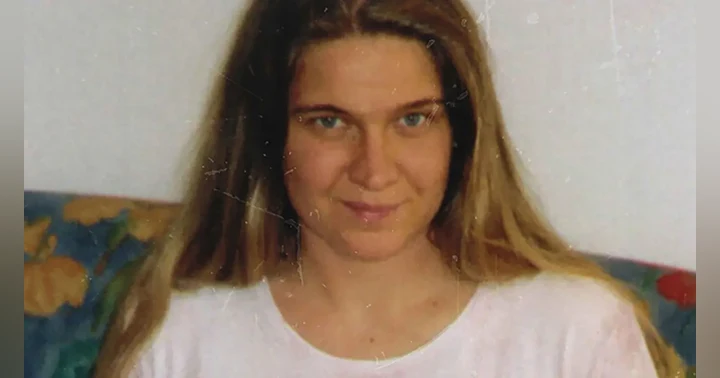
When Annie Börjesson’s body washed up on a beach in Prestwick, Scotland, police ruled it suicide within hours. But the evidence told a different story.She had bruises. Her hair was hacked off. Her lungs showed signs of freshwater drowning—despite being found by the ocean.
Nearly 20 years later, Annie’s case remains one of Europe’s most unsettling unsolved deaths. In this episode, we dive deep into her final hours, explore a possible cover-up, and examine every chilling clue:
- Her sudden exit from the airport
- Classified documents and government secrecy
- A mysterious man posing as a rugby player
- A possible case of mistaken identity tied to CIA rendition flights
Was Annie being followed? Was it murder? And why are so many records still sealed today?
We're telling that story tonight
Annie’s movements around Prestwick Airport and the beach are important because competing interpretations depend on what happened during a narrow final window. Her injuries, the condition of her hair, disputed drowning evidence, sealed or difficult-to-obtain records, and reports of an unidentified man have kept her family from accepting a rapid suicide ruling.
The episode treats espionage and mistaken-identity theories as possibilities rather than established fact. Its core subject is the unresolved evidentiary conflict: what can be documented about Annie Börjesson’s last day, what remains contested, and why nearly two decades of questions have not produced a publicly satisfying explanation.
🎧 LISTEN NOW and subscribe for spine-tingling horror stories every week!
🎉 Unlock exclusive bonus episodes and support the show on Patreon!
👉 WeeklySpooky.com/Join
📬 Contact Us / Submit Your Horror Story!
- Twitter: @WeeklySpooky
- Facebook: facebook.com/WeeklySpooky
- Email: WeeklySpooky@gmail.com
🎵 Music by Ray Mattis 👉 Check out Ray’s incredible work here !
👨💼 Executive Producers: Rob Fields, Bobbletopia.com
🎥 Produced by: Daniel Wilder
🌐 Explore more terrifying tales at: WeeklySpooky.com
0:02 She was found face down on a Scottish beach, her bag untouched and her hair hacked. Short authorities called it suicide, but her family and friends call it something else entirely, and they won't rest until they get their answers. What you were about to beat is burnt too. Based on witness accounts, testimonies and public record, this is terrifying and treat.
0:53 December of two thousand and five, a young woman's body is found face down on a cold, wind swept beach in western Scotland. Her belongings are oddly untouched. Her death quickly ruled a suicide, which left behind more questions than answers. Bruises, missing hair, traces of fresh water in her lungs all contradict the official story. Who was Annie Boreesen and what really happened to her in those final hours. Tonight we uncover the eerie, inconsistencies and haunting secrets behind one of the UK's most unsettling unsolved deaths. Make sure you're subscribed and we'll be telling that story after this. A frigid wind howled across Pressed beach on the morning of December fourth, two thousand and five, stirring the gray waters of the Firth of Clyde. A lone dog walker trudged along the damp sand, bundled against the chill, when his dog suddenly halted and barked at something crumpled near the sea wall. There,
2:25 in the weak dawn light lay the motionless body of a young woman. She was fully clothed, face down where the tide had receded. Her long blonde hair splayed and tangled with sand and seaweed. A canvas travel bag sat near by, its contents, clothes, a passport, and personal effects scattered by the wind. For a moment, confusion and dread hung in the salt air. Was she unconscious, in need of help, or was it already too late. The dog walker's shouted calls drew the attention of another passer by, and together they approached with trepidation. The young woman did not stir. Her skin was pallid and cold. It was clear she wasn't breathing. Within minutes, police sirens pierced the quiet Sunday morning as officers rushed to the scene. The authorities carefully noted that the woman's belongings were oddly near by and not lost to the sea, but in the urgency of the moment, they quickly focused on removing her from the incoming tide. As the medics and police worked, the early morning, beach goers watched in puzzled silence, the
3:57 seaside tranquility now transformed into the site of a sudden tragedy. None of them yet knew her name, but all sensed that something was off about this grim discovery. It was an eerie, unsettling scene, a lifeless body on an empty beach, with no obvious clues as to how she ended up here on a cold winter morning. The mystery of Prestwick Beach had just begun. The woman found on that beach was soon identified as thirty year old Annie Christina Bjoriessen, a Swedish native living in Scotland. Annie had moved from her hometown in Sweden to Edinburgh in the autumn of two thousand and four, drawn by a sense of adventure and the promise of new experiences abroad. In Scotland, she embraced the culture and was known to adore the country's rugged beauty. Friends describe Annie as vivacious and independent, chatty and lively, with an outgoing personality that helped her make fast friends in her newly adopted city. Tall with long, thick blonde hair and striking blue eyes, she cut an impressive figure. One friend affectionately likened her to a Viking
5:31 princess for her strength and Nordic features. Annie's talents went far beyond her appearance. Fluent in five or six languages, she had a gift for communication and a love of learning. She enrolled in English classes to polish her language skills and found work at a popular tourist information center in Edinburgh in early two thousand and five, where her bright demeanor made her a favorite of colleagues and visitors alike. A passionate music lover, she was also a budding singer who enjoyed nights out dancing with friends. To those who knew her, Annie was full of life, always planning her next steps and brimming with enthusiasm for the future. Her best friend, Maria Janson, recalls that Annie had great plans and was excited about upcoming opportunities. By late two thousand and five, Annie was hoping to make Scotland her long term home. She had applied for jobs and was looking into obtaining permanent residency, indicating how much she truly cherished her new life in Edinburgh. Despite living abroad, Annie remained close to her family and friends in Sweden. She phoned her mother, Gouge, and others back home regularly to share up on her life. As the two thousand five holiday
7:04 season approached, Annie was especially excited. She planned to return to Sweden in early December to reunite with loved ones for Christmas. She spoke of her trip cheerfully, making plans for gatherings and even arranging to stay with Maria for a few days during her visit. Annie's life, by all accounts, seemed happy and hopeful in those days. There were no obvious signs of despair or trouble weighing on her. To her friends and family, the news that Annie's journey had ended on a remote Scottish beach under such baffling circumstances was absolutely devastating and incomprehensible. Annie Boyesen's final two days alive have been painstakingly reconstructed from closed circuit television footage, witness accounts, and phone records, though many gaps and mysteries remain.
8:09 On Friday December two, two thousand and five, Annie went about what seemed like a normal day in Edinburgh. That afternoon, she stopped by her former workplace to say hello to old colleagues. She greeted her friend Cat Dolmo with her usual smile and energy. They chatted and made small talk. Kat later emphasized that Annie was quote in a good mood. She didn't seem depressed at all. During that visit, Annie briefly excused herself to take a phone call. Kat saw Annie speaking on her mobile phone and assumed it was a routine call, perhaps from a friend or relative. This detail would later become significant when police claimed Annie's phone had no activity in the days before her death, a point strongly contradicted by witnesses. After the call, Annie rejoined Cat, giving no indication that anything was a miss. Before leaving, she mentioned she would be flying home to Sweden the next day and expressed excitement about the trip. Indeed, Annie had been meticulously preparing. She had already packed her bags, paid her next month's rent in advance, and even scheduled a hairdresser appointment for after her return, clear signs she
9:40 intended to come back to Scotland after the holidays. On Saturday, December third, two thousand and five, Annie set out from her flat in Edinburgh with a travel bag in hand hand. She was bound for Glasgow Prestwick Airport commonly just referred to as Breastwick Airport in Ayrshire, about eighty miles away, where she had booked a budget flight to Gothenburg, Sweden, to depart that afternoon. Sometime around midday, Annie arrived at Edinburgh's Haymarket station and caught a train toward the West coast.
10:27 By three pms, she was in the vicinity of Prestwick Airport. Closed circuit TV cameras captured Annie at three fourteen pm, stepping off a train at Prestwick International Rail Station and entering the airport terminal alone. In the grainy footage, she is seen wearing a long dark coat and carrying her shoulder bag. She walks in through the revolving doors, just like any other traveler, ready to check in for their flight. What happened next is one of the first puzzling twists of Annie's story. Instead of proceeding to the check in counter or security with her luggage, Annie spent only about five minutes inside the terminal. Airport security cameras recorded her abruptly turning around and walking back out the same way she came in. At three nineteen p m, Annie Borjesen left Prestwick Airport not having boarded any plane. Her flight back to Sweden would depart without her. Why Annie suddenly changed her mind and exited the airport as unknown. She didn't speak to any airline staff or make any phone calls from the terminal that we know of. Perhaps something spooked her, or someone unexpected approached her. Perhaps she forgot
11:59 something important. Did she decide to delay her trip? The security cameras give no answers. It only shows Annie striding purposefully out of the building back into the cold afternoon light. Her plan seemingly altered in an instant After Annie walked out of the airport at three nineteen pm on December third, there's a troubling gap in the timeline from that moment until the discovery of her body the next morning. No definitive account of Annie's whereabouts exists. Investigators initially assumed she headed straight for the airport toward the adjacent beach, which is about a mile away, but there is no camera footage or confirmed sightings documenting that journey. The only purported sighting came from a letter the Scottish Police sent to the Swedish consulate soon after her death, it claimed that a witness saw a person matching Annie's description standing by the water's edge at Prestwick Beach around four thirty pm on December third. However, when journalists later tracked down that supposed witness, the individual denied ever making such a statement.
13:28 In other words, the only eye witness account placing Annie on the beach that day turned out to be unsubstantiated, casting doubt on the official timeline. What did Annie do in those missing hours on late Saturday afternoon? This mystery has fueled endless speculation. We know that sunset in Scotland in December comes early around four pm, so by four thirty it was dark. The weather on the coast can be unforgiving. Perhaps Annie sought shelter. There was mention that Annie might have entered a nearby beachfront park or cafe, or even struck up conversation with someone, but no reliable witnesses have come forward. Another friend later told Annie's family that on December third, before she left for Edinburgh, they saw her answer a phone call and then hurriedly depart for her trip. Could someone have been waiting to meet her near Prestwick. The lack of confirmed information between the airport's security cameras at three fourteen pm and the discovery of her body at around eight am the next day is one of the most haunting aspects of the case.
14:55 At some point on the night of December third, Annie Bjoriesen died, but how, where and why remained painfully unclear. In the early light of Sunday, December fourth, two thousand and five, Annie's body was found by the dog walker on Prestwick Beach, lying face down on the sand as if she had washed ashore. She was fully dressed in the clothes she had worn the day before, and her travel bag was resting near by, containing her passport, wallet, return train tickets, two library books, and other personal items.
15:38 The scene immediately raised some perplexing questions. For one, Annie's belongings were not dispersed or lost at sea. They were right next to her, almost too neatly accounted for. How was it that her bag and even books were found at exactly the same spot as her body. If she had drowned in the ocean, one might expect tides and currents to scatter or separate such items. The coincidence troubled her family later, who felt it looked more like her body and possessions had been placed there together. Local police and a medic arrived swiftly and transported Annie's body to a nearby hospital mortuary within just over an hour and a half of the initial report. Due to the rising tide that morning, the authorities were in a race against time, as Detective Michael Neal later put it, to move her before the sea could disturb the site. However, this urgency meant that the forensic examination of the scene was likely rushed.
16:52 It is doubtful that a full forensic survey, such as carefully photographing the body in situ, checking for footprints or signs of struggle in the sand, et cetera, could have been completed in that short of a window. By mid morning on December fourth, Annie's body was at the Air Hospital Morgue awaiting a post mortem, and the beach was clear again, almost as if nothing unusual had happened. The autopsy of Annie Boreesen was conducted on December seventh, two thousand and five, three days after she was found. The Scottish pathologists report concluded that her cause of death was most likely drowning, and noted no significant external injuries or trauma on her body. There were no obvious lethal wounds, no stab marks or gunshots, and importantly, the report did not mention any signs of a struggle. In the official view, Annie had walked into the sea and drowned, whether as an act of suicide or by accident. Toxicology results, to the extent that they have been released, did not reveal
18:23 anything unusual. There was no indication of heavy intoxication or drugs in her system. On the surface, it seemed like a tragic drowning. The case in the eyes of law enforcement was effectively closed almost as soon as it began. They believed they had a straightforward, albeit sad narrative, a depressed young woman who took her own life in the ocean. Yet almost immediately red flags emerged. When Annie's body body was prepared for transport back to Sweden, undertakers noticed injuries that the Scottish autopsy had not documented. A London undertaker who handled her remains in transit and a Swedish undertaker who received her coffin both were shocked at the state of Annie's body. In a written statement, the UK undertaker described quote significant bruising on Annie's body and expressed bafflement that these were omitted from the post mortem report. When the coffin arrived in Sweden, undertaker goun Dunnenberg, with nearly forty years of experience, found disturbing signs of violence. Quote.
19:50 When we opened the coffin, I still remember seeing finger marks around her neck, two marks. I remember them so clear. Dana Berg said she also observed extensive bruises on Annie's arms and sides quote, as though someone had hit her, and noted a particularly strange detail. Annie's beautiful, long blonde hair had been roughly chopped short, with a patch of hair missing, as if it had been yanked out by force.
20:31 Photos taken by Annie's family in Sweden indeed show her once long hair in an uneven, jagged cut and what appears to be a bald spot on her scalp where hair had been torn away. This suggested some kind of head trauma or assault, directly contradicting the official findings of no injury. Moreover, Swedish pathologists conducting their own analysis found microscopic dietems and organisms on Annie's body that are typically found in fresh water, not in the salty sea. This baffling forensic clue raises the possibility that Annie did not drown in the ocean at Prestwick Beach at all, but perhaps in another body of water. If she had died in a freshwater location like a lake, pond or even a bathtub, and then was moved to the beach, it would explain the presence of those freshwater microorganisms found inside her lungs. It would also recontextualize the shallow calm bay at Prestwick. Indeed, Prestwick's shore has very gentle waters and at low tide one must work talk half a mile out just to be deep enough to swim. The idea
22:05 that Annie chose this spot to weidhe in and end her life seemed increasingly questionable to those who looked closely at the evidence. These discrepancies, bruises, a potential post mortem haircut, signs of strangulation, and the fresh water evidence were deeply alarming to Annie's family. When they requested copies of the Scottish autopsy photographs to better understand how the official examination could have missed these points. Their request was refused. The authorities told the family that releasing the images was not quote in the family's interest, a decision that only heightened their suspicions. Every new fact that came to light seemed to contradict the tidy suicide narrative. Instead, a darker picture was emerging, one suggesting that Annie Boreesen may have met with foul play and that her body's discovery on the beach might have been staged to appear as a drowning.
23:22 From early on, Annie's loved ones and independent investigators found it hard to accept the official explanation of suicide. There were simply too many unanswered questions and odd inconsistencies. Over the years, several alternate theories about what might have happened to Annie Boriessen have been proposed, each with its own intriguing, if unproven evidence. One theory stems from Annie's own apparent fear of being watched or surveiled. In the days leading up to her death. According to her mother and friends, Annie had grown unusually anxious that her mobile phone and computer were somehow bugged or being monitored. In fact, two days before her death, on December first, Annie called her family from a payphone instead of her cell phone, telling them it was because she suspected someone was eavesdropping on her calls. This paranoia was very out of character for the normally upbeat young woman, and those close to her took it as a sign that something or someone had seriously frightened her. Could Annie have been receiving threats? Was she entangled in something that made her fear for her privacy or her safety? We know that Annie mentioned to
24:56 her mother that if anything happened to her, a man might be involved, a cryptic warning that only later seemed potentially relevant. At the time, her family wasn't sure what to make of it and didn't press her for details. Now, in hindsight, such remarks hint that Annie perceived a real and present danger. Another thread in this mystery is the tale of the mysterious rugby player. Shortly before her death, Annie confided to friends that she had met an older man at a nightclub in Edinburgh who claimed to be a New Zealand rugby player named Martin Leslie. He was friendly but overly forward, giving Annie a bad feeling. She became uneasy enough that she left the club up. A few days later, while swimming at her local pool, Annie noticed the same man standing by the pool watching her intently.
26:11 This deeply unnerved her. Annie told her family that she feared this individual was a stalker or sexual predator. Importantly, the real Martin Leslie, a famous rugby player, was confirmed to be on the other side of the world at that time, so whoever approached Annie was impersonating the sports star. The impostor was never identified. Some have speculated that this man could have tracked Annie or tried to meet her again, possibly even impressed Wick if he learned of her travel plans.
26:53 Could it be that Annie noticed him at the airport and panicked, prompting her hasty exit. While no direct evidence ties this unknown man to Annie's fate, the coincidence is eerie. The rugby player remains a tantalizing yet unproven lead in the case, a real person of interest who was never found. Perhaps the most sensational theory suggests that Annie Borjesen was the victim of an intelligence related mistaken identity, essentially caught in the crosshairs of international espionage by sheer bad luck.
27:38 This theory points to the context of late two thousand and five, The post nine to eleven War on Terror was in full Swing, and the United States was conducting secret prisoner transfers, so called rendition flights, around the world. Notably, it later emerged that Glasgow Prestwick Airport was allegedly used by the CIA as a refueling and transit point for many of these clandestine flights transporting detainees. Around the same time, an American journalist named Christina Borjesen, whose name is very similar to Annie's, was actively investigating and exposing CIA operations and illegal flights. Christina Borjesen is an Emmy winning investigative reporter known for digging into US intelligence activities. The coincidence and names has led to speculation that the agents of some intelligence service, perhaps American or Allied, might have confused Annie for Christina, or that Annie might have been surveilled or intercepted on the assumption that she had a connection to the journalist. Proponents of this theory note how fiercely
29:09 both Scottish and Swedish authorities later guarded information in Annie's case as if there were something politically sensitive at play. They also found it suspicious that Annie died near an airport rumored to be involved in covert ops. Could an operative have approached Annie at Prestwick, mistaking her identity, with a deadly outcome when the error was realized. It sounds far fetched, but the theory gained enough traction that even members of the Scottish Parliament raised questions about CIA activities at the Scottish airports during that time period. To be clear, no hard evidence has ever emerged linking Annie's death to a rendition, flight or intelligence agency, but the mere fact that documents about her case were later classified as secret, with authorities citing potential harm to quote international relations if released, it only adds fuel to the idea that something clandestine might be hidden in the files. Aside from these specific theories, there is the general possibility of foul play by an unknown assailant that is not part of any kind of
30:40 larger conspiracy. Annie could have encountered a dangerous person by chance alone, may be a predator on the beach, or a malicious stranger who crossed her path that evening. This scenario may just explain the signs of struggle later found on her body. Perhaps Annie fought someone off, getting bruised and having her hair pulled, and in the struggle she was drowned. Whether in the sea or elsewhere. The quiet dunes and dark shore of Prestwick would be a sadly opportune place for a crime, isolated and empty in winter. However, if a random murderer was at work, one would expect the police to have at least considered it, Yet they seemed convinced from the start it was suicide. No suspects of this nature were ever identified by any law enforcement.
31:46 Throughout all these alternate explanations, Annie's family has consistently championed one belief that Annie did not kill herself, and that she likely was murdered by persons unknown. Her mother, Gugie and best friend Maria have publicly stated that Annie was not suicidal and had too much to live for to abruptly end her life. They do acknowledge that even those seemingly happy can conceal in her despair, but in Annie's case, they saw specific evidence pointing away from suicide and toward a cover up. Over the years, independent journalists, true crime investigators, and internet sleuths have dissected Annie's case, uncovering each inconsistency we've spoken of so far. Theories have been debated in online forums and even on a dedicated Sky News podcast, as well as a BBC television documentary. While these theories range from plausible to exotic, they all underscore one central truth.
33:12 Something about the official story simply doesn't add up. The last hours of Annie Boyesen's life remain an enigma, one that has invited everyone from concerned citizens to parliamentarians to ask whether a deeper truth lies hidden beneath the surface of this so called open and shut case. From the outset, Scottish authorities treated Annie Boriessen's death as an unfortunate but straightforward case, showing little interest in pursuing alternatives to the suicide hypothesis. Police on the scene that morning found no immediate signs of foul play, no obvious murder, weapon, or severe trauma, and seemingly latched on to drowning as the cause of the death. In fact, astonishingly before the autopsy was even conducted, officials had already communicated to their counterparts in Sweden that the likely cause of death was suicide.
34:36 A document later obtained by journalists revealed that on December fifth, two thousand and five, just one day after Annie was found, when the investigation had barely begun, Scottish embassy officials told the Swedish embassy that they suspected suicide. This premature conclusion, made without waiting for post mortem evidence, suggests an early bias in their investigation, almost as if the authorities were eager to close the case as quickly as possible. Following the autopsy and a brief inquiry, the Scottish Crown Office, which handles sudden deaths, declined to hold a fatal accident inquiry for Annie's case. In Scotland, an FAI is a legal hearing that publicly examines the circumstances of certain unexpected deaths.
35:38 While not every drowning gets an FAI, it is noticeable that Annie's did not. Given the unusual aspects such as being a foreign national found in a public place under unclear circumstances, the Crown Office's position was that there was no evidence of criminality and thus no need for further inquiry. To Annie's family, this felt like a snub, a decision to sweep inconvenient questions under the rug. Why had she left the airport so suddenly? How did her bag end up beside her? These questions went officially unanswered. When Annie's family began pressing the authorities for more information, they encountered resistance.
36:34 The police were slow and sparing in sharing case details. For example, when the Buriessen family asked to see Annie's complete autopsy report and photographs, those requests were denied or deflected. The reason given was often that it was not in the public interest nor in the family's interest to release such material to the family. However, it felt as though crucial evidence was being hidden. Over time. This lack of transparency only fueled their suspicion that the investigation had been mishandled or that something was being covered up. The discrepancies about Annie's phone records further illustrate the investigative gaps. Police told the Boyesen family that, according to her mobile provider, Annie's phone showed no activity for three days preceding her death.
37:40 Yet we know her mother called her on December first and got through, and that a friend saw her answer a call on December second. How could the phone records reflect nothing. Either the records were incomplete, or some one had tampered with her callog or simcard. It appears this contradiction was never resolved by investigators. Similarly, Annie's e mail account had an inexplicable gap. Her entire EMIL history in that same period was wiped clean. These are the kind of leads that one would expect any thorough investigation to pursue by checking with the phone company, analyzing her electronics and the like. But there's little evidence the police dug deeply at all. If they did, the findings were not shared with her family. The official stance remained that there was quote no evidence of foul play, as Detective Neal repeated to the media over and over again. As the years went on, Annie's family, especially her mother, and a growing number of supporters in Sweden and Scotland campaigned to
39:11 have the case re examined. They wrote to Scottish officials, petitioned for an inquest, and contacted the media. For a long time, these efforts met a brick wall. The Scottish Crown Office maintained that the case was properly closed and refused to reopen it, citing the initial investigations conclusions. The frustration on the side of the family was compounded by a sense that Scottish and Swedish authorities were sharing information with each other that they wouldn't share with the family or public. This suspicion was dramatically confirmed in twoenty twenty, when, after a year long investigative push by journalists, the Swedish Foreign Ministry released some correspondence files involving Annie's case to the Sky News podcast team, but the documents were heavily redacted and officially classified as secret. Mysteriously, and bizarrely, whole sections, including the entries for Annie's cause of death in the files, were blacked out. A Swedish official explained that disclosing the
40:42 information could damage Sweden's relations with a foreign state, implying the United Kingdom, or potentially harm national interests. Annie's mother said, in dismay quote, even the cause of death has been hidden. It was an extraordinary stance over what was supposed to be a simple suicide. Why would details of such a case need to remain secret? Nearly fifteen years later, this official intransigence slowly started to shift as public attention on the case continued to grow. A Scottish newspaper and Sky News highlighted the possible connection to CIA flights in two thousand and fourteen and twenty twenty, prompting some Scottish politicians to begin to ask questions. Then, in twenty twenty three, the BBC commissioned a four part documentary called Body on the Beach What Happened to Annie. Investigative journalist Hazel Martin reinvestigated Annie's death on camera, interview viewing witnesses and experts, and even appealing to authorities on air. Under the spotlight of this renewed media scrutiny, the Scottish Crown Office made a small concession. They agreed to review any new evidence
42:17 submitted by the documentary team. In late twenty twenty three, after the documentary aired, the filmmakers handed over an eleven point dossier of new findings such as the fresh water drowning evidence and inconsistencies in post mortem reporting, to the Crown's Scottish Fatalities Investigation Unit. The Crown acknowledged receipt and said they would consider it. As of early twenty twenty five, however, no definitive reopening of the case or FAI has been announced. Officially, the police in Scotland still insists that Annie's death was fully investigated and that no criminal involvement was discovered. For Annie's family, the official response over these many years has been a source of immense pain and frustration to them.
43:19 It often seemed that the authorities wanted the case to simply go away, perhaps because admitting errors or unknowns would be embarrassing or troublesome. Whether due to bureaucratic defensiveness, genuine belief in the suicide ruling, or pressure from higher ups to avoid digging into certain angles, the result was the same, an enduring refusal to treat Annie Doryesen's death as the potential crime her loved ones believed it to be. The contrast is stark. On one side, a family pleading please investigate more, something's wrong. On the other, officials repeating there's nothing to see here. This standoff has persisted for nearly two decades, leaving the truth agonizingly out of our reach.
44:23 As the years have passed, the tragedy of Annie Boreesin's death continues to cast a very long shadow for her family and friends. Time has not brought closure. Instead, it has deepened the resolve to find answers and highlighted the lingering questions that still haunt this case. Annie's mother has fought tirelessly to keep her daughter's story in the public eye. The emotional toll is immeasurable. She discribes ribes it as an inhumanly long time to wait for the truth, a nightmare she would never have imagined enduring Every Christmas season instead of celebrating with there, Annie, her family is reminded of December of two thousand and five and the painful uncertainty that followed. Annie's bedroom back home remains just as she left it, a silent testament to a life interrupted.
45:35 The questions that remain unanswered are as unsettling as they ever have been. What truly happened in the hours between Annie leaving the airport and being found on the beach. If she intended no harm to herself, as her actions paying rent, scheduling appointments, and packing gifts suggest, then one diverted her from her path that day. Who if anyone met with her or saw her alive in Prestwick, How did she enter the water and where? If foul play occurred, what was the motive? Was it a random act of violence, a targeted crime, or a grave misunderstanding by someone with power?
46:30 Each question begets another. Even the basic mechanics of her death are in doubt. Did Annie drown in the sea at all? Or was her body moved there. The forensic anomaly of fresh water organisms in her system begs us to ask if the beach was just a dumping ground to obscure an earlier crime, and if so, why have the police not pursued that lead. Annie's case has gained a legacy in true crime circles as one of the more perplexing unsolved deaths in recent Scottish history, often likened in perplexity, if not in specifics, to the dyetlov Pass incident, which we covered on a prior episode, or other enduring mysteries.
47:27 Internet forums dissect every detail from the weather that weekend to the nuance of closed circuit television timestamps in hope of finding a clue that everyone else simply missed. Journalists have kept the story alive through articles, podcasts, and documentaries, ensuring that Annie's name is not forgotten and pressuring officials bit by bit to revisit the case. In Sweden, the case has spurred debates about transparency and the extent to which a foreign national the United Kingdom might influence the handling of a Swedish citizen's death. In Scotland, it's become an uncomfortable question mark a cold case that the public now views with skepticism toward the initial police work. For those who knew Annie personally, her legacy is far more personal and profound. They remember a bright, loving and talented young woman who had so much ahead of her. Maria Jansen and others continue to share stories of Annie's warmth and spirit, painting the picture of a friend who was like a sister and a very happy, lively girl. This
48:59 collective memory stands in stark contrast to the official file that reduced her to a case number with a label of suicide. In memory of Annie, her friends have vowed not to let the world simply move on. They have held memorials on Prestwick Beach, standing where she last lay, to honor her life and remind the world that unanswered deaths leave real wounds for the living. Each gathering is both a tribute and a quiet protest, a way of saying justice has not been served. Nearly twenty years later, the haunting mystery of Annie Boreesen's death endures. It endures in the classified files and redacted lines that her family is still fighting to see. It endures in the minds of everyone who has followed the story, each person wondering if there is a piece of the puzzle still out there that could bring the truth to light. And it endures on that wind swept Scottish beach, where every so often a passerby might pause and recall that a young woman's life tragically ended there under circumstances that remain unresolved.
50:32 In the absence of answers, theories will continue to flourish, and doubts will never fully be laid to rest. Was it a suicide, a tragic accident, or a cover up for something far more sinister? The world still doesn't know. What is known is that Annie Boyesen's loved ones will not stop seeking justice. As her mother poignantly said, quote, we are still motivated to get Annie an inquest. We are not afraid of that. Until the day the truth is uncovered, the case of Annie Boyesen remains an open wound, a chilling mystery lapping at the shores of Prestwick, refusing to be forgotten. Terrifying and True is narrated by Enrique Kuto.
51:31 It's executive produced by Rob Fields, Markshields and babble Toopia dot Com and produced by Dan Wilder with original theme music by Ray Mattis. If you have a story you think we should cover on Terrifying and True, send us an email at Weekly Spooky at gmail dot com. And if you want to support us for as little as one dollar a month, go to Weeklyspooky dot com slash join. Your support for as little as one dollar a month keeps the show going. And speaking of I want to say an extra special thank you to our Patrin podcast boosters, folks who pay a little bit more to hear their name at the end of the show. And they are Kate and Lulu, Jessica Fuller, Johnny Nicks, Jenny Green, Amber Hands for Brent mccallough, Karen we Met, Jack Ker and Craig Cohen. Thank you all so much and thank you for listening. We'll see you all right here next time on Terrifying and True.