


 Apple Podcasts
 Spotify
 Spreaker
 Audible
 Castro
 RSS Feed
 Terrifying & True | Stanley Hotel: The Shining Origin and America’s Most Haunted Hotel
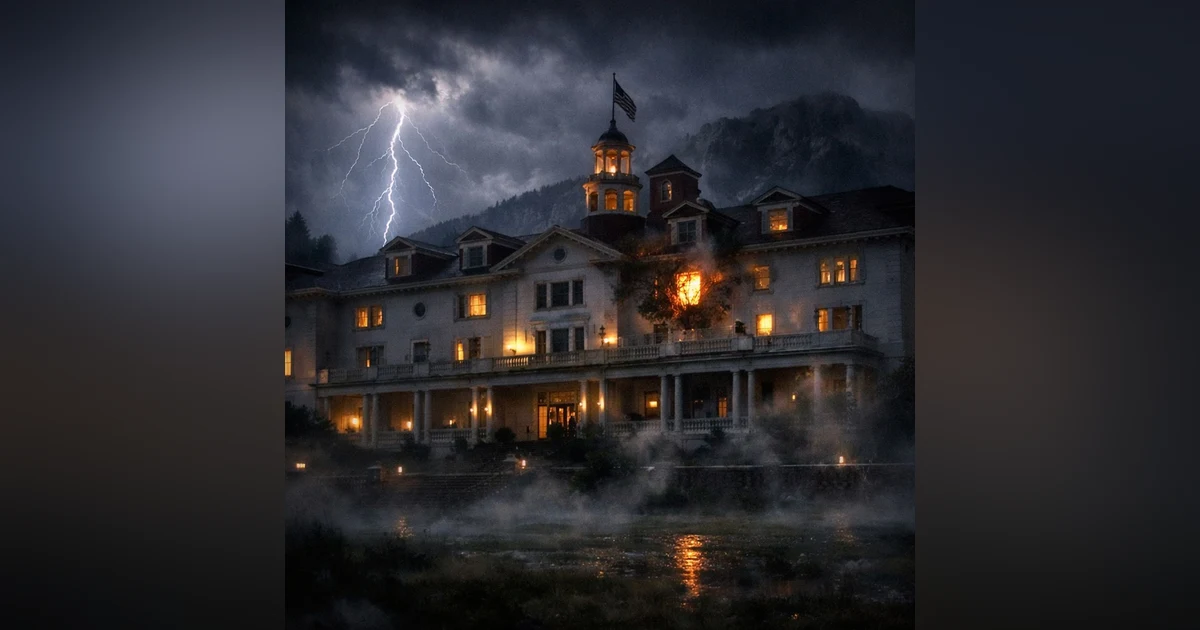
Room 217 at the Stanley Hotel connects a real explosion with the inspiration for Stephen King's The Shining. Terrifying & True visits Estes Park, Colorado, tracing the 1911 disaster, Elizabeth Wilson's survival, and the ghost stories surrounding F. O. and Flora Stanley. King's 1974 stay helped turn empty corridors into horror history; later television and tourism carried the legend further. Reported hauntings remain distinct from documented events. Explore how a hotel became a destination for paranormal curiosity, and why a story about a room can change the way its next guest sleeps.
Bonus episodes & support: https://weeklyspooky.com/join
More scary stories: https://weeklyspooky.com/
Story submissions: WeeklySpooky@gmail.com
Did the Stanley Hotel Inspire The Shining?
Yes. On Stephen King's official page for The Shining, he describes staying at the Stanley Hotel in Estes Park with his wife in late September 1974. The nearly empty hotel and a nightmare during that stay helped him imagine the book. Colorado's official tourism site identifies Room 217 as the room where he stayed.
The Stanley Hotel and the Fictional Overlook
The Stanley is a real Colorado hotel; the Overlook and the Torrance family's story are fiction. The murders in The Shining should not be treated as documented events at the Stanley. This episode explores the hotel's history and reported hauntings while keeping those accounts separate from the novel's plot.
Hear the History Behind the Ghost Stories
Play the Terrifying & True episode above for Room 217, the 1911 explosion, Elizabeth Wilson's survival and the stories associated with F. O. and Flora Stanley. The readable transcript offers another way to follow the episode. If haunted places are your favorite kind of spooky story, continue with the related episodes below.
Listen Next
Bihl Manor
Discover the Fremont, Ohio house and ghost stories behind A Very Haunted Renovation.
Haunted Ohio Road Trip
Travel through Ohio’s haunted-place folklore and the stories that draw visitors after dark.
Resurrection Mary
Follow Chicago’s Archer Avenue vanishing-hitchhiker legend and the accounts that keep it alive.
The lights die in the Stanley Hotel, and in the dark, invisible gas fills Room two seventeen like a held breath. A chambermaid steps inside with a candle. The flame wavers, then the whole mountain seems to detonate. She falls through collapsing floors and lives. But after that night, the Stanley never stops collecting stories. What you were about to tear is burt to beel. Based on witness accounts, testimonies, and public record, this is terrifying and treat treat. High in the rocky mountain, above the little town of Estes Park stands a grand, old hotel with a reputation that has outgrown its own history.
Visitors come for the view and stay for the rumors of strange music in empty rooms, of figures glimpsed and gone, of a corridor that feels a little too long when you're walking it alone. But beyond the ghost stories is something far more certain, a real night of terror in nineteen eleven, when a gas leak and a single candle turned Room two seventeen into the epicenter of an explosion that should have killed it didn't, and in the decades that followed that survival story mixed with money, troubles, winter silence, and one writer's nightmare help transform the Stanley Hotel into an American legend.
Tonight, we follow the facts and the fear that grew up around them. So make sure you're subscribed on your favorite podcasting app to hear more stories of the terrifying and true. Now, get comfortable and let's check in. A crack of thunder high in the Rocky Mountains, lightning over Estes Park, Colorado. The year is nineteen eleven. Inside the brand new Stanley Hotel, a grand Georgian revival resort, the electric lights sputter and die. Dinner guests murmur in uneasy darkness as wind lashes the windows. Staff scurry to light backup lamps. The hotel's owner, Freelan O. Stanley, had installed a new acetylene gas lighting system just for nights like this.
Up on the second floor, head chambermaid Elizabeth Wilson moves quickly a single candle in hand. The flames glow bobs through the corridor as she pushes open door after door to light the gas lamps inside. Meanwhile, down in the lobby, a cluster of patrons huddle together, listening to the storm's howl. They don't realize the entire hotel is now a ticking time bomb. In Room two seventeen, the Presidential Suite, invisible gas has been leaking from a pipe all day, pulling in the air. No one smelled it. Acetylene has no odour. Unaware of the danger, Elizabeth Wilson turns the knob and steps into the room, her candle casting dancing shadows.
The flame wavers, then ignites an unseeable cloud. At seven point fifty PM, a blinding flash and thunderous boom rock the stanley. The west wing explodes in a fireball. Floors heave, windows shatter, Guests scream as a shockwave rattles the valley on the second floor. The blast rips through Room two seventeen, and the floor gives way beneath Elizabeth Wilson's feet. Back in modern day, a tour guide gathers guests in a dim hallway outside Room two seventeen. Flashlights cast long shadows on floral wallpaper. The guide's voice drops to a hush as he recounts the hotel's most infamous tale, the gas explosion of nineteen eleven.
Tourists lean in eyes wide as she describes how a chambermaid was nearly blown to bits. In this very sweet she holds up a yellowed newspaper clipping quote. The Stanley Hotel, built at a cost of five hundred thousand dollars, was partly wrecked last night by an explosion of gas. Eight persons were injured, one seriously. Elizabeth Wilson was hurled from the second to the first floor, and both ankles were broken, reports a century old dispatch. The group gasps and chuckles nervously in this telling. Room two seventeen isn't just a lodging, it's a legend, the spot where the Stanley's haunted reputation sparked to life.
In nineteen o three, inventor F. O. Stanley arrives in Estes Park expecting to die of tuberculosis, but the crisp mountain air revives him. By the end of that summer, he's gained weight and a new vision. This valley of healing deserves a grand hotel. By nineteen o nine, Stanley opens his opulent, forty eight room hotel, an oasis of modern comfort in the wilderness. It's fully electrified and boasts telephones and running water in every suite, unheard of luxuries in the High Rockies. Wealthy travelers from back East flock here to summer in style. One newspaper said, quote Estes Park has been a favorite place for doctors to send patients, but it has not always been possible to get suitable accommodations. With the park now turned into a vast pleasure ground, all objections will be dissipated. In just a few years. Stanley's Mountain Retreat put the once sleepy valley on the map. Winters at the Stanley are a world apart. In January nineteen ten, the main hotel sits closed and dark, buried in snow. Nearly all staff and guests are gone for the season, leaving only a skeleton crew to guard the property. One night, a lone caretaker makes his rounds by lantern light.
The empty corridors groan as wind presses against the walls. Floorboards creak under his footsteps. Or is it someone following behind? He pauses, heart thudding in his ears, only silence. Up on the fourth floor, the caretaker checks each guest room, his breath clouding in the frigid air. A curtain billows in a draft startling him, He hastily latches the window against the howling gale. In these off season months, the luxurious hotel becomes an eerie shell. Imagination fills the void, turning dancing shadows and settling timbers into ghosts that don't exist, at least not yet. Hours after the nineteen eleven explosion, chaos rains.
Broken glass and splintered wood litter the corridors of the West Wing. Guests who are enjoying a genteel evening now huddle in shock on the front lawn in their dinner attire. Inside, f O. Stanley and his staff scramble through debris by lantern light, accounting for the injured. Miraculously, almost unbelievably, no one is killed. They find twenty six year old Elizabeth Wilson crumpled on the first floor, alive but hurt badly, both ankles broken. Several waiters are bloodied and dazed from the blast. Stanley's elegant mountain escape looks like a war zone. A huge chunk of the hotel's second floor has collapsed into the dining hall below, and acrid smoke hangs in the air.
With dawn still hours away, the stunned owner can only supervise makeshift first aid and pray help arrives from town before anyone's condition worsens. The next morning, news of the Stanley Hotel disaster spreads through Estes Park. Curious locals hike up the hill to gawk at the wreckage, trading rumors about what exactly had happened in town. A telegraph operator reads an early bullet allowed to a small crowd quote the explosion of a Settlene gas in the Stanley Hotel last night at eight o'clock endangered the lives of twenty guests and injured Miss Elizabeth Lambert fatally. One report claims a murmur ripples through the listeners.
Did the girl in Room two seventeen die? Then a message rides in from the hotel with an update The maid is alive, though her legs are broken. The crowd exhales in relief as townsfolk drift away, some cast uneasy glances up valley toward the Stanley's white facade, now marred by a blackened hole. One local mutters she's lucky that place could have been a tomb. In the weeks that follow fo Stanley refuses to let the disaster ruin his dream. Engineers shore up the wrecked wing and begin repairs immediately. Newspapers report ten thousand dollars in damage, a hefty sum, but far from a fatal blow.
Stanley personally pays the hospital bills for Elizabeth, Wilson and the other injured employees, promising they'll have jobs waiting once they recover. Sure enough, Elizabeth returns the next summer on crutches, eager to work. New guests checking into the rebuilt Room two seventeen have no idea that just a year earlier, the floorboards blew out under a maid's feet. By the end of nineteen eleven, the hotel is fully restored and back in business. Stanley breathes a sigh of relief his luxury mountain retreat has survived its first nightmare. Years later, the tale of the Room two seventeen explosion becomes part of the Stanley's folklore.
On quiet off season evenings, employees gather in the staff quarters and swap stories about that fateful summer night. Older bellhops and housekeepers who remember nineteen eleven embellished the details, with each retelling how the blast nearly blew the roof off or how a ghostly chambermaid still limps through the halls. New hires listen wide eyed as Elizabeth Wilson is elevated to a near mythic status as the woman who survived Room two seventeen. There's a thrill in the telling. The Stanley Hotel may have been reborn, shiny and new, but the staff keeps the memory of its brush with disaster alive in their whispered late night yarns.
The seeds of a haunted reputation quietly take root. In nineteen seventeen through nineteen twenty six, new pressures began to mount f o Stanley, now in his late seventies, faces harsh economic realities. The Stanley Hotel, for all its glamour, struggles to turn a profit in this remote locale. Stanley's business partner dies in nineteen fourteen, and maintaining the resort becomes an overwhelming burden. Finally, in nineteen twenty six, Stanley lets go. He sells the hotel to a group of Milwaukee investors and takes a last wistful look at his creation. The man who built Estes Park's showpiece departs Colorado for good.
The Stanley enters a new era under new owners, but financial strain, brutal winters, and the slow grind of time continue to stalk its halls. The building's survival story is far from over. Night. Nineteen forty, an employee making late rounds passes the darkened billiard room and freezes inside stands a gentleman in an old fashioned suit, bathed in faint moonlight. The employee's heart leaps. He recognizes the trim mustache and confident posture of Fo Stanley, the hotel's founder. But Stanley isn't supposed to be here. He left years ago. In fact, he died just weeks earlier back east. Summoning courage, the employee steps into the room to address the figure and finds it empty.
Only dust motes swirl in the silence. Many swear that Fo's ghost returned to his beloved hotel after death. Unable to leave its halls behind, staff over the years report fleeting glimpses of a dapper specter in the lobby or billiard room, as if the old proprietor still checks on the place after midnight. Meanwhile, in the nineteen thirties, new owner Roe Emery is determined to keep the Stanley Hotel afloat. A transportation tycoon, Emery uses his fortune to modernize the aging resort. In nineteen thirty five, he refurbishes every guest room with private baths and installs a new otis elevator.
He even repaints the hotel from its original ochre yellow to a crisp white, giving the old building a facelift. For a moment, the Stanley seems poised for a second Golden Age, but the hotel continues to bleed money despite Emery's improvements. Running a luxury resort in the remote Rockies during the Great Depression proves brutally difficult. Emery quietly shifts funds from his other businesses to cover the Stanley's losses. Through the late nineteen thirties, the grand hotel stays open, but only by borrowing against its owner's deep pockets. Late one evening in the nineteen fifties, music drifts from the stanleys deserted ballroom.
A sleepy security guard follows the soft melody down the corridor. He nudges open the ballroom door and finds the grand piano sitting unoccupied in the moonlight. Yet the keys are moving, playing a gentle waltz by themselves. As the guard steps forward, the music stops abruptly. The bathroom falls silent, empty of any living soul. Story spread that Flora Stanley, Fo's wife, who died in nineteen thirty nine, still plays her beloved Steinway piano in spirit. Staff and guests alike whisper about midnight sonatas with no pianist in sight. It's a beautiful, chilling thought. Perhaps Flora never left the music room she loved, even in death.
By nineteen seventy, the Stanley Hotel is on the brink of closure. Years of financial struggle have taken their toll. That spring, the local paper reports the once grand hotel will not open for the summer. It needs up to one hundred thousand dollars just to operate. Its owners are embroiled in lawsuits and debt. The majestic halls that once hosted Teddy Roosevelt and Molly Brown now sit dark and gathering dust. Locals begin to speculate the Stanley might be finished for good, Estes Park's crown jewel has become a forlorn relic. Some say the old hotel should be torn down before it falls apart on its own.
In the lobby, chairs are stacked on tables, and sheets drape over furniture, as if the building is already morning its own fate. Fast forward to the summer of nineteen seventy two. The Stanley has sat mostly empty for two years. Late one night, two local teenagers sneak in through a loose window, daring each other to explore the shuttered halls. Armed with a flashlight, they tiptoe through the darkness upstairs, a sudden giggle echoes like a child's laugh. The teens freeze an another laugh answers from down the corridor, followed by the pattern of unseen footsteps panicking the trespasser's sprint for the exit.
Convinced something unearthly is playing on the fourth floor. Outside, the two catch their breath under the stars and swear they'll never go back in. In a small mountain town, an abandoned hotel breeds rumors as naturally as mold. By the nineteen seventies, the Stanley's eerie reputation is set in stone, even if its doors might never reopen. Enter nineteen seventy four, and a new savior, entrepreneur Frank Normali, purchases the dilapidated Stanley Hotel in a last ditch effort to save it. When he first arrives, he's stunned by what he finds. The once opulent resort looks almost post apocalyptic quote.
Overgrown weeds peaked through the snow. A bulldozer sat frozen on the front lawn. Curls of peeling paint shrouded the hotel's columns in dirty fringes. Many of the doors and windows were boarded shut, while most of the upper casements were broken. Normali wrote in his memoir regarding his first sight of the hotel, Indeed, the Stanley resembles a haunted house, not from ghosts, but from neglect. Yet Normali sees potential. He launches a massive renovation, even installing heat so the Stanley can finally stay open through winter. The hotel had one foot in the grave, but He's determined to pull it back out.
By nineteen seventy four, the Stanley Hotel's haunted reputation was still mostly local lore. No formal paranormal investigations had ever been conducted, and the ghost stories lived mainly in staff gossip and regional rumor. The infamous Room two seventeen was not yet a tourist attraction, just another room seldom booked. In truth, the hotel's scariest enemy was simple economics. Decades of poultry profits and deferred maintenance nearly did what no phantom could shudder the Stanley for good. However, that same year, a chance visit by an up and coming horror novelist would soon change the hotel's fate forever. On October thirtieth, nineteen seventy four, Stephen King and his wife check in the only overnight guests in a one hundred and forty two room hotel about to close for the winter.
What happened during that isolated stay would put the Stanley Hotel on the map in a way no ghost story ever could. Later, deep in the night, Stephen King bolts upright from a nightmare. He's drenched in sweat, heart hammering in his chest. In his dreams, he saw his young son being chased down an empty corridor by a living fire hose. King sits on the edge of the bed in the dark, trying to calm his nerves. The vision was so vivid it takes him a moment to remember where he is. Room two seven of the Stanley Hotel.
King lights a cigarette. In that moment, inspiration strikes. He jolts down a stream of notes. By the dim glow of the bedside lamp. A story is taking shape about an old hotel, isolation and unseen horrors. By morning, he sketched out the bones of a novel. Quote. I woke up with a tremendous jerk, sweating all over. By the time the cigarette was done, I had the bones of the Shining firmly set in my mind. King later recalled he didn't encounter any literal ghosts that night, only a nightmare and an idea. But that nightmare, born in Room two seventeen, would soon make the Stanley Hotel world famous.
Over the years, some have embellished King's tale with phantom children or spectral bartenders, but the author himself has debunked those rumors. The only eerie coincidence King noted was that the hotel's actual bartender that night was named Grady, a name he'd later give to a ghostly character. The real ghosts that influenced the Shining where the Stanley's emptiness and atmosphere. King left Estes Park with plenty of inspiration, but no paranormal scars. In nineteen seventy seven, Stephen King's novel The Shining is a best seller, and curiosity about the Stanley Hotel is surging. A Denver reporter travels to Estes Park to interview staff about the book's inspiration. In the lobby, she quizzes the manager, did any ghosts actually scare mister King here? The manager chuckles, no, not that we heard only in his dreams. But off the record, employees slyly share a few of their own ghost yarns, knowing it makes great press. The reporter leaves with a colorful human interest piece about the real Overlook Hotel. King's introduction in the novel insists the Overlook is not based on any hotel quote. The Overlook and the people associated with it exist wholly in the author's imagination. King writes, Yet the Stanley's aura is hard to deny.
Newspapers and magazines spread the word that the Stanley is the place that fueled King's nightmare. For the first time, the hotel's spooky side is national news, and the line between clever publicity and genuine legend begins to blur. In the summer of nineteen eighty The Stanley Hotel is riding a wave of publicity from The Shining. A young horror movie buff strides up to the front desk, eyes a light. Can I have room two thirty seven, he asks. The clerk stifles a smile. It's a request that she's heard often since Stanley Kubrick's The Shining hit theaters. We don't have a room two thirty seven, she explains.
Stephen King stayed in two seventeen. The guest looks disappointed, but checks in anyway. Giddy to walk the halls of the Quote Overlook hotel, he isn't alone. Throughout the nineteen eighties, curios travelers converge on The Stanley, hoping to soak in its spooky aura. They snap photos in front of Room two seventeen and ask employees if the place is really haunted. The truth doesn't matter. Thanks to King's story and Kubrick's film, people already believe The Stanley is one of America's most haunted hotels. Each eager guest leaves with a new story to tell. Fast forward to the late nineteen eighties.
In Room two seventeen, a housekeeper finishes making the bed, only to return minutes later and find the pillows unfluffed and the comforter pulled down, as if someone invisible is preparing to go to sleep. Guests often report lights switching off and on in this suite, or their suitcases mysterious unpacked while they're out. The staff have a ready explanation. It's the ghost of Elizabeth Wilson, still keeping the house now decades after her death. She had passed in the nineteen fifties. Missus Wilson has become the Stanley's most famous spirit. Guides spin tales of her, primly admonishing unwed couples and tucking guests into bed.
Whether employees truly believe it or not, the tale of the loyal Maid of Room two seventeen is a crowd pleaser, and it grows with each retelling. In nineteen ninety four, the Stanley would double as a set for another legendary hit film, the comedy Dumb and Dumber, starring Jim Carrey, who insists on staying in the infamous Room two seventeen, but according to hotel lore, he doesn't last the night. As the story goes, Carrey flees his room at three a m. Pale and shaking. He refuses to tell even the manager what it was that terrified him, whether truth or simply an enduring rumor.
The Jim Carrey incident becomes another chapter in the Stanley's ghostly mystique. In March nineteen ninety six, film trucks and cable clutter the Stanley Hotel's grounds as a Hollywood crew transforms the building into a movie set. At long last, The Shining is being filmed on location. Here, not the nineteen eighty Kubrick version, but a three night TV mini series. Stephen King himself scripted and even had a cameo in. For weeks. Actors and extras roam the halls in period costumes, re enacting terrifying scenes on the very floors where King had dreamed them up. The production fills the hotel with uncanny sights, fake cobwebs in the hallway corners, prop axes behind the front desk, cameras covering every angle.
Local residents and hotel staff watched the spectacle with glee. The Stanley is now playing the Overlook Hotel, fully embracing its horror identity. When the mini series airs in nineteen ninety seven, viewers finally see the Stanley's real interiors on screen, and the hotel's fame as a haunted destination soars to new heights. Its official The Stanley Hotel and The Shining are forever intertwined, each feeding the other's legend. By the late nineteen nineties, the Stanley Hotel is actively embracing its eerie fame. The hotel launches nightly spirited night tours, guiding visitors to its most haunted rooms. Even a resident psychic is on staff and regaling them with tales of Flora's phantom Piano, fo Stanley's Wandering Spirit, and of course, the Benevolent Maid of Room two.
Seventeen. Halloween masquerades and horror themed balls become annual traditions, and the gift shop stocks everything from Ouija boards to copies of The Shining. The hotel that once struggled to fill rooms has reinvented itself as a mecca for horror fans and ghost hunters alike. In the coming decade, even paranormal TV crews come calling, eager to put the Stanley's legend to the test. The real history and the mythic persona have fused into one. Each new visitor arrives eager to experience the shining's legacy, and the Stanley Hotel is happy to oblige their imaginations. Nearly a century after nineteen eleven, the Stanley Hotel's survival owes much to its ghosts, figurative or otherwise real.
Dangers like gas leaks and isolation nearly doomed it, but spooky lore and pop culture came to save it. A story that began with a gaslight explosion has become the lifeblood of the Stanley A century later, Halloween two thousand and six, the popular TV show Ghost Hunters broadcasts live from the Stanley Hotel. Infrared cameras peer down dark hallways as lead investigators Jason and Grant from taps the Atlantic Paranormal Society hunker in the basement, calling out for spirits to give a sign. Over a million viewers tune in as near midnight, something uncanny happens. A camera on the empty fourth floor captures a closet door slowly opening by itself.
The hosts exult that its paranormal evidence. The Stanley gains a new legion of fans virtually overnight. From then on, the hotel becomes a recurring star of paranormal reality TV shows like Ghost Adventures and Most Haunted film episodes on the property, each adding to the ever growing lore for believers. The Stanley is now a proving ground to chase ghosts for the hotel its priceless publicity. Fast forward to two thoy twelve, another TV crew, Travel Channel's Ghost Adventures spends a night locked inside the Stanley in Room four zero one, one of the active rooms. Reportedly host Zak Bagans feels an invisible hand tug his jacket.
Their night vision cameras record strange orbs floating through the ballroom and capture an EVP of a child's laugh in an empty hallway. The episode airs to huge ratings. By now the Stanley is a bucket-list destination for ghost hunters across America. In twenty fourteen, horror filmmakers and fans flock to the Stanley Film Festival, an annual celebration of scary cinema held right in the hotel's eerie walls. Festival Goers watch classic horror films, including Kubrick's The Shining in the ballroom, attend panels with famous directors, and tour the hotel's basements. By flashlight. The Stanley's management leans fully into the hotel's macabre image, even serving a signature red rum punch cocktail to guests.
By turning itself into a horror convention hub, the hotel adds yet another layer to its mystique. It's not just a place to hear ghost stories, it's a place to live them. In two thousand and fifty teen, the Stanley's owners propose a twenty four million dollars Stanley Film Center, a horror themed museum and film archive on the hotel's grounds. Colorado's Tourism Board approves eight point five million dollars in state funding to support the project. Construction has been slow to start, but the very idea of a horror museum at the Stanley speaks volumes. The hotel that once catered to consumptive patients and jazz age vacationers is now positioning itself as a year round mecca for horror enthusiasts.
Turning fear into an attraction has proven a shrewd business solution. In two thoy sixteen, a family on a Stanley Hotel tour poses on the grand staircase for a photo. Later, when they review the image, they notice a fame figure standing on the stairs behind them, a woman in antiquated clothing that none of them remembers seeing in person. The photo goes viral online and makes international news as yet another ghost caught at the Stanley. Skeptics point out it could be an optical illusion or a tour guide blurred by a long exposure, but for believers its proof.
The Stanley spectral residents are, for lack of a better term, alive and well. In twenty twenty, a popular YouTuber with millions of subscribers set up cameras in Room two seventeen for an overnight live stream titled Alone at the Stanley Hotel. Thousands tune in to watch him wander the halls at three am, jumping at every creek. At one point five, viewers see a door in the background slowly swing shut, prompting a flood of excited comments and replay clips. Skeptic's note an open window likely caused a draft. The digital age has brought the Stanley's frights to a global audience.
Social media overflows with amateur ghost hunt videos shot on its grounds and personal tales of eerie encounters. Far from shying away, the hotel's official social accounts happily repost these viral ghost moments, stoking the legend for a new generation. In twoenty twenty three, in a bizarre twist, the Stanley Hotel even becomes home to a real corpse. Colorado's famous Frozen Dead Guy, a cryogenically frozen man kept on ice as part of a local folk legend, is relocated to the Stanley's property to be displayed in an on site international cryonics museum. Visitors can now pay to see an actual frozen body, blurring the line between morbid reality and attraction.
It's yet another sign that the Stanley will go to any lengths to cement its status as America's spookiest hotel. In twenty twenty five, the Stanley's ghost driven renaissance reaches a new peak when a partnership of investors and non profits announces plans to buy the hotel for a whopping four hundred million dollars. Once merely a summer resort, the Stanley is now valued as a cultural phenomenon, a historic landmark, horror museum, and year round tourist magnet rolled into one. The deal promises to preserve the hotel's heritage while expanding its paranormal and arts offerings. It's a long way from f O Stanley's vision of a genteel health retreat.
The Stanley Hotel has transcended its origins, transformed by the power of a good fright. So now one question remains, is the Stanley Hotel truly haunted or just a master of storytelling. Despite countless tours, TV shows and ghost sightings, there is still no conclusive proof of any ghosts in Estes Park and technically anywhere else on earth. But in a way that hardly matters. The Stanley thrives on the belief itself, the willingness of guests to be scared to interpret every creek or flicker as something supernatural. As one tour guide slyly admits, we sell the idea of ghosts, and indeed business is booming.
The Stanley now enjoys higher occupancy than ever before, and ambitious expansion plans are under way. Ultimately, the Stanley Hotel's legacy is a testament to how powerful stories can outlast reality. A century ago, real dangers nearly doomed it. Today, those same halls are kept alive by legends, imagination, and a shared love of a good scare. As long as curious guests keep coming, the Stanley's doors will never close, haunted or not. Now we head to midnight, present day alone night auditor walks through the silent lobby, checking that all is well. As she turns off the old chandelier, she hears the soft footfalls on the grand staircase.
The employee smiles. Whether it's just the creaky building or something more, she doesn't feel afraid. Good night, mister Stanley. She whispers toward the dim landing, echoing a tradition over a century old. Upstairs, a floorboard gently creaks in reply. Terrifying and True is narrated by Henrique Couto. It's executive produced by Rob Fields and bobble Topia dot com and produced by Dan Wilder, with original theme music by Ray Mattis. If you have a. Story you think we should cover on Terrifying and True, send us an email at Weekly Spooky at gmail dot com, and if you want to support us for as little as one dollar a month, go to Weeklyspooky dot com slash join.
Your support for as little as one dollar a month keeps. The show going. And speaking of I want to say an extra special Thank you to our Patreon podcast boosters, folks who pay a little bit more to hear their name at the end of the show, and they are Johnny Nix, Kate and Lulu, Jessica Fuller, Mike Scuey, Jenny Green, Amber Hansburg, Karen Weemet, Jack Ker, and Craig Cohen. Thank you all so much, and thank you for listening. We'll see you all right here next time on Terrifying and True
