


 Apple Podcasts

 Spotify

 Spreaker

 Audible

 Castro

 RSS Feed

 iHeartRadio
Cutting Deep into Horror | The Cell (2000): Ending Explained & Serial Killer Nightmares
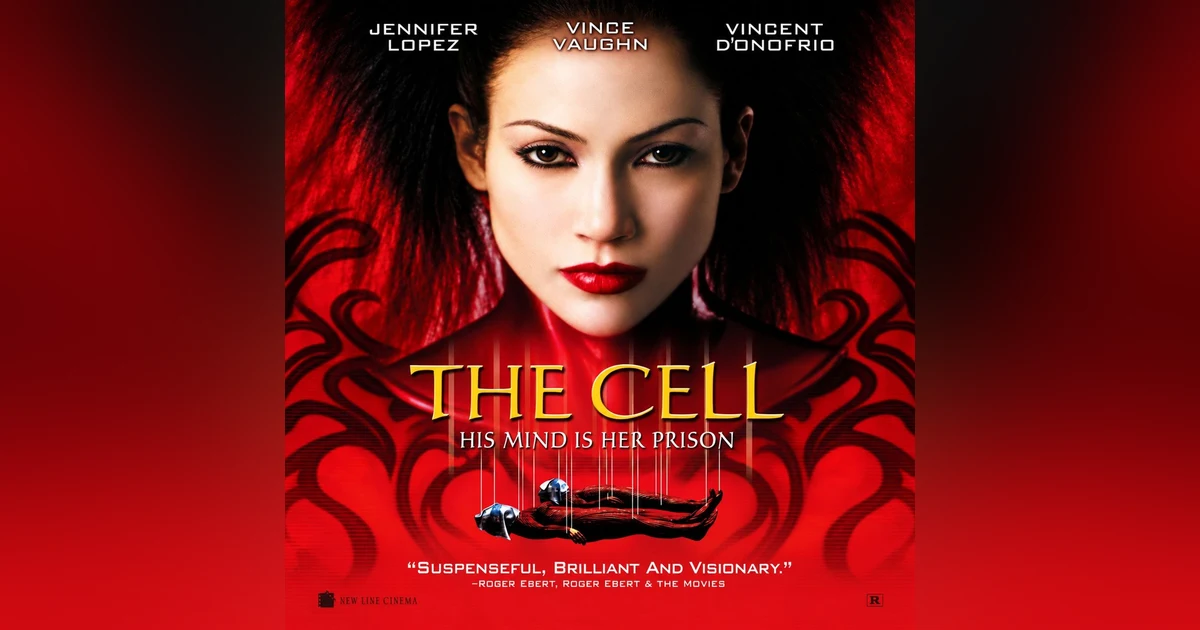
The Cell (2000) sends Jennifer Lopez into a serial killer's mind while his next victim fights to survive. Henrique Couto and Rachael Redolfi unpack Tarsem Singh's surreal psychological horror, Vincent D'Onofrio's nightmare imagery and the ending's troubling questions about mercy and control. Explore water symbolism, childhood trauma and seven ways to interpret the title. Is Catherine a savior—or another kind of captor? A spoiler-filled horror movie review for your Halloween watchlist.
Rent/buy (U.S.): https://tv.apple.com/us/movie/the-cell/umc.cmc.6nztuuqjkm043eux9zn1j0oy6
Bonus episodes & support: https://weeklyspooky.com/join
More scary stories: https://weeklyspooky.com/
Story submissions: WeeklySpooky@gmail.com
All right, and right through here, you'll see the chocolate fountain. Although, unlike most chocolate fountains, the fountain is made of chocolate, and it just, well, it uses regular water. It's a fountain made of chocolate, not a fountain that dispenses chocolate. Okay, so, yeah, that's pretty impressive. I would say so. It's really big. Well, yes, you see, when you're inside the mind of a murderer... Space doesn't really have an issue, per se. Can we back up? Sure, you wanted to get a better look at the fountain? No, no, no, to what you just said. Where are we?
Inside the mind of a murderer. Do you not remember the whole rundown where we were laying on those floating table thingies? Oh, I thought that was a dream. No, this would be more close to a dream, actually. Oh, God, what's that over there? Oh, that is... Yeah, that is a very large box of Captain Crunch. Incredibly large. I know, I mean, like, right beside it. The toilet? The thing with the oozing and the blood and the viscera. You know, this type of psychology is a little bit of a soft science, but I'm starting to think that maybe you're seeing kind of what you want to see.
Because... I see the box of Captain Crunch. I see the toilet, but it's not even a functional toilet. It's a Banksy. It has painting on it and it's gold. I don't know what you're looking for. Yeah, those are both right there. But then like right in front of them is like a big, is it a body or? It is the body of work of a famous poet. Oh man, Francisco. I can never remember his name. I apologize. I should have prepared better. I'm supposed to show you around. If you want to see all the violence and stuff, it's right through that door in the front of the house over there.
It's very well appointed. It even says, welcome to hack. Oh. Yeah. Okay. No, I think I want to stay here with the giant. Fountain that is chocolate. Obviously, you wanted to see the hell that is inside of his mind. So right through this door. Keep going. Don't trip on your shoelaces. He should have wore Velcro. They should have told you that before you entered. This podcast is about why horror scares us. What deep, dark, secret, scary cinema shines a light on. The discussions are frank and involve conversations about abuse, trauma, and mental health. There are also spoilers, so keep that in mind too.
Now, sharpen your machetes and straight razors, because this is Cutting Deep Into Horror. Hello, my spookies, and welcome back to Cutting Deep into Horror. I am your host, Henrique Couto, of course, here with my co-host, Rachel Rodolphe. Rachel, how are you? I'm doing good. Good. Yeah. Is it because you didn't turn 40? That's part of it. I turned 40 like a week ago or whatever, two weeks ago when this airs. Yeah. So, you know, of course, immediately I need readers. Yeah, it was like 10 days later. No, it was literally seven days later. Oh, it was literally seven days later.
My birthday was Thursday and then it was the next Thursday. I'm like, I'm not going to put off getting my eye exam again because I'm already blind as a bat anyway. But yeah, guy didn't even warn me. Just hands me the prescription, says a few things about contact lenses and then it's like, see ya. And then I go home and I'm like putting it in my prescription to order some glasses. And I'm like, what is this add one thing? Per eye? Oh, no. Wait, what is multifocal? Like bifocals? And then ChatGPT explained that I am indeed old.
So, you know, just a good punch in the lungs, you know, after feeling pretty all right otherwise. Well, you got to keep up the theme, you know. Well, oh, thanks. The theme of entropy? Yeah. Is that what you're going to say? Gotcha. No, yeah, it was, you know, an amusingly painful thing. But speaking of amusingly painful, our film tonight is The Cell from 2000. And it's a film that I feel like I wouldn't call it underrated. I feel like anybody who watched The Cell is a fan of it. Yeah, that's that's my my understanding. The last time I saw before we watched it for the show, the last time I saw the cell was I was randomly at the cigar lounge and it was just on the TV.
This was early days of the cigar lounge when they had one big TV in the one area. And then the loungy area has a bunch of TVs. But they were just watching the cell. I was like, oh, man, is this the cell? And they were like, yeah. I was like, oh, well, then I'm going to watch the last half of the cell. This is sad. But it is very much a product of its time, but in a charming way. I mean, in part, just the cast alone. I mean, because it stars Jennifer Lopez in one of her most serious roles, because she's dealing with a serial killer.
Then you got Vince Vaughn, who is kind of at the height of his Vince Vaughn-ness as well. Yeah. I like Vince Vaughn. I don't know about you, but I always liked him. And then we have, speaking of at their most... Lopez and Vaughn. But then at their least, what he's like at all is Vincent D'Onofrio, who is like a completely different person than he's been in nearly any other movie. He's completely transformed into this psycho and he's played a lot of scary, intense people before, but he's really on another plane. Oh yeah. On this one.
You probably don't even know what you know him from. I, I have to admit that I don't. I don't know what I know him from. He was Edgar the Bug in Men in Black. That is it. Yep. That's the big one. I mean, he was Leonard Gomer Pyle Lawrence in Full Metal Jacket, which was what made him famous in 87 because he played the most tragic character in Full Metal Jacket. But he's an incredible actor. He's been in so many films. I mean, he was in Jurassic World. Uh, gosh, uh, he's done a lot of films, um, massive, massive acting career.
So, but, uh, in this film, he, you barely even recognize him. He's so lost in the character of a psycho sexual serial killer who is extremely layered before you even get into his brain. Um, for those who don't know, the cell is basically a horror film about a serial killer who, Who kills women in very, very brutal ways, but he does it in a weird contained way. He likes to lock them in a cell. And I know what you're thinking. Oh, so that's the cell. There are a lot of cells. Yeah. That's one of my favorite things about the movie is that the cell is many things.
Figurative, literal, figurative again. It keeps jumping around. So he ends up in a coma. During apprehension, it turns out he had some kind of very rare ailment that's triggered by water, I think it was. And so he goes into a coma. They find him and he was like, I think he would have drowned in the bathtub if they hadn't found him right when they did. But because of his weird separation from killing, the way he kills is he sets up an automated thing that drowns these women in a tank and he films it while he's not there.
And then he comes back. He has this weird separation so that it's almost like he didn't do it, except that he absolutely did. But because of that, they have maybe 48 hours to figure out where the hell this woman is and save her life before she dies. So they go to Jennifer Lopez's character, who is an experimental neurologist, psychiatrist person who has been experimenting with these methods of going inside of minds of coma patients. Right. But the problem is. That the minds they've been going into are like a little boy who's in a coma, not, not a serial killer, let alone a grownup.
That was, I think they even mentioned that. Like, it's not even just that he's a serial killer. He's also an adult, which means he's just going to be far more intricate mentally. Yeah. Cause when, when they see at the beginning, we see her going into this little boy's consciousness. Yeah. It's relatively simple because he's a little boy. Yeah. And she's just trying to, you know, communicate with him. I think that they theorize that maybe it's a way to bring them out of the coma eventually. Maybe they could get there. Right. Eventually. That it's possible. Yeah, because I believe what it is, and they kind of go into it as the movie progresses, but the idea is that the therapist will go into the child's mind first, and then once they build a rapport, then eventually they can bring the child into the therapist's therapist's mind and then help them like break out.
I think that was the reveal at the end of the movie was that they realized it was better to do that yeah it was better to bring the child or to bring the person into the therapist's mind than to go into their mind which makes sense because uh one of the elements of this film that i've always felt was really important um and is kind of complicated is uh the idea of therapy being a kind of psychological um like not violation but like a like a Yeah. Like the idea that what therapists do is they go into your brain and they rearrange the furniture.
And how much can you even consent to that? And that is a nuanced take because obviously therapy works for millions of people. And there are some people who are going to have bad experiences with therapists, whether it's because the therapist was a bad fit or the therapist was legitimately bad. Usually the latter is not common. Yeah. It's more the former. It's just like, yeah, we didn't mesh very well. But this, I feel like, really kind of dives into the idea of what it's like when a therapist kind of goes into your mind metaphorically and starts digging things up.
Yes. And how it's like, you don't have permission for that. So I almost felt like the concept that it might be more effective to go into the therapist's mind might have been a suggestion that less invasive methods are better or something. But I'm still kind of thinking about it. It's a complex movie and it's... it's famous for being extremely surreal. Yeah. Obviously once they go into their minds, it gets very, very out there. Um, and I thought I had it up. I was going to say where you can watch it. Uh, let's see. Cell phone 2000.
So if you want to watch the cell before we really spoil it all, um, it is available. Yeah. It's basically just available to rent or buy digitally. So, uh, or on like, you know, physical media, if you're, if you're freaky like that, Unlike Amazon Prime, YouTube, Google Play, Apple TV, and Fandango. And I will say, if you've never seen this film, it's totally worth a rental fee to not only see a really interesting movie that is scary and upsetting and intense, but also to really see one of the big markers of 2000s horror. Because after Scream comes out in the late 90s, every movie, nearly every movie changed.
And a lot of people, well, it's incredible because it's a testament to Wes Craven. It's a testament to the work they were doing. It's a testament to the way the audiences felt about movies at the time. Some people feel like it kind of derailed an interesting era of horror movies. Because if you watch pre-96 horror, it's not at all what came after it. It's not a lot of meta... horror it's not a lot of self-referential horror self-aware horror i mean there's a little bit yeah but there's a lot more they were experimenting with monsters a lot uh you know there was deep rising mimic i think that came out that early um and it didn't derail them wholly it's just that a lot of them got overlooked entirely because what became hot was this meta slasher cast the you know all the cast of characters are young people from like dawson's creek basically and which I mean, literally spawned.
I know what you did last summer and more screen movies as well. And then more, I know you did last summer movies. So it's interesting that like a movie like the cell was really doing something more original. Yeah. Um, very, I don't know if the filmmaker was directly inspired by hell raiser, but it has a very hell raiser vibe. Absolutely. Which I, I, which I think works well for it. And while it was not a flop, it was not a huge hit. It was a hit. Okay. By the standards of 2000, it cost about $ 33 million to make, and it made about $ 104.
1 million at the box office. This would be an era when cable, pay cable, and VHS DVD sales were very, very rich. So I'm sure it made money. It made real money. But it wasn't, it didn't take the world by storm and cause an entire era of like, super cerebral horror films to kind of grip the country like Scream did. Or, you know, Nightmare on Elm Street or Friday the 13th or Texas Chainsaw Massacre or whatever. It wasn't one of those. If it was, no one would not have seen it. It'd be very rare. And it was produced by New Line Cinema, the studio that built Freddy Krueger.
Okay, yeah. Yeah. So it's an interesting film. It really is. And revisiting it, I liked it even more. I mean, my memory, I watched it Probably not right when it came out, but I definitely saw it on a home video, probably in 2002, 2003. And I remember just being kind of like, whoa, this trippy and dark. Yeah. So that's kind of like the biggest point you could say about the cell is it's trippy and it's dark. Both accurate. Yeah. So we're going to take a quick break and then we'll dive in deeper into exactly what the cell is all about and what we got from it and what about it scared us.
right after this. So what was your first impression watching the film? Because I didn't realize I gave mine. Well, because I watched it when I was so young. Yeah. But so, you know, sitting down, you know, the dark living room with the projector on, And watching this movie that I'm guessing, I mean, did you know much about it ahead of time? I didn't know much about it, but I do remember like when it came out, I remember seeing trailers and seeing like commercials when it came to video. And I always remember thinking like, wow, that looks really trippy.
It looks cool. I want to see that. And then, you know, never really got the chance to until, you know, now. So I really enjoyed it. I, you know, you know how I like, you know, movies and films and stuff that have like nightmare logic or dream logic to them. Yeah. You can never stay awake during a Fulci movie. He's the king of nightmare logic. Yeah. He really doesn't care. People are like, how did it stand there at the end? He's like, it's a nightmare. That's it. It's a nightmare. Fuck you. Uh, I mean, yeah, usually he would, he would swear at you too.
Yeah. I mean, he was Italian. What do you want? You know, well, he was Roman. I'm sorry. Well, that's yeah. Well, that, I think saying you're Roman says more about you than being quote unquote Roman. Absolutely. That just means he wasn't Sicilian. Thank goodness, right? But no, so yeah, it is. It's a trippy movie, but it's also, it's got, I mean, I don't know if you picked up on it, but it's got a very kind of in the scenes that aren't inside of the minds. Yeah. Because I think we go into three minds total because we go into the little boy right at the beginning.
Yeah, Edward and then Carl. Yeah, and then we go into the therapist mind at one point. So I think that aside from those sequences, it's kind of got a very dry kind of David Fincher style matter of factness. Yeah, it kind of feels like a detective procedural. I mean, that's a good way to put it. I feel like David Fincher... kind of invented the modern, well, the modern being post-90s detective procedural with Seven, the way he did Seven. Everybody wanted to do that too, down to what we lovingly in the business call Euro trash lighting, which is lighting things with fluorescents.
Or, well, really lighting things to look like fluorescents because you can't really, back then you couldn't unless you had specialized tubes, which you could get. You could get specialized tubes, but you had to have like, it took a lot of prep because you'd have to have, they'd have to be for, unless you had the fixtures built, which a lot of times bigger movies would, uh, then you would just have the tubes in there anyway. But often we would, uh, we would salt and pepper, uh, the lighting that we had that were fluorescent lights, but they were movie lights.
They weren't on the ceilings or anything. Um, and salt and pepper is just putting one bulb that's balanced to daylight and one bulb that's balanced to tungsten. So one's blue and one's orange. And it would kind of give this sheen and then, If you really needed it, then you'd just boost the green a little or reduce the magenta a tiny bit, and then you'd have it. But he made that really popular, and he made it look cool. So nearly any procedural movie leaned into this dark atmosphere with fluorescent lights and very matter-of-fact horrors or tragedies or what have you.
And I'm not even trying to pick on Fincher. I think he's a really amazing filmmaker, but he did establish that. In his early career. I mean, it's in Alien 3, which was his first feature. It's all, well, and he came from music videos, which were full of that too, his music videos. Yeah. So, but yeah, so that was a bit more of a digression than I meant for it. But, but so that's kind of my point though, is like, so it has like, it definitely has a sense of the era of like what people, what the visual palette had become to the audience.
Mm-hmm. Which makes sense, because makers are not going to be immune to it, and it's not like it came out the year after Seven or anything. It came out like four or five years later, so why wouldn't it be inspired by that? Yeah, it's like in the zeitgeist. Yeah, exactly. So, as you were watching the movie, and the trippy parts come in. Mm-hmm. Because I'm guessing that you may have been diffused by the non-trippy parts. Yeah, well, what. What was interesting is like looking back at my notes because the very very first scene is in the little kid's head yeah I for the I was having a very difficult time like kind of pinpointing what was going on in the mind versus like what is actually happening in.
Real life mm-hmm Well, I think that's very on purpose. Absolutely it is. And so that just made me even more engaged because it's that little mystery for like the first act of the film, basically, of figuring out like, okay, wait, no, is this real life? Okay, no, this is the dream part. This is the real life part. Wait, this is a new character. Are they real or not? Yeah. So unraveling that mystery just kept me engaged. It made me. Even more excited when Vince Vaughn's character came, because then it's like, oh, now we've got someone who's really in the investigation with us.
Yeah, and he's oddly grounded. Mm-hmm. Well, one of the things I think he did so well, the movie did so well, and then Vince Vaughn did so well, is he's kind of a cliche character. He's a guy who... because of a court thing and whatever, somebody died, you know, because he, because I think, wasn't he, I think he was a prosecutor. Yeah. And they didn't put this guy away and then he murders this woman and he felt horrible about it. So he became a detective because he was like, I want to be a part of Cajun.
I'm not anything else. Yeah. And I don't want to be whatever, whatever they do with it. I want to be my hands clean of that. If they let him go, it's not my fault. I put him in a cage. That's a very kind of cliche. Like, you know, I'm, I'm, struggling i don't uh i mean he has all those cliche moments i mean he's you know like brushing his teeth at the fbi office. Where he's clearly just been sleeping at his desk. Yeah yeah which works because vaughn is great yeah i mean he sells it he makes it believable or at least charming because he's he's just he is vince vaughn i mean there's no doubt yeah he's got the it factor um but because of the way the movie handles everything, that cliche for me, doesn't really, it doesn't really hit in a way that makes me feel, I don't know, uh, uh, talked down to or anything.
I feel like it works. Yeah. Um, you know, even though he is kind of like, I won't let this happen again. That's why I'll never give up, you know, which is a little chilly, cheesy and silly, uh, chilly, which is cheesy and silly or just cheesy, chilly. Um, you're not allowed to be hungry, but, um, But I think he nails it really well, and he does kind of, in an odd way, he kind of grounds everything, even though he is kind of an unbelievable cliché character. So I love that. But he plays against the clichés of Jennifer Lopez's character really well, because she is the kind of stereotypical...
always always optimistic like in it for the kids child psychologist like nobody else gets the kids like i do because you know they're so you know sweet and innocent and i see eye to eye with them like there's a very similar uh psychology to the archetypes they're playing it's just they're you know good cop bad cop kind. Of i mean yeah i i think that the way that they, that their dichotomies play is actually really fascinating. Cause if you look at, you know, Jennifer Lopez and, and later on, she's like referenced by religious iconography that actually kind of plays up this like idea that she's oddly pure and she's oddly kind and giving and sincere.
But then you have D'Onofrio's character who is a monster. I mean, he's just a monster. Like the moment that his introduction scene is, is mortifying and terrifying all at once. where you see the reality of what he does to his victims Vaughn to me is oddly grounding because D'Onofrio is almost, almost a caricature. I mean, because he's just so monstrous, but, but, but, but because they show you what he does, you don't laugh or giggle. You're like, Oh God, you know, so it keeps it that grounded in, in reality. But, you know, Lopez is a dreamer and D'Onofrio is a comically evil, I mean, so beyond evil monster.
And then Vaughn is just like hanging out being like, hey, I'm really flawed. I'm just trying to make sense of all this. He's right in the middle. He's right in the middle. And I think that that works really well. Yeah. You know, it plays really well with it. But. Yeah, I do. It did, especially like, sorry, I know we're getting ready to go to a break, but it did. Especially give, give away the secrets of the show. Jeez. Um, it, it gave me, especially in the first act, as we were, as we were learning about the characters, I got the feeling like this is what would happen if you took a character from like the original run of law and order and put them in the matrix.
Hmm. Okay. Just, you know, they're super grounded and like, yeah, we've just got to catch these bad guys. And then it's like, so anyway, we've got to go into this guy's brain. You're like, oh, okay. I'm just here to catch the bad guy, dude. And just for the record, I mean, it was D'Onofrio that was on Law & Order Criminal Intent for 10 years. That's just funny. One of those shows, actually it was D'Onofrio that was on one of those shows. That is funny. But when we get back, we'll dive a little deeper into the serial killer and his brain and what it means, what it all means, right after this.
So, one thing I did notice as we started the film, because the initial score is, like, really discordant, and there's, like, horns and, like, Middle Eastern, like, stringed instruments and everything. Which i'm not trying to to steal your digression uh but i i meant to mention and then i got sidetracked by us talking about the the dichotomy of the three main characters yeah um while it is a you know it was a relatively high budget movie and they could build all kinds of things um some of the moments that were really surreal where you were kind of like whoa especially the beginning they filmed those in uh nambia and barcelona spain like on the outskirts oh okay So that's one of the ways they were able to kind of get that other world thing.
Yeah. Kind of a world away. Yeah. Oh no, that's cool. Cause I do really like like the change in settings and obviously a lot of them are stages. Oh sure. Sure. But yeah, there is especially like desert scenes. Um, so yeah, that's really cool. Uh, but yeah, as, as the movie opens on this desert and, um, Jennifer Lopez's character is riding on a horse and she's in this beautiful white flowing gown. Lots of flowing. Lots of flowing imagery. Fabric and such. Yeah. And I love her costume changes, which we'll talk about that more. But, you know, the music was really discordant and the credits came up and said music's by Howard Shore.
And I looked at you and I was like, I know that name. I know that composer and I can't remember who it is. Yeah, Pauly Shore's dead, right? Yeah. That's a joke. I hope. I'm checking to make sure, but yeah, I'm pretty sure. It's a joke. I didn't look up his parents, but yeah. It's a joke. Will he be the father of Pauly Shore, not the son of Pauly Shore? No, you're correct. But he's not. So anyway. No relation. Zero relation. No relation at all. None. So, you know, we watched the movie and then I finally had to look it up and, oh no, Howard Shore.
who composed music for The Silence of the Lambs and Mrs. Doubtfire and Ed Wood and The Lord of the Rings. And The Hobbit. And The Hobbit, which is really funny that, you know, obviously I'm a huge fan of Lord of the Rings and The Hobbit. That was a bit of information that was tucked away in my brain, but I couldn't access it. I had to look it up, and I just thought that was really funny, kind of tied into the theme of the movie a little bit. Well, you... You're right. I mean, it's awesome. But there's an even more interesting element to his scoring career because his first film, I believe that was, yeah, his first film score for a major film was The Brood, which was one of David Cronenberg's first films.
Oh, shit. He's Canadian. And he went on to score all of Cronenberg's subsequent films except for The Dead Zone. Oh, damn. I didn't remember that. So he was a longtime collaborator with Cronenberg. He did The Fly. But he also scored five or six films for Scorsese. Damn. Including After Hours, which in my opinion is one of the most underrated Scorsese movies ever. You have not seen it. I know you haven't because the first time I watched it, you weren't there. So I know you didn't see it because I only saw it recently and it blew my mind.
I immediately bought the 4K of that. I was like, I have to have this around. It's super good. But he also did the score for Big. from penny marshall starring tom hanks where tom hanks gets turned into a from a little boy into a grown-up yeah um he did so many films and that was all before silence of the lambs you know before one of the biggest movies he he ever did um but he also uh scored philadelphia which was a another film by john jonathan demi which also another tom hanks movie the the film about hiv oh okay uh and then mrs doubtfire of course which is very very solid and um i mean i love mrs doubtfire but like uh mrs doubtfire in philadelphia being your back-to-back scores You might think I'm going to make a joke about how different they are, and that's fine.
But no, they were like two massively successful movies that came out right back to each other. Yeah. Philadelphia won Tom Hanks' first Oscar. Oh, damn. And Mrs. Doubtfire became, it was a gigantic monster hit. It was everywhere. So he's had like a really fascinating score. But where it gets funny is he did David Fincher's Seven and The Game. So he did two Fincher movies before this. I, how did I, I love the game, but somehow my brain did not accept that Fincher was the director. That's a phenomenal thriller. So, I mean, he, he had done, and my point is like, he had a, he had a stellar film score career.
And this is all before he did any of the Hobbit or Lord of the Rings or anything too. So he had a massive, massive, fascinating career. And yeah, You know, and then he did stuff like he scored Dogma. Oh. Yeah. And then right after Dogma, he did The Cell. So in my estimation, from looking at this, this obscene career that doesn't even end there, I mean, he's still alive and I think he's still working. I believe so. But what's crazy is his career was on such a trajectory. I feel like they brought him in for The Cell either because the director was Desperately wanted him or because the studio wanted to get, to get like, to buy some cred.
Ah, I can see that. I have it. Cause I, I feel bad. I didn't have the director, right. Uh, the director is, uh, Tarsam Singh. Uh, that is right. Right. I got paranoid. Tarsam Singh. Yeah. Tarsam Singh. I, as a filmmaker myself, it would be horribly inappropriate for me to say the wrong director, but he, he, he had a pretty interesting career. He didn't do a million huge hits. Um, but I think the cell was his, yeah, it was his first feature. So, and actually I could have guessed that simply from, they got the composer that literally just did an Oscar movie and then did an Oscar movie three years earlier and has done nothing but massive, massive things.
Um, that makes sense. Cause they're trying to like, you know, set him up for success. Yeah. So, Anyway, but that's that's I just want to mention that, too. Like, I looked into that composer a tiny bit and just noticed the obscene amount of notable credits, both in my personal opinion and in the lexicon of film lovers everywhere. Yeah. So and when we get back, maybe. We'll talk about the movie some more. I don't know. Why? What the? My Alexa just started talking for no reason. That is terrifying. I think we're haunted. Oh gosh, I'm out of here.
We've got to join Sarah Connor and the resistance. Oh God. I want to mention, by the way, The writer of this film is Mark Protasevich. I think that's how you say it, Protasevich. And I think that this was a spec concept he sold to New Line Cinema, which is cool. Oh, good for him. He wrote a few unproduced scripts before getting The Cell made. But after The Cell, he made a few movies that were big. He made Poseidon in 2006, which I think was a hit. That's during a blind spot when I didn't go to the movie theaters.
Oh, no, was not a hit. Well, huge budget, $ 160 million and it made 181. But that's a spicy meatball. But after that, he wrote I Am Legend. Oh, whoa. And I know you like I Am Legend. I'm pretty sure. I do. I think I've talked to you before about how I like, that's one of the few ones where I actually like the movie more than the book. Wow. Yeah. Don't tell anyone else I said that. I mean, that movie cost $ 150 million and made $ 585 million. I mean, that was a hit. Then he wrote the first Thor movie for Marvel.
Okay. In 2011. I mean, he was one of the story developing people, I guess. But it was interesting because I was looking at this and I was like, wow, there's a lot of breaks in there. It doesn't seem like he's working a lot. He wrote the American version of Oldboy from 2013, which I liked it, but it's hard to beat Oldboy. And it was a huge flop. Oh, it would be, they spent 30 million on it and made five at the box office. Ouch. So I was like, wow, his career hasn't like been that intense.
And I was like, oh, but then he also like created the, uh, Apple TV original series sugar, which is on its second season right now, I think. Okay. And it's, I I've, I've actually, it's on my list to start watching once I, once I have, uh, another slot in my, uh, free, I'm making air quotes, free time to watch TV. But just a really interesting trajectory. But it all started with him having a concept for the cell. That's so cool. Yeah, sure. If you're into that kind of thing. If you like factoids. Which we don't.
No, sir. No, sir. Not at all. So, but yeah. No, that's really cool. I mean, for a concept that he came up with himself, I really like this concept. And I think it's interesting that you mentioned at the beginning that the movie does kind of play with the question of how much consent can you give a therapist? Because that's one of the things that they kind of introduce is when we meet the murderer Carl, he's... drowned a woman and he's like processing her body but he's got you know those hooks on his back yeah like.
Suspension suspension yeah and he bleaches them yeah he bleaches them super white yeah. Again a purity thing um so he like suspends himself above their bodies to you know like play with himself and like Get off on it. He sexually gratifies himself while having this bizarre separation by being suspended above them. So there's no contact. It's super out there. It's super weird. And so they mention that after they bring in Carl, he's in this vegetative state. And they remove the hooks. And Jennifer Lopez's character, Catherine, she says, like, you shouldn't have removed the hooks because...
he clearly gets a sense of comfort from the feeling of suspension, of weightlessness. But then turn around and when she and any other therapist or anyone else is getting ready to go into someone's mind, they get suspended up above a table in a very, very similar manner. And I just, clearly that is on purpose. It's kind of saying like there is There is kind of like this interplay of, you know, trust that you have to have between a therapist and, you know, kind of asking how much trust do you give them versus someone else? Well, and I may have sold Catherine Lopez's character a little too simply.
I mean, she's got demons in a way. I mean, they're much milder. I mean, she wants to save people because she's seen hurt and stuff like that. And it does kind of open up the question of like, does she have a savior complex? Like how much is she doing for others and how much is she doing kind of for herself? You know, depending on how you look at it, because she's a child psychologist generally. And the whole point is that when they find out that this serial killer guy that they've been hunting forever is in a coma, it's just like through whispers.
Somebody's like, I've heard they're doing this thing with coma patients at this one hospital. Like, it's super experimental and super early. And then they have to go to the doctors and suggest this. And they're just like, I mean, that's not really what we do. And it's like, there are dangers we don't even understand yet. But then it's like, but we're on a clock. So, like, yes or no. Because if it's no, I got to leave and try to figure something else out. Yeah. Because their hope is that when they go into Carl's mind, they're going to get clues.
Mm-hmm. That's literally it. They just want to get a clue that could help them figure out something because they've already ran all of his personal stuff and he doesn't have any secret properties or anything. There were no clues in his home that they could decipher. So they're just trying to find anything about him that might tell something. Yeah. And of course, Catherine is curious. And one of the first things that happens when she's really in Carl's mind, aside from all the terrifying things Imagery that's presented is we start to see the child Carl. And he's presented as being abused and neglected and also being oddly protective of her because there's a part where like the dad's coming and he slams the door shut on the closet, thereby protecting her.
Yeah, keeping her safe yeah his dad. Except then she's like standing in a bucket of eels and stuff it's really the movie's wild um one of my favorite moments just because it's like whoa okay okay um but one of the elements that the movie really gets across that i think is is really valuable is she keeps encountering young carl but then the evil carl is, like, he's, like, depicts himself as, like, some kind of, like, king. Like a god emperor. A god emperor is a good way of putting it. But, like, through the styling of, like, really antiquated theater.
Mm-hmm. You know, big costume, big hat, big motions, big gestures. And again, with the big flowing cape and gown and everything. And, and, And we find out very quickly that he has, you know, an obsession with control. Yeah. With controlling others, which makes sense because, I mean, that's what he's doing to the victims is he's controlling them, you know, kidnapping them and then locking them up and then killing them on his whims, but then keeping that mild separation. And that is, that's actually where I was trying to go with it. I was having trouble finding my footing.
That separation. is kind of like young Carl and the king monster in his mind. He's trying to be both. Yeah. In a way. Yeah. But the element of the movie that is truly kind of the heartbreaking moment, especially the heartbreaking moment for Catherine, is she just can't seem to accept that they're not separate. They're just not. They are literally the same person. They're just two deviations. But they're literally the same. You can't have one and not the other. They either die or they don't. Well, and not to jump too far ahead, but that is kind of like the climax.
Yeah, yeah. But she struggles with that the whole time. The basic is string writing. Most of it is knowing what you're supposed to do and trying to decide if you should do it. That's like the ultimate conflict in almost every script. So that's one thing that really kind of fascinated me. That and witnessing the child abuse that Carl experiences as a child and seeing how he had no control. And then, yeah. So he wants ultimate control. But then this weird, this other weird element where young Carl is like running through this hellscape of memories and yada yada.
And the monster king Carl, I'm going to start calling him that. The monster King Carl is just lording over his dominion, his dominion of hellish experiences and the hope to hurt someone else. It's really fascinating. It is. And it's really, it gets your brain juices going about like what is going on here and we'll figure more out right after this or we won't. Before we get too far, we've discussed the therapist. We've discussed the detective. We've discussed the murderer. But I think we should. I know what you're I know where you're going. Yeah, I know where you're going.
We haven't discussed the fact that no one in this entire damn movie that's inside of the killer's mind or inside of Jennifer Lopez's mind or inside a little kid's mind ever when something weird happens or something bad happens or when they're struggling. No one, no one ever went. do you mind? Sorry. I, I, I, I thought of that. Like the moment you started talking, it was killing me. But anyway, but you have an actual point. I just, just the idea, like, like a giant snakes lives by. I was like, Oh, do you mind? Cause it's a mind there inside of, and it's just a, uh, like, uh, uh, Dr.
Zayas from planet of the apes. This mind is something. Anyway, Um, and nobody ever said a mind is a terrible thing to waste. Like if they saw a trash can or something, uh, it's so many, they, they wasted potential. They should have hired me to punch the script up. I was 11. You could have done it. I would have nailed it. Yeah. Maybe 12. Anyway, but no, you were, you, so we were, we've been talking a lot about, yeah, you were saying about the, the, the, the kind of lead three, especially, you know, the serial killer, the, the, the therapist who, you know, cares too much.
the detective who just won't let this happen again. But you're right, there's another really interesting character who gets a decent amount of screen time and it's all really quality screen time. It all really pays off. So the victim, in air quotes, victim, Julia, and she is victimized by Carl. So what happens is after the initial murder, Carl needs to find his next victim. And he's driving around. He sees some lady, you know, out in the city. He's driving around with his adorable albino dog, which feeds into all of it. The whole cleanliness and the bleach and stuff.
Yeah. Sorry. So he does. He has an albino German shepherd, which is like a big thing. So he's driving around with his dog. He sees this lady and ends up following her. And the thing I love about this character is Every once in a while in a film, you find someone who does it all right. Are you talking about like in the air quote, the victim realm? The victim realm, yeah. Like Red Eye. Exactly like Red Eye. Which Wes Craven, I think, or maybe it was the writer, the original writer, I can't remember which, one of the creators of Red Eye said that all they wanted to do was make a movie where as you were watching it, every time you were going to go, why doesn't she, she just does it.
Yeah. Yeah. And it doesn't, like, that is exactly my experience when I saw it. So, no, I know exactly what you're saying. The badass victim. Exactly. Yeah, yeah. The victim that, like, doesn't sit there and just, like, let everything happen. So, our introduction to Julia after that initial, like, just, you know, Carl making her, objectifying her. That's the word. Yeah, and literally, like, creating her into an object, not just, like, looking at her and going, woo! No, but, like, literally. No, he puts her in a box so he can look at her. Literally objectifying her.
Yeah. The introduction is she gets off of work, she's walking through a parking garage, and she does everything right. And you and I have talked before. Sorry, didn't mean to punch the microphone. Oh, it's fine. I'll send you a bill. But you and I have discussed before, like, something will happen in a movie and you're like, no, what do you think? Cause you are a tiny little person. What, what are you thinking in this moment? Especially stuff like when we watch like Henry or confessions of a serial killer. And it's like this scene where like a chick just takes a ride from a guy and then he makes it like super tense.
You know, like, what do you think? Cause like you, you know, I could have a version of that experience, but not the exact version. Yeah. Experience. Cause I've always got that little, that tinge of like, I'm a dude, even though I'm not like a tall dude and I'm not like a tough dude. I can still like, I can still like maybe punch your skull and maybe, I mean like it's in there somewhere in my, but you, it's like, if you punch their skull and you gotta be really dedicated, you gotta really know how, you know what I mean?
Like, you know, I don't, it's, it's, it's, it's very primal. It's a primal lizard thing. Oh, absolutely. So this, this lady does everything right. In that when she gets off work, she's going through a dark car park all alone. Could you say that three times fast? No. We got one, and that's it. That is the correct answer. I started the show, I was worried I was getting a really bad headache, if I'm honest. And all of a sudden, I'm not, and now I am feeling perky. I like it. And everyone has to pay the price on that.
Oh, no. But I don't want you to lose your thoughts, though. I just want to have fun with it. So she's walking through the car, the parking garage. She is parked under a light. She's parked near a door. She, you know, looks around. She has her keys, you know, between her fingers as she's walking up to her car. She gets in the car, immediately starts it, doesn't even stop to buckle before she starts backing up. Yeah. And then you hear, and she looks in the rearview mirror and there's the white dog. And that's why I love this movie is because like that would have got me.
Yeah. I would have gotten out of the car. And then in a hilarious turn of events last night, you saw used cars for the first time and saw the exact same gag used to sell a station wagon. Sorry, it's just, I literally, as you were saying, like, the backup thing, and I'm remembering, I'm like, oh, yeah. That's literally what he does. Oh, my dog! You killed my dog! He would have wanted you to have this gently used 1977 station wagon for your beautiful family. We'll buy it. We'll buy it. And the undercoating. Yeah, the undercoating, too.
Thank you. Sorry that was fun it was really funny but no no you're right he uses a classic and you know you know that ted bundy one of his moves was i'm i'm trying to find my lost dog yeah sorry to go back to the reality of the conversation yeah it was it was a move because women have i mean i have a soft spot for animals, but women tend to have a very, I wouldn't even call it a soft spot. They also have like a cruel hard spot for animals. When, uh, when John wick was being test on screen for test audiences, they were worried.
Well, they weren't worried, but they knew the movie was like appealing to men. And when they got their questionnaires, they were like, okay, um, what did you think of the dog dying? And they were like, oh my God, it's horrible. And they were like about 50% of men or so were like, that's, that's like the worst thing ever. About 85% of women were like, that is the worst thing ever. But then about 90% of women were like, he should have killed them worse. Like, like they wanted way more justice for the dog. So I just, I love that story.
Cause it's, it's a perfectly paints a picture, but yeah. So like, and plus like, if you're a dog lover, The only thing you could imagine worse than killing somebody's dog would be then leaving. Right. Like if you're going to kill a dog by I mean, if you accidentally kill a dog, you should try to get it to its owner to at least give the owner some peace of mind of like, this was an accident. I'm so sorry. Exactly. Even though they may be mad, it's something they can they could sit with longer. Well, the person really didn't mean it, though.
It was an accident. At least they showed they cared. I told you that story about my buddy Andrew's dad accidentally ran over a dog. Oh, no. Oh, it's unfortunately a funny story. Oh. Because he was riding his motorcycle and he accidentally hit this dog. And he didn't know, it wasn't his neighborhood, so he didn't know whose dog it was. So Andrew was maybe four, three, four. He was really young. And he had him bungee corded to the front of him. That's how he rode with him. Okay. Like a poose, but it's bungee cords. Yeah, yeah.
This story is literally a nothing good ever happens. And it's literally Andrew's dad's story. But so Andrew's dad, dog lover forever. His motorcycle club was called family dog. I mean, like he is, he always loved dogs. So he picks this poor bloody dog up and he just knocks on every door. Is this your dog? But the part that's funny is the, the image of what it, this biker covered in blood, holding a dead dog with a baby strapped to his chest is knocking on your door. It's awful, but it's like, what a frigging image, you know?
And they did find the people and he, you know, he, he sat with them and said, I'm like, I'm so sorry. It ran out in the street and I couldn't, you know, and, and, and he was able to, Andrew said that the lady was much more understanding. Cause he was like, I couldn't like veer hard. Cause I'm, I'm, I got my, I got my three-year-old with me and she was like, no, no. I mean, you can't want to do that, you know? So, but that image is forever. And I'm sorry about all my digressions. When we come back, we will talk about her getting abducted by the serial killer.
Maybe right after this. So, Julia. That reminds me about the Monopoly man. I'm just kidding. I am 100% kidding. I have no digression. I just thought it would be funny to let you get like three words out. The Monopoly man. So Julia thinks she's hit this little doggy. She thinks she's hit the dog. She gets out of the car, and that's when Carl comes up behind and gets her. And that, as an audience member, that would have got me. Absolutely. But what's great is There's, you know, there's a short period of time, you know, as we as the audience will occasionally tune in to Julia caught in this cell and like there's no apparent help for her.
She's not your average passive victim. No. She pretty quickly after like a good while of waiting, I would guess in movie about six hours, eight hours, 10, maybe at maximum. Yeah. Um, she immediately starts looking around, around her cell. Like, what can I use? What can I do? There's not a door. Like there's not, it's a, it's a glass plexiglass cell. There's nothing. It's what, is there anything on the ground? I'm pretty sure he welded her in because they established that he has this like machining building expertise. And we should mention the, the literal cell.
Cause there's one literal cell. Is in like an oil refinery building that like it's underground in the middle of the desert. Yeah. So it's kind of like a place where you would only know about it if you talk to some guy who knew that there used to be a refinery out there. Exactly. Which is another wonderful touch of how like of the atmosphere and stuff is that it's out in the desert. So she doesn't and she doesn't even know where she that she's in the middle of nowhere locked up. She just knows she's in this box that has no apparent entrance whatsoever.
Because it's been sealed by a welding, like by welding, which is just terrifying. But yeah, she's immediately hunting for something to some way, some anything. Anything, yeah. A screw, a vent, anything. Because the other thing that's kind of crazy about that cell, I mean, it's built with an odd amount of honesty. It has a drain. It has a toilet. It has a sink. It has a way for her to get a little bit of food. It has ventilation so she can breathe, which is terrifying because it means that he wants it to legitimately be livable until he decides you're dead.
Yeah, until it's not. Then it can fill with water. Yeah. And I think that's actually scarier. Like, I think it would be less scary if he's like, it's just a box you're going to die in. So, like, the air is going to get pretty thin. Oh, yeah. You know, shrug. Yeah, yeah. But no, it's like this is built so you could stay in here for months. There's a shower. You know, there's everything you need to be okay. A bed. Like, I think that's scarier. It absolutely. Because it shows the level of planning and awareness. And the opposite as well.
The level of planning and awareness, but also how far compartmentalized his brain is. Oh, yeah. They're just going to die in there. But it's like, no, but the whole point of why I can do this is because they're not going to die, but then they die. But it's not really me. It's just a timer I set, which isn't me. That's what makes that's because that's insanity. Well, yeah. And they go into that level of insanity, that level of psychosis toward the climax of the film when he explains the first time he drowned something that it was the first time it was an act of mercy.
And so there is that level of separation. But to him, death is purity, which, again, is really insane. So it's like. It feeds into it like this whole thing. And it's tied to his abusive dad who very abusively in his way of doing it baptized him. So I think that might be where he got the cleansing concept. Yeah. So, you know, the layers upon layers make make for a tasty onion in this in this movie. But I'm sorry, I got stuck in the weeds because I just kept thinking about the amount of effort to make it a real livable space when you're just going to kill them.
It's just a level of cuckoo bananas that we can't actually sit in and really get. Right. And that makes me so scared. Yeah. There are elements of compulsion I can at least get, but I don't get that. If I'm like, I'm not going to eat potato chips anymore because I've gained too much weight, I don't come up with an elaborate... Thing that makes me honest while also dishonest at the same time. That's insane. It is. It's just truly crazy. Sorry. And I guess I really just want to say, like, what great writing. Oh, absolutely. Yeah.
No, because there's I mean, there's a lot that is spelled out. But the all the information that we get about, you know, the construction of the cell that Carl keeps his victims in, how long he's been doing this. The process that he uses after, we all get that kind of, like, secondhand just hints throughout the movie. And going back to what you're saying, like, I feel like that's even scarier than having this whole exposition of, well, the first time he killed was this time, and then, you know, this is how he does it. It's like, no, you have to, like, piece it together yourself in much the same way that Julia does.
Mm-hmm. Because she's learning about this process via demonstration. Yes. Quite realistically. Yes. But again, she is not passive. So she finds a way to at least continue surviving until help does arrive. And I really like that because, you know, I feel like sometimes it's tempting to To, you know, just use victims as like just a means to the end of the story. But with this, I feel like, no, Julia has her own arc in this. She does. I love that. And the fact that due to her not being a main character, like a main, main character, there's definitely three main characters in this film.
The fact that we would like be not with her and then come back and she's done stuff, it gives her a dimension. And, but this is the thing. This is the cruelty though. The fact that she is so smart and that she is figuring out how to breathe through one little pipe a little while longer, which she couldn't sustain forever. Right, right. All of those elements are great, but they make her more believable, which makes it more heartbreaking if she dies. Mm-hmm. And that's kind of where it gets cruel, though, is when you mentioned the idea of it just being a means to an end.
Not just, but being a means to an end. Because we don't want to say just, because everything that's in a movie is a storytelling mechanism. Yeah. Because it's a storytelling exercise, is making a movie. I remember, because this was about sexual violence. I had a conversation with somebody years and years ago. They were like, I hate the idea that it's just a storytelling mechanism. And I was like, but everything that happens in the movie is a storytelling mechanism. Because it's just a story. Yeah. It would be worse if you put some kind of sexual violence in a movie and it had nothing to do with anything.
It didn't affect anything. That's bad. That's just exploitation. But if it pushes the story along or if it causes the climax or if it causes the resolution or if it causes the main character to finally become a part of the story we're seeing to become the protagonist fully. That's, that makes it matter. But if it just happens and then nothing else happens, it's like, uh, I guess at least it's not a story point. It's stupidest criticism I'd ever heard. But not, you didn't say it. No, but you can pretend I did though, if that makes sense.
Oh, as a little treat for myself? Yeah. Well, speaking of treats for ourselves, we'll, uh, we'll be diving deeper into some, uh, other cells, which at some point we're going to have to have a knockdown drag out of how many cells are there? Oh God. Not yet though. That's coming later toward the end of the show. But we'll be back. So the the scenes with Julia give this really great juxtaposition because she is so, you know, she's so rooted in reality, not just because she's the one stuck in the cell but she's the one you know like who has the most agency to like do the most in the moment because they're all stuck just trying to get information on where she is but it's a beautiful juxtaposition because you've got her scenes and then you've got the scenes with Vince Vaughn's character and Jennifer Lopez's character when they're in Carl's mind and it's all like giant staircases leading up into the sky and like a really long hallway full of clocks.
And there's a horse that gets, you know, sliced into all of those different sections. Yeah. Right from the get go, we get that like shocking little bit of 2000 CGI horror. Which is even creepier because it's early 2000 CGI. You're goddamn right it is. But it, that was also a really great scene because it kind of, it shows that while Carl is an absolute monster, that's not all there is to him. There is that child Carl because child Carl sees that she's going to get sliced up just like the horse. He pushes her out of the way and saves her.
We kind of learn, you know, a little bit about him, that there is something there that does care. It's just like, small and stunted and it's scared and lost and trapped and trapped in his mind um but there's there's other scenes where we meet the the god king carl and um you know he's in these giant uh you know like marble palace with like these huge um columns and he's got a a long uh billowing cloak that's tied to his back with hooks. And I like how lots of the gruesome realities are motifs. Yeah. In the inside their mind.
So like the hooks are a motif, but in reality they're just these metal things jabbed into flesh. I think that stuff is really, really fascinating. It is. And there's, you know, obviously the motif of water. The first time that Catherine goes into Carl's mind, she's kind of like ushered in through a series of visions and images involving water. So Carl's baptism slash drowning or his dog shaking water in super slow-mo, shaking water off of its back. Or, you know, she comes out of a sewer when she initially erupts into his mind. So there's a lot of symbology involved.
And we start to learn that that's like the big, that's kind of the big issue is they are on a clue finding mission. How do you find clues when literally everything is a symbol? Yeah. And, and one element, and I'm going to warn you right now that I have like a lot, I I've, I've been stewing on this for a little while. Um, But I have a lot of thoughts and opinions and theory and alternate theories about what things could mean in this movie. Once we're talking about the once we're talking about it's over and we're just talking about the whole thing is a one big piece.
Yeah. I have a lot of thoughts. Okay. I'm just warning you now because it's going to get it's going to get brutal. But I actually love this movie. I and I don't think that any of the interpretations I got from it are bad. Yeah. Like or make the movie not good. It's just that like I think there is a very positive way to understand the end. And there is a very soul crushing way to understand the way this movie ends. I believe that. And I think they're all probably true. I'm curious because I mostly just got the positive.
Oh, well, we'll get to that. I figure we'll we want to let's get through the other stuff because once we've once we've finished talking about the pieces we like. then we can judge the whole piece. Okay. But one thing I wanted to mention about his world being so confusing and chaotic, in a way you could read that as, oh, well, everybody's mind is kind of different. It's kind of what it's been built around. And obviously his mind has been built around horrific shit. Or you could look at it as, your sanity is holding you back from understanding what you're seeing.
You just made the perfect Bugs Bunny face when he's not sure if he believes that or not, where your lower lip got really low and your upper lip followed it. That was really funny. I wish you all could have seen that. Lil Blank would be proud. Damn right. But that's one thing I thought about too, is maybe one of the reasons it comes off so like that is because sanity holds you back from following his lead. But I'm not a hundred percent that I believe that. Cause like the kids world is a bit dramatic too, but it's not nearly as confusing.
No. But then also with his desire for control and his desire to be a God, you know, with the evil King car, cause he has, he actually calls himself, um, Oh, he calls himself, uh, uh, King Starger. Yeah. Yeah. But I like calling him just like, you know, Lizard Queen Carl or whatever. But there is an element where it's like he's presenting his, it's like he's presenting the hideousness in the way that he believes it should be perceived because he relishes it. Yeah. So to him, you know, my creation is beautiful and complex and interesting and da da da da da.
And it's like, dude, you live in a one bedroom apartment. You never wash your hair and you frigging murder people. You are not a king. I mean, okay. Kings didn't bathe a lot, but otherwise that's really all you have in common. That's it. Yeah. So that's, you know, and also a side note, the fact that he had an aquaphobic reaction of some sort that made him almost drown in the bathtub is also just a great touch. Yeah. I just side thing. Like, that's also a great touch. He was like going to drown in the bathtub after all of the stuff we learned about his psyche and water and baptism and mercy killing and all this stuff.
And then it's like, Oh, Oh, there it is. Yeah. And to go deeper about his God complex, you know, because of the drowning, the little bird to show kindness. And then his father basically like baptizing him too hard. I don't know how else to put it. So he started to actually drown because his dad, was an angry, drunk, mean guy. And to him, he was like, he needs a lot of it because he's not a good son or whatever. It's kind of, that's kind of the vibe. Yeah. So he held him down too long and it scared him.
I almost, well, I didn't almost, I drowned when I was a kid. Twice. Wasn't it? I was going to say it was more than once. Twice. Yeah. And it's funny because when you tell people like that, I'm like drowning just means that like you fall in the water and you couldn't get yourself out and you started breathing in water. Like it doesn't mean you die. You can drown or you can drown. Yeah, you can drown to death. Yes. That's not the same as just drowning. You can do many things to death if you're dedicated enough.
That's why I'm not allowed at Denny's anymore. Yeah, we don't like to talk about that. But, but, but. if you think about him as a god, the idea that drowning is mercy and cleansing and da-da-da-da, he can look at the world, the world he didn't create, the world that's so imperfect and so... dirty and all these things that are bad and, and really believe that he is saving people. Yeah. By killing them, preserving them and moving on. Now, obviously it's deeply perverted. It's not real. I mean, he's, he's made that up in a, in one of the many compartments of his brain so that he can do what he wants to do.
Right. But I think that once you look in his mind and this whole thing where he's just this decadent, brilliant artistic leader who, It shows you the reality that he actually is, that actually is the way the world he created and it's beautiful and it's, you know, all these things at first. Uh, but with a tinge of all the awful stuff, I just think that's a really interesting element to consider that he could very easily be like, no, I'm saving these people. This is my duty is drowning these women so that they don't have to be in this imperfect world.
Mm-hmm. Yeah, that's, no, I think that was definitely in there. Yeah. Kind of like the reasoning behind what he was doing. And there's a really interesting scene where Catherine confronts Carl. It's an adult Carl, but he's not in his like God form. And I found that scene really interesting because of how vulnerable he was with her in that moment. Yeah. It's one of the few times where he was so vulnerable with her, but not as a child. Okay. Yeah, I see that for sure. But there is still that, you know, that evil brokenness of like, yeah, this all happened to me.
Therefore, that's why I'm the one who has to cleanse these women or that. Therefore, I'm the one who has to do all this. Yeah. And that, I mean, there's so many layers of dark. you know, subtext. I mean, but, but I feel like, and this is not like, I think this is a common interpretation. The cells real challenge to the audience is, um, whether understanding how, uh, a heinous creature, uh, was created is, is like the same thing as forgiving them. Exactly. And I think that that's a legitimate question in life. Um, and, and I think that that's a, and that's why I think like, uh, when we get into it, I have so many challenging interpretations and we'll, we'll, we'll get there soon enough.
But first you gotta, you gotta eat your vegetables before you can have some more cake. In reference to the whole idea of like, if you understand a monster, does that allow you to forgive a monster? And, and, and the whole concept of forgiveness is a super, I would say it's a pretty deep concept. I mean, but only like a billion people in certain religions have been working on that problem forever, basically. Since we've been human. Yeah, yeah. But we get, this is actually my favorite part of the movie, although I feel like it's obvious that it's coming.
Eventually, Catherine is stuck in there. Because one of the problems is if you forget it's not real, then you can't leave. Yeah. Which, of course, in sci-fi, there's always some fun, weird rule like that. If you forget who you are, then you can't leave. And as we see, but the scientists can't see, Carl has made her convinced she's a part of his creation. So now she can't really leave. So we got to send frigging... unwashed, doesn't-go-home Vince Vaughn into the dream world without any training or preparation, we have to. That's what you do. Because if they didn't, we riot, damn it.
No, because we want that. I just spent all that time setting up how Vince Vaughn is kind of the grounding element of the film. Yeah. So throwing him into there is like a no-brainer. You gotta do it. Hope you don't mind the puns. Oh my god. Yeah. I lobe a good pun. Okay. I, I, I, I couldn't think of another one in time. Okay. So if I, if I missed the six second thing, I have to move on. So, but so he decides he's going to go in there cause he's going to try and pull her out for the combination of, he has gotten to know her.
They are not particularly love interests to each other. Although I think they did have a little chemistry. They did, but it seemed more like to me, it seemed more like, um, Mutual respect. Well, eventually. Eventually. Because at first he thinks she's just a quack. Oh, absolutely. A hundred percent. And it's not even anything against her or against the sciences. It's that he's like, if you guys, if this is quackery, if this is like self-flagellation and you guys are just hopeful that it's working, you're wasting our time and this girl is going to die. Yeah. You know, he's like, this isn't, you know, oh, little Billy needs to understand that he shouldn't cry when he sees a blue dinosaur.
It's... it's for real. Yeah. This is real life guys. That's his attitude. And she's like, um, I mean, no, it's real. Like I'm in their minds and he's like, I don't know what that means. So I'm just going to keep telling you, don't lie. Don't waste my time. You know, he basically just says, don't waste my time over and over until he starts to realize she's legitimate and they get to know each other. And that's why I'm saying like, it kind of felt like they had a little bit of a chemistry thing going, but it wasn't like, it wasn't even as deep as like a will.
They won't. They, it just started to be like, Oh, they're becoming fond of each other and they're starting to understand each other and they're bonding over trauma and stuff. Um, Which they didn't even realize how much trauma they'd get to bond over after this whole event. But I love that. But that makes bigger impetus that he has to go in there and help her because he believes that she is good and that she wouldn't stay in there unless she was in serious trouble. She would be doing everything she could to help Julia. So he goes in.
Somehow they had one of those weird suits that fit him. Scientists are also really good seamstresses. I believe that. So he goes in and, you know, immediately sees her all decked out in the, like, kabuki style that is the little king monster guys. And she's got, like, instead of having, like, the beautiful white and flowing and gowns and feathers, it's spikes. and red and skin tight and the one thing i really liked is carl in real life when he's doing stuff with his victims after he after they've died he puts a collar on their neck and then takes it off when he's done and part of how he traps katherine is he manages to grab her and put that collar on her neck so that's also part of her costume now is she's got that collar and she's got like you know, mask thing all over her face and weird makeup.
So again, I love how as her role in Carl's mind changes, her outfit changes. Yes. Well, and I think that it's easy to overlook how chilling the statement is that what gets you trapped in there is forgetting it's not real. And the reason that's chilling to me is not... Because it's a scary, heinous world. There's child abuse. There's all these horrible things. It's because the world that you would suddenly lose the concept of is a world where he is literally God, where Carl is literally God. Yeah. That's what's terrifying. So in that moment, she literally is like, I'm his creation because everything around me is his creation.
It just makes sense. That's so chilling from the most base human intellectual level. that you just know for, for a little while you believed he was God. And it makes even more sense because when Vaughn's character is like telling her, like, you're not, you're this, because he starts telling her that, you know, you're this, they're this, this, um, what he's doing is defying the creator, which is making her realize, okay, so everything around me isn't his creation. Am I his creation? And then, and then he, throws at her the personal information about, I think it was her sister.
I feel bad. I don't remember. Either a younger sister or younger brother. Yeah. It was a younger sibling had died and it was horrible. And he throws that at her and that's what kind of brings her back. And he, and he even says, I'm sorry for this. And then he says it to her, you know, like it's mean to, to throw something like that in somebody's face. So I, you know, I, I think that that whole element is great. And then, you know, he's detormants Vaughn. He, he does the thing where he's, um, winding his intestines out of his stomach, which is like straight out of like, uh, or like a Catholic, uh, uh, saint, um, uh, mural, you know, how they, how they have those ones that are really twisted because part of their sainthood is that they were, um, they were, they were killed or tortured for their beliefs.
Um, which is, you know, so I get why it has to be morbid to an extent. Cause like, no, we don't look away from it. We look toward it and say like, this is the reality of like faith. And it's like, Ooh, you guys are fun at parties. I bet. But I get it. I get where they're coming from about it. But like, it's, it's, uh, it's just, I love once he's in there and they're teaming up and they're trying to figure this stuff out. Um, this is where I think the movie really like shines the like fun element where it stops being quite so nonstop cerebral and painful.
until we get to the end. And then it gets right back to work on your old brain meats. But this is one of my favorite parts, though, is him saving her. It's so cool. But also he gets a little win. Yeah. Yeah. which is also like kind to a character cause he's tormented as hell. I mean, yeah. So it was nice that he gets a little win of like, I've saved you at least for now, but also like, we need to figure out that thing. So I can save the other person. I originally started all this to save.
And also she's in danger because of him. I mean, they showed up and like insisted cause it was her call. If she would try. Yeah. She could have said no and nobody could have forced anything. Yeah. So it is Vaughn. So actually it makes it even more tragic. It's his fault that she's like trapped in there. Trapped. Oh, sorry, I get like chills about the thought trapped in a world where a psychotic woman murderer who's psychosexual and completely demented and twisted in every way, uh, being trapped in a world where he's God, not trapped in a world where he is in charge of you, not trapped in a world where he's your boss or where he, you're, you're in a box.
He's literally God. And that's the way you perceive him. Yeah. I feel gross. Yeah. Talking about it. That's, that's what I love about, about, uh, about like what we do on the show of like about picking apart, like what makes things scary is because sometimes you don't realize, like, I didn't realize until we started talking about it, just how scary it was. The idea like, Oh, so if she doesn't understand, it's not real. Then she thinks he's God. That's mortifying. I mean, that's like, yeah, it's absolutely terrifying because not only because you can't even imagine what it would be like to sincerely just believe like that's God.
That's my creator. The end. Yeah. I can't, I can't even deal with it. Well, and the closest it can come to, and I'm, I'm, I'm sure you've had the experience too, like when you're in a dream and something happens and it just makes sense in that moment in the dream. Oh, constantly. Or it's like, oh yeah, of course everybody wears bananas on Tuesday. That's just the way it works. It's just the logic makes the logic. And when you wake up, it slowly fades, the logic fades. So then when you're trying to describe it, you're like, I guess this isn't actually funny because it doesn't make any sense.
Or at least the key part doesn't make any sense. Cause it's like, yeah, I walked in and like the two penguins are like, what are you doing here? And I was like, I brought the cake. And then like, as you're halfway through, you're like, this is not funny. I, but I woke up laughing. Yeah. But it was hilarious then. Yeah. You had to be there. So that's, that's really, yeah, that's very, very similar is just that. Oh yeah. Of course it's the way, the way it's always been. Cause that's how you believe it's always been.
Yes. And I, I, I am with you. I love, um, I love Vince Vaughn's character. Is his name Peter? think so something like that I love him calling Catherine back by sharing at first like sharing personal facts but then like almost being mean and bringing something so personal that it like violates the world that Carl had built for her well. And if you look at how they both handle their trauma I And their trauma is not equal. And I don't just mean, oh, like his thing was worse or her thing was worse. I mean, her thing happened when she was young and it was very close.
His thing happened when he was an adult and he could understand consequences and things very clearly. Yeah. So they're very different traumas. He ran toward that trauma as fast as you can and is okay with it kind of destroying him as long as he makes the inroads he wants. Uh-huh. And she kind of power walked toward it, trying to build herself and not in a selfish way, trying to build her life and her, in her happy, you know, and her existence around doing these good things. They're very, that's a very different mentality. She has a much healthier potentially until I start ripping apart everything about the movie in a minute, but she had a much healthier mentality about it in that way.
But yeah, That's why he was able to jump in there and get her the fuck out. Yeah. It's because he was like, I'm not like if I have to do the hard thing, like she can hate me forever as long as she's alive, because I'm already kind of kind of a Christ complex, actually. Oh, yeah. I had never thought about that until just now, because like she's got kind of the Virgin Mary thing. I mean, they show it like how she sees herself as kind of Virgin Mary. Yeah. And obviously, Carl sees as well as God.
Well, he definitely sees himself as a kind of as like the as the lamb of God or something, because he definitely is willing to sacrifice himself if it means that the good that the salvation will come. Yeah. Wow. Yeah. No, yeah, that's really good. Well, I need a break. We have to take a break because I'm going to get a nosebleed from all this thinking. But we'll be right back after this. So I find it interesting, first off, that Peter doesn't necessarily save Catherine. He just empowers her to take action. Yeah, but without his intervention, she wouldn't have snapped out of it.
At the end, they definitely save each other. I mean, without a doubt, it's a team effort. I just mean like in that moment. Because when they're putting him in, they're like, we don't know if you're even capable of having this procedure. Like, you could just die. Like, we build these procedures based on the people. Yeah. So that's the other reason, too, is, like, he could have literally just died trying and not even got in there. That's why I was saying, like, he has a little bit of a sacrificial element to him. So they rescue each other.
They get to another area in Carl's mind. And they see like this woman suspended in a cube and there's a screen and child Carl is there. And then Peter sees a symbol. He sees something like an inscription on this lady's back. And he remembers that he did see that same symbol when they were in Carl's apartment. So this means they do have finally some semblance of a clue, which is the whole reason they were there. I mean, it's important to remember that, like, they're there to save Julia. Catherine's been trying to work with Carl so that she can get information from him.
But that takes a long time. Yes. Yes, a very long time. And they don't have a lot of that. No. So once they get this clue, they're able to come back to the real world. And Vince kind of explains, like, you've got to look back at his apartment, find that symbol. And they start like unraveling it. And now we've got basically two racing clocks. We have Vince Vaughn's character racing to get into a helicopter so that he can like find a title and follow that. Because again, Carl's a great engineer. So he like was buying parts to build the cell.
So he's doing all that. while Catherine is still trapped in Carl's mind, but now she's been able to connect with child Carl. And so there's this moment where she can kind of subdue the God King Carl by getting child Carl to, like, commiserate with her. And she almost treats him like she did in the beginning with Edward, the little child, where she's able to, like, get him to open up and talk about it. So they, they do manage to find Julia as like, like you said, she found a pipe to breathe out of, but she is fully submerged.
Like that, that cell is full of water and Vince Vaughn finds her and he like finds a sledgehammer and like breaks the plexiglass. He shoots it first. Oh yeah. Yeah. But then that just weakens it enough, but, but not enough for it to break. So then he has to hit it with something. It's a really great sequence. Great suspense. Yeah. Because even though he's there, it's like you still got to get her out of there. And then the water rushing out is dangerous as shit. And she's scared to hell of him when he gets a hold of her.
Yeah, because she doesn't know what's going on. No, no. And she's just been through horrible, horrible shit. So I love that whole sequence is so good. And I love that he shows up and she's breathing through that pipe. It shows that she was not passive at all. Like you were mentioning, I mean, it's a really great touch. That also humanizes her to a point where it would really, really be heartbreaking if she died. Yeah, I was... My asshole was puckered. I was so scared. And then we've got Catherine as she's kind of talking with child Carl.
And then child Carl gets pulled away. And now she's got to deal with God King Carl. And she has her final costume change where she looks... She reminds me of, like, Greek iconography of, like, Artemis or the huntress gods. Okay. And, you know, she has her final moment where she, you know, shoots Carl through the heart and defeats him. Yeah. So it's this great, you know, they win. They win. And then, you know, it's several weeks later, weeks or months later. And, and, and, uh, but we, did we go, I apologize. Cause I was making a note about what we're about to talk about.
Oh no, do you mention the drowning? Uh, Julia drowning? No, no, no, no. Oh no, we didn't. Okay. Okay. I just want to make sure you go ahead. i apologize oh well that's because so the biggest uh turnaround of the film uh thematically is you know we learn about the drowning the bird to be merciful we learn about all this stuff now all of a sudden she's uh kind of uh catherine is kind of a um a mother mary a a like a deity not a god You know, because that's too much. A deity. Yeah.
And she tries, she brings, you know, because it's her mind, she tries to, she lies to little Carl and tells him, like, no, you can stay here forever. After he had said, like, can I go with you? And she's like, it doesn't work that way. And then she finally, she just puts his head under the water and she drowns him and it kills big Carl. Yeah. Because if you don't know it's not real, then it's real. It's real. Yeah. So it's, it's a, it's a, it's a devastating ending. I mean, the realization that you can't separate the two, they just really can't separate is really like one of the harshest elements of the film, but also her making that choice is really a lot.
Yeah. And just you wait. Cause I've got all the thoughts, but we're not going to get to that yet. Cause we're, we're getting to the, the, the, the part you wanted to talk about the most, but that ending is, affects me a lot, and it really makes the ending, to me, extremely complicated. Oh, yeah. And we'll get there. But then, you're right, so then a few weeks later, after she's murdered this guy, but it's okay, because she did it to a version of him that looked like a child. Wait, this is not getting easy yet.
No, but it was, but she was being merciful. It was a mercy killing. It was all about merciful, but the irony is, you know, it was a mercy that he understood. Yeah. Which is, I'll get there. But it is kind of beautiful in its way, you know, but it's also kind of like, you know, Mother Teresa, you know, watching people die and it's weird. So, yeah. So anyway, so a few weeks later. So a few weeks later, we find out that one, she's adopted Carl's dog. Yeah. I thought it was an interesting symbology, too, because he used the dog as like a tool in his crimes.
And then it's almost like she got to reclaim Carl. the dog or, you know, reclaim that, that innocence and purity. Yeah. Because he was subservient. One of the only actual subservience that Carl could manage. Yeah. Yeah. That's a good point. Um, so they, she, Catherine and Peter get up to kind of talk and it's kind of implied this is the last time they're ever going to be able to talk together. Yeah. Or that they just, cause why would they, cause why would they ever see each other again? Or maybe they don't want to. I mean, I don't want to remember any of this.
I don't blame them. So they're discussing it and, officially the records are that Vincent or, you know, Vincent Vaughn's character just did good old fashioned detective work and just managed to connect the dots. And he figured it out. He figured it out on his own. He ate a rare steak, smoked three cigarettes and solved that bastard. But, but then as audience members, we have to wonder like, okay, okay. Maybe he could have figured it out eventually. But would they have been able to find those clues, put all that together, you know, find the sales titles, trace everything down in time to save Julia?
Maybe. Yeah. I mean, maybe. But I mean, it's kind of a it's kind of a slim because we don't like they kind of threw all their eggs into this one basket. Yeah. Yeah. I'm just saying like, there's a chance that they didn't have to do any of that, which is, which is telling. Cause like the results of it were so devastating in every direction, except for Julia's maybe. I mean, I think that probably it helped, but they did, they did leave it. Like they could have kind of, cause at the same time they were kind of figuring it out when he got like the last little bit too.
Cause he wasn't, they didn't act. I mean, they kind of put it all in the basket, but I mean, Vaughn, was with them, but the other people, the rest of the FBI was doing everything else. So, I mean, they were trying. But again, it's kind of like Julia. We weren't following the rest of the FBI all the time. We had moments where we saw what they were doing. We had moments where we saw what Julia was doing trapped in the cell. So, but yeah, it's complicated. It is. It is. No, but that's why it's such a good movie, though, is because it is complicated.
Oh, just you wait. Yeah. But yeah, so they have that talk and, you know, there's a bit of a laugh about like, oh, well, you know, we'll always know. Sorry about that. We'll always know sort of thing. And then it kind of turns out that because Catherine had this experience with Carl, the research has concluded that it is better to bring her patients into her mind. So there's this brief little reconnection where she gets to talk to the kid edward and um he's like way more receptive now because they're they're in a different environment it's more you know it's so it's a really sweet kind of like sweet uh wrap up.
Yeah well it ends with physician heal thyself oh yeah you have to go into her mind and her mind has to be a healthy safe place for them to. Be yeah yeah yeah no you're right. Hence the idea that maybe it's a kind of psychological trespass to just walk into people's minds and start changing things when maybe what you should be doing is bringing them into yours. Again, I'm not saying that that is necessarily the perfect moral claim. I'm just saying like, it's a question that the movie kind of throws at you really hard, like a, like a frigging egg on Halloween.
So we're going to take a break and then we're going to talk about some interpretations of the film as a whole. And again, how many goddamn cells there actually are right after this. So help me. How many cells? Now you don't have to like, just say a number. I mean, like you can start listing out cells, but how many cells I, cause I was compiling my, my thoughts on it a little bit. How many cells, literal and figurative, do you feel are in the cell? Well, I mean, we're going to start with the obvious one.
Julia. Julia's cell. Literal glass cell. Literal glass cell. We could also count the room that the kid Edward is kept in. Could we? No, because he's not kept there. He's moved there for a thing and then moved to another thing. But I think Edward is trapped inside his coma. I think that's a sell for sure. For sure. A thousand percent. I would also say, oh, I feel like I had another one. Nope. Well, I think Carl is trapped inside of his damaged and fragmented mind. Okay. And that's only exacerbated by being in a coma. Okay.
It's not that the coma isn't really his cell. It's just. He is in a cell and the coma just makes, you know, that all he sees. Yeah. Because he was always trapped in there anyway. Yeah. We got Julia, Carl. Catherine is trapped inside Carl's concept of reality that becomes her cell. Okay. But she's not trapped in his coma and she's not trapped in his damaged mind per se. She's trapped in his conception, his creation. Yeah. Which I like that one. Um, you could also say that she's trapped in a possible savior complex. Yeah, that for sure.
I think there is a question about if she has like a kind of unhealthy savior complex and we'll get into that. Um, but we have to do the cell question first. Cause I thought it was hilarious to be like, how many damn cells are there being something we run down? Um, Carl's childhood. Okay. Yeah. Psychologically imprisoned inside an adult killer. And I think that's a fair cell. Yeah. Um, and then this is the, one of the last ones I thought of Peter is trapped in his job, which is the only way he can repent. Okay.
Yeah. And then of course the seventh cell, we are all trapped in our living room, watching the film and asking these questions. So those are the seven cells in the cell, according to me and you. It's perfect. Thank you. Thank you. I was very proud of that last one. I had to try so hard not to giggle when I thought of it. Uh, so I have some thoughts, uh, about the ending and I, I love the ending. I love that. I have like a bunch of interpretations and some of them are nice and some of them are mean.
So like, uh, how do I put this? Like, uh, an optimistic interpretation, uh, would be Catherine. Uh, Catherine is, uh, she's learned not to invade. A patient's hostile world. Like I was saying about the trespass thing. Yeah. So now she's, you know, inviting Edward to a safe environment she created. Therapy becomes, you know, hospitable and not interrogation-y or whatever. Way more consensual. Yeah. Like I said, physician heal thyself kind of thing where it's like you need to have a safe place inside you for people to come. Yeah. Which I think is a beautiful way to look at it.
Yeah. Or. Uh-oh. You could also consider the idea that Catherine has become more comfortable controlling another person's reality. Her world was kinder than Carl's. So, but Edward is still, he's still growing and being brought into an environment where she determines everything that he sees, how he develops, how he interprets, how he understands everything, which kind of makes her God to that boy. Yeah. Yeah. And she did perform a mercy killing just like Carl did. I was I was going to I was going to go there to be be extra mean. So like Catherine defeats Carl, but not through psychology or objective science or reason or any of the things she's trained to use.
Not like not really. Yeah. But by taking his cruel fantasy and replacing it with a merciful fantasy, it's also not real. He's not being held by a beautiful savior. Yeah. It's not real. It's just a world she controls that he is convinced he's in. And then the film kind of leaves the morality of that victory like kind of all over the place like kind of like it could be good it could be bad but the reason I find that extra troubling is because like she you could say that she leaves the cell more like Carl as to where Carl just dies Carl doesn't become better yeah he doesn't he just has like a brief moment of pretend peace and And then she mercy kills him.
Again, I'm not saying, I'm saying like, this is a way you can interpret it. Yeah. Yeah. I mean, there, there's a whole, we could go into a whole other, uh, just, you know, schmoz of frigging, you know, is a mercy killing. Okay. And, and, and all this stuff. But, you know, when you look at her, her mindset that like she can save people and that, um, you know, that there's like an innocent child instead of everybody. And then it's like, well, this child actually can't just be an innocent child. And it's like, OK, well, then I'll just drown him.
Yeah. So I love to hear what you think of that. It's an uncomfortable interpretation. It is. It is. But I mean, that's again, that's why I like the movie, because it is multilayered. Yes. And it does throughout the movie. It does kind of beg that question of. Is it OK for them to be doing this just because they're trying to save someone? Oh, that was something I hadn't brought up. That is the legal element of entering somebody's mind is completely way like a lawyer would have a field day with that. Yeah. I mean, literally, law enforcement is like, we're going to we're going to we're going to extract information from an unconscious suspect.
Well, it's the kind of thing that the Supreme Court would figure out if that could ever happen again after it happens. Yeah. But so she does have, you know, she does have like that kind of savior complex. For sure. I mean, she shows herself as a savior when he enters her mind. Yeah, when he enters her mind. And yeah, and it leaves us with the question of, was there anything she could have done to save Carl? Was he too far gone? And he was never coming out of the coma. Oh, yeah. That's early on. The doctor says that, like, he's never heard of anybody waking up from this type of coma.
Yeah. So that is that. And that's like I said, I'm not saying that that's exactly what I think the ending is. I have a bunch of thoughts about what the ending is. And they contradict each other a lot, which is why we record a show about it and also why we'll take this break and talk more about it. One other element, and I don't like to get too far in the weeds on this concept, but it is always interesting, is the concept of voyeurism in viewing. Because it is a theme in the movie. You know, Carl looks in the cell and watches, even without being there, like on a camera so he's not even seen.
So then Catherine goes into his mind and until Carl co-ops her, she's just a voyeur watching the violence and the cruelty and the creation and conception of this monster. Yeah. So she's kind of a voyeur in that way. So that's kind of a hefty one. But what makes it more hefty is, so he has this extravagancy. You know, in his mind that we talked about with the flowing silks and the this and that and this and that and how he thinks that this is like the world he's created. It's so gorgeous. But we're sitting there watching it and we're seeing the world through his creation through his eyes.
So we're seeing the cruelty, the violence, the whatever as beautiful ourselves, which in a way almost makes us complicit as an audience. Oh, yeah. Oh, okay. I don't always go because you can make that argument pretty easily that audiences are complicit. Yeah. I mean, it's not a big deal. Audiences are complicit in all kinds of, especially when it's horror, audiences become complicit all the time. I mean, you can watch a movie where all of a sudden you're like, why am I hoping this killer doesn't get caught? It's because they did a good job making you feel, you know, whatever they are.
But that's also just one other element is like the fact that it's so lush to look at and stuff. is the filmmaker translating Carl into something gorgeous so that you will identify with Carl more, so that you will understand his hideous world the way he understands it. Oh, yeah. Yeah, so that could be something that makes you kind of uncomfortable. I know I'm stretching now. I thought you'd have more counterpoints and disagreements with me, to be honest. Oh, sorry. Sometimes you have really good points, and I just agree with them. But if you want to be really mean to Catherine.
Oh, no. You could look at her as somebody who sees herself as so compassionate, like her compassion is so exceptional that ordinary limits of reason, sanity, and safety don't apply to her. It is a very hostile way of looking at it, but the rescuing becomes a personal project to her, you know, that she has to save this child inside this guy because who else could because and I do think that that like I could see that interpretation coming up pretty easily when she sees herself as like a savior in her own mind I think that that oh absolutely and again I actually I think her character is great I'm just saying like you know I could be pretty I could be pretty harsh to her if you really want like there are ways to look at it the other the other big one would be like Is it that she thinks domination is bad, or is it just that she thinks that it should only be her dominating?
I mean, we touched on it a little bit. Yeah, yeah. I get what you're saying there. And I definitely think that it's something the filmmakers wanted us to consider. Because there is a point... you know, roughly halfway through the movie where Catherine and Peter like sit down and they have kind of a heart to heart, which is how he discovers that, you know, her younger sibling died as a child and she kind of discovers his impetus to being a detective. And there is kind of like, as they're connecting, there is kind of this recognition he gives her of like, we're not doing this for Carl.
we're doing this for Julia and you have to keep this in mind that like, we're not there to save Carl. Um, but she's still like, that's not her way. Her way to save Julia is to connect with Carl, um, and kind of take things into her own hands. So yeah, she does have kind of like this, um, a little bit of an ego where she does seem to think that she knows better than everyone else. Well, it's like, she needs to be good, but isn't necessarily focused on whether she's doing good. Yes. Um, you know, in Carl's world, he's a King, right?
Yeah. In her world, she's a Saint, you know, but in both they're, they're creating a world, uh, the way they, the, in both worlds, the biggest thing they get to decide, the only thing they get to decide is what happens to the vulnerable, right? Oh, okay. I mean, that's the only thing you get to decide. There's nothing else. There's no one else there, whatever. She goes in there thinking she can save the innocent child inside him, but then she hurts the child while attacking him, you know, because they're the same. Then gives his death meaning of her salvation.
Sorry, I was having trouble really gathering my words and my notes are, I'm not I'm not a good note taker and I'm not taking really strong notes so I sometimes I'm like I have to read this three times to figure out what I was thinking when I wrote when I wrote down like you know you know turn signal pickle I'm like what. The hell was I saying it just says worm hat. Worm hat that's funny that's that's way better than mine but afterward So keep in mind that after she saves Carl, she doesn't look at it as like, I killed somebody.
She doesn't really look at it. She looks at it strictly as I saved him. She looks at it as like, I am now a bigger authority in this type of therapy than ever before, even though my only successful patient I personally killed. They didn't die because of my therapy. They died because I killed them. Yeah. By my hand. So then the first thought is, okay, so in my world, I killed a kid. Now let's get another kid in here. Now, of course he's not demented. Yeah. So I mean, again, this is me being bad faith.
I mean, this is me being devil's advocate against her a little bit, but that's why, but like, that's my point is like, you could take it as she's realized a purity beyond all that. If you want to go the total other way, it's that. killing Carl for mercy was like hell for her because it's the one thing she would never want. And that her doing it was her ultimate act of selflessness. You can go the totally. Oh yeah. So I don't want, I really, I don't want anybody to think I'm sitting here saying like, all I'm saying is that that movie has a, has a Latina Hitler in it.
That's not my point. You know, I would never say that about JLo. Um, so yeah, So I guess my point is, like, if you want to look at it, like, really negatively toward her because of the way things went and how complicated they are, maybe she has had massive personal growth or maybe she learned that absolute control is totally acceptable as long as her understanding of compassion is being executed. Yeah. Yeah. I really lucked out with the phrasing at the end. I was like, how am I going to land here? And the words came just fine.
I'm just getting old. You stuck the landing. You got it. You got it. But I really loved talking about this one and being a bit evil. I feel like we should just restructure the show into me being an attorney for the movie. And one of us has to be prosecutor and one of us has to be defense. But it doesn't matter how we actually feel about the movie. That's kind of how it is when I'm on Andrew Heaton's alienating the audience, because sometimes he really doesn't like the movie. And I do because I'm the best audience for most things.
So I'll just defend every bad choice he says was made in the script by like, well, actually, what if it was because of this? And he was like, you're like their attorney. Well, that would be saying we got to get out of here. It's I got to make you some chopped cheeses. So but thank you guys so much for hanging out with us. This was a really, really fun one. I've had a very stressful couple of weeks, even though it was fun. So this ended up being really fun, even though I'm recording like nine hours a day right now to get ready for Halloween.
I hope you guys are all excited about Halloween. Our next film, you want to tell the kids at home? Yeah, well, we did already tease it. So we're going to be, we teased it at the beginning of the episode. We're going to be watching Hellraiser. The original from 1987. 1987. And it's available to watch free on Tubi TV with ads. So anybody could check out Hellraiser. If you haven't seen it before, that's bizarre. But please do check it out. And if you need to revisit, it's also on Pluto TV, Amazon Prime, free with ads or with your subscription.
Plex, free with ads. And of course, you rent it at any place like that. That will be our next film. And perfect. That'll be our first of two Halloween episodes of Cutting Deep into Horror. I think we're going to have a good time with it, even if I'm falling asleep and you're pouring espresso into my sinuses. To keep me awake during it. Oh, I'm going to get an IV drip going. That's honestly very wise, I think. Thank you guys so much for joining us on Cutting Deep into Horror. If you want to send us an email, do so at weeklyspookyatgmail.com.
We'd love to hear from you. Tell us what you think about the movie conversations, movies we should watch, movies we were right about, wrong about. We would love to hear from you. So send us an email, weeklyspooky at gmail.com. We'll be back in a couple of weeks sharing even more fun about Hellraiser and all the weird stuff that comes with Hellraiser. There's a lot of it. I can't wait. And if you love what we're doing here, head to weeklyspooky.com slash join and find out how you can support us for as little as $ 1 a month, get two bonus shows, and really make a difference for the show.
But now I am going to go into my own personal... world where I am God and cook a really good dinner. Uh, so we'll see you all next time.
