


 Apple Podcasts

 Spotify

 Spreaker

 Audible

 Castro

 RSS Feed
Terrifying & True | 10-Year-Old Killer & Dark American Murder History

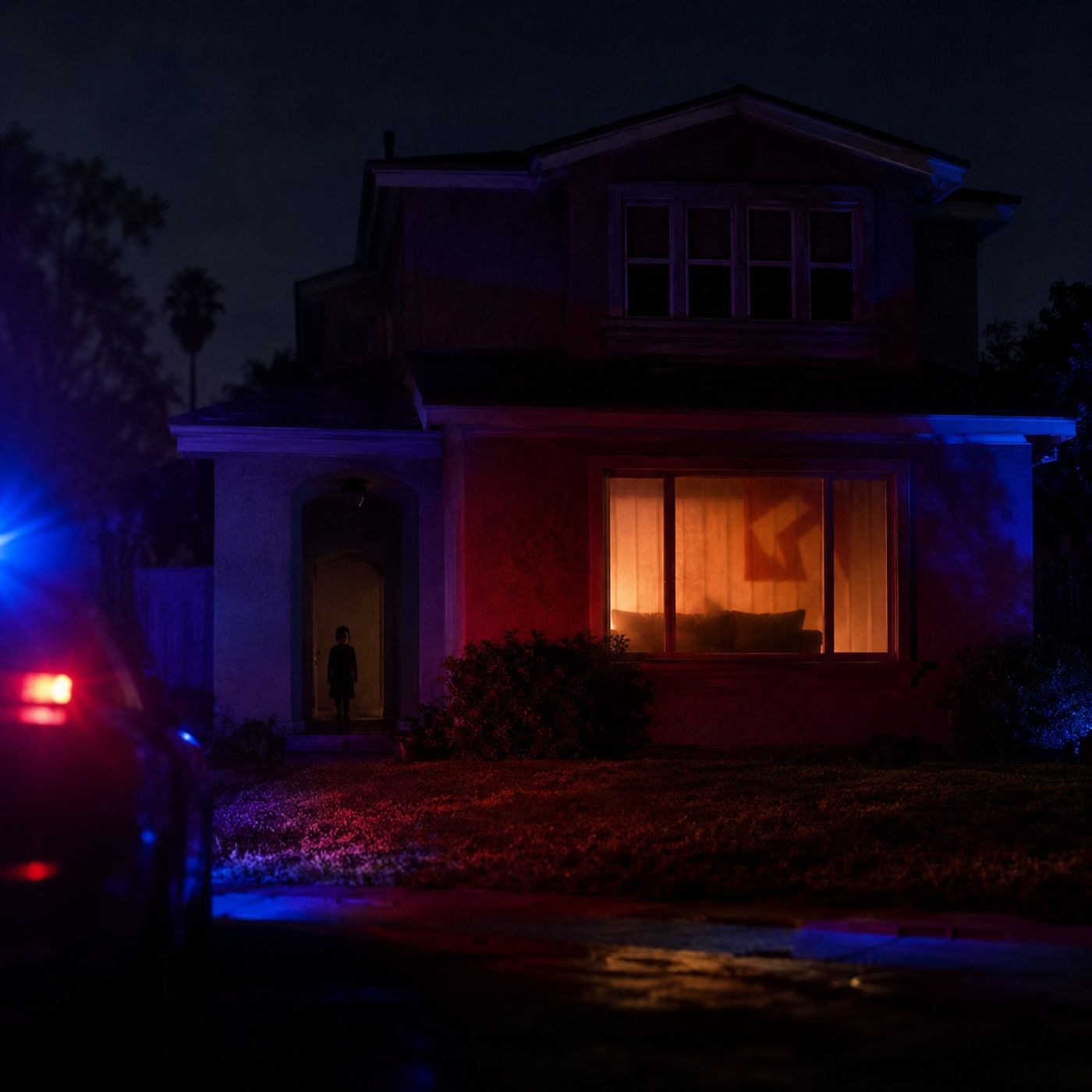
The murder of Jeffrey Hall is one of the most disturbing modern American true crime cases — not because the killer was hidden, but because the person who pulled the trigger was only 10 years old.
On May 1, 2011, in Riverside, California, 32-year-old Jeffrey Hall was asleep on the couch when his son, Joseph Hall, took a .357 revolver from a closet, walked downstairs, and shot him in the head. Jeffrey Hall was not just a father. He was a local leader in the National Socialist Movement, a neo-Nazi organization, and had filled his home with extremist politics, weapons, instability, fear, and violence.
But this case is not a simple story of poetic justice. It is a deeply unsettling look at childhood trauma, extremist indoctrination, domestic chaos, juvenile justice, gun access, and the impossible question of what justice means when a child kills.
Inside this episode:
• The life and extremism of Jeffrey Hall — a Riverside neo-Nazi leader who brought hate into politics, public rallies, and his own home.
• Joseph Hall’s troubled childhood — marked by neglect concerns, instability, weapons, alleged abuse, behavioral issues, and a household shaped by fear.
• The night of the shooting — when a 10-year-old boy retrieved a loaded revolver and killed his sleeping father.
• The legal question at the heart of the case — whether Joseph, at just 10 years old, truly understood the wrongfulness and permanence of what he had done.
• The juvenile trial and appeals — including the court’s finding of second-degree murder, challenges over Miranda rights, and the larger debate over children in the criminal justice system.
• The tragedy beneath the headlines — a violent extremist father, a frightened child, a broken household, and a legal system forced to sort horror into categories that never fully fit.
This is not a murder mystery. Joseph Hall admitted what happened. The deeper mystery is how a child arrived at that couch with a revolver in his hand — and how many adults, systems, ideologies, and failures helped put him there.
A man was killed. A child was charged. A family was destroyed. And the house Jeffrey Hall built around hatred became the place where that violence came home.
We’re telling that story tonight.
🎧 LISTEN NOW and subscribe for spine-tingling horror stories every week!
🎉 Unlock exclusive bonus episodes and support the show on Patreon!
👉 WeeklySpooky.com/Join
📬 Contact Us / Submit Your Horror Story!
- Twitter: @WeeklySpooky
- Facebook: facebook.com/WeeklySpooky
- Email: WeeklySpooky@gmail.com
🎵 Music by Ray Mattis 👉 Check out Ray’s incredible work here !
👨💼 Executive Producers: Rob Fields, Bobbletopia.com
🎥 Produced by: Daniel Wilder
🌐 Explore more terrifying tales at: WeeklySpooky.com
0:02 A neo Nazi leader, is asleep on the couch. His ten year old son knows where the gun is. Before sunrise, one shot will leave Jeffrey Hall dead and force a courtroom to ask a question no one can answer cleanly. When a child kills after growing up surrounded by hate, fear and violence, What does justice even mean? What you were about to pit you? He spurt to be based on witness accounts, testamles, and puply record, this is terrifying and treat treat.
0:57 In the early morning hours of May first, two, thy eleven, a quiet house in Riverside, California, became the scene of a crime that would disturb the nation. Thirty two year old Jeffrey Hall, a local leader in the National Socialist Movement, was asleep on the couch. Upstairs was his ten year old son, Joseph, a boy raised in a home marked by extremist ideology, weapons, fear, and alleged abuse. Before dawn, Joseph found a loaded revolver. He walked downstairs, he aimed at his sleeping father, and he fired. There was no search for a killer, no hidden suspect, no mystery about who pulled the trigger, but the case of Joseph Hall became something far more difficult, a test of the justice system, a portrait of a child shaped by violence, and a chilling question about responsibility, trauma and the lessons a hateful home can teach. Tonight, we examine the murder of Jeffrey Hall and the ten year old boy left standing in the wreckage. Make sure you're subscribed on your podcast app.
2:32 We bring a brand new, terrifying and true story every single Monday, May one, two thousand and eleven. Riverside, California. The house is quiet in a way troubled homes can only pretend to be not peaceful or calm, just temporarily exhausted. In the living room, thirty two year old Jeffrey Hall is asleep on the couch. The television is still on, the lights are still burning. Somewhere nearby are children who have spent too much of their young lives surrounded by adult anger, extremist politics, weapons, shouting, and fear. Jeffrey Hall is not just a father. He is a local leader in the National Socialist Movement, a neo Nazi political organization.
3:50 He has spent the previous years dragging hatred into public view, dwindling rallies, patrols, swastikas uniforms, political stunts, interviews, and angry speeches about race and power. He's tried to turn his home into a staging ground for an ideology built on domination. But inside that home, the ideology is not the only danger. According to later testimony and reporting, the children in that house have lived with chaos, violence, neglect, weapons within reach, with no supervision, and the constant pressure of an unstable household.
4:41 Joseph Hall, Jeffrey's ten year old son, is small for his age, troubled, and already carrying more fear than any child should have to understand. In the early morning hours, Joseph gets up. He knows where the gun is, a three fifty seven revolver. He takes it from the closet. He moves downstairs. His father is asleep on the couch, unaware. Joseph later tells police he is afraid, afraid his father will hurt his stepmother, Afraid his father will hurt the family.
5:23 Afraid of a threat he says his father made that he might remove the smoke detectors and burn the house down while everyone slept. Joseph approaches the couch. He pulls back the hammer, he raises the gun toward his father's head, and in that frozen moment, the horror of this story twists into something almost impossible to hold all at once. A violent man, a frightened child, a loaded gun, a house full of hate, and a single gunshot that will leave one person dead, one child charged with murder, and a courtroom forced to ask questions that sound simple until you try to answer them outside the realm of hypotheticals.
6:22 When a ten year old kills what does justice look like? Before he became a national headline, Jeffrey Russell Hall was a man trying to build a life in Riverside County. He worked in construction and plumbing, had children, and lived in a suburban California home that might have looked ordinary from the street. By the late two thousands, though Hall had made himself into a public face of American white supremacy. He became a regional leader in the National Socialist movement. He hosted meetings, he gave interviews, He marched in Nazi imagery.
7:08 He even ran for a seat on the Western Municipal Water District Board in twenty ten, drawing attention not because he hid his extremism, but because he refused to. That is one of the first uncomfortable realities of the case. Jeffrey Hall did not keep his hatred private. He brought it into politics, he brought it into the streets. Most disturbingly of all, he brought it into his home. Joseph was exposed to that world very young. Journalists and court records describe a child surrounded by extremist symbols, adult meetings, border patrol fantasies, and weapons. Reportedly boasted about teaching his son to use night vision equipment and firearms. Joseph was not merely living with a father who believed violent things.
8:13 He was living inside a worldview where intimidation and domination were treated like virtues. But this case is not only about ideology. It's about domestic life, child welfare, mental health abuse allegations, and access to weapons. Joseph's early childhood had already been unstable. His biological mother, Letitia Neil, had lost custody after serious neglect concerns. Joseph and his sister went to live with Jeffrey. Later, Jeffrey married Christa Mcarey, whom Joseph referred to as Mom. The household eventually included several children, and by many accounts, it was filthy, chaotic, and frightening.
9:06 Reporting described weapons being openly accessible to children. A psychologist testified that Joseph had suffered a long history of physical, emotional, and likely sexual abuse, though the precise facts and responsibility for every allegation became part of the painful dispute at trial. Joseph himself wasn't easy, and we'd be dishonest if we pretended otherwise. Prosecutors emphasized behavioral problems, violent incidents, and trouble at school. The defense emphasized developmental delays, trauma, ADHD, and low intellectual functioning. Both portraits could contain truth. A child can be frightening as well as frightened. A child can hurt others and still be profoundly damaged. That tension is what makes this case so complex. In most murder stories, we're trained to look for the monster. Here, the story doesn't really fit together quite like that Jeffrey Hall was a violent extremist who filled his home with hate. Joseph Hall was a ten year old child who shot a sleeping man in the head. The stepmother described fear and
10:37 violence prosecutors described planning and awareness. Defense experts described trauma and developmental limits. The law demanded categories guilty or not capable or incapable, murder, or something else. Real life did not arrive in neat categories. On April thirtieth, twenty eleven, Jeffrey Hall hosted a gathering at the family home. Adults talked politics. Extremist symbols hung in the house. Joseph moved through that space like a child trapped in an adult nightmare, close enough to absorb everything, too young to truly understand any of it. According to later accounts, Joseph said something happened that frightened him deeply. He claimed his father had threatened to remove all the smoke detectors and set the house on fire while the family slept. Whether that was a true threat made by Jeffrey or coming from drunken rage, or whether Joseph understood it through the distorted lens of fear, the effect on the boy appears to have been very real.
12:02 That night, Jeffrey drank. Eventually he fell asleep on the couch upstairs. Joseph woke. The next steps are simple, too simple. A child walks to a closet, finds a gun, takes it in his hands. There is no elaborate plot, no getaway, no masked intruder, just a ten year old moving through the house toward his sleeping father. Joseph later said he did not fully understand death the way an adult would.
12:45 Reports said he had seen a television episode where a child killed an abusive parent and wasn't punished, and that this may have shaped his thinking in a distorted, childlike way. He reportedly believed there might be a way for his father to be gone, stopped, or changed, without fully grasping the permanent finality of what a gunshot to the head would do. But he knew where the gun was, he knew how to cock it, he knew how to aim it. At around four a m. On May one, twenty eleven, a gun shot cracked through the Hall home. Jeffrey Hall was dead, and Joseph Hall, age ten, had just become the center of one of the most troubling juvenile murder cases in modern American history. When police arrived, the scene was both shocking and strangely clear. There was no mystery about who fired the gun. Joseph admitted it. He told investigators he had shot his father. He described taking the revolver, cocking it, aiming it at Geoffrey while he slept, and firing.
14:19 The death itself was not the puzzle. The puzzle was everything around it. Why had this child done it? What did he understand? And what should the justice system do with him? The first public reaction was almost automatic. Jeoffrey Hall was a neo Nazi. He filled his home with hatred. His son killed him cause an effect a grotesque moral fable. But the truth was more complicated and much much sadder.
15:00 Joseph was taken into custody. The other children were removed from the home. Christa. Mcarey, Joseph's stepmother, was later charged with child endangerment and criminal storage of a firearm after prosecutors said the loaded gun had been left where children could access it. Police reports also described other weapons in the home, including a rifle in the garage and edged weapons in the master bedroom. The case immediately became more than one killing. It became a public autopsy of a household that had failed its children before the gun even went off. Investigators and attorneys built two very different portraits of Joseph. The prosecutions Joseph was a child who knew what he was doing. They argued that he had planned shooting, understood the wrongfulness of the act, and made a deliberate decision to kill his father. Prosecutors pointed to alleged statements that he had talked beforehand about shooting Jeffrey, including claims that he had mentioned it to his sister. They also highlighted his history of violent behavior, arguing that this was not an accident or a reflex the defense's Joseph was
16:32 a traumatized child formed by abuse, neglect, instability, and extremist conditioning. His lawyers argued he had developmental disabilities and a warped understanding of consequences. He was not, they said, a miniature adult with adult malice. He was a damaged child acting out of fear and confusion. This is where the case turns from true crime into something closer to a nightmare. Philosophy exam. California law, like many legal systems, recognizes that children below a certain age are presumed incapable of committing crimes unless the state proves they understood the wrongfulness of their conduct. In Joseph's case, the court had to decide whether a ten year old boy, This specific ten year old boy, with his specific history, limitations, and home environment, understood what he did was wrong, not just dangerous, not just forbidden wrong. The legal question was not whether Joseph pulled the trigger he had admitted to shooting Jeffrey Hall.
17:59 The central legal dal dispute was whether, at age ten, he understood fully the wrongfulness of his actions, and whether the killing amounted to murder under juvenile law. The California Court of Appeal later described the Juvenile Court's findings. Joseph understood the wrongfulness of the act, committed what would have been second degree murder if done by an adult, and personally discharged a firearm causing death. Joseph's police interviews became a major issue. Later, appeals challenged whether a child that young could validly waive miranderites and whether statements taken from him should have been used. In twenty fifteen, the California Court of Appeal upheld the Juvenile Court's decision. The California Supreme Court declined review. The U. S Supreme Court declined to take the case in twenty sixteen. Think about the scale of that question. A ten year old is small enough that juvenile authorities reportedly struggled with how to house him among older offenders, but legally, the court still had to examine whether he could understand rights, consequences, and moral wrongfulness at a level sufficient for adjudication. The court room
19:30 would hear about Jeffrey Hall's public extremism, but prosecutors argued that his neo Nazi activity was not the legal cause of the murder. They focused on Joseph's conduct, alleged planning, and ability to distinguish right from wrong. The defense argued that Joseph's act could not be separated from the world that had shaped him. A child raised around Hey instability and violence does not process fear like a healthy adult would. A child who sees guns as household objects and hears threats as possible realities may reach conclusions that are horrifying, irrational, and still tragically understandable. The distinction is very important, but it's also what makes the case so morally uneasy. If we treat Jeffrey's death as poetic justice, we forget the shooter was a child. If we treat Joseph only as a murderer, we forget the adult failures that brought him to that couch at four in the morning, and in the middle of it all was a dead man on said couch, a man who had preached hate, a father who had left a gun within reach, a household that
21:03 had become a furnace, and a little boy who had learned somewhere along the way that violence was an answer. Joseph Hall's juvenile trial opened in Riverside in twenty twelve, when he was just twelve years old. That detail alone is worth some pause. The killing happened when he was ten. By the time the court finally weighed the evidence, he was still barely older than he had been on the night of the shooting. Both sides agreed Joseph shot Jeffrey Hall at close range. The dispute was responsibility, intent, and understanding.
21:58 The trial was held in juvenile court, but it became unusually public because of the seriousness of the allegations and the notoriety of the case. The courtroom had to handle testimony about extremist politics, domestic violence, allegations, child development, mental health, and a killing carried out by someone young enough to still misunderstand the world in a way only a child can. The prosecutors argued premeditation and awareness. They said Joseph had talked about killing his father before it happened. They also said he knew to wait until Jeffrey was asleep. They said he knew how to handle the gun. They pointed to prior violent behavior, including school incidents, as evidence that Joseph was not merely passive or confused. The defense argued fear, trauma, and incapacity. A psychologist testified about Joseph's history of abuse and mental health issues. The defense painted the shooting as the act of a child who wanted danger to stop, not as a calculating murder by someone with adult comprehension.
23:23 One of the most chilling pieces of the case was Joseph's own explanation. He reportedly said he wanted everything to stop. He was tired of his father hurting people. He feared his stepmother might leave or be hurt. He had absorbed the idea from television and his environment that maybe if he told the truth, things might work out. That is not adult logic. It is child logic bent through fear. But the law. Law doesn't simply ask whether a child's reasoning is childish. It asks whether he knew right from wrong.
24:09 Judge Gen R. Leonard had to weigh evidence that pointed in both directions. Joseph's background suggested deep damage and limited understanding. His actions suggested planning. He retrieved a weapon, approached a sleeping person, aimed and fired. Afterward, he had acknowledged he had done something wrong. To the court, those facts were paramount. In January of twenty thirteen, the judge found that Joseph had committed second degree murder, not first degree murder, not a finding that he was an adult style mastermind, but still a murderer. The court found that Joseph understood the wrongfulness of his actions, despite the legal presumption that a child under fourteen years old is incapable unless proven otherwise.
25:11 It's important to keep in mind Joseph was not tried as an adult. Joseph Hall's case remained in juvenile court from beginning to end. He was found responsible for an act that would have been second degree murder if committed by an adult, but he was not sent to adult prison. The sentence included an adult style term on paper, but reporting emphasized that juvenile law limited how long he could actually be held. The sentencing question became its own battle. What do you do with a child like Joseph, a traditional punishment model does not fit comfortably. He was not a hardened adult offender, but a purely therapeutic model. Frightened people too, because the act was irreversible and his behavioral problems were serious. In twenty thirteen, Joseph was ordered to spend at least seven years in a juvenile facility. Reporting described him as one of the youngest inmates in California's juvenile justice system. His lawyers warned that he would be surrounded by older youths, including gang members and offenders with far more developed criminal histories. His biological mother publicly feared what that placement could do to him. Child advocates questioned
26:46 whether confinement in such a setting could meet the needs of a boy whose life had already been defined by instability and violence. Judge Leonard described Joseph as a child with exceptional needs. That phrase stands out. It suggests a child who required structure, treatment, education, and containment. It also reminds us that by the time the state stepped in, the damage was already deep. The appeals kept the case alive. Joseph's attorneys challenged the use of his statements to police and the finding that he knowingly and intelligently waived his rights.
27:33 The question drew national attention. Can a ten year old truly understand Miranda rights? Can a child that young grasp the right to remain silent? The role of police, the consequences of speaking, and the way statements can shape a murder case. All attempts at appeal were either upheld or decline, including the US Supreme Court leaving the ruling in place. And this is the part that sticks. The court had evidence, the judge made findings, the appeals Court reviewed them. The system did what it was designed to do, but emotionally, morally, humanly, it still feels like staring into a cracked mirror. Joseph Hall did something horrific. Jeffrey Hall died violently in his own home. The children lost their father, their home, and each other. As the system took over. The public turned the story into a symbol. But symbols are easier than children.
28:54 A symbol can stand for hate destroying itself. A child has to keep living. After the verdict, the story didn't end, it changed shape. The national spotlight moved on, but Joseph Hall remained inside. The consequences of that early morning. His case became part of a larger debate about children and criminal responsibility. Legal scholars, child advocates, prosecutors, and ordinary people continued to argue over what the courts had done and what they should have done. The appellate decision preserved the juvenile Court's findings. It concluded that the evidence supported the ruling, that Joseph understood the wrongfulness of his conduct, and that challenged questioning did not require reversal. The U. S. Supreme Court's refusal to review the case meant the adjudication would stand.
30:02 But legal finality is not moral closure. Some saw the outcome as necessary accountability. Joseph got the gun, he aimed it at a sleeping person, he fired, a man died. To ignore that, they argued, would be to deny the reality of the act. Others saw the outcome as a failure to understand childhood. Joseph's world had been shaped by instability, alleged abuse, extremist indoctrination, and accessible firearms. Treating him as a murderer, even in juvenile court, seemed to them like punishing the last broken link in a chain adults had forged.
30:52 Both reactions came from something real. A man was killed, a child was damaged, a family was destroyed, and no verdict could repair any of it. In the court of public opinion, Jeffrey Hall's extremism was always the elephant in the room. He was a neo Nazi leader, and that fact is central to the environment Joseph grew up in. But the legal case did not treat Hall's ideology as a justification for murder. Prosecutors focused on Joseph's actions and state of mind. The defense focused on abuse, trauma, and developmental capacity. The moral weight of Hall's extremism may shape how the public sees him, but it does not erase the tragedy of a child killing a parent. The most important question is not who did it. The case answers that almost immediately. The real question is how exactly does a ten year old arrive at that couch with a revolver in his hand. The answer is not one thing.
32:14 It's a combination of neglect, fear, ideology, violence, untreated trauma, and adults who either caused harm, mist harm, minimized harm, or failed to stop harm. The murder of Jeffrey Hall is terrifying, not because it's supernatural or mysterious. It's terrifying because it's brutally human. A father built a home around hate, a child grew up inside it, and one morning before sunrise, the violence that had saturated that house came back through the barrel of a gun. The most frightening thing in the hall house was not the flag on the wall.
33:12 It was what that house taught a child to believe was possible. Terrifying and True is narrated by Enrique Kuto. It's executive produced by Rob Fields and bobble Toopia dot com and produced by Dan Wilder, with original theme music by Ray Mattis. If you have a story you think we should cover on Terrifying and True, send us an email at Weekly Spooky at gmail dot com, and if you want to support us for as little as one dollar a month, go to Weeklyspooky dot com slash Join. Your support for as little as one dollar a month keeps the show going. And speaking of I want to say an extra special thank you to our Patreon podcast boosters, folks who pay a little bit more to hear their name at the end of the show, and they are Johnny Nix, Kate and Lulu, Jessica Fuller, Mike Scuey, Jenny Green, Amber Hansburg, Karen we Met Jacker and Craig Cohen. Thank you all so much, and thank you for listening. We'll see you all right here next time. On Terrifying and True
