


 Apple Podcasts

 Spotify

 Spreaker

 Audible

 Castro

 RSS Feed

 iHeartRadio
Terrifying & True | Yoshihiro Hattori — The Halloween Wrong-Door Shooting in Louisiana
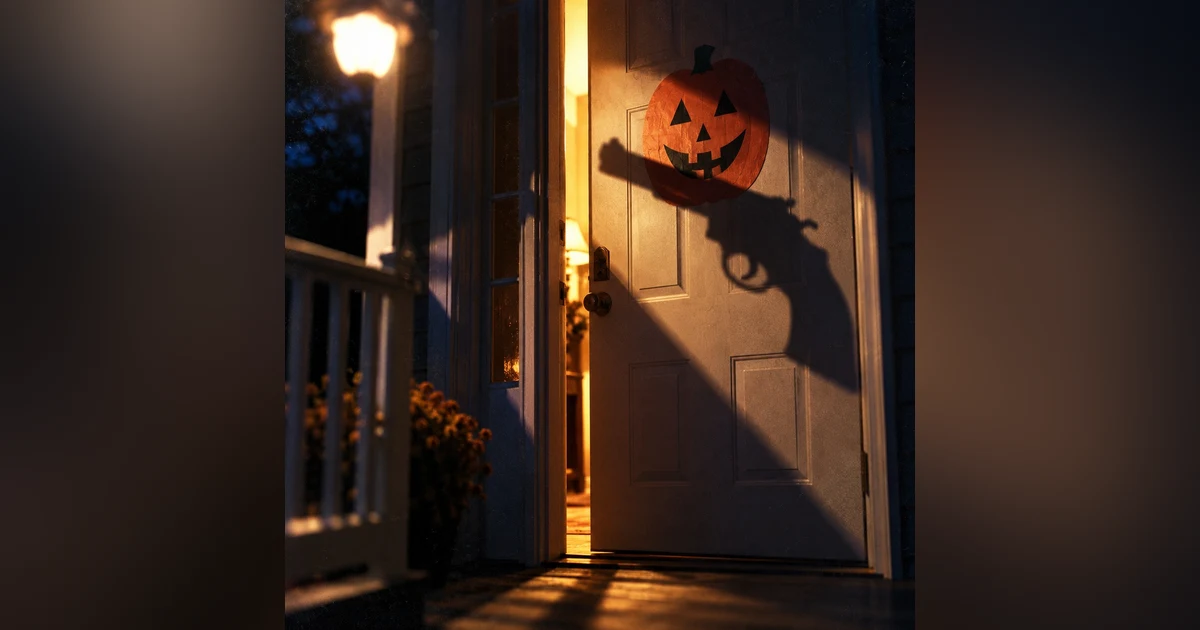

Japanese exchange student Yoshihiro “Yoshi” Hattori went to the wrong Louisiana house while looking for a Halloween party and was shot at the door.
On October 17, 1992, the 16-year-old and his host brother Webb Haymaker followed a mistaken address in Baton Rouge. The decorated home and cars outside looked like the party, but homeowner Rodney Peairs emerged with a revolver. Peairs ordered Yoshi to “freeze.” Yoshi, wearing a costume and still approaching, may not have understood the command before Peairs fired into his chest.
Terrifying & True follows the cultural misunderstanding, self-defense arguments, and two sharply different legal outcomes. A jury acquitted Peairs of manslaughter in 1993; a later civil court rejected his defense and held him liable for Yoshi’s death. No criminal conviction followed.
Yoshi’s parents and the Haymaker family turned grief into advocacy, collecting signatures for stronger U. S. gun laws and establishing the Yoshihiro Hattori Memorial Fund for student exchange. This Halloween true-crime story is ultimately about a friendly teenager, one wrong doorstep, and the fatal distance between “welcome” and “freeze.”
🎧 LISTEN NOW and subscribe for spine-tingling horror stories every week!
🎉 Unlock exclusive bonus episodes and support the show on Patreon!
👉 WeeklySpooky.com/Join
📬 Contact Us / Submit Your Horror Story!
- Twitter: @WeeklySpooky
- Facebook: facebook.com/WeeklySpooky
- Email: WeeklySpooky@gmail.com
🎵 Music by Ray Mattis 👉 Check out Ray’s incredible work here !
👨💼 Executive Producers: Rob Fields, Bobbletopia.com
🎥 Produced by: Daniel Wilder
🌐 Explore more terrifying tales at: WeeklySpooky.com
Episode transcript, edited from an automatic transcription. Minor transcription errors may remain; not checked word for word against the audio. Advertising and closing credits omitted. The original narration and commentary are preserved. Editorial corrections: Yoshihiro Hattori’s parents were Masaichi and Mieko Hattori; the names Maisa, Masa, Mako and Miko below are errors in the source narration/transcription. The civil court awarded $650,000, but the family received $100,000 from the insurer ($45,000 after expenses), according to LSU Libraries’ Richard W. Haymaker Collection finding aid: https://www.lib.lsu.edu/sites/default/files/sc/findaid/4698.pdf. The original assertion that email and the internet did not exist at the time is also incorrect.
A Halloween party There's nothing quite so simple and joyous about the fall season at least in the United States and other nations where they celebrate. But what if on a simple stroll to your favorite Monster Mash, things turned truly terrifying and deadly? What you are about to hear is believed to be real. Based on witness accounts, testimonies, and public record, this is Terrifying and True. Have you ever heard of a doorknock that led to a murder?
Or linguistic barriers that ended up being fatal? Well, tonight we're going to be talking about the case of a boy whose life was tragically cut short for those very reasons. We are going to take a deep dive into the heartbreaking case of Yoshihiro Hattori, the 16-year-old Japanese boy who tragically lost his life while making his way to a Halloween party. something worth running through your mind as you're preparing for your own fall extravaganzas we're going to cover all the pertinent details right here on terrifying and true so make sure you're subscribed and ready after these quick words from our sponsors Yoshihiro Hattori was born on november 22nd 1975 in nagoya japan to his parents maisa and mako hatori and was a middle child he had a brother and a sister yoshi's family described him as a gregarious teen who was friendly loving and kind to everyone he met he had a strong passion for going on adventures and thoroughly enjoyed meeting new people.
If we talk about his high school life, it was quite thrilling and pretty exciting. Many would even describe it as happening. Yoshi was an active member of the rugby team, which he enjoyed greatly. His social nature also led him to pursue an exchange program that would take him to the United States. With a deep fascination for America, he dreamed of experiencing life there, learning the language, and connecting with new friends. Through the American Field Service, a global exchange organization for young individuals, Yoshi was granted the opportunity to participate in a year-long exchange program in Baton Rouge, Louisiana.
Upon reaching America, Yoshi, like many other overseas students, decided to stay with a host family. The family that he chose consisted of Dr. Holley Haymaker, a physician, her husband Richard Haymaker, a physicist, and the couple's son. Having hosted exchange students previously, the Haymakers lovingly welcomed Yoshi into their home, where he quickly bonded with their son, Webb. Yoshi's engaging personality helped Webb, who was more introverted, come out of his shell, and the two of them began to form a close friendship.
Everything was going well until the night of October 17th, 1992, when tragedy struck. Yoshi and Webb were making their way together to a Halloween party. After arriving at the wrong address due to confusion over the house number, they approached a residence with Halloween decorations and cars in the driveway, assuming it was the party location. They rang the doorbell and when there was no response they began to walk back to their car.
As they were leaving a man named Rodney Peairs opened the door holding a magnum revolver. He had been alerted to the presence of the teenagers at his door and, fearing for his safety, confronted them. Mistaking Yoshi's intentions due to a language barrier and his outgoing demeanor Rodney felt threatened and demanded them to freeze. Tragically, Yoshi continued to approach him with excitement, not comprehending the situation or, for that matter, fully understanding the language that the man was speaking.
Believing he was acting in self-defense, Rodney shot Yoshi in the chest, leaving him fatally wounded. In another part of town, the Haymakers were leaving the movie theater after watching The Last of the Mohicans. As they strolled away from the theater, Holley's pager suddenly went off, prompting her to dial the number. On the other end of the line was a police officer who informed her that Webb was safe, but there was distressing news about Yoshi.
Holley informed the officer that they would head to the hospital to meet with the police. The officer, however, assured her it would not be necessary. Acting swiftly, Richard and Holley rushed to the police station to find Webb alone, unaware of the tragic turn of events that had transpired after the ambulance had departed. They broke the devastating news to their son. Yoshi's parents were informed of the heartbreaking news as well through an exchange program worker.
Miko, Yoshi's mother, sought solace in her son's childhood room, overcome by grief and tears as you would imagine any parent in a similar situation would. The aftermath of this heartbreaking incident saw grief and shock ripple through both Yoshi's family as well as the community. The legal trials that were conducted to solve the case and provide justice captured national and international attention, shedding light on cultural differences, self-defense laws, and the tragic loss of a young life.
As the legal proceedings unfolded, the Hattori family, along with the haymakers, worked tirelessly to pursue justice for Yoshi and ensure that his story would not be forgotten. Back in Baton Rouge, Rodney Peairs trial became quite the media circus. Police initially released Peairs without charge, assuming he was within his rights to shoot a trespasser. But, after complaints from Louisiana's governor and Japan's consul in New Orleans, he was charged with manslaughter. This decision received mixed reactions from the public.
Supporters of Rodney argued that he was protecting his home while others mourned Yoshi's untimely death and called for justice. His lawyers worked hard to establish his actions as self-defense. They said Peairs was, quote, no killer, simply, quote, one of your neighbors, who was reacting to Yoshi's, quote, extremely unusual way of moving. Meanwhile, Bonnie Peairs, Rodney's wife, who first opened the door, told the court Yoshi had scared her, and she had ordered her husband to, quote, get the gun.
The defense worked, and in May of 1993, Rodney Peairs was acquitted after a jury deliberation of just three hours. The Haymaker family offered unwavering support to the Hattori family throughout the entire ordeal. When the verdict was delivered in favor of Rodney, both families were outside the courtroom, taking a moment to process the news. Richard Haymaker expressed shock and disbelief at Rodney's acquittal, feeling that justice had not been served. Webb Haymaker shared the same sentiment, believing that Rodney's defense had portrayed Yoshi inaccurately. as a menacing figure, which was far from the truth.
Quote, Yoshi was very ebullient, a total extrovert, Holley stated in an interview. Quote, The kids at McKinley High School loved him because he was such a free spirit. Agreeing with his wife, Mr. Haymaker also remarked, Quote, He was an extraordinary guy. He was life. He moved through space like a dancer. Given that these were the positive views the haymakers held about the young boy, it was only natural that the verdict had left both of the families feeling equally numb and distressed.
Masa Hattori attended the trial hearing descriptions of his son as a, quote, out-of-control, hyperactive Japanese exchange student who thought his job was to scare people. And this left her absolutely torn and disheartened. Japan's media channels also provided coverage of these trials, and there the shooting was referred to as the freeze case, symbolizing the misunderstanding that had led to the tragedy. The Japanese media even offered explanations of the English word freeze to help people understand its significance in the context of the incident.
Despite the verdict, Yoshi's family continued their fight for justice. His mother, Mako, had a vivid dream in which Yoshi urged her to start a petition calling for stricter gun control in the United States. The Hattori family launched a campaign to gather signatures aiming to advocate for an end to easy access to firearms. Their efforts gained momentum, and they collected 1.7 million signatures in Japan. Both the Hattori and Haymaker families were dedicated to their cause.
Richard Haymaker quit his job to focus on the campaign, gathering over 150,000 signatures through handwritten letters and phone calls. Given the absence of email, the internet, and social media, the campaign relied heavily on the telephone and snail mail, and consumed a large portion of their time. These petitions, though, truly were heartfelt appeals to the American people, urging them to reconsider the prevalence of firearms in society. Eventually, the persistence of both families led to a significant development when President Bill Clinton reached out to offer his condolences and support.
In November, the Hattori and Haymaker families met with President Clinton at the White House. This meeting aimed to emphasize the need for stricter gun control measures. President Clinton subsequently signed the Brady Handgun Violence Prevention Act into law, mandating background checks and waiting periods for gun purchases. It is worth mentioning that had that law been in effect prior, it would not have in any way prevented the shooting of Yoshi Hattori. The firearm was not purchased by somebody who should not legally have the right to maintain it.
And also, it was not purchased suddenly to be used against someone. In December of 1993, U.S. Ambassador to Japan Walter Mondale visited the Hattoris and Nagoya, presenting them with a copy of the law, the Brady Bill. He acknowledged their pivotal role in the passage of the bill, which had been introduced originally in 1991, but was only brought to vote months after Yoshi's tragic demise. That subsequent fall in September of 1994, Congress enacted the Federal Assaults Weapon Ban, a 10-year prohibition on the manufacturing of certain semi-automatic weapons for civilian use.
It is also worth mentioning that had that law been in effect prior, it also would not have prevented the shooting of Yoshi Hattori. The firearm used was not designated by any definition to be an assault weapon. The Hattori family, however, did not stop their efforts there. They pursued a civil lawsuit against Rodney Peairs and his homeowner's insurance company. During the trial, the racial aspect of the incident was highlighted, suggesting that Yoshi's appearance played a role in the shooting.
The judge ruled against the defense's self-defense claim, holding Rodney liable for Yoshi's death and awarding the Hattori family damages. In memory of Yoshi, the Hattori family has also established the Yoshihiro Hattori Memorial Fund, which offers scholarships to high school students for intercultural exchange. The fund has provided numerous students with the opportunity to travel and study in Japan. This initiative aims to promote friendship and understanding between Japan and the United States, carrying on in Yoshi's spirit.
Yoshi's tragic story was later fictionalized in TV shows and documentaries, raising awareness about the case. The impact of his death on both the Hattori and Haymaker families has been profound, shaping their lives and inspiring them to work toward positive exchange. The case of Yoshihiro Hattori is a tragic tale, and it continues to haunt the hearts of many around the globe. A young Japanese teenager, full of life and dreams, had his promising future abruptly cut short due to a knock on the wrong door and a linguistic barrier.
It's almost unbelievable. However, if you attempt to put yourself in the shoes of the homeowner, in times like these seconds do count and for all he knew a man was simply approaching him as he held a gun and yelled freeze and wouldn't relent it truly is a very complex case but nevertheless extremely heartbreaking yet in the face of this unspeakable loss Yoshihiro Hattori's memory lives on as a reminder of the complexities of human interaction the importance of understanding and empathy and the need for a world where tragedies like these are prevented.
So the question becomes, how do you prevent a tragedy like this? The laws that were passed would not have prevented it. Many have even accused politicians of simply taking advantage of the tragedy. A story like this is hard to really nail down. Often, these stories feel very black and white. This story seems like a true tragedy in every direction. From all the research I was able to do, the Peairs family was hugely shattered from the incident and not just financially from having to pay $650,000 in damages either.
No one came out of this happy. No one came out of this relieved. And worst of all, there were no answers. Because sometimes, bad things happen to good people. and no matter how much we fight how much we hem and haw how much we try to prevent our hearts will be broken that's something I've definitely learned doing terrifying and true bad things happen sometimes they can be prevented sometimes they can be stopped sometimes they can be explained and other times we're all just left in the lurch left to handle our own pain all by ourselves.
I wish I had a more positive spin to put on this, but I don't. In my mind, I don't know how we could have prevented this tragedy in a reasonable way. The United States of America has always had cultural issues, whether flagrant racism or simply misunderstandings. It's part of the melting pot that makes our society so great, so powerful. But it also causes unforeseen consequences. And they really, truly are heartbreaking.
