


 Apple Podcasts

 Spotify

 Spreaker

 Audible

 Castro

 RSS Feed

 iHeartRadio
Terrifying & True | Dorothy Jane Scott: Stalker Calls and an Unsolved Murder
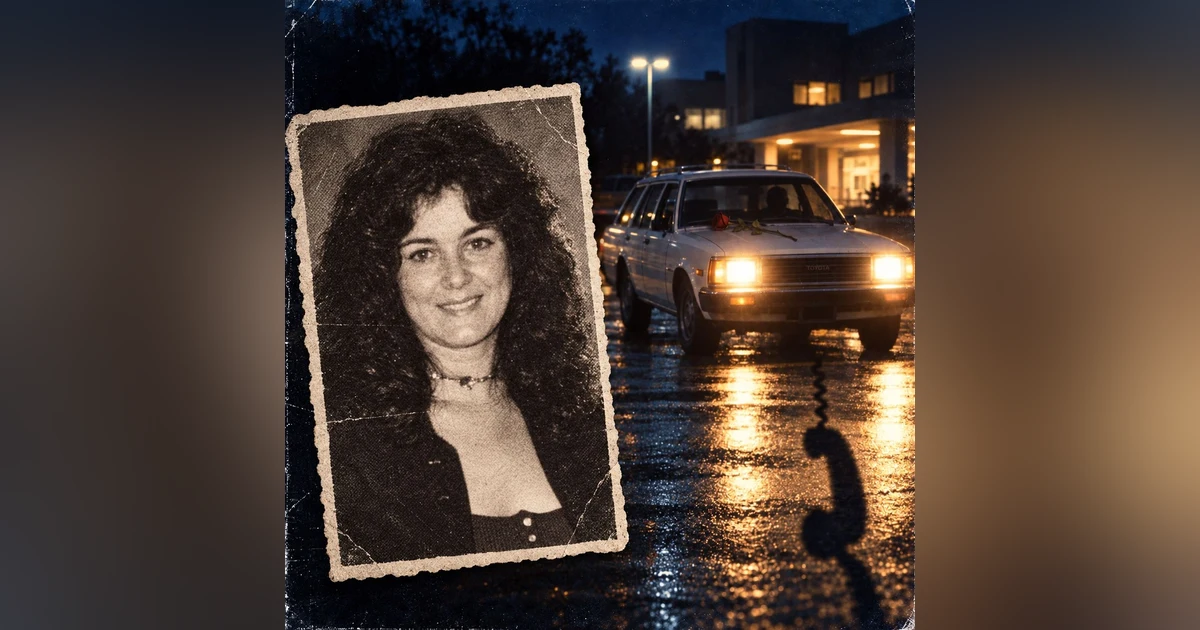
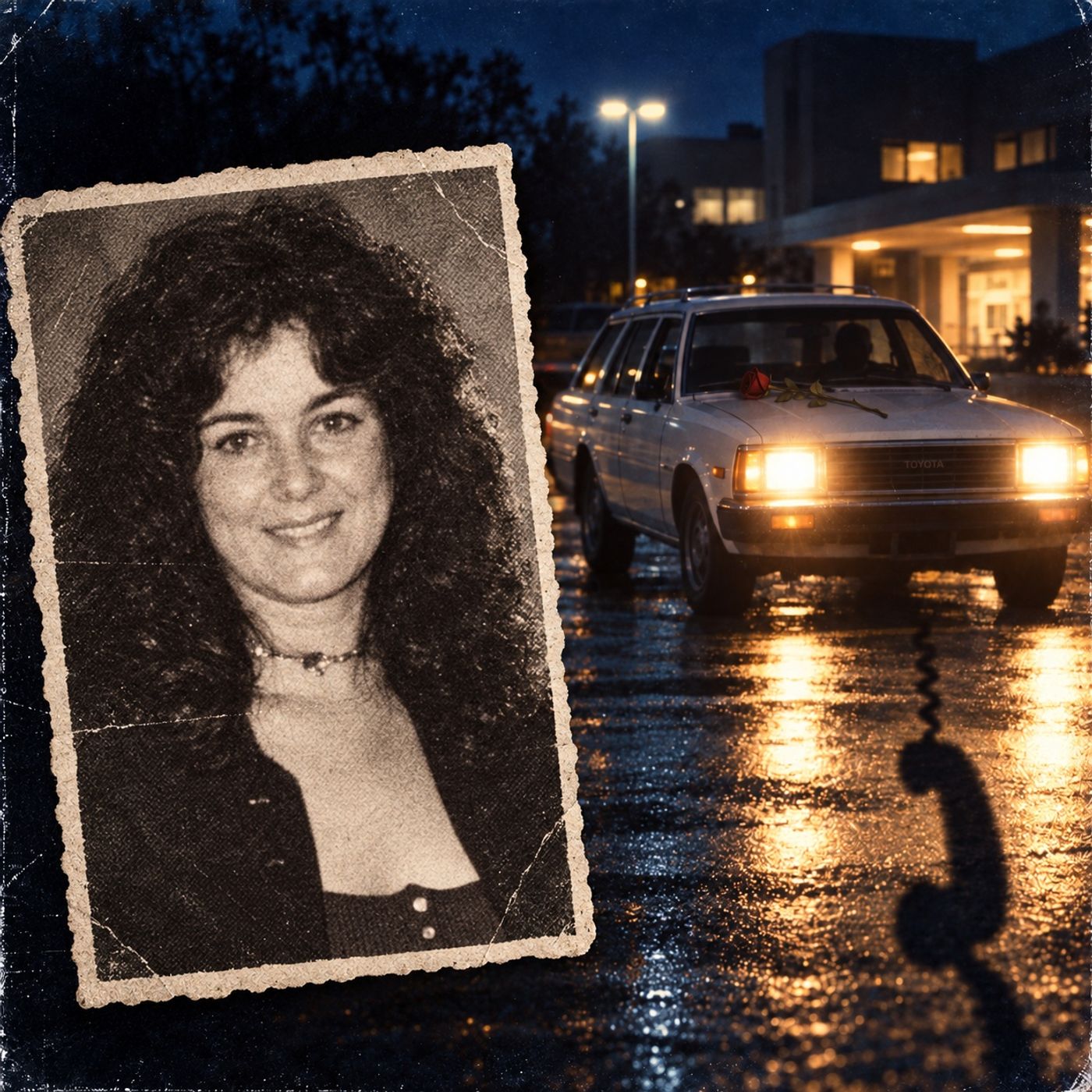
Dorothy Jane Scott disappeared from UCI Medical Center in Orange, California, in May 1980 after months of threatening phone calls. Her car was found burning; then an anonymous caller claimed he had killed her. Terrifying & True examines this unsolved murder through the stalking reports, the hospital parking-lot mystery, and the discovery of her remains in 1984. Explore what the caller appeared to know and the witness account that challenged his version of events. Did the voice on the telephone belong to Dorothy's killer? We're telling that story tonight.
Bonus episodes & support: https://weeklyspooky.com/join
More scary stories: https://weeklyspooky.com/
Story submissions: WeeklySpooky@gmail.com
Dorothy Scott had been missing for four years when police finally identified her remains. While her parents were arranging the funeral, the telephone rang at home. Her brother answered. A man asked one question. Is Dorothy home? Her father believed the voice had been calling since before she vanished, and nobody knew his name. What you are about to hear is believed to be real. Based on witness accounts, testimonies, and public record, this is Terrifying and True. The car is coming toward them. Ham Head and Conrad Bostron have been waiting outside the hospital for Dorothy Scott. She went to get her station wagon so Conrad, who has just been treated in the emergency room, won't have to walk to it.
It should be the last small errand of a long evening. Bring the car around, pick up her co-workers, go home. Now they can see The headlights. According to the account Pam gave afterward, the lights were so bright that she can't make out the person behind the wheel. She and Conrad wave. The station wagon keeps coming, passes them, and turns out of the parking lot. It doesn't stop. They've seen Dorothy's car, but they've not established anything. Who is driving it? And the woman who went outside to collect it has not come back. This is the UCI Medical Center in Orange, California, near midnight on the night of May 28th into May 29th, 1980.
Dorothy is 32. Her young son is with his grandparents. She came here to help someone else. Somewhere between the hospital and the departing car, an ordinary favor has become a missing person case. There is another part of Dorothy's life that makes this moment more disturbing. Before tonight, an unidentified man has been calling her. According to her mother, he's made threats against her life. What happened when Dorothy walked out? to get her car, and how much did the man on the telephone really know? We're telling that story tonight. Dorothy Jane Scott lived in Stanton, in Orange County, with her aunt and her four-year-old son.
Her parents, Jacob and Vera, lived in nearby Anaheim and helped care for him while she worked. Those places can blur together in accounts of her disappearance, but they belong to different parts of her life. Stanton was home. Anaheim was where she worked and where her parents could look after her son. The hospital in Orange would enter the story because a coworker, who needed medical attention. Dorothy worked as a secretary for two jointly-owned shops in Anaheim. One sold the sort of psychedelic merchandise associated with the era. Beads, lamps, gifts. The other was a head shop. Her job placed her in the working life behind those storefronts, handling the office side of the business's People who knew Dorothy described a woman who preferred being at home.
Her Christian faith was part of her life. So was her closeness to her family, whose recollections would eventually provide much of what the public would learn about her. The more revealing picture comes from the arrangements that kept her days moving. A job, a child, an aunt sharing a home. Grandparents who could help when work kept her out. She was part of other people's routines, and other people were part of hers. Then someone began inserting himself into that life without giving her a name. In the months before her disappearance, Dorothy received disturbing telephone calls at work.
The man on the line alternated between declarations of affection, and threats. Vera later said her daughter didn't know who he was. He could address Dorothy personally while keeping his own identity out of reach. His anonymity left her without a person to connect to the words. The telephone gave him access to a place where she worked, but it gave her no view. of the person using it. A call could end without an explanation, and another could begin on his terms. The accounts preserve what she reported hearing, but not the face of the speaker. The caller reportedly referred to things Dorothy had done, presenting himself as someone who could observe her movements.
Whether every claim was accurate is harder to reconstruct. What he was asking her to believe was clear. He could reach her on the telephone because he already knew where she was. One incident moved the threat beyond the receiver. Vera later recounted that the man told Dorothy to go outside because he had something for her. On the windshield of Dorothy's car, she found a single, Dead rose. A telephone call could arrive from somewhere unseen, but the rose occupied a place where she had to return to. Someone had apparently approached the vehicle, left something on it, and gone away.
In her mother's account, the call and the object were connected. The windshield made the gesture difficult to overlook. The caller had directed Dorothy towards something waiting in her physical world, on an object that had belonged to her. She did not have to accept his account of watching her all day to find that disturbing. There was something on the car that her mother said had been announced by the voice. His language also became violent. Vera described a threat that Dorothy would be taken when she was alone and made impossible to find. A person she could not name was speaking about an encounter she could not know how to avoid.
These were not invitations she was obligated to answer. Whatever affection the man claimed, he was describing harm. Dorothy considered buying a handgun. An early newspaper account says she decided against it because she was worried about her young son, who might accidentally hurt himself with the weapon. She had to think about the danger outside her home and the safety of the child inside it. She also began taking karate lessons shortly before she disappeared. Her family described someone taking precautions while continuing to work and care for her child. The calls had become a problem she was trying to act on, even though identifying the caller remained out of reach.
The year matters too. In California, they would not enact the country's first specific anti-stalking law until 1990, a decade later. after Dorothy's disappearance. The legal response to a continuing pattern of pursuit was still developing. The behavior itself was older than the specific law. Following someone, making unwanted calls and threatening them could form a continuing pattern, even when each incident arrived separately. In Dorothy's account, the same channel carried both supposed affection and the threat of violence the declarations did not cancel one another out they made the next contact upsettingly unpredictable what we can follow is the behavior described by her family unwanted contact claims of observation a threatening object and language about getting her alone the pattern gave the telephone calls a significance beyond any single conversation on the evening of may 28th dorothy attended a meeting at work her son was being looked after by her parents.
Among the other employees were the aforementioned Pam Head and Conrad Bostron. During the meeting, Conrad became unwell. Accounts describe a red mark or streak on his arm. Dorothy and Pam decided to take him to the emergency room at UCI Medical Center. The decision brought Dorothy into the story through something she did for another person. Someone needed help She had a car and could take him. Pam would come along. Before going to the hospital, Dorothy stopped at her parents' house to check on her son and let them know what was going on. She also changed the scarf she was wearing.
That small alteration, easily passed over in an ordinary account of an evening, would later attract investigators' attention drastically. For now, There were three co-workers traveling to a hospital because one of them was ill. The destination had been added to Dorothy's evening by an unexpected problem. The man who had been calling her had spoken about finding her alone. At this point in the night, she was still with friends. At the hospital, Conrad was treated for what reports identified as a black widow spider bite. Dorothy and Pam waited while medical staff looked after him. Contemporary reporting describes the two women watching television and reading magazines.
Nothing about the scene suggested that this ordinary wait would become the final stretch of time in which a friend could account for Dorothy's movements. The scarf Dorothy had changed at her parents' house was white. The sheriff's account also described her wearing jeans, a long-sleeved maroon blouse, and a round turquoise ring. Those details would soon shift from ordinary clothing to the description of a missing woman. Pam said she remained with Dorothy in the waiting area, aside from a brief trip Dorothy made. As Conrad was being released, Dorothy offered to bring her car closer, making it easier for him to load in.
Pam and Conrad dealt with his prescription while Dorothy went outside. The car was a white 1973 Toyota station wagon. When Pam and Conrad were ready to leave, Dorothy was not waiting for them. Then they saw the Toyota approaching. Its headlights were so bright that Pam could not make out the person behind the wheel. She and Conrad waved, the station wagon passed them, and turned out of the parking lot without stopping. There was no useful identification of the driver. At first, Pam and Conrad considered an ordinary explanation. Perhaps Dorothy had learned of an emergency involving her son and had to rush away.
But the plan had been for her to pick them up, and she did not return. A later Los Angeles Times account says they waited two hours while the night of May 28th gave way to the morning of May 29th. Before dawn, police in Santa Ana found Dorothy's station wagon burning in an alley in the 800 block of South Townsend. Dorothy was not with it. Whatever explanation might have existed for the car leaving the hospital, a burned vehicle in another city changed the nature of the search. Police had the Toyota, but they still did not know who had driven it away and what had happened to Dorothy in the parking lot or where she had gone afterward.
The unexpected hospital trip also sharpened the question created by the earlier threats. If the caller was involved, how had he found Dorothy during an outing that had not been planned in advance? The record does not establish that he followed her continuously, and the hospital trip alone cannot prove that he was there. But the possibility could not be ignored because Dorothy had already described a man who wanted her to believe he knew all her movements. In the first days, Dorothy's father kept the disappearance out of the newspaper. Early reporting says police asked the family to maintain a low profile in case a ransom demand were to arrive.
Her young son was initially told that his mother was away, caring for a friend. As the days passed, that explanation became harder to sustain. About a week after Dorothy disappeared, The telephone rang at her parents' home. Vera answered. The caller said, I've got her. Then he hung up. More calls followed. Some claimed Dorothy was being held. Others claimed she had been killed. The statements contradicted one another, and the man never gave the family what they needed most, a location that could be checked. In June, the Santa Ana Register published a story about the disappearance. On June 12th, according to the paper's follow-up reporting, a man called editor Pat Riley and claimed he had killed Dorothy.
He described her as someone with whom he had a romantic relationship and said he had killed her after catching her with another man. That was his claim, but it was not an established relationship or motive. What made the call difficult to dismiss, though, was the information he appeared to possess. Contemporary reporting says the caller knew that Conrad had been treated for a spider bite, and that Dorothy had changed scarves before reaching the hospital. Those details reportedly had not appeared in the register's first story. Their omission from the article made his knowledge significant. but it did not prove that only the killer could have known them.
Other people had been present during parts of Dorothy's evening, and investigators could not reconstruct every route through which information might have traveled. The caller also said Dorothy had telephoned him from the hospital. Pam disputed that account. She said that she had been with Dorothy and had not seen her make such a call. That contradiction was very important. The man seemed to know something about the night, while at least one part of his story was challenged by a witness who had been there. Meanwhile, the calls to Dorothy's family continued. Vera described a pattern of brief contacts, often on Wednesday afternoons, when she was alone.
Efforts were made to record or trace the calls, but she later said some arrived when monitoring was not active and others ended too quickly to locate. No caller was identified through those efforts. By July, Jacob and Vera were offering $ 2, 500 for information leading to Dorothy or to her body. They were still allowing for the possibility that she might be alive. while also asking for the chance to bring her home if she wasn't. The anonymous caller kept speaking, but he never supplied the answer their reward was meant to obtain. The calls continued beyond that summer and beyond that year.
Police suspected a connection between the threatening calls and Dorothy's fate, and Vera believed the voice contacting the family belonged to the same man but belief and suspicion never became a public identification. Then, in the spring of 1984, Jacob answered one of the calls. According to later reporting, he told the man he had the wrong number. After that, the calls stopped for several months. Four years after the hospital, the silence still had no answers to the central questions. In August, a construction crew working near Santa Ana Canyon Road in Anaheim Hills came across skeletal remains. The discovery was made on August 6, 1984, near a bend in Santa Ana Canyon Road.
Reporting described a subcontractor preparing for telephone cable work when human bones were found alongside the bones of a dog. The area had changed during the years Dorothy was missing. Soil and vegetation surrounded the remains, and later reporting quoted police as saying they had not been buried. Erosion had partly covered them. Some of the bones were charred. A brush fire had swept through the area in 1982. offering a possible explanation for the burning without establishing when the person had died or how the remains first reached that location. Investigators now had to determine whether the discovery belonged to the case that had remained unresolved for years.
Among the items found with the remains was a turquoise ring. Dorothy had been described as wearing one when she disappeared. Vera recognized it as her daughter's. The ring was meaningful to the family, but identification required more than recognition of an object. Dental records supplied the official answer. The remains were Dorothy Jane Scott's. For four years, her parents had lived with an absence that anonymous callers repeatedly claimed to understand. Now they knew where Dorothy was. had been found. They still didn't know who had taken her from the hospital, who had driven her station wagon, or who had killed her.
The condition of the remains prevented investigators from determining a cause of death in the reporting that followed. Exposure, soil, time, and the later brush fire had affected what was recovered. The evidence could give Dorothy back her name, but It couldn't reconstruct the missing hours after she walked into the parking lot. Jacob and Vera went to a mortuary to arrange their daughter's funeral. While they were away, their son Alan answered the telephone at the family home. A caller asked, According to a register report, there were two such calls. Alan received both while Jacob and Vera were making the funeral arrangements.
Jacob believed the voice belonged to the same man who had contacted the family before. No public evidence established that identity. The timing made the calls especially cruel. Dorothy's remains had just been identified. Her parents were arranging a funeral. Someone called the house and asked for her as though she might simply... come to the telephone. For months, the calls had been silent after Jacob answered one in the spring. Now, with the parents away and another family member answering, the voice appeared to return. The family still had no name to attach to it. On August 22nd, 52 mourners gathered at Forest Lawn in Cyprus.
The Los Angeles Times described flowers, a framed photograph of Dorothy, and ribbons bearing the words, Sis and Beloved Sister. A service had originally been planned for Dorothy's uncle, who had died the previous week. The family was now mourning both losses. Her brother Jim spoke about Dorothy's generosity. and about the help she had given other people during her last known hours. That detail is important because the final confirmed sequence of Dorothy's life did not begin with recklessness or secrecy. It began with her taking a sick co-worker to the hospital. Her son had been four when she disappeared.
He was eight when her remains were identified. and Jacob and Vera were raising him. The discovery ended one kind of uncertainty for the family, but it did not provide the person responsible or the reason Dorothy had been taken. The investigation remained open. At this point, the documented record gives way to theory. Any explanation for Dorothy's murder has to account for something unusual about that night. The trip to the hospital, we remind you, was not planned. Dorothy did not leave work intending to go to UCI Medical Center. Conrad became ill, Dorothy and Pam decided to help him, and the evening changed course.
So if the man who had been calling Dorothy was also responsible for her disappearance, how did he know where she was? One possibility is that he did not have to know in advance, he may have been following her. If the caller had already been watching Dorothy closely enough to describe her movements and leave a dead rose on her car, he could conceivably have followed her from work, to her parents' house, and eventually to the hospital. That would place him nearby when Dorothy finally did exactly what he had threatened to wait for. she walked outside alone.
There is another possibility hiding inside the caller's own story. When he contacted the newspaper, he claimed Dorothy had been his love and that he had caught her with another man. There is no evidence Dorothy was romantically involved with Conrad Bostron. She had taken a sick co-worker to an emergency room, but an obsessive person watching from a distance was might not have understood or cared about the difference. If the caller had convinced himself that Dorothy belonged to him, seeing her arrive at a hospital with another man could have become something entirely different inside his own mind.
An ordinary act of kindness might have been interpreted as betrayal. That remains speculation. So does another possibility. that the newspaper caller really did know something about Dorothy's murder, but lied about why it happened. He reportedly knew about Conrad's spider bite and Dorothy changing scarves, details that gave investigators reason to take the call seriously. Yet he also claimed Dorothy had called him on the phone from the hospital, something first-hand accounts challenged. Those two things can exist together. A person can know genuine details and still tell a false story around them. The supposed romance, the accusation of cheating, even Dorothy supposedly calling him.
Those may have been described reality. Or they may have described the reality the caller wanted everyone else to believe. And that distinction remains unsolved. More than 40 years later, the Orange County Sheriff's Department still describes the unidentified man who repeatedly called Dorothy and her family as a potential murder suspect. But they still don't know his name. Today, the Orange County Sheriff's Department continues to list Dorothy's death among its homicide cold cases. Its account describes the unidentified caller as a potential suspect. and asks for new leads. That language is telling. The calls are central to the case, but the public record does not conclusively establish that every call came from the same person, or that the man who made them was necessarily Dorothy's killer.
What can be established is disturbing enough. Before Dorothy disappeared, an unidentified man called her at work. claimed to know her movements, left a dead rose on her car, according to her mother's account, and threatened violence. On May 28th, Dorothy took a sick co-worker to the UCI Medical Center. Near midnight, she went outside to bring her station wagon closer. Her friends then saw the car leave beneath headlights that prevented useful identification of the driver. Then, hours later, the Toyota was found burning, in Santa Ana. After Dorothy vanished, the anonymous calls reached her family. One man claimed to have her, a caller to the newspaper claimed to have killed her, and new details reportedly absent from the first article, while also making a claim about a hospital phone call that Pam disputed.
The family continued receiving calls for years, then Dorothy's remains were found in Anaheim Hills and two more calls reportedly reached the house while her parents were arranging her funeral. Those are all of the known points. The threats, the hospital, the departing car, the burned Toyota, the calls, and the remains. What connects those points has never been established, not publicly. The discovery site added one more location to the map of the case. The hospital in Orange, the burned car in Santa Ana, and the remains in Anaheim Hills were all real places investigators could examine. What the evidence could not supply was the route between them, or the moment when Dorothy's movements stopped being her own.
There is a temptation in an unsolved case to let the unknown person become the center of the story. The caller's words are dramatic because he chose when to appear, what to claim, and when to hang up. But his anonymity should not give him ownership of Dorothy's story. Dorothy was a mother, daughter, sister, co-worker, and friend. She worked, cared for her son, stayed close to her family, and took precautions when someone began frightening her. On her final known night, she saw that a co-worker needed help and drove him to the hospital. Then, when it was time to leave, she offered one more small kindness.
Conrad had just been treated and did not need to walk far, Dorothy went to bring the car closer anyway. Her friends saw the station wagon leave, and they were still waiting for Dorothy. Terrifying and True is narrated by Henrique Couto. It's executive produced by Rob Fields and bobbletopia.com and produced by Dan Wilder with original theme music by Ray Mattis. If you have a story you think we should cover on Terrifying and True, send us an email at weeklyspooky at gmail.com. And if you want to support us for as little as $ 1 a month, go to weeklyspooky.com slash join.
Your support for as little as $ 1 a month keeps the show going. And speaking of, I want to say an extra special thank you to our Patreon podcast boosters, folks who pay a little bit more to hear their name at the end of the show. And they are Johnny Nix, Kate and Lulu, Jessica Fuller, Mike Eshkewi, Jenny Green, Amber Hansford, Karen Wemet, Jack Kerr, and Craig Cohen. Thank you all so much, and thank you for listening. We'll see you all right here next time on Terrifying and Truth.
