


 Apple Podcasts

 Spotify

 Spreaker

 Audible

 Castro

 RSS Feed

 iHeartRadio
Solar Eclipse 2026: Supernatural Folklore & Celestial Monsters | Thursday Thrills
Key Takeaways
- On August 12, 2026, a total solar eclipse will sweep across parts of Greenland, Iceland, Spain, and beyond, plunging day into sudden darkness.
- Exploring solar eclipse folklore reveals ancient fears and mythological creatures blamed for consuming the sun, including celestial dragons, Norse wolves, and even a ravenous black squirrel.
- Across various global traditions, communities historically reacted to eclipses by making loud noises with drums, gongs, pots, and pans to frighten the solar predators away.
- In Hindu mythology, the severed, deathless head known as Rahu endlessly chases the sun and moon, creating eclipses when he swallows the light.
- While modern science fully understands the mechanics of eclipses, looking up during the 2026 event still requires proper certified eye protection to prevent permanent injury.
What if a monster swallowed the sun? The August 12, 2026 solar eclipse sets the stage for a Thursday Thrills journey through celestial dragons, Rahu, and the Norse wolves Sköll and Hati. Henrique Couto explores the folklore people used to explain a darkened sky, from noise meant to drive a creature away to fears that daylight might never return. Originally released before the eclipse, this episode also covers its path through Greenland, Iceland, and Spain, animal behavior, and viewing safety. Discover why an astronomical event became a story about hunger, danger, and the sun's survival.
Bonus episodes & support: https://weeklyspooky.com/join
More scary stories: https://weeklyspooky.com/
Story submissions: WeeklySpooky@gmail.com
Frequently Asked Questions
When is the next total solar eclipse visible in Europe?
The next total solar eclipse will take place on August 12, 2026, crossing paths through Greenland, Iceland, Spain, and parts of Russia.
What does solar eclipse folklore say about why the sun disappears?
Solar eclipse folklore from various cultures suggests that celestial monsters—such as dragons, giant wolves, frogs, or even a black squirrel—are attempting to eat or gnaw at the sun.
How did ancient cultures try to stop a solar eclipse?
Many ancient societies believed that making loud noises by banging pots and pans, beating drums, and screaming would frighten the mythical creatures away and force them to release the sun.
Do you need special glasses to watch the 2026 total solar eclipse?
Yes, proper certified solar viewing glasses must be worn during all partial phases of the eclipse, as regular sunglasses are not safe.
Imagine yourself outside on an ordinary August afternoon. The sun is bright, the sky is clear. Then the light starts too thin, not fading like sunset, turning wrong. Colors flatten, shadows sharpen, the air cools against your skin. Birds settle down as if night has arrived early, and somewhere nearby a dog begins barking at the sky. Through your eclipse glasses, you see a black bite growing across the sun. Then the final sliver of daylight snaps out above you hangs a perfect black circle surrounded by white fire. Today we know this as the moon, but for most of human history, the more urgent explanation was much worse.
Something had climbed into the sky and it was eating the sun. Thirstayrills. This is Thursday Thrills, a quick weekly ride into the creepy stories, haunted places, weird obsessions, and eerie little corners of the world worth talking about. I'm your host, Henrique Couto. On Wednesday October twelfth, twoenty twenty six, the moon's shadow will sweep across the far North, crossing parts of Russia, Greenland, Iceland, the Atlantic, Spain, and a tiny corner of Portugal. Oddly enough, the part of Portugal my family is from, but I'm sure that's just a coincidence. People inside that narrow path will watch the sun disappear completely.
Much of Europe, Canada, northern Africa, and parts of the northern United States will see at least a partial eclipse. For most people who get totality, the full blackout sun moment will last less than two minutes, and believe me, that is plenty. I saw one a couple years back here in Ohio, and it was bizarre hearing the birds stop singing and the insects start well their own songs. It really felt like night had just interrupted the day. An eclipse is not just something you see. It's something the whole landscape notices. The light turns odd, temperatures can drop.
The crickets, as I said, will start up, birds quiet down, or they head toward their roosts. Bees have been observed returning to their hives. Your surroundings begin behaving as if somebody reached over and moved the clock without any warning. And your brain may understand exactly what's happening. But the older part of your brain, the lizard part, it doesn't. That part knows the sun is supposed to stay where it is. It can disappear behind clouds, it can sink at the end of the day, but it is not supposed to be bitten away in the middle of the afternoon.
One quick real world warning before we release the monsters. Please you whose proper eclipse glasses or another safe solar viewer during every partial phase regular sunglasses they don't cut it. Only people inside the path of totality can look up without protection during the brief moment when the sun is completely covered there. My responsibility is good. Now the warning's been delivered, we can move on to the spooky stuff. So let's pretend nobody knows what the moon is doing, just for a moment, no forecast, no countdowns or live streams. You're working in a field, walking down a road, or sitting outside your home when somebody points upward and says, was the sun always shape like that?
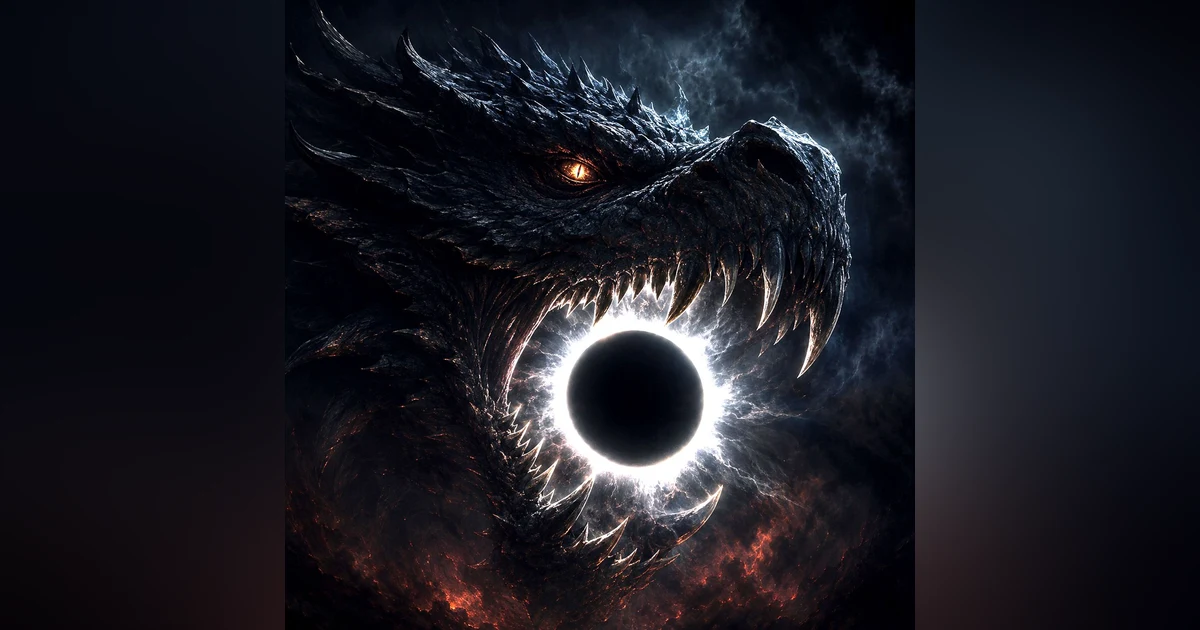
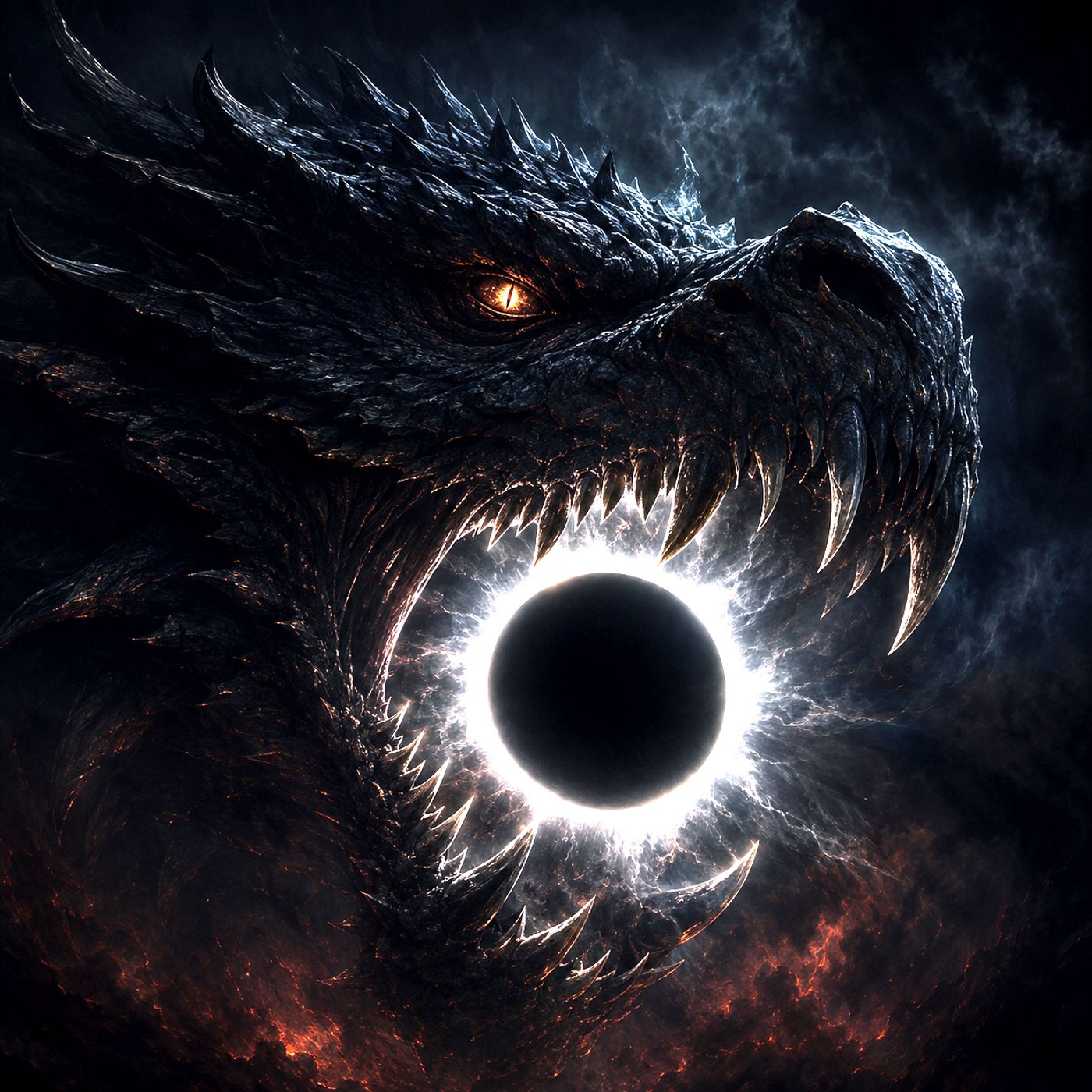
And the bite grows, the daylight weaken and every second introduces a new possibility. What if it doesn't stop? That question is at the heart of all folklore involving eclipses, not only what is happening, but how do we make it let go? In traditions recorded from ancient China. The answer was a celestial dragon. The sky was not empty space. It was alive with forces, spirits, warnings, and enormous creatures that human beings couldn't see until something went very wrong. Then a dark curve appeared on the edge of the sun. The dragon had opened its mouth. People responded the way you probably should respond when a giant, invisible reptile begins eating the most important object in existence.
They made noise. Drums thundered, gongs rang, pots and metal objects crashed together. Voices rose into the darkening air, all of it aimed upward. All of it meant to frighten the creature away from its big meal. Try to hear that scene in your mind. Daylight is draining from the streets, children are crying, dogs barking, and entire village hammering on anything that could make a sound. While the dragon swallowed another piece of the sun. Then the darkness stops spreading, a thread of light begins to return. The sun begins sliding out of the monster's aw. Of course, that means the ritual worked.
That is the beautiful trap hidden inside and eclipse legend. The sun always returns, which means whatever people did to save. It must have worked. The dragon was not defeated forever, It was only frightened away. And next time you'd better hit the drum that much harder if you know what's good for you. Then there is Rahu, the eclipse monster, with perhaps the most frustrating curse in all of mythology. In a famous Hindu story, gods and demons churn the cosmic ocean and produce Amrita, the nectar of immortality. A demon slips into the line into skies and manages to get a taste.
The Sun and moon recognize him and expose the trick. Vishnu strikes, cutting the demon in two, but the nectar has already touched him. The head cannot die. It becomes Rahu. In many tellings, the body becomes k Tu, and Rahu remembers exactly who betrayed him. So the severed, deathless head hunts the Sun and moon across the sky. Every so often he catches one, opens an enormous mouth, and swallows the light. The world darkens inside a demon's head. But Rahu has one problem. You see no body, no stone, no closed throat. The Sun or moon simply passes through the opening where his neck should be, and escapes back into the sky.
It's almost funny until you really imagine it. An immortal head drifting above the world, eyes fixed on the sun, mouth opening wider than the horizon, Forever, hungry, forever, furious, forever, unable to keep what it catches. And eclipse is not a random attack. It is more of an ancient grudge briefly catching up farther north. The things chasing the sun had fur. In Norse mythology, the Sun is soul moving through the sky while a wolf named Skull races behind her. The moon has a pursuer, too, Hati. Every day is a chase. Every sunrise means the jaws have not quite closed, but the wolves are patient because they're tied to Ragnarok, the collapse of the Old World.
When that ending finally arrives, the chase ends, The celestial prey is caught, The familiar lights disappear, the earth shakes, the world people understand comes apart. The old sources don't give us one neat rule saying every solar eclipse was definitely Skull taking a bite, because folklore is rarely that neat and tidy. But if you lived with the story of a wolf forever pursuing the sun. What else could an eclipse feel like? For a few awful moments, the distance closes, a dark jaw moves across the Sun's face, the temperature drops, daylight drains from the world. Maybe this isn't the end.
Maybe it's only practice, and that makes the wolf especially creepy. The dragon can be frightened away by noise, but Rahu is doomed to lose his meal. Skull is not scared of your pots and pans. He is simply waiting for the day when he's finally allowed to win. Now, before we keep staring into the black sun, make sure you're subscribed to Weakly Spooky, because every Thursday we bring you a new thrill. And make sure you send this episode to a person who would absolutely like to bring a wooden spoon to an eclipse, just in case. The best monsters still travel by word of mouth.
Not every creature accused of eating the sun was enormous. One historical account attributed to Choctaw tradition, describes a small black squirrel gnawing at the sun. Honestly knowing squirrels, it sounds accurate at first, It seems like the cute version, but it's really not imagine discovering that daylight is so fragile. It doesn't take a dragon, a god, or a world ending wolf to destroy it. It only takes one small, ravenous animal with sharp teeth and some time on their little, nonopposable thumb hands. In the recorded story, people shouted and shrieked, children banged pots, men fired rifles, all to scare the squirrel away.
A whole community fought the end of the world with kitchenware, and once again, the sun returned. The squirrel had been driven off for now. And honestly, I love this one because a giant monster gives the sun some dignity. A squirrel makes the universe feel badly maintained. I mean, sunlight isn't just your only source of warmth. It grows the food you eat. That's pretty scary when it becomes the food that a ravenous little Scurrillus carolinius craves. Once you start collecting eclipse stories, you almost immediately notice something. Humanity looked at the same black shape crossing the sun and imagined an astonishing number of mouths.
Stories from Vietnam tell of a giant frog swallowing the sun. In Javanese mythology, Batara Kala, a power associated with darkness and destruction, devours it while people beat drums and make offerings. An Andean tradition, a puma attacks the sun and must be frightened away by screaming children and crying animals. A Pomo story describes the sun getting into a fight with a bear along the Milky Way. Elsewhere, the Sun is trapped, wounded, sick, abandoned, or being punished. Different places, different creatures, same awful sight. The light above everything begins disappearing. And here's the part that really gets under my skin.
So many traditions didn't imagine the sun simply switching off. They imagine something consuming it. Teeth make the darkness extra personal. A shadow, well, that's just a shadow. A mouth, it's hungry, and thank goodness, everyone thought the same thing at once. The one concept that truly brings humanity together, when something scares you, scream at it. I gotta love that. I gotta love that. I get behind that one, all right. Here's another true addition collected among the Apa Po Couva Qua raw Nie of South America. And did that one pretty good? In the recorded story, an eternal bat or sometimes a celestial jaguar, gnaws at the sun or moon, not necessarily swallowing it, gnawing at it.
That word kind of adjusts the whole image. It feels slower, patient, like something outside the ordinary world has found the edge of the sun and is testing it with its teeth. The account connects the creature with an expectation that the present world will not last forever. Fire will come, cosmic beasts will be released the stars, and humanity will face destruction. So an eclipse is not merely a strange afternoon its evidence the things waiting beyond the light are still there. The eternal bat didn't vanish, It only stopped it's chewing. Today we understand eclipses. We can calculate them years in advance.
We draw the path on maps and then book hotels beneath it. We buy special glasses, check the weather, charge our phones, and wait for the moon's shadow like it's a touring attraction. But knowledge doesn't make the moment ordinary. On August twelfth, people in Iceland will watch darkness arrive in the late afternoon. In Spain, totality will happen low in the evening sky, long before sunset across much of Europe, the sun will become a thin, damaged shape hanging over the western horizon, and for a moment, the sky will break one of its oldest promises. The sun is supposed to stay there, even behind clouds, even through storms, even through the longest night.
We know it will come back, and eclipse lets us watch that certainty being covered by something black. So when the light begins to weaken, remember the old explanations. Maybe a dragon has wrapped its jaws around the sun. Maybe Rahu has finally caught his enemy. Maybe skull has closed the distance. Maybe a little black squirrel is chewing much faster than anyone expected. Or maybe beyond the last bright edge, the eternal bat has woken up, and boy is it hungry. We know the moon will keep on moving. We know the light will return, it always has. Still I would keep a pot and a wooden spoon nearby, because every eclipse in human history has ended, and I would hate for us to be the first to forget how to scare the monster away.
I'm Henrique Couto, and this has been Thursday. Thrills. Now stay safe out there, keep your headlights on protect your eyes on August twelfth, and remember, when the sun goes black, do not assume the moon is the only thing up there. Come back tomorrow for more fear. Until then, lock your doors, as if that will help you
