


 Apple Podcasts

 Spotify

 Spreaker

 Audible

 Castro

 RSS Feed

 iHeartRadio
Terrifying & True | Père Fouettard: The French Krampus and the Dark Side of Christmas
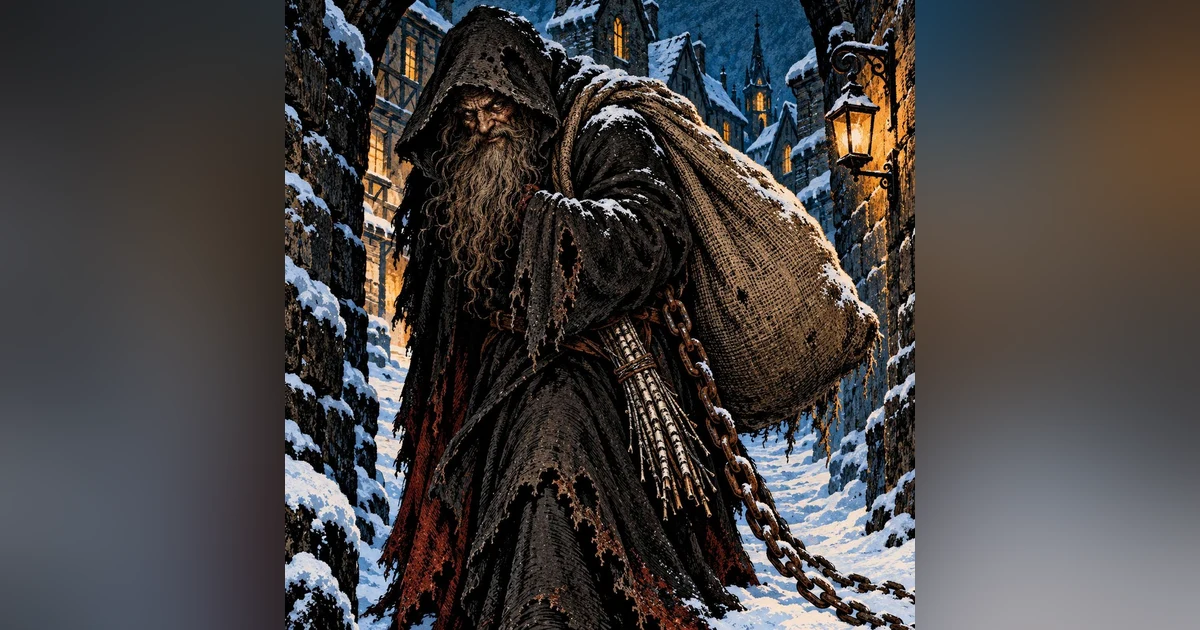
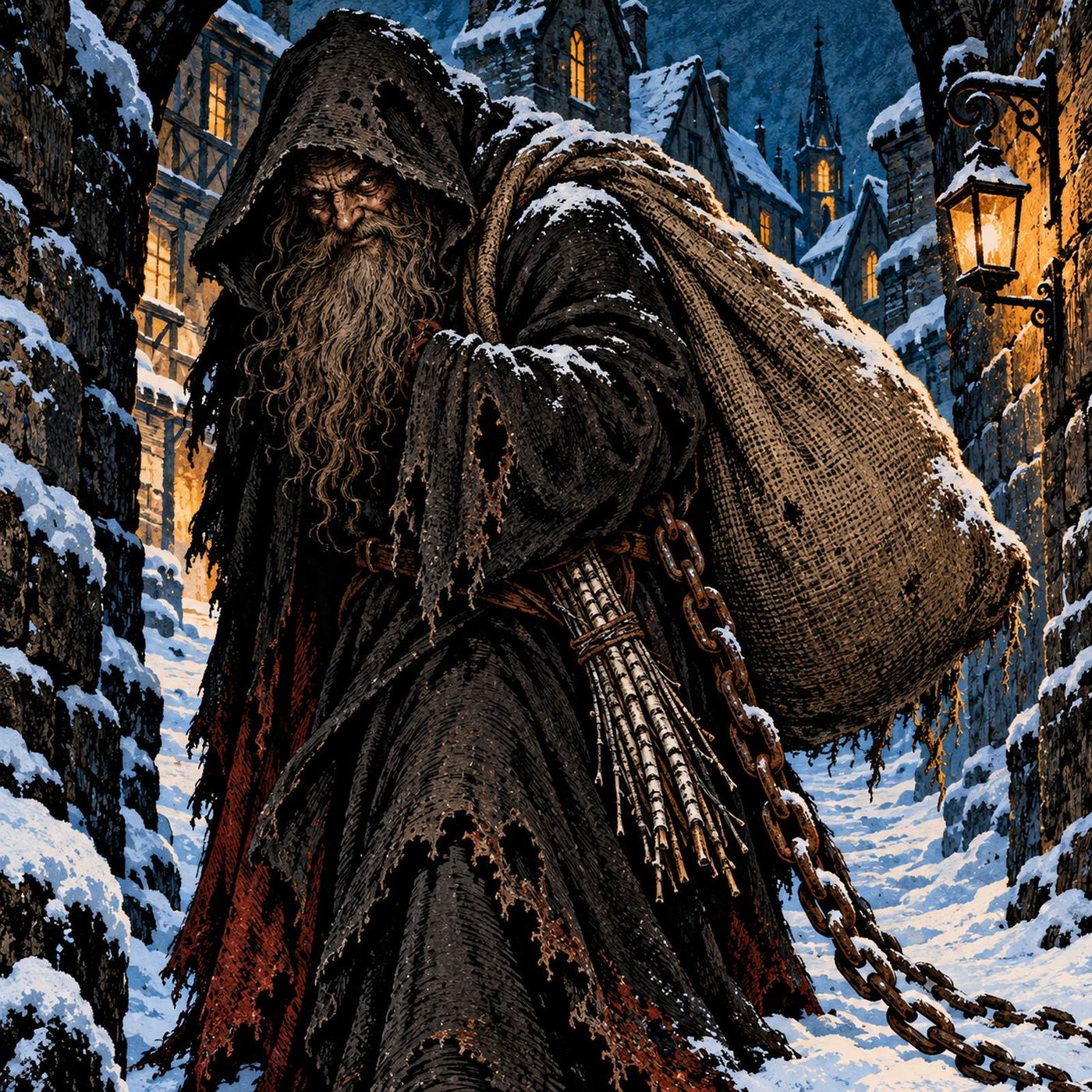
When most people think of Christmas, they picture cozy lights, warm cocoa, and jolly Saint Nick. But in parts of France and Belgium, children grew up with a much darker figure stalking the snowy streets: Père Fouettard, the “French Krampus” — Saint Nicholas’ brutal Christmas punisher. In this chilling episode of Terrifying & True, we unwrap one of Europe’s scariest Christmas legends, where miracle stories, war, and fear-based parenting all twist together in the shadows of the holiday season.
We travel from the glowing Saint Nicholas Day festival in Nancy, where modern light shows retell the butcher’s crime, back to the Middle Ages, when tales of three boys butchered, salted, and resurrected turned Saint Nicholas into a protector—and doomed their killer to walk forever by his side with a whip and a sack for bad children. Then we follow the story into the 1500s and the Siege of Metz, where a grotesque, whip-wielding effigy of Emperor Charles V helped transform a political insult into a permanent Christmas bogeyman.
As the legend spreads, Père Fouettard becomes the nightmare shadow of Saint Nicholas Day: chains clanking on cobblestones, a hooded figure in filthy black, a bundle of switches in one hand and an empty sack in the other, ready to terrorize misbehaving kids while the saint hands sweets to the good. Along the way, we meet his terrifying cousins across Europe: Krampus in the Alps, Hans Trapp in Alsace, Knecht Ruprecht and Belsnickel in Germany, Schmutzli in Switzerland, and Zwarte Piet in the Low Countries—a whole dark Christmas folklore universe built on the promise of gifts… and the threat of pain.
Inside this episode:
- The butcher of Nancy – How a medieval story of murdered schoolboys, salted flesh, and a miraculous resurrection birthed one of the most disturbing Christmas horror tales in Europe.
- Saint Nicholas and his punisher – Why the beloved gift-giver needed a Christmas enforcer, and how Père Fouettard became the terrifying counterpart to holiday joy and presents.
- From siege to street parade – How a mocking effigy during the Siege of Metz slowly evolved into the ragged, terrifying figure marching beside Saint Nicholas in winter festivals today.
- Krampus and the other Christmas monsters – The wider world of scary Christmas creatures, from horned demons to scarecrow cannibals haunting the Advent season.
- Fear as a Christmas tradition – How generations of parents used whips, sacks, and coal as holiday pressure to keep kids “good” before Christmas morning—and why that idea is finally being questioned.
- Folklore in a changing world – The modern controversies over blackface portrayals, Zwarte Piet, and racist imagery, and how some communities are trying to keep the tradition while shedding its ugliest parts.
🎧 LISTEN NOW and subscribe for spine-tingling horror stories every week!
🎉 Unlock exclusive bonus episodes and support the show on Patreon!
👉 WeeklySpooky.com/Join
📬 Contact Us / Submit Your Horror Story!
- Twitter: @WeeklySpooky
- Facebook: facebook.com/WeeklySpooky
- Email: WeeklySpooky@gmail.com
🎵 Music by Ray Mattis 👉 Check out Ray’s incredible work here !
👨💼 Executive Producers: Rob Fields, Bobbletopia.com
🎥 Produced by: Daniel Wilder
🌐 Explore more terrifying tales at: WeeklySpooky.com
0:00 A filthy man in black stalks the winter streets, chains scraping over the snow. Children are told he walks beside Saint Nicholas, watching, waiting, his sack hanging empty and his whip ready for bad kids. Tonight we follow the legend of pair for Tah, the Christmas butcher who traded his soul for a lifetime of punishing children. What you were about to tet is believed to be based on witness accounts, testimonies, and public record. This is terrifying and treat. On a cold December night in the old city of Nancy, fronts families gather to watch Saint Nicholas glide across the facade of City Hall in a sea of lights. But in this Christmas spectacle, the snowflakes suddenly turn red. Three lost children knock on a butcher's door and never walk out again.
1:28 For centuries, parents in France and Belgium told their children that Saint Nicholas did not travel alone. At his side walked a filthy figure clothed in rags, face blackened with soot, chains dragging in the snow, a bundle of switches clenched in his fist. His name was pere for tar father Whipper, and his job was simple. Saint Nicholas brought the gifts, pear Foitar brought the punishment. Was this sinister companion born from a real life medieval crime, a war torn cities, mockery of an empire, or a long tradition of terrifying children into being good? For Christmas? Tonight, we'll trace the legend from salted corpses in a butcher's barrel to torchlit parades in modern streets, and ask why a season of peace and joy kept such a brutal shadow at its side.
2:43 So join us as we step into the winter dark and confront the chilling Christmas folklore of pear Foitar. And if you don't want to meet him yourself, don't be naughty makes you hit that subscribe button right now. On a winter night in the French town of Nansi, a spectacular light show unfolds across the city hall. But three children, lost in the cold knock on a butcher's door. But instead of refuge, they meet a gruesome fate, chopped into pieces and salted away in a barrel. In the midst of the light show, gentle Snowflake suddenly turn into bloody chunks of meat, and the crowd shudders. This morbid scene might seem out of place in a Christmas festival, but it retells a chilling legend ingrained in French and Belgian folklore.
4:19 It's the origin story of Parafoitar, literally translated to Father Whipper, a sinister figure who became the dark companion of jolly old Saint Nick, tasked with punishing naughty children during the holiday season. But there's so much more to unravel in the eerie tale of Pearfoitar, a cannibalistic boogeyman born of medieval fears and enduring as a cautionary specter in Christmas traditions. In much of the world, the win holidays bring images of benevolent gift givers jolly Santa Claus with his reindeer and elves. But in northern and eastern France, Belgium, and parts of French speaking Switzerland, children once grew up with a very different Christmas visitor lurking in their imaginations. Per Fotar is the anti Santa, a ragged, menacing figure clad all in black who accompany Saint Nicholas on his annual rounds every December sixth. While kindly Saint Nicholas, the patron saint of children and original historical model for Santa Claus,
5:49 hands out gifts and treats to well behaved youngsters, Father Whipper deals with the rest, dispensing lump of coal, lashes from his whip, or much worse. The very side of pear Foitar sent shivers through generations of children. Parents would warn misbehaving kids that this grim attendant was watching. If you didn't say your prayers, if you were lazy with chores or gave your parents trouble, you might not just miss out on presents, you might earn a visit from pear Foitar and of course his whip. Unlike the gentle encouragement of be good for Santa, this was discipline by fear, a moral bargain sealed with threats of pain or a trip into the darkness. As one folklorest Riley noted, quote, it's better than the carat and stick. This one basically terrifies you into being good. The legend of pear Foitar illustrates a long standing tradition in European winter folklore. For
7:21 every benevolent holiday figure, there is a shadowy enforcer, ensuring that virtue is rewarded and vice is punished. To uncover how Father Whipper came to haunt French Christmas time, we journey back to the Middle Ages. The most famous origin tale of pear Foitar is as ghastly as any grim fairy tale, and it dates to around the twelfth or thirteenth century. It begins, as we spoke of earlier in Nansea's Light Sun Show, with a butcher and three unwary children.
8:05 Imagine a dimly lit roadside inn or butcher's shop in medieval Lorraine on a frigid night, three young boys, perhaps wealthy students traveling to boarding school, seek shelter from the cold. The innkeeper, in some tellings, a butcher named Pierre fittingly Pierre Lenoir or Black Peter, welcomes them inside, but behind his hospitality lurks evil intent. Sensing the boy's fine clothes and the money that they carry, the butcher and his wife conspire to rob them. They decide they can't simply steal from them and then let the children go, so they plan something far more horrific. When the boys are asleep or drugged after a special supper, the butcher pounces in the dead of night. He slits the children's throats one by one. What follows is sheer butchery. The bodies are carved into pieces, little cubes, as one version puts it, and placed into a sulting barrel to cure as one would preserve meat. The butcher intends to pickle the flesh.
9:39 Some legends even suggest cannibalistic plans, turning the innocent children into salted pork to be sold or consumed. It's a scene of absolute horror. Blood on the floor, a barrel filled with dismembered limbs, the air thick with the iron scent of death. Yet this gruesome crime does not go unnoticed. Saint Nicholas, making his sacred rounds, senses the atrocity. In one telling, a heavenly vision alerts him since he is the patron of children. The holy Bishop arrives at the murder scene and confronts the butcher with divine power. Saint Nicholas miraculously resurrects the slain children, reassembling their butchered bodies and bringing them back to life. In some versions, the boys awake from the salting barrel as if from a deep slumber entirely unharmed. This miracle cements Saint Nicholas's reputation as protector of the innocent, and it seals the butcher's fate as well. Caught red handed in an unforgivable crime,
11:14 the butcher is overwhelmed with fear and remorse. The kindly saint could have struck him down on the spot, but instead imposes a fate worse than death for a wicked soul. Saint Nicholas condemns the murderer to a life of eternal penance. The butcher must dawn a dark cloak and follow the saint forever more as his servant. From that day on, the legend says the criminal was transformed into per foitar, the whipping father, doomed to serve as the disciplinarian alongside Saint Nick. It's a poetic justice. The man who dealt out suffering to children is now tasked with delivering just punishments to misbehaving children for eternity. In grizzly folk tale logic, an infanticidal butcher becomes the dark helper of the children's saint, a boogeyman to frighten the living so that no similar tragedy, ever occurs. This tale, blending murder, cannibalism, and redemption through servitude, first appeared in oral folklore around twelve fifty two CE
12:45 and spread quickly across French provinces. Its popularity endured passed down through generations as a warning to be good or else, and while it may be apoca, by the late medieval era, the story of Saint Nicholas and the Wicked Butcher was firmly ingrained in tradition. Art and literature began to depict Saint Nicholas accompanied by a sinister figure in chains, a reminder that even as the Saint rewards the good, a dark force lingers for the bad. Interestingly, Lorraine offers another origin story for our peer, Foitar that ties the legend to a specific historical event. Fast forward a bit to the year fifteen fifty two in the walled city of Metz in Lorraine. Europe is convulsed by wars of religion and territory, and Mets is under siege by the armies of Emperor Charles the fifth of the Holy Roman Empire.
14:02 As the siege wears on, the desperate citizens of Mets decide to mock their besieger. In a grand display, according to local accounts, the town's guild of tanners constructed a grotesque effigy of Charles the Fifth, dressed it in rags, arming it with a whip, and even binding it in chains. This monstrous puppet, a caricature of the hated emperor, was paraded through the streets in order to rally defiance. The people jeered and hurled insults as the effigy was dragged and publicly burned. The crude figure with a whip earned the name peer Foitar, the father Whipper, being a symbol of the oppressor. Miraculously, Mets revived the siege and was liberated the following year. In the celebrations that followed, the tanner's menacing, whip wielding character was brought out again during the Feast of Saint Nicholas, a cherished holiday in Lorraine.
15:17 The victorious townsfolk merged their new local symbol with the existing Saint Nicholas tradition, adopting the charred chain dragging whipper effigy as Saint Nick's frightening companion. In this telling, per Foitar was born not from a butcher's sin, but from a community's triumph and dark humor in times of war. Over the many years, folklore being fluid, these two narratives intertwined. The cannibal Butcher's tale and the whip bearing effigy from Mets coalesced in to one legend. By the modern era, the butcher and Parafoitar became the same character in popular imagination.
16:11 In Nansi's annual pageant today, for example, the story explicitly shows the butcher transforming into Parafoitar after Saint Nicholas resurrects the children. This fusion gave Parafoitar a rich dual identity. He is at once a specific penitent murderer from an old miracle story and a broader personification of punitive justice born of folklore and history. Either way. By the sixteenth century, the figure of Father Whipper was firmly entrenched in the holiday traditions of the region, becoming the embodiment of Christmas fear for centuries. December sixth, Saint Nicholas Day was the highlight of the winter for children in many European regions.
17:10 Long before Christmas Day took center stage. Kids would polish their shoes or set out wooden sabbots on the eve of Saint Nicholas's feast, hoping to find them filled with sweets the next morning. In Nord Pas de Calais, Lorraine and Wallonia, southern Belgium, this tradition thrived. Saint Nicholas would visit homes, schools, or town squares, delivering chocolates and sweets to the nice children. But tradition also warned that Saint Nick never traveled alone, lurking just behind the jolly Saint was, of course, per Foyte, there to deal with the naughty ones as he saw fit. Accounts of Saint Nicholas day in the past paint an atmosphere of both excitement and dread.
18:20 As a child, you might lie awake listening for any hint of jingle bells or heavy footsteps outside your door. Imagine the scene as written by a chronicler from Lorraine. Saint Nick enters with a warm smile and basket of goodies, and right behind him looms Pear Foyitar, scowling under his hood, whip in hand. In village processions, Foitar announced his presence with noise and clamor the clanking of chains, the crack of whips, the thud of heavy boots on cobblestone. Children's hearts would leap into their throats at that very sound.
19:09 In the nineteen sixties in Nansi, one woman recalls how quote we behaved like altar boys in his presence. We had to contain our fear. The threat of a lashing, even if only symbolic, was enough to make even the cheekiest child stand up straight and be quiet when peer Foyitar walk by. Traditionally, his gifts for bad children ranged from the meager to the macabre. The mildest outcome might be finding a lump of coal or a turnip, maybe even a black onion left in your shoe instead of candy, a silent reproach of your misdeeds. For the those who had been especially bad, parents warned of harsher consequences, the whipping father might swatch you with his matinete, a short whip or bundle of sticks, right then and right there.
20:18 Some families had elaborate scare tactics, like a knock on the door and a deep voice asking if any bad children lived there. Others told tales that if you were truly unruly, Peer Foiitar would stuff you in his sack or wicker basket and carry you away to who knows where. This image a child snatcher figure carrying off kids appears in many many European folk traditions, and in French lore.
20:58 It was father Whipper's most verifying role. Yet there was always a balance in the ritual. Saint Nicholas, the benevolent bishop in white and gold, stood as a buffer between the monster and the child. Often, the Saint would intercede on a frightened child's behalf, giving them a chance to recite a prayer or promise to be good in order to be spared a whipping. The psychological impact was potent. Children experienced a living morality play each Saint Nicholas day, with the reward for goodness and the threat of punishment personified right before them. As one eye witness from decades past recalled, Luckily for us, Saint Nicholas was there to protect the innocent. What does a Christmas boogeyman look like? Exactly? Well, in the case of parafoitar tradition gave us a character that is instantly unsettling. The classic portrayal is of a man with a sinister, weathered face and a wild mane of unkempt hair framing a scraggly beard. He's usually dressed in dark, tattered robes or a heavy oversized black coat,
22:29 often with a hood obscuring much of his visage. His clothes are sooty and worn, and in some versions, his face itself is blackened with ash or dirt, either to suggest his sooty travels down chimneys or simply to make him look more demonic. No matter the exact costume, Parafoitar cuts a repulsive figure. Contemporary reenactors in Lorraine have described how they prepare to become the Whipping Father. They rub dirt or coal dust on their skin, black out a few teeth, and down a ragged hooded cape to achieve a truly filthy, inhuman look. One performer said quote, I want my character to disgust people, not just scare them, emphasizing the grimy, depraved aspect of Foitar's persona. From the tip of his pointed hood to the clatter of his wooden clogs or heavy boots, he represents decay and menace, the very opposite of Saint Nicholas and his shining goodness. Crucially, pear Foitar is always armed. In one hand, he carries
24:02 his trademark implement of punishment, variously described as a whip, a stick or cudgel, or more often, a fistful of switches, thin sticks, or birch branches bound together. This martinet whip is as much a symbol of his identity as the big red sack is for Santa Claus. Often, Fouitar also hauls a large sack or basket on his back, poised to snatch up the misbehaving children. Old illustrations show him with a wicker backpack filled with wriggling terrified adolescents he's collected, or carrying an empty sack that could easily fit a particularly small in stature victim. Sometimes he drags chains, adding an ominous rattle to his approach. Every detail of his appearance is meant to inspire dread. The sounds of chains and switches dragging on the ground, the sight of his dark form looming in the corner, the smell of soot and sweat and old leather that might accompany him. As
25:33 mentioned earlier, his methods of punishment vary in severity. A quick whipping on the backside is the most common threat. Indeed, his name Foyitar comes from foyette or whip. In practice, the person playing pearafoyar might swipe the air or lightly tap the floor with the switches as a war warning. Historically, however, children were convinced he might do much more than that. He could give you a good thrashing with a stick, leave welts on your behind, or, as some exaggerations went, even evisceriate naughty children and carry their guts away in a sack. That over the top claim likely came from adults, either half joking or possibly being inspired by our old friend Frau Perchta over in the Alpines. After all, she is the original belly slitter. They're more likely to deck the halls with Holly's bowels than bows of Holly, one dark humored rider quipped of these darker Christmas figures. In any case, the violence associated with pairfe sets him apart from most americanized holiday figures. He is not a jolly
27:07 trickster like the Grinch or a friendly ghost. He is unabashedly a child beater in folklore, a character from a time when physical punishment was an acceptable tool to enforce good behavior. As I just mentioned, In some regions, folklore would take an even darker turn. There are versions of parafoy Tar legend in which he is not merely a human boogeyman, but a near demonic presence. Artistic depictions occasionally gave him horns, a tale, or a devilish grin, blending him with the archetype of a chained demon subdued by the saint. This imagery likely draws from medieval iconography. Some old church paintings showed Saint Nicholas taming a devilish creature, symbolizing good triumphing over evil. Indeed, in the previously mentioned Alpine Europe, Saint Nicholas's companion is often literally a horned devil crampus, and influences from those regions may have sweeped into how Foitar was imagined. A modern statue of Peara Foitar even portrays him as a horned satyr like monster, blurring the line between the whipping Father and a Christmas demon.
28:42 Whether human or fiend, Parafoitar's appearance has always been calculated to send a chill down the spine, especially the spine of a misbehaving child who suspects that this year the dark figure with the wind might just be coming for them. So I'm sure you're wondering why would parents and communities include such a frightening figure in a children's celebration. To modern sensibilities, it might seem cruel or damaging to scare children with tales of a murderous whipping man, but historically speaking, figures like Pera foy are served a clear psychological and moral function. They were the enforcers of good behavior, the living embodiment of consequences in a pre modern world of harsher realities. They were thought to be effective. The logic was simple. Toe the line and you'll be rewarded. Stray and you'll face the whip. In an era when discipline was often literally enforced with rods and canes at home and school, children understood Parafoitar as an extension of authority.
30:12 He was a tool of both parental control and moral education, making abstract concepts of right and wrong very concrete. If a child lied or stole during the year, the prospect of Parafoitar's punishment on Saint Nicholas Day was a looming and ever present deterrent. Some tales even assigned specific punishments for specific sins. One nineteen thirty's American version of Father Flog as they translated him at the time, had a ledger of crimes, cut a lying child's tongue out with the lazy child's backside, and so on and so on.
31:03 As harsh as it may sound, these legends were essentially the Boogeyman method of parenting, and still just enough fear to keep kids obedient and safe. There was also a moral allegory at play. Together. Saint Nicholas and Parafoitar personified the dual nature of justice, mercy, and judgment. Even the wicked butcher in the legend was offered a chance at repentance by serving Saint Nicholas. The message was that misdeeds do have consequences, but with contrition and maybe a little punishment, one can return to grace. Ultimately, the fear of Parafoitar was meant to guide children towards choosing good over evil. Psychologically, such frightful folklore gave children a way to externalize their naughty impulses. The whipping father will get the bad parts of me and then avoid acting on them. As one commentator observed, quote, there is a cultural, social, and religious through line in all of these traditions. Say your prayers
32:33 be good to your parents and you'll be rewarded. If not, you'd better watch out. Generations of parents believe these terrifying tales worked. They kept children in line, at least during the crucial lead up to Christmas, and for the children. As frightening as peer Foar was, he also added a sense of drama and mystery to the holidays. The relief of being declared good by Saint Nicholas felt all the sweeter when you'd secretly dreaded the alternative. In that way, fear heightened the joy of finding sweets in your shoe instead of coal on December sixth. Of course, not everyone embraced frightening children into obedience. Even historically, some families likely toned down the scare tactics. Still, until very recent times, pear Foitar and his dark visit was an accepted and even beloved part of holiday tradition in parts of France and Belgium. Folklore is never static. As the legend of Pear Foitar spread and evolved, different regions put their own twist on the Christmas boogeyman. Throughout France and neighboring countries,
34:08 local names and lore sprouted, each adding a dash of color to the dark figure. In the French province of Alsace, for instance, they tell of a sinister companion to Saint nick named Hans Trop. Hans Trop's story is itself truly chilling. He is said to be the ghost of a medieval night, inspired by the real fifteenth century Hans von Trotha, who was so wicked and cannibalistic that he was excommunicated and struck down by lightning. An Alsatian folklore, Hans Trop roams in ragged clothes, sometimes dressed as a scarecrow, and like peer foy Tar, he accompanies Saint Nicholas to punish the naughty children. Essentially, Alsace is Hans Trap is another incarnation of the Whipping Father legend away for that region to graft the concept onto a notorious local boogeyman. During Christmas processions in Alsays, Hans Trap appears much like per Foyitar, bearing a rod, threatening to carry off disobedient kids and adding a hair raising edge to the festive atmosphere. Elsewhere
35:39 in France, we find other names in some German speaking enclaves of Lorraine, he's called Rupelse or rupe nect, related to the German nect Ruprecht. In Normandy, folklore speaks of Pere Lapoque, a phantom whom might replace Pear Foyitar in local Christmas scare stories across the border. In the Netherlands, the role of Saint Nicholas's punitive helper is famously filled by Zvarta Piet or Black Pete, a character who, despite a very different backstory, shares the function of delivering coal and punishment instead of presence. In the Dutch and Flemish tradition, Zvarta Piet was long depicted as a Moorish servant in colorful Renaissance attire with a blackened face, a portrayal that has sparked significant controversy in recent years. More on that a little later. Importantly, in the French speaking parts of Belgium, Zvarte Pier is essentially the same figure known as Pere Foitar, showing how intertwined these personas are across languages. Zooming out further, Perfortar is part of a pantheon of terrifying Christmas companions
37:10 found throughout Europe. These figures are often collectively referred to as the companions of Saint Nicholas. For example, in the Alpine countries, the Marquis Christmas monster is our aforementioned Crampus, a half goat half demon creature with huge horns, fangs, and a lolling tongue. Crampus originates in Austria and Bavaria and fulfills the same role, whipping or chaining misbehaving children and sometimes tossing them in his basket to take back to his layer. Unlike parafoyars purely human form, Crampus is blatantly monstrous, often portrayed with fur and hoofs clanking chains as he runs through the streets on Crampusnacht. Yet the thematic resemblance is strong, as one writer noted, they're like quote mismatched buddy cops, Saint Nick as the good cop and these fiends as the bad. In Germany, particularly the north, there is the previously mentioned necht Rupprecht, an older man dressed in dark robes much like peer Foyitar, who carries a bundle of birch switches to beat unruly kids. German
38:42 folklore also has Belschnikel or Pelsnickel, a fur clad wild man who sometimes travels alone instead of with Saint Nick Bellschnikel would visit homes and quizically ask children if they've been good. If they answered yes, he might throw candies on the floor, But if they scrambled too greedily, out came the switch to smack their little fingers. Like most things, such figures crossed over to the New World. Pennsylvania German settlers kept the Bellschnekel tradition alive, scaring kids in America in the eighteen hundreds, the same way our peer Foutar did in Europe. Even in Switzerland their's Schmutzley meaning little dirty one, who yet again resembles a sootie mean assistant to the benevolent Saint Mikos. All these characters and more fulfill a similar culd purpose. They are the shadow side of the season, ensuring that the light of generosity is balanced by a dark warning against naughtiness. Each region's version
40:14 has its own unique flavor. Literally in some cases, the Icelandic yule cat will eat you if you don't get new clothes for Christmas, and Italy's Befana is a witch who might leave you coal, but none perhaps is as genuinely horrifying an origin as peer Foyitar, the child murdering butcher forced into eternal servitude. His legend stands out for its blend of true crime style horror and religious redemption, which is likely why it has endured specifically in the folklore rich regions of France and Belgium. As times changed, so did the depiction of pear Foitar. What was acceptable or effective in eighteen fifty might raise eyebrows or outright outrage in two thousand and twenty five. Over the centuries, the whipping father's image softened in some ways, sharpened in others, and even sparked controversy as cultures reassessed these traditions. One major shift was a general toning down of violence and fear.
41:35 As modern parenting evolved. By the late twentieth century, fewer parents were keen on traumatizing their children with literal fears of abduction. In many communities, pear Foitar became more of a comedic, cartoonish character, still a bit scary in looks, but not truly threatening. As a Belgian commentary notes quote, in times past, pear Fortar was a threatening figure who put children in his sack or beat them with switches. Now he's seen as a jovial, though mute assistant to Saint Nicholas. He often plays the fool, nodding silently or making faces while the big guy does the talking. The practice of actually whipping children during Saint Nicholas visits has largely disappeared. At most, Pearfotar might wag a finger or give a token swish of his stick. The fear, while still present, is more playful and calibrated to not truly terrorize, at least in most settings. However, the visual of pear Fortar, particular regularly his dark complexion, has ignited debate in modern times. Traditionally,
43:07 in parades and home visits, the role of Peer or Zvarta Piet in Dutch regions was played by someone in costume, often a Caucasian actor in full black face makeup with thick red lips and an Afro style wig. This was long explained away in folklore as either he's a more from Spain, tying into the story that Saint Nicholas comes by boat from Spain in Dutch tradition, or he's covered in chimney soot from going down flues in order to deliver coal. By the late twentieth and early twenty first centuries, these justifications rang hollow to many. The portrayal looked comfortably like a racial caricature, a stereotypical minstrel like image, and people began to call it out as racist imagery that needed to change. Protests erupted in the Netherlands over Zvarte Piet's blackface appearance, and similar criticisms were voiced in Belgium and France regarding Parafoitar's portrayal. This sparked a cultural tug of war. On one side, traditionalists argued that it's folklore
44:37 not intended to offend, pointing out that no actual race is being depicted. Parafoitar is a fantastical character. In fact, in twenty fourteen, Belgian's inter Federal Center for Equal Opportunities officially judged that black Peter slash pear Foitar in blackface was not any legal form of racial discrimination since it's part of a tradition without intent to demean a real group. But in the same breath that body urged a quote constructive social debate on the figure's future, advising that perhaps pear Foyitar quote be portrayed other than as a stupid, subordinate or dangerous black man, through whom stereotypes are maintained.
45:37 In short, keep the tradition if you must, but find a way to update the imagery, and indeed changes have begun. In the Netherlands, many cities in recent years have adopted sooty peat or road vig Piet, where actors portray the character by wearing just a few soot smudges on their face, as if from chimney ash, rather than the full blackface. They often forego the exaggerated red lips and afro wig as well. This approach attempts to keep the beloved character but remove the racial overtones. By twenty twenty one, the soot version of zvarta Piet had become more common than the traditional blackface version at public events in the Netherlands.
46:40 In French speaking regions, the debate has been somewhat less prominent, but is growing, especially as images of blackface in any context become broadly seen as problematic. Some Saint Nicholas parades in Belgium have quietly shifted did to using helpers with dark clothing and maybe a little dirt on their cheeks rather than a full pitch black face. Others still hold on to the old style, so one may see both approaches depending on the town. Beyond the issues of race, peer Foyar also faced the possibility of obsolescence. The rise of pere Noel Father Christmas, essentially the French Santa Claus in the twentieth century, started to overshadow the Saint Nicholas tradition in many parts of France. After World War II, as American style Christmas practices such as Santa Claus, Christmas Morning gifts and decorated fir trees spread in France, the old sixth of December celebrations became far less universal. In regions like Flanders, Alsace and Lorraine, people held on to Saint Nicholas Day strongly. It was part of their cultural identity.
48:09 But elsewhere in France, December twenty fifth and Santa took center stage, and on Santa's team there is no evil sidekick. One historian notes that quote. With the transformation of Saint Nicholas into our modern day Santa, per Foyitar has disappeared altogether in France. In fact, he has given way to other characters such as elves and reindeer. Indeed, Santa Claus per Noel was deliberately stripped of sinister companions in the nineteenth century as his myth was commercialized. A scary helper would have been counterproductive to the image of a magical, child friendly hollyiwy, So in much of France today you'll find children more familiar with Santa's benign elves than any pair foitar. Many have never even heard of the Whipping Father outside of a history lesson or regional museum, or even maybe a podcast. That being said, in the pockets where he does survive, pear Foitar remains a cherished, if spooky tradition. Cities like Nansi and Mets in Lorraine still hold annual Saint Nicholas festivals where the pair is front
49:42 and center. As we saw, Nansi goes so far as to protect the entire butcher legend in lights in stage with a live reenactment. Local actors portray the butcher and his wife, luring them the children in miming the grisly murder tastefully off screen, one can hope and then dramatizing Saint Nicholas's miracle and the transformation of the butcher into foitar. During the parade, an actor dressed as Parafoitar lunges at the crowd with a whip in hand, giving out lumps of coal and even root vegetables like turnips and potatoes to jokingly punish random onlookers. Children shriek and laugh, some delighted, some a bit frightened, and parents get to enjoy a bit of good old fashioned pageantry. The fact that multiple generations attend these events is telling. For the grandparents, it's nostalgia.
50:53 For the parents, it's a bit of fun, and for the kids, perhaps their first brush with a legend that used to keep their ancestors up at night. In Belgium, the tradition of cinerclass and Zvarta biet on December sixth is still very much alive, more so than in most of France. Belgian children expect a visit from the Saint at schools or homes, and typically several peats or pairs accompany him to carry the bags of candy and maybe playfully scold the kids. The controversies have forced some adaptations, as mentioned, but the core custom persists. It's such a part of the culture that even efforts to legally curtail the blackface aspect were met with resistance and eventually compromise.
51:56 Time will tell if per Foyitar a few decades from now will be depicted as just a normal person with a bit of soot, essentially losing the black Peter aspect entirely, or if he will fade as society decides it's no longer in need of a human embodiment of child punishment in holiday celebrations. Though the world around him has changed, Peri Foi tars legend endures a dark stain that the bright cheer of modern Christmas hasn't completely scrubbed away. In the whispers of old folk tales, in the revived festivals of historic towns, and even in popular culture, the Whipping Father continues to fascinate and frighten. He a reminder that behind the glowing Christmas lights lurk ancient shadows, and that our ancestors did not shy away from mixing fear with festivity.
53:14 Even to day. If you listen on a cold December night in certain villages, you just might hear the distant echo of chains dragging and whips cracking as a parade passes by peer Fortar making his rounds. Yet again, parents still use his name to jokingly chide a misbehaving child careful or Pear Fortars will hear you. The child might roll their eyes if they're older, after all, they've seen far scarier things in horror movies, especially in France, But for the younger ones, the threat can still send them scurrying to brush their teeth or finish their homework. The character has also found new life in media, from postcards and figurines to mentions in songs and TV shows. He's become part of the very fabric of Christmas lore. In twoenty twenty three, of all places, a Hallmark Christmas TV movie even slipped in a joke about Peer Foitar a wink to those in the know. And as true crime and horror podcasts much like this one explore the dark
54:45 historical origins of beloved holidays, Pear Foitar's story is being retold to new audiences worldwide, not as a parenting tool, but as a chilling cury on from the past. Ultimately, pair foy Tar stands as a symbol of Christmas's dual nature. He embodies the ancient idea that winter is not only a time of giving, but also a time of reckoning. In the long nights of December, one's deeds of the year come home to roost. The kind are rewarded with sweets and toys. The wicked meet the whip. It's a primitive accounting, perhaps, but it spoke to something deeply human, our need to believe the world has balance, especially at the turn of a new year. So as you enjoy your holiday traditions, spare a thought for Pear Foitar and the role he played for generations of wide eyed children huddling by the fire. Their Christmas season was not all sugar plums and candy canes. It was also cautionary tales
56:19 and shadows in the corner. There is, in a way, a comforting moral to this frightening presence. Behave well and you have nothing to fear. And if you do slip up, well, somewhere out there in the winter dark, an old man with a whip and a sack has you on his list. Better be good for goodness sake, or pear Foitar might just pay you a visit. Ooh, Terrifying and True is narrated by Enrique Kuto. It's executive produced by Rob Fields.
57:13 And bobbletopia dot com and produced by Dan Wilder with original theme music by Ray Mattis. If you have a story you think we should cover on Terrifying and True, send us an email at Weekly Spooky at gmail dot com, and if you want to support us for as little as one dollar a month, go to Weeklyspooky dot com slash join. Your support for as little as one dollar a month keeps the show going. And speaking of I want to say an extra special thank you to our Patreon podcast boosters, folks who pay a little bit more to hear their name at the end of the show, and they are Johnny Nix, Kate and Lulu, Jessica Fuller, Mike Escuey, Jenny Green, Amber Hansford, Karenwemet, Jack Ker, and Craig Cohen. Thank you all so much and thank you for listening. We'll see you all right here next time on Terrifying and True
