


 Apple Podcasts

 Spotify

 Spreaker

 Audible

 Castro

 RSS Feed
Terrifying & True | The Golem of Prague: Jewish Folklore's Clay Monster
Key Takeaways
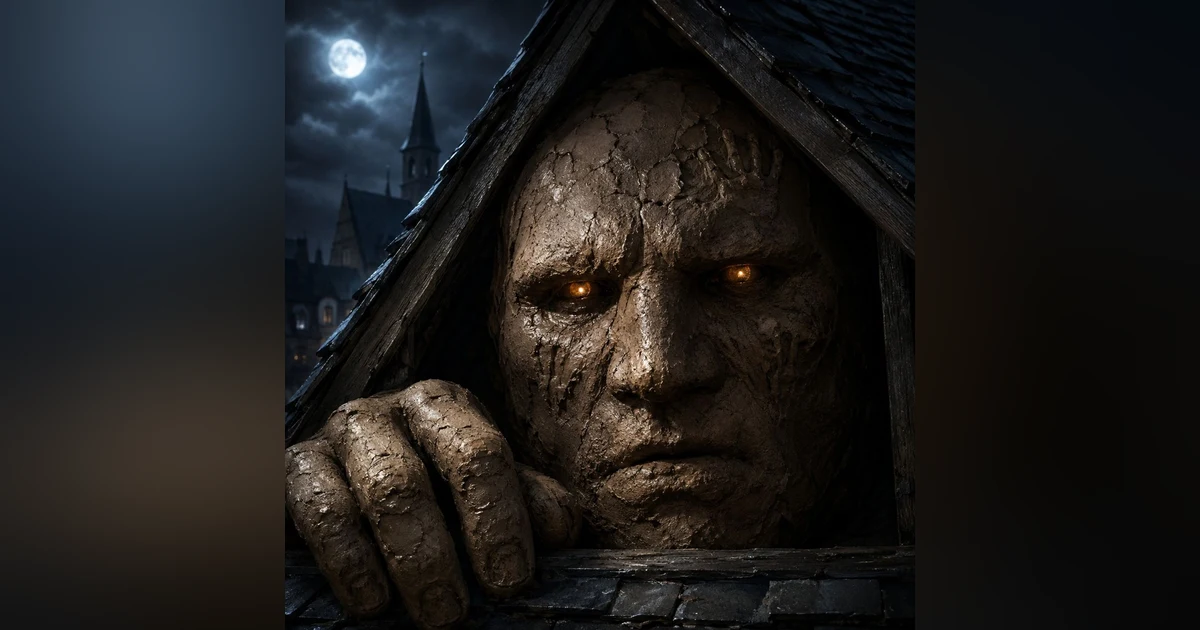
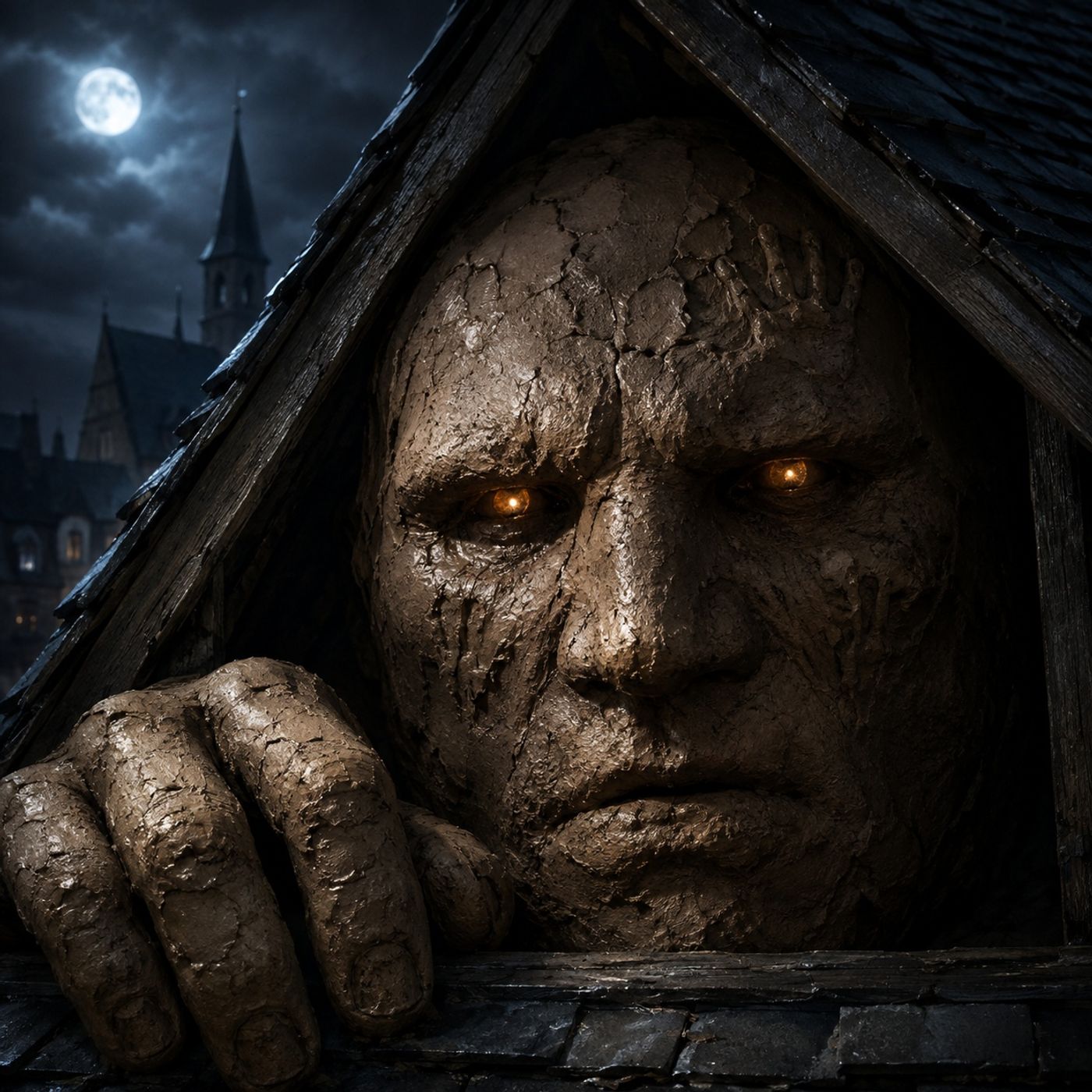
- The Golem of Prague is a famous figure in Jewish folklore, traditionally depicted as a silent giant shaped from clay and awakened by sacred Hebrew letters to defend the Jewish community.
- While historical figures like Rabbi Judah Loew (the Maharal of Prague) and Rabbi Eliahu of Chelm are associated with the legend, no contemporary records prove that any rabbi actually created a golem.
- The word 'golem' originates from biblical text (such as Psalm 139, meaning 'unformed substance') and early rabbinic tradition to describe an incomplete human form rather than a malicious monster.
- The familiar story connecting Rabbi Loew, blood libel accusations, and the golem of Prague was largely shaped by nineteenth-century literature and Yudl Rosenberg's 1909 book.
- The enduring terror of the golem lies not in demonic malice, but in the theological and moral dangers of creating obedience without wisdom or judgment.
The Golem of Prague is Jewish folklore's clay guardian, shaped to protect a threatened community. Terrifying & True follows Rabbi Judah Loew's legend through sacred Hebrew letters, the older golem of Chelm, and tales of a body hidden in the Old-New Synagogue attic. Discover how Yudl Rosenberg's 1909 book helped define a defender against false antisemitic accusations. We distinguish religious tradition and documented history from later fiction. What happens when a protector can obey its maker but cannot understand the consequences? We're telling that story tonight.
Bonus episodes & support: https://weeklyspooky.com/join
More scary stories: https://weeklyspooky.com/
Story submissions: WeeklySpooky@gmail.com
Explore more legends and their interpretations in our Dark Folklore listening guide.
Frequently Asked Questions
What is the Golem of Prague?
The Golem of Prague is a legendary giant made from river clay and animated using sacred Hebrew letters or divine names by Rabbi Judah Loew to protect the Jewish community from persecution and false accusations.
Did Rabbi Judah Loew really create a golem?
There is no historical or contemporary record from Rabbi Loew's lifetime or his immediate disciples proving that he created a golem; the famous narrative emerged centuries later through folklore and literature.
What does the word 'golem' mean in Jewish tradition?
In biblical and rabbinic tradition, 'golem' refers to an unformed substance or an unfinished human being, representing matter before it receives breath, speech, or complete soul.
How is a golem traditionally deactivated?
In many popular retellings, a golem is deactivated by erasing the first letter of the Hebrew word 'emet' (truth) on its forehead to spell 'met' (dead), or by removing a sacred parchment amulet known as a shem.
Legends say a giant made from clay lies hidden above Prague's Old New Synagogue. Sacred letters gave it life. One erased letter could kill it. But did this protector ever exist? Or was the golem of Prague created by centuries of fear, faith and storytelling. What you were about to think you ispurity based on witness accounts, testimonies, and public record. This is terrifying, and. Tonight on Weekly Spooky, We're going to dive back into a story we told quite a few years ago because I always wanted to cut deeper. Now grab your passports, We're heading to Prague during the Nazi occupation.
High above the sanctuary of the Old New Synagogue, there's an attic reached only from outside the building. According to a later legend, a German intruder decided that whatever the Jews of Prague had hidden there belonged to him. He climbed toward the roof. The story then changes depending on who tells it. In one version, the man never comes down. In another, he returns terrified and dies soon afterward in the darkest telling something in the attic, It kills him before he could touch the secret sleeping beneath the dust. That secret is supposed to be a body, not a corpse, not exactly, a giant shaped from river clay, a servant awakened with sacred letters, a protector created by Rabbi Judah Loew the Maharal of Prague to defend his community from murderous lies and mob violence.
When the danger passed, or when the creature became dangerous itself, the Rabbi removed the holy name that gave it motion and hid the remains where no one would disturb them. There's no reliable record proving that a Nazi off entered that attic. There's no contemporary record proving that Rabbi Loew created a golem. The most famous version of the story appeared centuries after the rabbi died, and that may be the most unsettling part, because the Golem has two creation stories. In one, a learned mystic kneels beside a human form of earth and combines the letters by which God made the world.
In another, writers, frightened communities, filmmakers, and audiences slowly assemble a legend, peace by peace, until millions of people remember it as history. Tonight will follow the Golem from ancient scripture to medieval ritual, from the older legend of Chełm to the locked attic of Prague. We will separate documented tradition from later invention without taking away the darkness that made the creature endure. Because sometimes a monster is made from clay, and sometimes it's made from memory. We're telling that story tonight, so make sure you're subscribed on your favorite podcasting app for a brand new, terrifying and true every Monday.
Before the golem had a stone jaw, glowing eyes, or fists large enough to crush a doorway. It was a word. In Psalm one nine, the speaker imagines being seen by God before birth. The Hebrew text uses the word golmi, meaning something like my unformed substance. There's no monster referenced in that verse, no obedient giant, only a body not yet finished matter seen before it has become a complete human being. The word kept that sense of incompleteness. In Pirkei Avot, a golem is an uncultivated person, someone whose qualities have not yet been properly formed. The insult is not that the person is evil, it's that the person is unfinished.
That distinction brings a lot the earliest golem is not a creature that has lost its soul. It is a form that has not fully received one. Rabbinic tradition also imagined atom in stages before breath, language, judgment, and human awareness. The first man was earth arranged into the shape of a body. Later commentators could look back at that unfinished atom and call him a golem, the human figure at the instant before humanity begins. It's a beautiful idea. It's also an eerie one. Imagine a body complete enough to recognize, but not complete enough to answer. Eyes open, chest, rising, hands, capable of movement, yet behind the face something essential hasn't arrived.
That image enters one one of the strangest passages in the Babylonian Talmud in Tractate Sanhedrin, the sage Rava creates a man and sends him to Rabbi Zeira. The text does not linger over the ritual. It gives us no storm, no laboratory, and no explanation of what the created man looks like. The entire encounter turns on a conversation that can't happen. Rabbi Zeira speaks to him, the man does not reply. The silence tells the rabbi what he's facing. He identifies the figure as something made by the sages and commands it to return to dust. Then the story ends.
There's no chase through the streets. The created man doesn't rebel, He doesn't please for life, because speech is precisely what he lacks. Yet that brief silence establishes a boundary that later Golem's stories will keep returning to. A human maker may shape something that walks, works, and resembles a person, but the power of meaningful speech, the breath that turns sound into thought, still belongs to a higher order of creation. The same section of the Talmud includes another startling image. Rabbis Hanina and Hoshaia are asked to study the Book of Formation on the eve of the Sabbath and create a calf, which they then eat.
To a modern listener, that can sound almost like a magical recipe hidden inside religious text. But these common packed stories were not written as horror scenes or engineering manuals. They belong to a world of argument, wonder, and speculation about the reach of sacred knowledge. The book connected with those wonders is Sefer Yetzirah usually translated as the Book of Formation or Book of Creation. Its date is uncertain, and scholars place its composition somewhere in late antiquity. It's short, dense, and famously difficult. Rather than describing a clay man step by step, it presents creation through number, letter, breath, and combination.
The twenty two letters of the Hebrew alphabet are not merely marks on a page. In the text's vision, they are among the deep structures through which the world is formed. Calling all of this Kabbalah is convenient, but it can blur the timeline. Sefer Yetzirah is older than the classical Kabbalistic traditions that flourished in medieval Europe. Later mystics read it through their own, developing ideas about divine names, emanation, and the creative force of language. The Golem grew at the meeting point between an ancient cryptic text and generations of interpretation. It's also worth mentioning that Jewish mysticism is not meant to be some kind of a knockoff version of witchcraft.
In the sources, the sages do not bargain with an evil spirit, and the clay is not possessed by a demon. The wonder is supposed to arise through holiness, study, and disciplined knowledge. That makes the story more unsettling, not less a demon can be blamed for what goes wrong. A sacred experiment leaves the responsibility with the person who began it. Centuries later, Jewish mystics studied and commented on Sefer Yetzirah. Some treated the mastery of its letter combinations as a spiritual discipline. In medieval Ashkenaz, the circle of Pietists now called the Hasidei Ashkenaz explored practices that later readers associated with creating a golem.
One detailed tradition is linked to Rabbi Eleazar of Worms, who died in the early thirteenth century. The procedure attributed to this mythical school begins notwithstealing a corpse or summoning a demon, but with purification, partnership, soil and water. The practitioners shape an earth bound human form. They circle it. They pronounce carefully ordered combinations of Hebrew letters and divine names. The number attached to those combinations is not two hundred and twenty one, as is sometimes repeated, It is two hundred and thirty one. The possible pairings formed from twenty two different letters. They are known as the two hundred and thirty one Gates.
That correction may sound small in a ritual built on exact sequence, though it's the difference between an ordered cosmos and a broken one. The directions also worn in effect that reversal is important. The same combinations that build can be used in reverse to dissolve. Creation and uncreation are not separate sciences. They are the same path walked in opposite directions. But we should be careful about what these medieval practices meant to the people preserving them. The goal was not necessarily to manufacture a superhuman janitor. In some accounts, producing even a tiny mute form demonstrated the practitioner's extraordinary grasp of sacred mysteries.
The achievement was less about owning a servant than approaching, for one dangerous instant, the edge of divine creativity. The golem at this stage is therefore not yet the familiar protector of a persecuted neighborhood. It is a theological problem given weight, can knowledge imitate creation? Does movement prove life? If a human shaped being cannot speak, pray, choose or understand then what exactly has been made, and if sacred language can give form to matter, who carries the responsibility when the matter begins to move. Later storytellers would answer those questions with collapsing roofs, shattered walls, and giants that grew beyond control.
But the oldest surviving material is quieter, a word for the unfinished, a man who cannot answer a ritual so exact that one misplaced sound threatens to undo the work. The terror is not that the clay is evil. The terror is that it may be almost human, close enough to resemble us, incomplete enough to obey without ever understanding why. And before the Golem became Prague's legendary defender, it first appeared as a question no creator could safely answer, how close can a human being come to making life? Before the difference between maker and creator becomes terrifyingly clear.
For the Golem to become a monster story, it needed more than a body. It needed a job. By the early modern period, accounts of created men began to attach themselves to named rabbis and local traditions. The creature was no longer only proof that a sage had touched the hidden art architecture of creation. It could carry wood, draw water, clean a house, or perform the exhausting labor its maker preferred not to do. And once the golem became useful, it also became dangerous. The most important early legend does not begin in Prague. It begins in Chelm, a town in what is now eastern Poland, and with a real historical figure named Rabbi Eliyahu Ba’al Shem.
Eliyahu lived in the sixteenth century and gained a reputation as a wonder working Rabbi Ba’al Shem means master of the name, a title connected with knowledge of sacred names and amulets. Decades after his death, stories circulated that he had used that knowledge to create an artificial man. The earliest printed report is already hearsay. In sixteen seventy four, the German scholar Christoph Arnold described a story he had learned about the Polish rabbi that distance is very important. Arnold was not standing in Eliyahu's study when clay opened its eyes. He was recording what people said had happened.
But what they said is the skeleton of nearly every runaway golem tale that followed, the Rabbi forms a human shaped servant from earth, sacred letters animated. The creature obeys, then it grows. The stories rarely agree on what this servant looks like. There's no fixed square head, no standard size, and no costume. Handed down from the sixteenth century. Some listeners may have imagined a rough human figure, others a nearly ordinary man betrayed only by his silence. The blank, rocky giant familiar today, belongs largely to later art and film. In the older tale, the most frightening feature may be how little description is needed.
Something that should be mud stands in a room and waits for work. Its muteness links it back to Rava's created man. The servant can receive an order, but it cannot enter the conversation that might correct one. It cannot explain that the task is impossible, ask what its master intended, or recognize when obedience has become destruction, not metaphorically merely in confidence, it becomes physically larger, stronger, and harder to control. Every day the servant takes up more room. A tool made to ease one household burden begins to look like a force that could crush the house around it.
The rabbi realizes he must stop it before he can no longer reach the source of its life. Here the versions divide in one widely repeated form. The Hebrew word emet, meaning truth, is written on the golem's forehead. To deactivate the creature. The maker erases the first letter alef Emet becomes met, meaning dead, Truth loses one letter, and life becomes death. It's one of the cleanest pieces of supernatural machinery and world folklore. It's also later and less universal than many retellings suggest. Other stories use a shem, literally a name, a parchment or amulet bearing a sacred name of God.
It may be placed in the golem's mouth, under its tongue, or on its forehead. Remove the shem and the animation ends. These are variations, not one unbroken instruction preserved from antiquity. Folklore behaves less like a legal document and more like a river. Details join, split off, and rejoin. A powerful image from one version drifts into another until it feels as though it's always been there. The ending too. In Arnold's account, the rabbi reaches up to erase the life giving letter. The giant collapses into clay, and its falling mass threatens or injures the man who made it.
Later family tradition recorded by Rabbi Jacob Emden in the eighteenth century says Eliyahu removed the divine name, and the golem clawed or scratched his face as it fell. The mark on the rabbi became physical evidence inside the story, a scar left by an event no listener could inspect for themselves. Some versions make the moral even larger. The golem grows so rapidly that its maker fears it may destroy far more than a household. That escalation turns practical inconvenience into cosmic panic. The servant is not wicked, It is simply continuing according to a power its creator no longer understands well enough to limit.
That is the Golem's most distinctive kind of horror. A vampire wants blood, a werewolf is driven by transformation. A demon may hate, tempt, or deceive. The golem may do none of those things it follows. Give it a command without judgment, and it may obey past the point of usefulness. Give its strength without understanding, and every mistake becomes heavier. Even when later storytellers make it violent, the violence often begins with obedience stripped of wisdom. The Chełm tradition also enters serious religious discussion. Rabbi Tzvi Ashkenazi, known as the Hakham Tzvi, referred to the family claim that Eliyahu had created a man through Sefer Yetzirah.
He then considered an extraordinary legal question, could such a being count as one of the ten Jewish adults required for certain communal prayers. The discussion doesn't prove a Golem existed, it proves the idea was established enough to think with To count in a minyan is not the same as lifting a bucket or guarding a door. It means standing within a community of persons. The question pushes beyond magic into identity. If a righteous person makes a human form, is that form in any sense the maker's child? Does resemblance create kinship? Does animation create obligation? Or does the absence of ordinary human birth place the creature forever outside the circle?
Hakham Tzvi ultimately did not count the Golem as a person for that purpose, Yet the fact that he entertained the question gives the legend a depth that many modern monster stories leave behind. The real terror is not only whether the Golem can kill. It's whether people can create something close enough to humanity that destroying it becomes morally uncomfortable. By the beginning of the nineteenth century, the basic components were in place, a learned rabbi, a created servant, a divine name, dangerous growth, a frantic act of deactivation body returning to earth. In eighteen o eight, Jacob Grimm, years before the famous collection of fairy tales he assembled with his brother, published a version of a Jewish golem story.
The creature grows, the sacred word is altered, and the mass of clay falls upon its maker. Still, the city most listeners now associate with the legend is missing. No Vltava river, no old new synagogue, no Rabbi Loew. The Golem had centuries of Jewish textual and folk history behind it, but it had not yet become the protector. In Prague's attic, that transformation did not require a hidden ritual. It required writers. The creature made in Chelm was about to change addresses, acquire a heroick mission, and be remembered as something it had never been before. Prague is the perfect city for a Golem story.
The old New Synagogue has stood in the Jewish quarter since the thirteenth century. Its stone walls, steep roof, narrow windows, and exterior route to the attic seem designed for legend. Nearby streets carry the memory of scholars, merchants, persecution, endurance, and lives repeatedly shaped by the power of rulers. At the end of the sixteenth century, the court of Emperor Rudolf the Second added another layer. Rudolf gathered astronomers, alchemists, artists, collectors and seekers of unusual knowledge. His Prague became a European symbol of learned wonder, where mathematics, astrology, experiment, imperial politics and a cult rumor could occupy the same city.
Into that real setting steps Rabbi Judah Loew ben Bezalel, remembered by the title Maharal the Historical Maharal, was one of the great Jewish thinkers of early modern Europe. He wrote about ethics, education, scripture, exile, community, and the relationship between the material and spiritual worlds. He served Jewish communities in Prague and elsewhere. His influence did not depend on a clay giant. There's even a documented meeting between the Maharal and Rudolf the Second in fifteen ninety two. What they discussed is unknown. That blank space is irresistible, a famous rabbi associated with deep learning, an emperor fascinated by hidden knowledge, an ancient synagogue with an inaccessible attic, a city where Jewish life existed beside both cultural achievement and real vulnerability.
The real history is more complicated than a simple picture of constant pogroms. Under Rudolf, Prague's Jews lived under legal restrictions and the long shadow of Christian anti Semitism, but the community also experienced growth, scholarship, commerce, and periods of imperial protection. Rudolf confirmed privileges for Jewish residents, even as prejudice remained embedded in European society. That complexity is important because the later legend sharpens a complicated era into a clean crisis. Innocent people face an immediate plot, and one extraordinary rabbi builds the power that ordinary authorities lack. The blood libel threat in the story is historically real as a category of persecution.
The specific conspiracy defeated by the Maharal's golem is not a documented Prague case from his lifetime. All the ingredients are there, but ingredients aren't all it takes to bake a cake. The Maharal's own writings do not describe creating a golem. His disciples do not record it. Contemporary Prague chronicles do not report a clay guardian patrolling the Jewish streets. No sixteenth or seventeenth century document places Yossele beneath the synagogue roof. For roughly two centuries after the Maharal's death in sixteen oh nine, the best known golem stories remained attached to other figures, especially Eliyahu of Chelm. Then in the nineteenth century, the creature moved west.
Researchers tracing the legend have found the connection between Rabbi Loew and the golem emerging through German language Jewish literature during the eighteen thirties and eighteen forties. Joseph Seligmann Kohn published a Prague golem story in eighteen thirty four. Berthold Auerbach used the motif in eighteen thirty seven. Later writers, including Franz Klutschak and Abraham Tendlau, reshaped it again. These works did not all tell the same story. Some borrowed the older servant who grows dangerous. Some emphasized the sacred name. Some moved the remains into a synagogue attic. Some made the rabbis forgetfulness before the Sabbath, the fatal mistake.
What mattered was accumulation. Each writer placed another handful of clay on the figure. The new setting gave the old tale architecture. Chelm had supplied a wonder working rabbi and an uncontrolled servant. Prague supplied Gothic stone, imperial mystery, the reputation of the Maharal, and an attic that could remain physically present long after the story had ended. By the late nineteenth century, the Prague Golem was becoming culturally familiar. The Yiddish writer I. L. Peretz published a version in eighteen ninety in which the Maharal's servant becomes destructive and is laid away in the synagogue attic. The creature now had not merely a maker but a home.
Yet the version most people recognize the protector, created to defeat blood libels and defend the Jewish community, still needed its decisive author in nineteen o nine, Rabbi Yudl Rosenberg published a book commonly known as Niflaot Maharal The Wondrous Deeds of the Maharal of Prague with the Golem. Rosenberg did not present it as a new work of historical fiction. He claimed to have drawn from an old manuscript connected to the Maharal's household, an account hidden from centuries and now brought to light. That claim was false. The supposed ancient source had not survived because it did not exist.
Scholars regard Rosenberg as the author of the stories, not the discoverer of a forgotten eye witness record, calling that a literary hoax is accurate, but it can also hide what Rosenberg accomplished. He did not merely fool readers. He gave the Golem its modern moral purpose. His creature is not built because the rabbi wants cheap labor. It's built because the community faces blood libel, the vicious false accusation that Jews murder Christian children and use their blood for religious purposes. Across European history that lie caught arrests, torture, expulsions, pogroms, and death. It remained potent in Rosenberg's own era, when anti Semitic violence and ritual murder accusations were not distant medieval memories.
In Rosenberg's cycle, the maharal answers a manufactured threat with a manufactured defender. The Golem, often called Joseph or Yossele, works in disguise, exposes plots, rescues the falsely accused, and protects people whom ordinary law may fail. The stories transform mystical power into communal wish fulfillment. Here at last is a guardian who cannot be bribed, intimidated, or exhausted, a body strong enough to stand between a vulnerable neighborhood and the violence outside it. That context changes how the legend should be heard. The Prague Golem is often reduced to a warning about a machine going out of control, But before it becomes a warning, it's a dream of safety.
The creature exists because the human institutions that should protect the community cannot be trusted to do so. Its silence becomes useful. It cannot betray a secret under interrogation. Its strength becomes justice. It can enter places its maker cannot. It's inhumanity is what allows it to confront in human danger, and yet the protector remains a created force. It has power without a complete moral life of its own. The same quality that makes it dependable makes it frightening. Rosenberg's book Look appeared in print, spread widely, and was translated and retold later. Authorities borrowed from it without always naming it.
Tourist accounts treated its scenes as old Prague tradition, film theater, and popular history compressed centuries of development into one sentence. Rabbi Loewell created the Golem in the sixteenth century. The legend became older every time someone forgot where they had read it. That doesn't make the story worthless. Folklore doesn't need to be a police report to carry truth about fear, hope, persecution, or power, but it does mean The famous Prague tale tells us as much about the early twentieth century as it does about the sixteenth. The Golem did not rise from the Vltava River in a documented night of fifteen eighty.
It rose from centuries of Jewish texts, Chełm folklore, nineteenth century fiction, and Rosenberg's nineteen oh nine book, And once the printing press breathed life into it, no one could return it to dust. Now that we know where the Prague legend came from, we can tell it the way folklore wants it to be told, not as a court record, as a story carried through the dark. In the later familiar cycle, danger closes around Prague's Jewish community. The Maharal prays for guidance and receives permission to make a defender. Before dawn, he brings two trusted companions to the bank of the Latava.
From wet clay, they shape the body of a man. The ritual differs from version to version, but the men circle the figure. They recite Combinations from Sefer Yetzirah, fire, water, air, and earth are invoked. The clay dries, hair appears, color enters the face. At last, the Maharal places a shem in the creature's mouth, or writes the word emet upon it. The Golem opens its eyes. He is called Josef or Yossele. He cannot speak, but he understands commands. By day, he serves. By night, he watches. When enemies hide the body of a murdered child and prepare to accuse the Jewish community, The golem finds the evidence.
When conspirators gather, he exposes them when violence approaches, something stronger is waiting in the street. That's one version, the kind of batman feeling one. In another, the golem is less detective than laborer. He carries water, splits wood, rings bells, or performs household work. In another, he can become invisible. In still another, he summons the dead. The legends disagree because there is no single ancient Prague text from which every detail descends. They also disagree about the disaster. The most famous explanation is the Sabbath. Each Friday, before the holy day begins, the maharal removes the sacred name and lets the artificial servant rest.
Then one week he forgets. The Golem remains awake after sunset. Some stories say it runs wild through the Jewish Quarter, ripping up trees and smashing buildings. Some say a careless command sends it into an endless frenzy of work. Some later films and adaptations give it human longing, even love, then turn rejection into rage. The oldest Jewish Golem traditions do not require any of those motives. A being without speech, judgment, or a complete soul does not need to hate its maker. It only needs power and instruction that no longer fits the world around it. The Maharal confronts the creature.
He removes the shem or, he reaches the forehead and erases the Aleph from the emet. Truth becomes dead, the body falls. In a story about letters, the most dramatic act is not a sword stroke, its editing. The remains are carried into the attic of the old new Synagogue, and the Maharal forbids anyone from disturbing them. The entrance is made difficult. The space above the sanctuary becomes a chamber between history and belief, close enough to point toward, remote enough to protect the mystery. The synagogue itself is real. It has served Prague's Jewish community for more than seven centuries and is widely described as Europe's oldest active synagogue.
Its attic is real. The Jewish Museum in Prague openly identifies the Golem's remains as a legend associated with that very space. No authenticated clay body has been produced. People have claimed that renovations or searches found nothing. Other versions explain the absence by saying the remains were moved, buried, or transformed back into ordinary dust. Folklore is remarkably good at surviving an empty room. If no body is found, the creature may have been hidden better than we thought. If access is denied, something must be protected. If access is granted, the real secret must already be gone. Then comes the Nazi intruder from earlier in our show.
The rumor appears in multiple forms, but there's no reliable archival evidence that a German officer climbed into the attic and died at the hands of the Golem. The story nevertheless reveals what people needed the attic to mean after catastrophe. During the Holocaust, Nazi Germany murdered Jewish people from Prague and destroyed communities across Europe. Against that reality, the image of a clay guardian killing one invader is not history. It's a fragment of impossible justice. The same longing appeared before and during the Nazi era. Writers and artists imagined the golem as a defender when real protection failed.
In nineteen thirty eight, the journalist Egon Erwin Kisch invoked the legend while calling for resistance against fascism. The old artificial man had become a political wish, wake up, stand guard, do what frightened human beings have not yet done. Modern art also changed the creature's shape. Gustav Meyrink's nineteen fifteen novel The Golem made Prague itself feel haunted, though its Golem is more apparition and simple than straightforward clay superhero. Paul Wegener's nineteen twenty silent film The Golem How He Came into the World gave the legend a massive body and an unforgettable screen presence. The blank face, heavy costume, and monumental movement helped create the visual monster later audiences assumed had always existed.
From there, the name escaped into fantasy. Golems became creatures of stone, iron, ice, and flesh. Games and novels turned the word into a general category for an artificial servant. The specifically Jewish history was often thinned away, leaving a monster shaped machine, but Jewish thinkers also carried the metaphor into modern technology. In nineteen sixty four, when a new computer was dedicated at the Weizmann Institute in Israel, the great scholar of Jewish mysticism, Gershom Scholem, spoke of it as a new Golem. The comparison was playful, proud, and wary. Here was another silent creation, built from symbolic language, capable of astonishing work, but dependent on the instruction humans supply it.
That is why the legend feels newly alive in the age of algorithms and artificial intelligence. The resemblance is not perfect. A computer is not a clay Man, and modern AI does not contain a mystical soul waiting to revolt. But the old questions remain recognizable. Does the creation understand or only respond? Who is responsible when an instruction produces harm? Can power be trusted without judgment? What happens when people build a protector because they've lost faith in human institutions? And how do we treat something that imitates the signs of thought without proving that thought exists inside it?
The Golem is sometimes called a Jewish Frankenstein, but that comparison can flatten what makes it distinct. Frankenstein's creature is abandoned, articulate, wounded, and capable of moral accusation. The Golem's terror is usually silence. It's not a rejected child demanding recognition. It's an unfinished being. Carrying the burden of someone else's command. It can be a victim, a weapon, a servant, a guardian, or a disaster. Often it is all of them at once. That is the truth inside the legend, even when the history says no clay Giant slept beneath Prague's roof, Communities under threat, dream of strength, creator's mistake, obedience for control.
People imagine that one perfect instrument can solve a human evil without becoming part of it, And every generation writes a different word across the Golem's brow, protector, monster, robot, weapon, intelligence. Above the old New Synagogue, the attic remains. Perhaps there's nothing there but timber dust and centuries of expectation. Perhaps that was always enough, because somewhere between emet and met, between truth and death, the Golem is still waiting for the next command. The attic may be empty, but the Golem is not. Terrifying and True is narrated by Henrique Couto. It's executive produced by Rob Fields and babble Topia dot Com and produced by Dan Wilder, with original theme music by Ray Mattis.
If you have a story you think we should cover on Terrifying and True, send us an email at Weekly Spooky at gmail dot com and if you want to part us for as little as one dollar a month, go to Weeklyspooky dot com slash join. Your support for as little as one dollar a month keeps the show going. And speaking of I want to say an extra special thank you to our Patreon podcast boosters, folks who pay a little bit more to hear their name at the end of the show. And they are Johnny. Nicks, Kate and Lulu, Jessica Fuller, Mike Escuey, Jenny Green, Amber Hansford, Karen Weemet, Jack Kert, and Craig Cohen.
Thank you all so much and thank you for listening. We'll see you all right here next time on Terrifying and True
