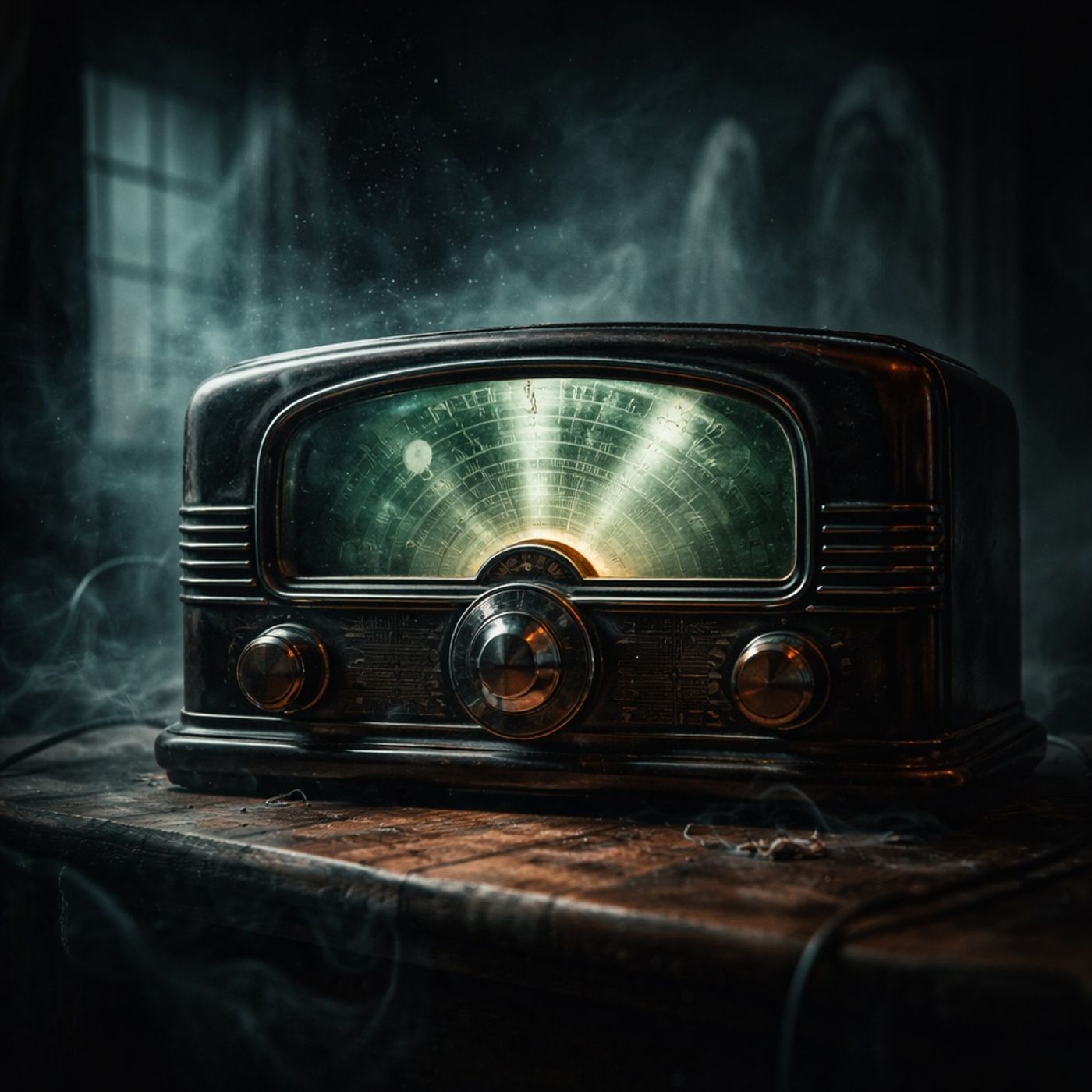
The Clockmaker's Bargain: Unpacking the True Cost of Stopping Time in Horror
Ever wished you could freeze a moment? In horror, that power often comes with a chilling price tag. This post explores the steep, unseen costs behind the fantasy of stopping time, as revealed in 'Time and Again' from Weekly Spooky's 'Unknown Broadcast' episode.
Key Takeaways
- The seemingly simple act of stopping time carries profound existential and psychological burdens.
- Moral compromises are inevitable when the rules of time are bent or broken for personal gain.
- Horror stories often depict stopping time as a form of cosmic debt, demanding a payment from reality itself.
- The ultimate horror lies not in external threats, but in the crushing isolation of being the only one moving in a frozen world.
- The allure of temporal control masks a deeper, more terrifying reality of inescapable consequences.
The Allure of the Frozen Moment
The fantasy of stopping time is a potent one. Who hasn't yearned to pause a perfect sunset, prevent a fleeting disaster, or simply gain a moment of absolute peace from the relentless march of seconds? In horror fiction, this desire is a dangerous seed, one that blossoms into dread and despair. The story 'Time and Again' from Weekly Spooky's 'Unknown Broadcast' masterfully taps into this primal fantasy, presenting a clockmaker who stumbles upon the ultimate temptation: a clock that can halt time itself.
This isn't just about gaining a few extra seconds; it's about wielding god-like power over existence. Imagine walking through a world utterly still, every person, every object, frozen in a perpetual instant. The initial appeal is undeniable. It promises control, the ability to observe, to manipulate, and perhaps even to correct. But as the narrative of 'Time and Again' chillingly illustrates, this perceived control is an illusion. The 'cost of stopping time horror stories' isn't merely a magical toll; it's the subtle erosion of one's humanity and the devastating weight of absolute solitude.
The Existential Debt of Temporal Manipulation
The clockmaker in 'Time and Again' discovers an hourglass-shaped clock, not just a device but a symbol of forbidden knowledge. Its very existence suggests a disruption in the natural order, a violation of cosmic law. When he begins to use it, the story delves into the 'cost of stopping time horror stories' not as a simple transaction, but as an existential debt. The clock isn't just a tool; it's a trap, and the price it demands is far steeper than mere trinkets or fleeting moments of power.
The horror doesn't stem from a monster lurking in the shadows, but from the very act of stepping outside the flow of existence. The clockmaker's ability to freeze the world around him isolates him. He becomes a phantom in his own life, an observer of stillness. This profound loneliness, the inability to connect or interact with a world that is literally frozen in place, is a terrifying consequence. It's a form of psychological torture, amplifying the fear that the true horror of stopping time lies not in external threats, but in the internal unraveling of the self. The story forces us to confront the unsettling idea that tampering with the fundamental nature of time is an act of cosmic rebellion, one that incurs a debt that reality itself will eventually demand to be paid.
Moral Quagmires in a Frozen World
When time is stopped, the usual rules of engagement disappear. For the clockmaker in 'Time and Again,' the ability to freeze the world presents not just opportunities for observation, but for manipulation. What lines are crossed when there are no witnesses, no consequences in the conventional sense? The narrative hints at the moral compromises inherent in such power. Does he simply observe, or does he interfere? The ambiguity is where the true horror lies. Each moment he stops time, he is making a choice, and these choices, free from the usual checks and balances, can lead him down a dark path.
This exploration of the 'cost of stopping time horror stories' delves into the psychological impact of unchecked power. The isolation breeds a detachment from reality, a feeling of being above the mundane concerns of humanity. This can lead to a dangerous sense of entitlement, where personal desires override ethical considerations. The story masterfully suggests that the most terrifying aspect of stopping time isn't the external threat, but the internal corruption that such power can foster. It forces us to consider whether any mortal can truly handle the temptation of god-like control without succumbing to their baser instincts. The stillness of the frozen world offers a stark mirror to the soul, reflecting the moral rot that can fester when temporal boundaries are dissolved.
The Price of an Eternal Instant
The climax of 'Time and Again' leaves the listener contemplating the true price of the clockmaker's bargain. The tale serves as a potent reminder that in the realm of horror, wishes rarely come true without a devastating cost. The 'cost of stopping time horror stories' is often painted as a dramatic, almost supernatural, payment, but the story emphasizes that the most profound costs are internal and existential. The isolation, the moral decay, the sheer psychological toll of existing outside the normal flow of time – these are the true horrors.
Weekly Spooky's 'Unknown Broadcast' episode uses 'Time and Again' to illustrate that while the fantasy of stopping time is alluring, the reality, when explored through a horror lens, is a cautionary tale. It’s about the unseen consequences that ripple outward from a single, seemingly controllable act. The story doesn't just present a cursed object; it presents a chilling meditation on human desire, the corrupting nature of absolute power, and the profound terror of eternal solitude. The clock ticks on, but for the clockmaker, time has truly stopped, and the cost is immeasurable.
For more tales that explore the darker side of human desires and the terrifying costs of the unnatural, listen to the full episode of 'Unknown Broadcast' on Weekly Spooky here: Weekly Spooky - Unknown Broadcast.
Frequently Asked Questions
What is the primary cost of stopping time in horror stories like 'Time and Again'?
The primary cost is often psychological and existential, leading to profound isolation and a detachment from reality, rather than just a magical price.
How do moral compromises arise when time is stopped?
When time is stopped, the usual societal rules and consequences vanish, allowing individuals to act on selfish desires without immediate repercussions, blurring ethical lines.
Can stopping time be seen as a form of theft in horror narratives?
Yes, some narratives, like 'Time and Again,' portray stopping time as a form of stealing moments or experiences from the natural flow of existence, which often requires a price.
Is the isolation of a frozen world worse than an external monster?
For many characters in these stories, the crushing loneliness and psychological burden of being the only conscious entity in a static world can be as horrifying, if not more so, than any physical threat.
What are the unseen consequences of manipulating time in horror?
Unseen consequences can range from psychological torment and moral decay to a fundamental unraveling of one's connection to reality and the fabric of existence itself.