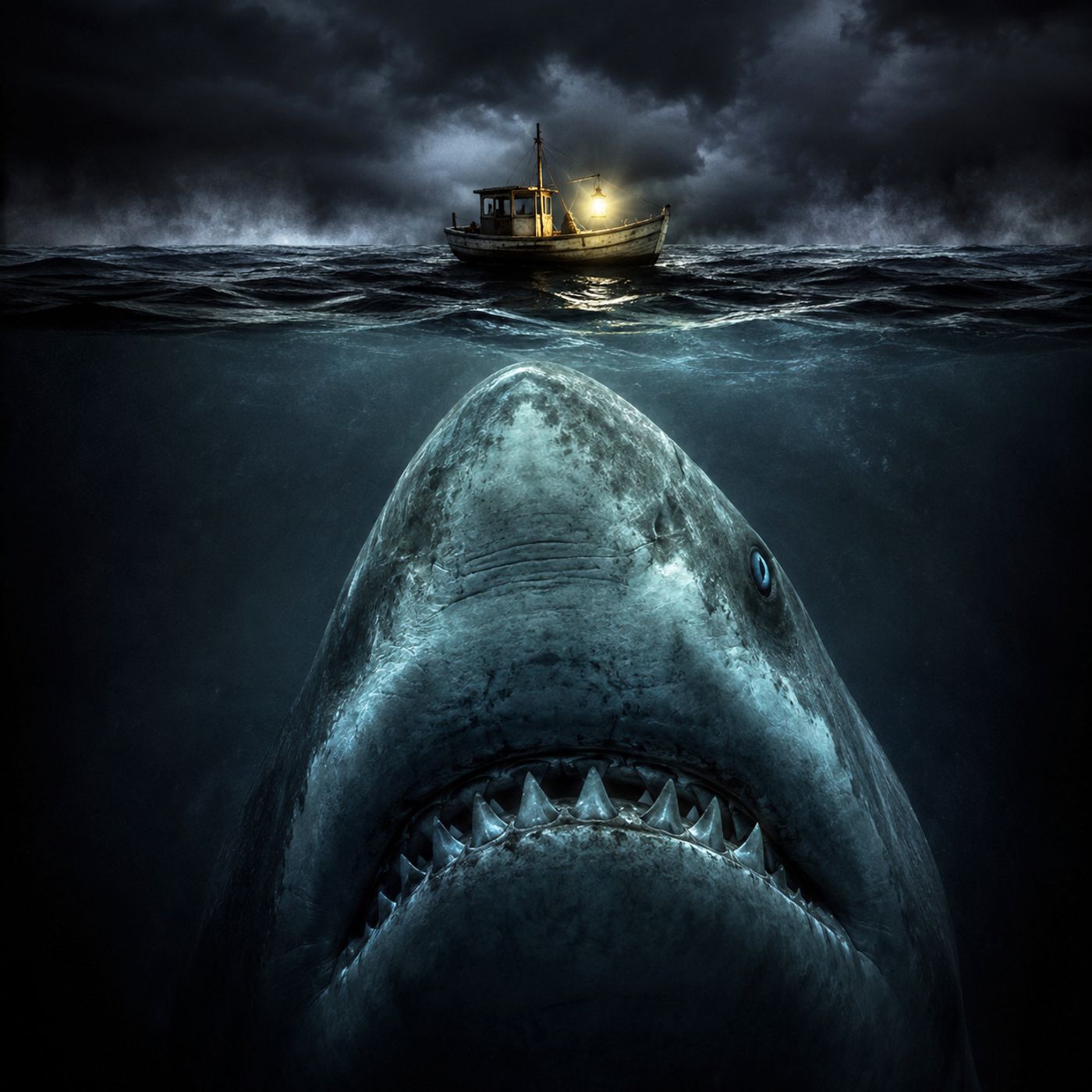
The 1916 Jersey Shore Shark Attacks: History, Bull Sharks, and Real Terror
The 1916 Jersey Shore shark attacks shattered the American illusion of coastal safety over twelve terrifying days in July. This deep dive examines the historical panic, the debate between great white and bull sharks in Matawan Creek, and how a summer resort tragedy changed our understanding of ocean predators forever.
Key Takeaways
- Five people were attacked and four died during a brutal twelve-day span in July 1916 along the New Jersey coast.
- The attacks pushed inland into the narrow, freshwater-tolerant environment of Matawan Creek, shocking the nation.
- Experts still debate whether a single rogue great white shark or river-roaming bull sharks were responsible.
- The historic panic heavily influenced popular culture and shaped modern public perception of marine predators.
The Summer of Panic: 1916
Before the scorching summer of 1916, the prevailing wisdom among Americans was simple: large, dangerous sharks did not hunt swimmers in the temperate, chilly waters of the northeastern United States. Visitors to Atlantic coastal resorts believed that swimming in the ocean was inherently safe from lethal marine predators. That comfortable assumption was violently dismantled in a matter of days.
It all began on July 1 in Beach Haven, New Jersey, when Charles van Sant went out for an evening dip in the Atlantic. Spectators on the shore heard his frantic shouting, initially mistaking his distress calls for playful interaction with a dog in the surf. Instead, van Sant was being mauled. Though pulled ashore alive, he succumbed to his catastrophic injuries.
At the time, newspapers and local authorities treated the incident as a freak anomaly—a tragic, once-in-a-lifetime fluke. Beach resorts remained open, and tourists continued to crowd the water, wholly unaware that a terrifying pattern was unfolding just miles away.
The Attacks Move Inland: Matawan Creek
Five days after the initial tragedy, forty-five miles north in Spring Lake, hotel employee Charles Bruder was attacked and killed while swimming. With a second fatal strike, the impossible had officially occurred twice, sparking rising anxiety among coastal tourists.
However, the most chilling chapter of the 1916 attacks occurred on July 12, when the terror moved more than fifteen miles inland from the open ocean into Matawan Creek. Narrow, muddy, and familiar to local children, the creek seemed like the absolute last place a deep-sea predator could or would venture.
Local sea captain Thomas Cottrell reportedly spotted a massive shark in the creek and attempted to sound the alarm, but his warnings were dismissed by skeptical townspeople. Tragically, hours later, eleven-year-old Lester Stillwell was pulled beneath the murky surface while swimming with friends near a local dock.
When young Stanley Fisher bravely entered the creek to search for the missing boy, he too was ambushed by the creature. Fisher managed to crawl back to shore but later died from severe wounds. Less than half a mile away and mere minutes later, a teenager named Joseph Dunn was attacked as well, though his companions successfully dragged him to safety.
Great White vs. Bull Shark: The Ongoing Mystery
By the time the twelve days of terror concluded, five people had been attacked, leaving four dead and a nation gripped by panic. The event triggered an unprecedented real-life monster hunt, complete with armed patrols, nets stretched across waterways, and explosives deployed in suspected hiding spots.
A great white shark was eventually captured nearby, with authorities claiming its stomach contents confirmed it as the killer. Yet, modern marine biologists and historians still debate the true identity of the predator.
Why Bull Sharks Are Prime Suspects
Many experts argue that the Matawan Creek attacks point directly to a bull shark rather than a great white. Unlike great whites, bull sharks possess a unique physiological capability that allows them to tolerate low-salinity and fresh water, enabling them to travel far up rivers and tidal estuaries. The narrow, brackish environment of Matawan Creek fits the known hunting grounds of aggressive bull sharks far better than the open-ocean habitat typical of great whites.
Other marine scientists suggest that multiple sharks of different species might have been involved, turning the entire coastline into a gauntlet. The uncertainty surrounding the exact nature of the beast only deepens the horror of the historical event.
Conclusion
The 1916 Jersey Shore attacks permanently transformed how humans viewed the ocean, creating a lasting cultural archetype of the unseen terror lurking just beneath the surface. To explore more chilling ocean mysteries, cryptozoology tales, and true crime crossovers, check out the full audio broadcast. Listen to the full episode and subscribe to Weekly Spooky for new horror tales every Wednesday!
Frequently Asked Questions
How many people were killed in the 1916 Jersey Shore shark attacks?
Five people were attacked over a twelve-day period in July 1916, resulting in four fatalities across Beach Haven, Spring Lake, and Matawan Creek.
Why did the shark attack people in Matawan Creek?
Matawan Creek is a narrow, tidal freshwater inlet located miles inland from the ocean. Experts believe the attacks were likely carried out by a bull shark, a species known for its ability to travel up rivers and tolerate low-salinity water.
Were the 1916 attacks the direct inspiration for the movie Jaws?
While author Peter Benchley later denied that the 1916 events were a direct blueprint for his novel, the parallels are striking—including summer heat, reluctant local officials trying to protect tourism, and panic in coastal waters.
Did they ever catch the shark responsible for the 1916 attacks?
A great white shark containing human remains was caught nearby shortly after the attacks ended, but scientists and historians continue to debate whether it was a single rogue animal or multiple sharks involved.