


 Apple Podcasts

 Spotify

 Spreaker

 Audible

 Castro

 RSS Feed

 iHeartRadio
Terrifying & True | Anneliese Michel: Exorcism, Medical Crisis & the Negligent-Homicide Trial
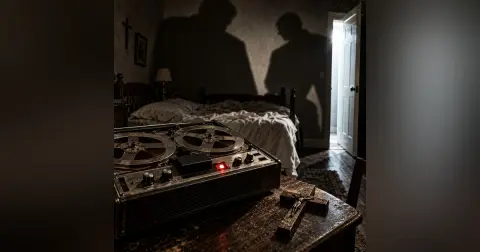
Anneliese Michel underwent months of Catholic exorcism while epilepsy, psychiatric distress, malnutrition, and dehydration pushed her toward a preventable death.
Michel was a deeply religious young woman from Klingenberg, West Germany, with a documented history of seizures and years of medical treatment. As depression, hallucinations, aversion to religious objects, and frightening voices intensified, she and her family came to interpret her condition as demonic possession. Bishop Josef Stangl authorized priests Ernst Alt and Arnold Renz to perform the major rite of exorcism.
Terrifying & True follows the 67 reported sessions conducted from 1975 into 1976, the recorded voices and punishing physical behavior that later fueled supernatural retellings, and the collapse of active medical care. Michel stopped eating adequately and became dangerously emaciated. She died at home on July 1, 1976, at age 23, weighing approximately 68 pounds.
Her parents and the two priests were convicted of negligent homicide in 1978 and received suspended sentences. The court did not need to decide whether demons exist; it considered whether responsible adults failed to obtain lifesaving care. The episode also examines later church archival research, the limits of retrospective diagnosis, and modern Catholic guidance requiring careful medical and psychiatric evaluation before a major exorcism. This is not presented as proof of possession. It is the documented story of how neurological illness, faith, fear, and certainty combined around a suffering woman until ritual replaced rescue.
🎧 LISTEN NOW and subscribe for spine-tingling horror stories every week!
🎉 Unlock exclusive bonus episodes and support the show on Patreon!
👉 WeeklySpooky.com/Join
📬 Contact Us / Submit Your Horror Story!
- Twitter: @WeeklySpooky
- Facebook: facebook.com/WeeklySpooky
- Email: WeeklySpooky@gmail.com
🎵 Music by Ray Mattis 👉 Check out Ray’s incredible work here !
👨💼 Executive Producers: Rob Fields, Bobbletopia.com
🎥 Produced by: Daniel Wilder
🌐 Explore more terrifying tales at: WeeklySpooky.com
0:01 A young woman is wasting away in a quiet German bedroom. Priests pray over her. Her family believes they're fighting evil, but as the ritual drags on and her body collapses. The most terrifying possibility isn't that a demon entered the room. It's that everyone inside became too certain to stop what's happening. What you were about to pet you is pit to be based on witness accounts, testimonies, and public record. This is terrifying and.
0:58 July one, teen seventy six, klingenberg Am, main West, Germany, in a modest bedroom, a twenty three year old woman lies dead after months of sanctioned Catholic exorcism rights. Her name was Anna l's Michel. By the time she died, she weighed shockingly little, her body was failing. Her family believed she was possessed. The priests who prayed over her believed it too. For decades, her story has been sold as one of the most terrifying real exorcism cases ever recorded.
1:42 A grim tale of demonic voices, sacred rituals, and evil refusing to leave it inspired films, documentaries, books, and endless arguments over whether something supernatural had taken hold of a deeply religious young woman. But behind the legend is a far more unsettling reality. Annalise Michelle had a history of seizures, psychiatric distress, and prolonged suffering. As her condition worsened, medical care gave way to spiritual intervention, and once that happened, every new symptom could be interpreted not as a warning sign of physical collapse, but as proof that the ritual battle was real. Tonight, we examined the true case of Annalise Michel, the illness, the exorcisms, the trial, and the terrible possibility that the greatest danger in the room was not an unseen force at all, but the absolute certainty of the people standing around the bed. So make sure you're subscribed as we tell that story tonight. On July one,
3:23 nineteen seventy six, in Klingenberg, Am Maine, West Germany, inside a modest family home, a twenty three year old woman lies dying in a bedroom that has become over the past ten months, a battleground. Prayers have been shouted here, Latin rites have been spoken here. Priests have stood over the bed and commanded unseen things to leave. Tapes have rolled, parents have watched and as the room narrowed around her. Ritual after ritual, session after session, her body kept doing what bodies do when nobody truly stops the collapse. It weakened, starved, and failed. By the time Annelise Michel dies, she weighs about sixty eight pounds. The priests who prayed over her will later insist she was possessed. Her parents will insist the same. The state will charge all four with negligent homicide, arguing that her death could have been prevented even a week before the end, if someone had simply called a doctor.
4:47 And that is the real horror of this story, not the possibility that evil entered the room, but the certainty that a suffering young woman did, and the peace people around her answered suffering with conviction instead of care. For decades, the case of Annelise Michel has been sold as the real exorcism story, the one too disturbing for fiction, the one that inspired movies, arguments, pilgrimages, and endless debates about faith, demons, medicine, and the limits of reason. But the truth is more troubling than the legend, because the truth does not need spinning furniture or sulfurous shadows. It only needs a sick young woman, a devout family, a church willing to authorize ritual, and enough certainty in the room to make every warning sign appear to be proof of the very thing that was killing her. Before she became an infamous case, before she became shorthand for real exorcism. Annalise Michel was a Bavarian student from a deeply Catholic family in the town of Klingenberg. Contemporary reporting described her as deeply religious, raised by equally religious parents, with a home life steeped not
6:21 casually in faith, but in a worldview where sin, suffering, guilt, redemption, and spiritual warfare were all part of reality, not metaphor or old folklore, but cold, hard reality that matters because cases like this do not begin with spectacle. They begin with atmosphere. A person gets sick inside a framework that already knows how to explain pain. As a teenager, Annalise had episodes that brought her into psychiatric care, and later she developed a documented history of epilepsy. Contemporary trial coverage said she underwent about four years of medical treatment. Even then, though treatment did not bring her relief, her condition continued to worsen. Depression, deepened. Doctors tried to treat what they saw, but for Annaale's and the people closest to her, medicine was not producing clarity. It was producing frustration, dread, and a terrifying vacuum where explanation ought to be. That vacuum is where this story starts to turn, because once a disease becomes emotionally unbearable, people do not always want the likeliest answer, They want the most meaningful one. Later archival
7:56 work summarized by the Diocese of Wurzburg says Annals and her family refused medical help and placed their hopes in a spiritual solution. That shift was not some sudden thunderbolt where a healthy woman went from normal life to Latin prayers overnight. It was gradual. Symptoms continued to accumulate, religious interpretation accumulated along with them, and eventually one started feeding the other. There were experiences that had genuinely frightened her. Later church related commentary and reporting about the case described visual and auditory disturbances, hearing voices, seeing grotesque faces, feeling unable to pray normally, growing distressed around religious objects in a secular frame. Those details sound like psychiatric and neurological red flags. In without supernatural frame, they can sound like confirmation.
9:05 If you already believe the world contains malevolent spiritual forces, then hearing a voice that tells you not to eat is not just a symptom. It becomes a message. If prayer fills you with revulsion or panic, that's not just distress. It becomes evidence, and there is a grounded reason that matters. Modern medical literature does not prove what happened to Anale's michelle specifically, but it does show that psychosis and epilepsy can overlap in serious ways. A systematic review and meta analysis found a pooled prevalence of psychosis in epilepsy of five point six percent, with a higher prevalence of seven percent in temporal lobe epilepsy, and an almost eightfold in increased risk of psychosis compared with controls. That does not settle her case from a distance, but it does remind us that bizarre, frightening, and apparently spiritual symptoms can emerge from organic illness without becoming any less real or terrifying to the person living through them. This is where sensational versions of the story usually go off the rails. They start acting as if medicine and religion are two cleanly
10:36 separate lanes, and one of them must be lying. Real life is uglier than that a devout person with epilepsy, depression, hallucinations, and a collapsing sense of self can experience everything as spiritually meaningful while still being profoundly medically unwell. Those are not opposite. They can happen at the same time, and that overlap may be exactly what made Annalise Michel's case so combustible. Eventually, Father ernst Alt, a local priest, became convinced that more than illness was at work. Another priest, Arnold Wrens, would later be assigned to perform the formal rite.
11:24 Above them was Bishop Joseph Stengel of Wurzburg, whose permission mattered because a major exorcism was never supposed to be a casual, local event. Even modern Catholic guidance is explicit a solemn or major exorcism may be performed only by a bishop or by a priest with the bishop's special permission, and only after thorough medical, psychological, and psychiatric examination. That guidance is modern, not a record of exactly how things were handled. In nineteen seventy five Bavaria, but it shows plainly that the Church itself sees this territory as dangerous.
12:13 Once Bishop Stengel approved the right, the case changed shape completely. Annealise Michel was no longer simply a sick young woman whose treatment was failing. She became a possession case, a spiritual emergency, a person who's worsening condition could now be interpreted not as disproof of the exorcism, but as proof that the enemy being fought was stronger than anyone thought. And once that logic takes hold, every failed intervention can become fuel for the next one. The exorcisms began in nineteen seventy five and continued into nineteen seventy six. Archival research summarized by the Diocese of Wurzburg says the major exorcism was prayed over Anale's Michelle between September of nineteen seventy five and June of nineteen seventy six. A widely cited figure echoed in later accounts and consistent with long running reporting on the case, is that there were sixty seven exorcism sessions in total. Contemporary trial coverage from nineteen seventy eight described tapes recorded during some seventy visits by the two priests to the family home. So whether one
13:47 uses sixty seven or some seventy, the important thing is not the exact dramatic number, it's the duration. This was not one night of pain. This was months, a campaign, a structure of belief sustained over time. Those rituals were conducted in secret in the bedroom of her parents' home. According to trial reporting, sessions lasted roughly an hour. Other later retellings stretched them even longer. But the reliable point is simple. They were frequent enough, intense enough, and prolonged enough that they became the defining rhythm of Analisa's life, prayer, exhaustion, expectation, fear, and more prayer. Her room ceased to be a place of recovery. It became a stage on which everyone present kept trying to force an answer out of suffering, and all the while the medical side was collapsing. Contemporary reporting said that eleven months before she died, all medical treatment was stopped. That point is central, because once active treatment falls away, ritual stops being something that coexists with care and becomes the care itself. Later archival reassessment adds an
15:19 important wrinkle. The Diocese of Wurzburg summary says Annelise herself and her family refused further medical help and put their trust in a spiritual solution. In other words, this was not merely something done to her by remote authority. It was something reinforced by the convictions inside the house. That makes the case more tragic, not less. Loving people can absolutely help destroy someone when everyone is speaking the same catastrophic language. The image that's in popular memories usually grotesque and theatrical, a girl shrieking in demonic voices, recoiling from holy objects, speaking obscenites, kneeling until her body breaks. Some of those details entered the public record through the tapes and testimony. But what matters more than the lurid details is the pattern. As her physical state worsened, the exorcisms did not stop. They continued. That is the detail that should chill all of us. Not that adults thought something supernatural was happening. People have thought that for centuries. The chilling part is that a room full of adults watched a body deteriorate and interpreted that deterioration as part of
16:51 the ritual logic instead of as a medical emergency overtaking everything else. By Earth only nineteen seventy six, the case had deepened into something almost impossible to interrupt. An Alis reportedly heard voices telling her not to eat and compelling punishing physical behaviors. Jesuit priest and physician Ulrich Niemann later said the descriptions of her seizures pointed to epilepsy, and that in rare cases, anti epileptic treatment can be associated with psychosis. He also described hallucinations and extreme exertion as part of the picture. He argued that the exorcism itself was not the direct cause of death, but that under nourishment combined with extreme physical strain was fatal. That distinction is very important. It's the difference between the ritual killed her and the ritualized environment failed to stop what was killing her. Her body was telling the truth, whether anyone wanted to hear it or not. By the end, she was emaciated. The best supported contemporary figure is about sixty eight pounds at death. Later archival summaries say she died of under nourishment. Contemporaneous reporting said the autopsy attributed death
18:23 to malnutrition and dehydration resulting from almost a year of semi starvation during the rites. However phrased, the body's testimony was plain. This was not a case of floating above biology. Biology had become the entire emergency. One of the most dangerous things that can happen in a crisis is for worsening evidence to become stronger confirmation of the chosen explanation. If if someone believes a person is possessed, refusal to eat can seem as though its demonic interference. If someone believes a person is profoundly ill, refusal to eat is a medical emergency. Same behavior, different reactions. One framework narrows toward intervention, the other can keep widening until the person at the center disappears inside it. By June of nineteen seventy six, there was very little ambiguity left in the physical facts. The spiritual narrative was still raging. The body had nearly run out. On July one, nineteen seventy six, Annelise Michel died at home in Klingenberg. For all the arguments that would come later about devils, rights, visions and voices,
19:57 the immediate reality was brutally ordinary. A twenty three year old woman had been allowed to deteriorate to the edge of starvation, and beyond that is where the legend ends and the case begins. After her death, the state moved in the story shifted from prayer to prosecution. Investigators concluded that Annelise Michel's death could have been prevented even a week before the end if a physician had been called.
20:40 That conclusion became the backbone of the case against her parents and the two priests. They were charged with negligent homicide. Think about that term. The court did not have to prove the devil did not exist. It did not have to solve theology. It only had to ask whether adults responsible for a collapsing young woman had failed in a duty of care. The trial began on March thirtieth, nineteen seventy eight, in Aschoffenberg and drew major attention. Contemporary reporting described a court room transfixed by tapes recorded during the exorcism sessions. Spectators listened to the sounds of a dead woman's voice being replayed in public space. Her sister reportedly fled in tears. Her father sat listening through an amplifier.
21:42 Her mother took notes and cried out When the doctors described her daughter as mentally ill rather than demonically afflicted. You can feel the split in the room, even across the decades. On one side, a medical and legal framework trying to classify what had happened. On the other, a family still unable or unwilling to release the supernatural meaning that had carried them to the edge. Doctors testified that she had died from a combination of epilepsy, mental disorder, and an extreme religious environment. That phrase extreme religious environment is easy to rush past, but it may be the most haunting phrase in the whole case. Not simply epilepsy, not simply psychiatric distress, an environment, a world of interpretation, a home where suffering had been translated into cosmic warfare, and where each new symptom could be fitted into a script that made outside intervention feel less necessary, less useful, maybe even spiritually wrong. The defense did what you would expect in a case so bound up in faith. It emphasized religious freedom and the legality of exorcism under church law.
23:17 Reporting noted that the lawyers argued the unrestricted exercise of religious belief was constitutionally protected. That argument has force in the abstract, but abstract rights grow thin when a dead body sits at the center of a room. The prosecutors did not have to criminalize religion. They only had to show that faith had been allowed to replace necessary medical action while a woman wasted away. Bishop Joseph Stungel, who had approved the exorcism, was investigated but not indicted. That too, fed the sin that the trial was about where responsibility stopped.
24:06 Later archival research says Stanngel trusted the priests and that the absence of medical accompaniment was not simply attributable to him, and Elise and her family had refused medical help. That later nuance is important because it keeps the case from collapsing into a cartoon. There was no single puppet master. There was an entire web of conviction, delegation, trust, and fear. Still, courts do not weigh nuance in the abstract. They weigh outcomes. In April of nineteen seventy eight, the four defendants were found guilty. The parents and the two priests each received six months suspended prison sentences. Nobody went to jail. In legal terms, the punishment was light. In historical terms, the meaning was enormous. A modern court had looked at an exorcism death, and said, essentially, whatever you believed, you still had obligations to a living person. This is one reason the case endured, not because it cleanly proved possession or disproved faith, but because it forced two systems to look at one another in public. Religion said there are realities
25:36 beyond medicine. Medicine said there are illnesses that can hijack belief and behavior. The court said none of that absolves caretakers when a person is visibly dying. That triangular collision is much more interesting and much more frightening than any lazy was she really zest debate. There was one more grotesque aftershock in nineteen seventy eight, after a nun claimed to have had a vision that Analise's body remained intact. Her parents had the body exhumed, authorities found normal decay.
26:22 Even then, even after a death, a trial, medical testimony, and public humiliation, the need to find supernatural vindication had not disappeared. That detail is not proof of anything occult, but it is proof of how hard it can be for grief to surrender, meaning once suffering has been sanctified. After the trial, the Analise Michel case did what most combustible true stories always do. It stopped belonging only to the people who lived it. It became public property, a morality play, a warning, a fetish object for true believers and skeptics alike, films, books, documentaries, websites, endless retellings. Some treat her as a martyr, some as a textbook case of abuse. Some strip the story down to grotesque audio snippets and dare the listener to feel clever about it.
27:33 But the strongest later work on the case did something less flashy and more useful. It went back to the original records. In twoenty and fourteen, the Diocese of Wurzburg summarized archival research by his story in Petra Ney Hellmuth that had been granted access to state and diocesan files. One of the major conclusions was that several details had been publicly misrepresented. Most important, the exorcism had often been equated directly with the cause of death. Nay Hellmuth argued that this was the biggest error in the public presentation the exorcism. In that formulation was prayer in a pastoral setting.
28:34 Annalise Michel, an epileptic young woman, died of under nourishment while the major exorcism was being prayed over her. That distinction matters not because it clears anyone, but because it restores precision. Precision is one of the only antidotes to mythology. The same archival summary also show sharpened the question of agency. Bishop Stanngel had authorized the right and trusted the priests ernst Alt and Arnold Wrens. Those priests were later convicted, but Michel herself and her family had refused medical help and placed their hopes in a spiritual solution. So the case does not cleanly divide into villains and victims. It's a case where the victim may have participated in the framework that helped kill her, and where the people who loved her may have sincerely believed they were serving a higher good while stepping farther and farther away from rescue.
29:46 That is much closer to how real tragedy works. Modern church guidance makes the case look even more sobering in retrospect. As explained earlier, Current Catholic guidance says that only after thorough medical, psychological, and psychiatric examination might a person be referred to an exorcist, and that the Church has historically exercised caution so as not to mistake psychosis or illness for demonic affliction. Again, that is not proof of what was or was not done in nineteen seventy five Germany, but it is evidence that even the Church, speaking in its own institutional voice, understands the terrible danger of moving quickly toward a possession narrative. And maybe that's why the story still has so much force. The simplest version is spooky.
30:50 The truest version is destabilizing, because Annalise Michel sits at the place where several frightening realities overlap. The fragility of the mind, the mystery of neurological illness, the power of culture to script suffering, the way families can become closed systems, the way institutions defer to belief, and the way a person in crisis can become the least authoritative voice in the room, even when everyone insists they are acting for her salvation. So what exactly happened? To analyze Michel? The most responsible answer is also the least satisfying to anyone craving a neat supernatural verdict. She was a deeply religious young woman with epilepsy and severe psychiatric disturbance. She and her family came to believe she was possessed. Church authorities approved months of exorcism. Medical care fell away, She became severely malnourished and dehydrated, and died at home on July first, nineteen seventy six. Her parents and the two priests were convicted of negligent homicide and received suspended sentences. The arguments over demons never ended. The body, however, had already delivered
32:24 its verdict, and that is the final chill in this case. Not that some ancient evil may have entered the room, but that certainty did certainty in the parents, certainty in the priests, certainty that suffering meant something more than illness, that worsening meant the ritual was working, that the next prayer mattered more than the next. Doctor. A demon's story leaves you glancing at the dark corner of the room, but the story of Anneal's Michelle leaves you looking at the people standing around the bed and wondering how many of history's worst endings began with love, fear, and the absolute conviction that what they were doing was the right thing.
33:21 Terrifying and true is narrated by Enrique Kuto. It's executive produced by Rob Fields and bobble Topia dot com and produced by Dan Wilder, with original theme music by Ray Mattis. If you have a story you think we should cover on Terrifying and True, send us an email at Weekly Spooky at gmail dot com, and if you want to support us for as little as one dollar a month, go to Weeklyspooky dot com slash join. Your support for as little as one dollar a month keeps the show going. And speaking of I want to say an extra special thank you to our Patreon podcast boosters, folks who pay a little bit more to hear their name at the end of the show, and they are Johnny Nix, Kate and Lou, Jessica Fuller, Mike Escuey, Jenny Green, Amber Hansburg, Karen we Met, Jack Ker, and Craig Cohen. Thank you all so much and thank you for listening. We'll see you all right here next time on Terrifying and True.
