


 Apple Podcasts

 Spotify

 Spreaker

 Audible

 Castro

 RSS Feed

 iHeartRadio
Terrifying & True | Alfred Packer: The Colorado Cannibal’s 1874 Murder Trial
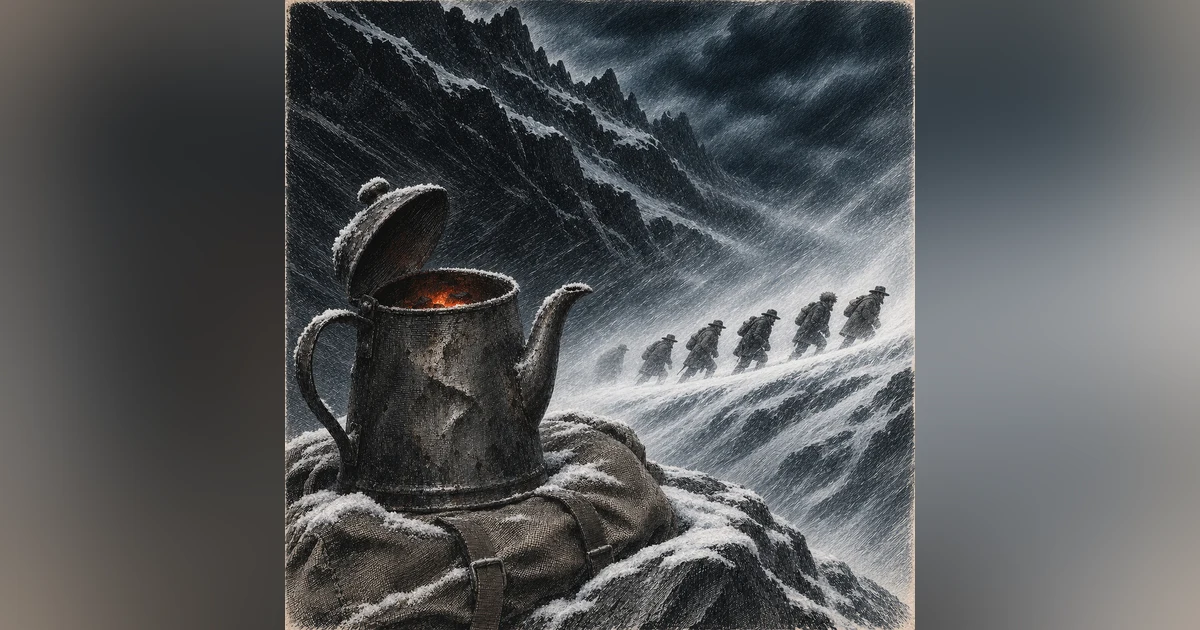
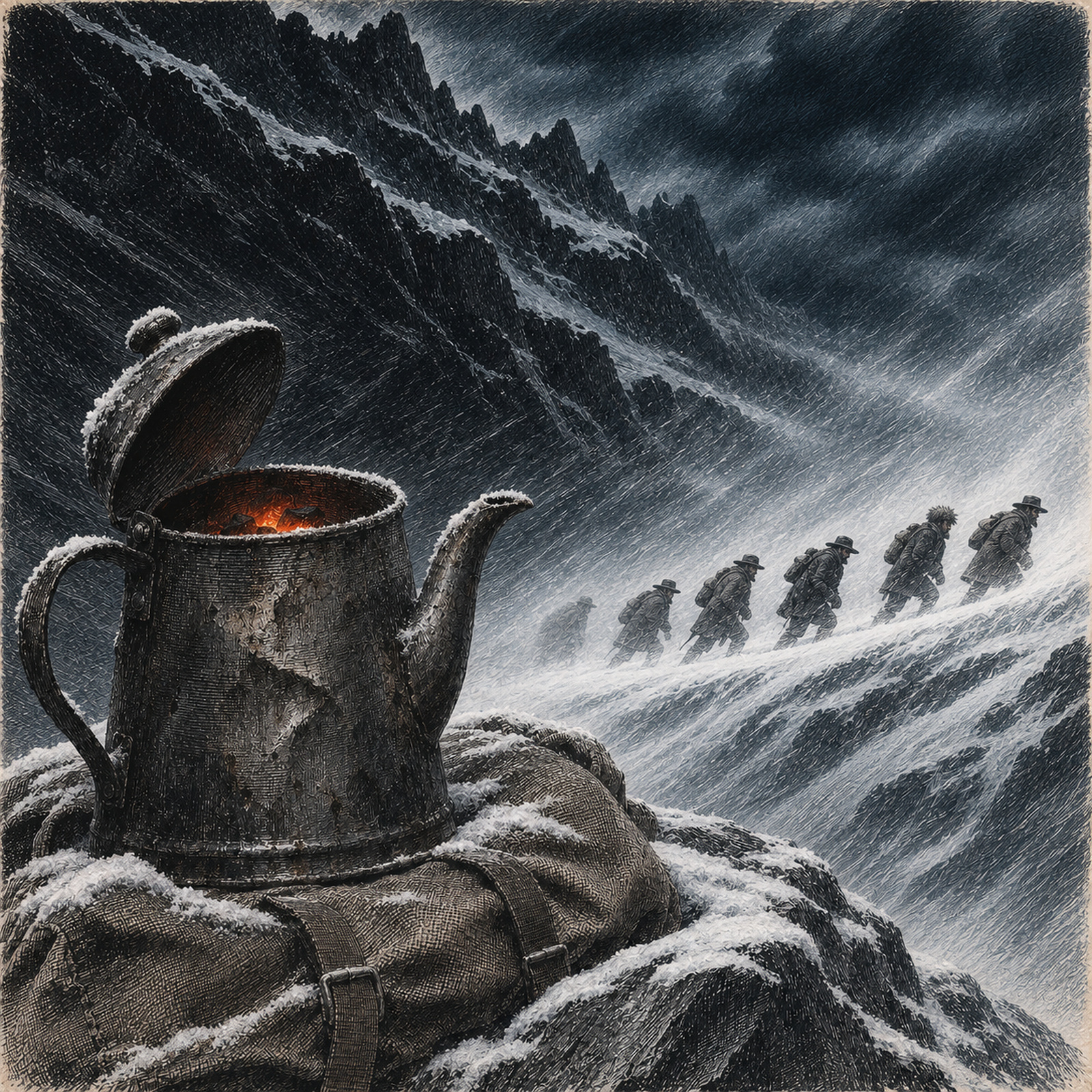
A blizzard. A vanished trail. The San Juan Mountains in the winter of 1874. Six men leave safety behind—and only one walks back into town. This is the infamous Alfred (Alferd) Packer story: the “Colorado Cannibal” case that refuses to stay settled, because the evidence is brutal… and the survivor’s account keeps shifting.
In this episode of Terrifying & True, we follow the doomed decision to cross the high country after Chief Ouray’s warning, the slow collapse into starvation, and the moment the frontier stops being romantic and becomes a cold, clinical math problem: move or die. Then comes the part that turned suspicion into fury—Packer returning alive, armed, spending money, and carrying other men’s belongings, offering explanations that mutate under pressure.
And when the thaw gives up what the snow hid—five bodies, skulls split by a hatchet, butchered remains on a slope near Lake City—the story transforms from survival horror into a courtroom nightmare: confessions, escape, a retrial, a legal technicality, and a sentence that changes… even as the legend hardens.
Inside this episode:
- The last “clean moment”: Chief Ouray’s warning—and why it didn’t stop them
- The six who left: the men, the reputations, and the stakes that followed them into the snow
- Starvation’s escalation: boots, leather, and the point where “survival” becomes something else
- Dead Man’s Gulch: the gap between what we can prove and what one man claims
- The changing story: why Packer’s versions keep reshaping themselves
- The discovery in the thaw: what the scene says when words can’t be trusted
- Trial, technicality, and legend: how the case becomes folklore without ever becoming clear
Because in the end, the wilderness doesn’t need ghosts to be haunted. Sometimes it only needs snow thick enough to erase tracks… and one man left alive to explain what happened. We’re telling that story tonight.
🎧 LISTEN NOW and subscribe for spine-tingling horror stories every week!
🎉 Unlock exclusive bonus episodes and support the show on Patreon!
👉 WeeklySpooky.com/Join
📬 Contact Us / Submit Your Horror Story!
- Twitter: @WeeklySpooky
- Facebook: facebook.com/WeeklySpooky
- Email: WeeklySpooky@gmail.com
🎵 Music by Ray Mattis 👉 Check out Ray’s incredible work here !
👨💼 Executive Producers: Rob Fields, Bobbletopia.com
🎥 Produced by: Daniel Wilder
🌐 Explore more terrifying tales at: WeeklySpooky.com
0:02 Six men march into Colorado's winter mountains, and only one comes back, healthy enough to walk, rich enough to spend, and carrying what doesn't belong to him. His story shifts with every question, and when the snow finally melts, the truth left behind in dead man's gulch is written in bone. What you were about to beat is burieved to be based on witness accounts, testimonies, and public record. This is terrifying and treat In February of eighteen seventy four, a small party of prospectors ignored a warning that should have ended their plans. Do not cross the high mountains in winter.
1:11 The trail would vanish, the storms would close in, and the cold would take them quietly, efficiently, without mercy. They went anyway, driven by gold and certainty, and disappeared in the San Juan wilderness. Months later, one man walked back into civilization, the now notorious Alfred Packer. His explanation of what happened failed to hold water. Soon the mountains surrendered a scene that no one could explain away as simple misfortune.
1:57 Five bodies butchered, skulls split by a hatchet. What happened out there? A desperate act or something far darker. Get comfortable, make sure you've hit subscribe, because this is not a cozy winter story. This is a frigid and true tale that has no shortage of teeth. If you want a story that proves the wilderness doesn't need ghosts to be haunted, start in the San Juan Mountains. In the winter of eighteen seventy four, six men walked into that white country with the guide who promised he knew the way. Only one man walked out, and when he came back he wasn't just alive. He was carrying a rifle, carrying other men's property, and carrying a story that kept changing its shape every time someone pressed on it. His name was Alfred, often written Alfred Packer, and Colorado has been arguing about
3:30 what he did ever since January eighteen seventy four. A large party of prospectors, more than twenty men, straggled into the ute camp of Chief Alrey, starving and battered. Their faces were cracked from wind and cold, their hands were stiff. Their eyes had the dull panic to look people get when they've started doing the math in their heads. How many days of food do we have left? The Utes fed them anyway, and then Chief a Ray gave them something even more valuable than food. He warned them that crossing the high mountains in winter was to risk certain death, not maybe certain. The trails vanish under snow, the storms come fast, the cold traps you in place, and it drains you while you're still breathing. A Ray told them no ute would attempt that passage before spring. It's the kind of warning you'd think would end the conversation, but gold changes the way people here words. It turns certainty
5:04 into probably and probably into we'll be fine. This is the last clean moment in the story, the moment before hunger starts making decisions for them. Several miners refuse to wait, and that's how a desperate, doomed little party formed, six men leaving the safety of Airey's camp on February ninth, eighteen seventy four. It's easy to say five victims, but these were not faceless characters. They were men with quirks and reputations and private reasons for gambling their lives on snowbound mountains. Israel Swan was the elder, in his sixties and rumored to be carrying a small fortune in cash, people remembered that detail because it matters later, because money makes motives heavier. George California Noon was a teenager barely old enough to grow a decent beard, chasing the frontier dream like it was an adventure novel. Frank Miller was a German butcher. Even if you don't know anything else about him, you know this. He owned knives and he
6:35 knew what a blade could do. That also matters later. There was James Humphrey, part of the party as well, less vivid in the surviving accounts. Sometimes the quiet ones vanish first in history, even if they didn't vanish first in the snow chen and Wilson Bell was described as a gambler, red faced, with the kind of confidence that reads as charm until it becomes aggression. And then there was Alfred Packer, the Guide, a drifter with a rough past, a man who talked like he belonged in the mountains.
7:22 He would be the only one who returned. The san Juans in winter aren't just cold, they're obliterating. Snow doesn't fall politely. It comes down hard, sideways in curtains. It fills footprints, it rounds off landmarks, It takes a trail you can follow at noon and turns it into nothing by dusk. Within days, a fierce blizzard trapped them among the peaks. Rations ran out. They weren't traveling with the kind of food you need for a long winter march.
8:03 They were traveling with optimism, which isn't edible. By the ninth day, they'd eaten their last morsel of flour mixed with snow to make a thin dough. That's not a meal so much as a ritual, something you swallow to pretend you still have control. Old man Swan volunteered to carry a pot of burning coals in his knapsack so the others could warm their frozen feet at stops. Imagine that for a second. Your survival plan is carrying fire like it's an infant you can't afford to drop. The matches were gone, fingers were clumsy, and the wind was relentless, so they marched with glowing coals inside of a coffee pot.
9:00 They chewed pine gum, They ate rosebuds, and when even that wasn't enough, the body would start stripping itself for parts. That's when they did something like a tall tail. Until you remember what starvation does to a man. They ate leather, They pulled hair from their goat skin moccasins, roasted the hides, and gnawed on their own boots. Not because they were insane, at least not in the traditional sense, because hunger is a blunt instrument and it doesn't care what you think is normal. By day twenty, Israel Swan collapsed, not dramatically, not with last words. He just ran out of gas.
9:57 The others dragged him to the banks of a fron lake and punched holes in the ice, hunting for fish. They found nothing, no movement below, no miracle under the ice, and at that point their options narrowed to the cruelest kind of choice. Stay and die where you are, or move and die somewhere else. So they limped down the frozen Gunnison River toward a pine shaded gulch near a plateau, to places later known as dead Man's Gulch and Cannibal Plateau.
10:47 Names like that don't come from nowhere. They're not given so much as earned. We don't have a perfect minute by minute account of what happened next, because the story's only narrator is the one man everyone suspects. But we do know the shape of the end, because the mountains gave up evidence. When the thaw finally came, somewhere in that gulch, starvation became something worse. Somewhere in those trees, the line between survival and murder got crossed, and when it was done, five men were dead. On April sixteenth, eighteen seventy four, more than two months after leaving Aure's camp, Alfred Packer stumbled into the Ute Agency near Los Pinos modern Sacawachee. The ute agent, Charles Adams, later reported that Packer arrived quote evidently in good health and condition. Despite the other's disappearance. People expected a skeleton of a man.
12:19 They expected frostbite, delirium, half mad desperation. Instead, Packer looked functional. He had a rifle, he had some missing belongings, but most of all, he had a story ready to go from here on out. This is not just a survival tale. It's a case with a witness who keeps changing his words. He claimed Swan had frozen or collapsed early, and that the others left him behind, promising to send help. He implied he'd been abandoned, and somehow, by grit, luck or willpower, he crawled his way back to civilization. But then Packer went in to Sagawache and did something that makes suspicion spread like wildfire. He started spending money, horse money, drink money, and he carried a rifle. No one could find a purchase record for the other prospectors who'd listened to Ray, who'd waited out winter and reached the agency safely, were shocked.
13:41 They'd survived by being cautious. How had Packer survived by rushing into a blizzard and then came out richer town talk turned sharp, and talk becomes pressure. Under that pressure, Packer confessed sort of. On May eighth, eighteen seventy four, he signed a notarized statement in Airey's camp. In it, he described a grim sequence that tried to paint the situation as a series of disasters where he was always the last man left holding the moral line. He said, Israel Swan died of hunger. The men cut meat from Swan's body and ate it. A few days later, James Humphrey also died and was eaten. Packer said he left the camp to gather firewood and returned to find Frank Miller killed by the remaining men. Then, according to Packer.
14:55 Shannon Bell shot and killed George Noon and fined. Bell tried to murder Packer. Packer claimed he fought back, shooting Bell twice in self defense. After that, with everyone else dead, he admitted taking meat from Bell's body for food because he had to live long enough to walk out. It is, on the surface a survival confession, but it's also a story that does something very convenient. It makes everyone else either die naturally or become the monster, while Packer becomes the last reluctant survivor. That's a hard story to swallow when the teller is also holding on to the dead men's property. Authorities were now fully convinced. Charles Adams organized a search party to verify Packer's account, with Packer guiding.
16:09 Adams even persuaded him to lead them to the missing men's camp, and Packer's story hit a problem you can't explain away with just winter. After days in the snow, Packer claimed he couldn't find the route they had taken. Couldn't or wouldn't. One frontiersman shouted at him, quote, you killed these men. You ought to be hung for it. And here's a detail that should make your skin crawl before anything could be proven. In early August of eighteen seventy four, a jailer inexplicably slipped Packer a penknife. Packer used it to escape. He disappeared into the night. If you're innocent, you don't usually run like a guilty man.
17:07 But Packer ran. Just days after his escape, evidence of the crime could not be ignored. A prosecutor stumbled upon a grisly tableau high near Lake City. Five bodies, partially buried by snow on a grassy slope. This is where the maybe dies. Each skull had been split by a heavy hatchet. One corpse was missing its head entirely. Limbs were mangled and sliced. Blankets draped over the dead were stained and torn. A witness later recalled they were a nasty, bad smelling mess to handle. A Harper's Weekly correspondent sketched the scene five butchered men amid pine needles and blood, turning the mountain horror into a national image. Whatever happened in that gulch, it certainly wasn't gentle, and it didn't look like a neat series of one dies, then another dies, then a third. It looked like violence. It looked like a slaughterhouse in the snow. Nine years passed, but the story didn't fade. It fermented. For the next nine years,
18:40 Packer evaded capture. He drifted among Arizona, Montana, and Colorado under various aliases. At one point he would even work as a saloon keeper. Imagine the conversations in that bar if anyone knew who was pouring the drinks. But in eighteen eighty three, his past caught up with him. One of the men from the larger party who had stayed in Airey's camp, a French peddler named Jean Frenchi Cabazon, recognized Packer's distinctive laugh in a Wyoming saloon. Think about that for a second. Not a face, not a scar, not a confession, a laugh. Packer was arrested in Fort Fetterman, Wyoming, and his identity was confirmed by Charles Adams. In March eighteen eighty three, the notorious Colorado cannibal was brought back under guard to Hinsdale County, Colorado. What comes next is not one trial, but years of retellings, courtroom versions of the same nightmare. Packer's trial began in Lake City on
20:15 April ninth, eighteen eighty three. The courthouse was packed. The story had transfixed the west. The air in that room would have felt like a storm cloud, heavy with certainty, hungry for a villain. The prosecution called dozens of witnesses. Travel companions testified Packer had boasted about eating human flesh and had been seen skulking through camp counting dollars. One frontiersman said Packer lunged at him when asked for a knife, with quote murder in his eyes, and then Packer took the stand. He gave a six hour rambling testimony, altering his earlier narrative again. Now he insisted the others all lived until Bell, out of his mind, hacked them to death.
21:20 In this version, Packer returned to camp and found Bell alone wielding a hatchet over a campfire. Packer claimed he shot Bell in the stomach. Bell attacked anyway and fell. Bell, Packer said, had killed the other four with the hatchet. Packer fled, Then he returned to gather a pot of butchered meat for food. It was dramatic, it was cinematic, and it was hard to believe because the bodies had been found together, not scattered in some long, chaotic chase, and because Packer's story kept evolving like it was trying to fit the shape of whatever people had already discovered, the jury convicted him of first degree murder for the death of Israel Swan. On April nineteenth, eighteen eighty three, Judge Melville Gary sentenced him to hang, language so severe it became famous. He was to quote Die Die Die.
22:45 But the law, as always had its own appetite. Before Packer could be executed, the Colorado Supreme Court intervened. His lawyers argued correctly that the killings occurred on Ute reservation land before Colorado's statehood in eighteen seventy six, when Colorado law had no death penalty. In late eighteen eighty five, the court annulled the death sentence on that very technicality. A retrial followed, moved to Gunnison to find impartial jurors.
23:27 Because locals were furious, some even threatened to lynch him themselves if the case wasn't moved. In eighteen eighty six, Packer was convicted of manslaughter five counts, won for each death, and received a forty year prison term. He wouldn't hang, but he would disappear behind stone. In prison, Packer became a model inmate, pious, helped them, beloved by young warders. That's one of the eeriest turns in this story, the way a man can become good inside a controlled environment while the question of what he did in the mountains stays unanswered. Journalists took interest, and one in particular became pivotal.
24:26 Denver postwriter Polly Pry. She befriended Packer and published letters that painted him as tragically wronged and epileptic, a chronic condition he'd supposedly had since childhood. Through her advocacy, public sympathy grew slowly at first, then louder, not gore, not snow the horror of narrative, because once a public story changes, it doesn't matter how many bodies are in the ground. People start arguing over which version feels right. After roughly sixteen years behind bars, in nineteen oh one, Governor Charles S.
25:19 Thomas granted Packer a parole, not a pardon. His record remained that of a convicted felon, but he walked free. In his sixties, Packer spent his final years quietly in Colorado, living on a small Civil War pension. He died on April twenty fourth, nineteen oh seven, in Jefferson County, near Lyttleton. The US government honored him with a full military funeral. His gravestone reads and reportedly maintained his innocence until the bitter end. All that time ago. When Packer arrived at the agency, what set people on edge wasn't just that he was alive. It was that he didn't look like a man who had survived by mere inches. Agent Charles Adams noted that Packer seemed quote in good health and condition, which lands like a cold splash of water. It suggests energy reserves, not the last flicker of a candle. And then there were the objects, a rifle, belongings that belonged to men who were missing money to spend. Now, none
26:50 of those things are a mathematical proof of murder. A starving party can trade, steal, redistribute. A man can pick up a dead companion's gear with the intention of returning it later. A person can stumble into luck. But this is why those details matter. They became the first public evidence, and they shaped the way everyone listened to him afterward. Once a crowd decides you're lying, every sentence you speak sounds like a lie, and Packer didn't help himself. Instead of keeping a low profile, he moved through town like a man who thought he had outrun consequences. People watched him by a horse, watched him drink, watched him act at times more irritated than grateful, and irritation is a terrible emotion for a lone survivor to wear. It reads as entitlement, it reads as contempt. That's when the rumor mill turned into a grinder. Imagine the position of the officials at Los Pinos. Six men went into the mountains, one came out. Five are missing. Even if you're trying to be fair, you have to ask questions, and those
28:23 questions sharpen quickly. Where are the bodies, where are their belongings? Why did no one else return? Why didn't you turn around sooner? Why didn't you stay put and wait for spring? And when you ask those questions, you're not just interrogating a man. You're pressing on a story to see where it cracks. Packer's story cracked repeatedly, not necessarily, in the broad strokes of snow, hunger, death, cannibalism. Those things were plausible.
29:05 It cracked in the way, details shifted and motives rearranged, like he was constantly adjusting his narrative to whatever suspicion he felt in the air. The moment you start adjusting a survival story, people stop hearing survival. They hear invention. And once that happens, you're no longer a witness, You're a suspect. Packer's May eighth statement has a strange rhythm to it, like it's trying to be both confession and defense at the same time. It admits cannibalism because by then denying it would have sounded absurd, but it also tries to contain culpability. Swan died of hunger. Humphrey died of hunger, Mill was killed by returning men, Noon was shot by Bell and Bell. Bell is the one Packer says he personally killed because Bell supposedly attacked him. It's a narrative that gives Packer a role, but not a motive.
30:21 It makes him an unwilling participant, and that's what makes the confession so unsettling. It isn't a purge of guilt. It's a negotiated document. It's Packer trying to sign his way out of being hanged. Even the way he tells it, if you read between the lines, feels like a man rehearsing what the listeners want to hear. Because every frontier town understood starvation, but every frontier town also understood robbery. And when you're suspected of killing men for money we were starving, isn't enough. You need a villain. So Packer gave them bell. When Adams organized a search party and insisted Packer guide them, the mountain itself became a courtroom.
31:25 If Packer could lead them to the site, if the scene matched his account, he might have had a chance, at least a slim one, of being viewed as a survivor rather than a butcher. But the search bogged down. Snow does that still? There was something about Packer failing to find the route that feels bigger than weather, because if you've watched someone lie, you recognize the move, vague directions, circular detoys. Frustration that feels performative, A sudden I don't know that arrives exactly when knowing would be dangerous. And then when confronted, Packer didn't melt down in despair, he erupted.
32:19 He attacked. That's not a courtroom detail. It's a personality detail. It hints at the kind of man he becomes when the walls close in. And then comes the detail that frankly sounds like a scene from a cheap frontier novel, a jailer slipping him a penknife. Whether it was bribery, stupidity, sympathy, or corruption, we can't say for sure, but the result is clear. Packer cut his way out of custody and vanished. Running doesn't prove guilt, but it is a powerful public statement.
33:04 It tells everyone watching that you believe the truth will not protect you. And just days later, the mountains answered the question everyone had been circling. When the prospector found the bodies near Lake City. It wasn't just a discovery. It was an image five men together, violence written into bone, skulls split, a missing head, sliced limbs, damaged, contemporary investigators described as too targeted for a simple scavenging or exposure, signs of deliberate blows and cutting. It's why Harper's Weekly sent it to the page. Why an illustrator sketched it, because the scene had the cruel clarity of something the public could understand at a glance. These men didn't simply fade away. Something happened to them. Something did this, and once that drawing existed, once people could picture it, Packer's chances of being seen as anything other than the cannibal collapsed.
34:26 Because the frontier loved a story with a monster, and now it had a picture to match. Packers nine years on the run are another kind of darkness, less bloody, more psychological. Imagine living with your name as a rumor, knowing that if anyone recognizes you, you'll be dragged back in chains. You'd have to become careful, quiet, adaptable. And yet, as we mentioned earlier, according to the account in the record, what brought him down wasn't carelessness with money or violence.
35:11 It was a laugh. That detail feels almost supernatural, like the story itself refused to let Packer dissolve into anonymity, like something followed him, not a ghost memory. By April of eighteen eighty three, the trial was already a public drama. Witnesses didn't just testify, they performed. The prosecution didn't just present a case. It fed a hungry audience. Every mention of counting money, every hint of boastfulness, every ugly detail of the bodies. It landed, and it landed hard, and Packer's six hour testimony did not save him. It exposed him because the more he talked, the more he reshaped the story. And that is the fatal flaw for any narrator.
36:14 If your core facts keep changing, people assume they are fiction. So the jury convicted him, and Judge Gary's sentence became legend partly because it matched what the crowd wanted to hear. Even stripped of folklore, the sentiment was clear. The court wanted a clean, dramatic ending, but the law gave them a mess. When the death sentence was overturned on a technicality, people didn't respond like citizens. They responded like a mob deprived of a spectacle. That's why the retrial had to be moved, because in a small town, everyone had already written the ending that they wanted. The Gunnison trial in eighteen eighty six is crucial because it shows how the case weakened when it was stripped of pure emotion and tried again manslaughter not murder, forty years not the rope.
37:23 It doesn't mean Packer was cleared. It means the legal system found a narrower certainty than the public did, and that gap between what the crowd believes and what the court can prove became the space where the legend grew. And then comes Polly Prye. And if you want to understand why Packer is still debated, start here. She didn't argue that the bodies weren't butchered. She argued that Packer was the wrong monster. She emphasized his alleged epilepsy, his rough upbringing his vulnerability pieces that create sympathy. She published his letters and reframed him as a tragic figure. And once you reframe a villain as a victim, everything changes.
38:17 People begin to reconsider. They begin to say, well, maybe that maybe is everything. It turns a case into a conversation. It turns a crime into a controversy, and it can outlive the dead. By the time the late twentieth century rolled around, Colorado wasn't just living with the story, it was selling it. A cafeteria, a sandwich, a mural, a slogan, a festival with coffin races and mystery meat, a beer brewed in his name, a preserved skull fragment in a museum, ghost tours, dark chuckles. If that feels disrespectful. That's because it is, and it's also human. People process horror by turning it into something manageable. You can't invite tourists to stare at five dead men forever, but you can invite tourists to laugh. It's easier. A century later, the bodies are still in the ground, but the argument is not.
39:38 Still the debate persists. Was Packer a calculating killer or a desperate survivor blamed for an unthinkable chain of events. Modern sleuths have tried to crack the case using science. In nineteen eighty nine, scientists exhumed the bodies of Packers five victims. They found indications that Bell's hip bone had a hole, possibly made by a bullet rather than an animal. Later, forensic testing on a bullet fragment in Bell's hip, paired with a nineteenth century cult revolver labeled as having been found at the massacre site, that lent weight to Packer's claim that he shot Bell. And that is the maddening part.
40:29 That small detail offers the faintest possible support for his story, while the overall scene still screams violence and deception. And then there's the blunt truth from forensic anthropologist Walter Birkby, who studied the bones and found nothing that could conclusively corroborate or refute Packer's claims. In other words, we can argue motive, we can argue narrative, we can argue what hunger could do, but physical evidence doesn't give us a clear answer. Ultimately, the historical verdict is what it is.
41:13 Packer was convicted of manslaughter and serve time. He remains the only person in US history ever convicted of a crime related to cannibalism. But the moral verdict, the one people pass around campfires and in taverns or on ghost tours, has never settled because there are still questions that won't die down. Why did Packer return evidently in good health when others vanished, Why did he have their belongings? Why was his story so slippery, why did he escape when pressure mounted, And if he was telling the truth about Bell turning violent, why didn't Packer's versions stabilize instead of mutating.
42:06 Alfred Packer's name spelled A L F E R D by his own ironic choice, still feels like it belongs in a cautionary tale. It contains all the trappings of frontier horror, an isolated winter passage, a blizzard that erases trails, a gulch with an honest name, a butcher's knives, a guide who returns alone. We know five men died, we know a sixth man survived. We know the bodies were found butchered. We know Packer confessed to cannibalism and gave shifting accounts of violence. What we don't know, what we may never know, is the exact moment the situation turned from starvation into murder. And that is why the story stays alive, Because in the lonely mountains, survival can become horror without warning, and when the snow falls hard enough, it covers tracks so completely that all you're left with is one man's story and the awful suspicion that that story is the least trustworthy thing in the whole case.
43:33 So when you hear Alfred Packer, don't just picture a cannibal. Picture a white landscape that erases trails. Picture a pot of coals in a knapsack. Picture men chewing their own boots. Picture five bodies on a slope, skulls split, a hatchet's truth written in bone and then picture a single man walking into town, alive, funded, armed, trying to talk his way out of what the mountains kept. If the wilderness is a character in this story, it's not a villain.
44:19 It's a witness, cold, silent, impartial, And every time the wind comes down off those peaks, it's as if it's still asking the same question, what happened in dead Man's gulch and why did only one man come back to answer for it. Terrifying and True is narrated by Enrique Kuto. It's executive produced by Rob Fields and bobble Topia dot com and produced by Dan Wilder, with original theme music by Ray Mattis. If you have a story you think we should cover on Terrifying and True, send us an email at Weekly Spooky at gmail dot com, and if you want to support us for as little as one dollar a month, go to Weeklyspooky dot com slash Join.
45:08 Your support for as little as one dollar a month keeps the show going. And speaking of I want to say an extra special thank you to our Patreon podcast boosters, folks who pay a little bit more to hear their name at the end of the show, and they are Johnny Nix Kate and Lulu, Jessica Fuller, Mike Scuey, Jenny Green, Amber Hansford, Karen Weemet, Jack Ker, and Craig Cohen. Thank you all so much, and thank you for listening. We'll see you all right here next time. On Terrifying and True
