


 Apple Podcasts

 Spotify

 Spreaker

 Audible

 Castro

 RSS Feed
Terrifying & True | 1993 Hamar-Daban Mystery: Siberia’s “Dyatlov Pass” Tragedy
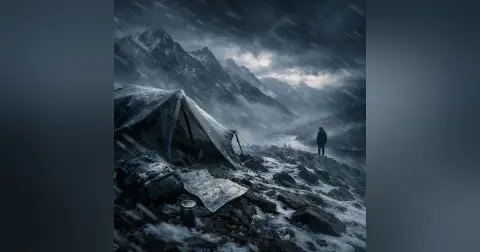
In August 1993, six members of Lyudmila Korovina’s hiking group died rapidly in Siberia’s Hamar-Daban Mountains; Valentina Utochenko was the only survivor.
- The trek: Lyudmila Korovina leads six young hikers into the Hamar-Daban range
- The turn: August 4–5 — a brutal storm hits at roughly 2,300 meters
- The collapse: eyewitness survivor account of sudden convulsions and rapid deaths
- The recovery: why the scene looked “impossible,” and what time + wildlife can do
- The official file: why authorities said hypothermia—and what they dismissed
- Theories vs. evidence: separating folklore from what the record can actually support
This is a case where nature, fear, and unanswered questions collide—and the only person who knows the final minutes had to live with them forever. We’re telling that story tonight.
Valentina Utochenko’s survival account is the emotional and evidentiary center: six companions collapsed during a severe mountain emergency, while she descended alone and eventually reached help. Later retellings amplify the strangest symptoms, but weather, exposure, exhaustion, altitude, recovery delay, and animal activity can explain parts of a scene that appeared impossible.
The episode compares official hypothermia findings with toxic-exposure, pulmonary-edema, and military theories without presenting speculation as resolution. It is a careful Hamar-Daban mystery narrative about Lyudmila Korovina’s hiking group, the August 1993 storm, a lone survivor, and the limits of reconstructing rapid deaths in remote Siberia.
🎧 LISTEN NOW and subscribe for spine-tingling horror stories every week!
🎉 Unlock exclusive bonus episodes and support the show on Patreon!
👉 WeeklySpooky.com/Join
📬 Contact Us / Submit Your Horror Story!
- Twitter: @WeeklySpooky
- Facebook: facebook.com/WeeklySpooky
- Email: WeeklySpooky@gmail.com
🎵 Music by Ray Mattis 👉 Check out Ray’s incredible work here !
👨💼 Executive Producers: Rob Fields, Bobbletopia.com
🎥 Produced by: Daniel Wilder
🌐 Explore more terrifying tales at: WeeklySpooky.com
0:02 The storm came out of nowhere, and then the hikers started dropping, one by one, foaming, bleeding, screaming. In minutes, six were gone on a Siberian ridge they would never escape, and one terrified teenager ran blind into the wilderness, praying the river would lead her to safety. What you were about to pat is buried to be based on witness accounts, testaments, and public record, this is terrifying and treat High in the Hamar Dabon Mountains of Siberia, winter doesn't wait for a season. Even in summer, the cold can arrive like a verdict, wind knifing through wet clothing, fog swallowing the distance, and sleet turning every rock into a trap. One moment you're hiking beneath gray skies, the next you're fighting to
1:32 breathe in the air that feels sharpened and watching the world turn white. In August of nineteen ninety three, seven hitchhikers followed an experienced leader into that very unforgiving range near Lake bai Kal. They weren't reckless thrill seekers. They were trained, prepared and moving with purpose. But when a sudden storm slammed into the ridge, warmth vanished, Visibility collapsed, and the mountain began doing what it does best, isolating people, one decision at a time, until there's no one left to hear you call out. What happened next still chills investigators and locals. Decades later, a frantic descent, a campsite abandoned in chaos, and then the survivor's account of terrifying symptoms and to collapse so fast it felt unreal. Six would die on that frozen slope. One would stumble into the wilderness alone, oaked to the bone, with the storm
3:03 at her back and the silence ahead. Authorities were quick to call it hypothermia and close the file, but the details refuse to freeze in place. Tonight we examine the facts, the contradictions, and the theories, because in Hamar Daba, the cold doesn't just kill, it keeps secrets. Grab a blanket and something warm to drink as we make our way to Siberia. And while you're at it, make sure you're subscribed for more terrifying and true every Monday, right here on Weekly Spooky. In August of nineteen ninety three, the Hamar Daban Mountains of Buriatiya majestic peaks, notorious for sudden storms, became the scene of a baffling tragedy a season. Forty one year old instructor Laudmiya Coravina led six young trekkers from Kazakhstan on a challenging hike through this wild terrain.
4:33 They had prepared well, mapping their route months in advance and carrying plenty of food and gear for several days. Everything went according to plan as the team made steady progress through forests and over ridges, enjoying campfires under the stars. But on the night of August fourth through fifth, near the crest of the rain jet around twenty three hundred meters, the weather turned. A vicious storm blew in with howling winds and freezing rain that soon changed to wet snow.
5:15 The hikers, dressed for mild weather, were suddenly soaked and shivering as the temperature plunged. Tense collapsed under the gale before dawn, Coravina decided they had to get off the exposed ridge immediately. The group hurried back to pack up and began descending toward the treeline as the blizzard intensified. In the early morning hours of August fifth, As the seven struggled down a slope through blinding snow. Disaster struck without warning, Twenty four year old Alexander Creasan, one of the strongest hikers in the team, suddenly fell to the ground, frothing at the mouth. Valentina Utochenko seventeen later described foam coming from Chrysan's mouth and blood from his ears as he convulsed. By the time Coravina reached him, Cresan was not breathing. Then, shockingly, Corovina herself collapsed. She clutched her chest and dropped to her knees over Cresan's body, apparently felled by a heart attack on the spot. What followed
6:46 was pure chaos. The remaining hikers were thrown into panic. In their terror, one hiker, Tatiana Filippenko, began smashing her head against rocks, Another, Dini Schvatchkin, curled up in his sleeping bag under a boulder, and seventeen year old Victoria Zalezova went into a hysterical rage, at one point biting Valentina's arm while screaming incoherently. Korvina tried to rally them, but it was too late. One by one, the others collapsed on the icy ground, falling where they stood. In a matter of minutes, six members of the group were dead or dying, scattered in the howling wind. Only Valentina remained on her feet. Bruised, numb, and terrified. She realized she was the last one alive. She broke away and ran half stumbling, half sliding down the mountain through the storm, praying she might find help before it was too late.
8:11 After several hours of stumbling alone through the wilderness, a little past midday, a group of Ukrainian rafters on the Sneezna River spotted a young woman on the river bank. It was Valentina. She was battered, soaked, and incoherent, shouting about dead friends on the mountain. The rafters rushed to her aid. They wrapped her in warm clothes and tried to calm her as she babbled about what had happened. Once they grasped the situation, they alerted the authorities at once.
8:52 Rescue teams launched an urgent search, but the weather hampered them. Helicopters and round crews scoured the mountains for days, initially finding nothing. Finally, on August twenty seventh, nearly three weeks after the ordeal, a rescue helicopter crew spotted a grim scene on a high barren ledge. Six bodies were lying in the snow. When rescuers reached the site, they found the corpses exactly as Valentina had described. The site was ghastly.
9:36 It was a terrible picture, as one helicopter crewman reported. The bodies lay on a small rocky shelf, some huddled together, others sprawled apart. They had been exposed to the elements for weeks. All of their eyes were gone, empty sockets staring into the sky, and parts of their faces and limbs had been eaten away by scavengers. In the open mouths, insects writhed the stench of decay hung in the thin air.
10:18 Rescuers wrapped the remains in plastic for transport, but even then the helicopter was filled with a foul odor during the return flight. In total, six lives were lost on that ledge. Valentina Otchenko, the teenager who managed to flee, was the only survivor of the expedition. Russian authorities investigated the incident to determine how this calamity unfolded. Forensic autopsies confirmed that All six victims ultimately died of hypothermia lethal exposure to the cold. Their bodies showed classic signs of freezing and exhaustion, soaked tattered clothes, and internal damage consistent with extreme cold, including completely depleted energy reserves. Importantly, there were no major external injuries and no indication of foul play or violence. Investigators found no traces of any toxins or drugs. Based on the evidence, officials concluded that the group fell victim to a deadly combination of weather and human missteps. As the final report put it, no criminal
11:51 case was opened. The only factors were in proper leadership and cold. In other words, the official verdict was that Coravena's team froze to death due to an unexpected mountain storm and sheer fatigue. One finding suggested the hikers were weaker than expected before the storm even hit. Searchers noted that at the final campsite, the team's food stores were virtually gone. Only a single can of meat stew was found for all seven people quote, no candy wrappers, no extra rations, nothing, One rescuer recalled, implying the group might have been running on empty. Coravina was known as a tough survivalist instructor who sometimes kept her students on minimal rations to harden them. If she had done so here, it could explain why the hikers deteriorated so rapidly when conditions turned Quote, no wonder they died. Their bodies were spent, that rescuer commented bitterly. Valentina o Tochenko, however, has always
13:27 defended her mentor and the group's preparation. She insists they were well fed and well equipped. In interviews, Valentina said they ate hot meals four times a day and had plenty of snacks. Quote we often built campfires to warm food, she noted. She describes Coravina as an attentive, caring leader who did everything possible once the weather turned bad. According to Valentina, Corovina woke everyone early and tried to lead a careful descent. Quote she tried to save us. She just didn't have time, Valentina recounted, rejecting any claim of incompetence.
14:20 Valentina also offered her own theory for the tragedy. She believes a sudden pulmonary edema a rapid fluid build up in the lungs might have struck down her friends. In the extreme conditions, this can cause victims to froth blood and suffocate quickly. It's a known but rare reaction to high altitude and cold, and it matched some of the symptoms she witnessed. Doctors acknowledged that cold induced edema can happen, though it is highly unusual dual at two thousand, three hundred meters. Despite her speculation, officials did not find medical proof of this specific occurrence, and the official explanation remained hypothermia.
15:17 In the end, the authorities treated the case as a tragic accident. No further criminal or scientific inquiry was pursued. The file was closed with the conclusion that a sudden change of weather, combined with possible mistakes in judgment, led to the deaths. Nothing supernatural or extraordinary, just a worst case scenario of nature overwhelming the hikers. For many who hear the story, however, the official verdict feels incomplete. The base manner in which the hikers died has given rise to a slew of alternative theories. How could a close knit trekking group descend into such horror so quickly. Over the years, outdoor enthusiasts and mystery lovers have proposed various explanations.
16:23 Here are some of the leading theories, each with a compelling point or two, and each with a major flaw. The first is nerve gas exposure. Perhaps the hikers encountered a cloud of military grade nerve gas. Nerve agents like novichok, can cause convulsions, foaming at the mouth, paralysis, and death within minutes, eerily matching the scene Valentina had described. Maybe a seascret weapons test or accidental leak in the area gased the group, killing them almost simultaneously. However, extensive testing found no poisons in the victim's bodies and there were no reports of military operations nearby. Without a shred of evidence of chemicals, this theory remains pure speculation. Another theory is more natural, although still terrifying. Some theorize a natural phenomena infrasound from the storm induced terror in the group.
17:45 Powerful winds can generate low frequency vibrations that humans can't hear but might feel, potentially causing unease or panic. The fierce gale that night could have conceivably produced infrasound that drove the hikers into irrational fear or even physical distress. This might account for their sudden hysterical behavior. Yet this idea is very very hard to prove. No recordings exist of any unusual sound that night, and the hikers already had ample reason to panic due to the freezing blizzard and the collapsing of their camp infrasound remains an intriguing but uninformed hypothesis. Another theory that others suspect are environmental toxins.
18:52 Perhaps an unexpected release of gas from a lightning strike the ground or a d distant industrial accident poisoned the hiker's air inhaling something like ozone or chemical fumes could have burned their lungs, causing them to cough blood and collapse. Such fumes would neatly explain the bloody froth and sudden deaths. However, no evidence of any chemical leak or unusual gas was ever found. Autopsies detected no toxins, and no nearby incident was reported. This theory, too, is mostly guesswork without data.
19:43 A more conventional disaster scenario is also considered. Maybe a small avalanche or a powerful gust of wind a catabatic wind struck the camp. A slab of wet snow could have collapsed onto them, or a sudden windblast might have knocked members off their feet, triggering panic. This could explain why the team became so disoriented so fast. However, rescuers saw no sign of any avalanche debris, and the bodies had no injuries, none consistent with a snow slide impact.
20:29 While extreme weather undoubtedly contributed to their fate, it alone doesn't explain the hiker's bizarre symptoms and rapid demise. The simplest explanation is that there was no mystery at all, just human tragedy. Coravena may have overestimated her team's ability and made fatal decisions. By the time they faced the storm, the hikers were already exhausted and freezing. Severe hypothermia can lead to confusion, irrational behavior, and even hallucinations, which could explain the self harm and delirium reported. The gruesome injuries like missing eyes were likely caused by scavenging animals after death, not any strange force, as investigators had suggested a perfect storm of poor planning and brutal weather, not the paranormal had killed the group. None of these theories can be proven, yet none can be entirely dismissed. Decades later, people still
22:04 debate what really happened on that mountain. Officially, the tragedy was simple, but to those who know the story, that answer feels almost too neat and tidy. The deaths were so sudden and strange that it's hard not to wonder if something more was at play in the end. The nineteen ninety three Hamar Dabbin incident occupies an uneasy realm between fact and folklore, a case where nature's power, human fear, and our desire for answers combine to shroud the truth in mystery. This disaster inevitably drew parallels to the famous Yatlav Past incident of nineteen fifty nine. Both involved young hikers dying under puzzling circumstances in the mountains. The media even dubbed Coravina's case as the buryat Ditlov Pass because of these similarities, unexplained injuries, signs of panic, and gruesome details evoking the Ditlav mystery. However, the differences are significant.
23:30 Ditlov's group faced deep winter cold and likely an avalanche, whereas Coravina's team was caught in a summer storm and no avalanche evidence was ever found Ditlov's autopsies showed severe trauma from a snow impact, while the Hamar D'aban victims had no such injuries, only indications of hypothera. Moreover, the Dyetlav incident underwent decades of intensive investigation, and today most experts conclude an avalanche and hypothermia were to blame. Coravina's case, in contrast, was quickly classified as an accident and never studied to the same depth. Additionally, each tragedy left only one survivor. At the Dyetlav Pass, a hiker had turned back early and wasn't present for the fatal night. At Hamar Daban, only Valentina lived to recount the ordeal. That solitary perspective or lack of witnesses in the final moments contributed to the enduring aura of mystery in both cases.
24:58 As a result, the diet Love Pass mystery became a well known and now largely solved legend, while the Hamar Daban tragedy, though chilling, remained a more obscure regional tale. In the years since nineteen ninety three, the story of Corravina's expedition has become part of local lore tour guides in Buratia sometimes speak of a cursed pass where the mountain claimed six lives, and hikers share the tale as a cautionary lesson. Valentina Utochenko, the sole survivor, withdrew from public view and only gave a brief television interview many years later. The incident has been recounted in a few documentaries and online articles, often with sensational or supernatural embellishments that never appeared in the official report. In truth, the formal aftermath was straightforward. The victims were recovered and laid to rest, and the authorities filed the case as a tragic mountaineering accident, a Turiskaya tragedya in the official records.
26:28 Not everyone believes there's anything mystical to the story. Experts like Edward Gothstein emphasized that quote none of this was a mystery. In reality, they point out that Valentina's recollections have varied on certain details, for example, whether foam and blood were present or whether she closed her friend's eyes, suggesting that trauma may have distorted some of her memories. From this perspective, the Hammar Daban tragedy was caused by an over zealous leader bad luck and brutal weather, and it unfolded much like any other outdoor accident might. The most remarkable part, they argue, is not any unknown force, but Valentina's own survival against the odds. Even today, the incident remains unsettling. Hikers on the Hammar Daban route sometimes pause at a small memorial plaque for the nineteen ninety three victims and reflect on what happened. The wind at that pass still whispers through the trees, and it's easy to feel a shiver recalling how quickly an adventure turned
27:59 in to a nightmare. In these lonely heights, nature's fury can seem almost otherworldly. Whatever the truth may be, the memory of Cora ven A's doomed group endures a haunting reminder that the wilderness can keep its darkest secrets. Terrifying and True is narrated by Enrique Kuto. It's executive produced by Rob Fields and bobble Topia dot com and produced by Dan Wilder, with original theme music by Ray Mattis. If you have a story you think we should cover on Terrifying and True, send us an email at Weekly Spooky at gmail dot com, and if you want to support us for as little as one dollar a month.
28:49 Go to Weeklyspooky dot com slash join. Your support for as little as one dollar a month keeps the show going. And speaking of, I want to say an extra special thank you to our Patreon podcast boost folks who pay a little bit more to hear their name at the end of the show. And they are Johnny Nicks, Kate and Lulu, Jessica Fuller, Mike Escuey, Jenny Green, Amber Hansburg, Karen we Met, Jack Ker, and Craig Cohen. Thank you all so much and thank you for listening. We'll see you all right here next time on Terrifying and True
