


 Apple Podcasts

 Spotify

 Spreaker

 Audible

 Castro

 RSS Feed

 iHeartRadio
Terrifying & True | The Changeling Legend — Fairy Folklore and Real-Life Horror
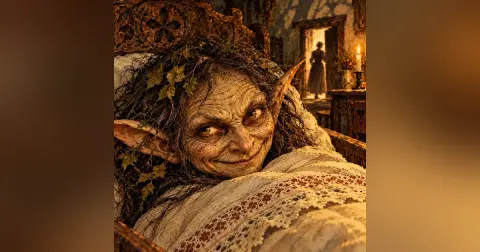
Changeling folklore warned that fairies or trolls could steal a person and leave an uncanny substitute behind—but belief in the legend caused real human suffering.
Terrifying & True explores the changeling traditions of Ireland, Scotland, Scandinavia, and the wider Germanic world. Stories of the Aos Sí and other supernatural beings once offered families an explanation for sudden illness, disability, developmental differences, or a child who seemed unlike the one they remembered. Those explanations could become accusations, cruel “tests,” abandonment, and violence against the vulnerable.
The episode centers on Bridget Cleary, murdered in Ballyvadlea, Ireland, in March 1895 after her husband and relatives claimed the sick young woman had been replaced by a fairy changeling. Her death exposed the lethal point where folklore, fear, domestic abuse, and social pressure converged.
From old protective rituals to modern psychology and horror fiction, this is the dark history of a myth that tried to explain unsettling change—and sometimes transformed loved ones into suspected monsters.
Changeling accusations offered a supernatural explanation for changes families did not understand, but the person labeled a substitute could be disabled, ill, neurodivergent, or simply behaving outside expectation. Protective practices and story traditions therefore existed beside real coercion, abandonment, and assault.
Bridget Cleary’s murder shows the legend operating inside domestic power rather than as harmless fairy lore. By following Irish, Scottish, Scandinavian, and Germanic traditions into a documented 1895 killing, the episode distinguishes cultural variation from the recurring danger of deciding that a vulnerable loved one is no longer human.
🎧 LISTEN NOW and subscribe for spine-tingling horror stories every week!
🎉 Unlock exclusive bonus episodes and support the show on Patreon!
👉 WeeklySpooky.com/Join
📬 Contact Us / Submit Your Horror Story!
- Twitter: @WeeklySpooky
- Facebook: facebook.com/WeeklySpooky
- Email: WeeklySpooky@gmail.com
🎵 Music by Ray Mattis 👉 Check out Ray’s incredible work here !
👨💼 Executive Producers: Rob Fields, Bobbletopia.com
🎥 Produced by: Daniel Wilder
🌐 Explore more terrifying tales at: WeeklySpooky.com
0:02 Fairies, folklore and fire. For centuries, changeling legends whispered of babies stolen from their cradles and replaced with something eerie, something inhuman. But in eighteen ninety five Ireland, this myth turned to murder. Tonight, we're diving deep into the history of change lengths. What you were about to take is buried to be based on witness accounts, testimonies and public record. This is terrifying and truth.
0:53 Tipperary, Ireland, eighteen ninety five. A young woman writhes in agony as flames rise around her. Her husband watches coldly, declaring that she is not his wife, but a changeling, a demonic fairy impostor left in her place. Across centuries and continents, people have whispered of such creatures. Infants swapped in the night, loved ones returned strangely, altered their eyes too, knowing their smiles just wrong. They're cold changelings, beings of myth and fear. But what happens when folklore is mistaken for fact. We'll dive into that story after this. On a cold March night in eight eighteen ninety five, a small cottage in Ballyvadley Ireland became the stage for a horrific drama. Neighbors huddled by the doorway as Bridget Cleary lay writhing on the floor, her husband, Michael, towering above her.
2:22 He forced a foul herbal concoction between her lips and doused his shivering wife in urine, all the while shouting at the terrified twenty six year old, Are you Bridget Boland, the wife of Michael Cleary, answer me? Beside the hearth, a peat fire roared, casting wild shadows as Michael brandished a burning stick. Bridget, feverish from days of illness, cried out in confusion and pain. Her cotton chemis suddenly caught flame.
3:04 In an instant, Michael threw lamp oil across her body, feeding the blaze. The witnesses would later say they weren't sure if Bridget was still alive when the flames engulfed her. They only knew Michael's face was set like stone as he held them back, roaring that this was not his wife at all, but a demonic changeling he had to destroy. She's not Bridget, She's a fairy, he yelled, insisting the real Bridget had been abducted by the fairy folk a week prior. As the firelight danced in his eyes, Michael vowed he would get his true wife back from the near by Ringford, even if it meant burning this thing to ashes. When Bridget's charred remains were found in a shallow grave days later, a shocked nation grappled with the story.
4:13 The press dubbed her the last witch burned in Ireland. Though Bridget was no witch, Her husband's defense was chilling in its sincerity. He claimed he truly believed he hadn't killed his wife, only the fairy impostor that had replaced her. In the ensuing trial, neighbors and even Bridget's own father admitted they had assisted Michael in driving out the supposed changeling with brutal folk remedies. The case of Bridget Cleary, a modern young woman tortured and burned alive in the nineteenth century, became one of the most notorious incidents of changeling lore intruding on reality. It revealed how deeply the old belief in fairies and changelings still gripped rural communities, and how deadly the consequences could be when folklore and fear outweighed reason Bridget's story would echo through history as a grim warning of what happens when myth and reality collide.
5:40 The legend of the changeling, a fairy's deceitful surrogate left in place of a stolen person, haunts the folklore of many lands, from the misty bogs of Celtic Ireland to the rugged forests of Scandinavia. Tales abound of infants whisked away by supernatural beings and replaced with something else. In European lore, a changeling could be a fairy child or elderly sprite, magically disguised as a human, or even an enchanted piece of wood carved to look like a person.
6:23 Almost every culture had its own twist on the myth, but the core was the same, malicious other worldly forces snatching loved ones and leaving an impostor behind. Celtic traditions are especially rich with changeling stories. In Irish and Scottish legends, it was said the fairy folk the ease she coveted beautiful, healthy human babies to strengthen their own bloodlines. A fairy mother might slip into a home and leave her ailing fairy infant in the cradle, spiriting the human child away to live in the fairy realm. The changeling left behind was often sickly and stunted, sometimes with bizarre features, an infant who never grew, perhaps sprouting teeth or even a beard, and who cried and fed endlessly without ever thriving. In Irish lore, some changelings displayed uncanny intelligence beyond their years, or other eerie behaviors when they thought no one was watching, like dancing on their own or playing the fiddle in
7:54 the crib. Such a creature was clearly not a normal child. In Wales, similarly, a plant in kale or changeling child might start out looking ordinary but gradually turned ill featured, malformed and ill tempered, given to constant screaming and biting. One Welsh test for a fairy swamp was to brew a family dinner in eggshells. If the wizened little changeling laughed and revealed his centuries of knowledge, perhaps responding to the strange meal by saying I have seen the acorn before the oak, but never saw the likes of this, it proved his other worldly nature. Across the sea in Scandinavian countries, changeling lore often featured trolls. Medieval Scandinavian villagers believed that rolls sometimes snatched unbaptized infants, perhaps because it was more respectable for a troll child to be raised by humans than by their own kind. In these tales, a troll mother might leave her own ugly newborn in
9:25 a human cradle and take the human baby as a foster prize. Scandinavian parents, well aware of this threat, would guard newborns with iron scissors or knives placed over the cradle, since supernatural beings were said to dread cold iron. But if the swap was successful, the unlucky family would be left with a troll changeling, often described as a baby with a big head, distorted features, and an insatiable appetite.
10:06 One Danish legend tells of a mother who returns to her infant's crib to find a scrawny, dark complexioned changeling with a huge belly and piercing eyes. Her once plump, fair haired baby had vanished. German folklore likewise warned of wexelbalk, their word for changelings left by elves or even the devil himself. The brother's grim collected a tale of a new mother near Breslau, Germany, forced to leave her weak old son unattended while she worked in the fields. In that brief time, a demonic figure supposedly slipped a swap into the crib. The baby she returned to was not her own. It bit her while nursing and howled with an inhuman voice. On her lord's advice, the desperate mother carried the creature out to the very meadow where her real child had been taken and beat the changeling with a switch, upon which the devil himself appeared, snarling and thrust the real child back at her, before snatching his screeching imp away. Such stories underscore the common themes that
11:39 span these cultures, fairy abductions, swapped infants, and the terror of another in the guise of one's loved one. In an era before medical science, these tales offered an explanation for the unexplainable, why a healthy child might suddenly fall ill and waste away, or why a person's behavior could mysteriously and radically change. It was far easier to blame capricious fairies or trolls than to accept an inexplicable loss or illness. As one scholar noted, the changeling legend persisted as a folk belief among adults, not just a fanciful fairy tale for children. People truly feared that not all is as it seems, that a beloved child, or even an adult, might be taken by supernatural forces lurking just beyond the candlelight. How would you know if your loved one had been swapped with a changeling? Folklore provided plenty of ominous signs. A once happy baby might suddenly become withdrawn and constantly crying, or develop a voracious appetite, nursing greedily,
13:17 yet never seeming satisfied. The child might not grow or hit milestones, perhaps remaining oddly small, unable to stand or speak when other children its age do. Many a medieval mother cradling an infant who would not stop wailing and failing to thrive, look down in fear and thought, this is not my child. In Irish tradition, a fairy changeling often appeared pale, wizened, and sickly, sometimes with peculiar physical traits like a full set of teeth, long fingernails, or an aged face, incongruous on a baby's body. The eyes were often a giveaway. A changeling might gaze at people with a knowing adult intelligence, or have an uncanny glint that sent shivers through the parents. If the creature in the cradle could suddenly speak or sing beyond its age, or caper about when alone, no further proof was needed.
14:40 Even subtle traits raised suspicion. An aversion to iron, the way a fay would recoil from a horseshoe or scissors near the crib, or a birthmark or deformity taken as the mark of fairy tampering. In some locales, le left handedness, once considered devilish, was enough to brand a child as a changeling. Essentially, any deviation from the norm could be construed as evidence that the child was an otherworldly interloper. Tragically, we can recognize today what many of those changeling symptoms really were signs of physical or developmental disabilities. A baby that did not grow or walk might have had congenital illness like rickets or cerebral palsy. A child who screamed and did not respond to comfort could have been suffering from colic or even autism. In centuries past, such conditions were mysteries with no name. The changeling myth became a convenient label for children who were developmentally different. For example, autism,
16:16 which can manifest in toddlers as a loss of speech, social withdrawal, repetitive behaviours, or unusual reactions maps uncannily on to changeling lore. Families have long told of children who developed normally at first, then around age two, regressed into their own world. In earlier eras, this heartbreaking regression might be explained as the fairies stealing the healthy child and leaving a strange double in its place. Neurodivergent traits like fidgeting, hypersensitivity, or lack of eye contact were interpreted as the changelings witchy misbehavior. A nineteenth century idiot or imbecile child, terms then used for intellectual disabilities was often presumed to be a changeling or elf child. In fact, the very term changeling had a very different use later in history. The term changeling was sometimes used colloquially to mean a person of limited mental capacity. The historical record shows even learned
17:51 men subscribed to this notion. Martin Luther, the Protestant Reformation leader once described a to say twelve year old boy as a changeling quote with no soul, only a piece of flesh, and chillingly advised that the child be drowned quote to rid us of the devil's imposture, since no amount of prayer could redeem such a creature. While extreme Luther's view reflected a grim reality, children who today would receive medical care and education were in past centuries often seen as supernatural changelings to be fixed or eliminated. Modern historians and psychologists suspect that countless cases of autism, down syndrome, metabolic disorders like phenal kidanuria, and other genetic conditions lie behind changeling folklore. The myth provided a perverse comfort to parents racked with guilt or grief. It allowed them to believe their real child was perfect and had been stolen away, rather than accept that their beloved child was permanently different
19:25 or disabled. But that comfort came at a terrible price if the family then turned on the changeling in their midst. For those who feared a changeling had infiltrated their home, folklore prescribed drastic remedies. The foremost goal was to get the supernatural impostor to reveal itself, or to punish it so severely that the fairies would return the real person to spare their child further harm. Many of these cures ranged from bizarre rituals to outright cruelty, often crossing the line into tragic abuse. Some methods were relatively harmless tricks.
20:21 One famous ploy was the eggshell brew. The worried parent would boil water in eggshells instead of a pot. This nonsensical act was supposed to make a sly fairy changeling laugh or comment blowing its cover. In Welsh lore, a changeling watching its mother boil eggshells might cackle and comment, I have seen the acorn before the oak, but never such a brew, as this a sure sign that an ancient fairy, not an infant, was in the cradle. According to tales, upon this outburst, the spell would break, the elderly fairy would vanish, and the true child would be miraculously returned, as if by waiting elves just outside the door. Similarly, benign ruses included tricking the changeling with music or mystery, anything to provoke an out of character reaction. In Ireland, one story tells of a mother who suspected her toddler was a fairy. She started feigning a dance with an empty shawl as if cradling an invisible baby, singing that she had a fairy child of her own. The changeling,
21:52 unable to resist, sneered that she was a foolish woman to dance with nothing. At that the mother knew her true child was gone. While these gentle tricks sometimes feature in folklore with happy endings, the reality was far darker when mere trickery failed. Traditions sanctioned painful trials by fire and water. It was widely believed that iron and fire were anathema to fairy folk. Thus heat could torture the changeling or drive the fairy spirit out. One prescribed remedy in multiple cultures was to heat a shovel or poker in the fire and then hold the changeling on it or near it. The idea was to literally scorch the fairy out of the victim. In Whales, a mother might shove the suspected changeling into a hot oven briefly as grotesque as that sounds, or boil herbs like foxglove to bathe the child in a scalding tub. Foxglove was a poisonous plant associated with fairy magic. Its name even comes
23:24 from folks and glove i e. The little folk's glove, referring to fairies. An infamous case in eighteen fifty seven Whales saw a baby killed after being dunked in a foxglove bath meant to dispel the fairy influence. Likewise, in the Irish countryside, fairy doctors sometimes prescribed dunking or dragging children through rivers or lakes. Drowning could result, whether intended or not. In eighteen twenty six, an irishwoman named Anne Roche was charged with the death of four year old Michael Lady, a boy who couldn't speak or stand. Anne had immersed the child in the icy river flesk three times, trying to wash the fairy out of him. On the third immersion, the little boy drowned. At her trial, Anne swore she had only been attempting a cure for the changeling. Remarkably, the jury acquitted her of murder, implicitly accepting that she acted out of sincere, albeit misguided belief. Such acquittals were
24:55 not uncommon in communities where fairy loyd was part of life. Ordinary people might sympathize with those who used brutal methods to save a loved one from a supposed changeling. After all, if one truly believed a malignant fairy had taken hold of a child, almost any action could be justified in order to defeat it. Of all the remedies, fire was the most extreme. Fire was also the remedy that left the most indelible records of horror. The reasoning was simple and stark. If you burn the changeling, the fairies will be forced to return the human, since presumably they wouldn't want their own kind to die. Countless folk tales culminate in a child being held over a roaring hearth, or even tossed in, only for a fairy to screech and fly up the chimney as the unharmed real child is suddenly restored on the doorstep. In practice, however, real children and adults suffered grievously from attempts to smoke out a changeling.
26:33 A nineteenth century Scottish account from Kerr Laverac describes a desperate father distraught at his infant's constant screaming and illness, who heaped hot coals from the fire on to the baby's bare stomach. The baby tragically died from the burns, a victim of what to day we would recognizes as abusive violence, but which the father may have rationalized as a last resort to expel a fairy. In rural Ireland, those claiming expertise in fairy matters, often called fairy doctors or wise folk, sometimes orchestrated such rituals. They would insist the family not intervene, no matter how the child cried, until the changeling yielded. Scholar Carol Silver notes instances of fairy doctors killing children with these ordeals. One case in Donegal involved a foxglove poison bath in the eighteen seventies.
27:50 Another in Ulster had a blacksmith applying red hot iron to a toddler. In one haunting anac recorded by classical scholar Gilbert Murray, a supposed changeling boy was beaten and burned with hot irons by a faery doctor while the mother was locked outside the room. The child succumbed to the abuse, and tellingly, no one was prosecuted. These happenings were often kept secret or passed off as accidents, meaning we likely only know a fraction of such cases. Even when these violent measures caused obvious harm, authorities sometimes struggled with how to punish the perpetrators. A remarkable trial in Kilkenny in eighteen fifty six came to light only by chance.
28:57 A police patrol stumbled upon a life laborer's family surreptitiously carrying the corpse of their nine year old son for a secret burial. Under questioning, an astonishing tale emerged. The boy had been bedridden by illness later determined to be a brain tumor and hydrosyphalus. A local faery, doctor Thomas Donovan, declared the child was not actually the parent's son at all, but that the boy was quote being gradually carried off by the fairies. In order to save the real child, Donovan and a helper subjected the boy to a horrific test.
29:47 They forced a potion of herbs, and then dragged the weak child out of the house at midnight. When the boy couldn't answer their demands to cough up the fairy or reveal the truth, they beat and strangled him in the yard. All in an attempt to drive out the changeling or induce the fairies to return the true son. The poor child died from his injuries within hours. In court, Donovan still insisted on the fairy rationale. The judge firmly rejected it, emphasizing that such supernatural delusions were no excuse for murder. Yet, even then, perhaps out of pity or incredulity, Donovan was convicted only of manslaughter and given a mere one year of hard labor. Cases like this laid bare a gulf between educated officials and the rural poor. The court noted how odd it was that the family had also consulted two licensed doctors, but when the boy didn't improve, they turned to folklore and magic as a last hope.
31:21 To the modern eye, the chilling truth is evident. The changeling myth provided cover and justification for what we now label as child abuse or even infanticide. As folkloreist Katherine Briggs wrote, countless children suffered dreadful harm from being beaten, exposed on hillsides, or thrown into fires on the mere suspicion of being changelings. Only occasionally did a wiser voice suggest treating the afflicted child kindly. Instead, Far more often violence was the recommended cure to quote, send the fairy packing.
32:14 Most changeling tales involve infants or children, but the legend's terror wasn't confined to the nursery. Adults too could be taken by the fairies with a changeling left in their stead. Nowhere is this more infamously demonstrated than in the case of Bridget Cleary, the young Irish wife whose gruesome death brought to this podcast, The Truly Deadly Side of Change lays.
32:57 Bridget's story shows how changeing lore could turn from superstition to scapegoating, especially against a woman who didn't fit the mold of her community. Bridget Cleary was, by all accounts, a vibrant and independent woman. In eighteen ninety five, she was twenty six years old, a dressmaker and egg seller who had her own income and a singer, sewing machine, modern luxuries in her small County Tipperary village. She dressed stylishly in feathered hats rather than the usual shawls, and was childless after eight years of marriage, an unusual circumstance that set her apart. Some neighbors whispered that Bridget was different.
33:57 She sometimes walked alone near the old fairy Ringfort on the hill, perhaps to enjoy the view or seek a bit of freedom after caring for her elderly father. In local folklore that Ringford was known as a fairy dwelling, a place where the veil between worlds was thin. It's easy to imagine how gossip might swirl a pretty assertive, childless woman visiting fairy haunts. Perhaps the fairies fancied her. Perhaps if she fell ill, people might wonder if the good folk had designs on Bridget. Indeed, in March eighteen ninety five, Bridget came down with a sudden illness, likely bronchitis or pneumonia, that left her bedridden with fever. A doctor was summoned on March thirteenth, and a priest delivered last rites. But as days passed and Bridget remained delirious, her family grew anxious. Into this tense atmosphere stepped an older local man, Jack Dunn, a neighbor reputed to be a shan key or story teller knowledgeable about fairy lore.
35:32 Dunn eyed the ailing Bridget and proclaimed what must have sent chills through the entire room. This wasn't Bridget at all, but a fairy changeling. The real Bridget, he claimed, had been snatched away by the fairies after her walk in the Ringford, and a fairy put in her place. In the days that followed, Bridget's husband, Michael Cleary, her father Patrick, and several cousins became entangled in a series of increasingly frantic folk treatments to get the real Bridget back. They boiled herbs in new milk and forced Bridget, already weak and nauseated, to swallow the concoction. They shouted questions and prayers at her, trying to get the changeling to admit its identity. At one point, they picked up Bridget's frail body and carried her before the kitchen fireplace, hoping to drive the fairy out with the heat, a ritual known in local lore as trying the changeling. Bridget was terrified, thrashing and pleading, but her husband and relatives persisted. Witnesses
37:03 later described how Michael egg dawn by Jack Dunn, doused her with urine, another folk remedy, and threatened her with hot irons while demanding are you Bridget Cleary answer in the name of God. At one moment of respite, Bridget, perhaps fed up or delirious, reportedly shouted back something cutting that the only person going off with fairies was Michael's mother, who had died years before. This retort sent Michael into a fury. The torture escalated until that final act of immolation we've already recounted. By March fifteenth, Bridget was dead, burned on her own kitchen flo and Michael truly believed he had killed a fairy, not his wife. The legal aftermath showed just how strong the changeling belief was. Eleven people were arrested for Bridget's death, including her husband, father, and cousin who had been present at the trial. All of them still insisted they thought they were attacking a fairy,
38:34 not Bridget. It was dubbed the Tipperary fairy murder in newspapers, and the sensational details were reported as far away as London. The case caused a scandal in late Victorian society. How could such medieval beliefs persist in modern Ireland? Some British papers cynically used the story to argue the Irish were too superstitious and savage for self governance. This was the era of the home rule debate. Scholars later noted that the Crown prosecutors treated the defendant's fairy explanation with a measure of gravity likely to undermine any kind of insanity defense.
39:29 They needed to show the accused understood their actions, even if motivated by bizarre beliefs. In the end, Michael Cleary was convicted of manslaughter rather than murder. The jury, perhaps reluctant to utterly condemn a man who appeared genuinely deluded, spared him the hangman. He was sentenced to twenty years in prison, but only served fifteen, reportedly emigrating to Canada upon release. The others received lesser sentences for assault. The community, meanwhile, was left grappling with the reality that everyone knew why it happened. Many locals quietly shared the belief that Bridget had indeed been taken by fairies. A children's rhyme later sung in Tipperary encapsulated the macabre lore are you a witch or are you a fairy? Or are you the wife of Michael Clary? A dark taunt ripped from the headlines.
40:48 Bridget's case was not an isolated incident of changeling mythology leading to violence, but it was the most publicized. Its starkly demonstrated that even on the cusp of the twentieth century, ancient folklore still held a lethal grip on the imagination. Here was a young, educated woman effectively sacrificed to a fairy tale. The incident prompted widespread soul searching in Ireland. Some saw it as a clash between modernity and myth.
41:29 Bridget owned a sewing machine and read fashion magazines, yet died in a manner reminiscent of the witch burnings of old. Others interpreted Michael Cleary's motives in a less sympathetic light, suggesting he may have used the changeling excuse as a cover for simple domestic cruelty and rage. After all, Bridget had insulted his manhood in front of others, and she was more financially independent than he was, which could have stoked such resentment. It remains debatable how much Michael truly believed in the fairy explanation versus how much it conveniently absolved him of murdering his wife in a fit of anger.
42:25 What is clear is that the changeling lore provided a ready made narrative for him to latch onto, one that many in his community were predisposed to accept. Bridget Cleary thus lives on in infamy in ballads, books and plays as quote the last witch or fairy burned in Ireland. Her story serves as a grim benchmark, a final tragic eruption of folkloric violence in an era that was otherwise turning towards science and reason. Why did the changeling legend exert such power over people, enabling and even encouraging acts that seemed to us to be unthinkable. The answer lies in a confluence of medical ignorance, psychological need, and social control that spanned for centuries. At its heart, the changeling myth can be seen as a culturally sanctioned coping mechanism for parents and communities facing inexplicable tragedy. In modern times, infant and child mortality were crushingly common. Diseases like influenza, meningitis,
43:55 or genetic disorders could turn a thriving baby into a feeble, unresponsive one almost overnight. Lacking any scientific framework, grief stricken parents reached for the explanation their culture provided. The fairies did it believing that their true child had been stolen offered a bizarre sort of comfort. It externalized the blame. As folklorus. Carol Silver observed, the changeling belief conveniently shifted responsibility for a child's affliction quote into a separate, supernatural realm beyond human control. The parents were absolved of fault.
44:46 It wasn't their bad genes or a failure to care properly. It was the fairies. And there was even hope, however, faint, that the real child might be recovered if the correct ritual was performed. Susan Eberley, a scholar who studied changeling cases, noted that parents often harbored anger and guilt toward a disabled child, anger at the burden and disruption, guilt for the feeling of that anger. The changeling myth gave those conflicting emotions an outlet. A parent could project their anger onto the impostor, leading to abusive attempts to drive it out, while clinging to the guilt easing belief that their actual beloved child was blameless and could still be saved. In a perverse way, some of the very cruelty inflicted on changelings was driven by love for the missing child. As one writer put it, quote, even as they tormented these supposed changelings, parents were projecting their own familial love onto fairyland and acting out of desperate hope for a reunion.
46:14 It's a heartrending paradox. The changeling fantasy allowed parents to express devotion to an idealized absent child, even as it drove them to abuse the flesh and blood child in front of them. Yet belief in changelings was not purely a private family matter. It was reinforced by community and authority figures. At times, village healers or wise women. The fairy doctors could gain status by diagnosing changelings and prescribing cures which might feed their own sense of importance or even bring materisurial reward. And as seen, even prominent religious figures like Martin Luther lent theological weight to the idea that some children or soulless fairy or demon spawn that deserved death. In Luther's sixteenth century context, a changeling might equally be called a devil's changeling. The concept overlaps with demonic possession, declaring a child inhuman could remove moral qualms about extreme treatment. It's a disturbing early example of how dehumanization can justify violence. If a child is not truly
47:45 a child lacking a soul, as Luther claimed, then killing that child might be seen not as murder but as a kind of spiritual pest control. Indeed, some changeling trials in the nineteenth century reveal that defendants were genuinely shocked to be accused of crime. In their minds, they hadn't killed a person at all. The changeling myth also intersected with issues of social control and conformity, especially regarding women's roles.
48:32 While most changeling victims were children, the folklore implicitly threatened women too, particularly mothers. A woman who lost multiple infants to miscarriage or illness might herself be suspected of harboring a malevolent fairy spirit as an explanation for her failure to produce a living child. In Nigeria, for instance, there's a striking parallel in the belief in obanjay, or child's spirit that repeatedly dies and returns to torment a mother. This was likely an explanation for recurring still births or sickle cell anemia, but it led families to ritualistically scar or even kill suspected obanjay children in order to break the cycle. In Europe, a mother's behavior could invite changeling rumors.
49:35 If a mother was seen as negligent, falling asleep and letting her baby out of sight, even if from sheer exhaustion and the child then sickened, tongues might wag that she had literally allowed the fairies in. Thus the myth enforced a kind of vigilance on mothers. Don't ever let your guard down, or the fairies will come. New mothers were cautioned not to leave a newborn unattended, even for a few minutes, and to always keep iron or holy relics near the cradle. In the Bridget Cleary case, although she was an adult, some scholars have read subtexts of patriarchal control. Bridget was independent and childless, attributes that made her troublesome when she fell ill, possibly with something along the lines of pneumonia. Instead of caring for her with patience, the men in her life, her husband and the local storyteller, reached for a narrative that put her under their control.
50:46 In the most extreme of ways. By casting Bridget as a fairy changeling, Michael Cleary could reassert dominance. He literally objectified her into a non human thing that he had the right to punish. It's telling that in the folklore the process of curing a changeling often involves a group overpowering an individual, holding them down, force feeding, et cetera. This can be viewed through a sociological lens as well. It was a sanctioned occasion for the community, usually led by men, to enforce norms through violence. Anyone who was other, whether a disabled child or a non conforming adult, could be socially punished under the guise of battling fairies. In a sense, the changeling myth was a tool for enforcing homogeneity.
51:50 Children who could not contribute to agrarian labor or wives who did not conform to expected behavior were at risk of being branded changelings, which in effect marked them as expendable. It is no coincidence that in famine stricken or impoverished communities, a child who was a severe drain on resources might be more readily labeled a fairy and quietly removed. An awful calculus driven by survival historian William Alberry noted that as societies moved into the industrial Age, the changeling archetype in popular culture morphed into new forms, similar to how alien abduction narratives did, but the underlying theme remained the same.
52:48 They are stories we tell to negotiate our anxieties about dependence, difference, and identity. Modern medicine and psychology have thankfully dispelled literal belief in changelings, but the legacy of these stories lingers in how we talk about kids with differences. Until the twentieth century, terms like elf child and fairy struck were sometimes used in rural Europe to describe developmentally disabled people, a last echo of the old idea. Even today, some autistic individuals find a resonance in the changeling narrative minus the stigma, viewing themselves as feeling out of place or alien in a neurotypical world. In a tragic psychological phenomenon known as Capgrass syndrome, a person often suffering from schizophrenia or dementia, becomes deluded that a loved one has been replaced by an impostor. This is essentially the changeling and playing out in a clinical setting, the patient is utterly convinced their spouse or child isn't really them. Such cases can lead to violence even now. In twenty ten, for example,
54:19 a mother with severe postpartum psychosis in Texas drowned her baby daughter because she believed the child was an evil impostor, a modern parallel to Anne Rosch's case in eighteen twenty six. These instances are exceedingly rare, but they remind us that the human mind can still fall back on archetypal fears of replacement and possession when found to be in extreme distress. Though we no longer attribute illness to fairy swaps, the changeling continue used to fascinate and frighten us through literature, film, and art. The tales, themes the loss of a loved one to an uncanny force, the dread that something familiar is secretly alien are timeless storytelling fuel. In fact, modern horror and fantasy have reimagined changelings in ways that speak to contemporary anxieties. One of the earliest literary reflections comes from the Irish poet W. B. Yates, who in eighteen eighty six wrote The Stolen Child. In that poem, Fairies lure a human child away with promises of a care free life, whispering come away, o human child, to the
55:51 waters and the wild with a fairy hand in hand. The poem captures both the seductive illue and the sorrow of the changeling myth, the idea of escape from pain, but at the cost of abandoning reality. Yates and other folklorists of his generation helped preserve changeling stories even as the belief was waning. As the twentieth century progressed, changelings found new life in fiction as metaphors. Authors began to use the concept to explore themes of identity, otherness, and the fear of not recognizing one's own kin. Science fiction notably gave us alien versions of the changeling. The motif of extraterrestrials abducting humans and planting lookalikes or hybrids owes to the old fairy lore. Indeed, some scholars have pointed out that alien abduction narratives in the late twentieth century are strikingly similar to changeling legends. Eerie lights at night, missing time, returned people who are not quite the same.
57:22 Classic films like Invasion of the Body Snatchers from nineteen fifty six play on exactly that terror of loved ones being replaced with emotionless doubles, essentially an updated changeling scenario for the Cold War era, tapping into fears of conformity and loss of self. In the horror genre, child centric fear has repeatedly revisited changeling themes, because few things unsettle us more than a creepy kid who isn't what they seem. Eighteen seventies brought the Omen nineteen seventy six, technically about the Antichrist as a child, but again the idea of an evil entity swamped into a family. A direct nod to the myth came with the film The Changeling nineteen eighty starring George C. Scott, which, while actually a ghost story, leveraged the title to evoke the dread of a child's spirit in limbo. More recently, a wave of Irish horror films has explicitly drawn on the changeling folklore of that country.
58:40 The Hole in the Ground twenty nineteen, for example, tells of a mother in rural Ireland who becomes convinced her young son is not really her son after he wanders near a sinkhole in the woods. The film uses the changeling premise as an uncanny exploration of parental mental illness and psychosis, blurring whether the threat is supernatural or in the mother's mind. Similarly, You Are Not My Mother twenty twenty one flips the script by depicting a teenage girl whose mother disappears and returns strangely altered, leading the girl to suspect a fairy substitution amidst her mother's mental health crisis.
59:31 These films, steeped in Irish fairy lore and even local songs about infanticide, show how the myth still resonates in a modern setting. They channel the very contemporary fear of not recognizing those closest to us, and the horror that the monsters we battle might actually be our own inner demons, like depression or psychosis given shape. Even outside of horror, the changeling idea appears in fantasy literature and media, from the changeling beings in Neil Gaiman's stories to the shape shifting changelings of Star Trek Deep Space nine. Here, the term is applied to alien impostors able to shape shift at will. One of the most acclaimed recent uses of the myth is Victor Lavelle's novel The Changeling two thousand seventeen, a dark urban fairy tale set in New York City.
1:00:35 Lavaille explicitly frames his story around the classic definition quote, if you know what a changeling is, a substitute child swapped for a real one by fairies or trolls, you are already two thirds of the way to the meet of the changeling. His tale starts with new parents and then spirals into a nightmarish quest involving witches and a secret island of stolen children, and while examining very real themes of postpartum depression, fatherhood fears, and racial heritage in America. The novel was successful enough to spawn a twenty twenty three streaming series adaptation. Its popularity suggests that the changeling legend, stripped of overt fairy trappings, still has compelling power as a metaphor for the uncertainties of parenthood and the fragility of family. When Lavaille's narrator in tones this fairy tale begins in a library in Queens, he reminds us that these are not just old time rural superstitions. They are living narratives that can be transplanted even to the bustling heart of a modern metropolis. Why does the changeling myth continue to captivate us, Perhaps because it touches on primal
1:02:06 human fears that are just as potent now as in the dark ages. The fear of losing a child is universal and timeless. So is the fear of the unknown masquerading as the familiar, that the face we see across the breakfast table might not truly be the person we think it is. These anxieties have simply taken new forms. Today. A parent might fear autism or mental illness stealing their child's personality, or worry that technology and the Internet are creating a stranger out of their once innocent kid. The changeling legend, with its vivid imagery of doubles and doppelgangers, provides a dramatic framework to explore those feelings. Additionally, the narrative of others worldly intervention let storytellers grapple with themes of blame and guilt in an allegorical way. In a horror movie, it might not really be a fairy causing the child to change. It could be a stand in for abuse, trauma, or neglect. By the story's end, whether the threat is vanquished or tragically realized, we've confronted that nebulous dread through the safe or not so safe filter of folklore. Meanwhile, on a lighter note, the changeling has
1:03:37 been reclaimed in some fantasy works as a figure of empathy, the idea of a child of two worlds who doesn't fully belong in either. This interpretation flips the script to ask what it's like for the changeling itself growing up among humans. Modern authors have imagined sympathetic change and characters who yearn for acceptance, reflecting the outsider experience in society. Thus, the changeling endures not only as a monster in our stories, but also as a poignant symbol for anyone who feels different or displaced. From chilling true cases like Bridget Cleary's Murder to eerie horror films and haunting fairy tales, the legend of the changeling has proven to be remarkably tenacious.
1:04:33 It is a story shape shifted over time, much like the fairies themselves, adapting to our cultural needs. In medieval cottages, it was a literal belief that explained misfortune in a twenty first century film or novel. It is a metaphor that illuminates our inner turmoils. Yet the fear at its core remains the same, the fear of the other that wears a loved one's face. We are still, it seems, haunted by the possibility that just beyond the warm glow of our home, something uncanny watches and covets what we cherish most, And if we gaze too long into the cradle or the mirror, we might yet catch a glimpse of a stranger staring back. Terrifying and True is narrated by Enrique Kuta. It's executive produced by Rob Fields and bobble Topia dot com and produced by Dan Wilder, with original theme music by Ray Mattis. If you have a story you think we should cover on Terrifying and True, send us an email at Weekly Spooky at gmail dot com, and if you want to support us for as little as one dollar a month, go to Weekly Spooky dot com slash join. Your support for as little as one
1:06:03 dollar a month keeps the show going. And speaking of I want to say an extra special thank you to our Patreon podcast boosters, folks who pay a little bit more to hear their name at the end of the show, and they are Kate and Lulu, Jessica Fuller, Johnny Nix, Jenny Green, Amber Hansford, Brent mccaullough, Karen We met, Jack Kerr and Craig Cohen. Thank you all so much, and thank you for listening. We'll see you all right here next time on Terrifying and True
