


 Apple Podcasts

 Spotify

 Spreaker

 Audible

 Castro

 RSS Feed

 iHeartRadio
Cutting Deep Into Horror | Henry: Portrait of a Serial Killer (1986): Why It’s So Disturbing
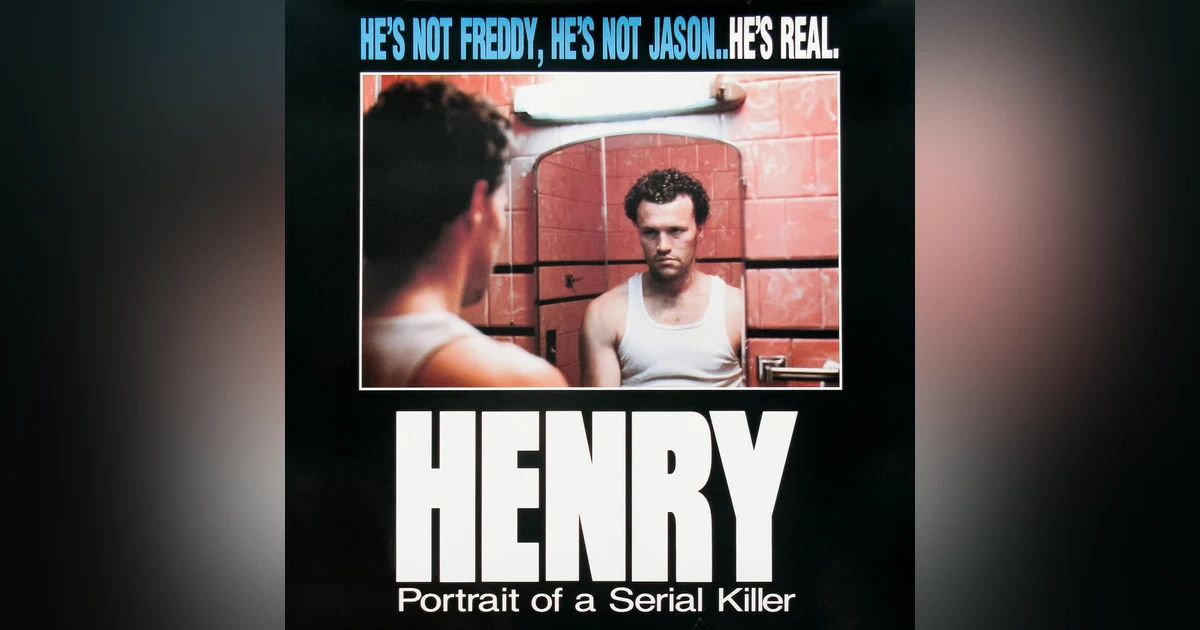
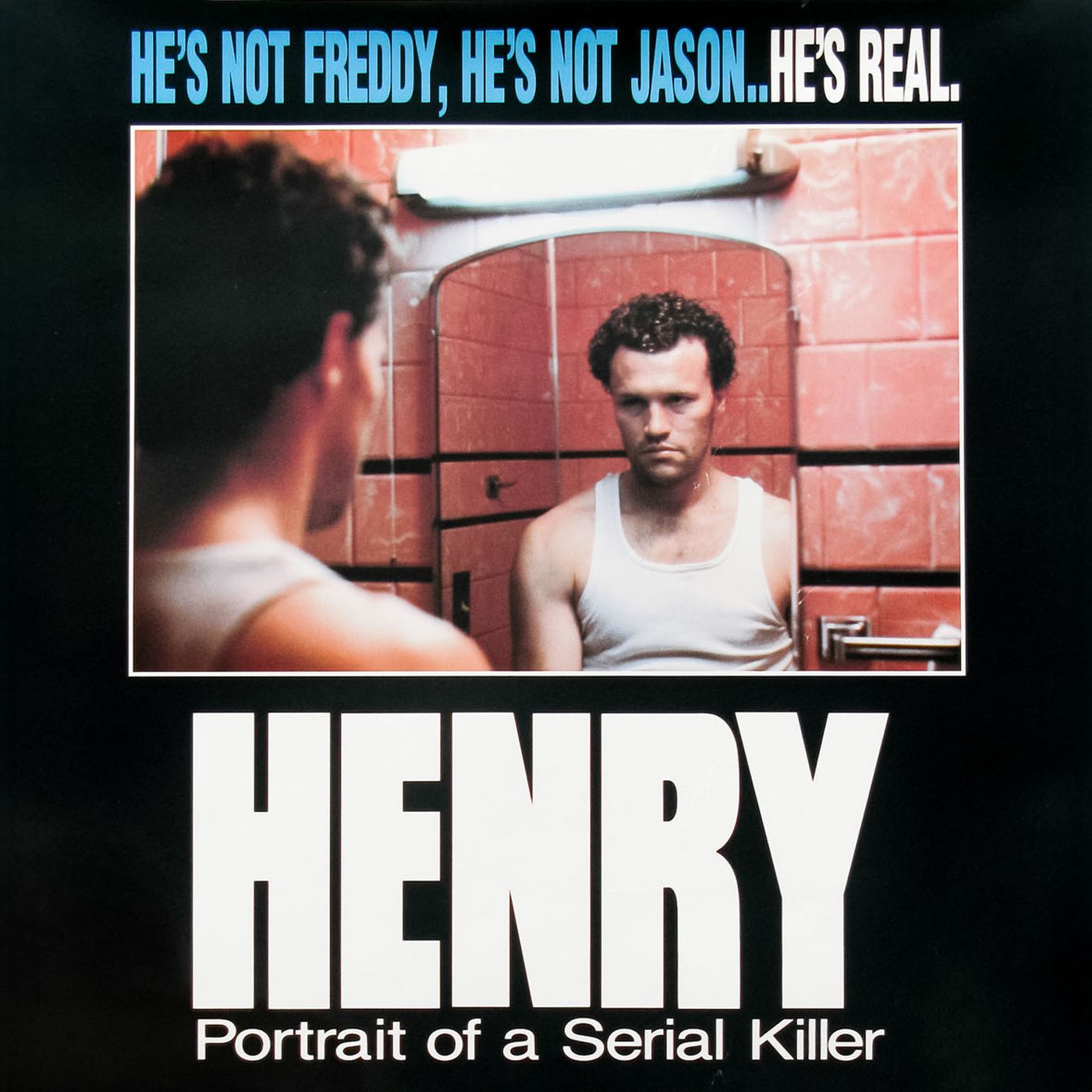
Henry: Portrait of a Serial Killer (1986) is one of the bleakest and most notorious serial killer horror films ever made, and in this episode of Cutting Deep into Horror, Henrique Couto and Rachael Redolfi dig into what makes John McNaughton’s grim 1986 cult classic still feel so raw, disturbing, and hard to shake. Starring Michael Rooker in a chilling breakout role, Henry strips away slick movie thrills and replaces them with grime, dread, and the sickening feeling that you are watching something you should not be seeing.
Inside this episode:
- why Henry feels more like a serial killer character study than a conventional slasher
- how the film’s cold, ugly realism makes the violence hit harder
- the disturbing dynamic between Henry, Otis, and Becky
- why the ending lingers long after the credits
- how the movie uses restraint, suggestion, and atmosphere to become even more upsetting than gorier horror films
- whether its “true story” reputation helps or hurts the movie’s power
Henrique and Rachael get into the film’s nasty little-world realism, its uncomfortable intimacy, Michael Rooker’s unsettling screen presence, and the way Henry blurs the line between horror movie, exploitation film, and crime nightmare. They also talk through the movie’s reputation, what makes Becky such an important part of the story, and why this one still feels meaner and more dangerous than a lot of modern serial killer horror.
Film details
Year: 1986
Director: John McNaughton
Starring: Michael Rooker, Tom Towles, Tracy Arnold
Runtime: 83 minutes
Where to watch (U. S., this week):
https://www.amazon.com/gp/vide..., and free options including https://pluto.tv/on-demand/mov..., https://athome.fandango.com/co...~Vudu~GoogleWatch, and https://watch.plex.tv/movie/he..., with rental/purchase options on https://tv.apple.com/us/movie/...
🎧 LISTEN NOW and subscribe for spine-tingling horror stories every week!
🎉 Unlock exclusive bonus episodes and support the show on Patreon!
👉 WeeklySpooky.com/Join
📬 Contact Us / Submit Your Horror Story!
- Twitter: @WeeklySpooky
- Facebook: facebook.com/WeeklySpooky
- Email: WeeklySpooky@gmail.com
🎵 Music by Ray Mattis 👉 Check out Ray’s incredible work here !
👨💼 Executive Producers: Rob Fields, Bobbletopia.com
🎥 Produced by: Daniel Wilder
🌐 Explore more terrifying tales at: WeeklySpooky.com
0:00 That's a nice dog you got there. Yeah, yeah, it's my little dog Fife. Yeah, he's he's a cutie fiefee. Huh yeah, yeah, he's. He's a cute little uh a little mutt dog. Got a leasha on that thing. Huh yeah, So he doesn't, you know, he's a dog. There's there's laws. I know what a dog is. You've got some very intense eyes. What's that supposed to mean? Just an observation. So you like Chicago, it's a it's pretty nice city. I've gotta I gotta go, like meet with some people.
0:47 Cool, I'm a murderer. Yeah, kinda kind of was getting that, getting that vibe there. Come on, Fifi. This podcast is about why horror scares us, what deep, dark, secret scary cinema shines a light on. The discussions are frank and involve conversations about abuse, trauma, and mental health. There are awesome spoilers, so. Keep that in mind too. Now, sharpen your machetes and straight razors, because this is Cutting Deep into Horror.
1:33 Welcome back to Cutting Deep into Horror. I am, of course your host, Enrique Kuto here with my co host Rachel Ridolfi. Rachel how are you. I'm doing pretty all right. Yeah, yeah, yeah, you survived the storm today barely. I was like, it was kind of intense out in the workshop. It was getting brutal. Huh yeah, yeah I was. I was in the cigar lounge, so I was just watching the rain. Apparently some trees fell down out by the County Line road. Oh yeah, that's the place for it to happen. Yeah, it makes sense. But yeah, I was just staring at the one tree in our backyard, like, please, don't let this be the day. Oh gosh, don't talk about that tree. Give me anxiety.
2:17 But so, last time we were here, we talked about Confessions of a serial Killer, one of my favorite kind of underappreciated hidden gems of a very dark, creepy true crime horror story, and it brought about the realization that you had never seen the more famous serial killer horror film based on a true story, Henry Portrait of a serial Killer, which, oddly enough, they were produced basically at the same time. Yeah, they were both made in around eighty five eighty forty five area, and both took quite a while to come out. Her Portrait of a serial Killer was made in nineteen eighty six or at least completed in eighty six, and it wasn't really I don't believe it was heavily released until yeah, until nineteen ninety damn.
3:12 So it screened in eighty six and then sat until January fifth, nineteen ninety damn. Because now, okay, So, first of all, if you've never seen Henry Portrait of a serial Killer, it's a rough watch. But it's a really brilliant movie. Oh yeah, very fascinating character study and considered one of the top tier of you know, kind of gross, nasty horror, serial killer true crime movies. But when it was made, I almost lost my train of thought, but then I remembered it. My point was, they tried to claim that it was because the film was too violent, too brutal, too graphic, fast, too furious to come out, but in reality, a lot of it was the producers were terrified of lawsuits because they used the real names in the film. Yeah, the three leads, Henry, Otis, although it was Oddis in real life, Otis, and Becky. Those were all their real names, which is extra funny because, as we talked about last time on Confessions, Confessions is far more accurate to the story as they understood it at the time of Henry Lee Lucas the serial Killer, far more accurate, and they changed all of the names, and then you get Henry, which is barely resemblant to Henry Lee Lucas, and they use the actual names, so
4:47 you know. Yeah, so there were some fears that there could be legal repercussions, but they might have even used some names of victims. I can't remember off the top of my head, but yeah, so you know, we end up with Henry Henry Portrait of a serial Killer. If you've never seen the film before, it is streaming right now free with ads on to b Pluto TV and the Roku channel, so you know, check it out if you have the stomach for the Harsher movies. We've definitely done two of the Harsher ones back to back and they're about the same subject matter, so it kind of makes sense. Yeah, but in some ways, in a lot of ways, I think Henry is a little softer.
5:29 It is I have to confessions. Yeah, well, and they're a little bit kinder to it the Henry character in a way, although that is in a way also to pull the rug on you some that they kind of established this idea that Henry has like a degree of morality, a degree of justice or or yeah, I guess morality is really the only word for it. Or any kind of scruples. Yeah and yeah. In Confessions, he just does not, not even vaguely well. In Confessions he literally says like, I don't know, killing for me is like breathing is for you. So yeah, just do it all the time. Yeah, just all the time, everywhere, all the time. So but Henry, for all the bullying I can do to the film because of its heavy artistic license with Henry Lee Lucas, it's a phenomenal movie. It's very well thought out, it's very well directed, well performed. The actors are all great in it. It captures a very perfect Chicago sleeze my mentality, Like it really gets that to a tee. Yeah, and it's a classic. Confessions of a serial Killer kind of came out and it was kind of lost to time for quite a while. But Henry has been notorious for just about as long as it's existed. And in many ways, Henry was one of those rites of passage movies. You know,
7:00 you have to watch Henry, you have to watch Texas Chainsaw, Maasacre, you have to watch Cannibal Holocaust, you have to watch you know, you know whatever the gross out movie is. So it's definitely lived on and it launched several big careers, including the director John McNaughton, who went on to direct a bunch of movies. But one of the most famous was Wild Things from nineteen ninety eight with Nev Campbell and Matt Dillon and oh gosh, what was there the other Denise Richards and Wild Things was a massive movie. I mean, it was a cultural phenomenon when it came out, mainly because it had everybody was waiting to see the threesome scene. That's what Wild Things was kind of about in that way. But John McNaughton's made a lot of really interesting movies, but that one is probably beyond Henry one of his most interesting and he's very talented director.
7:57 But then Michael Rooker came out of this film. He's the star of the film playing Henry, and Michael Rooker has had a truly incredible career, appearing in movies like Mississippi, Burning, Days of Thunder, JFK. Cliffhanger, Tombstone, Mal Rats, The Bone, Collector, and he ended up becoming really good buddies with James Gunn and appeared in Super and then later on in both the Peacemaker series and as a major role in Guardians of the Galaxy one and two. So he's had an incredible career, just tons and tons of work. And another guy that some people may not know his name off the top of their heads, but a guy who he became pretty well known, especially in genre spaces as a character actor, is Tom Toles, who plays Otis and he has been in so many movies. He played Cooper in Night A Living Dead nineteen ninety the remake. He wouldn't even recognize him. He looks depletely different. Yeah, he was in Blood in Blood Out, he was in The Rock, He was on episodes of NYPD Blue. He was in Doctor Doolittle, he was in The Devil's Rejects. He was in episodes of Miami Vice. He was in an episode of Malcolm in the Middle. I mean, he just had quite the career, just appearing in tons and tons of films, and often he would appear in more genre movies and TV shows. I mean I just pulled up his TV listings.
9:26 It's nuts. I mean he was in an episode of Deep Space nine star Trek Deep Space nine Seinfeld the same year, La law, let's see Third Rock from the Sun. Like you see what I mean? Like, yeah, star Trek Voyager. Damn. I mean, he just gets tons of. Work, huh, he did. He Unfortunately we lost him in twenty fifteen, but he was at Cinema Wasteland once or twice. Oh really, he was a very very nice guy. So anyway, their careers launched from this film, and they all had pretty substantial Hollywood careers. So I think that's that alone is really interesting for a little small ish movie based out of Chicago. They had about one hundred thousand dollars to work with, financed by MPI Home Video, who at the time were dabbling and creating things, and to this day they still own Henry, and it's one of their big ownerships is Henry. And they bought the rights to the original Texas Chainsaw Massacre. I don't know how long ago, but they're still putting out editions of it.
10:29 Huh. But yeah, So that's that's my rundown of Henry. And the first time I saw Henry, I believe I rented it at Hollywood Video, much like I rented Confessions of a Serial Killer from Hollywood Video and I do remember being shocked by it, which is interesting because as an adult watching it it actually the pace is very slow and the violence is mostly off screen to an extent. Yeah, but it's it is hefty. The violence we get is memorable and shocking and gruesome. But I will say, like if you watched it back to back with Confessions, it feels a little tame. It does so a little yeah, you know.
11:17 Yeah, not by like leaps and bounds, but yeah. But what makes the movie work is Michael Rooker's intensity. Because in Confessions, and you mentioned this right away, like in Confessions, the Henry character Daniel Ray Hawkins, he comes off as a creep and a kind of a weirdo, but you know, he makes you feel uh yeah, but Henry and Henry Portrait of a serial Killer, Rooker's character comes off he's not quite charming, he's not quite that far, but he's just really intense. M So he's more off putting but not not necessarily like scary in that way.
11:59 If that makes it, I don't know what. No, it it makes sense to me, and to me it with with confessions. There was much more like a feeling of like, if I were to meet this character on the street, I would just like cross to the other side and get away as as far as possible. But the thing that makes Henry so creepy in portrait is that, because he was so much more calculating, you would give him the time of day. Yeah, he was intense, but he's one of those people you're like, ah, well, maybe he's got like the touch of the tism, you know, like I don't know, you just cry, you know, give him a break. And that's that's how he gets into your house and murders you, is because you're willing to let your guard down around him a little bit.
12:57 And he did have an eerie confidence to him too, you know, he could walk up to anybody and just start talking to them. Yeah, he's got like a brooding miss Yeah. And that he felt much more like an anti heroo to me, because you were, to an extent you were supposed to sympathize with him, Yeah, and you are supposed to kind of unders like really start to get into his head and start to understand, like. Almost like it's a portrait of a serious. Yeah, I see what you did there. I mean, you know that was just an artsy turn back then to call a movie a portrait of a whatever. Yeah, but no, I think you're right, and that's kind of what.
13:42 What about the movie I like is they do rug pull you for it though, Yes, and it has That's the other thing these two movies have in common is they have a chilling last moment, and I think they're competitive for which is the most chilling. Although I think Confessions wins. I think Confessions leave feeling really dirty. Yes, Henry leave feeling pretty dirty, you know so, But I mean I could I I don't know. Maybe I'm biased. I've always thought Confessions didn't get enough love. I think I think of the two, I definitely have to agree that Confessions, the end line, the end scene is much more chilling and it kind of sticks with you.
14:31 But what sticks with you for Portrait is the whole ride. Like it's not just that one moment, it's the whole thing, Like you kind of remember the whiplash that you feel more than anything else, or at least I did. I think that's a fair statement. Well, we're going to take a quick break and then I'm gonna pick your brain a little bit more about your first impressions on Henry before we dive deep into this Portrait of a serial Killer. Right right after this, so we're back talking about Henry Portrait of a serial Killer. And I want to mention the poster for Henry, the poster that became infamous wasn't even that salacious. It was a shot of Henry from toward the end of the film when he's looking at himself in the mirror in that sleazy hotel room. Yeah, he's got the grimace going looking at himself and it's in a little square cutout all black, and above it it says he's not Freddy, he's not Jason, He's real.
15:55 I like that though. Yeah, so that is I mean that's what they were going for, this idea that he was believable and real, which I do feel that's the case, Which is funny because, as we mentioned, very minimally based on a true story at all. But he does come off like a real person. The crimes he commits are not shocking that he could get away with them, like they're in the time period. You know, the idea that you know, if somebody pulls up to help you with your car and nobody's around, you just shoot him and drive away. How would anybody ever catch you have no connection to that person? That makes sense? Yeah, I mean I wouldn't bet on it, and I don't want to murder anybody, but I get where that you know how that could work? I guess so.
16:45 But what were your first impressions? I mean, you talked about it a little bit before the break when we put it up. I put it up on the big screen for you, and you were watching it like a week after you first saw Confessions. The first thing that that really struck me was how starkly different the like opening credits are, and also how starkly different, like by and large the soundtracks are. Sure, I think that I like the soundtrack of Portrait a little bit more, and not just because Bucket had sampled it quite a bit, Yeah, but also I just feel like the atmosphere that it builds is so perfect for that movie. I just I really liked it.
17:40 The soundtrack is very experimental. It's a very like out like a very out there synthesizer thing, and they and they do this whole thing where they sampled violent sounds, like the sounds of yelling and glass breaking and women's screaming and played it as notes in the music very subtly, not not out and out. It was kind of almost it was like one step above subliminal. I mean you could notice it if you were listening now. The music is one of the most powerful parts of Henry. It's very engrossing, and the opening is very artsy. And that's the thing I would say is John McNaughton's pretty artsy at times. Nothing against him. I think that that's why Henry works is because it is kind of an art film MM in a lot of ways. It's really not a slasher movie. It's it's a character study, yeah, and an unflinching one, which is kind of I think unflinching is a good way to describe Henry. You know. There's never any looking away or anything like that. So but I've always thought it was a great film, and I've always thought that it's it's one of those movies that, like, if somebody is saying, I want to get into horror movies, but I don't know if I have the stomach, I'm like, all right, well, we should show you Henry, you know, we should show you Texas Chainsaw. You know, just to get you started. Yeah, like movies that are gonna really gut punch you to see where you land. So but since you mentioned it, we could jump into the beginning of the film because that was actually a really good segue. Yeah.
19:12 But so the opening are these tableaus of dead women, and the way they revealed is, you know, we hear the music and the camera just moves to reveal these women in various states of just gruesome murder. Yeah, And supposedly those were based on actual reports on Henry Lee Lucas. I don't know how accurate that actually is, or maybe they got inaccurate reports at the time, who knows, because it was a long time ago. But that's that's where that concept, those concepts came from. So we see Henry traveling going places. He's on the highway or whatever, and then each time he leaves a place, we get this tableau dead woman in the hotel, woman in the creek, yeah, dead woman in a shop or m h and and just the slow camera moves in to the dead person and the music that this ethereal.
20:12 A while there sounds of like subtle crashings. And and swear to die bitch, like that's in one of the sounds they yeah, they put in there. It's it's very eerie, and it is fascinating because it almost it's almost like it's displaying like works of art that Henry is left behind. Yeah, because tableau, for those who don't know, it's it's literally pose posing as art. It's it's a it's not still life technically, but it's people staying in one position. You know that they've been positioned in very specifically m hm. So in a way, it is kind of like they're revealing the artwork that Henry's created in a very twisted way. Yeah.
20:58 And I feel that there was the way the music cues with the tableaus was very similar to me that the music cue changed in the home invasion scene of Confessions. And I liked. How that music cue wasn't just at the start of the movie. There was several times there was different tableaus, like even throughout the movie, and you would hear that, and so it almost kind of like psychologically conditioned you that when you started to hear that like otherworldly synth, you were like, oh no, we're gonna see like another death tableau.
21:46 Yeah. Well, and and the idea is that in a way what they want you to have, because most of the time when we're seeing these tableaus, we haven't even really met Henry yet. He's just kind of existing in front of us, So it's almost like we're getting his reputation preceding him. It's almost like, Oh, you're familiar with my work, and now you're meeting me, which is twisted, dark, and creepy, which you'll probably hear those words in that order at least a few more times during this. And we haven't even gotten to Chicago yet, but we will right after this.
22:36 So after all of these death tableaus following Henry around, he finally pulls up to like a mall or a shopping center or something, and he's watching women as they leave and finally sees one, and like tracks are down and followers, he follows her home and we can see the gears turning, but then a guy comes out to meet her like outside the door, and Henry just like drives away, and we start to really get the feeling pretty immediately that this is a very different portrayal than in Confessions.
23:21 Yeah, he's a bit more plotting, yeah, and I mean because I mean in Confessions, he didn't like want to get caught. But he also would have never I mean in Confessions, he would have never stayed in one place so long while killing so often. Yeah, although if you're going to do it anywhere, Chicago makes the most sense. Were they going to come looking for you? I mean it's just there's a lot of bodies to dig through, so Chicago, Shy Town, the Windy City. So so yeah, we really see he's like methodical. Yeah, this one almost and that pretty much immediately goes into meeting Becky and otis because they meet each other like at the airport and as they're like driving back to his apartment. I don't know, I got the feeling that like she was supposed to be much more of a damsel in distress in this version, because in Confessions she's like a loose cannon.
24:32 Well, calling her a damsel in distress in comparison to the depiction and like Confessions of a serial Killer is an interesting way to put it. I mean, in this one, she is not murderous, Yeah, I mean she's really just like a normal moral human being. She's also much older she's in which is hilarious because the follow up is she's in her early twenties, so much older because in Confessions she was sixteen, and I think it realized she was thirteen or three years old or something like that. But in this you know, she's Otis's sister who they picked her up at the airport, and Otis and Henry were friends in prison, but Henry got out a few years before Otis did and they met back up after Otis got out. And Becky's married to a guy. I think his name was Leroy, Yeah, and Lee Roy was not a nice man. It sounds so apparently Becky packed up left, Leroy sent her daughter, their daughter to live with her mom, and she's in Chicago for a spell to catch your breath, crash with Otis, and possibly try to get set up to move to Chicago. Yeah, the idea being if she finds a good job and things are working out okay, then she'll send for her daughter.
25:53 Very different from Becky just kind of being a drifter and ending up with them and everything like that. So she's a lot more yeah, I mean, like of the normal human in this scenario. It also becomes apparent very quickly that Otis and I'm getting a little ahead, but Otis doesn't know Henry just kills people. No, Like, he doesn't have any clue. He knows that why he knows that Henry killed his mother, which we'll get into in a minute, but he doesn't know that he's killed lots of people. He figures he's into some bad stuff. Yeah, but it's his whole thing is kind of like it's none of his business, and like.
26:35 Well, he's slinging dope. Yeah, you know, on the side, he's working, he's on parole, working at a gas station as a as a thing and just selling weed. So you know, he's already and you know, flirting with the young patrons for the weed because he's a creep. I mean, he's just a total creep. So and I think Tom Tole's depiction was very, very good. I mean, he's believable. He's the kind of guy that, like, the more you get to know him, the more you realize, Okay, harmless is not what I would ascribe to his description, but it takes a minute. Yeah, because at first he seems like he's just kind of a good old boy. Hmm, you know that that's it. He seems like he.
27:15 Just a little crass, a little rough around the engine. Yeah, yeah, but he's not, you know, but he's not nothing dangerous. And then the more you're around and the more you realize e. So Becky is of course immediately enamored with the Broodings stranger living in their apartment, and Henry is overall like, okay, your sister's staying here. That's fine, because at first he didn't remember. And then Otis literally said I told you about that. He was like, oh yeah, yeah, which which is like if anything humanizes Henry more, it's that I've been that. I've been that before. I told you all about it and you said it was fine, Yeah you did. Oh cool, Well then it's fine. If the past me was fine with it, then I'm fine with it. But so, of course Becky is just fascinated by him, so she talks to Otis, and Otis, God, he is really a well written character. Just immediately spills the beans because well, I guess it's not entirely Otis's fault.
28:16 He says like he was in he was in jail, and she was like, what for? Do he kill his mama? Do you rob a bank? And Otis is like, well he was right the first time, and she's like what and He's like, eh, right, the first time he killed his mama, Yeah, beat her head in with a baseball bat. And the look on his face too, It just Otis. This character's so he's so great. He's such a perfect villain. But like the way he just smiles when he tells her the gruesome details. He's just He's also such a big brother, you know, he's just like grissing out his little sister. But so what's interesting about this, though, is that it doesn't scare her away. It actually kind of pulls her in. Yeah, Because I mean, shocker of the century.
29:03 Otis's home life growing up wasn't so good, which means Becky's wasn't so good. And we get throughout the film little tastes of the awful things her father did to her, you know that range from beatings and verbal abuse to sexual abuse. We get the it's the whole shebang. But I love that he tells her like, don't tell Henry, I told you he'll kill me. And like the moment he's not there and she's alone with Henry, I think Otis was gonna go. He had to run an errand or something, and Henry's like, oh, hang back. Yeah, they're just sitting there playing cards. Ah, hang back, you might want to mention, by the way, because I know people are gonna mention it. I know that my Henry voice at the beginning really almost sounded like Steve Stone called Steve Austin, by the way. I realized it as soon as I was doing it in the microphone. But but he hangs back, and you're playing cards, and she almost immediately just goes like, did you really kill your mama? And You're like, wow, yeah, it wasn't even like two beats. You're really good at this, Like you and Otis both man like lips of steel. You would just keep a secret like nobody's business tact. Just tack.
30:21 That's the word that used to be a t shirt with Otis' character's head that this is him smiling. I know what I'm making tomorrow. Oh. But instead of it scaring her away, because at first Henry's obviously taken aback by it, she explains her abuse and how her home life was really bad and how she could kind of understand, like she basically wants to know, like she must have done something really bad to you, you know, for you to do that, and that kind of blows his mind because she did do a lot of really bad things to him, and he describes them, and they're very similar to confessions we talked about. Yeah, you know, describes his mom prostituting, beating them, making them watch her have sex with men. You know. It's and also added the part about dressing him up in a dress and stuff like that, which is one of the few times he really came off as vulnerable because when she said when he says that she just goes in a dress and he's like, what you think that's funny, and she's like, no, it's terrible. Yeah.
31:22 So they bond over this, but when Henry's telling her how he did it, he says he shot her his mom, and then she's like, otis said it was a baseball. He's like, oh. Yeah, Well it's even better though, because at first he's saying that he stabbed her. Oh Like initially he says like, I stabbed her, and then like they keep talking about it, and then he keeps reminiscing. He's like, yeah, it was when I was fourteen and I couldn't take it anymore. And after she hit me in the head with a beer bottle, I grabbed the gun and I shot her, and Becky's like, I thought you shit, I thought you said. Yeah. So he can't, like Otis didn't get it right, he can't even keep the story straight. But that doesn't that doesn't raise any alarm bells for her that he can't keep the story straight of how he killed his mom, which you'd think your first murder, you would kind of remember.
32:15 Well, he never said it was his first murder. Oh, fair enough, but no, you're right. But it also although they didn't do a lot of that, you know, the Henry Lee Lucas doubt stuff, they did way more of it in confessions. That is one of those moments where you realize Henry's not entirely honest. He's kind of pathological mm hmmm, because he's literally made up multiple stories about killing his mom, and we're almost certain he did kill his mom mm hmm. But the way has changed from every time he tells it. Yeah, and that could be deeper too. I mean, Henry could just be delusional, you know, completely deluded, and when he retells the story, it's just whichever he hated his mother so much, it's just whichever fantasy that Yeah, well, I mean killing your mother is is you know a big element with serial killers? M h.
33:07 And it's interesting because when do you know Ed Kemper isn't We'll talk about Ed Kemper right after the break because this is gonna get heady. Oh god, I didn't mean it like that. He cuts off a lot of people's heads right after this. So we're talking real quick about Ed Kemper, the serial killer who was most active in May of nineteen seventy two and through April of nineteen seventy three. Yeah, he murdered seven women, including his own mother.
33:52 That's actually a lot of people. In under a year or just over a year. So Ed Kemper was a really fast doating figure in the world of serial killers because he was well. First of all, he was a mammoth of a man. He was six foot nine, goddamn and often weighed over three hundred pounds. He was very, very big. He was extremely soft spoken, and when he was in prison he was notoriously kind, calm, and friendly. His murders, most of them included necrophilia, decapitation, dismemberment, and possibly cannibalism, although I don't know I feel about possibly cannibalism because he admitted to everything he did. I'm pretty sure once he got arrested. So he was known as the co ed killer. He mostly killed co eds, okay and uh oh, and at the age of oh, at the age of fifteen, he murdered his paternal grandparents.
34:49 I didn't know about that, so I guess he killed even more. Yeah, oh yeah. He was convicted of murdering seven women. Sorry, he may have murdered more people than that. But so Kemper was killing these co eds, you know, and cutting their heads off and just doing all these awful things. He killed his grandmother after an argument using a rifle and then stabbed her afterward. When his grandfather came home, he shot him in the driveway and then phoned his mother and told and she told him to call the police. So apparently Kemper told the police he just this, he's fourteen. He just wanted to see what it felt like to kill grandma, and later said that he killed his grandfather because he would be angry at him.
35:34 Kemper's crimes were deemed incomprehensible for a fifteen year old to commit, and the court psychiatrist diagnosed him with paranoid schizophrenia and sent him away for a while, but he was eventually released. So anyway, I don't want to digress on him a ton. My point is Kemper kills all these women. And he claimed later on that he would imagine his mother every time he killed them, that he wanted to kill his mother so badly that he would kill any woman to to feel like he was killing his mother. So eventually, after he killed so many women, he just went to his mother, killed her, cut her head off, and then turned himself in and basically was like, please stop me. Yeah. So then he ends up in prison, and like I said, he he would talk to police officers, he would talk to crime crime crime investigators, he would do interviews, he would talk about other criminals, like he would anytime somebody was like I want to understand the mind of a killer, he'd be like, I'll sit with you as long as you want and talk about my life.
36:36 But he was very he was odd. He was he was a very strange guy. The show mind Hunter had a depiction of him that was shockingly bizarre and accurate in many ways. But the idea of killing all these people then finally being like, what I need to do is kill my mother and then turn myself in. You know, please stop me, he requests. Did the death penalty, wow, But they commuted him to life or didn't give him the death penalty at all. He spent his time in prison volunteering, including reading books out loud for the blind on audio cassette. He from what I've heard, he recorded hundreds of hours of audio cassettes of books for the specifically a service that then they would dub those tapes and give them to the blind. So it's possible if you listen to an audio book in the seventies and eighties, you probably heard ed Kemper's voice because he would sit and do it. He woul because they would let him sit in a room alone with a tape recorder and he would just read books. And he loved to read.
37:39 So he was and his attitude when people would talk to him is he'd be like, they should never let me out of here. If you let me out, I'll do it again. I know I will, because I don't know how to stop. So anyway, Like I just wanted to mention that because I think that that's that AE that is also terrifying the idea of having a degree of awareness of your situation, but also a degree of understanding of what compulsion is. And I suppose you, after killing so many people, you must have realized, like, I can't stop. I'm you know, I either don't want to stop or I simply am not capable of stopping myself. Therefore, yeah, you know, I need to be in prison. And I've always been fascinated by criminals like that, by violent criminals who are like I belong in here. I kind of respect that, yeah, you know, being able to kind of see yourself for who you are, who you actually are, and what you've actually done and accept the consequences, because it's really the only way to even get a vague amount of atonement is to accept the punishment for the crimes you committed, you know, accept the weight of what you've done, you know, And even that is not much comfort to people who have been harmed. But it's something. Yeah, it's better than nothing, It's better than words. Yeah, you know, be like, I know I did wrong. That's why I'm gonna sit in this cage for twenty five years or for the rest of my life or for whatever. So anyway, that all being said, I just think that's a fascinating case.
39:11 Henry's not like this, not like that, no, no, so so he's had his little heart to heart with Becky about killing his math and now what's what are they up to now? So well, one thing I thought was interesting was, you know, Henry Otis works at like an auto repair shop and also sells drugs, and Henry's just kind of like a jack of all trades handyman though. Yeah, like uh so there there's a day where he goes and he's like spraying down an apartment building as like just doing an odd job.
39:53 He's a bugman, and. The apartment owners like like, I don't don't have any more jobs for you now, but like here's you know, here's some money, and basically like gives them some extra cash. Just think of it as a retainer like answer when I call yeah, even says if I don't call you in a couple of days, call me yeah, which is funny because as a small business owner, I've said things like that to people I'm hiring for things. I've been like, if you don't hear from me in four days, you call me, because I do want to hire you, I may forget. Yeah, So like I love that that little bit of just like humanity there. But then Henry tries to give back the like canister, the big like bug spray thing and the uh you know, the apartment owner says like, oh, you can keep it because I know you're gonna have to use it again. So what does Henry do. He immediately turns around and uses that to disguise himself to get into someone's house and murder them.
40:56 Not just someone a woman alone. Home and alone, and just walk up and you know, obviously introduces himself as like, oh, I'm here, you know, I can spray spray your house or whatever. And again we don't see the actual act of the murder. We just see him walking up and then we hear the music kind of swell and change, and then it goes to the camera slowly panning over her dead mostly naked on the couch, like strangled to death with chords. And we hear like an echo of the sounds that had happened. Yeah, the screams and the die die and and her Yeah. Oh and I always thought that that sound, that that that a kind of thing. It felt almost like it makes me think the sound makes me think of being underwater, kind of yeah. It makes me think of like relaxing relaxation music mm hm, which is very creepy.
41:55 Yeah, like what you would hear in a spa or something. Yeah yeah, yeah, almost like world music, but then with the weird screen parts. Yeah. So but he's just getting started, kids, and we'll talk more about that right after this, so real quick. I did want to mention when I was looking back at some Henry portrait of of a serial killer trivia that two things came to mind that made me laugh a lot. Which is number one, Henry's outfit, which is just kind of a coverall jacket. Yeah, was actually Michael Rooker's uniform from his job as a janitor he had at the time, which is why every time they did a killing scene or whatever, he'd take his jacket off because he couldn't get blood on it.
42:51 Love it, and I especially love it because we have been there where it's like okay, and now switch out the jacket. We can't get that one turney Yeah, no for real. But the other thing I wanted to mention is that they had some issues with casting for the victims, the murdered women victims, because the you know, the violence, the gratuity of the nudity and the just the heinousness of the murders. So all of the Tableau murder victims, the young women Tableau murder victims, are the same woman. Really, John McNaughton had a friend of his portrayed all of them. Huh, well, I work. No, I would never have guessed, yeah if it hadn't been pointing out, because they're so differently styled and everything. But yeah, they were all the same, the same person. So I just want to mention that because that's just a cool little tidbit.
43:47 Yeah, No, that is that is very interesting and again very similar to stunts we've had to pull. Oh yeah, I mean we didn't have one hundred grand to burn through. Yeah, although they were shooting on sixteen millimeters, which is another big difference between this and Confessions. Confessions was shot on thirty five. I don't know how much money they had in Confessions. I think they had two hundred grand though, Okay, but I mean I don't know for sure. Yeah, I mean they went to a more traditional route. This was definitely a lot more kind of run and gun yeah than they were. Yeah, so Henry's killed yet another young woman. Mm hm. And now he's back at the house and Becky's got some news. Yeah, Becky's celebrating because she got a job at a hair salon. Yeah, she's a shampoo girl, which I do love.
44:37 There are several scenes where the three of them are just like hanging out and it's almost wholesome. And this is one of those scenes where like they're both almost like kind of making fun of her, like what the fuck is a shampoo girl? And she's like, no, I've done the job before, and you know, like it's it's a it's a well respected job. And then they, you know, Otis being the big brother, makes fun of her because she's been a dancer before in her life and so he, you know, kind of ribs at her about that. So but then she wants to show off she's gotten a new T shirt, and again just the the the layers of character exposition she puts on. You know, she's got this T shirt and she kind of lifts it up and shows it, shows it off, and Henry goes, what does it say? And you just realize that he's totally illiterate.
45:35 Well, he says he says it so nonchalantly. He just says, what's it say? Yeah, I mean he's like a smallest face because he's like joined in on the happy feelings. Yeah, it's iHeart Chicago. No, And that's a brief little thing which I honestly, knowing what I know about Michael Rooker and him growing up very very poor in poverty and stuff like that, I always wondered if that was a because he's from Jasper, Alabama originally, I always wondered if that was an improv or if that was in the script because we never get a hint that Henry can't read again, although we never see him like out and outread, and people who are I've known a few illiterate people.
46:16 They memorize street signs and they memorize road signs. They memorize the shapes of the words. They just don't know exactly what they Yeah, they don't know how to sound them out, but they know like what that road is or whatever. Yeah, it's tough because I mean if you one of them's for it was now he's fifty, so like fifty years old and he's functionally illiterate, And it's one of those things where, like being alive that long, you pick things up. You just can't sit down and read a book. It's impossible, Yeah, for him to, I mean he would feel it was impossible. So I appreciated that little reference because some people just never especially back then, I mean just yeah, they never get to learn to read.
46:58 Yeah, And it just added that layer of understanding to his character. But then the tone shifts a little bit because they want Becky to show off the shirt and she she tells them like, Okay, I'll change into the shirt, but you guys have to turn around, and they both turn around. Henry stays put, but Otis tries to get a peak of her while she's like just in her just in her bra And that's when we start to realize that Otis is just kind of creepy with her, just.
47:42 Not but with her in particular. So so that kind of like that that starts the understanding of like, Okay, he may have like some some dark feelings toward her, yeah, and she didn't, you know, like kind of shuts it down. But Henry really steps up and like is the one that like like pushes him so that he turns back around. So again we start to get some more about Henry's character that he's really stepping up as Becky's protector. So we start to I don't know, I started to feel kind of like again he was in he was more of an anti hero at this point because you start to feel like he's Becky's protector. But then she encourages the guys to go out and have a fun guy's night out.
48:46 Yeah, well she cleans up because she had made them a nice fish for dinner and you know, to celebrate, which is the other thing too. Before we get into the guys dine out, you mentioned like when they're all hanging out and stuff, it really does come off kind of natural, and you know, her cooking them all dinner to like show how grateful she is that she can crash with them even though they live in a slum by the way. Oh yeah, if you've never seen the movie, they live in a disgusting It is. A kitchen, a living room, and a bedroom. There's two bedrooms. Early on, Henry says he'll take the couch and she can take his bed. And there's the thing. But the bedrooms are like shoe boxes.
49:27 Yeah, they're tiny, they're small. And on top of that, I mean they do not keep their home clean. I mean the place is bad. Anyway, but they are also pretty slobbish, so I don't know, it all kind of adds to the ambiance. But her, you know, I just found it kind of adorably wholesome that she like cooks them dinner to celebrate and then says, no, I'll clean up. You guys, go get some drinks, have a good time, like, you know, thank you, guys. And do they have a good time? Boy? Howdy do they? And we'll talk about you left way too hard at that. We'll talk about that right after this.
50:14 So Henry and Otis go out for a drive and get some beers, get some smokes, and pretty much immediately decide to pick up some hookers. And you know, a park around in a dark alley, as one does. Well, yeah, and when in Chicago, visit our dark alleys. And they're having a fun time, each in their own way, the problem being that Henry's way of employing a woman of the night is a little less conventional, and Otis's hooker in the front seat, she like kind of notices that in the back seat the girl is now screaming and gargling because she's being choked to death, and she rightfully starts freaking out and so then Otis he starts freaking out, and he grabs his hooker and starts strangling her, and so as like a bonding exercise. I guess they both kill their hookers and then dump them out.
51:33 Of the well. Henry breaks their necks. Oh that's right. Yeah, yeah, because he kills the girl in the back, which isn't like super obvious, but then he just reaches over all Otis is like fighting with the girl and he just snaps her neck. And Otis's face. Yeah, he he's mortified. Yeah, he's completely in shock. His eyes are bulging out of his head. And Henry's just like opens the door. He dumps one of them out, dumps the other one out, moves them away from the car, a bitten to the edge of the alley, and Otis is just staring him. He's like, come on, like okay, come on, and I'll drive, you know, like, let's go, and they drive out of there. He doesn't even I actually made it sound like he had more of an impetus to get out right away.
52:16 It was more just like, well, come on, let's go, like this is what we do now, and Otis is just, yeah, he's just terrified and if I remember correctly. Right after that, it cuts to them and they're just sitting in the car and Henry's eating a burger and fries in the car and drinking a cup of coffee. Yeah. Well, Otis has got like the thousand yard stare going on. Yeah, And this exchange is really interesting because Otis is just kind of like, you just killed him, and he's like, so what you know. He's like, you've done this before. He's like yeah, And I think Otis said something like you know, or he says to Otis He's like, you've never killed before. He's like, well, yeah, yeah, but it was it was different. How was it? Henry's adases like how was it different? And you get the idea. They never really spell it out, but you get the idea.
53:09 Otis may have killed somebody in a fight, or killed somebody in a you know, dispute robbery. I mean, I'm not saying that like it was mutual combat passion. Yeah, I don't think he ever killed anybody for the sake of killing. He may have killed somebody for personal gain or you know whatever. I definitely don't think he ever killed anybody in a clean version of self defense. Yeah, because remember, kids, it's not self defense. If you leave the bar, get a gun, come back in and shoot them, it's not That was a case in Florida, Oh god, Florida. Well, there was a ruling that set the precedent that that is not self defense in I want to say Wisconsin, Mina or Minnesota, like in the nineties. But recently a woman left and got a weapon and came back and attacked her x I think it was. And yeah, they were like, that is not self defense. You literally fleed the scene of the conflict and then returned to the conflict with a weapon. That is making the conflict worse.
54:12 We'll say it. Really, So they tried to make the argument I won't go into this ton, but they tried to make the argument that it was like, but what about the standard ground law? And they were like, that is not what it is. That is not what it is. You do not flee and then re engage. Re engaging ends the argument of self defense. Oh my god. Anyway, So, but no, so Otis has made it clear that he's never been a cold blooded killer. Mm hmm. He's probably every other thing there is, yeah, but not not that. But as Henry talks, to him, it kind of kind of feels better. Yeah. Well, the thing that Henry says, I don't know, I found it chilling was Henry says, the thing is, any time you kill someone, it's always it always comes down to your life for theirs. And that's the thing that it like clicks for Otis, and it was chilling for me.
55:07 One because of Henry's conviction. Yeah no, he seems like he truly believes what he's saying. And then two that like totally changes Otis's mind. And then for the rest of the movie it's almost like Otis is chasing that high. Yes afterward, yeah, no, without a doubt. And and they become like they're they're egging each other on. And whereas before, like Henry was pretty calculating and methodical, he's trying to teach Otis to be calculating and methodical, but Otis is just going off. He just wants to kill now.
55:50 Well, and it seems like, I mean, for whatever version of it there may be that Otis is or that Henry is in some way fond of Otis, he considers him a friend and a confidante in whatever way he's capable. I mean, because you could talk for hours about Henry's layers or whatever. But my favorite way that they get across that Otis feels better about it all and that he's starting to shift away from the shock. I just love this because it's great storytelling. And again, this might be in the script or this could have been improvisation, because these actors are all really good. And on top of that, a lot of these scenes I don't know if you noticed this, because it's a very engrossing movie, but there are a lot of scenes that are minimal takes.
56:32 They're one shots for really long periods of time, and that I know from experience that leaves tons of room for minor improvisation because you don't have to worry about matching in the coverage. M hm. So after that, Henry says you want to fry, and he eats one, and then Henry explains more of what you were saying, and then after Otis listens all that, he just takes the whole bag of fries and just starts eating them. Yeah, And I feel like that says a lot because that tells you like his appetites back, which means he's no longer mortified. Yeah, And because I mean if you look at Otis, I mean, that's a man that never met a French fry. He didn't eat. That's all I'm saying. Never met a fried potato he didn't eat, or any pet. Listen, that is a fried potato eating son of a bitch anyway. But no, so, and this is this is where the film really kind of reaches its apex of or not apex, but really reaches its oh what's the term like, It gets its footing, like stride, that's the word I was looking for. It gets its stride for being depraved. Yeah. Yeah, Because now that Otis knows what Henry does, and Henry's willing to let Otis kind of be apart, all bets are kind of off, and we'll talk about those bets and the importance of testing electronics before you buy them, among other things, right after this.
58:11 So after an exciting evening, right, Becky's out at work at the salon, Henry's off doing whatever it is he does, and Otis is at home just watching TV and TV's not getting great reception, so he sits there and fights with it, and, being the hot head that he is, eventually decides that kicking the screen is the thing to do. Hey, I mean worked for Elvis alreadys shot it, but whatever I mean still works. Yeah. Yeah. Well, and one thing about Henry is time is a little loose. Yeah, like we don't really know how long went by from when they killed those hookers too. Then I would assume a day or two, but we had there's no real context. Yeah, all we know a couple of weeks.
59:11 Yeah, all we know is some time has passed. Yeah. Yeah. So he kicks the TV and you know, shatters it and it's smoking, and now he's fuming because now he's got like a totally broken TV instead of one that just doesn't have great reception. The vertical hold was not working, okay. Gosh, and Henry walks in and he's just like. You broke the TV. It broke. It sounds like Steve Austin, And I can't sound like Steve Austin when I want to sound like Steve Austin. So the key to doing the stee your Steve Austin. To Henry Lee Luke or Henry from Henry forts're a serial killer, give me a hell ya, it's close. I'm also afraid to wreck my voice, but yeah, don't, don't hurt yourself. Thank you. But so yeah, Henry's like, you busted the TV up, you know, and he's like, well it wasn't working right, it's a great estage. So he's like, well, let's go get your new TV then, and he's like all right, he's all excited. So they go to what you call the uh no somebody shop the fence.
1:00:25 I've never heard it. Heard it called a no somebody shop. Really no, oh man. So well then for the uninitiated, that's where you go to get the finest in merchandise that falls off of trucks but manages to be completely unscathed in every way. Yeah, yeah, that's what I assumed. That's what I assume. Yeah, So it's it's it looks like it is a back room of an actual business. We don't really see, yeah, where it is, but they go in through like a garage door, basically like a loading bay door. And the guy literally is this very rotund gentleman sitting behind a desk in a way white shirt, and there's just electronics all around him, and he's got. This sort of ceiling.
1:01:05 Yeah, I mean some are out, some are in boxes, and he has a little remote and he presses it and closes the garage door behind them. And I have to say, in my opinion, that guy is a highlight of this film. I love him too. I mean, don't get me wrong, he is meant to be hated in it so much because he's so over the top. Yeah, Like, nobody onlike without real provocation, is this much of a prick? Nobody like this dude looks like like he is so angry because they come in and they say, we're looking for a TV and he's like, okay, well what are you thinking. He's like, I've got fifty bucks. He's like, I could tell you this one right here, and it's a smaller T and it's black and white. And he's like, oh, black and white, you know, black and white. He's like, what do you expect for fifty dollars? And I gotta admit, you know, in the eighties, I mean I was born in eighty six, so this film came out like actually I think it screened the month I was born, which explains a lot. But TVs were not that cheap. I mean now you can walk into a Best Buy and get a seventy nine dollars TV, you know, But like back then I mean TV's VCRs, they were expensive. In fact, I remember my first VCR when it finally died and I had to get a new one at like fifteen years I was fifteen years old. The copyright thing on it, the like manufacturer date was nineteen eighty three, so it
1:02:36 was two years older than I was. So anyway, but so he's like he starts the moment he says like, I want to look at color, he just starts going, oh, I'm so sorry. He just starts being a prick. Immediately, super condescending. This guy like he must wake up in the morning and fill his cheerios bowl with piss and get mad when people throw milk at him. I mean, like pissing his cheerios ain't enough. I mean, he is so angry and insulting. He's like, oh, you're a smart one, aren't you. Like he's just so he's just. So frizzing, so antagonistic. Yeah yeah. And the thing that really seals it is they're there, they want a bigger one and one that's color.
1:03:22 And and and they insist on testing you. Yeah, they want to test it. And then he gets really mean about that, and he's like, just take the fifty dollars one, give me your money and go, and it's well. And when he's selling them on stuff because he shows them this really nice color TV, but it's like one fifty or two hundred bucks or something like that, and there's all you know, he wants to play it. He's like, what, you don't trust me, which is hilarious because this guy is like such a sack of shit. I mean, he's just a bad dude because like his room, it's probably in the back of like a repair shop would be my guess, and he's running the fence out of it because he has all the stuff to fix electronics in the back, which would make sense if you were gonna fence you know, stolen or whatever goods is like some would show up broken, so fix a few of them, get him out of there. Yeah. But the reason I bring it up is he mentions like this is you know, a really great TV. And then I'll throw in this VCR or this cam quarder, which tells you how old the movie is. I remember explaining that to you. I was like, did you notice he had to tell them what the word cam quorder meant. Yeah, So they're like camcorders, like it's a video camera and a recorder. You just put the tape in and you're ready to go. And they're both kind of like, oh, I notice says like you can make your own movies on day. He's like, yes, that is what it's for. And I was like, man, he's such a jerk. So he offers to throw that in for five hundred. It's worth a thousand. The TV is like two hundred or whatever. It's worth five hundred
1:04:52 or whatever. So he says like yeah, you know, and they're like, we don't have enough money. So he gets he gets livid with them, like you were saying, like he gets lived with the about you. Why why did you tell me that to begin with? Why'd you waste so much of my time? Just give me your fifty dollars, take the set and get the fuck out. It's it's so he's so angry from the most like that's not Chicago, that's New York. That's see I that's I'm glad you mentioned that, because the whole time they were interacting with him, I was like, did they suddenly transport to the Bronx, Like what the fuck happened? You know, he's queen's mean. Ah. No, yeah, he's queen's mean. Uh he grew up on a freaking fire escape. No but a no, he's he's so mean. So finally they've had enough, the Otis grabs him and starts choking him.
1:05:43 He puts him in a choke hold. Anything right, Yeah, Otis puts him in a choke hold, and Henry grabs the soldering iron on his desk and just starts stabbing him with. It, and it appears it's on. Yeah, And the way they sell that it's on and it hurts is the music. Every time he gets stabbed, the uh synthesizer goes, eh, like this really high pitched thing, and it's I mean, like they're stabbing him and stabbing him, it's it's heinous. But then after he's been stabbed and he's all like, uh, they slam the TV set that the cheaper set over his head. And so this is why this movie is legendary, beloved and quoted is because it has these little, highly memorable things. The fact that after the TV's busted over his head, Henry looks at him as Otis plug it in.
1:06:39 Everyone remembers Otis plug it in, you know, like it's just and that's that's the other reason I think people get disturbed by this movie is because they kind of make it fun yeah at times, Yeah, which is a classic move when you want the audience to really understand what's going on. I mean, just watch Boogie Nights, just watch Casino Good. Really, almost any Scorsese movie. He makes the first half how fun crime is or how fun war is, and then the second half is, oh, but actually it's this, and it helps you kind of understand how somebody could be involved. Yeah, although in this case it's a little it's it's much more less intense than that. But they plug it in. Of course, the TV like makes the guy's head gush blood and sparks everywhere, and wouldn't you know it, next scene they have a brand new TV and a cam corder. It. Sometimes life is good.
1:07:35 Sometimes it just works out. And we'll talk about how that worked out. Right after this. So otis he's got a check in with his pearl officer. Oh yeah, because I mean he's on parole. Of course, because he just got out of jail. Reason well, And and we figure out basically that's why he has that job at the gas station instead of just slinging drugs, and he's got to have something for the parole officer because he even tells him, like, how are you working there five days a week? Every day?
1:08:16 And he's like, nah, two three days. And the parole officers to something I thought was hilarious. He says, well, if they take you down to two or less, let me know. And I'm like, wait, two or less. I feel like one of those numbers is they fire you? Right. He's like, let me know and i'll uh, you know, I'll see what we can do for you. Yeah. So, and the parole officer is completely disinterested. Yeah, he like is sitting there talking about like, oh, are you doing this or are you doing that? And then takes a call and is like, actually, I've got to cut this short because. I've got to go to like pick up my daughter or whatever. No, it's even better than that, he says, I'm sorry to cut the short, but my son is getting is getting orthodontic surgery, so I've got to take him.
1:08:59 It's just so specific, it's perfect. Yeah. I mean, my dad's parole officer was nicer than that, I mean a little bit more attentive. So I only met him the one time. It was only moderately awkward. My dad seemed to like him. Although I would do that too if I was if I had a parole officer, I'd probably be super nice. Oh yeah, yeah, yeah so but. But yeah, otis, being the fine upstanding citizen that he is, walked out of the meeting with his parole officer, then immediately gets into a stranger's car and does a drug deal. Yeah. No, no, no, it's his own car.
1:09:40 Oh it's yeah, it's his own car. For Henry's car. I only have one car, Yeah, like they share it or something. But this teenage boy who he was like creeping out at the gas station to buy weed from him. Yeah, he sits down in the car with him, and he sells in the bag of weed, and he says, you want to try it first, and offers him the joint. Yeah. And so they're sitting there like passing the joint back and forth, and otis, again being the kind of great guy that he is, puts his hand on the thigh of this teenage kid and starts like feeling him up. Well, he in the defense of that teenage kid, he had cat like reflexes. Can he immediately the moment his hand goes on his thigh, he just haymakers him right in the nose, which makes sense because he already knows Otis is a creep. Yeah, so I can't imagine he got in there and was like, I'm just chilling out, relaxing, buying drugs from that guy who wags his tongue at me, you know. So he's ready to knock his block off.
1:10:44 And I mean, and it's not like on top of him being a creep, I mean, is there anyone more homophobic than a nineteen eighties like football player. He looked like a like a football player. If I'm sure he's wearing a letter jacket. Yeah, he was probably not. So probably he's got that puts a little extra stink on it, you know. Yeah, he's not having it. But but Otis is livid. Yeah, and he's back at home and he's telling Henry like, I want to kill that boy. Yeah, and uh do you want to tell the chilling part? Uh? So Henry, instead of telling him like no or it'll be fine, he says, just let it go. You don't want to You don't want to try and kill him because.
1:11:37 People have seen you together. Yeah. So they'll know, Like, if he goes missing, they'll know it's you. They'll put it together immediately, like, oh, well he was hanging out with that you know, that nineteen year old kid who was hanging out with that creepy guy at the auto body shop. Like, and the kid disappeared, they're gonna come looking for you. So they have to find some outlet for lotuses. Basically tell them you want to kill somebody though, mm hmm. Yeah. So they they drive down legendary Lower Whacker Drive in Chicago, which is there's a road where it goes up and it goes down. Okay, the upper Whacker Drive and lower Whacker Drive. I don't know Chicago's super well, but I remember I remember a road named Whacker. How could you not? Right?
1:12:29 So they go down into Lower Whacker Drive late at night, and generally not a lot of people are going to be on Lower Whacker Drive late at night because it's it's pretty much for work, like for going to job sites. And they pretend they have a break a car breakdown, and they're baiting a trap. So sure enough, a good Samaritan pulls over offers to help, and Ugh, this scene is it's so brutal because it's so immediate. Yeah, he just hands Otis the gun. Yeah, and uh, I'm trying to remember what did he say? Do you remember what he said? Was he said like Otis, do you need his help? Or something like that. It is something I can't remember it something like that.
1:13:10 He's like, do you need help? Oh? Yeah, He's like nope, and he just shoots. Oh. Yeah, he's because it's it's double on andenre. He's saying like, do you need help to kill this guy? Yeah? And he says nope, and he just shoots the guy dead. They get in their car and they drive away. And this is where Henry starts to become especially anti hero y because he starts explaining how you get away with it? Yeah, And this is the part that I think is super scary, And you could argue that it's scarier in confessions, because in confessions it's just I don't know, I just kill a lot of people and then I just drive away.
1:13:50 And then I kill more people and I drive away. I try not to get caught. I guess like that's that's his attitude, which is also terrifying that he could kill so many people with that little out of intellect, right, But Henry is all about you have to use you have to use a different mo. That means modus operendi. I bet you didn't know I knew Latin, you know, like and and so he explains to him, like, if you kill somebody, you gotta you know, if you stab them in the stomach, the next time, you gotta strangle him. And then if you strangle the next time, you gotta shoot him in the in the heart. And then the next time you gotta you know, sometimes you chop them up. Sometimes you don't. That way, they think you kill five different people, they think there's five different murderers. Yeah, and that is very I mean, it's pre Tarantino, but it's a very Tarantino kind of like just laying out how to do crime. But it's also really scary to imagine that somebody has thought it out that much. And it does make sense because generally serial killers are habitual. Yeah, so him killing people in totally different ways every time would make it almost impossible to connect the crimes, which you know, if five homicides from five different hillers is not going to be as urgent as five homicides from one person. Yeah, that would make them really desperate to catch you if they knew you were that you know, that prolific. And Otis even says like, so, why can't I use a gun again? Is like, you can't you can use a gun again, just not that one, Yeah, just a different kind of gun. Yeah, it's it's it's wild because it's like he's taking him under his you know,
1:15:22 hellish wing and yeah, it's this is this is Yeah. So this is kind of that part where he kind of comes off as an anti hero because he's like explaining how he bucks the system. But this is something that always drove me crazy with this movie is when I hear people say, like, you know how Henry's you know, emotion, not emotion, but like his moral elements, like how he would stop Otis from you know, getting sexual with Becky and and later on he stops Otis from doing some other twisted stuff too. And they'd always say like, well he seemed to have like whatever. It's like okay, but they killed that guy. They did not know him at all. Yeah, Like you could claim that somehow people crossed him before, but you can't claim it on that guy. I mean, there's no argument. We literally saw the entire interaction, Hey do you guys need some help dead? You know, and you can say, well, otis did it Henry literally did. Yeah, he literally said, hey kill that guy. Yeah. So anyway, but it but it does kind of give you that vibe I think, do you do you agree?
1:16:26 No? I agree? And and that's one of the things that I liked is how it how it progressed, because what you have is at the first, like the first part of the film, all of the deaths are tableaus and they're really disconnected from Henry. That's a really good way to put it. And then the first murder where we really like see him committing the murder is him at the fence, and the way that it's played, or at least the way that I, you know, I kind of was like seeing it is we're almost supposed to be sympathetic to him killing.
1:17:09 Yeah, they've definitely handed us the most please kill him kind of character is he's. Such a fucking flaming asshole from the get go. From the second he opens his mouth. So when they do kill him, you're almost like, oh, god, finally. Yeah, I thank goodness that guy's been stabbed with a soldering iron. Because that's what I wanted to do the whole time. Come on. Yeah, so no, you're totally right. Yes, they can't make it seem like it's reasonable. So every every kill after that is almost like the film asking you, but do you agree with this one? And it's kind of like asking you where like it's it's an escalator and it's going down, which level do you stop at? So you know, the fence totally we all understand. Then we get to the random stranger that they just kill on the side of the road, and it's like, a he was okay, he.
1:18:04 Was literally a good Samaritan. Yeah, he was literally trying to help. And the guy they cast for it, who I think was the director, although I read it might have actually been the production designer, was just a skinny white dude in a nice jacket. Like there's no way he was like there to mug them. Yeah, you know, do anything, but just be nice exactly. I mean the dude looks like, yeah, he drinks milk three meals a day. Yeah. I don't know why I said that, but it made sense in my brain. That does sound like a nice person, it does. And a skinny person. Yeah, very so. But after that. Of course, we also got a treat to them making a home movie at their house or at their apartment, and they're dancing to music and having a good time, and Becky and Henry are starting to get real friendly.
1:18:49 Becky starts kissing on Henry, and Otis is jeering them on in a very kind of creepy way, trying to get them to like touch each other and stuff. And first of all, I mean, where'd they get the cam quarder? I mean, that's so nice. But unfortunately, speaking of that moral elevator, you were referencing. The next scene involving a camquarder that we'll be talking about might just be where you get off right after that.
1:19:32 So after making a fun little video at home, yeah, a home movie, if you will, and I will. Steal in my lines. What to do with a video camera? What do? What do? What do? And they do something very similar because in Confessions they have polaroids, Yeah, because they want to make their own skin magazine is what they say, yeah so, or dirty magazine or whatever. And in Henry they want to make their own horror movie. And this scene was very ahead of its time, yeah, because it's it's entirely well, it's from the perspective of the video camera, although they're filming a TV set, which, by the way, I can tell you why they did it that way for sure. Why because I don't know that in nineteen eighty six, I don't know that they knew or that they could in a reasonable cost way print videotape to film. Really, if the technology existed, it would have been very expensive. Okay, So filming the TV set and showing that, you know, like letting it be a TV screen in the middle of the frame, would be the smartest way to show it.
1:20:55 So we get to be reliving it as they're reliving it, which is just that alone. You know, the idea, when you commit a crime, it's you know, violent crime. It's one thing when you film committing a violent crime is so much worse ycause it means you want to relive this heinous thing. And that's so so this whole sequence it's tough, it's rough, it's painful, but it's also genius for the exact reason that you're explaining, because it furthers the narrative and the character of both these guys. Because we watch this play out and we're watching it on the TV set, and then after this whole terrible thing happens, the footage pauses and then rewinds, and then we look and see and they are rewatching it.
1:21:52 Yeah, just just Henry and Otis just. Because Becky's yeah, Becky doesn't know what's going on at all at all, so so what they've done all it does. It just immediately opens. There's a woman screaming. There's a man who's been tied up and gagged and he's on the floor, and the woman is like most of her clothes have been ripped off, and Otis has grabbed her and holding her down and groping her and choking her. And we don't see Henry, but we see the camera kind of moving around, so we get the idea like Henry's the one holding the camera, right, And it's it's so painful because to watch it unfold, because at first we're registering, okay, we feel bad for the woman, we feel bad for the man, and Henry's kind of like jeering from behind the camera and he's like goating the man, like what are you.
1:22:57 Going to do? You can't save her now, and we're really worried about what's gonna happen. To the woman on screen, because Otis has made it very clear up to this point like what kind of creepy is, so we have some inklings of what he's capable of. Yeah. Then the front door opens and a like eleven twelve thirteen year old kid like kind of walks in. And the way it is, the way the room is set up, is he wouldn't be able when the door opens, he wouldn't be able to see what's going on until he like passes around, yeah, part of the room. So he comes in and he can hear stuff going on and he starts yelling like mom, and the camera drops. Henry bolts forward and tackles the kid, pins him to the ground, grabs his head and just breaks his neck. Yeah, And the woman loses is it, absolutely loses it, and she you know, crumples in Otis's arms and he grabs her head and breaks her neck.
1:24:12 And when he does it, he like kind of looks to Henry like for approval, Yeah, because he's like, ah, you know, I did did did they did it? Uh? And then they they grab something and they go over and they stab the man repeatedly, and that's when the footage stops freezes and then rewinds and they're sitting there watching it together. You forgot something though, that makes it worse. After he's killed that woman, he starts trying to, like, that's it, have sex with her, and Henry stops him. H says like, Otis, what are you doing? No? Otis No, and he like pulls her off. He pulls him off her. Another example of the kind of anti herois that they keep hand to Henry because he stops Otis from committing necrophilia. Mm hm. The kind of morbid irony being that Henry lu Lucas committed multiple acts of necrophilia, admittedly throughout his crimespree. But so now they've established I mean, Otis is really out there. I mean, he was gonna sleep with the corpse. Yeah, but you're but I mean, to be honest, I mean, with how how heinous it all is, I don't blame you for forgetting that one detail. Yeah, but it is a point toward them trying to kind of make you think Henry is somehow even remotely good somehow, And.
1:25:44 To me, and maybe I was reading into it a little bit too much. Maybe I'm just so jaded, but I feel like they were also in a way trying to give you an excuse to sympathize with Henry killing the kid, because the scenes prior to that are all him explaining to Otis how to get away with murder y, that you never want to have any witnesses, that you want to make sure that there's no loose ends. You don't. So it's it's almost giving you this out of being like, but you can almost sympathize with him because he's so methodical.
1:26:25 He wouldn't leave a loose end like a child who would tell everyone what they just saw. Yeah, And and then with him like telling otis like don't don't commit necrophilia again, it kind of it kind of gives you this sense of like, maybe he isn't a total and complete monster. Well, and he also mentioned, just because it'll pay off in a little bit, that the other trick to not getting caught is to keep moving. Yes, and so he mentions like, I probably can't be in Chicago much longer. I do want to mention that that scene that we were just discussing with the family is what has been most heavily censored and caused Henry to not be released in multiple countries. Think I believe it, and in nineteen ninety two the British Board of Censorship. The director James Furman had previously announced on a film program on television that he could not envision Henry ever being granted a video certificate as it was simply too disturbing to be viewed at home. We could talk for hours about the BBFC, because there's a whole thing. There was an era where they released a list of movies that just were not even allowed, all the video nasty. Oh you remember the video Nasties. Yeah, Henry was after that era. Okay, so it wasn't literally a video Nasty, but it was very close.
1:27:55 I mean it was illegal to have copies of them in Britain. Yeah, so people had them like crazy, because that's the way that works. Yeah. So that sequence, you know, rightfully, so caused a lot of people to be pretty upset. I mean they kill a family. Yeah. Well, and see that's the thing. You and I will both agree on this. It is a rough sequence to watch. Yeah, and I can't like if there's someone out there who would ever say like, oh, well, I'm very sensitive, so I don't think I could watch that movie. I'm not going to say like, oh, well, you're a bad person. But I don't agree with the government telling me that I'm not allowed to watch it.
1:28:37 That's different. I don't agree with the British government telling me anything. That's why I. Don't yeah them, yeah them doubly. So we thought a full more about it. Yeah, eighteen twelve, which lasted til eighteen fourteen. Well, we're going to take a quick break and things are beginning to escalate because Becky has a surprise to drop at Hen's feet right after this. All right, so after all of that.
1:29:21 We need a change of tone a little bit, I guess I suppose. So, yeah, and a lot happens in this last little section. Gosh, okay, So what was the first part of. So Becky's working at the salon and I love this. People will say, oh, you couldn't make this movie today, and they're being pretentious and trying to say like because of the messaging or because of this or that, people wouldn't want this movie to be made. You literally couldn't make this sequence today because everyone has cell phone. I mean in that time period.
1:30:04 But so Becky's at work, but she's talking with her mom because they don't have a working phone at home, so the only time she can talk to her mom is at work. So she's talking to her mom and she gets some news. LeRoy's in jail for murder. Yep. What a guy that Leroy. So great, great character. I guess she knows how she really knows how to pick them. Yep, we were thinking the same thing. So, yeah, we find out that LeRoy's in jail and that she misses her daughter pretty bad. And then Henry and Otis are out driving around and Otis is sticking his head out the car window and trying to film women and whatever else be in a creep Yeah, and he ends up getting a little two cocky and he busts his camera. Yeah.
1:30:59 And this sequence is interesting because it it shows you that Henry has a temperamental side. I mean Otis is. Otis doesn't have a temperamental side. That's just all of his side. He's one side and it is temperamental. Yeah, but if both sides are temperamental, you don't have a temperamental side. So he gets livid, you know, says like you could have hurt me, you busted it up, and all of a sudden he throws it right out of the car. Yeah, and Henry is just like, I could have fixed it, and he's like it was busted. He was like I could have fixed it. He's like, well I didn't know. So it's it's like very realistic argument. And he ends up leaving Otis because Otis wants to get a drink and Henry doesn't. So Otis kicks him.
1:31:42 He kicks him out of the car. Well it does feel like friends they're gonna cool off. Yeah, you know, so Otis gets out of the car and walks off. And I like how this sequence Otis is getting a little too cocky because, like earlier on, after he saw that Henry killed people, those few times when Henry would stand up to him because he was pissing him off, you know, whether it was trying to kiss at Becky or whether it was you know, egging them all on or whatever, when he would stand up to Otis would like get he was clearly afraid of him. Yeah, you know, he'd be like no problem, man, Sorry, sorry sorry. Yeah. So he's getting a little bit ballsy. I mean he was yelling at him in the car. So and after that I believe he he heads home and that's when we find out Becky's big surprise. She's going home. Yeah, she quit her job at the salon, and she's decided that Chicago's just not going to work out for her.
1:32:41 She wants to be home with her kid, and where she needs to be is with her mama, you know, and her and her daughter. And Henry is not would you say he's not phased. He just kind of blinks. He's kind of hears it, and he hears it, you know. Yeah, well he's always been so he's been so weird about her because they'll bond, but then when they get too close, he gets icy. And and so when she drops this news that she's quit her job and she's gonna be moving again, he's kind of like, okay, And and he even his whole thing is like he was going to be leaving soon anyway.
1:33:23 Yeah. Yeah, so he he's he's not really that upset. And she even she even invites him, she's like, you can come with me, and he's. Like, she says, you can live with us at my mama. I don't know if that would be the best idea. So, but but he does offer to take her out to dinner. Yeah, to steak dinner. Yeah, they'll find a place to treat her, not to celebrate, because she tells him like, you're gonna have to decide, you know, quick, and he's like, I just need to think about it. Yeah, and uh oh boy, they you know they're gonna go out to a steak dinner. Yeah, So so they go out, right, Yeah.
1:34:09 They go out, and then it's when they come back and Otis is passed out watching the tape. Which Henry luckily notices first. So he turns the tape off, takes and then this is something I like, because did you did you catch this that Henry? It's it's like he's getting ready for the bad shit because he turns it off and then ejects the tape and puts it immediately in his coat pocket. I didn't catch that he put it in his coat pocket. I just caught that he turned it off and immediately took it out. Yeah, he put it in his coat pocket. So he was taking evidence from there. Yeah, whether it was simply because Otis can't be trusted with it if he's gonna leave it on while he's you know, passed out, or because he's gonna leave and therefore wants the evidence, you know, So that nothing could implicate him, that's arguable.
1:35:05 Yeah, but either way, he doesn't want to leave a loose end. Yeah. And the two lovebirds, the two Romeo and his Juliette. They they go into his little bedroom and she starts, you know, making time with him. She she you know, is crazy about him. Yeah, And right when maybe she might be making some headway, Otis interrupts and you know, in his charming way, he's drunker than a skunk, and Henry's just it just pulls him out of that moment, and it pulls about of that. He kind of realizes, like he doesn't know how he feels about all this. Yeah, so he says he's gonna go get smokes. Yeah, and he just needs to get some mayor. I'm gonna get smokes and I'm gonna get some mayor. You know, it really does sound like Steve Austin when I do that.
1:35:59 That's what he's gonna do. Yeah. So he takes off, Yes if they want anything, which I thought was very funny because it's very roommate thing. Yeah thing, Nope, Nope. So he leaves and wanders the Chicago streets at night, goes to a bodet. Well, I don't think they're called bodegas out there. But he goes to the store, a corner store, and uh, I want to mention, I wish I could remember his name off the top of my head. The clerk at the station, he's like a like a Asian or Arab clerk. Yeah, he was actually one of the producers really, because the the brothers who owned MPI or started MPI. I'm trying to find their their names, but I'm not finding it. Their names are at the beginning of the movie. They're like Ali Wayid or something.
1:36:49 I saw their names, but I do not remember. Yeah, I'm not seeing it now, but uh, it was one of the brothers played him, which I just thought was cool that he like popped up in there. And he says something that's like sacrilegious in Chicago, because after he buys the cigarettes from him, and we're all waiting wondering, like is he gonna kill this guy and rob him or something, he just says, you know how about the Bears, and and Henry looks dead in the eye goes fuck the Bears. Whoa? And then you debut that in Chicago what jeeks? So, but things are getting a little bit harrier as he notices a woman alone walking a dog, and we'll get to that right after this.
1:37:45 On his way back from the corner store, Henry encounters this lady and she's walking her little dog. He's like a nice dog. Yeah, he just asked her about her dogs, like. Thanks, She's like thanks, Heines fifty seven. He's like what, And I loved that because that is such an old person joke. Yeah, the Heines fifty seven variety joke is such an old person joke. And he's like, what Heine's fifty seven varieties. He's a mutt. I mean it just I love that exchange. And for some reason he decides not to kill her. Yeah. I don't know if it's because he wanted to get back to Becky or if it's because he wanted to get out of town. Yeah, because maybe he felt like, you know, his expiration date for crime there was coming close, you know, because he keeps committing more and more crimes in the same area. Eventually he might get caught.
1:38:44 And and he's also I feel like there was a lot of urgency in internal urgency because they left the broken camcorder on the side of the road, and that could be extra evidence potentially. I mean, I don't know. I mean, obviously the tape wasn't in it. Yeah that's true, but but no, I mean, you know, he's definitely noticed Otis is getting sloppy, and it's about time to peace out. Speaking of Otis getting sloppy, oh god, ugh, yeah, yeah, go ahead. So the next most disturbing scene, we're back at the apartment and Otis is like just attempting to rape Becky, like he's got her pinned down, and he's like like, damn near, uh damn near doing it. And Henry walks in and obviously is outraged, so pushes, you know, pushes him and beats him up and they start fighting.
1:39:53 Otis actually gets the upper hand though, and Otis is about ready to strangle he to death when Becky kind of snaps out of it and she grabs her comb and stabs Otis in. The eye with. Yeah, a pit comb, so she's got like the sharp end and she stabs him in the eye with it, and he, you know, he reels back, and then Henry grabs the pick comb out of his eye and just starts stabbing him repeatedly and murders him dead. Yes, and beys just like you, No, we do not, and he.
1:40:38 Just picks up, picks up Otis by the ankles, drags him into the bathroom and she's in the bedroom freaking out, like covered in blood, shocked, absolutely shocked at what has just happened. And then we just hear hacking noises coming from the bathroom, and then we go and he's got Otis's head. Drops it into the trash bags. Yeah, just got him in pieces. And then they late that night they leave with a whole bunch of luggage and a whole bunch of bags in the trunk. They stop halfway over a bridge and dump a whole bunch of bags right into the river, right into the river, and then just drive off to a nice seedy motel somewhere at the edge of the edge of town.
1:41:41 Well, he says. Two things I love about this sequence is when they're talking in the car, Henry says that his sister owns a ranch in San Bernardino. Yeah, yeah, and that they could go stay there as long as they want. And she's like, what about my daughter, And he's like, we can send for when we get there, and so she's kind of like, you know, do you think that'll be okay, because she's very scared. She's not like just like, okay, let's go somewhere. She's like, what did you know? What did we do? Like what happened? You know? And Henry's just like, you just got to get past it. So one of my favorite things, though, is when she tells him I love you yeah, and he says, I guess I love you too, yeah, and that alone like, I mean, I guess I love you too.
1:42:32 And then she says, where are we going to stay? And he says, We'll find a place. And that's what he said when they went when they wanted to go out for dinner, she said where are we going to go? And he said, we'll find a place. We'll find a place. So yeah, So they end up at that CD hotel, like you were saying. Yeah, So they end up in a CD hotel. They they're sitting around and Becky's playing on a guitar, which which Henry had gotten from a woman that he had killed at the start of the movie, and he brought the guitar home and gave it to Otis and was like, hey, you want this. Otis didn't want it, so Becky took it so she's sitting there playing the guitar, and she's kind of like talking about the future and kind of like talking about like maybe this will be good, moving to California could be good. And you know, I've never been good at playing guitar, but you know he used to and all this and kind of talking about her daughter.
1:43:29 And he's just kind of sitting there listening but not listening, like he's he's listening, but he's not engaging. Yeah. Then it's the next morning, early the next morning, it's like, you know, Golden Hour. His car pulls up to the side of the road on like a backcountry road somewhere. Well, I want to set it up a little bit more, okay, because I love how they I love how they did this. Yeah, it's morning. He's shaving. Yeah, I mean he's just looking in the mirror. He's shaving. He's walks out of the motel, gets in his car. He appears to be by himself, but they do obscure the passenger side, as if somebody could be sitting there and you wouldn't be able to see them. Yes, but then once he's on the road, it becomes pretty clear he's the only one in the car, and I didn't mean to steal your thunder. It's just that, Like, I love that. It's he shaves and then just casually gets in the car and scoots. Yeah. But yeah, as you were saying, so he pulls up on the side of the road. He's probably I think they make it look like he probably went sixty seventy eighty miles from the hotel.
1:44:35 Yeah, it's I mean, it's a clip, I would call it. So he gets out of the car and he gets Becky's luggage, Becky's suitcase, and it's got like a bloody handprint on it, and it's huge, and it's huge, it's like full, bursting full, tosses it off the side of the road, gets back into the car, drives off. The camera stays and pulls in slowly on the suitcase sitting on the side of the road, and we hear the music and it becomes very clear that that is Becky's final resting place. And because Henry is a killer, Yeah, at the end of the day, that's all he is.
1:45:20 And I love that because it's a gut punch that if you weren't expecting it, you weren't paying attention, you were trying to believe something else because he never had anyone's best interest at heart in the long term, not even vaguely. M So, you know, he had his scruples about certain activities, but I don't I mean, but not about killing anybody for any reason. And yeah, it's a chilling, chilling ending, And we're gonna take a quick break and we'll give our final thoughts on Henry Portrait of a Serial Killer how it compares to Confessions, and also we'll tease what the next film we'll be talking about is right after this. So final thoughts on Henry Portrait of a Serial Killer, go.
1:46:23 Well, I I like it as much as Confessions. It's just they're both so tonally different that I can't choose like one or the other. Really, yeah, they are very different in style and tone. Yeah, so I like how. I like how in Henry it was they were both character studies. But in Henry it was almost like a play, a little bit of a play with the unreliable narrator because we saw in the first act of the movie, we say, we only see the aftermath of Henry's violence, we don't see the killing itself. So it's because it's so detached. We almost feel like the film is kind of again leading us to sympathize with him as a killer, whereas in Confessions, it's in your face, like from the get go, he is the killer. He's the one doing it, so there's there's no question at all about whether he's the one committing the violence.
1:47:41 Yeah, I mean they do. They do give you opportunities to sympathize with him early on. M hmm, but then they just keep unrolling more and more because we get a lot more detail about his abusive childhood, We get a lot more detail about the ways he's been hurt, yeah, mistreated, And we even have the Texas race who like starts to almost be buddies with him for a second and then realize like, no, this guy is a monster because he gets that weird feeling because they're solving crimes together. It's just their crimes he committed. Yeah. So I don't know. I mean, I love Henry. I think Henry deserves its reputation as a fascinating, brilliant, and painful piece of art. Yeah, but I think Confessions is just plain scarier. I really do.
1:48:26 I think that I feel more unnerved at the end of Confessions, although Henry does creep me out, but I think, honestly, I think that Henry, like most horror movies, classic horror movies, I think Henry is a lot tamer now, yeah, because of how I mean, what Henry does that is so shocking is in like every A twenty four movie, you know, I mean, I stabbing. I hate to put it this way, but I'm just talking about from a presentation there or like mild sexual violence. Yeah, you know, they don't show a lot of it, and it's you know, that's not uncommon in a lot of modern horror films for them to be very gruesome, never flinch. So in that way, Henry is kind of mild now, but I think Confessions is still very upsetting. It is. Sorry about that terrifying.
1:49:21 Was you got possessed by Pazuzu for a second? There? No, No, it really is. And I think that's the thing is as as films, I think they're both really compelling. I would have to agree with you that Confessions is scarier. It is more chilling, but something like I was as you were talking, like I thought about it. I think the reason for me, in particular as an audience member, why I found Henry in particular compelling is because of the Becky character and because because she was so she was so different, she was relatable, it was a lot easier for me to like feel for her and so that sense of peril of like she felt like she had a protector in Henry, but in the end she did not. So there's kind of like that extra level of that association for me, whereas in Confessions, like Becky is just as reprehensible as as Otis and Henry.
1:50:32 So, yeah, well I get that for sure. I mean, there's a lot to love about Henry. I don't think it's any by any means a bad movie, not even vaguely. And it's a phenomenal movie, I think. I mean, I get what you're saying, like Becky kind of brings an emotional center. But I think that's why Confessions bothers me so much. Yeah, is there is no emotion because it's like, look at this sky. He just drifts around doing these awful things. Why because that's what he did us. I don't know, but and and I do think it's just more heinous as probably what really like they really pulled no punches. I really mean it watching them, you know, somewhat back to back made me realize how tame Henry is by today's standards. Oh yeah, so, but it's still absolutely worth a watch. It's still vile and challenging and artful and insightful. So I think Henry is a phenomenal movie and a great way to spend your time if you you know, in the words of Abraham Lincoln, it's the kind of thing you like, if you like that kind of thing. So, uh, but yeah, I think I think, Yeah, Henry, Henry's a hell of a flick, and I'm glad I could show it to you. We won't be talking about it on the show, but sometime I'll show you the sequel, Henry Too. Okay, oh, I'm sorry the Squeakwell, no, no, there's a Henry Too. I think I told you a little bit about that.
1:51:58 Yeah. It was directed by the guy, the guy who took over the head of promotions when Henry was released in theaters. Okay, like, he ended up taking a crack at it and directed a sequel, and it's it's very different. It's much more polished. It's much more of a regular like killer movie. But I kind of it has a charm to it. But it is nothing like Henry. I mean, well it doesn't. There are a lot of sequels like that where it's like, well, it's not that the original is something else entirely, but I do find the sequel charming in its way. Yeah, you know so, But with that all being said, what is our next film? The next film is gonna be Someone's Watching Me.
1:52:41 The nineteen seventy eight John Carpenter TV movie. Yeah. I said that, like I wasn't reading it, so it would sound like I just know off the top of my head all of that information. You are just that good. I mean, I know Someone's Watching Me was John Carpenter. I could do that without a prompt. But but and it was a TV movie. But I don't remember the year and stuff. But this is the film he did right before he directed Halloween. Yeah, like right before. It's called Someone's Watching Me and Let's see. It's stars Laura Holton and David Bernie and Adrian Barbeo, and it's basically a woman relocates from New York City to Los Angeles for a job and she ends up basically being stalked by someone residing in the building across from hers. It's a solid cat and mouse horror. I found it really compelling, and I think it's a fascinating watch along with Halloween because there's a lot. It looks to me like he learned a lot of tricks on Halloween, because I believe the film before Someone's Watching Me was Assault on Precinct thirteen.
1:53:47 I could be wrong, he might have done one mother other one before that, but Assault on Precinct thirteen is very meat and potatoes. It's good. Yeah, it's very meat and potatoes. Someone's Watching Me is pretty damn good, especially for a TV movie. But the seventies had a lot of good TV movies. But then Halloween is just like a step above. Yeah. I mean that's where he really found his artfulness and a lot of his cleverness. So I think Someone's Watching Me as a highly underrated example of John Carpenter's power and style as a horror filmmaker and suspense filmmaker. And it's available to watch free free with ads on two B or you can rent it at Amazon Prime, Fandango, at Home, Apple TV, whatever, So that is your homework. We'll be back in a week or two to talk all about Someone's Watching Me. So don't miss it or I'll be I'll be sad. I'll be real sad.
1:54:38 Yeah, I don't want you to be sad. Yeah, don't hurt my feelings. Thank you guys so much for joining us on cutting Deep into Horror. Really did enjoy talking with you. Guys. Remember, if you want to email us, you can do so at Weekly Spooky at gmail dot com. We love to hear from you, and if you want to support us in a very direct way, which we appreciate greatly, you can head to Weekly Spooky dot com slash join for as little as one dollar a month. You get two bonus episodes every month, and of course my undying gratitude. I really do appreciate the support very very much. But now we're gonna get out of here, so stay safe and uh don't pick up any hitchhikers or or leave the house. Yeah, see you guys next time.
