


 Apple Podcasts

 Spotify

 Spreaker

 Audible

 Castro

 RSS Feed

 iHeartRadio
Terrifying & True | Bonnie Hood Murder at Camp Nelson Lodge (1990): The California Double Jeopardy Case
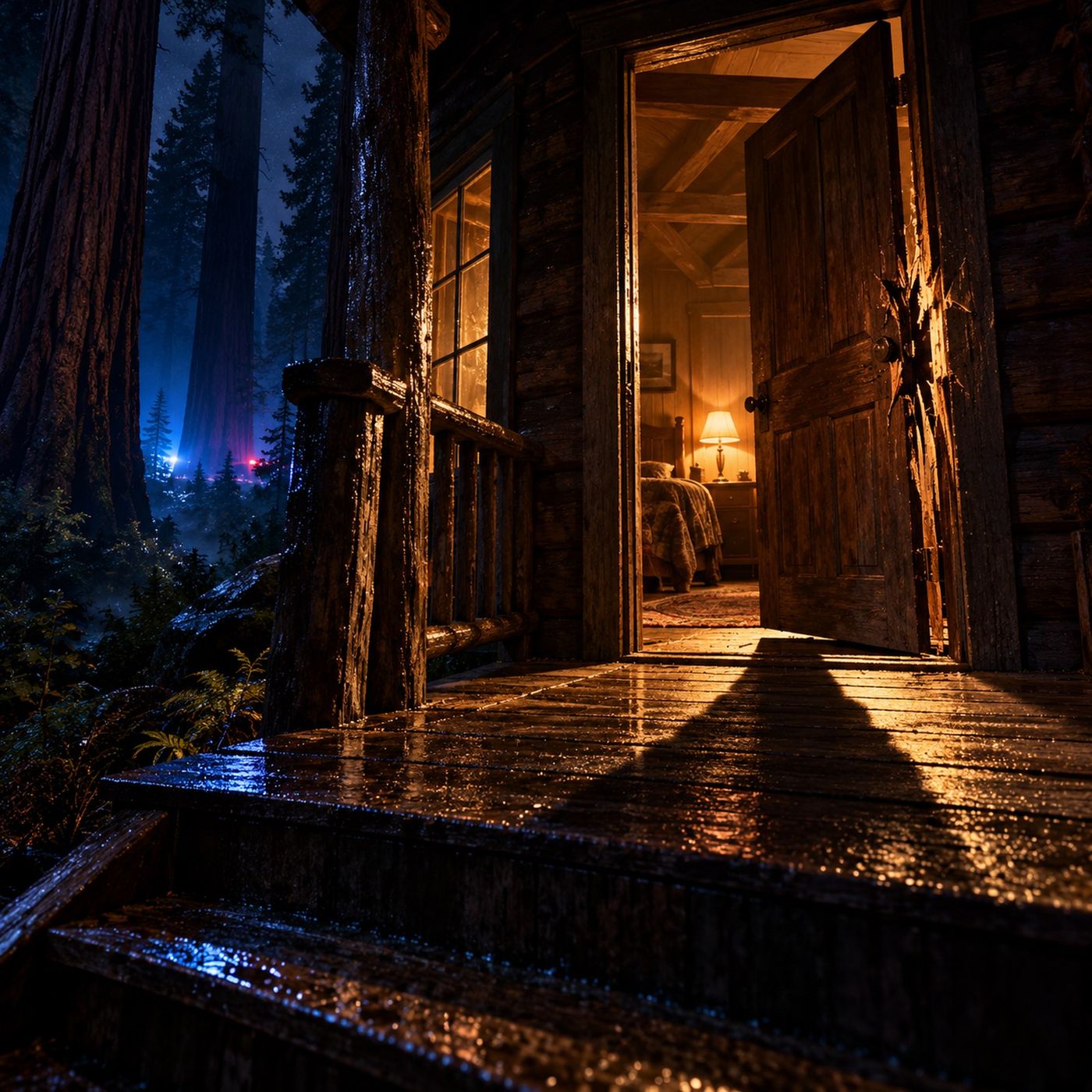
A remote mountain lodge in the Sierra Nevada. A busy wedding weekend. And a violent break-in after midnight that leaves one woman dead and a key witness barely alive.
On August 19, 1990, in Camp Nelson, California, Bonnie Hood (46) is shot and killed inside a cabin at Camp Nelson Lodge, a secluded retreat in Tulare County. Her handyman, Rudy Manuel, is shot in the head—but survives long enough to describe what he says happened. Investigators initially believe it’s a robbery… until the details don’t fit: nothing of value is taken, and the attack feels targeted.
The evidence leads prosecutors to Bruce (Edward) Beauchamp, and the case barrels toward trial. But when the jury returns a stunning verdict on March 29, 1991—not guilty on all charges—the investigation hits a legal wall. Under double jeopardy, Beauchamp can never be tried again for Bonnie Hood’s murder, no matter what new suspicions emerge.
And then the story turns again.
About a year later, on March 22, 1992, Beauchamp confronts Jim Hood, Bonnie’s husband. The encounter ends in gunfire—and this time the courtroom battle focuses on Jim Hood, not the man once accused of the original cabin murder. The trials that follow spiral into a web of motive, credibility, and forensics, culminating in a final verdict on December 9, 1993 that seals Jim Hood’s fate.
Inside this episode
- The Night of the Cabin Shooting: what happened at Camp Nelson Lodge and why it didn’t look like a typical robbery
- The Surviving Witness: Rudy Manuel’s account—and why it becomes so contested
- The Suspect & The Trial: how the case centers on Bruce Beauchamp… and what the jury ultimately decides
- Double Jeopardy: how one verdict can permanently lock a murder case
- The Second Shooting: the confrontation between Beauchamp and Jim Hood that ends with another homicide
- What’s Proven vs. What’s Alleged: separating courtroom facts from lingering theories
If you’re drawn to California true crime, unsolved murders, and cases where the justice system itself becomes part of the mystery, this one is a chilling ride through a crime that never truly got its ending. We’re telling that story tonight.
🎧 LISTEN NOW and subscribe for spine-tingling horror stories every week!
🎉 Unlock exclusive bonus episodes and support the show on Patreon!
👉 WeeklySpooky.com/Join
📬 Contact Us / Submit Your Horror Story!
- Twitter: @WeeklySpooky
- Facebook: facebook.com/WeeklySpooky
- Email: WeeklySpooky@gmail.com
🎵 Music by Ray Mattis 👉 Check out Ray’s incredible work here !
👨💼 Executive Producers: Rob Fields, Bobbletopia.com
🎥 Produced by: Daniel Wilder
🌐 Explore more terrifying tales at: WeeklySpooky.com
0:01 A cabin in the Sierra Nevada goes quiet after a party until footsteps hit the porch after three am. The door blows open, a gun flashes in the dark, and Bonnie Hood is dead with only one witness barely alive beside her. Police find clues, make an arrest, and head to court, but the verdict is only the beginning. What you are about to pet you is pot to be based on witness accounts, testimonies, and public record.
0:46 This is. Terrifying, and tonight. We have a case from California's Sierra Nevada. In Camp Nelson, a quiet lodge night ends with a cabin door forced open and gunfire in the dark. Bonnie Hood is killed in her bed. The man beside her shot in the head, yet survives. Investigators suspect a robbery until they find nothing was stolen. The evidence leads to Bruce Edward Bowchamp. The case goes to trial, The verdict not guilty and double jeopardy seals the file forever, but the story doesn't end with not guilty. One year later, the man closest to Bonnie, her husband, Jim Hood, comes face to face with Bowchamp.
1:58 What happens next sets off a second shooting and a second courtroom battle, this one driven by motive, fear and the question no jury can answer for the first crime? Did justice slip away into the darkness on a mountain road where no one was supposed to be watching? Who really got away with murder? August nineteenth, nineteen ninety The remote mountain hamlet of Camp Nelson, California, sleeps under a canopy made of towering pines in a rustic cabin at the Camp Nelson Lodge, a forty three acre retreat miles from the nearest city. Forty six year old Bonnie Hood lies in bed as the clock creaks past three am.
3:09 The night air is thin and still at nearly five thousand feet of elevation, broken only by the distant rush of a river and the whisper of wind through the sequoias. Inside Bonnie's cabin, the celebration of hours earlier has faded to an eerie quiet. That Saturday, the lodge hosted a lavish wedding party, and now Bonnie and her guest, Rudy Manuel, the lodge caretaker, have finally settled down to rest. Rudy is a trusted employee and much more He and Bonnie have grown close in recent months, sharing secrets under these isolated stars, though the world beyond these mountains has no idea. Suddenly, a noise cracks the silence. Footsteps on the cabin's wooden porch.
4:13 Bonnie and Rudy's stir hearts pounding. Before they can react, the cabin door crashes open. A figure looms in the doorway, a man roughly thirty, an unknown intruder. In the darkness, Bonnie can just make out the glint of a firearm raised toward them. The stranger's voice cuts through the cabin. He demands money, talking about cash from the wedding tips. Rudy, adrenaline surging, stammers that there is no money here. In a flash, the intruder opens fire. A gunshot explodes, and Rudy col lapses a bullet wound to his head. Bonnie screams, throwing herself backward on the bed. The gunman steps closer to her. She can see the outline of his face now, and hears him snarl words that chill her blood. I know you, bitch, he spits. The muzzle flashes, A point blank shot tears through bonnie hood, ending her life. As quickly as he came, the killer slips away into the mountainous night. Smoke and silence fill the cabin. Amid the bloodshed,
5:45 Rudy Manuel clings to life, barely conscious but alive, next to Bonnie's motionless body in the darkness of Camp Nelson. One horror has unfolded and another one is just beginning. Bonnie Hood had long dreamed of a life in the Sierra Nevada Woods. In nineteen eighty seven, when a historic mountain resort in Camp Nelson went up for sale, she and her husband, Jim seized the chance and bought it. Bonnie left the suburbs behind and moved to Tulare County to run the Camp Nelson Lodge, a rustic forty three acre property ringed by giant Sequoia trees. Jim stayed in Orange County with their two teenage children while Bonnie embraced the quiet rhythms of mountain life. Locals saw her trading designer outfits for boots and denham, even swapping her luxury car for a horse. As one account noted quote, Bonnie spoke of the joys of leaving behind behind her world of charge cards and trading her Mercedes for the simpler transportation of an Arabian steed. It was an idyllic escape, at least for a while. Jim Hood meanwhile remained in
7:17 Newport Beach. Wealthy, sociable, and seemingly content. The couple prospered. Jim's real estate holdings were thought to be worth millions, and the family's lifestyle reflected that. While Bonnie adjusted to rustic solitude, Jim moved in high powered circles back home. Known as a millionaire developer with a taste for adventure. By the late nineteen eighties, Jim was jetting off on thrill seeking trips, visiting the Amazon and running with the bulls at Pampalona. Then returning to Orange County's luxury and ocean views. He basked in the Orange County social scene, enjoying a glitzy lifestyle among the elite. In those years, the Hood's marriage evolved into an unorthodox arrangement. Two different lives split between two very different worlds. They made the distance look easy. Every day, Bonnie and Jim stayed connected by long phone calls and faxes between the mountains and the coast. They reunited on weekends, alternating between Newport Beaches comforts and Camp Nelson's cabins. In a glowing profile, the whole Hood family praised the unconventional set up. Bonnie could
8:50 chase her wilderness dreams, Jim could focus on his businesses, and the kids had both parents in different ways. The Hoods even claimed the separation brought them closer together. They installed six separate phone lines linking home to lodge and faxed schoolwork back and forth. Even the Hood children noted that the unusual living situation actually brought the family closer together. As observers saw it, theirs was a modern, unusual marriage that they all swore was working perfectly. Behind the scenes, however, cracks were forming. Running Camp Nelson Lodge was far more costly than expected. Instead of breaking even, the retreat began devouring cash. Prosecutors would later argue that Bonnie's dream project was a money pit, sucking hundreds of thousands of dollars from the family. Finances grew over money, and when Bonnie received a two hundred and fifty thousand dollars inheritance, Jim allegedly pressed her to sink it into the floundering lodge, and they bitterly quarreled over it. At the same time, Jim's own business empire was on shaky ground. He had
10:21 his fingers in so many pies that even though he claimed to be a multi millionaire, in fact he was in a precarious financial situation, one investigators later noted, And while Bonnie poured her energy into the lodge, she found affection with someone new. By mid nineteen ninety, Bonnie Hood was growing close to her handyman Rudy, a fact that would remain a secret from Jim, at least for a while. Investigators would later suggest that Bonnie was even contemplating divorce by that point. August eighteenth, nineteen ninety, the final day of Bonnie Hood's life was anything but quiet. Camp Nelson Lodge was buzzing with activity as Bonnie hosted a large weekend wedding. The cabins and bar were packed with celebrating guests.
11:25 Bonnie thrived in her element, playing gracious hostess amid the pine scented mountain air. As daylight gave way to dusk, the wedding party wound down with laughter and last calls at the lodge's bar. Locals later remembered one unfamiliar patron who lingered late, a lone man drinking Budweiser, conspicuous by his rough look and a missing tooth. By midnight, the newlyweds and their friends had departed, and Bonnie finally closed up for the night. The summer air in the Sierras turned cold, and still a long, hectic day was over, or so it seemed. One by one, the final cars departed down the twisting mountain road, leaving the lodge isolated in darkness once more. Meanwhile, back in Newport Beach, Jim Hood was unaware of any trouble brewing in the mountains that Saturday night. While Bonnie oversaw the festivities up north, Jim stayed over two hundred miles away at home. By midnight, he was likely asleep in his coastal suburban enclave. Assuming all was well, Jim had grown accustomed to Bonnie's lodge,
12:56 thriving under her care. He had no reason to expect a phone call in the middle of the night. In Jim's world, August eighteenth, nineteen ninety was just another pleasant summer evening. As he slept soundly in Orange County, the only monsters he knew were on the movie screen. Or in the pages of financial ledgers. The real threat was far from his mind and far up in the mountains. Back at Camp Nelson, the lodge settled into a deep silence after midnight. Inside Bonnie's cabin, a single lamp glowed as she and Rudy Manuel retired to bed. Outside, the remote resort was utterly dark, no street lights, no passing cars, only the endless forest pressing in. The partying crowd was gone, and even the crickets had grown quiet. In the chill Mountain air Camp Nelson was a community where violent crime was unheard of. Bonnie had little reason to fear intruders on her property. If she had any worries, she never showed them. Here in her beloved mountains, she was usually at ease, But on this night, something was off. Out
14:30 among the black silhouettes of the pine trees, an unseen presence was watching the lodge, waiting for the right moment to strike. Bonnie had no inkling whatsoever that her remote paradise was about to become the scene of a nightmare. A little after three a m a faint crunch of footsteps broke the silence outside Bonnie's cabin. In the darkness, A shadow moved across the porch. Floorboards creaked under the slow weight of someone approaching inside. Bonnie's eyes opened just as the doorknob began to turn. Her heart froze. In an instant, every comfort of her mountain refuge evaporated, replaced by raw fear. Without warning, the cabin door crashed open, kicked violently inward. The sudden blast of noise and motion jolted Bonnie and Rudy upright. A blinding flashlight beam swept across their faces as a dark figure lunged through the doorway, pointing a handgun directly at them with a finger on the trigger. Bonnie opened her mouth to scream. Dazed and bleeding.
16:03 Rudy Manuel managed to grab the phone by Bonnie's bed and dial for help. In a shaky voice. He gave the essentials, one person dead, one wounded. He also gave a critical clue before losing consciousness. The shooter was driving a red jeep. In the pre dawn hours, sirens finally pierced the quiet as first responders navigated the winding mountain road to Camp Nelson. Paramedics found Bonnie beyond saving, but Rudy was miraculously alive despite a gunshot to his head.
16:51 Sheriff's deputies secured the crime scene. A once peaceful cabin was now a sight of unimaginable violence, with broken glass and blood staining the pinewood floors. In the tiny community, residents awoke to the rare sound of emergency sirens echoing through the pines, something practically unheard of in those parts. Investigators from the Tulare County Sheriff's Office began piecing together what happened. Bonnie had been shot at close range in her own bed, and Rudy had taken a bullet to the head, yet nothing of value was taken from the cabin.
17:38 She had several hundred dollars in her purse and expensive jewelry in the room, but police said nothing was missing. That fact chilled detectives. This was no botched robbery. The intruder came to kill. Forensics teams were covered a thirty eight caliber bullet and noted footprints outside leading into the woods. The technicians also dusted for fingerprints, hopeful that the killer might have left a mark. Amid the chaos, deputies alerted neighboring counties to watch for any red jeeps speeding away on the mountain highways, but the killer had a head start in the wilderness. As the investigation deepened, one uncomfortable secret soon came to life. When Rudy Manuel regained the ability to speak, he confessed the truth. He and Bonnie had been lovers. The married handyman admitted their affair quietly to detectives, a fact he had hidden from Jim. This cast the crime in a very different light, a jealous rage, a love triangle gone wrong in the room, rumor mill of tiny camp Nelson scandal spread fast. Locals speculated in hushed tones about the other man in Bonnie's bed. For
19:12 a moment, even Rudy himself came under scrutiny. Was it possible he had staged the attack? Or could Bonnie's husband have learned of the affair and sought revenge. Nothing was off the table in those early hours, and fear and suspicion ran wild. In the immediate aftermath, only certain facts were clear. Bonnie was shot dead in her own bed at around three a m. Rudy Manuel was found seriously wounded but alive, supporting his account of an unknown intruder.
19:54 Physical evidence, including a shoe print outside and a latent fingerprint confirmed that a third party was indeed at the scene. Investigators found no sign of forced entry, but the cabin door itself was broken. In early suspicions that Rudy or a jealous third party staged the scene remained uncorroborated. Beyond Rudy's description of a fleeing red jeep, the killer's identity was entirely unknown at this stage. Meanwhile, James or Jim Hood raced to Camp Nelson as soon as he got word of the attack. Arriving amid the chaos, Jim was questioned by investigators on the morning of August nineteenth. Visibly distraught, he professed ignorance of any marital rift. Jim described his marriage as loving and solid, and insisted he had no idea about Bonnie's infidelity. He would maintain for years. He floated his own theory for the crime, perhaps someone Bonnie had angered, a disgruntled patron, or a neighbor with a grudge had come after her. Detectives noted Jim's input and kept it on file. Standard procedure or not, the widowed husband was always an important person of interest in any
21:26 murder case, and this was no exception. Within days, the investigation scored a breakthrough. A fingerprint lifted from a beer bottle at the lodge bar came back from the lab with a match. It belonged to thirty one year old Bruce Edward Bowchamp, a construction worker from Fontana, California. Detectives were stunned. Camp Nelson's mystery intruder wasn't a local at all. He lived hundreds of miles south in San Bernardino County. Digging deeper, investigators discovered a boot print at the crime scene that appeared to match Bowchamp's footwear. A receipt recovered from Bouchamp's residence showed he owned boots with souls identical to the tracks left outside Bonnie's cabin. Bouchamp's fingerprint was on file due to a prior run in with the law, which is how investigators identified him so quickly. On the strength of this evidence, authorities swiftly issued an arrest warrant for Bruce Bowchamp. He was arrested without incident and brought back to Tulare County for questioning. A tall, heavy set man with a biker like persona Bauchamp calmly denied any involvement in Bonnie Hood's murder. He admitted that he had
22:56 indeed been at Camp Nelson on the night of August eighteenth. He claimed he was simply there for some rest and relaxation, camping out in the area, but he swore that he never saw Bonnie that weekend. In fact, Beauchamp insisted he barely knew her at all. His story was that he left the lodge area and was already driving home to Fontana at the time of the shooting. Intriguingly, parts of his account meshed with what witnesses from the wedding party had told investigators. Still faced with the fingerprint and bootprint evidence, Beauchamp had no convincing explanation. He was promptly charged with Bonnie's murder and the attempted murder of Rudy Manuel prosecutors threw the book at Bouchamp. In addition to first degree murder and the attempted murder of Rudy, they charged him with attempted robbery and burglary, implying that Bonnie's killing occurred during a bungled theft. It was a theory of convenience.
24:08 By portraying the crime as a robbery gone wrong, authorities could seek the maximum penalties without hard evidence of premeditation. Beauchamp pleaded not guilty on all counts. The stage was set for a dramatic trial in Visalia, and Toulaire County officials announced they would consider pursuing the death penalty if he were convicted. Locals hoped justice for Bonnie Hood was at hand, but as the case headed to court in early nineteen ninety one, few could imagine the twists that lay ahead. But behind the scenes, detective stumbled on to an unsettling link. Bruce Beauchamp was no stranger to the Hood family. He had been an employee of Jim Hood's construction business. This revelation, which emerged as investigators dug into Beauchamp's background, raised the specter of a murder for higher plot.
25:16 Could Jim Hood himself have orchestrated Bonnie's killing by paying Beauchamp. It was an explosive question, but in nineteen ninety there was no proof to answer it. Jim Hood was never charged in connection with Bonnie's death. Officially, Jim remained simply the grieving widower to Lair County prosecutors chose not to introduce his connection at Beauchamp's upcoming trial, fearing it would prejudice the jury. Without solid evidence, for now, the case against Bruce Bowchamp would proceed on a straightforward premise that he acted alone. In January nineteen ninety one, people packed into the Visalia courtroom for the State of California Versus Bruce Bowchamp, Bonnie Hood's accused killer, went on trial amid high drama. The case had attracted national attention, and even court TV cameras were rolling to Lair County Prosecutors Melinda Red and David Whitney painted Bruce as a cold blooded intruder.
26:38 In opening arguments. They acknowledged Bonnie's complex personal life, even hinting that she'd considered divorce and had taken a lover, but argued that none of it excused what happened. According to the state, Bruce had tried to rob the lodge and ended up shooting Bonnie and Rudy. The defense, led by Attorney Charles Rothbaum, flatly denied this narrative and awaited the chance to challenge the prosecution's evidence. The prosecution's case hinged on Rudy Manuel's eye witness testimony. When the lodge caretaker took the stand, he pointed to Bruce Beauchamp as the man who shot Bonnie and himself. But under oath, Rudy stunned the courtroom by contradicting his own earlier statements. Nervously, he denied that he and Bonnie were having an affair, the very secret he'd confessed to when speaking to investigators.
27:44 This lie undermined his credibility completely. Jurors, now aware that Rudy had not told them the full truth, were skeptical of his entire account. In fact, jurors later admitted Manuell's backtracking destroyed his credibility. If he lied about the affair, what else might he be hiding. Bruce's attorney seized on the moment, implying that Rudy himself or someone connected to him could be the real culprit. Prosecutors could only watch in dismay as their case began to unravel. The state's key witness was suddenly a liability. With the prosecutions star witness compromised, the defense went on the offense. Attorney Charles Rothbaum floated alternative theories for the crime, anything to plant reasonable doubt. He suggested that Rudy Manuel himself could have been the killer, or that unknown drug dealers might have targeted Bonnie for reasons also unknown. The scattershots strategy aimed to confuse the jury. Deputy d A. Melinda Reid later slammed the defense case as a circus in truth. Apart from a finger print at the lodge and Rudy's now questionable word, there was little to definitively tie Bruce Bauchamp
29:20 to the crime. But in the jury room at least some members found that these outlandish ideas, combined with the weakness in the state's evidence, were enough to muddy the waters. The once strong narrative of an armed intruder was now riddled with doubt and contradictions. On March twenty ninth, nineteen ninety one, the verdict came down. After two days of deliberation, the jury found Bruce Bowchamp not guilty on all charges. He was acquitted not only of Bonnie Hood's murder, but also the attempted murder of Rudy and the alleged robbery and burglary Bruce broke into a relieved smile as the foreman read the decision. He had walked away a free man.
30:15 In the back of the courtroom, members of Bonnie's family wept in frustration. An accused killer had just been set free. For Toulaire County law enforcement, it was a devastating blow. The Bonnie Hood case was now back to square one, and a murderer was still out there. Under the law, Bruce could never be tried again for Bonnie's killing. Double jeopardy attached, and the case was left officially unsolved. Once Beauchamp was acquitted on March twenty ninth, nineteen ninety one, the constitution's double jeopardy rule barred prosecutor from trying him again for Bonnie Hood's murder, even if new evidence later emerged.
31:07 That legal finality shaped everything that followed. Investigators could keep digging, but the courtroom door on that charge was closed permanently. The acquittal sparked outrage and confusion. Prosecutor Melinda Reid condemned the defense's tactics and the jury's decision. Officials disclosed that they had been ready to seek the death penalty for Bruce, a request now rendered moot. Bonnie Hood's loved ones were left heartbroken with no one held accountable for her killing.
31:48 Investigators too, were frustrated a man they firmly believed to be the killer was now beyond the law's reach. Privately, some law enforcement began to turn a sharper eye toward Jim Hood. They had long had their suspicions about Jim. The Tulare County Sheriff's office had not forgotten the uncanny link between the suspect and the victim's husband. However, with no new evidence, the case went cold, officially unsolved. The case had already drawn interest from true crime writers and even a potential TV movie, only to end with no satisfying conclusion. This sensational saga was left with an uneasy ending, a mystery with no justice. Bruce Beauchamp's trial answered a few questions about why Bonnie hood was killed. Prosecutors had officially argued that the crime was a robbery gone wrong, even though no robbery had taken place. They implied personal motives like marital strife or revenge, without directly accusing any accomplice.
33:09 The defense, for its part, throughout unsubstantiated theories about drug dealers and frame ups to confuse the jury. In the end, no concrete motive was ever proven in court. Investigators suspected that financial gain related to Bonnie's life insurance payout or a contracted hit might be behind the scenes, but such ideas remained conjecture. The truth of why Bonnie was targeted died with her, leaving a void that the legal proceedings did not fill. If Bruce Beauchamp felt invincible after beating the murder rap, he didn't hide it. He boasted to friends that he had a story to sell. In fact, Bauchamp consulted a freelance writer about a book and asked a paralegal whether he could ever be retried. The answer, of course, was no. Double jeopardy protected him. Bruce seemed to relish his freedom, but those who knew him observed that he wasn't exactly going straight. He still hung out with a rough crowd and dabbled in illicit activities. For Jim Hood, watching from afar, the sight of his wife's accused killer walking free must have been infuriating and perhaps frightening.
34:42 The two men's fates were not done intersecting just yet. After the acquittal, Bruce Bochamp was entangled in trouble yet again, this time colliding directly with Jim Hood's business interests. Bruce's brother in law was caught in a sting, arrested for stealing valuable equipment from one of Jim's commercial properties. Investigators believed Bruce himself had a hand in the burglary scheme. Tensions escalated. According to later court testimony, Bruce left vaguely threatening phone messages for Jim and his business partner. He hinted that he could cause problems if they pressed charges or revealed what he knew. Jim Hood reported these threats to the authorities, but Bruce was not arrested. Still, the situation was volatile, a powder cake of bad blood and fear that was about to explode. A confrontation began to feel increasingly likely. On the afternoon of March twenty second, nineteen ninety two, about a year after the acquittal, Bruce Bauchamp decided to confront Jim Hood face to face. He telephoned Jim's office in Fontana and told the secretary he
36:12 was coming by. Jim agreed to meet him, perhaps hoping to finally diffuse the situation. Minutes later, Bruce arrived at the Mission Plaza shopping center that Jim owned, where Hood kept a private office. Bruce was overheard saying he just wanted to talk. Jim's secretary showed him in and closed the door behind them. Footsteps, door thudding shut. For a brief moment, there was silence inside Jim Hood's office. Then suddenly, gunshots echo. Moments after Bruce Bowchamp stepped into Jim Hood's office, gunfire erupted. Employees in the building jolted at the sound of multiple shots, a rapid pop pop pop pop pop echoing through the halls. Inside the office, thirty two year old Bruce Bowchamp lay dead on the floor. Jim Hoods stood over him, a smoking nine millimeter glock in hand.
37:36 Jim's version of events came immediately. He insisted that Bruce had stormed in and brandished a three point fifty seven magnum revolver, forcing Jim to shoot in self defense. Indeed, when police arrived, they found a revolver at Bruce's side, but the scene raised disturbing questions. Bruce had been shot seven times, including multiple wounds to his head and torso. Five of those bullets were fired after he was already on the ground, according to forensic pathologists. To investigators, the pattern of wounds raised the possibility of an execution rather than a split second gunfight. Investigators immediately suspected that Jim Hood had staged the shooting to look like self defense.
38:34 For one, Bruce's supposed weapon, the three fifty seven revolver, was found clutched in his right hand, yet Bruce was known to be left handed. Blood spatter analysis and gunshot residue told a grim story. Bruce's palms were coated with gunshot residue and his hand was splashed with blood, while the revolver itself had none. To detectives, it looked as if jim had placed the gun in Bruce's hand after killing him. As prosecutor David Whitney put it quote, the scientific evidence exposes Jim Hood for the shrewd murderer he is.
39:21 Jim Hood was arrested and charged with first degree murder. Authorities even added a special circumstances allegation of lying in wait, making him eligible for the death penalty if convicted. Jim Hood's first murder trial began in late nineteen ninety two. The case in San Bernardino County brimmed with forensic exhibits and drama. Prosecutors hammered on the evidence, the staged gun, the excessive number of shots in order to portray Jim as a calculating killer. The the fence maintained Jim's fear for his life was genuine, claiming Bruce was a violent man who had threatened Jim in the past. Jurors even watched dueling three D animations of the shooting presented by each side, high tech reenactments on a large screen monitor that illustrated two starkly different scenarios. After a forty one day proceeding, however, the panel was deadlocked. In March nineteen ninety three, a mistrial was declared. A frustrating hung Jerry Jim's attorney declared it a partial victory. Prosecutor Whitney warned quote, he dodged a bullet, and I'll aim better next time, vowing to retry hood out on a million dollar bond.
40:54 In the interim, Jim even tried to resume a normal life. He was spotted attending concerts and social events in Orange County while awaiting his retrial. In mid nineteen ninety three, Jim Hood was tried again, and this time the prosecution refined its attack. They leaned even more on the forensics and highlighted inconsistencies in Jim's own accounts. Jurors from the first trial were even called to testify how Jim's story changed between trials. The strategy paid off. Jurors never heard the unproven murder for higher allegations against Jim, the judge deemed them too prejudicial to introduce. On December ninth, nineteen ninety three, a San Bernardino jury found Jim Hood guilty of first degree murder. Hood showed no emotion as the verdict was read, but his fate was sealed. Quote. The evidence turned out to be overwhelming, one juror remarked afterwards.
42:06 Another said there was quote no other conclusion once they examined the facts. Notably, Jim's own testimony had shifted between trials. He initially claimed Bruce lifted his gun in a dying attempt to shoot him, but later revised it to say Bruce merely twitched his hand, a discrepancy that undermined his credibility. Jim Hood, once a respected millionaire businessman was now a convicted killer, facing life in prison. Throughout Jim Hood's legal saga, prosecutors and police suspected that Bonnie's murder was a contract killing arranged by Jim, But what was the proof. It never went beyond allegation. Bruce Beauchamp's widow, Sharon, did testify that Bruce showed her a stash of cash and claimed it was fifty thousand dollars payment from Jim Hood to kill Bonnie. That explosive claim has never been corroborated by physical evidence, no paper trail, no recorded conversations, no independent witnesses ever tied Jim to soliciting Bonnie's murder. In Jim's trials, judges deemed the murder for higher theory too prejudicial to present to jurors. To this day, Bonnie Hood's death remains
43:39 officially unsolved. No one has been legally proven to have ordered her killing. Jim Hood pursued appeals, but to no avail. In nineteen ninety seven, a California Court of Appeal reviewed his case and upheld the conviction. The evidence of guilt was deemed solid. The state Supreme Court declined to hear the matter. For Bonnie Hood's relatives, Jim's last legal gasp had failed. Their focus turned back to Bonnie's unsolved murder. There were talks of convening a new grand jury or finding fresh evidence against Jim, but nothing materialized. The years marched on and Bonnie's case grew colder. By the time Jim came up for parole, Bonnie had been gone for over a quarter of a century. Jim Hood was sentenced in early nineteen ninety four to twenty nine years to life in prison, a twenty seven to life term plus two years for the firearm enhancement. At age fifty, the once glamorous developer traded his suit for a prison uniform.
44:58 He served twenty three years behind bars before being paroled in twenty seventeen. As of today, Jim Hood is a free man in his eighties. He was never prosecuted for Bonnie Hood's murder, and the murder for higher plot remains an unproven theory. Camp Nelson Lodge, Bonnie's dream project, eventually sold off and faded into new ownership. Bonnie's absence still lingers in the quiet of those mountains in Camp Nelson. Older residence still speak of that violent night in hushed tones.
45:41 Unable to forget, Bonnie's story has become part of local legend, a cautionary tale of greed and betrayal beneath the tall pines. More than three decades later, the question of who truly ordered her killing remains an open wound, a twisted saga with secrets that may never fully come to light. Terrifying and True is narrated by Enrique Kuto. It's executive produced by Rob Fields and bobble Topia dot com and produced by Dan Wilder, with original theme music by Ray Mattis.
46:23 If you have a story you think we should cover on Terrifying and True, send us an email at Weekly Spooky at gmail dot com, and if you want to support us for as little as one dollar a month, go to Weeklyspooky dot com slash Join. Your support for as little as one dollar a month keeps the show going. And speaking of I want to say an extra special thank you to our Patreon podcast boosters, folks who pay a little bit more to hear their name at the end of the show, and they are Johnny Nix, Kate and Lulu, Jessica Fuller, Mike Escuey, Jenny Green, Amber Hansford, Karenwemet, Jack Ker, and Craig Cohen. Thank you all so much, and thank you for listening. I'll see you all right here next time. On Terrifying and True
