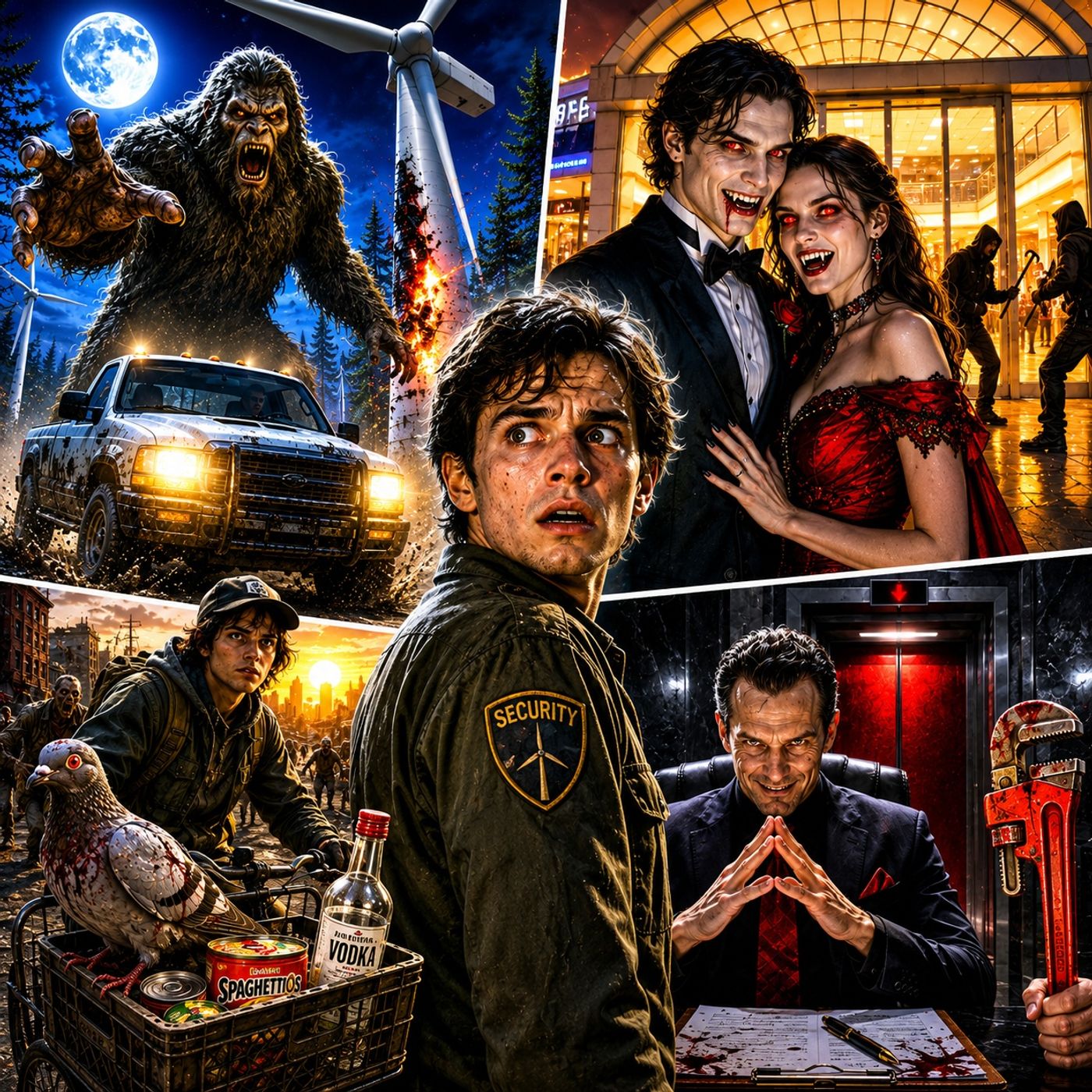
Why Wind Farm Night Watchman Jobs Are the New Frontier of Cryptid Horror
Remote wind farms offer the ultimate combination of industrial isolation and pristine wilderness, creating a terrifying new subgenre of occupational hazard. When security guards accept overnight watch positions in these sprawling complexes, they often find themselves hunted across dark access roads by violent, territorial Sasquatch populations that view green energy infrastructure as an intrusion into their domain.
Key Takeaways
- Remote wind farms built over dense forests combine industrial isolation with prime cryptid territory, creating high-risk environments for night watchmen.
- Management often withholds critical safety information, such as previous turbine destruction and aggressive Sasquatch activity, to fill undesirable shifts.
- Sudden forest silence and localized wildlife abandonment serve as reliable biological warning signs of an impending cryptid confrontation.
- High-speed vehicle chases on rugged gravel roads test the survival limits of security personnel attempting to outrun territorial apex predators.
The Evolution of Occupational Cryptid Horror
For decades, traditional horror tropes placed victims in abandoned cabins, deep caves, or foggy rural campsites. However, contemporary storytelling has shifted toward the mundane horrors of modern employment mixed with the unknown wilds. Night watchman narratives tap into a universal anxiety: the feeling of being trapped in an isolated workplace with zero support when things go terribly wrong. When you add heavy machinery, four-hundred-foot wind turbines, and miles of unpaved forest access roads, the workplace transforms into a gauntlet of survival.
Unlike urban security gigs where the primary threat is human trespassers or petty thieves, a wind farm night watchman is stepping onto territory claimed by something entirely outside human understanding. The juxtaposition of high-tech renewable energy generation with ancient, primeval woodland creatures creates a stark narrative tension that resonates deeply with modern horror enthusiasts.
Red Flags in Industrial Security Hiring
The recruitment process for these remote industrial postings usually features glaring red flags that desperate applicants overlook out of financial necessity. When a hiring manager bypasses formal interviews, extends immediate employment offers, and dangles a hefty signing bonus for a night shift, alarm bells should ring.
The Omission of Facility Damage
In the case of Larsen Energy Limited, the newly hired watchman discovers a missing wind turbine during his very first shift. Instead of a standing structure, he finds a scorched concrete base surrounded by melted metal and heavy burn marks. Management's complete failure to mention a destroyed multi-million-dollar turbine highlights the deceit inherent in filling these dangerous positions. Workers are treated as expendable fodder to monitor automated assets while corporations sweep catastrophic cryptid attacks under the rug.
The Unspoken Rules of the Night Shift
Experienced night guards know that silence from superiors is never a good sign. When daytime personnel exchange nervous glances, hand over cryptic phone numbers, and lock the gates behind them with an air of finality, they are passing the torch of survival. The absence of a physical on-site office after hours forces the night watchman to rely solely on a company truck, a portable flashlight, and their own instincts when something steps out of the tree line.
Biological Indicators of a Sasquatch Territory
Surviving a night shift in Bigfoot territory requires an acute awareness of environmental shifts. Nature provides distinct biological warnings before an apex predator makes its presence known.
The most immediate and terrifying indicator is the sudden cessation of ambient forest noise. When crickets, owls, frogs, and songbirds abruptly fall silent, it signals that every creature in the vicinity is freezing in fear. This unnatural quiet acts as a localized vacuum, preparing the senses for a violent encounter.
Furthermore, olfactory cues play a major role. As the night deepens and temperatures drop, the comforting scent of pine needles is often overtaken by a suffocating tinge of fear and dense animal musk. When a seven-foot, fur-covered entity breaks cover and begins pursuing a moving vehicle at thirty-five miles per hour, the psychological impact of these environmental warnings becomes starkly clear.
Conclusion
Working the night shift at a remote wind farm is not merely a test of endurance against boredom; it is a high-stakes gamble with cryptozoological forces that refuse to share their forests with industrial progress. For those fascinated by tales of solitary guards pushed to their limits by aggressive Sasquatch attacks, exploring these niche horror scenarios offers a thrilling look at what lurks just beyond the reach of our security lights.
To hear this complete terrifying encounter along with three other chilling stories featuring vampires, zombies, and demonic employment, make sure to Listen to the full episode. Subscribe to Weekly Spooky every Wednesday for your weekly fix of terror tales.
Frequently Asked Questions
Why are wind farms common settings for cryptid horror stories?
Wind farms are typically located in remote, heavily forested regions with vast tracts of undisturbed wilderness. This isolation, combined with massive industrial machinery and reduced human presence at night, makes them ideal hunting grounds for territorial cryptids like Bigfoot.
What are the warning signs of a Bigfoot encounter on a night shift?
Key warning signs include a sudden and unnatural cessation of forest noises, such as insects and birds stopping their calls simultaneously, an oppressive drop in ambient temperature, and the overwhelming scent of fear or musk in the air.
Can a vehicle outrun a Sasquatch during a security patrol?
While standard company pickup trucks can reach high speeds, rough terrain, potholes, and poor visibility can severely hamper escape efforts. Sasquatts possess incredible stamina and burst speed, making vehicle chases extremely dangerous for night watchmen.
Why do fictional employers hide supernatural dangers from night watchmen?
In horror fiction, management hides dangers like burned-out turbines and aggressive cryptids because the remote shifts are notoriously difficult to staff. Offering signing bonuses and omitting hazard details helps trap desperate applicants into perilous contracts.