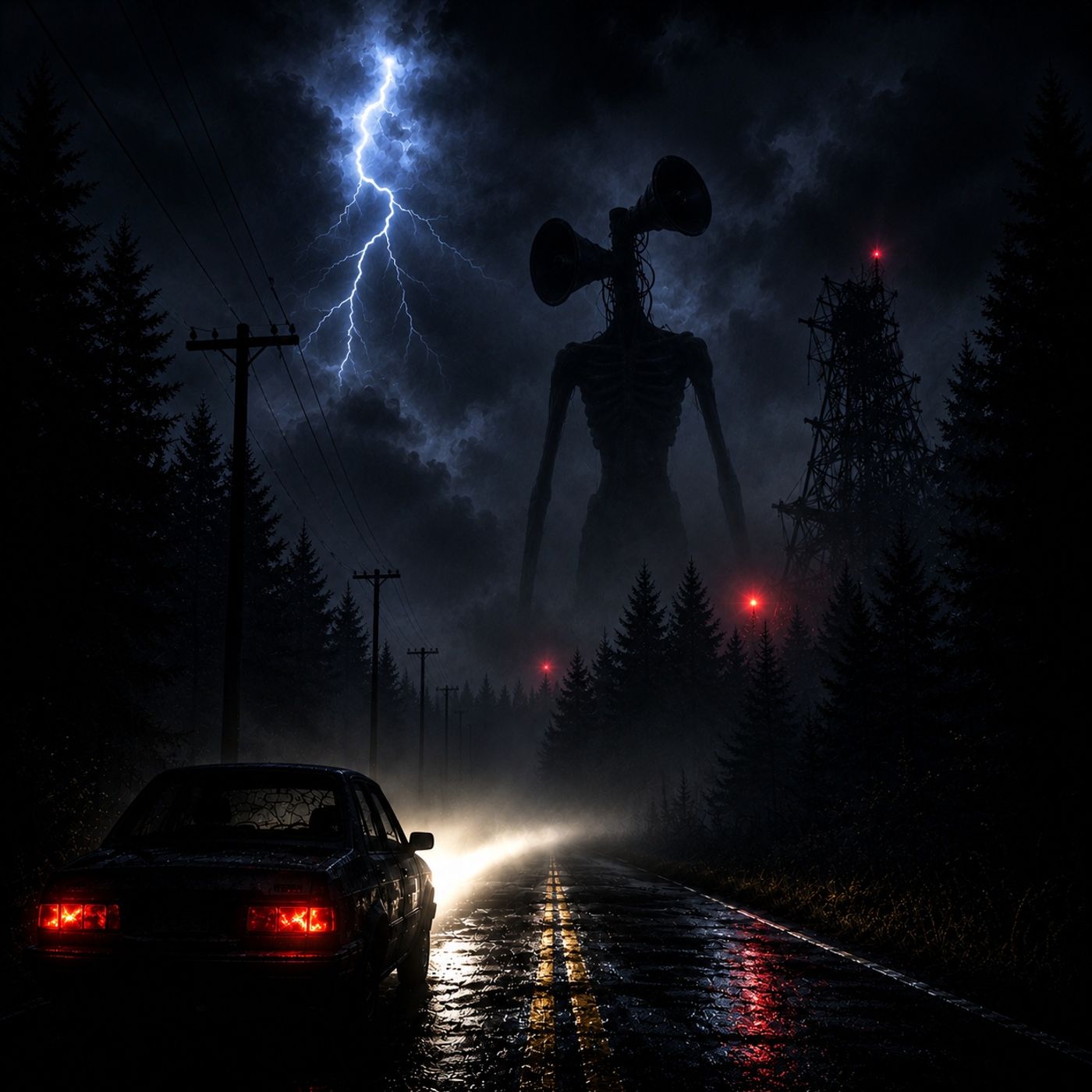
Siren Head's Twisted Mimicry: How a Modern Myth Exploits Our Trust in Warnings
This post dives deep into how Siren Head’s unique horror stems from its ability to twist familiar warning sounds and voices into traps. We’ll explore the psychology behind why we trust these alerts and how the creature weaponizes that trust.
Key Takeaways
- Siren Head’s terror isn't just its appearance, but its manipulation of sounds designed for safety and guidance.
- The creature weaponizes our ingrained trust in emergency sirens, weather alerts, and even familiar voices.
- Its ability to mimic distress calls or authoritative warnings exploits our instinct to help or obey.
- Modern folklore like Siren Head thrives on the ambiguity of digital communication and distorted signals.
- The fear comes from a trusted system turning into a predator, making the familiar dangerously alien.
The Uncanny Sound of Danger
Siren Head, the unsettling forty-foot entity with sirens for a head, has become a potent symbol of modern horror. While its imposing, skeletal form is undeniably frightening, the true genius of the legend lies not in what it looks like, but in what it *sounds* like. The core of Siren Head’s terror is its twisted mimicry, its ability to transform sounds that are universally understood as signals of safety, warning, or guidance into instruments of dread and death. We are conditioned from childhood to react to sirens. A distant wail means danger is present, and our instincts scream at us to pay attention, to seek shelter, or to get out of the way. Siren Head doesn’t just make a loud noise; it co-opts our survival mechanisms.
Think about the common sounds associated with emergencies: the piercing shriek of a tornado siren, the urgent blare of an ambulance, the steady drone of an air raid alert, or even the jarring tone of an Emergency Alert System broadcast. Each carries a specific weight, a psychological imperative. Siren Head weaponizes this ingrained trust. It’s not just a creature lurking in the dark; it’s a corruption of the very systems designed to protect us. This parasitic relationship with our sense of security is what makes Siren Head’s terror so uniquely modern and deeply unsettling.
Weaponizing Our Instinct to Listen
The effectiveness of Siren Head stems from its ability to exploit our innate, almost primal, response to specific auditory cues. When we hear a siren, our brains are wired to process it as a signal from an authoritative source, indicating something that requires immediate attention. This conditioning is not just learned; it's deeply embedded, a byproduct of societal structures built around public safety. Siren Head takes this trusted authority and twists it into a predatory lure.
The transcript of the 'Thursday Thrills' episode perfectly captures this when it states, "A siren is not just a noise, it's an authority, its instruction. It's the voice of the world saying pay attention. Danger is here." Siren Head embodies the nightmare scenario where this voice is not a warning *from* danger, but the voice *of* the danger itself. It can mimic the distinct tones of emergency broadcasts, transforming a comforting notification that prompts us to seek shelter into a call that lures us into a trap. This is particularly chilling when considering the various forms Siren Head’s mimicry can take in fan lore and stories, extending beyond mere sirens to encompass distorted radio broadcasts, static-laden news reports, or even familiar melodies warped into something sinister.
The Lure of Familiar Voices
Beyond generic siren sounds, Siren Head’s more terrifying iterations involve the mimicry of human voices. The legend often includes scenarios where the creature uses the voice of a loved one, a lost friend, a crying child, or even an authoritative figure to draw victims closer. This is where the horror escalates from a primal fear of the unknown to a deeply personal and psychological dread.
“A voice can make you choose wrong. It can make you leave the porch, make you step off the path. A voice can make you say, wait, did you hear that? Somebody is out there?” This psychological manipulation is a far more insidious threat than brute force. We are naturally inclined to respond to calls for help or familiar voices, especially in isolated or dangerous environments. Siren Head exploits this empathy and our innate desire to connect or assist. The idea that a monstrous entity can perfectly replicate the sound of a parent calling their child, or a friend in distress, plays on our deepest vulnerabilities. It transforms a trusted auditory landscape into a minefield, where every sound could be a calculated deception.
Analog Horror and Digital Distortions
Siren Head’s resonance with the concept of analog horror is profound. Analog horror often thrives on the unsettling nature of older, degraded media—static-filled broadcasts, VHS tape glitches, and the eerie emptiness of abandoned infrastructure. Siren Head, with its siren-like head that evokes old emergency warning systems and its presence in desolate rural landscapes or decaying industrial sites, taps directly into this aesthetic.
The creature embodies the anxieties of a world saturated with both outdated technology and emerging digital oddities. It feels like a relic from a Cold War-era public safety announcement gone terribly wrong, yet it flourishes in the hyper-digital realm of TikTok, YouTube shorts, and indie horror games. This juxtaposition is key to its modern appeal. Siren Head exists in the liminal space between the tangible world of imposing, physical structures (like an actual siren tower) and the intangible, often distorted, digital world. The legend is often spread through glitchy videos, blurry photos, and short, looped audio clips—formats that mirror the very distorted broadcasts Siren Head is associated with.
The Internet as a Breeding Ground
The creation and proliferation of Siren Head perfectly illustrate how modern folklore evolves. Unlike traditional myths that emerge organically over centuries, Siren Head has a clear origin: the 2018 artwork by Trevor Henderson. However, the internet has transformed this single image into a global phenomenon. Platforms like TikTok and YouTube have become the modern equivalent of campfires around which stories are told and retold.
“Sometimes folklore doesn't need to be ancient... Sometimes folklore starts as a picture online, and then the Internet does what the Internet does best. It looks at the thing, gets scared by the thing, laughs at the thing, remixes the thing, tells a story about the thing, and then tells that story so many times that the monster starts to feel like it was always there.” This process of remixing, reinterpretation, and mass dissemination is what gives Siren Head its power. Each new story, animation, or game adds layers to the legend, often emphasizing its manipulative auditory tactics, further solidifying its place in contemporary horror. The sheer volume of content means that audiences are exposed to Siren Head in various forms, each reinforcing the core concept of a sound-based, deceptive entity.
Siren Head: The Perfect Modern Monster
Ultimately, Siren Head’s enduring appeal lies in its masterful integration of psychological horror, modern technological anxieties, and a primal fear of the unknown. It’s a creature born from the digital age, yet it taps into the ancient fear of things that lure us into danger with deceptive sounds. Its ability to corrupt trusted signals—from emergency sirens to familiar voices—makes it a uniquely potent antagonist.
The legend thrives in the ambiguity of our modern world, where false alarms, distorted transmissions, and fake news are commonplace. Siren Head is the personification of these anxieties, a reminder that even the systems designed to protect us can become sources of terror. It doesn't need elaborate backstories or detailed explanations; its power lies in suggestion, in the half-glimpsed shape and the chilling, distorted sound that makes us question whether the warning is for our safety, or a siren's call to doom.
If you found the exploration of Siren Head's unique horror and its manipulation of auditory warnings as chilling as we do, you'll love the full discussion on the podcast. Listen to the full episode for a deeper dive into this modern cryptid and other tales of terror.
Frequently Asked Questions
How does Siren Head use sound to scare people?
Siren Head's primary method of terrifying people is by mimicking sounds that are associated with safety and authority, such as emergency sirens or authoritative voices, and using them to lure victims into dangerous situations or to instill dread.
Why is Siren Head's voice mimicry so effective?
Voice mimicry is effective because it preys on our natural human instinct to respond to familiar voices and calls for help, exploiting our empathy and trust to draw us into danger.
How is Siren Head linked to analog horror?
Siren Head embodies analog horror by drawing on the unsettling nature of old technology, distorted broadcasts, and decaying infrastructure, making it feel like a relic of a past era corrupted by modern anxieties.
Does Siren Head actually use sirens as weapons?
In the lore, Siren Head uses the sounds of sirens and distorted broadcasts not as physical weapons, but as psychological tools to confuse, lure, and terrorize its victims.
Why is Siren Head considered a modern folklore icon?
Siren Head is a modern folklore icon because it originated online and has been collectively built upon by a global community through various forms of media, demonstrating how new myths can emerge and evolve rapidly in the digital age.