

 Apple Podcasts

 Spotify

 Spreaker

 Audible

 Castro

 RSS Feed

 iHeartRadio
Terrifying & True | The Murder of Katarzyna Zowada: Krakow's Darkest Unsolved Murder
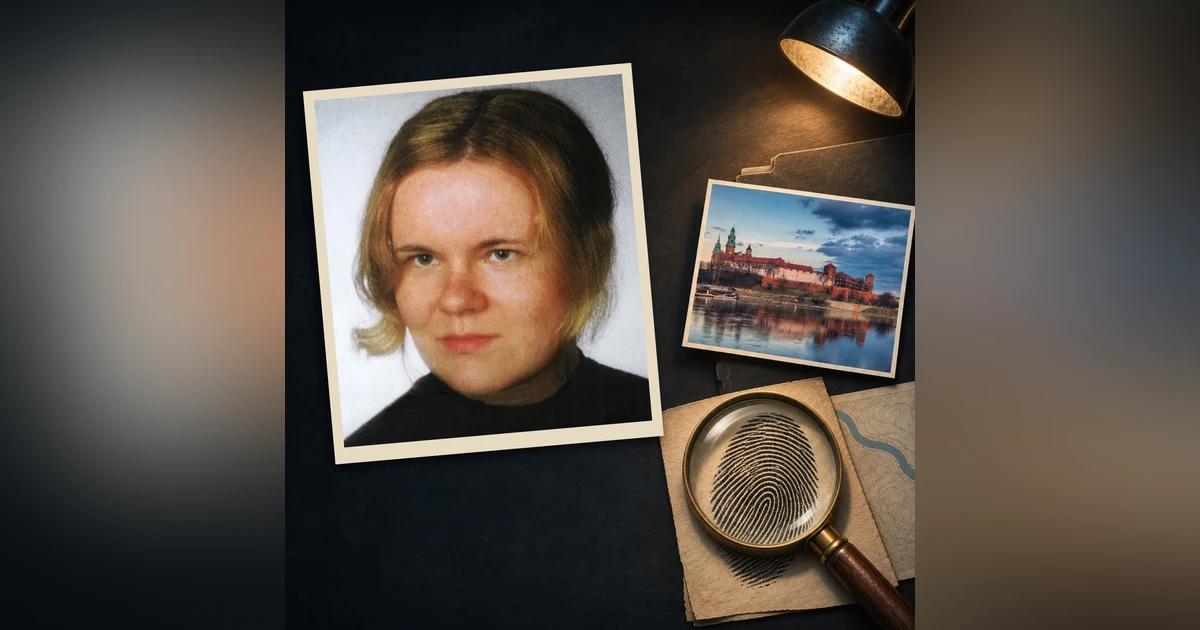
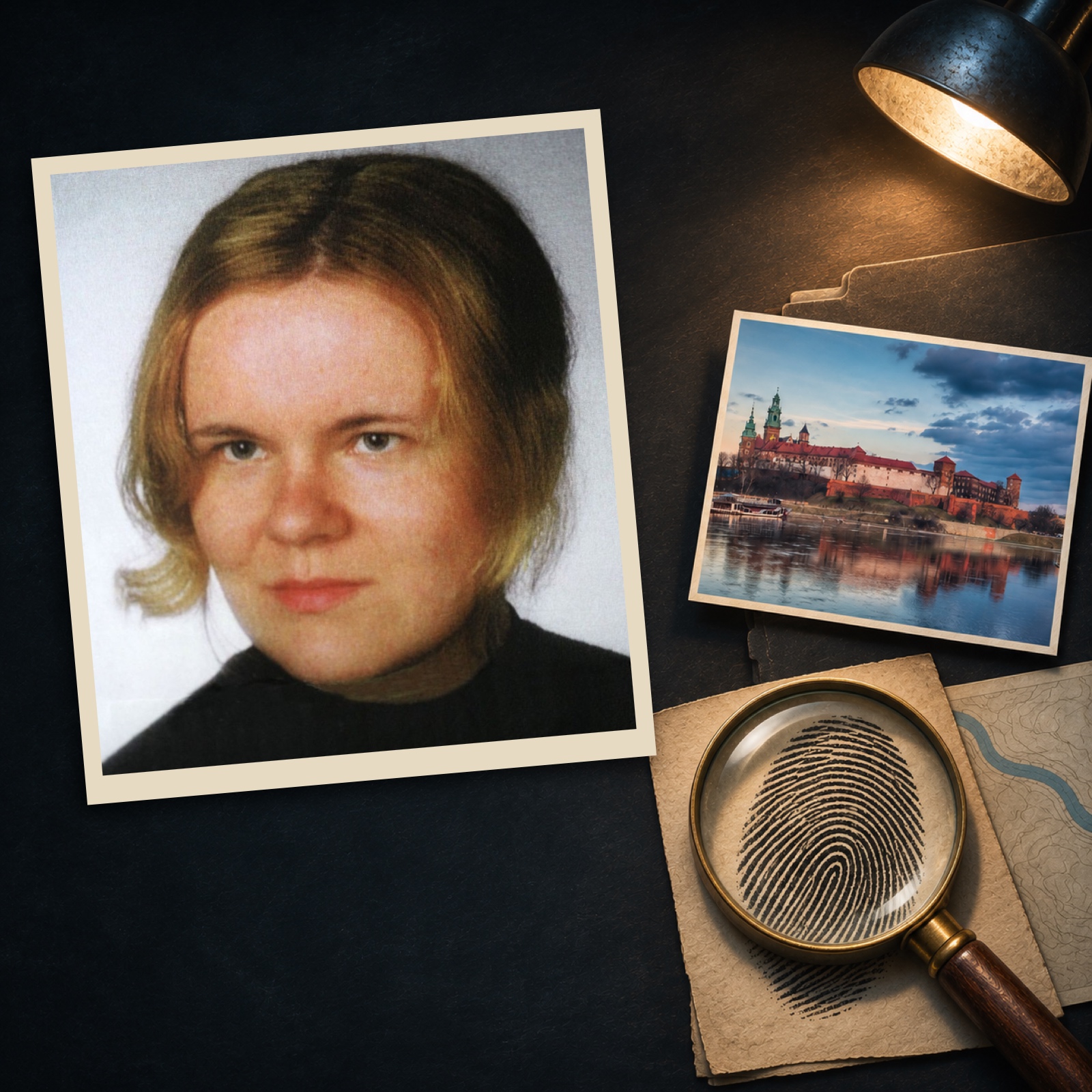
Key Takeaways
- Katarzyna Zowada's 1998 disappearance in Krakow escalated into a notorious unsolved murder case after the discovery of her remains in the Vistula River.
- The case presents a chilling forensic mystery involving the deliberate removal of skin, raising questions about the killer's motives and expertise.
- Extensive cold case efforts, including DNA testing and exhumations, have been employed to solve the Katarzyna Zowada murder, yet the killer remains at large.
- Despite the arrest, conviction, and subsequent acquittal of a suspect, the Katarzyna Zowada murder remains legally unresolved, highlighting the complexities of justice and proof.
- The episode emphasizes Katarzyna's humanity and explores the enduring grief that persists when a crime lacks a definitive legal conclusion.
On November 12, 1998, twenty-three-year-old Katarzyna Zowada vanished in Krakow, Poland—a disappearance that would transform into one of modern horror history's most disturbing cases. Weeks later, a discovery on the Vistula River revealed forensic horror and unanswered questions that still haunt the city. Join Henrique as we explore the gaps, the inexplicable details, and the paranormal mystery behind one of Poland's most chilling unsolved murders.
Inside this episode:
• The disappearance of Katarzyna Zowada and the warning signs that were not treated urgently enough.
• The horrifying Vistula River discovery that transformed a missing-person case into one of Poland’s most infamous murders.
• The forensic mystery surrounding the deliberate removal of skin and the questions it raised about the killer’s knowledge, motive, and control.
• The long cold case investigation, including Poland’s Archiwum X, DNA testing, exhumation, 3D modeling, and renewed river searches.
• The arrest, conviction, appeal, and 2024 acquittal of Robert J., and why the case remains legally unresolved.
• The human story beneath the horror — Katarzyna as a daughter, student, and young woman whose identity should never be swallowed by the brutality of what was done to her.
This is not just a story about one of Europe’s most shocking true crime cases. It is a story about how grief lingers when the legal system cannot give a final answer. It is about the danger of confusing suspicion with proof. And it is about a river that gave back part of the truth — but not the killer’s name.
Katarzyna Zowada disappeared in 1998. Her remains surfaced in the Vistula in 1999. More than twenty-five years later, her murder is still waiting for justice.
We’re telling that story tonight.
🎧 LISTEN NOW and subscribe for spine-tingling horror stories every week!
🎉 Unlock exclusive bonus episodes and support the show on Patreon!
👉 WeeklySpooky.com/Join
📬 Contact Us / Submit Your Horror Story!
- Twitter: @WeeklySpooky
- Facebook: facebook.com/WeeklySpooky
- Email: WeeklySpooky@gmail.com
🎵 Music by Ray Mattis 👉 Check out Ray’s incredible work here !
👨💼 Executive Producers: Rob Fields, Bobbletopia.com
🎥 Produced by: Daniel Wilder
🌐 Explore more terrifying tales at: WeeklySpooky.com
Frequently Asked Questions
What happened to Katarzyna Zowada in Krakow?
Katarzyna Zowada, a 23-year-old, disappeared in Krakow, Poland, on November 12, 1998. Her disappearance eventually led to the discovery of her remains, transforming the case into one of Poland's most disturbing unsolved murders.
What was discovered in the Vistula River related to the Katarzyna Zowada case?
Weeks after Katarzyna Zowada went missing, her remains were found in the Vistula River. This discovery revealed horrifying forensic details and unanswered questions that continue to haunt the case.
What makes the forensic details of the Katarzyna Zowada murder so mysterious?
The investigation into the Katarzyna Zowada murder is marked by the deliberate removal of skin from her remains, suggesting a killer with specific knowledge, motive, and a high degree of control, adding a disturbing layer to the crime.
What were the key investigation efforts in the Katarzyna Zowada cold case?
Efforts to solve the Katarzyna Zowada murder have included Poland's Archiwum X (cold case unit), DNA testing, exhumation of remains, 3D modeling, and renewed searches of the Vistula River.
Who was Robert J. in the Katarzyna Zowada murder case and why was he acquitted?
Robert J. was arrested and convicted for the murder of Katarzyna Zowada. However, following an appeal, he was acquitted in 2024, leaving the case legally unresolved and highlighting the difficulty in proving guilt beyond reasonable doubt.
Why is the Katarzyna Zowada murder considered unresolved?
Despite extensive investigations and legal proceedings, including an arrest and conviction that was later overturned by an acquittal, the perpetrator of the Katarzyna Zowada murder has not been definitively identified or convicted, leaving the case legally unresolved.
How does grief linger in unsolved cases like Katarzyna Zowada's?
Grief lingers because the legal system cannot provide a final answer or closure to the victim's family and friends. The lack of a confirmed killer means Katarzyna's identity can be overshadowed by the brutality of her death, and justice remains elusive.
0:01 A young woman vanishes in crackout. Weeks later, the Vistula River gives investigators something almost impossible to believe, not a body or a confession, but human skin. For over twenty five years, Katazina Zavada's murder has haunted Poland because, even after an arrest, a conviction, and an appeal, the final question remains, who did this to her? What you were about to bet ispur to be based on witness accounts, testimonies and public record. This is terrifying and true.
0:58 On a winter day in crackout Poland, the Vistula River carried a secret back to the city. It began as a disappearance. A twenty three year old student named Katazina Zovada failed to meet her mother and vanished into the ordinary movement of the city. For weeks, there were no answers. Then, in January of nineteen ninety nine, river workers discovered something caught near a boat's propeller, something so disturbing that the case would become one of the most infamous in Polish criminal history. Investigators would follow the evidence through DNA testing, forensic reconstruction, cold case files, and a suspect who seemed to bring the mystery closer to an ending, but years later that ending would fall apart. Tonight we examine the disappearance, the evidence, the courtroom twists, and the terrible uncertainty that still surrounds the murder of Katazina Zovada. Because sometimes the most haunting mysteries are not the ones with no suspect, They're the ones where the answer refuses to stay buried.
2:27 We're telling that story tonight, so make sure you're subscribed on your podcast app. We bring a brand new, terrifying and true every Monday, January sixth, nineteen ninety nine. Krackow is wearing winter like a funeral coat. The sky is low, the Vistula River moves through the city with cold patients.
3:10 Like a witness. Near the Dambier barrage, a river worker aboard a pusher tug begins dealing with something caught in the propeller. At first, it could be anything river trash, cloth, a sack, some pale, heavy thing pulled from the water. Then the ordinary explanations peel away. It isn't fabric it isn't animal hide, it's not a grotesque trick of ice and grease. It is human skin, not a scrap, a large piece removed with deliberate cuts, shaped in a way investigators would later say suggested preparation like a garment. The discovery changes the air before anyone even knows the victim's name.
4:18 Soon DNA testing identifies the remains. Katazina Zovada twenty three years old, a student in Krakau, missing since November twelfth, nineteen ninety eight, after she failed to meet her mother for an appointment at a psychiatric clinic in Nova Juta. She had struggled with depression after her father's death, drifted through studies and moved quietly through a city that should have been full of possibility. For weeks, she had been a missing person. Now she is evidence in one of the most disturbing homicide cases in modern Polish history. Eight days later, more of her remains are recovered from the Vistula, but most of her body is never found. The river keeps its secrets, and Krakow begins whispering. Because this is not only a murder, it is ritualistic in appearance, controlled in execution, and almost too grotesque to describe without sounding like a folk story. A killer has not merely taken Katazina's life. He's transformed her body into a message no
5:51 one can fully read. For nearly two decades, investigators will chase shadows through la voratories, cold case files, psychological profiles, river searches, and one suspect whose name rises again and again. But even after an arrest, even after a conviction, the story manages to twist one final time, because in twenty twenty four, the man accused of murdering Katazina Zovada is acquitted on appeal, leaving Krakow with the same terrible question the river asked in nineteen ninety nine, who did this to her? Katazina Zovada was born on June one, nineteen seventy five. By the late nineteen nineties, she was living around Krakow, one of Poland's oldest and most beautiful cities, medieval stones, church bells, university courtyards, and under it all a present that always seems haunted by history. Katazina, often called Kaja, was twenty three. She had studied at Yagewonian University and was remembered in later reports as quiet, kind,
7:25 withdrawn and sad. She had changed academic paths more than once, moving through psychology, history and religious studies searching for the door that felt right. Her father had died in nineteen ninety six. After that, Katazina struggled with depression and was receiving psychiatric care. This element is important but needs to be handled carefully. Depression did not kill her, vulnerability did not make her responsible for what happened, but it did shape how others interpreted her disappearance, and that early interpretation may have cost precious time. On November twelfth, nineteen ninety eight, Katazena was supposed to meet her mother at a psychiatric clinic in Nova Juda, the planned socialist district east of central Krakow. Nova Juta has an atmosphere made for a ghost story, wide avenues, monumental blocks, industrial memory. Katazena never arrived.
8:44 Her mother knew something was wrong, and that is one of the oldest alarms in the world, apparent realizing the silence is different. Not late, not distracted or cares, but different. According to retrospective reporting, when Katazina's mother first tried to report her missing, she was initially told to wait. Adults with mental health struggles are often assumed to have left voluntarily. Perhaps she needed space, maybe she would come back. Maybe It wasn't urgent yet, but November became December. Krackow moved toward winter streets filled with cold rain, holiday lights, markets, church services, and errands. Somewhere inside all that ordinary life, Katazina was gone. There was no ransom note, no public confrontation, no obvious scenes screaming where the horror began. That is one of the chilling features of this case. The place where Katazina was taken and killed has never been publicly established with certainty. But we know the ending surfaced in
10:16 the river. We don't truly know details from before that. That blank space is where imagination tends to rush in a stairwell or a basement, an apartment or a workshop, ordinary enough to hide in the city, private enough to become a chamber of nightmares. In the official record, much of that middle remains murky. Then came January sixth, nineteen ninety nine. The crew of a river vessel described an official Polish police material as a pusher type boat, discovered the human skin in the vistula. At first, investigators considered whether the propeller had caused the damage. Rivers and machinery can mutilate bodies in terrible ways. But the closer experts looked, the less that explanation held. The cuts were deliberate. The skin had been removed from the torso this was not the river, this was a person. Eight days later, on January fourteenth, divers recovered Katazina's right leg from the river near the Dambie water step. Searchers combed the vistula, but
11:49 the rest of her remains were never recovered. Police asked other units along the river whether remains had surfaced elsewhere. Nothing resolved the awful absence. The identification came through DNA testing. The Polish Police archive later noted that the genetic tests were among the earlier DNA tests conducted for Polish police investigations. The case arrived at a hinge moment between older investigative methods and the future of forensics. Krakow had a murder case unlike anything investigators had seen. The killer had not only murdered a young woman, he had performed post mortem mutilation with a level of control that suggested not only knowledge and patience, but a mind drawn to the body as an object. Later experts considered whether the perpetrator had anatomical education, section experience, or specialized familiarity with cutting flesh and preserving skin, and that is where the case can become dangerous for storytellers. The phrase that clings to it, the skin case, sounds like horror marketing. But before it
13:23 became a phrase, it was a woman, Katazina Zovada. She had a mother, grief, studies, appointments, and a life that should not be reduced to evidence. Still, the evidence was monstrous, and monsters create legends. Was the killer a surgeon, a butcher, a taxidermist, a sadist, someone who knew Katazina, someone hiding in plain sight? The first investigation moved under immense pressure, but the killer, whoever they were, had chosen the river.
14:08 Well Water is a thief of evidence. It moves, degrades, scatters, and hides. It takes a crime scene. It takes a crime scene and turns it into currents. So the case began with an image Poland could never forget, a winter river, a propeller stopped cold, and human skin rising from the water. The first problem was the body. There was simply too little of it. Forensic investigators had to reconstruct a murder from fragments, skin, a leg traces, cuts, absence, most homicide investigations began with a scene. Here the scene was a river, and the river was lying by omission. It could show what had been thrown into it, but not where the killing occurred. The recovered skin told experts that Katazina had been subjected to deliberate post mortem mutilation. It had been removed in a manner that appeared intentional and controlled. The official Polish police archive later described the act as unprecedented
15:39 in Polish criminalistics. Investigators were facing body interference so rare and macabre that ordinary categories seemed too small to fit it. Early theories began to multiply. Maybe the killer had medical knowledge, maybe butcher skills, experience with taxidermy, zoology, anatomy, mortuary work, dissection, or a private obsession with bodies. Psychological profilers saw sadism, control, and a perpetrator who may have had specialized experience. But a profile is not a name. Investigators pursued leads. They interviewed people they considered men with relevant knowledge or disturbing histories.
16:38 One grisly case in Krakow briefly drew attention. A man named Vladimir w killed and mutilated his father, and reports described him wearing skin from the victim's head. The resemblance was grotesque enough to demand investigation, but police found no evidence tying him to Katazina's murder, and that path quickly ended. This is how cold cases are built, not from one dead end, but from hundreds of them. A witness who might have seen something but not enough. A suspect who seems perfect until evidence breaks the spell. A rumor that burns bright and collapses. A behavioral clue that narrows the field in theory but not in court. According to the Polish police case files, the investigation was formally discontinued in two thousand because the perpetrator had yet to be identified.
17:49 That did not mean everyone stopped caring. Polish cold case officers are he vumex or x files kept returning to old files with new technology and the belief that time can weaken secrets instead of protecting them. For more than a decade, Ktazina's case sat between active grief and institutional patients. Then in twenty twelve, the investigation was reopened. The past was exhumed literally and figuratively. Prosecutors ordered the remaining evidence be re examined. Catazina's remains were exhumed for further autopsy.
18:39 Experts returned to the cuts injuries and limited physical evidence. With techniques unavailable. In nineteen ninety nine, the case, for lack of a better term, entered its forensic gothic phase. Scientists created three dimensional reconstructions of injuries and the likely mechanics of the killing. The Polish Police archive described cooperation with the three D Expertise Laboratory at the University of ROTSWAFF. Investigators also consulted criminology and criminalistic specialists from Europe and beyond, including an FBI representative for Europe, who prepared a psychological profile that combination old river evidence, exhemation, international consultation, three D modeling gives the case its strange modern horror texture. Prosecutors, pathologists, divers, police archives, sonar, computer models, and old death returning under fluorescent light. In October of twenty sixteen, Polish police and Pulsat News described plan to search the Vistula again near the Dombier barrage. Investigators believed remaining body parts might have
20:09 been trapped on submerged objects and covered by sand. Sonar and underwater vehicles would examine the river bed hoping to recover some piece of truth the river had hidden for eighteen years. That search is haunting to imagine divers descending into brown winter water, not for treasure, but for a young woman taken apart. Sonar over silt, gloves, through debris, every shape briefly becoming possible macabre evidence. The reopened investigation eventually moved toward a man who had already appeared in the orbit of the case, Robert J. In Polish reporting, he's generally identified by first name and initial because of privacy laws. English language sources often give him the fuller name of Robert Yonchevsky, but the safest way to discuss the court record is to go with Robert j. Zek.
21:24 Postpolita and other Polish outlets described Robert J as a Krakow man born in nineteen sixty five, with past work connected to a human dissection laboratory and Yagewonian University's Institute of Zoology. Reports also described martial arts training, alleged harassment of women, and claims that he had known Katazina or visited her grave, claims that became central to the public picture of him. He had been of interest early on, but not arrested. Then, in two thy seventeen, police received a letter from an acquaintance of Robert J. The contents were not made public, but it apparently mattered enough to help revive action. On October fourth, two thy seventeen, nearly nineteen years after Katazina disappeared, police arrested Robert J. In Krakau's Kazimyesh district. During a search of his apartment. Polish reporting said investigators found blood in the bathroom and the bathtub, which were secured for testing. He was charged with murder with particular cruelty. For many observers, it seemed the long nightmare might finally be narrowing toward an answer. But a
23:00 charge is not a conviction, a profile is not proof, and in a case this old, this strange, and this emotionally charged, the distance between suspicion and certainty would become the most important space of all. The arrest of Robert J. Gave the public something it had wanted for almost twenty years, a face to place inside the nightmare that can be dangerous.
23:41 True crime audiences know the pull of a suspect who seems to fit possible anatomical experience, laboratory connections, strange behavior, reported martial arts training, a secret letter, and the same city where Katazina had vanished. The story begins to arrange itself around him, like iron filings around a magnet. Of course, people think, Of course people think it was him. But courts are not supposed to be run on narrative magnetism. They run on proof. Robert J. Denied murdering Katazina. He maintained his innocence. Prosecutors built their case around forensic interpretation, witness material, behavioral evidence, and the long pattern of suspicion.
24:39 The details made headlines across Poland and beyond. The trial was conducted behind closed doors, which deepened the atmosphere of mystery. The public could see the outline, but not the full machinery moving inside. Closed trials can be necessary, especially with graphic evidence and sensitive material, but they can also create a vacuum, and vacuums fill with speculation. In twenty twenty two, after years of proceedings, Robert J. Was convicted by the District Court in Crackow. He received a life sentence for the murder of Katazina Zovada. For a moment, the case seemed to have found its ending the river had finally given up its secret, or so it appeared. Robert J. Appealed, and on October thirty first, twenty twenty four, on Halloween, in a coincidence too cruel for a horror writer to come up, with the Court of Appeal in Crackow changed the lower court's judgment and acquitted Robert J. Of murder in Katazina. The court then ordered his immediate release. The principle associated with that result in later summaries was in
26:11 dubio pro reo, or when in doubt for the accused. That does not mean the appellate court proved someone else committed the murder. It simply means the court found the evidence insufficient to uphold guilt beyond the required standard. For the public, this distinction can feel unbearable. The public wants a sentence that solves the story. Courts sometimes give us a sentence that only solves the law. This is where we tighten around the real subject, not certainty, but the danger of mistaking a compelling story for proof. The horror is not only what happened to Katazina's body, or even the long hunt that followed. It's the way certainty seems to arrive first as suspicion, then arrest, then conviction, only to collapse under appeal for her family. Each milestone reopened the wound disappearance in nineteen ninety eight, the river identification in ninety nine, the discontinuation in two thousand, reopening in twenty twelve, arrest in twenty seventeen, conviction in twenty twenty two,
27:41 and acquittal in twenty twenty four. Grief is not linear, but the legal process pretends it can be. Search, arrest, trial, verdict. Here every step changed the pain instead of ending it, but the city at it became part of the atmosphere. Cracow is not a backwoods horror setting. It's a cultural capital, a university city, a place of museums, cathedrals, tourists, students, and late night trams. Katazina did not vanish into wilderness.
28:24 She vanished into civilization. The killer didn't need a haunted castle, just privacy and time in a city large enough to hide him and old enough to make shadows feel normal. The case also brushes against urban legend. The details are so extreme they almost detach from reality. A student disappears, human skin surfaces in a river, a suspect with anatomical experience emerges, The case freezes and thaws, and the cold case unit is even called X files. But this isn't folklore.
29:11 It's the danger zone where fact becomes so bizarre that people process it like it is folklore. The public fascination often circles the so called skin garment. That detail is horrifying, but it can distort the victim. We're trying to tell this story and let the horror be horror, but not let it consume Katazina. The vistula becomes the witness. The river runs through Krackow like a dark ribbon, carrying snow, melt, rain, trash, memory, and, for one awful moment in January of nineteen ninety nine, proof of something almost beyond human language. A river is supposed to carry things away. In Katazina's case, it carried the murder back, but not enough to name the killer, just enough to make sure she was not forgotten. So what remains after the court record refuses to give us a clean ending? Not an answer, but a boundary. The Court of Appeal ruling means we can't point directly to Robert J and say there is the killer. We can
30:44 only share what the record allows. Prosecutors believed they had their man, a lower court convicted him, and an appellate court later acquitted him. That may feel unsatisfying, but it's the truth, and the truth is always scarier than a neat ending. A neat ending lets us close the door. It says the monster was found, named, judged, and locked away. It allows the listener to believe the world eventually sorts itself out in short order. Katazina's case does not offer that comfort. Instead, it leaves us with a city full of possibilities. The killer may have been someone known to her, someone in her orbit only briefly, someone with anatomical knowledge, or someone with enough patience and cruelty to mimic it.
31:48 They may be dead, they may have lived an ordinary life after doing something profoundly abnormal, or, as is often the case, they very well could be serving a prison sentence for a different and unrelated crime. That is the hardest part about an unsolved case. The unknown only expands. I want to mention the phrase skin case, as this is often referred to, is a media shorthand, and nowhere near the whole story. The confirmed facts are already disturbing as you've heard, Katazina disappeared in November of nineteen ninety eight, was identified through remains recovered from the vistula in January nineteen ninety nine, and had been deliberately mutilated. But many sensational claims about exact motives, rituals, and the perpetrator did with the skin exceed what can be stated with certainty.
33:07 The responsible position is to separate confirmed forensic findings from interpretation and sensation. And there is one other thing I think we should talk about beneath all of this, mental health. Kadazena had been treated for depression and that shaped the first stage of her disappearance. It is tempting in true crime to treat mental health as foreshadowing, but that is not always the case. Depression made her a person in pain, not a plot device. Her misappointment mattered because someone loved her enough to notice. The delay in taking disappearance seriously is also part of the story. We can't know whether earlier action would have changed the outcome, but the pattern is painfully recognizable. Vulnerable adults, especially those with mental health histories, are sometimes treated as less urgent because their absence can be explained away and that is a lesson this case still whispers. Do not let an explanation become an excuse not to look. The forensic afterlife of the case matters as well. Katazina's murder helped push Polish investigators into new territory DNA identification, cold case reanalysis, exhamation, three D modeling,
34:45 and international consultation. But a young woman should not have to become a landmark case. She should have been allowed to become older. She should have had bad semesters followed by better ones. She should have had the opportunity to change majors again. If that's what she wanted, She should have walked through Krackow in spring. She deserves to be more than the case name strangers repeat online. The artistic horror of this story is almost too easy. The river, the skin, the cold, the famous university city, the suspect in the shadows, the X Files unit, the Halloween acquittal.
35:36 The details line up like a Gothic novelist arranged them with a black gloved hand. But the human horror is what really matters. A mother waited, a daughter never came. For weeks, there was no answer. Then the answer came from the river. A form no mother should ever have to receive, and more than twenty five years later, there's still no final legal answer to the question of who murdered Katazina Zovada. That is why her name matters more than the nickname, not the skin case. Katazina Kaja a person, a student, a daughter, a young woman whose killer turned her body into an object, and whose story must be told in a way that gives her back her humanity.
36:47 The vistula carried part of Katazina Zovada back to Krakow, but the river kept the killer's name, and somewhere between those two facts, the city is still waiting. Terrifying and True is narrated by Enrique Kuto. It's executive produced by Rob Fields and babble Toopia dot com and produced by Dan Wilder, with original theme music by Ray Mattis. If you have a story you think we should cover on Terrifying and True, send us an email at Weekly Spooky at gmail dot com, and if you want to support us for as little as one dollar a month, go to Weeklyspooky dot com slash join. Your support for as little as one dollar a month keeps the show going.
37:34 And speaking of I want to say an extra special thank you to our Patreon podcast boosters, folks who pay a little bit more to hear their name at the end of the show. And they are Johnny Nix, Kate and Lulu, Jessica Fuller, Mike Escuey, Jenny Green, Amber Hansford, Karen Weemet, Jack Ker, and Craig Cohen. Thank you all so much, and thank you for listening. We'll see you all right here next time on Terrifying and True
