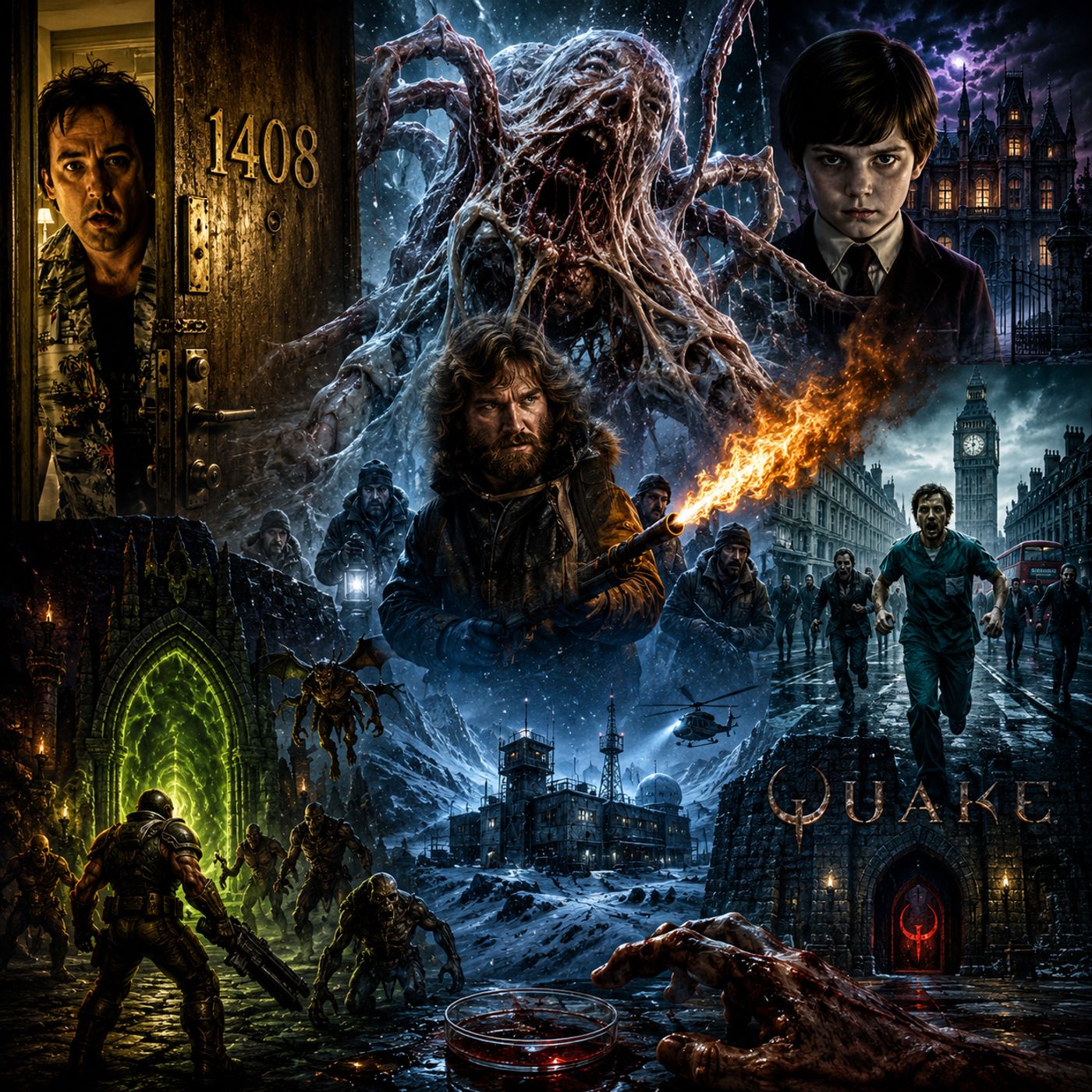
Beyond the Blood Test: Unraveling the Psychological Warfare of Paranoia and Body Horror in The Thing
John Carpenter's 'The Thing' isn't just a creature feature; it's a primal descent into paranoia where the ultimate horror lies not in the alien's grotesque forms, but in the insidious erosion of trust among men.
Key Takeaways
- The isolation of the Antarctic setting in 'The Thing' serves as a crucible, amplifying the paranoia and fracturing the crew's ability to trust one another.
- Rob Bottin's groundbreaking practical effects are essential for the visceral body horror, but their true power lies in how they fuel the psychological terror of assimilation and disguised identity.
- The film masterfully uses ambiguity to make the audience complicit in the paranoia, questioning every character's motives and humanity.
- 'The Thing' explores a deep-seated human fear of the "other" and the breakdown of social order when faced with an existential, undetectable threat.
- The iconic blood test scene is not just a plot device; it’s a terrifying ritual born from absolute desperation, highlighting the characters' descent into a state of pure survival instinct.
The Insidious Nature of the Alien and the Paranoia It Breeds
John Carpenter's 1982 film, The Thing, masterfully crafts a chilling narrative not just through its iconic alien creature, but through the psychological dread it instills. The antagonist in The Thing is not merely a monstrous entity to be fought; it is an existential threat that operates on a fundamental level of deception. Its ability to perfectly assimilate and mimic any living organism means the enemy is not an external invader, but an internal infiltrator. This core characteristic weaponizes paranoia, turning the isolated Antarctic research station into a pressure cooker of suspicion and distrust. Every character becomes a potential suspect, and every interaction is fraught with the possibility of betrayal. The film doesn't shy away from depicting the grotesque transformations the alien undergoes, but its true horror lies in the moments *before* these transformations are revealed, in the agonizing uncertainty of who is still human.
The chilling effectiveness of this paranoia stems from the alien's perfect imitation. It doesn't just kill; it replaces. This act of replacement is far more terrifying than simple violence because it attacks the very fabric of identity and camaraderie. The men are trapped not only by the external Antarctic environment but by their own internal breakdown of trust. The inability to definitively identify friend from foe forces them to turn on each other, adopting increasingly desperate and violent measures to ensure their own survival. The paranoia becomes a self-fulfilling prophecy; the very fear of being infiltrated leads to actions that isolate and endanger the group, mirroring the alien's own disruptive agenda.
Body Horror as a Catalyst for Psychological Breakdown
Rob Bottin's groundbreaking practical effects in The Thing are legendary, and for good reason. The visceral, nightmarish transformations are the film's most visually arresting elements. However, the power of this body horror extends far beyond mere shock value. It serves as a crucial catalyst for the escalating psychological breakdown of the characters. Each horrifying reveal of the alien's true form – a grotesque amalgamation of flesh and alien anatomy – confirms their worst fears and pushes them further into a state of panic and desperation. These scenes are not just about the physical manifestation of the threat; they are about the destruction of the familiar, the horrifying realization that the bodies of their friends are no longer their own.
The body horror functions as a tangible representation of the alien's insidious nature. When a crew member is revealed to be a Thing, their body contorts and reshapes in ways that are profoundly unnatural and disturbing. This visual violation of the human form underscores the alien's complete disregard for organic life and its ability to twist it into something monstrous. This visual horror then feeds directly into the psychological horror. Seeing what the Thing can do to a human body instills a deep-seated terror of assimilation. The characters, and the audience, are left to grapple with the idea that a human consciousness could be trapped within these grotesque forms, or worse, that their own bodies could be hijacked and twisted into such abominations. The practical effects are not just gore; they are psychological ammunition, designed to dismantle the characters' sanity and their perception of reality.
The Unraveling of Trust in the Face of the Unknowable
At its core, The Thing is a profound examination of trust and the fragility of human connection when confronted with an unknowable, existential threat. The Antarctic setting, while isolating, would be manageable if the enemy were clearly defined. The true terror arises from the alien's ability to hide in plain sight, turning every person into a potential enemy. This constant suspicion erodes the bonds of camaraderie and mutual reliance that are essential for survival in such a harsh environment. The film uses tense dialogue, long silences, and subtle behavioral cues to create an atmosphere where trust is a luxury no one can afford.
The iconic blood test scene is perhaps the most potent distillation of this theme. MacReady's desperate, violent method of forcing a confrontation is a testament to the complete breakdown of interpersonal trust. He must resort to an almost medieval trial by ordeal because any other method of identification has become impossible. The scene is a terrifying spectacle of desperation, highlighting how the paranoia has driven the men to the brink of savagery. Even as the alien is exposed, the underlying fear and distrust linger. The film's ambiguous ending, with the surviving members huddled together, wary of each other, leaves the audience with the chilling realization that the battle against the Thing may be over, but the war against paranoia and suspicion has just begun. The true horror is not just the alien, but what it reveals about humanity's capacity for fear and its ability to destroy itself from within when trust is shattered.
The Thing remains a benchmark in horror cinema not for its creature effects alone, but for its relentless exploration of paranoia and the horrifying ways in which fear can dismantle the human psyche. It’s a chilling reminder that sometimes, the greatest monsters are not the ones we see, but the ones we suspect are standing right beside us.
If you were chilled to the bone by the paranoia and body horror in John Carpenter's 'The Thing', dive deeper into more terrifying tales from horror history. Listen to the full episode of Weekly Spooky for a comprehensive look at chilling classics and modern nightmares: WeeklySpooky.com/Episodes
Frequently Asked Questions
What makes the paranoia in 'The Thing' so effective?
The paranoia is effective because the alien's ability to perfectly imitate humans means the threat is internal, making it impossible to trust anyone. This isolation and the constant threat of assimilation create intense psychological pressure.
How does the body horror contribute to the film's themes?
The grotesque body horror visually represents the alien's destructive and transformative nature, serving as a constant reminder of the threat of assimilation and the violation of the human form. It fuels the psychological breakdown of the characters.
Why is the Antarctic setting so important to the story?
The remote Antarctic setting amplifies the sense of isolation and claustrophobia, trapping the characters with the threat and removing any possibility of escape or external help, thus intensifying the paranoia.
Is the blood test scene the only way to identify the Thing?
In the context of the film, the blood test becomes the most reliable, albeit brutal, method the characters devise to identify the Thing due to the alien's perfect mimicry. Other attempts at identification are largely unsuccessful or too risky.