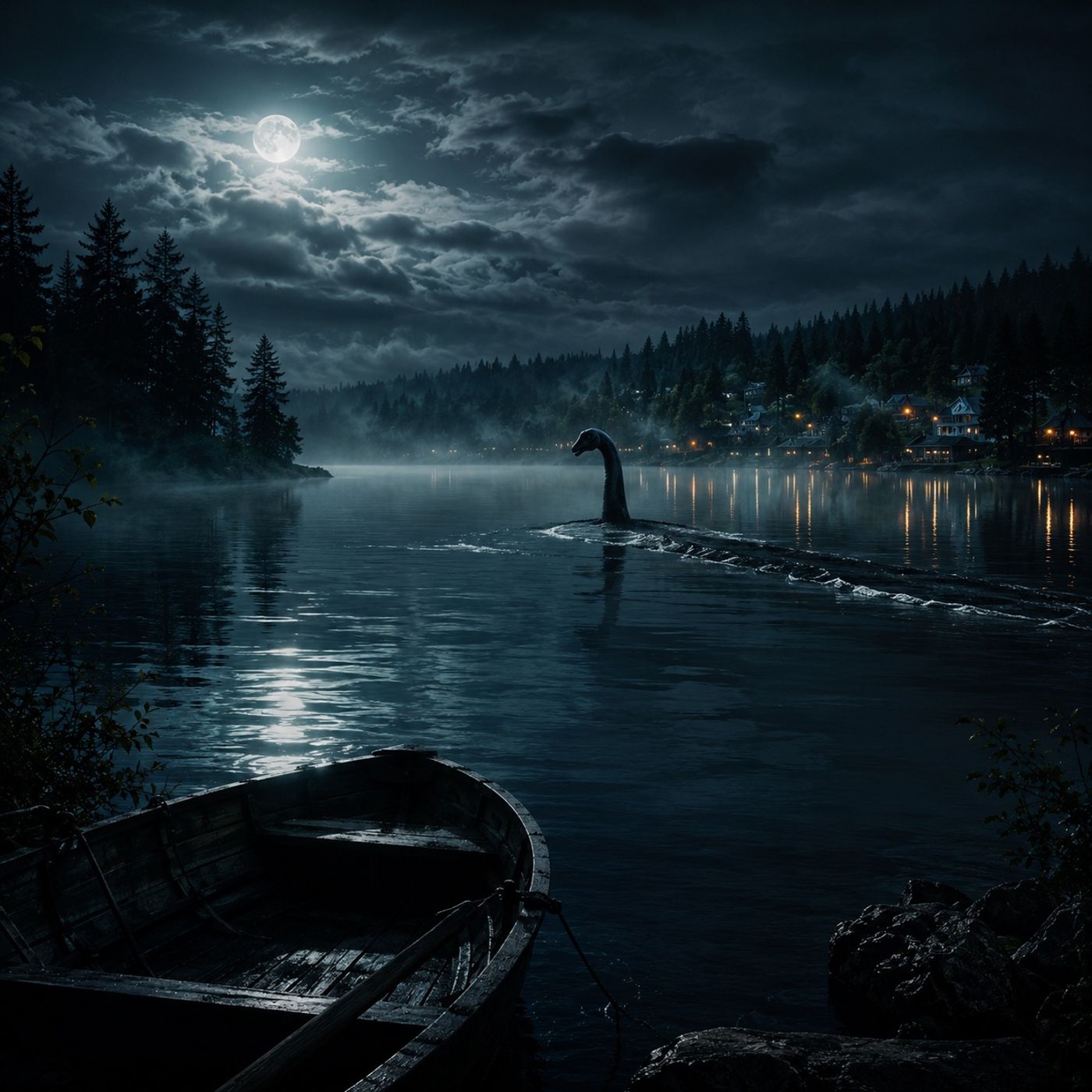
America’s Loch Ness Monster: Why Lake Monster Legends Still Refuse to Sink
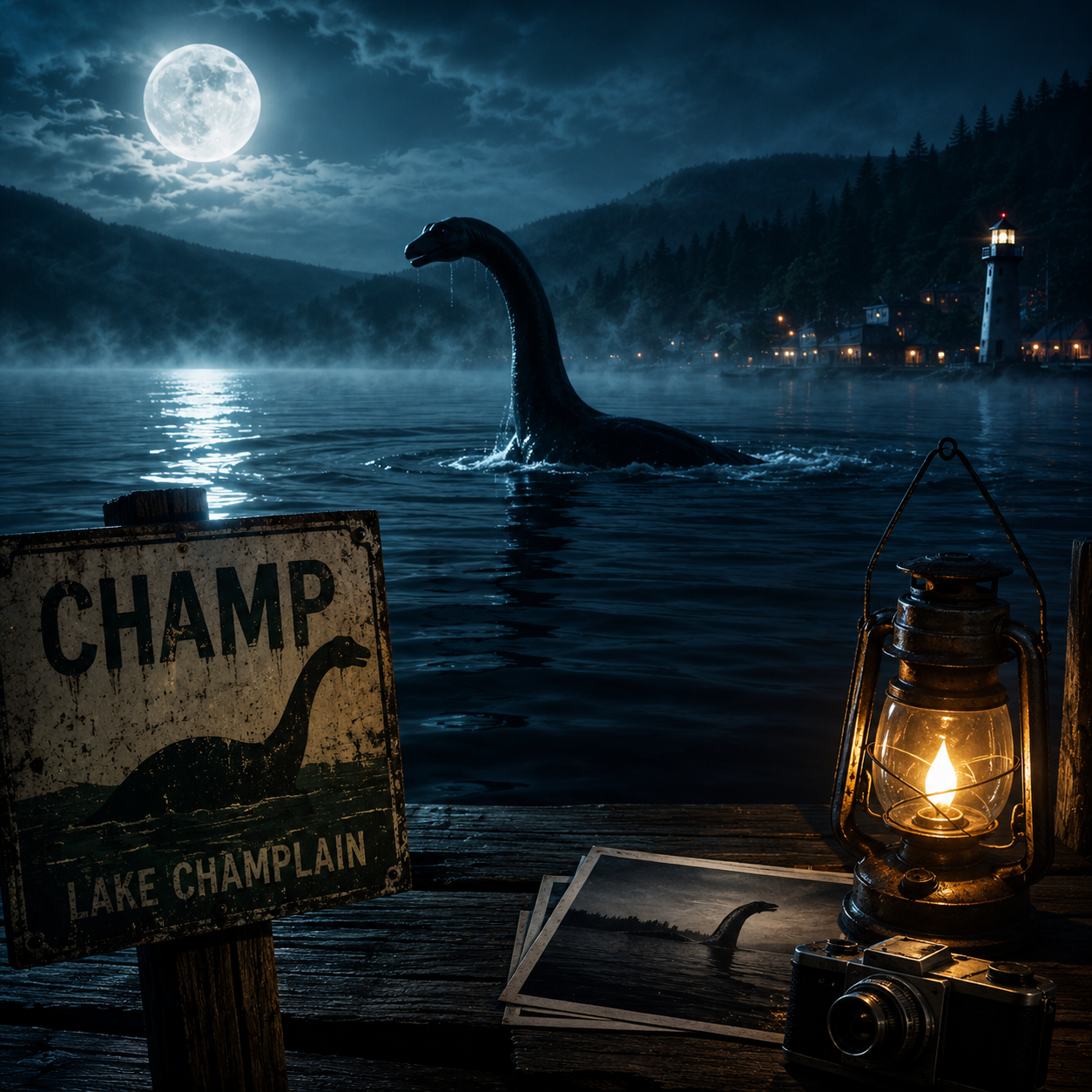
What is it about a dark lake at night that makes every ripple feel alive?
In this episode of Thursday Thrills, Weekly Spooky dives into one of the most enduring forms of monster folklore: the lake creature. From the legendary Champ of Lake Champlain to the long shadow of the Loch Ness Monster, these stories live in that perfect horror space between eyewitness accounts, local legend, blurry footage, skeptical explanations, and the deep human fear of whatever might be moving beneath black water.
Lake monster stories are not just about creatures. They are about places. A quiet shoreline. A fishing boat that drifts a little too far from the dock. A tourist town where every gift shop sells the monster, every old-timer knows someone who saw it, and every dark wave feels like it might be hiding something ancient.
That is why these legends refuse to die.
Why Champ Still Captures the Imagination
The Lake Champlain Monster, better known as Champ, has often been described as America’s answer to Nessie. Sightings around Lake Champlain have been reported for generations, and the legend has become part of the region’s identity. Some people treat Champ as a beloved piece of local folklore. Others wonder whether the lake could be hiding an unknown animal, a misidentified sturgeon, a floating log, a wave pattern, or something stranger.
Part of Champ’s power comes from the setting itself. Lake Champlain is massive, old, and atmospheric. It sits between New York, Vermont, and Quebec, with enough history, depth, and misty shoreline to make even the most skeptical listener understand why the legend works.
When new alleged footage or new witness claims appear, the question is rarely as simple as “Is this proof?” More often, the real question is: why do we want it to be?
That is where lake monster folklore becomes so fascinating. Every new ripple, shadow, photograph, and video gives the legend another breath. Even when a sighting is explained away, the story somehow becomes stronger. The mystery does not need certainty to survive. In fact, uncertainty may be the thing that keeps it alive.
Loch Ness, Champ, and the Shape of a Perfect Monster
The Loch Ness Monster remains the most famous lake creature in the world, but its influence reaches far beyond Scotland. Nessie created a template that other lake monster legends still follow: a large, elusive creature; a dark body of water; a history of sightings; skeptical experts; hopeful believers; and the irresistible promise that one clear piece of evidence might finally surface.
Champ fits beautifully into that tradition. So do dozens of other lake and water monster legends across North America and beyond. These creatures are often described as serpent-like, long-necked, dark, fast-moving, and almost impossible to photograph clearly. They appear just long enough to unsettle witnesses, then vanish beneath the surface.
That pattern is part of the appeal. A lake monster is not a creature that jumps out and explains itself. It is a shape in the water. A wake moving against the wind. A dark curve where there should not be one. A story that begins with someone saying, “I know how this sounds, but…”
That phrase may be the true heartbeat of cryptid folklore.
Why Lake Monster Stories Feel So Possible
Unlike ghosts or demons, lake monsters have a strange advantage: they feel almost biological. The idea of an undiscovered creature in a large body of water does not require an entirely supernatural worldview. It only asks the listener to believe that maybe, somewhere deep and cold and hard to search, something has avoided being fully documented.
That does not mean every sighting is real. Many lake monster reports can be approached through ordinary explanations: waves, logs, large fish, otters swimming in a line, unusual lighting, boats, hoaxes, or honest mistakes. But those explanations do not completely drain the fun from the legend. If anything, they give the story texture.
The best lake monster tales live in the tension between belief and doubt. You can know all the rational possibilities and still feel your stomach tighten when something large moves under the water at night.
That is the sweet spot for Thursday Thrills: spooky, fun, grounded, and just strange enough to make you glance twice at the shoreline.
The Power of “Creature on Camera”
Modern lake monster legends are shaped by cameras. A century ago, stories traveled through newspapers, taverns, postcards, and word of mouth. Today, they travel through phone videos, social media clips, local news segments, documentaries, podcasts, and Reddit threads.
But footage rarely settles the question. Blurry monster videos often create more mystery, not less. The image is too far away. The water is too dark. The shape is too unclear. The witness sounds excited, confused, or strangely calm. Skeptics see a log. Believers see a neck. Everyone else leans closer to the screen.
That is the strange magic of cryptid footage. It invites the viewer to participate. You are not just watching evidence; you are deciding what kind of story you want to believe you are seeing.
And with lake monsters, that uncertainty is everything.
More Than a Monster: A Local Legend
Lake monsters also matter because they become part of a place’s identity. Champ is not just a possible creature. Champ is a mascot, a tourism hook, a local legend, a campfire story, and a symbol of regional mystery. The same is true of many cryptids. Whether or not the monster is real in a scientific sense, it becomes real in the culture around it.
People visit the lake hoping to see something. They buy souvenirs. They tell children to watch the water. They point out where someone’s uncle supposedly saw a long neck rise from the waves. The legend becomes a way of making the landscape feel enchanted.
That may be why these stories last. They turn ordinary places into haunted places without needing a house, a graveyard, or a ghost. All they need is water, darkness, and the possibility that something below the surface knows you are there.
Why We Still Want to Believe
The most interesting part of lake monster folklore may not be the monster. It may be us.
We live in a world where so much has been mapped, measured, photographed, and explained. Lake monster stories push back against that. They suggest that mystery has not been completely defeated. They offer the thrilling possibility that the world still has corners we do not understand.
That does not mean every story should be accepted without question. Skepticism matters. Honest framing matters. Folklore becomes more interesting, not less, when we separate what is claimed, what is known, what is possible, and what simply makes a great scary story.
But after all the explanations, after all the debunking, after all the expert analysis, there is still that moment.
A dark lake.
A still boat.
A ripple moving the wrong way.
And for one second, you understand why people keep watching the water.
Listen to the Full Episode
If you love cryptids, lake monster sightings, mysterious creatures, folklore, eerie travel stories, and the strange thrill of wondering what might be hiding beneath the surface, this episode of Thursday Thrills is for you.
Listen to “America’s Loch Ness Monster: Lake Creature on Camera | Thursday Thrills” on Weekly Spooky.
https://www.weeklyspooky.com/champ-lake-monster-camera/
Frequently Asked Questions
What is Champ?
Champ is the legendary lake monster said to inhabit Lake Champlain, which borders New York, Vermont, and Quebec. The creature is often described as long-necked or serpent-like, and it has become one of North America’s most famous lake monster legends.
Is Champ considered America’s Loch Ness Monster?
Yes, Champ is often described that way because the legend shares similarities with the Loch Ness Monster: a large mysterious creature, a deep scenic lake, generations of reported sightings, and ongoing debate between believers and skeptics.
Are lake monster sightings real?
Some sightings are sincere reports from people who believe they saw something unusual. However, many possible explanations include waves, logs, large fish, swimming animals, lighting effects, boats, hoaxes, or misidentification. The mystery is part of what keeps the folklore alive.
Why do people still believe in lake monsters?
Lake monster legends combine fear, wonder, local identity, eyewitness testimony, and the hope that the world still contains unexplained mysteries. Even without definitive proof, these stories remain powerful because they make familiar places feel strange again.
What makes lake monster folklore different from ghost stories?
Lake monster legends often feel more physically possible than supernatural hauntings because they are tied to animals, water, geography, and the unknown depths of nature. That gives them a different kind of creepiness: less “haunted house” and more “something alive is under the boat.”