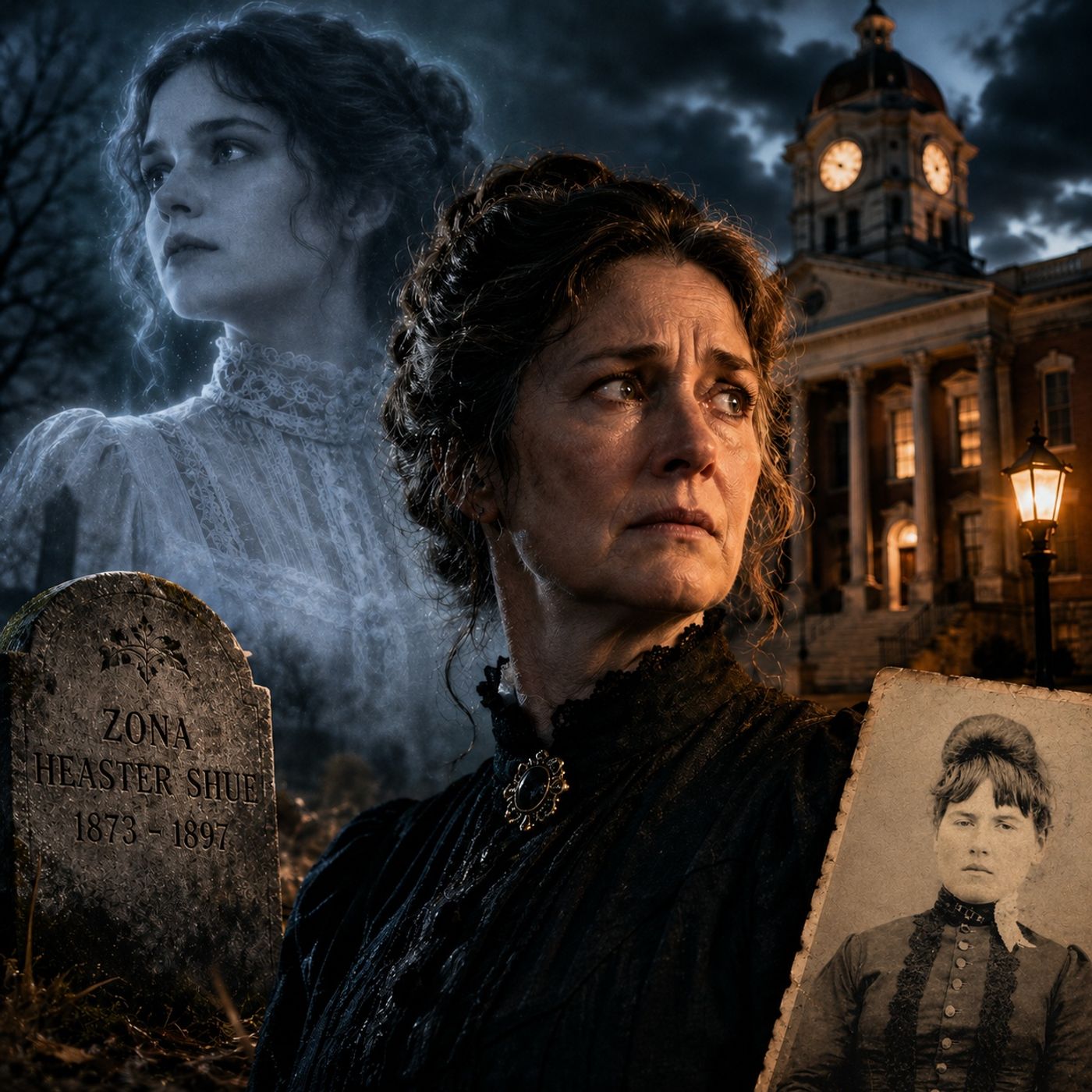
Could A Mother's Grief Trigger Ghostly Visions? The Greenbrier Ghost Case
Explore the fascinating intersection of grief, intuition, and the unexplainable in the Greenbrier Ghost case. This post delves into whether Zona Heaster Shue's mother, Mary Jane, experienced genuine supernatural visitations or if her profound grief manifested in visions that ultimately led to justice for her daughter. We examine the psychological and anecdotal aspects that surround this unique true crime mystery.
Key Takeaways
- Mary Jane Heaster's claims of her daughter's spectral visits were central to the Greenbrier Ghost investigation.
- The detailed nature of Mary Jane's alleged visions, including specific injuries, lent them significant weight.
- Psychological factors such as intense grief and trauma can manifest as vivid visions or hallucinations.
- The legal system grappled with how to interpret and utilize such deeply personal and extraordinary testimony.
- While the exhumation provided physical evidence, the interpretation of Mary Jane's experiences remains a subject of debate.
Grief, Intuition, and the Unexplained in the Greenbrier Ghost Case
The story of Zona Heaster Shue is one of America's most peculiar true crime cases, largely because of the role her mother, Mary Jane Heaster, played in uncovering the truth. Zona's death was initially presumed natural, and her husband, Erasmus "Trout" Shue, moved swiftly to arrange her burial. However, Mary Jane's insistence that her daughter had appeared to her, revealing a tragic end, changed the course of events entirely. This begs a profound question: Was Mary Jane truly communicating with her deceased daughter, or was this a manifestation of a grieving mother's desperate search for answers and justice?
In cases like these, the line between the supernatural and the psychological can become incredibly blurred. Intense emotional distress, such as the profound grief Mary Jane must have experienced, is known to trigger powerful psychological phenomena. These can include vivid dreams, waking visions, or even a deep-seated intuition that guides one's actions. Mary Jane's narrative was remarkably detailed. She claimed Zona appeared to her over four consecutive nights, describing not only her death but the very act of Trout breaking her neck. The specificity of these alleged visitations, particularly the detail about the broken neck, became a crucial element that authorities could not ignore.
The Psychology of Grief and Visions
When a loved one dies suddenly and under suspicious circumstances, the surviving family members often struggle with disbelief, anger, and a desperate need for closure. For Mary Jane Heaster, the speed with which Trout Shue arranged the burial and his seemingly dismissive attitude towards a full medical examination would have amplified her suspicions and distress. In such a heightened emotional state, the mind can process information and internalize fears in extraordinary ways.
It's well-documented in psychology that intense grief can lead to hallucinations. These aren't necessarily signs of mental illness but rather a profound response to loss. People may report seeing, hearing, or feeling the presence of the deceased. For Mary Jane, these alleged visitations from Zona could have been her subconscious mind piecing together clues, a manifestation of her intuition, or even a deeply felt spiritual conviction. The details she shared, such as Zona pointing to her neck, could have stemmed from subtle observations she made about her daughter's demeanor before her death, or from her own suspicions about Trout.
Intuition vs. Supernatural Intervention
One of the most compelling aspects of this case is the role of Mary Jane's intuition. She sensed something was deeply wrong and refused to accept the narrative of a natural death. Her persistence, fueled by her claimed spectral visitations, pushed the authorities to exhume Zona's body. It was this exhumation that provided the tangible, physical evidence – a broken neck and crushed windpipe – that turned the case into a murder investigation.
Could Mary Jane have simply possessed an extraordinary intuition, a mother's instinct so powerful it felt like divine communication? Or did Zona's spirit genuinely reach out from beyond the grave to expose her killer? The lack of definitive proof for either scenario leaves room for speculation. However, from a human perspective, Mary Jane's actions were those of a mother determined to find justice for her child. Whether guided by spirits or by an unshakeable inner knowing, her role was pivotal.
The Courtroom Challenge
Presenting Mary Jane's testimony in court was a significant challenge. The defense naturally attempted to discredit her, portraying her claims as the fanciful ramblings of a grieving mother. They argued that her visions were merely dreams or products of an overactive imagination fueled by sorrow. However, Mary Jane remained steadfast. When pressed in court, she refused to call her experiences dreams, insisting they were real visitations from her daughter.
Her unwavering conviction, combined with the corroborating physical evidence from the exhumation, made her testimony incredibly impactful. The jury had to weigh the extraordinary nature of her claims against the undeniable forensic findings and the suspicious behavior of Trout Shue. The legal system was forced to confront how to interpret and act upon evidence that straddled the realms of the uncanny and the empirical. While the verdict against Trout Shue was for murder, the question of whether a ghost truly testified remains a haunting element of the case.
Lessons from the Greenbrier Ghost
The Greenbrier Ghost case offers a unique lens through which to examine the complexities of human experience, belief, and the pursuit of justice. It highlights how grief can manifest in powerful, sometimes inexplicable ways. It also underscores the importance of listening to the deepest intuitions of those closest to a victim, even when their accounts seem extraordinary.
While scientific minds might lean towards psychological explanations for Mary Jane's visions, the enduring power of her story lies in its ability to provoke thought about what we truly understand about life, death, and the forces that might connect us beyond our physical existence. The case serves as a reminder that sometimes, the most compelling evidence comes not from sterile laboratories, but from the heart of a mother driven by love and a fierce desire for truth.
To hear the full, chilling account of the Greenbrier Ghost and the ensuing murder trial, listen to the full episode on Weekly Spooky. It’s a story that will make you question everything you thought you knew about justice and the beyond.