


 Apple Podcasts

 Spotify

 Spreaker

 Audible

 Castro

 RSS Feed

 iHeartRadio
Terrifying & True | Brian Shaffer: The Ugly Tuna Saloona Disappearance
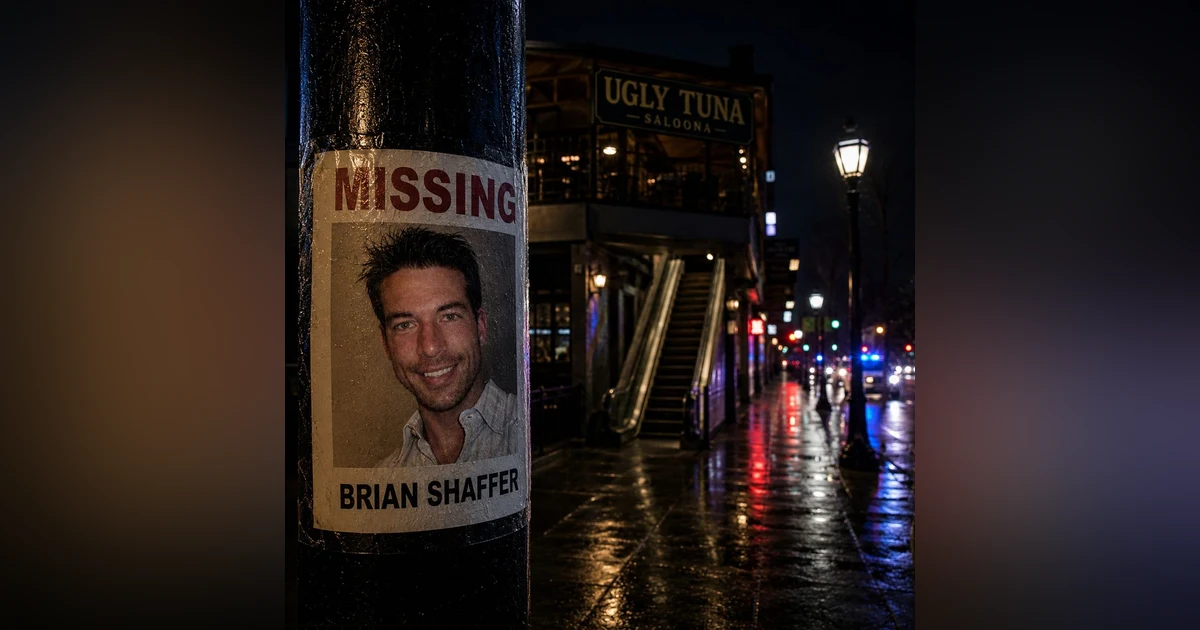
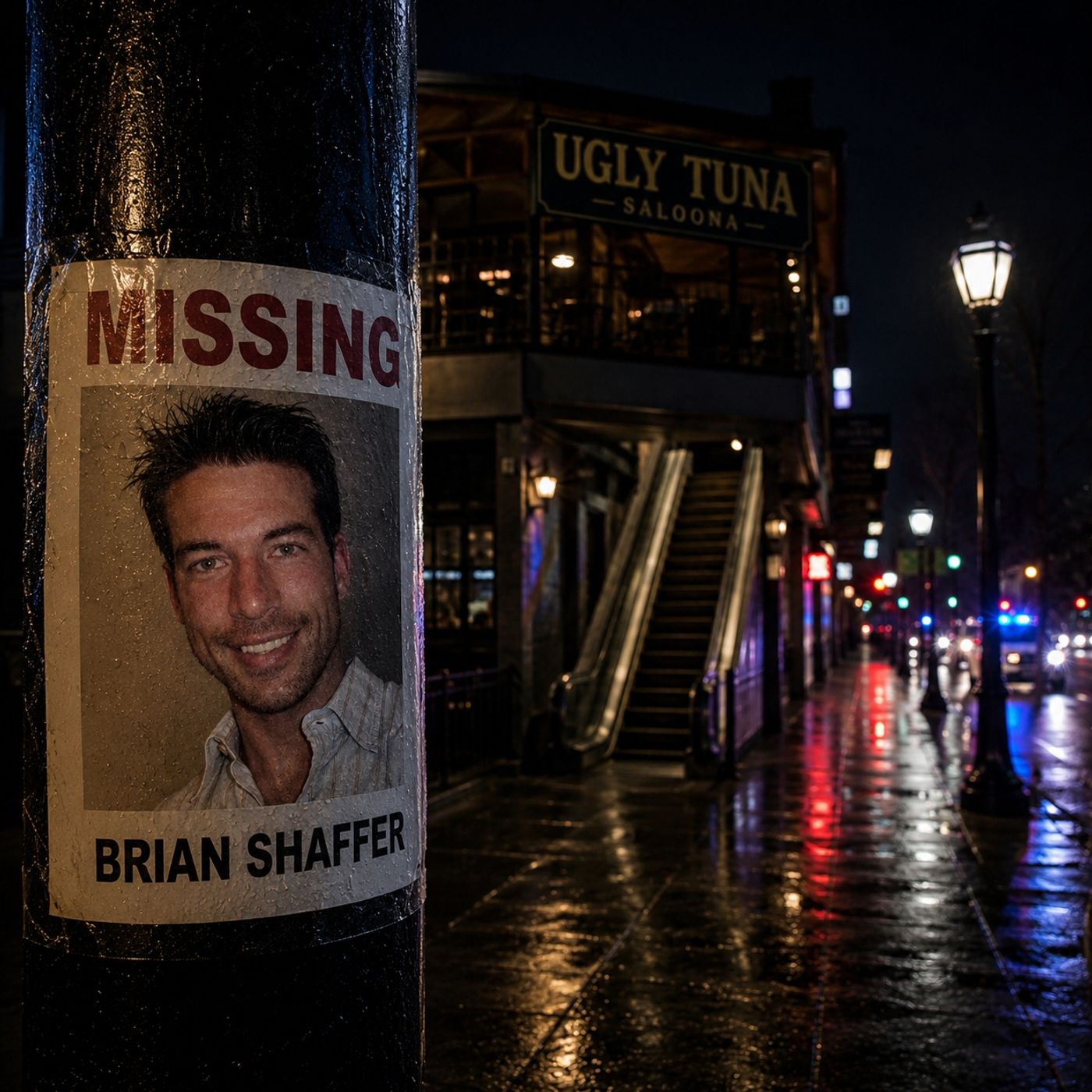
Brian Shaffer was last seen near closing time at a Columbus bar on April 1, 2006. The Ohio State medical student's disappearance drew attention to footage that did not clearly show him leaving. Terrifying & True examines the Ugly Tuna Saloona, camera blind spots, searches, and the theories that grew around the missing images. It remains a missing-person investigation, with a family and loved ones behind every unanswered question. Follow what the record establishes and where it stops, without turning incomplete camera coverage into proof that someone could not have left the building.
Bonus episodes & support: https://weeklyspooky.com/join
More scary stories: https://weeklyspooky.com/
Story submissions: WeeklySpooky@gmail.com
Listen Next
A medical student walks into a crowded Columbus, Ohio bar at the start of spring break. Cameras show him near the entrance just before closing time. Then Brian Schaefer turns away and vanishes into one of Ohio's most haunted unsolved mysteries. What you were about to pick youspur to be based on witness accounts, testimonies, and public record. This is terrifying and April first, two thousand and six, Columbus o High, the bars near Ohio State are closing, the sidewalks are crowded, and spring break has just begun. Among the students and strangers is twenty seven year old Brian Schaeffer, a medical student with a future waiting for him.
He's seen on surveillance near the entrance of the Ugly Tuna Saluna shortly before two am. He talks, he smiles, he turns away, and then somehow he disappears. The cameras do not clearly show him leaving. His phone goes silent, His plans are abandoned. His family searches, his girlfriend waits investigator's return again and again to the same few minutes of footage, looking for the answer hidden just beyond the frame. Did Brian Shaefer leave the bar unseen, did he meet with foul play, did an accident steal him from the world, or does someone still know what happened that night?
Tonight, we investigate the disappearance of Brian Schaefer, the Ohio State mystery, where the camera captured the last known moment before a man vanished completely. The lights of North High Street are still burning like a second moon over the Ohio State campus. It's the first breath of spring break, that strange hour when Friday night has technically become Saturday morning, but no one has agreed to go home yet. Music leaks from bars, Traffic slides past, in pulses. Young people spill into the cold air, laughing, shouting, searching for friends, rides for one last place to stand before the night ends.
Inside the South Campus Gateway complex, above the sidewalk, the ugly Tuna Saluna is winding down. The bar is crowded, noisy, and alive. In the way college bars are just before closing, half celebration, half confusion. Somewhere in that crush is twenty seven year old Brian Schaeffer, a second year medical student at Ohio State He's tall, handsome, exhausted, grieving, brilliant, and about to disappear so completely that twenty years later, investigators will still be studying the same few minutes of surveillance footage. Just before two a m. Brian appears outside the bar entrance, near the top of the escalator.
He talks briefly with two young women. Nothing about it looks dramatic, Nothing looks like an ending. It looks like a normal late night moment, a smile, a few words, a goodbye. Then Brian turns and moves back toward the bar, and then he's gone. Not gone in the cinematic sense, not dragged away on camera, not seen stumbling into traffic, not captured leaving through the main entrance, or spotted at another bar, or found wandering home. Not found in the morning or the week after, or the year after or the decade after. He simply vanishes from the record.
His friends think he must have left without them. His girlfriend waits for the Miami trip they're supposed to take. His father expects a call. His apartment waits, along with his car, His wallet, phone activity, and future all fall silent. The cameras show Brian Schaeffer near the end of the night. What they don't show the is where the night took him, And from that tiny gap between sight and absence and entire mystery grows. Brian Randall Schaeffer was not the sort of person people expected to vanish into myth. He was not a drifter or a man living off the grid.
He wasn't someone known for disappearing for days at a time. He was a medical student, a son, a brother, a boyfriend, A tall man with brown hair, hazel eyes, and a distinctive tattoo on his upper right arm. The official Ohio missing person listing says he was last seen around two a m. Near the fifteen hundred block of North High Street in Columbus, wearing jeans, a blue or green striped shirt, and tennis shoes. He was twenty seven years old when he disappeared. As of twenty twenty six, he would be forty seven years old. Those details are important because missing people are often flattened into one haunting photograph.
Brian's case has one of those photographs too, the smiling young man, the medical future, the face that keeps appearing in news stories and posters. But before he became a case, Brian had momentum. He had plans. He had grown up in Pickerington, Ohio, just outside Columbus. He studied at Ohio State then entered medical school there. People close to him described him as bright and social, a guy who could move easily through a room, someone who loved music, and had the sort of future that made sense when you explained it out loud. He wasn't just drifting through school.
He was becoming something. But the weeks before his disappearance had been hard. Brian's mother, Renee Schaeffer, had died only weeks earlier after a battle with cancer. That loss weighed heavily on the family. Brian's father, Randy, was grieving as well, and he spent time with his son. On the evening of March thirty first, two thousand and six, they went to dinner at a steakhouse. Randy later said Brian seemed exhausted. He had been studying, pushing through medical school, carrying grief, and standing at the edge of spring break. After dinner, Brian went out. The plan was ordinary. He would meet his friend and former roommate, Clint Florence.
They would have drinks around campus. Later they would end up at the Ugly Tuna Saluna, a bar in the South Campus Gateway development near Ohio State. Brian's girlfriend, Alexis Wagoner, was out of town visiting family, and the two were supposed to leave soon for a spring break trip to Miami. There was even talk in the air that Brian might propose. That's one reason this story stings in retrospect. Every normal detail feels loaded. Dinner with his father becomes the last dinner, a night out becomes the last night. A spring break trip becomes a future waiting at the gate that Brian will never reach.
The Ugly Tuna Salouna sat on the second floor of a mixed use campus complex. Patrons used an escalator to reach the bar entrance. Surveillance cameras watched the area. In theory, that should have made Brian's last known movements easier to comprehend. In practice, it created one of the strangest missing person puzzles in modern American true crime. The general timeline is familiar now. Brian and Clint began the night at the Ugly Tuna, then moved through other nearby bars, then returned after one a m with another friend, Meredith Read Cameras captured them entering the gateway complex and going up toward the bar.
Inside, the crowd was thick, the music was loud. People moved in and out, and at some point Brian became separated from Clint and Meredith. Around one point fifty five am, Brian appears on surveillance near the Ugly Tuna entrance. He's outside the bar area speaking with two women. The moment appeared casual. He doesn't seem to be running, hiding, struggling, or signaling for help. He appears to be a man at the end of a long night, pausing in conversation. Then he turns away. Some descriptions said he appears to move back toward the bar entrance. Some viewers focus on the exact angle, the blind spots, the timing, and the fact that the camera does not follow him continuously, but the essential fact remains.
After that point, there is no confirmed sighting of Brian Schaeffer. When the bar closed, Clint and Meredith waited for him. They didn't see him come down the escalator. They called, they looked. Eventually they left, assuming he had gone home without them. That assumption was not strange. In the moment, it was late, people were drinking, groups split up, friends sometimes vanish for the night and research the next day with sheepish explanation. But Brian didn't resurface the next day. Worry sharpened. He hadn't come home, he wasn't answering his phone, He didn't appear where he was supposed to.
The Miami trip with Alexis came and went. The life waiting for him remained untouched. Police reviewed the surveillance footage, expecting it to provide an answer, and it didn't. The cameras showed Brian entering the complex and standing near the bar shortly before closing, but they did not show him leaving the way everyone expected him to leave. The absence became the black hole at the center of the case For family and friends. The early search had a desperate rhythm. Posters went up, buttons were worn. Students, relatives and police combed the campus area. They checked dumpsters and streets, hospitals and shelters, construction zones and riverbanks.
The Olentangy River was searched. Dogs were used. The area around the bar was picked over again and again. Nothing no body, no confirmed sighting, no credit card trail, no digital footprint, no goodbye, and because the human mind hates a blank space. Theories rushed in to fill it. Maybe Brian had slipped out through another exit. Maybe he had fallen somewhere in the building. Maybe he had been attacked after leaving through a blind spot. Maybe he had chosen to vanish. Maybe someone close to him knew more than they were saying. Maybe the cameras missed something simple and the Internet made it impossible.
In the beginning, though the mystery was still raw, it wasn't yet a legend. It was a missing son, boyfriend and brother. Randy Shaeffer still believed he would find his boy Alexis still waited for a call and somewhere inside the last recorded images of Brian near the Ugly Tuna Saluna, investigators kept staring at the same question. How does a man walk into a bar surrounded by cameras and never appear to walk out. The first searches focused on the obvious place, the building. If Brian had gone into the Ugly Tuna Saluna and never appeared on camera leaving, then maybe he had never left at all.
That possibility sounds absurd until you remember the setting. This wasn't a tiny one room tavern on a quiet street. It was a second floor bar inside a larger commercial complex, one with service corridors, construction areas, rooftops, and places that might not register in the public imagination when someone says simply the bar. Investigators searched the Ugly Tuna and the surrounding gateway complex in ten Ny. They looked in hidden places, They checked crawl spaces. They searched the roof. They examined service areas and nearby construction zones. Retired Columbus Police detective John Hurst, who worked the case, said in a twenty twenty six interview that he believes Brian did leave the bar, even though he was not captured on camera doing so.
Hurst said the building was searched thoroughly enough that he had no doubt Brian exited. Somehow, that conclusion only moves the mystery from one room to another. If Brian left, where did he go. Investigators have considered blind spots, service doors, alternate roots, clothing changes, crowd confusion, and camera limitations. The most grounded reading is not impossible disappearance so much as unconfirmed exit. While that feels less supernatural in some ways, that makes it even more unsettling. Once police accepted that Brian might have exited unseen. The search widened. Campus neighborhoods at night are liminal places. By day, there are classrooms, coffee shops, bookstores, apartments, and bike racks.
At two am, they become something else. Alley's wet with spilled beer, dumpsters behind restaurants, construction fences, rattling in the wind side streets where laughter turns a corner and vanishes. Brian could have walked north, south, east, or west. He could have gone toward home. He could have followed someone. He could have been followed. His apartment wasn't far away, His car remained there inside. Nothing appeared to suggest a planned disappearance. People who intentionally vanish usually need resources, money, documents, transportation, or at least some sign of a transition. Brian left behind a life still in motion. He had a girlfriend, school, family, and belongings from there.
Investigators had to hold several possibilities at once. Brian could have left voluntarily, though his abandoned plans and silent financial trail made that difficult to square. He could have offered an accident after leaving, though searches failed to find a body or a scene. He could have met with foul play within minutes of exiting, though no blood trail, eyewitness accounts, confessions, or recovered remains ever broke the case open. The people around Brian were interviewed. Family, friends, acquaintances, and those who saw him that night became part of the investigative web. His father and others reportedly took polygraph tests.
Clint Florence, the friend who had been with him that night, became a focus of public suspicion over time because he declined to take one after reportedly being advised by counsel. That detail has fueled years of speculation, but suspicion is not proof. That's where true crime can become dangerous. A person who declines a polygraph may be hiding something, or they may also be following legal advice. Because polygraphs themselves are not magical truth machines, their controversial tools, to say the least, and definitely not courtroom certainty. In Brian's case, the public's hunger for an answer attached itself to every odd choice, every silence, and every inconsistency.
However, no one has been charged in Brian Schaeffer's disappearance. Police have acknowledged persons of interest and theories, but they have not publicly proven a suspect. It's important to separate suspicion, rumor, and investigative interest from established fact. As months turned into years, the case began to accumulate folklore. There were allegedly sightings. There were rumors that Brian had started over somewhere else. There were claims about homeless men resembling him. There were stories about a phone ping about islands, about messages that seemed promising and then collapsed. After Randy Shaeffer died in a tragic accident during a windstorm in two thousand and eight, a message appeared in an online condolence book, signed as if it was from Brian in the US Virgin Islands.
For a brief, cruel moment, it suggested the impossible that Brian was alive and had reached out after his father's death. Investigators later determined it was a hoax, and that hoax is one of the most hurtful details in the case. A missing person creates a wound that cannot close. Every tip is hope, Every hope can be another cut. By twenty twenty one, the Ohio Attorney General's Bureau of Criminal Investigation and Columbus Police released an age progressed image of Brian showing what he might look like at forty two. The announcement asked the public to keep looking. It emphasized that one tip can revive a cold case.
It also quietly acknowledged the unbearable passage of time. A young man last seen in two thousand and six had become, in official imagination, a middle aged man who might still be somewhere. That is the strange purgatory of Brian Schaefer's case. He's the missing medical student walking back toward a crowded bar. He's the man in the surveillance still and the man in the age progressed image. And he is the unanswered question, moving farther away from the camera every year. Over time, the mystery of Brian Schaefer became famous for one image, the man who went into the bar and was never seen leaving.
That phrase is irresistible. It's clean and spooky. It has it's the shape of an urban legend. You can tell it in one sentence and watch the room lean in. But the truth of a disappearance is not one sentence. Its hours of footage, flawed memories, alcohol, grief, investigative limitations and time. It's also family members trying to survive the transformation of someone they love into internet lore. For Alexis Wagoner, Brian's girlfriend, the aftermath was devastating. She had expected a vacation, she expected phone calls, she expected a future. Instead, she entered the strange ritual of the missing, calling, searching, waiting, answering questions, repeating details, and learning that the world can keep moving while your life remains stopped at two a m.
For Randy Schaeffer, the loss was a second catastrophe following his wife's death. He searched for Brian publicly and emotionally. News footage and interviews from the period show a father clinging to hope, wearing Brian's photo, saying in different ways that his son had to be out there somewhere. Then, in two thousand eight, Randy was killed when a falling tree limb struck him during a windstorm. The family had already been split open by absence and was now struck again by sudden death. Brian's brother Derek became one of the people left to carry the case forward. In two thousand and twenty six, as the twentieth anniversary approached, he issued a statement saying that not a day went by without thinking of Brian, and that he believed someone out there knew what happened.
That's not a conspiracy theory. It's the exhausted hope of a family that has waited two decades for some one to speak. Meanwhile, the public kept building stories around the case. The building theory had the cleanest hook. If cameras didn't catch Brian leaving, maybe the answer was still inside the walls. But investigators searched the bar and the larger complex repeatedly, and hearsts twenty twenty six comments pushed hard against that idea. In his view, Brian exited. The more useful question is not whether he vanished inside a haunted box, it's what happened after the building stopped recording him.
The accident theory requires no villain. It requires bad luck, intoxication, the dark, and one fatal wrong turn, a dangerous construction area, water, a concealed fall, or some overlooked space, But the lack of physical evidence keeps it unresolved. The foul play theory is the one many investigators and observers find difficult to dismiss. In twenty twenty six, retire detective Hurst said Brian was probably deceased and that foul play was likely. That doesn't identify a killer, but it reflects the grim instinct of someone who spent years looking at the case. The voluntary disappearance theory lingers because Brian had grief and stress, but it struggles against the evidence of his attachments.
He had plans with his girlfriend, he had medical school. He left behind the ordinary structure of life. No confirmed post disappearance trail emerged. Then come the wilder theories. Some have tried to connect Brian's disappearance to the so called smiley face killer theory, a disputed idea linking the deaths and disappearances of young men near water in different cities. Law enforcement and the FBI have generally rejected the broader theory, and there's no confirmed evidence tying Brian's case to a serial killer. It's easy to see why people reach for a pattern. Patterns feel better than randomness, but not every cluster is a conspiracy, not every mystery belongs to a master narrative.
None of these have been proven. The serial killer theories remain speculative and unsupported by confirmed case evidence. The most honest answer is also the hardest one for an audience. Investigators still don't know what happened. The architecture of the disappearance keeps pulling people back. The escalator, the second floor entrance, the camera angle, the two women, the final turn, the missing exit shot. There's something almost theatrical about it, like Brian stepped behind a curtain and the stage hands forgot to bring him back. But real disappearances are not stage tricks. The curtain is made of missing data. The ugly Tuna Saluna itself eventually closed, and the physical landscape changed.
Businesses come and go, campus districts reinvent themselves. The people who were students that night became adults with careers and children. A disappearance that happened at the edge of the modern digital age now feels both recent and ancient. Enough technology to show us the beginning of the vanishing, not enough to show us the end, and so the case lives in the gap. Tips came from around the world. Some were checked and dismissed, Some led nowhere. A homeless man in Mexico who resembled Brian was analyzed and ruled out. The online condolence message was traced as a hoax.
Each false lead added another layer of scar tissue for investigators. A cold case is not frozen, but it is slow. It waits for a witness to talk, for technology to improve, for a forgotten detail to become meaningful, for someone to clear their conscience. The Ohio Attorney General's twenty twenty one age progressed image was a reminder that official hope still existed. It was also a reminder that every passing year changes the face people are supposed to recognize. Imagine being asked to look for a man who is two people at once. The Brian of two thousand and six twenty seven, smiling, tall, walking into spring break, the Brian of now older, if alive, his face altered by time, his life either hidden beyond belief or cut short long ago.
That duality is what makes the case so haunting. Missing persons do not remain still for the people who love them. They age in imagination, They appear in crowds, pass in the face of a stranger at an airport. Brian Schaefer's story is not only about the night he disappeared. It's about the years after, when everyone else had to keep living inside the question so what happened to Brian Shaeffer? The most honest answer is really the one no storyteller wants to give. We don't know, but we don't know does not mean every theory is equal. Some possibilities fit the known facts better than others.
Some are dramatic but weak, Some are boring but plausible. Many depend on one central assumption that Brian left the bar unseen. Once you accept that possibility, the mystery changes. It becomes less about magic and more about minutes, A few minutes after two am, a street, a stranger, a shortcut, a fall, a decision, a car door, a riverbank, a construction fence, a person who has managed to stay silent for twenty years. Retired detective Hearsts twenty twenty six. Comments are significant because they cut through the most popular myth. He believes Brian indeed exited the building. He believes the search is inside or thorough.
He believes Brian is likely deceased, and that foul play is most probable. This isn't a solved case, but it is a grounded investigative instinct. It suggests the answers may not be hidden in the bar at all. It may have been waiting just beyond the camera. If foul play occurred, the window may have been brutally small. Brian leaves unseen, he encounters someone, something happens quickly. The body is moved or concealed before anyone realizes he's missing. That scenario does not require a criminal genius. It requires timing, opportunity, and luck, the ugly luck offenders sometimes get when a victim's last confirmed movements are confused by alcohol, crowds, and closing time.
If an accident occurred, the same small window applies. Brian exits disoriented or tired, he takes a wrong path, enters an unsafe area, falls, becomes trapped, or ends up in water. The reason this theory persists is because accidents can look like disappearances when the body is never found. The reason it frustrates people is because so much searching produces nothing. If voluntary disappearance occurred, it would be one of the most complete examples imaginable. He would have had to leave family, behind, a girlfriend, school, all of his belongings and identity while avoiding confirmed detection for decades. Grief can make people flee, but total silence is harder to explain, and if someone close to Brian knew more.
The case remains locked behind human silence. That is the hardest possibility for families, because it means the answer is not in a river, not in a wall, not in a camera frame. It's in a person. The absence of an answer creates temptation. It tempts us to make the mystery prettier than it is, cleaner than it is, stranger than it needs to be. We want the bar to become a haunted box. We want the camera to be a doorway. We want the final footage to contain a hidden clue visible only to the clever. But the most frightening version may be the simplest.
Brian Schaeffer left the frame and something happened in the world outside it. That's all it takes. A frame is not protection, A camera is not a guardian angel. A crowded street can become empty in the wrong direction. A night full of people can leave one person alone at exactly the wrong moment. There's another reason the case endures, especially in Ohio. Brian was not abstract. He was local. He was someone's classmate. His disappearance sits in the geography of a real place. North High Street campus bars, the Olin tangy, the shifting face of Columbus. People who know those streets can imagine the walk.
That familiarity makes the vanishing feel personal, And maybe that's why Brian Schaefer's disappearance feels less like a puzzle box and more like a warning. We like to believe modern life captures everything. We like to believe that cameras, phones, friends, and cities create a net strong enough to catch us. But nets have holes, and on April first, two thousand and six, Brian Schaefer slipped through. One. Terrifying and True is narrated by Henrique Couto. It's executive produced by Rob Fields and bobble Topia dot com and produced by Dan Wilder, with original theme music by Ray Mattis. If you have a story you think we should cover on Terrifying and True, send us an email at Weekly Spooky at gmail dot com, and if you want to support us for as little as one dollar a month, go to Weeklyspooky dot com slash join.
Your support for as little as one dollar a month keeps the show going. And speaking of I want to say an extra special thank you to our Patreon podcast boosters, folks who pay a little bit more to hear their name at the end of the show, and they are Johnny Nicks, Kate and Lulu, Jessica Fuller, Mike Escuey, Jenny Green, Amber Hansford, Karen Wee, Met Jack Ker and Craig Cohen. Thank you all so much, and thank you for listening. We'll see you all right here next time on Terrifying and True
