


 Apple Podcasts

 Spotify

 Spreaker

 Audible

 Castro

 RSS Feed

 iHeartRadio
Terrifying & True | The Gardner Museum Heist — 13 Masterpieces Still Missing
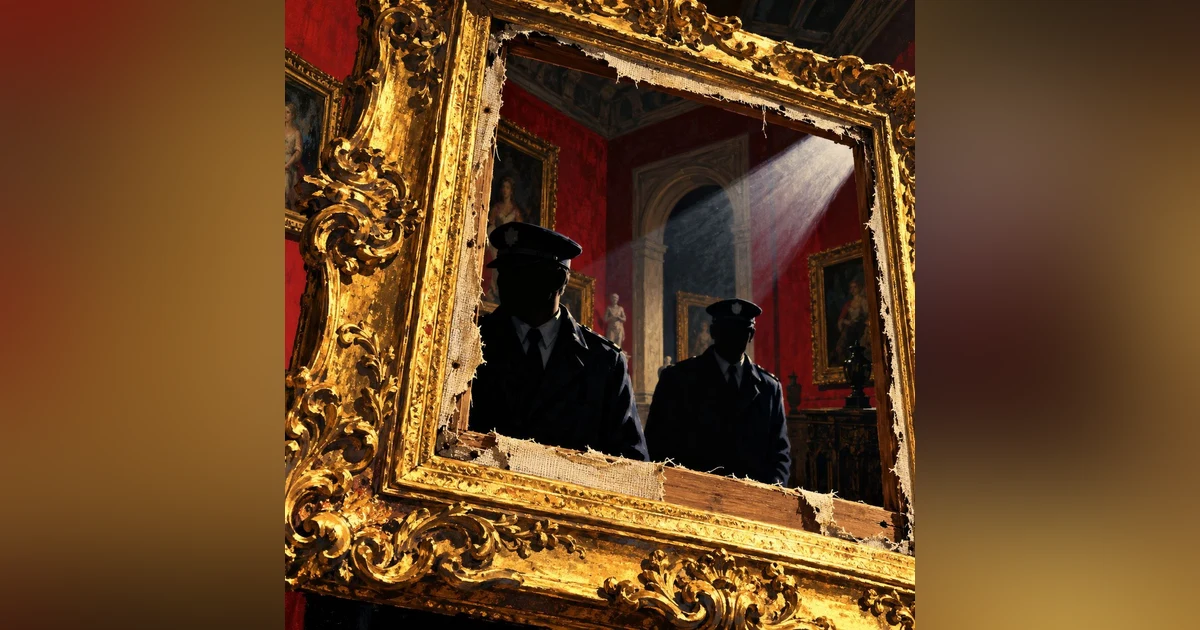
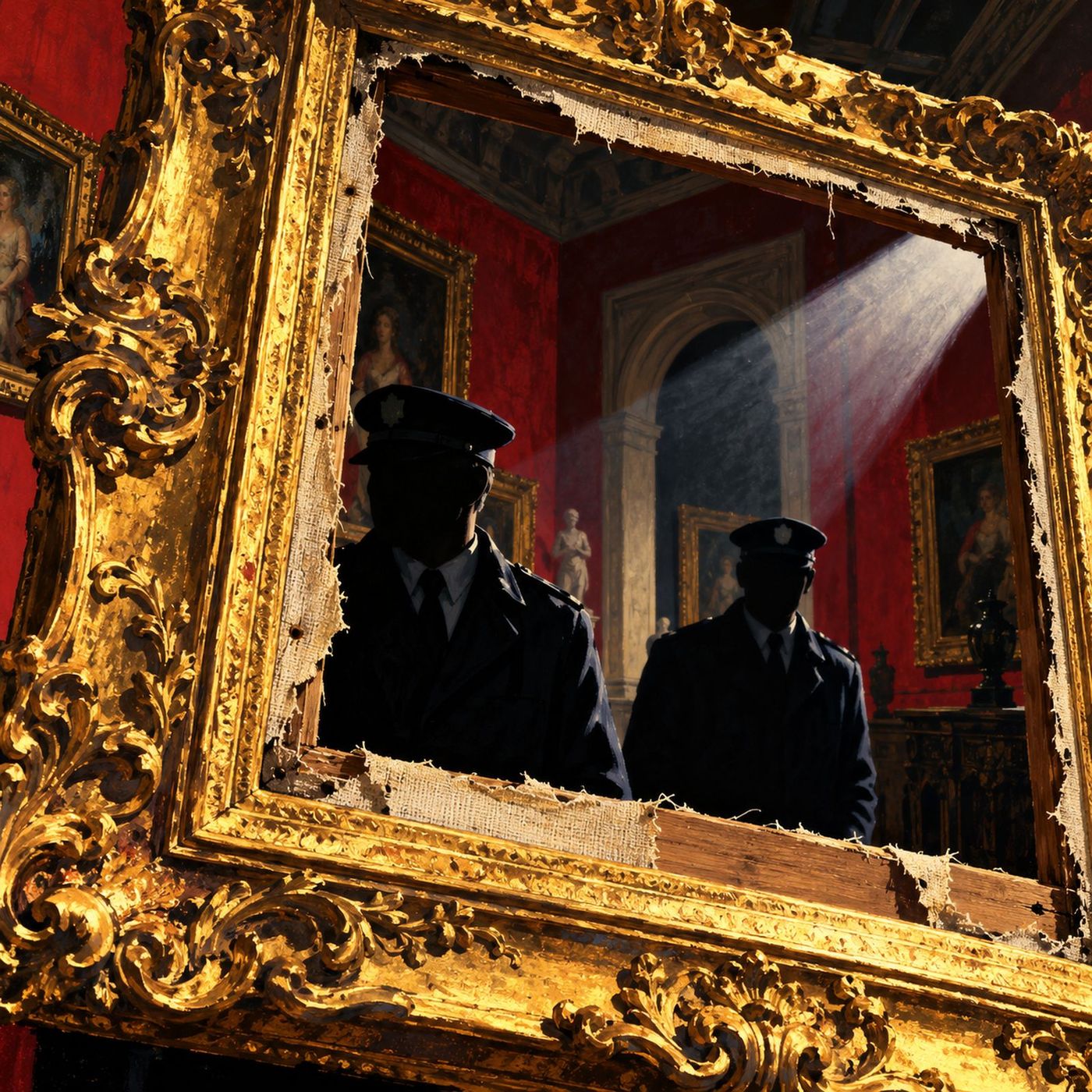
Two thieves dressed as police entered Boston’s Isabella Stewart Gardner Museum on March 18, 1990, restrained the guards, and stole thirteen works of art.
Over 81 minutes, the intruders moved through the galleries and took pieces by Rembrandt, Vermeer, Degas, and others—including The Storm on the Sea of Galilee and The Concert. They cut paintings from their frames, removed security records, and disappeared before the morning shift found guards Rick Abath and Randy Hestand handcuffed in the basement. The empty frames still hang in the museum.
Terrifying & True follows the false-police ruse, security vulnerabilities, motion-detector timeline, and strange choices that made this the world’s most valuable unresolved art theft. The FBI explored possible insider knowledge, organized-crime connections, and Boston underworld suspects, but no one has been charged and none of the thirteen objects has been recovered.
With a $10 million reward still attached to their return, the Gardner Museum heist remains both a criminal mystery and an open wound in art history: who planned it, and where are the stolen masterpieces now?
The thieves’ selections remain puzzling. They took priceless paintings and small Degas works, ignored other celebrated objects nearby, damaged frames, and removed surveillance material—behavior that has fueled questions about expertise, haste, and advance knowledge of the museum. The guards’ restraint and the unusually long 81-minute visit deepen the mystery.
Empty frames remain on the walls as both evidence and promise. The episode gives listeners a clear account of the police disguise, gallery route, stolen works, security timeline, organized-crime theories, reward, and continuing effort to recover art whose value cannot explain why these particular objects disappeared together.
🎧 LISTEN NOW and subscribe for spine-tingling horror stories every week!
🎉 Unlock exclusive bonus episodes and support the show on Patreon!
👉 WeeklySpooky.com/Join
📬 Contact Us / Submit Your Horror Story!
- Twitter: @WeeklySpooky
- Facebook: facebook.com/WeeklySpooky
- Email: WeeklySpooky@gmail.com
🎵 Music by Ray Mattis 👉 Check out Ray’s incredible work here !
👨💼 Executive Producers: Rob Fields, Bobbletopia.com
🎥 Produced by: Daniel Wilder
🌐 Explore more terrifying tales at: WeeklySpooky.com
0:03 When it comes to priceless works of art, many things come to mind, whether it's museums or the concept of some kind of fortress owned by a diplomat or billionaire. But what happens when artwork is stolen in mass and somehow no one can figure out? How? We're telling that story tonight, What you were about to beat is burn. Based on witness accounts, testimonies, and public record, this is terrifying and truth. On Saint Patrick's Day nineteen ninety nine, while Boston celebrated with parades and hints, two men in police uniforms entered the Isabella Stuart Gardner Museum and proceeded to vanish into history along with thirteen priceless works of art.
1:14 It was the perfect crime, executed on the perfect night, leaving behind only empty frames and unanswered questions. In this poetic twist of fate, we unravel the mystery of the world's most infamous art heist on Saint Patrick's Day here tonight, so as we learn a little bit and hope for some luck of the Irish. Remember there's only one thing more priceless than fine art. Answers. Right after this, on the night of March eighteenth. Nineteen ninety, the Isabella's Stuart Gardner Museum in Boston was transformed from a place of artistic wonder into the site of one of the most infamous heists in history. Two men disguised as police officers gained access to the museum under the cover of darkness.
2:19 Their appearance seemed routine, and the guards on duty, Rick Abbath and Randy Hestan, had no reason to suspect anything was amiss. What followed was a brazen robbery that would see thirteen invaluable works of art stolen, including masterpieces by Rembrandt, Vermier and Degas, and left the art world reeling. In the hours after the crime, investigators were left with little more than questions. The thieves expertly bypassed security measures, including motion detectors, and subdued the guard arts with precision. The stolen artwork, valued at hundreds of millions of dollars, vanished without a trace. Despite the urgency of the FBI's investigation and a ten million dollar reward for information, the case quickly turned cold. Over the years, numerous theories emerged, including connections to the Boston Mafia and various criminal organizations, but no definitive answers have been found. The Isabella Stuart Gardner Museum heist remains a chilling mystery. How did two thieves execute such a meticulously planned crime and what happened to the stolen masterpieces? The unanswered questions continue to haunt investigators,
3:55 the museum and art enthusiasts around the world. The Isabella's Stewart Gardner Museum was constructed under the guidance and vision of their namesake, an art collector who dedicated her life to assembling an extraordinary personal art collection. Gardner was an influential figure in the art world, known for her deep appreciation of beauty and culture. She was an American art collector as well as philanthropist and a respected patron of the arts. Her passion for art and her desire to share it with others led to the establishment of the museum in Boston. She aimed to create a unique and intimate environment where visitors could engage with masterpieces from around the world, displayed not in the traditional gallery style, but in a way that reflected her personal esthetic and artistic philosophy.
5:01 Gardner's pursuit of art was driven by her energetic intellectual curiosity, an adventurous spirit and her privileged financial position. Her wealth allowed her to travel extensively, collecting rare and valuable artworks from Europe, Asia and beyond. These travels exposed her to diverse cultures and artistic traditions, shaping her distinctive taste. Gardner was not only a collector, but a well connected figure in artistry and literary circles. She formed close friendships with some of the most notable artists and writers of her time, including painter John Singer, Sargent artist James McNeil Whistler, landscape painter Dennis Miller Bunker, Swedish artist and heer Zorn, novelist Henry James, watercolorist Dodge mcnight, Japanese art historian A Kura Cacuso, and novelist Francis Marion Crawford. These relationships influenced her collecting habits and inspired her approach to arranging her museum's displays.
6:15 The museum, designed to resemble a fifteenth century Venetian palace. Officially open to the public in nineteen o three, Gardener oversaw every detail of the museum's construction and interior arrangement. She carefully curated the collection arranging the artworks, sculptures, tapestries, and decorative objects according to her vision. Each room was designed to offer visitors a multi sensory experience, blending visual art with architectural elements and lush gardens. Gardner believed that the setting in which art was viewed was as important as the art itself. Her unconventional approach defied the rigid display methods commonly used by museums of her time, creating an atmosphere that invited personal reflection and emotional connection with the pieces. In nineteen nineteen, Gardner's health began to decline after suffering the first series of strokes. Though her physical condition weakened, she continued to reside in her private quarters on the museum's fourth floor. Her connection to the museum remained strong, as it was not only her legacy, but also her home. Over the next few years, her health continued to worsen until she passed away on July seventeenth,
7:50 nineteen twenty four, at the age of eighty four. She was laid to rest in the Gardner family tomb at Mount Auburn Cemetery, a historic resting place situated between Watertown and Cambridge, Massachusetts. She was buried alongside her husband, Jack Gardner, and their only child, who died in infancy. Upon her death, Gardner left behind not only an artistic treasure, but also a clear vision for its preservation. She provided a three point six million dollar endowment, which would be worth approximately sixty four million dollars in today's currency. To secure the museum's future, her will included strict instructions. The collection was to remain precisely as she arranged it, with no artwork to be removed, sold, or added. This requirement ensured that her vision would be preserved for generations, making the Isabella Stuart Gardner Museum a timeless reflection of her passion for art, her personal taste, and her unwavering dedication to creating a cultural sanctuary in Boston. However, in the years to come, financial challenges would arise. By the nineteen eighties, the Isabella
9:26 Stuart Gardner Museum was grappling with serious financial difficulties that affected nearly every aspect of its operations. The endowment left by Gardner had significantly declined in value over the years, leaving the museum struggling to cover its operational costs. Lack of sufficient funds led to a noticeable decline in the building's condition, with essential maintenance being delayed or ignored. The museum did not have a climate control system, placing its valuable collection at risk of damage from fluctuating temperatures and humidity. Additionally, the museum was operating without an insurance policy, meaning that any damage to or theft of its artwork would result in an irreparable financial loss. These financial constraints left the institution vulnerable, both structurally and in terms of safeguarding its priceless collection. Concerns about the museum's security heightened in nineteen eighty two when the FBI uncovered a plot by a group of Boston criminals to rob the museum. This alarming development prompted museum officials to prioritize security improvements despite the ongoing financial strain. Funds were redirected to install sixty infrared
10:58 motion detectors throughout the building and a closed circuit television system with four cameras positioned around the museum's exterior. However, the Board of trustees deemed the installation of interior cameras too costly given the museum's budgetary limitations. Instead, they opted to increase the number of security guards monitoring the premises. These upgrades marked an improvement, but the absence of internal surveillance left significant gaps in the security system. Despite the adjustments, the museum's security remained notably inadequate compared to other institutions.
11:44 The only means for guards to alert the police were by pressing an emergency button located at the security desk. Unlike neighboring museums that had more comprehensive systems requiring night watchmen to place hourly calls to local law enforcement as a safety check, the Gardner Museum relied solely on this single point alarm system. This approach left the museum particularly exposed during overnight hours, as any failure to reach the security desk could delay a response to suspicious activity. In nineteen eighty eight, recognizing the ongoing concerns, museum officials sought an evaluation from an independent security consultant. The review concluded that the museum's security measures were generally on par with those of similar institutions, but recommended additional upgrades to strengthen its defenses. Around the same time, the security director at the Museum of Fine Arts in Boston also advised Gardner Museum officials to implement further security improvements. However, the Board of trustees, facing persistent financial limitations and adhering to Isabella Stuart Gardner's directive against making significant alterations to the building, ultimately decided against pursuing these recommendations. The museum's staffing situation
13:19 further compounded these vulnerabilities. The security director requested increased wages for guards in an effort to attract and retain more qualified personnel. This proposal was rejected by the board, leaving guards earning only slightly above minimum wage. As a result, many of the security staff were inexperienced and lacked the training necessary to handle sophisticated threats. The museum's security shortcomings became widely known among the guards, creating an environment where internal knowledge of these weaknesses could potend be exploited. These unresolved issues left the Gardener Museum in a precarious position, relying heavily on underpaid staff and an incomplete security system to protect its priceless collection. Everything appeared routine at the Isabella Stuart Gardner Museum until the early morning hours of Sunday, March eighteenth, nineteen ninety, when an unprecedented crime unfolded. At approximately twelve thirty am, a group of Saint Patrick's Day party goers making their way home noticed two men sitting inside a parked hatchback along Palace Road near the museum's side entrance. The men wore police uniforms and their presence
14:52 seemed ordinary to the revelers, who assumed the officers were responding to a disturbance common on a night of heavy celebrations. Inside the museum, two guards were on duty, twenty three year old Rick Abbath, a regular night watchman, and twenty five year old Randy Hesstand, working his first night shift. Their routine involved one guard patrolling the galleries while the other remained at the security desk. During Abbath's patrol, fire alarms suddenly went off in several rooms, but he found no signs of fire. Believing it was a system malfunction, he turned off the alarms and continued his rounds. Before returning to the desk, he briefly opened and closed the side door without notifying hestand. At one twenty a m.
15:50 The disguised men approached the side entrance and rang the buzzer, claiming to be the police investigating a disturbance. Abbath saw their uniforms on the security camera, and, assuming it was related to the Saint Patrick's Day festivities, allowed them inside. Once in the foyer, they asked Abbath to call hestand back to the security desk. It was then Abbath noticed one man's mustache appeared to be fake, but before he could react, the men claimed he was wanted on a warrant and ordered him away from the desk. As Abbath stepped out, one intruder pushed him against a wall and handcuffed him. When hestand arrived, he was restrained in the same way. The thieves then revealed their true intentions, taping the guards heads and eyes before leading them to the basement, where they were handcuffed to a pipe. The intruders warned the guards not to alert authorities and hinted they would be rewarded if they stayed quiet. Within fifteen minutes, the guards were subdued and the stage was set for the theft.
17:09 The thieves path through the museum was tracked by infrared motion detectors, providing investigators with a detailed timeline of their movements. It was not until one forty eight a m Thirteen minutes after restraining the guards that the first motion was recorded in the Dutch room on the second floor. This delay led authorities to believe that the thieves likely waited to ensure no police had been alerted before beginning their operation. Upon entering the dutch room, a censor designed to warn when visitors got too close to the artwork activated, prompting the thieves to smash it. Once inside, the thieves wasted no time targeting valuable pieces. They removed the Storm of the Sea of Galilee and a Lady and a Gentleman in Black, throwing both onto the marble floor, shattering their glass frames. Using a blade, they cut the paintings from their stretchers. They also removed a large self portrait oil painting by Rembrandt from the wall, but left it leaning against a cabinet, likely due to its size and wooden backing. Instead, they took a small self portrait etching by Rembrandt that was displayed beneath the larger painting. The thieves continued by cutting Landscape with Obelisk and the Concert from their frames, and they also took an ancient Chinese goo a bronze vessel.
18:43 While one thief continued looting the Dutch room. The other moved into the short gallery located on the opposite end of the second floor. Eventually, both men worked together in this narrow hallway. They began unscrewing a frame holding in the poleonic flag, appearing to intend to steal it, but ultimately abandoning the effort. Instead, they took only the eagle shaped finial from the top of the flagpole. Additionally, they seized five sketches by Edgar Degas on the first floor. The final piece stolen was Shay Tortoni from the Blue Room. Strangely, the museum's motion detectors recorded no activity in the Blue room during the heist. Only a Bath's footsteps had been detected earlier during his patrol. Before leaving, the thieves checked on the guards, asking if they were comfortable. They then entered the security director's office, seizing the videotapes that contained footage of their entry and data print from the motion detectors. However, they overlooked a hard drive that had also recorded movement data.
20:09 The empty frame of Shae Tortoni was left on the security director's desk. At two forty am, the side entrance doors were opened, and again at two forty five am, marking their final departure after eighty one minutes inside the museum. Later that morning, the next shift of guards arrived and found they could not gain access. When their calls went unanswered, they contacted the security director, who unlocked the building and discovered the empty watch desk. Police were summoned and a search revealed Abbath and hestand still bound in the basement.
20:52 In total, thirteen works of art had been stolen. Initially valued at two hundred million dollars by the FBI in nineteen ninety, the estimated worth increased to five hundred million dollars by two thousand. By the late two thousands, some art dealers speculated the stolen works could be worth as much as six hundred million. It remains the most valuable museum heist in history. The FBI swiftly took control of the investigation, suspecting that the stolen artworks could be transported across state lines. However, the case proved challenging due to the lack of concrete physical evidence. It remains uncertain whether the thieves left behind any DNA, and although fingerprints and footprints were found, they couldn't be definitively linked to the criminals, as they could have belonged to museum staff. As forensic technology evolved over time, the FBI pursued DNA analysis, but some of the evidence went missing within the agency's records, complicating the investigation. Further, witnesses provided descriptions of the two thieves.
22:13 One was described as around five feet nine inches to five feet ten inches tall, with a medium build, likely in his late thirties, while the other stood about six feet tall with a heavier build and appeared to be in his early thirties. Early on, suspicion fell on security guard Richard Abbeth due to his unusual behavior that night. Surveillance footage showed him briefly opening and closing a side door during his shift, leading some to suspect he may have signaled the thieves waiting outside. Abbath explained that it was part of his routine to check the door's security. However, some of his colleagues argued that such actions would have been flagged by supervisor security logs. Adding to the suspicion was the revelation that the motion detectors in the blue room where se Tortoni was stolen did not record any movement during the robbery. The only recorded footsteps you may recall were Abbaths during his earlier patrol. A security consultant later verified that the motion censors had been functioning properly at the time. In twenty fifteen, the FBI released footage from the night before the heist showing Abbath letting an unidentified man into the museum to speak with him at the security desk. Abbath claimed not to remember the interaction
23:45 or recognize the man. Later on, former museum employees identified the man as the museum's deputy security chief, casting doubt on the significance of the footage. Throughout his life life, Abbath maintained his innocence and denied any involvement in the theft. He passed away in twenty twenty four at the age of fifty seven. Despite extensive investigations, the stolen artworks, now worth hundreds of millions of dollars, remain missing. Isabella Stuart Gardner Museum continues to offer a ten million dollar reward, the largest ever offered by a private institution, for information that leads to their return. The FBI has relied heavily on informants, interrogations, and undercover operations to track down leads, but progress has been slow. Investigators suspect the robbery was masterminded by a criminal organization. The FBI's focus has been on the Boston Mafia, which was in the midst of internal conflict at the time. One theory suggests that gangster Bobby Donati orchestrated the heist in order to negotiate the release of a key associate from prison. Donati was murdered a year later, only adding to the mystery. Another possibility
25:19 involves a gang from Boston's Dorchester neighborhood, although no members have admitted involvement. Despite several individuals facing sentences after a sting operation, none of them have provided information about the stolen artwork, and despite the offer of reduced sentences and reward money, all leads have proven to be fruitless, leaving the case unresolved and the fate of the masterpieces still unknown. The Isabella Stuart Gardner Museum heist remains one of the most perplexing crimes in history. Light years of investigation, the culprits remain unknown, and the stolen masterpieces have never resurfaced.
26:09 The mystery of how two thieves pulled off such a sophisticated and daring robbery, and the whereabouts of the priceless artworks continues to haunt law enforcement and the art world alike. The theft not only shattered the museum's sense of security, but also left a lasting scar on the families and communities connected to the stolen works. The sense of loss is not just in the absence of the art, but in the unanswered questions that linger with every passing year as the investigation unfolds for decades. One pressing question lingers how could such a high profile robbery occur under the noses of the museum's security staff and why did the shift supervisors fail to detect any anomalies? Could there have been an inside connection or lapse in security protocols that allowed the thieves to execute their plan without alerting authorities.
27:21 This is one of those mysteries we hope will be solved, not just for the sake of justice or for the preservation of fine art, but out of shear and morbid curiosity. Terrifying and True is narrated by Enrique Kuto, its executive produced by Rob Field's Markshields and babble Topia dot Com, and produced by Dan Wilder with original theme music by Ray Mattis. If you have a story you think we should cover on Terrifying and True, send us an email at Weekly Spooky at gmail dot com. And if you want to support us as little as one dollar a month, go to Weeklyspooky dot com slash Join. Your support for as little as one dollar a month keeps the show going.
28:07 And speaking of I want to say an extra special thank you to our Patreon podcast boosters, folks who pay a little bit more to hear their name at the end of the show. And they are Kate and Lulu, Jessica Fuller, Johnny Nix, Jenny Green, Amber Hands for Brent mccaullough, Karen we Met, Jack Ker and Craig Cohen. Thank you all so much and thank you for listening. We'll see you all right here next time on Terrifying and True.
