


 Apple Podcasts

 Spotify

 Spreaker

 Audible

 Castro

 RSS Feed

 iHeartRadio
Terrifying & True | The Babes in the Wood Murders — The Noakes Family Tragedy
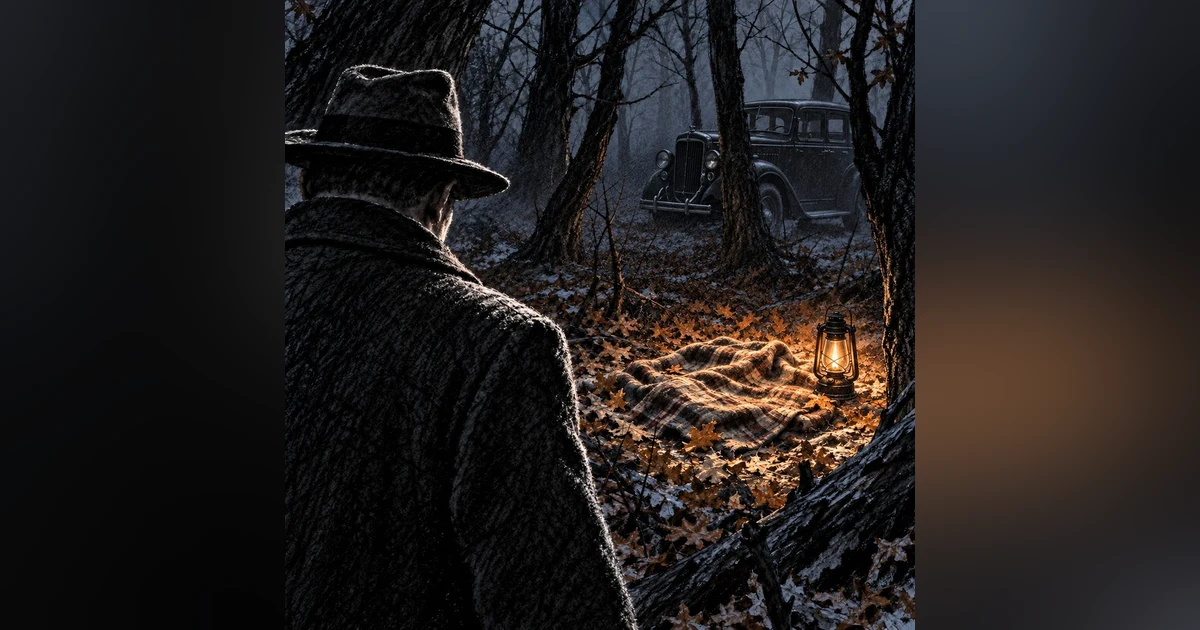
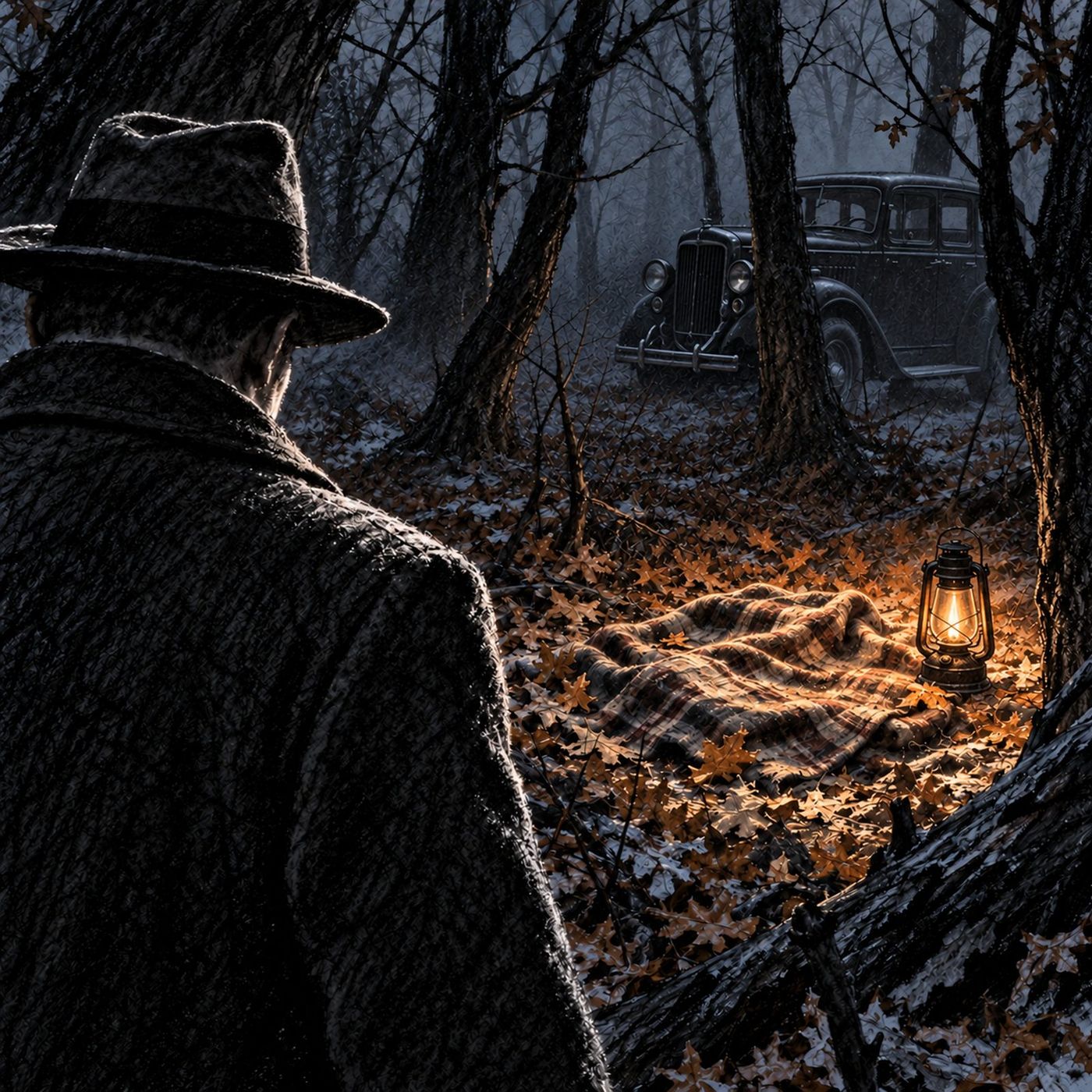
Three young girls were found beneath a blanket near Pennsylvania’s Pine Grove Furnace in November 1934, unidentified and abandoned far from home.
Thousands viewed the bodies as authorities tried to learn who the “Babes in the Wood” were. The investigation ultimately traced them to California: Norma, Dewilla, and Cordelia Noakes had crossed the country with their father, Elmo Noakes, and his 18-year-old niece, Winifred Pierce, during the Great Depression. Early reports struggled to determine whether exposure, starvation, or violence caused the deaths; investigators later concluded that the children had been suffocated.
More than one hundred miles away, Noakes and Pierce were found dead near Altoona after an apparent murder-suicide. Receipts, newspaper coverage, physical identification, and the family’s 1929 Pontiac helped connect the two scenes and reconstruct a desperate journey from Roseville to Pennsylvania.
Terrifying & True examines the mystery that gripped the nation, the evolving forensic conclusions, and how poverty and despair became part of one of Depression-era America’s most haunting family tragedies.
Rather than relying on the headline alone, this Terrifying & True account traces The Babes in the Wood Murders through the people affected, the known record, and the questions the evidence still cannot settle.
🎧 LISTEN NOW and subscribe for spine-tingling horror stories every week!
🎉 Unlock exclusive bonus episodes and support the show on Patreon!
👉 WeeklySpooky.com/Join
📬 Contact Us / Submit Your Horror Story!
- Twitter: @WeeklySpooky
- Facebook: facebook.com/WeeklySpooky
- Email: WeeklySpooky@gmail.com
🎵 Music by Ray Mattis 👉 Check out Ray’s incredible work here !
👨💼 Executive Producers: Rob Fields, Bobbletopia.com
🎥 Produced by: Daniel Wilder
🌐 Explore more terrifying tales at: WeeklySpooky.com
0:01 Two children found dead in the forest. A sad story, a tragic case of misadventure, harming the most vulnerable and innocent of a song, something we all dread. But as investigations dig deeper, something more devious and macabre may be afoot. And we're telling that story tonight. What you were about to beat, you isspur to be you. Based on witness accounts, testimonies, and public record, this is terrifying and treat.
0:53 In November of nineteen thirty four, three young sisters were found lifeless in the woods of Pine Grove Furnace, Pennsylvania. What seemed like a tragic accident soon revealed a chilling story of desperation and death. Was it mercy, madness or something far more sinister? These questions are deeply uncomfortable. They make us think about the inhumanity that may lie in each and every one of us. But we'll be asking those questions here tonight, So make sure you're comfortable and hold your loved ones close all that. Right after this, a shocking finding shook the small town of penn Township in Pennsylvania's Cumberland County. Back in November of nineteen thirty four, The tranquility of the area was disrupted when the lifeless bodies of three young girls, affectionately referred to as the Babes in the Woods, were discovered on that cold day of November twenty fourth, nineteen thirty four, in a location
2:24 that now marks the entrance to the scenic Pine Grove Furnace State Park. This grim finding not only plunged the local residents into a profound sense of shock, but also catapulted them into the center of a mystery that would haunt them for decades. In the initial days following the discovery, investigators were faced with a complex puzzle wrapping their heads around the circumstances that led to such a tragic end for these children, which was no small feet. They elved deep, gathering fragments of information bit by bit to construct a narrative that was as heartbreaking as it was horrifying. The tragedy unfurled a tale of a man, his niece, his two daughters, and his stepdaughter whose fates were cruelly intertwined.
3:21 As the investigation progressed, a startling revelation came to light. The young girls were part of a larger family tragedy. Their bodies were found over one hundred miles away from another chilling sea, connecting dots that spanned across the state. The autopsy revealed that the girls had not died from violence, but rather from exposure and possibly starvation. It appeared that they had been left in the woods, abandoned to fend for themselves in the cold, harshaped environment. But why, who would commit such a callous act and what could possibly be the motive. It's believed that this sad and lonely story of desperation and tragedy took place in a quiet Pennsylvania town in the dead of winter nineteen thirty four.
4:22 Elmo J. Noakes, a once employed member of a fruit company in Roseville, California, found himself grappling with the stark realities of the Great Depression. With no jobs and no prospects, he made a fateful decision that set a devastating series of events into motion. Strapped for cash but determined to seek a better life, Noakes embarked on a desperate journey eastward on November eleventh, nineteen thirty four. Accompanying him were his three daughters, Norma, de Willa, and Cordelia, along with his niece Winifred Pierce. The family's hopes were packed into a car purchased for a mere forty six dollars roughly one thousand, ninety dollars in twenty twenty five, a vehicle that symbolized both their escape and their fragile dreams. As they traveled, it became painfully clear that the promises of a fresh start would not materialize. Stricken by poverty and unable to provide for his children, Noakes was faced with an agonizing decision. Believing death to be a kinder faith than starvation, he tragically ended the lives of his daughter in the secluded woods of Cumberland County on November twenty first.
5:52 Their bodies were discovered days later, marking a grim end to their young lives. But the ordeal did not end there. Noakes and Pierce, with nothing but the clothes on their backs and a world of despair, continued westward, leaving behind the vehicle that had carried their hopes. In a final act of desperation, they sold Pierce's coat, their last possession, for a meager sum. With the proceeds, Noakes purchased a twenty two caliber rifle. On November twenty fourth, in an isolated railroad station in Blair County. Noakes used the rifle to end both Pierce's life and his own. Their bodies were found just as the three young girls were being discovered in the woods, sealing the tragic fate of the family in a painful echo. The autopsies revealed the extent of their desperation, showing the children had gone without food for eighteen hours before their deaths, suggesting a much longer period of starvation prior to being abandoned. This story, which unfolded on the front pages of local newspapers, captivated and horrified the public, leaving a lasting impact on the communities involved.
7:24 Two days after the bodies were found, on November twenty sixth, nineteen thirty four, the Patriot newspaper reported on the unfolding situation with both an air of mystery and a sense of urgency. The community and authorities faced a daunting challenge. The identities of the three young girls, thought to be sisters, were still unknown, despite the girls being found carefully covered with a blanket in a secluded part of the woods. This revelation prompted a massive public response, with over five thousand individuals visiting the ewing funeral parlors in Carlisle, hoping to catch a glimpse of the children and perhaps help in identifying them. Understanding the gravity of the situation and with daylight fading on the possibility of swiftly identifying the young girls, authorities embarked on a nationwide effort. Schools across the country were contacted, with officials hopeful that the girls might be recognized through their absence from class, a tactic that underscored the desperate measures being taken to solve this grisly mystery. Simultaneously, next to the report about the girls, another story emerged that further deepened the puzzle, the discovery of the bodies of a man and a woman near Altoona,
8:56 identified later as Noakes and Peers. Authorities dismissed any connection between the two cases, citing the geographical and temporal challenges that suggested it was impossible for the stories to be related. They stated they wouldn't have had time to be in both places, a stance that reflected both the complexities and limitations of forensic science and investigative methods at the time. As investigators hunted deeper, a black bag found near the girls offered potential clues. It contained an assortment of clothes ranging from soil to fair quality, including a man's gray shirt traced back to a store in Napa, California. This discovery provided the first tangent link in a chain of events that would eventually unfold to reveal a tragic story spanning across the country. Efforts to piece together the journey and lives of the Knoakes family and Winifred Pierce intensified in the days following the grim discovery. The authorities planned autopsies for the young girls and created masks of their faces, hoping to preserve their identities for future identification. Unfortunately, the
10:32 autopsies initially failed to uncover the cause of death, leaving more questions than answers and the public waiting anxiously for any news that could bring solace to the tragedy. Following the distressing discoveries in central Pennsylvania and the days of intense investigation as well as public interest that followed, significant progress was made. By November thirtieth, the Patriot newspaper brought to light new information that would finally begin to connect the dots in this baffling case. The dots linked a journey that spanned the breadth of the United States, from the sunny streets of Roseville, California, to the quiet woods of Pennsylvania. Authorities had successfully identified the woman found near Altoona as Winifred Pierce, an eighteen year old girl who played a crucial role in the lives of Elmo J.
11:33 Noakes and his three daughters. Notably, Pierce had a distinct physical characteristic a deformed foot, which aided in her identification. She, alongside Elmo J. Noakes, had been reported missing from Roseville, California. It came to light that Pierce had been more than just a relative. She kept house for Noakes and his daughters in bed herself as a vital part of their everyday lives. With identities becoming clearer, the community sought to offer some semblance of dignity to the tragic outcome of this story. The Patriot detailed plans for the young girl's funeral, which was held the next day. The American Legion Post number one oh one of Carlisle had taken it upon themselves to arrange a simple but impressive ceremony at Ewing Funeral Home on South Hanover Street, leading to their final resting place in Westminster Cemetery. This gesture of respect provided a stark contrast to the bewildering circumstances surrounding their debts.
12:44 Aiming to offer solace and finality to a case that had captivated the nation. In an effort to bring closure to the community and perhaps offer a final chance for connection, the newspaper announced that the public would have one last opportunity to view the bodies on the evening of November thirtieth, from six to ten pm. This announcement underscored the profound impact the story had on public consciousness, with the community eager for answers and hoping to pay their respects. Behind the scenes, the police and investigative teams pressed on piecing together the journey that led from Roseville, California, to the tragic endpoint in Pennsylvania. Through the collaborative efforts with newspapers across the country, previously missing links in the family's journey through the state or being uncovered. These efforts painted a detailed picture of a cross country trip that ended in unforeseen tragedy. As the investigation progressed, more details about the movements of Elmo J. Noakes and his family began to emerge, painting a clearer picture of their enormous journey from the west to the east coast of the United States. Investigators had pieced together that the family's presence in Pennsylvania was first noted in Waynesboro on the chilly night of November seventeenth.
14:18 This was a key finding since it provided a timeline for their travels. The car, a nineteen twenty nine model Pontiac Sedan that would become their vessel for the long trip, was purchased in Roseville, California, on November tenth. If Noakes set off on the same day he bought the car, he would have had just about a week to cover the increasing distance of over thirty two hundred miles to reach Waynesboro. For context, such a distance would overwhelm even seasoned travelers today and back then, it would have been an incredibly grueling feat for Noakes to arrive in that time frame. He must have driven relentlessly fast, stopping only when absolutely necessary curiously. Throughout the family's travels, there was no sign that Noakes looked for any employment in the towns they passed through. The sole exception was in Philadelphia, suggesting that he was on the run or desperately trying to reach a specific destination. This behavior was odd because back home in California, Noakes had a stable job at a fruit company where he earned twenty five dollars a week, a decent wage for the era. He left abruptly, leaving behind fifty dollars owed to him, indicating his departure was hasty and perhaps fueled by urgent motives. At some point
15:54 during their journey, Noakes acquired a gun from a pawn shop in Altoona, which cost him too two dollars in eighty five cents, a small price but significant in the unraveling of this tragedy. In a seemingly desperate act, he attempted to sell his glasses to a jeweler for just one dollar, exemplifying the dire financial straits he may have found himself in or a rapidly deteriorating mental state. On December one, authorities reached a grim conclusion. They believed that the children did not die by natural causes, but were suffocated.
16:39 This chilling revelation brought a somber tone to the ongoing investigation, as it pointed towards a devastating possibility that Noakes, perhaps feeling trapped by the weight of his responsibilities and unable to cope with the stressors of his life, might have brutally ended the lives of his children. Speculation arose he may have turned the violence towards his niece when a Fred Pierce, before ultimately taking his own life. The Babes in the Wood murders left a scar on the Pine Grove Furnace community. The case was a tragic reminder of the vulnerability of innocence in a world where evil lurks in the shadows. This ever growing narrative, meticulously captured by newspaper reports, not only aimed to reconstruct the family's tragic journey, but also delved into the psyche of Notakes. The public, investigators, and the community at large were left to ponder a daunting question. Could a man pushed beyond his endurance have committed such a heartbreaking act? The narrative shifted from merely examining the events to also contemplating the deeper undercurrents of human despair and the lengths individuals can be pushed to act.
18:14 Terrifying and true is narrated by Enrique Kuto. It's executive produced by Rob Fields, Markshields and bobble Topia dot com and produced by Dan Wilder with original theme music by Ray Mattis. If you have a story you think we should cover on Terrifying and True, send us an email at Weekly Spooky at gmail dot com, and if you want to support us for as little as one dollar a month, go to Weeklyspooky dot com slash join. Your support for as little as one dollar a month keeps the show going. And speaking of I want to say an extra special thank you to our Patreon podcast boosters, folks who pay a little bit more to hear their name at the end of the show, and they are Kate and Lulu, Jessica Fuller, Johnny Nix, Jenny Green, Amber Hands for Brent mccallaugh, Karen we Met, Jack Kerr and Craig Cohen. Thank you all so much and thank you for listening. We'll see you all right here next time on Terrifying and True
