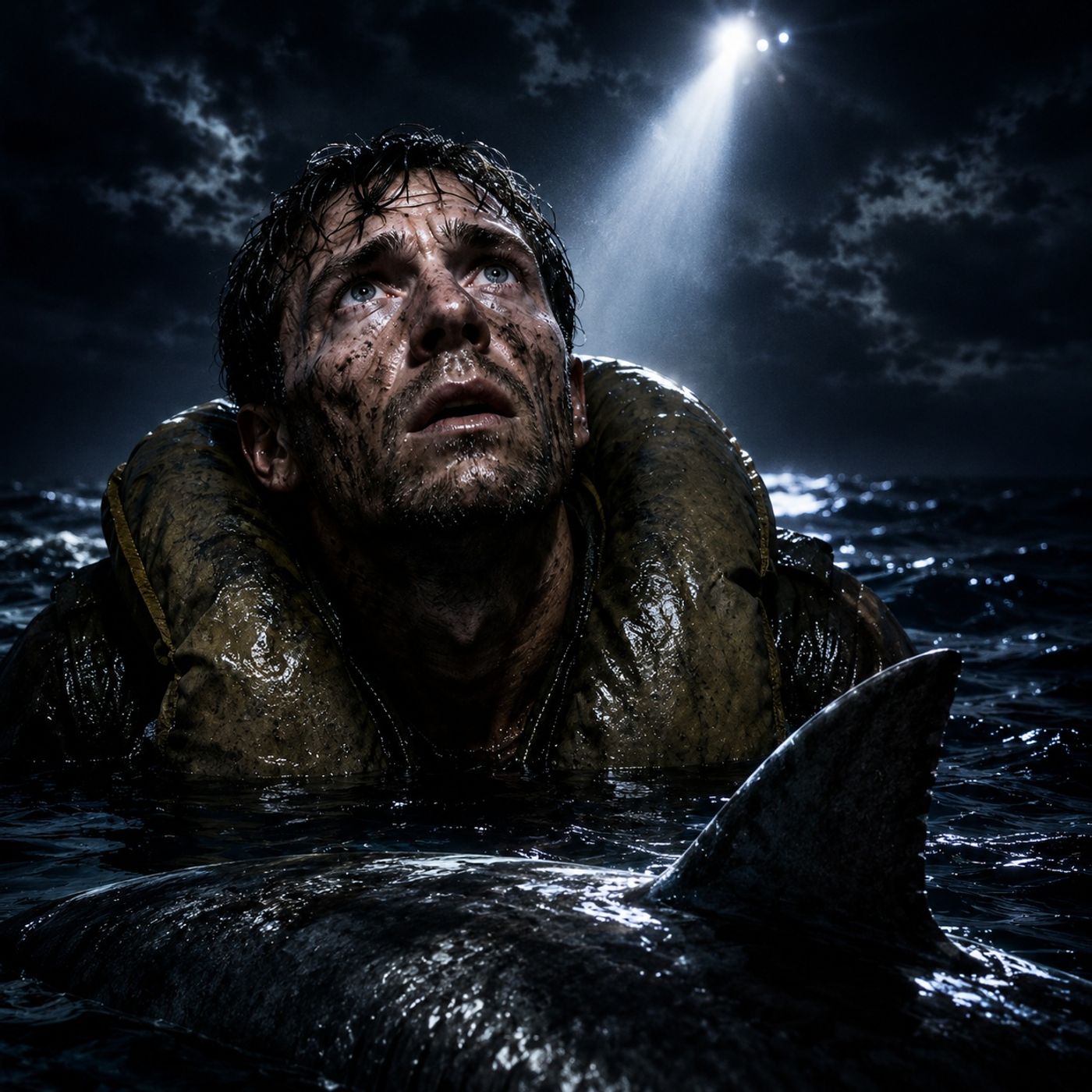
Why the Navy Failed to Notice the USS Indianapolis Was Missing
The disappearance of the USS Indianapolis in July 1945 remains one of the most astonishing administrative failures in naval history. Due to a broken movement-reporting system, fragmented command responsibilities, and procedural blind spots, a major heavy cruiser carrying nearly 1,200 men vanished between major American bases without triggering an immediate search or missing ship alert.
Key Takeaways
- The US Navy's movement-reporting system relied on predicted schedules rather than confirmed arrival logs.
- Responsibility for tracking the USS Indianapolis was divided among multiple commands at Leyte.
- At least one officer knew the cruiser was overdue, but delayed arrivals were far too common to raise immediate alarms.
- Hundreds of sailors survived the initial midnight torpedo attack by a Japanese submarine, only to perish during four days of waiting inside an administrative blind spot.
- A faulty patrol plane antenna ultimately led to the accidental discovery of the survivors after more than three days adrift.
The Flawed Movement-Reporting System
In the final weeks of World War II, the Pacific theater operated at a staggering scale. Thousands of vessels, supply ships, aircraft carriers, and heavy cruisers crisscrossed the ocean under complex command structures. Within this massive machinery, tracking individual ships was often treated as an administrative formality rather than an active safety protocol.
Predicted Positions Versus Confirmed Reports
Navy plotting boards frequently displayed the predicted movement of large vessels based on their estimated times of arrival, rather than positions verified by direct radio reports. Once a ship was scheduled to arrive at its destination, it could effectively disappear from one command's tracking board before anyone had cross-referenced whether it had actually materialized on another.
When the USS Indianapolis was finished delivering components for the Little Boy atomic bomb to Tinian, she proceeded to Guam and then received orders to sail for Leyte in the Philippines. Her route was plotted, her speed was known, and her expected arrival window was logged. However, when she failed to show up on time, the system failed to trigger a safety net.
Fragmented Command Responsibilities at Leyte
Communication breakdowns and divided jurisdictions at Leyte played a massive role in the disaster. Responsibilities for receiving and logging arriving vessels were scattered among various desk officers and department heads. Because delayed arrivals of combat vessels were a routine occurrence in a busy warzone, an overdue ship did not immediately command urgent attention.
The Danger of Normalcy
Human psychology in high-stress environments often normalizes minor irregularities. When a ship the size of the Indianapolis failed to dock precisely on schedule, officers on the receiving end assumed minor delays, routing adjustments, or operational reassignments were to blame. There was no single, mandatory protocol requiring an immediate missing ship alert the moment a cruiser missed its window.
Consequently, the paper records and tracking logs allowed the heavy cruiser to slip between the cracks of the military bureaucracy. While hundreds of men fought for their lives against dehydration, exhaustion, and shark attacks in the Philippine Sea, headquarters simply operated under the false assumption that the ship had already arrived or was safely accounted for elsewhere.
The Cost of Administrative Blind Spots
The true tragedy of the administrative failure lies in the human cost. About 900 men survived the initial midnight torpedo attack by Japanese submarine I-58 on July 30, 1945. They entered the water with life jackets, makeshift rafts, and fierce determination. They expected rescue by sunrise.
Instead, they endured more than three days of extreme environmental torture. Without the administrative system sounding an alarm, no rescue force was dispatched. Pilots flew routine missions overhead, and nearby naval bases maintained normal operations while hundreds of sailors slowly died of salt poisoning, exposure, and exhaustion. It took a freak accident—a broken trailing antenna on a patrol plane flown by Lieutenant Wilbur Gwinn—to finally reveal the massive oil slick and the human survivors bobbing in the open ocean.
Conclusion
The bureaucratic failure that left the crew of the USS Indianapolis stranded at sea demonstrates how systemic oversight can be just as deadly as enemy action. It wasn't until a routine patrol flight stumbled upon the disaster that the Navy realized its tracking methods were fatally flawed. To dive deeper into the harrowing survival tale, the secret atomic mission, and the aftermath of this tragedy, make sure to Listen to the full episode of Weekly Spooky for more terrifying and true historical accounts every Wednesday.
Frequently Asked Questions
Why wasn't a search party sent immediately when the USS Indianapolis went missing?
The Navy's movement-reporting system relied on predicted arrival schedules and fragmented paperwork rather than active verification. Because delayed arrivals were common, no single command recognized that the cruiser was missing and overdue.
Did the navy know the ship had been torpedoed before it was found?
No. Radio operators aboard the Indianapolis attempted to send distress signals during the twelve-minute sinking, but power failures and the chaos of the attack meant no clear distress message was received or logged by shore commands.
How were the survivors ultimately discovered?
They were found purely by accident on August 2, 1945, when a patrol plane pilot named Wilbur Gwinn noticed a massive oil slick while investigating a broken radio antenna, leading him to fly low enough to spot the men in the water.