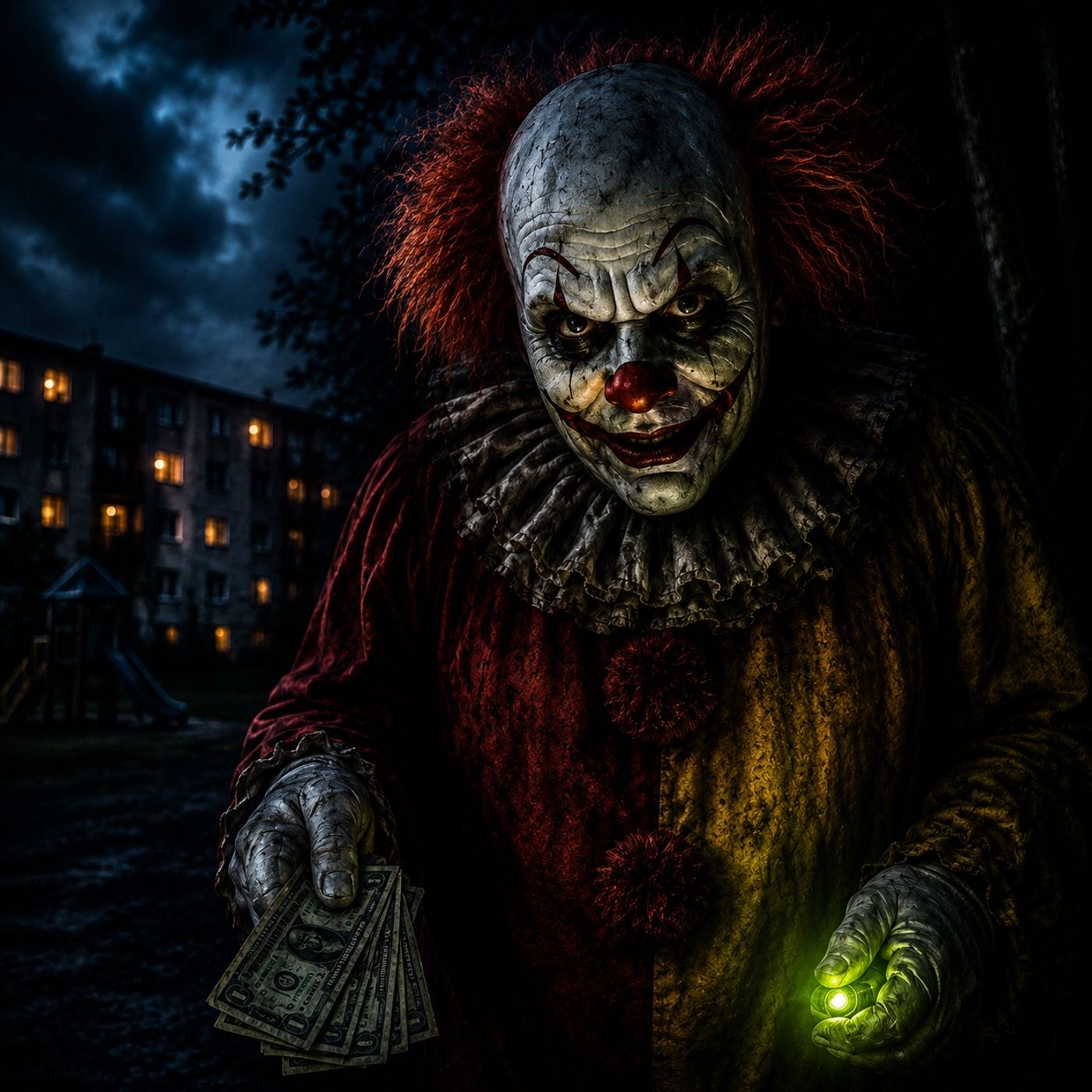
Why Clown Faces Trigger Deep Psychological Fear and Unpredictability
When strange sightings gripped communities in 2016, the choice of costume was not random. This article explores the deep psychological science behind why clown faces trigger intense creepiness, hyper-vigilance, and irrational dread. We examine how masked unpredictability transforms harmless childhood entertainment into modern folklore and real-world panic.
Key Takeaways
- Clown makeup creates permanent, exaggerated expressions that obscure human emotion and genuine intent.
- Psychological studies confirm clowns rank among the creepiest occupations due to behavioral unpredictability.
- Familiar childhood imagery appearing in bizarre contexts generates profound cognitive dissonance.
- The 2016 panic proved that visual ambiguity allows human imagination to supply its own terrifying narratives.
- Context dictates safety: parades and birthday parties feel secure, while dark tree lines evoke primal threats.
Human beings rely heavily on facial cues to assess safety. From the moment we make eye contact with another person, our brains unconsciously scan micro-expressions, posture, and subtle shifts in emotion to determine whether someone is friendly, angry, or dangerous. Evolutionarily speaking, this hyper-vigilance keeps us safe from hostile strangers and predators.
Clowns completely short-circuit this natural assessment system. By painting a permanent, unyielding smile over a human face, a performer creates a profound psychological barrier. You are looking at a human being, but you cannot see what they are actually feeling, thinking, or planning. That hidden identity is the bedrock of fear.
The Psychology of Clown Creepiness
In academic studies examining eerie human behavior, researchers have consistently found that clowns evoke a distinct sense of unease. Unlike overt monsters or clearly identifiable threats, clowns occupy an ambiguous middle ground. They are supposed to be funny and approachable, yet their exaggerated white face paint, oversized features, and unnatural movements send mixed signals to the human brain.
This ambiguity is known as ambivalence. When your brain receives contradictory signals—such as a visual cue for joy paired with a context of isolation and silence—it enters a state of heightened alert. You do not know whether to laugh, run, or investigate. That cognitive friction makes the uncertainty inherently uncomfortable.
Unpredictability and Contextual Danger
Context is everything when it comes to human perception. A person wearing a bright circus costume and honking a bicycle horn at a children's birthday party is safely categorized as a entertainer. Your brain understands the rules of the environment, the boundaries of the event, and the expected behavior.
Take that exact same costume, remove the circus tent, and place the figure silently at the edge of a dark treeline near an apartment complex at two-thirty in the morning. The rules vanish entirely. The behavior is no longer playful; it is profoundly inappropriate and bizarre. Because the clown's intentions are entirely hidden behind greasepaint, the human mind fills the void with worst-case scenarios.
How Horror Culture Amplified the Panic
The psychological vulnerability surrounding clown imagery did not develop in a vacuum. For decades, popular culture, horror cinema, and viral internet hoaxes have systematically trained audiences to associate clowns with menace. From fictional entities like Stephen King's Pennywise to real-world criminal profiles, the archetype of the sinister clown has been deeply embedded in modern consciousness.
When vague neighborhood reports began spreading across social media, they tapped directly into this pre-conditioned cultural anxiety. People did not need a detailed explanation of what a clown in the woods was doing. The costume itself served as a complete, pre-programmed narrative. The grin promised terror, and the dark woods supplied the stage.
The Enduring Mystery of Masked Fear
The phenomenon of the 2016 clown panic demonstrates how quickly cultural anxieties can manifest into physical reality once people begin playing the part. The human fascination—and terror—associated with clown faces remains as potent today as it was a decade ago. To explore the full historical timeline of how these urban legends escalated into nationwide copycat incidents, police investigations, and mass hysteria, Listen to the full episode of Weekly Spooky for a deep dive into modern horror history.
Frequently Asked Questions
Why do people find clowns inherently creepy?
Psychologists attribute clown creepiness to facial ambiguity. Permanent painted smiles hide true emotional expressions, creating uncertainty about whether a person is safe or dangerous.
How does context change the perception of a clown costume?
At birthday parties or parades, clear rules and safe environments frame clowns as entertainers. In isolated, dark settings like woodland edges or parking lots at night, the same costume signals unpredictability and threat.
What role did pop culture play in amplifying clown fear?
Decades of horror films, creepy urban legends, and viral media trained audiences to associate clowns with menace, allowing brief rumors to instantly evoke terror without needing detailed proof.