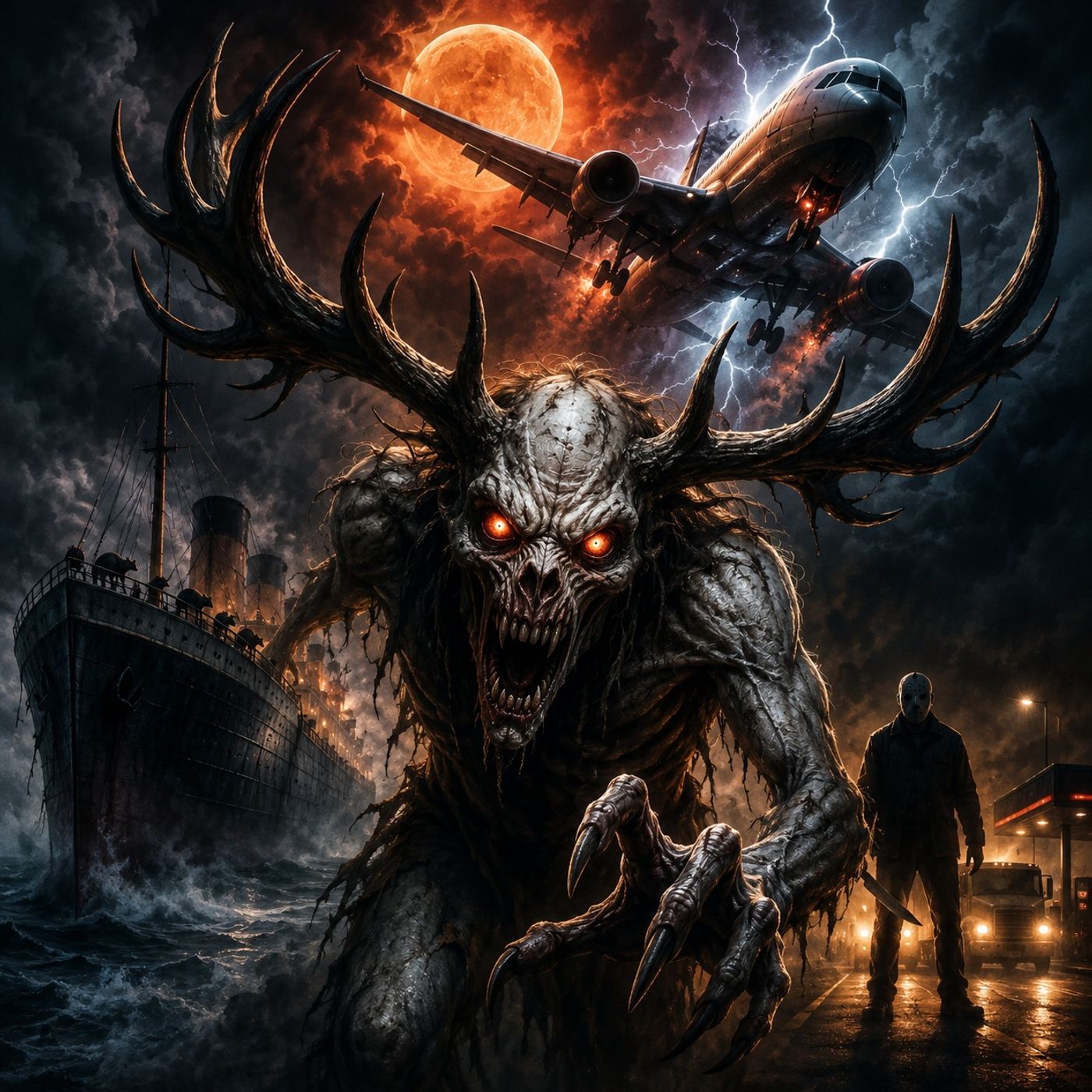
Why Psychological Grief Makes Haunted Airplane Stories So Terrifying
Haunted airplane stories tap into a unique brand of psychological terror by combining the inherent claustrophobia of commercial air travel with the crushing weight of unresolved grief. When characters find themselves trapped thousands of feet in the air, the inability to physically escape turns normal anxieties about flying into a nightmare where past traumas and supernatural loops collide.
Key Takeaways
- Haunted airplane stories rely heavily on the psychological claustrophobia of being trapped at 35,000 feet.
- Unprocessed grief, such as postpartum depression and loss, creates vulnerable psychological spaces for supernatural hauntings.
- Charles Campbell's 'The Last Flight Out' blends urban folklore mechanics with the psychological weight of memory loops.
- Confined transit spaces force characters to confront ghosts from their past without any physical escape route.
The Psychology of Altitude Terror
Commercial air travel is already an exercise in controlled vulnerability. Passengers surrender complete control of their safety to anonymous pilots, strapping themselves into narrow metal tubes hurtling through the stratosphere at hundreds of miles per hour. This baseline tension provides fertile ground for horror fiction writers. Unlike a haunted house, where a protagonist can theoretically run out the front door, an airplane passenger has zero options for departure once the landing gear retracts.
When horror authors introduce supernatural elements into this environment, the terror multiplies exponentially. The sterile cabin lighting, the monotonous drone of the jet engines, and the crowded rows of strangers create an artificial society cut off from the rest of the world. In Charles Campbell's story "The Last Flight Out" featured in the Weekly Spooky anthology, this setting becomes the ultimate trap. The protagonist, Sheila, boards a routine flight only to find herself seated next to a gentle yet melancholic elderly man named Otis, whose seemingly innocent reminiscing slowly peels back layers of profound historical trauma.
Grief as a Supernatural Anchor
One of the most compelling aspects of high-altitude horror is how it mirrors internal emotional states. At 35,000 feet, you are suspended between earth and sky, completely isolated. This physical suspension frequently mirrors the emotional state of individuals dealing with profound loss. Unprocessed grief acts as a psychological anchor, dragging a person's consciousness backward in time even as their physical body moves forward.
In Otis's tale within the episode, the devastating combination of sudden bereavement, family tragedy, and postpartum depression creates a heavy atmosphere of sorrow that refuses to stay buried in the past. The story demonstrates how psychological wounds, left unattended, can warp reality itself. The boundary between memory and the supernatural blurs, transforming a standard flight path into a haunting feedback loop of historical tragedy. The ghosts that appear in these narratives are rarely malevolent monsters hiding in the dark; instead, they are manifestations of unhealed wounds demanding acknowledgment.
Why We Fear Confined Spaces in Horror
Horror thrives on boundaries. By restricting a character's movement, creators force them to confront the very things they spend their daily lives trying to avoid. While road trips and ocean voyages offer vast expanses where danger can loom on the horizon, an airplane cabin forces proximity. You cannot look away from the person sitting next to you. You cannot drown out the unsettling stories whispered across the armrest.
This forced intimacy breaks down the social contracts that make modern travel bearable. When Otis recounts the heartbreaking events of a fateful November evening decades prior, Sheila cannot simply put her headphones back on and ignore him. She is drawn into the narrative gravity of his past. The airplane cabin acts as a crucible, melting away the distractions of modern life until only raw emotion and supernatural inevitability remain.
The Mechanics of Temporal Loops in Fiction
Haunted transit narratives often utilize temporal loops to trap their characters in cycles of doom. The airplane becomes a vessel not just for physical travelers, but for trapped moments in time. As turbulence shakes the cabin and oxygen levels shift, the passengers are subjected to the psychological weight of relived history. This technique forces the reader to question what is real and what is a manifestation of collective trauma.
The genius of this subgenre lies in its ability to make internal psychological struggles feel external and visceral. The physical drops in altitude mirror the plunging spirits of characters confronting their worst memories. It is an exploration of guilt, regret, and the inescapable nature of family tragedy.
Conclusion
Stories that blend the claustrophobia of aviation with the deep scars of human grief remind us that our most terrifying journeys are often internal. Whether dealing with phantom passengers, cursed flight paths, or the lingering echoes of past trauma, haunted airplane narratives prove that you can never truly outrun your history—especially when you are trapped miles above the ground.
To dive deeper into this chilling tale and explore other terrifying narratives involving ghost ships, Wendigos, and highway horror, make sure to Listen to the full episode. Subscribe to Weekly Spooky for weekly terror tales that keep Halloween alive all year long.
Frequently Asked Questions
What makes haunted airplane stories so effective in horror fiction?
Haunted airplane stories combine intense physical claustrophobia with the psychological isolation of high-altitude travel, leaving passengers with no means of escape when the supernatural manifests.
How does grief function as a supernatural catalyst in horror stories?
In tales like 'The Last Flight Out,' deep emotional trauma and unresolved grief lower a character's psychological defenses, making them susceptible to repeating tragic temporal loops and ghostly encounters.
Why are closed transit environments common in modern horror writing?
Closed transit environments like airplanes, ships, and trains create immediate stakes because the characters are physically trapped together with the threat, amplifying tension and paranoia.