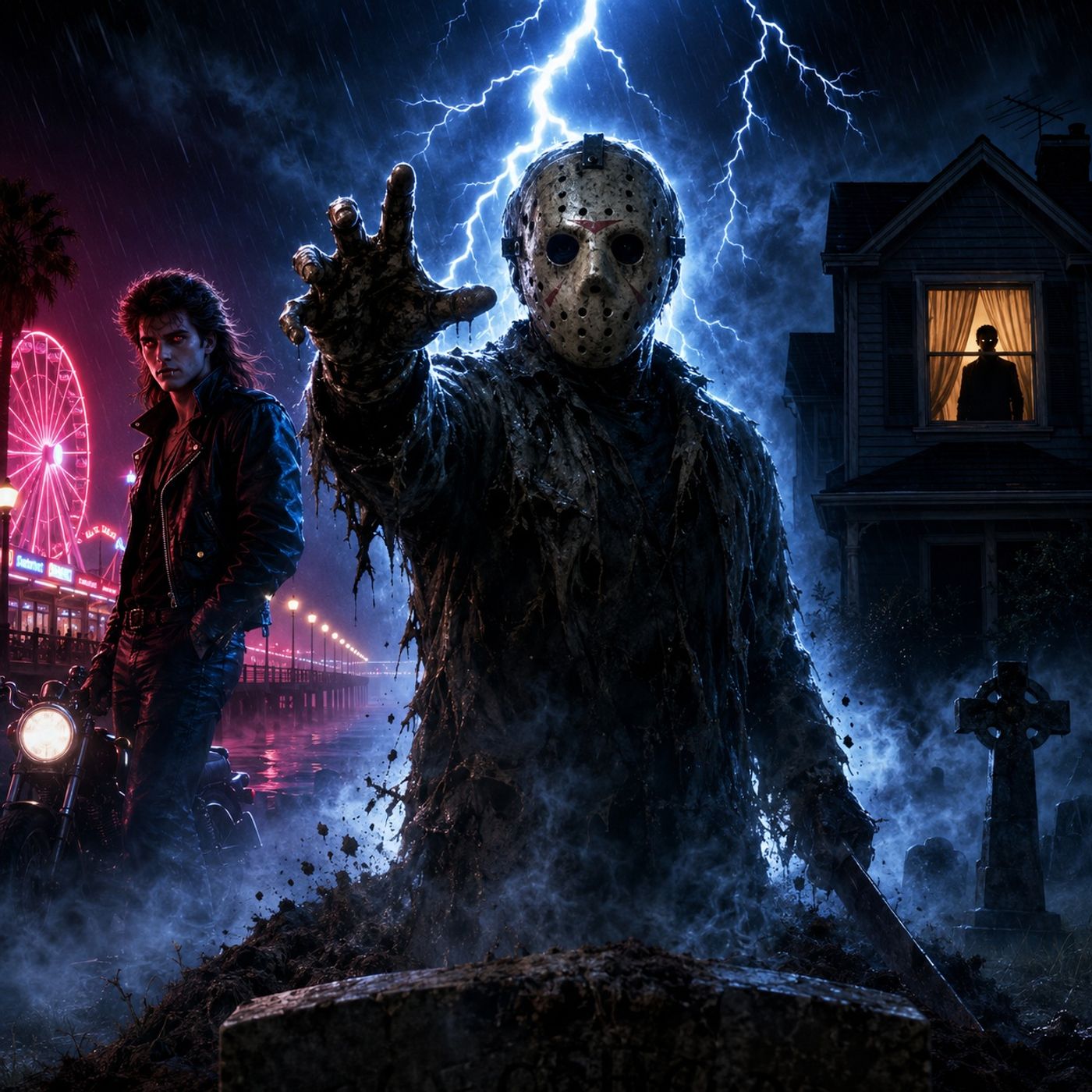
Why Friday the 13th Part VI: Jason Lives Changed the Slasher Genre Forever
Friday the 13th Part VI: Jason Lives completely redefines the Crystal Lake slasher by transforming Jason Voorhees from a rugged, tough-to-kill mortal into a full-blown supernatural zombie. This pivotal 1986 sequel leans heavily into gothic horror, black comedy, and mythic resurrection to permanently change the trajectory of one of cinema's most famous killers.
Key Takeaways
- Jason Lives marks the pivotal moment Jason Voorhees transforms from a mortal woods-dweller into a supernatural undead zombie.
- The accidental lightning-bolt resurrection by Tommy Jarvis permanently alters the lore and mechanics of the franchise.
- The film introduces a self-aware, tongue-in-cheek comedic tone that influenced later meta-slashers.
- By embracing gothic Frankenstein imagery, the movie gives Jason an indestructible, mythic quality.
The Evolution From Mortal Man to Supernatural Force
Before the release of Friday the 13th Part VI: Jason Lives on August 1, 1986, the hockey-masked killer was essentially viewed as an extraordinarily resilient, hyper-violent human hiding out in the wilderness. While he survived unbelievable amounts of trauma in earlier installments, the underlying physics of his character still belonged to the real world—albeit a heightened, cinematic one.
Part VI changes all of that in the opening minutes. A traumatized, grown-up Tommy Jarvis returns to the cemetery to make sure the nightmare is truly over. Desperate for closure, he digs up Jason's decomposing corpse. When a bolt of lightning strikes a metal post impaling the rotting body, the franchise crosses an invisible line. Jason is no longer just a masked man who refuses to die; he is a reanimated corpse powered by supernatural electricity and sheer unyielding vengeance.
Gothic Imagery and Frankenstein Themes
The lightning-bolt resurrection is more than just a cool visual effect—it is a direct literary nod to Mary Shelley's Frankenstein. By utilizing a storm to jumpstart a dead body, director Tom McLoughlin wraps the slasher genre in classic gothic tropes. Crystal Lake effectively becomes a graveyard playground where the boundaries between life, death, and eternal torment completely dissolve.
This shift allows Jason to function less like a stealthy stalker and more like a mythic force of nature. He can punch through doors, shrug off point-blank gunfire, and move with a terrifyingly casual momentum. The atmosphere swaps out gritty realism for graveyard fog, camp-cabin dread, and cinematic grandeur.
Self-Awareness and Black Comedy
Another major way Jason Lives alters the DNA of the franchise is through its embrace of humor. Earlier entries played their violence straight, but Part VI introduces a winking, self-aware attitude toward the absurdities of the genre. Characters make witty remarks, the kills are staged with theatrical flair, and the movie understands the sheer ridiculousness of a summer camp continuously hiring teenagers after a string of massacres.
This tongue-in-cheek approach laid important groundwork for the meta-horror boom of the 1990s, proving that audiences were ready to laugh alongside the terror. It turned Jason from a simple boogeyman into an entertaining pop-culture icon.
Conclusion
Friday the 13th Part VI: Jason Lives stands as a high-water mark for the franchise because it refused to play by the old rules. By trading gritty survivalism for a lightning-charged zombie mythos, the film secured Jason Voorhees' legendary status forever.
To hear a deeper discussion on this cinematic milestone alongside other legendary horror anniversaries like The Lost Boys, Fright Night, and The Collector, make sure to Listen to the full episode of Weekly Spooky! Subscribe today for your weekly dose of terror tales.
Frequently Asked Questions
How does Jason Voorhees come back to life in Jason Lives?
Tommy Jarvis accidentally resurrects Jason by digging up his corpse and impaling him with a metal fence post during a severe thunderstorm, which channels a bolt of lightning straight into Jason's body.
Is Jason a zombie in Friday the 13th Part 6?
Yes. Prior to Part VI, Jason was depicted as a heavily scarred, incredibly durable mortal man. The lightning strike permanently turns him into a supernatural, reanimated corpse.
Why is Jason Lives considered a turning point for the franchise?
It shifts the series away from gritty, straightforward slasher templates into a more self-aware, humorous, and gothic territory, cementing Jason as a supernatural pop-culture icon.