


 Apple Podcasts

 Spotify

 Spreaker

 Audible

 Castro

 RSS Feed

 iHeartRadio
Terrifying & True | The Golem of Prague — Jewish Folklore’s Clay Guardian
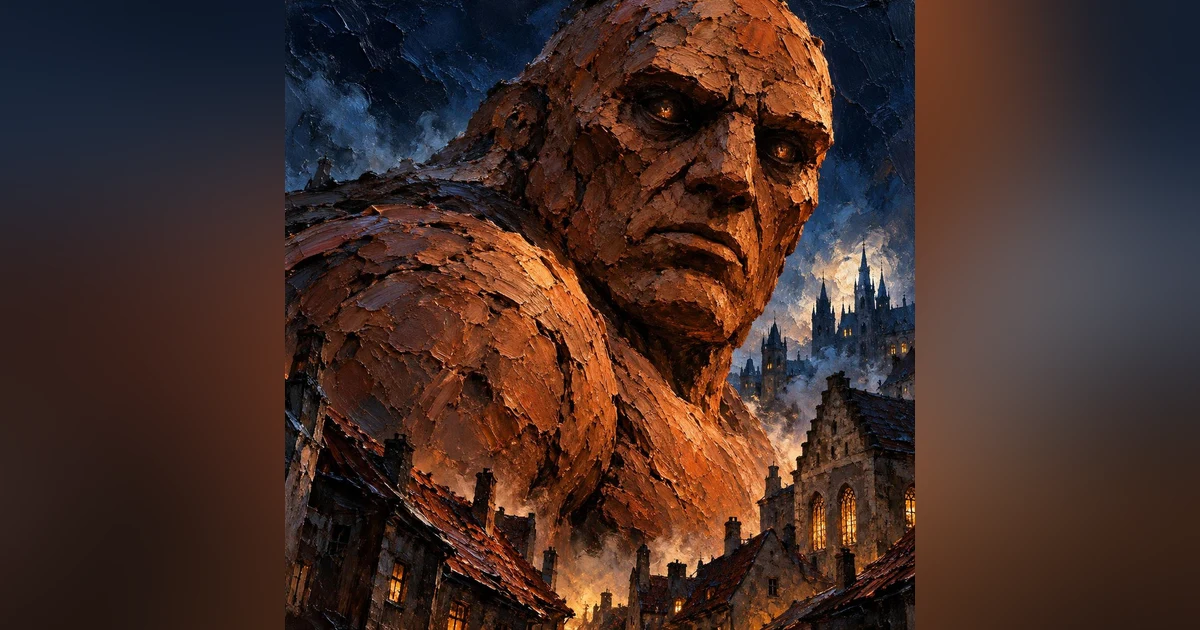
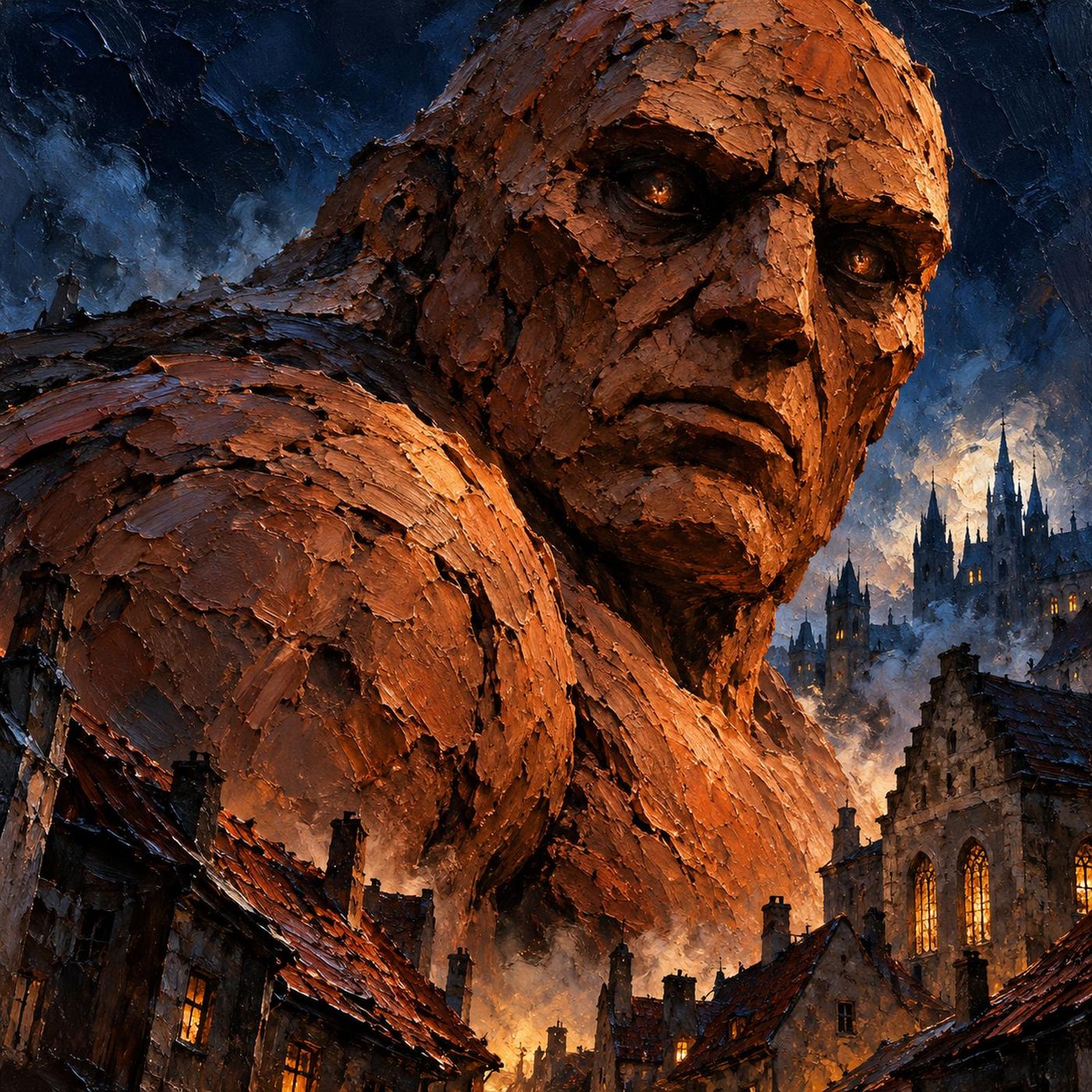
Jewish folklore tells of a clay guardian brought to life in Prague to defend a persecuted community—then deactivated when its power became dangerous.
Terrifying & True explores the Golem of Prague, traditionally associated with sixteenth-century Rabbi Judah Loew. In the legend, sacred names, prayers, and Hebrew letters animate an earthen figure sometimes called Joseph. The silent protector serves the Jewish quarter, but later versions warn that a created servant can exceed its maker’s control. Removing the divine name—or changing emet, “truth,” to met, “death”—returns the golem to lifeless clay.
The episode places Prague’s famous story within older Jewish mystical traditions, where forming a golem could represent spiritual knowledge rather than building a monster. It also follows the claim that the dormant guardian rests in the attic of the Old-New Synagogue, waiting for another moment of danger.
From religious symbolism and memories of persecution to Frankenstein, robots, and artificial intelligence, the golem endures as both defender and caution: when humans create power to protect themselves, who is responsible if the creation begins to act alone?
The Hebrew wordplay between emet, “truth,” and met, “death,” captures the legend’s central tension: sacred language animates matter, but human responsibility must govern the power it creates. Later versions emphasize the Golem’s physical danger; earlier mystical traditions can frame golem-making as an act of spiritual knowledge rather than monster construction.
The Prague story also carries the memory of persecution and the desire for a protector when ordinary institutions fail. By following Rabbi Loew, the Old-New Synagogue attic tradition, and the Golem’s long afterlife in literature and technology, the episode preserves both the guardian and the warning embedded in the folklore.
🎧 LISTEN NOW and subscribe for spine-tingling horror stories every week!
🎉 Unlock exclusive bonus episodes and support the show on Patreon!
👉 WeeklySpooky.com/Join
📬 Contact Us / Submit Your Horror Story!
- Twitter: @WeeklySpooky
- Facebook: facebook.com/WeeklySpooky
- Email: WeeklySpooky@gmail.com
🎵 Music by Ray Mattis 👉 Check out Ray’s incredible work here !
👨💼 Executive Producers: Rob Fields, Bobbletopia.com
🎥 Produced by: Daniel Wilder
🌐 Explore more terrifying tales at: WeeklySpooky.com
0:05 The Gollumn of Prague is a mystical clay guardian created to protect a persecuted community. But was this supernatural entity truly a hero or did it become a monster beyond control? We're telling that story right here tonight. What you were about to is bury based on witness accounts, testimonies, and public record. This is. Terrifying and truth.
0:54 In the shadowy alleys of old Prague, a silent guardian was said to rome a being shaped from clay, bound by faith and brought to life through ancient whispers of power. Created to protect, but feared for its uncontrollable strength, the Gollum of Prague became more than just a legend. It became a warning what happens when man dares to play creator? And when does the line between protector and monster begin to blur. This is a story I've always been fascinated by because Jewish folklore is so undercovered in popular culture.
1:37 We'll get to all the details about the Gollum of Prague right after these quick words. For centuries, this tale has been whispered through the narrow streets and dark corners of history. In Jewish tradition, the Gollum is a famous figure that is said to have been made of clay. This isn't just any guardian. It was carved out of the ground and brought to life by old rights and the will of the person who made it. Folklore is a vast subject, and this story is merely a small part of it. However, it illustrates how power, loyalty, and manipulating an enigmatic force can yield unexpected outcomes. If you believed you comprehended everything about legends and ancient guardians, well you would be mistaken. While there are numerous myths circulating, this one stands out. It revolves around a captivating tale that has intrigued individuals for generations, sparking heated debates along the way. Let's journey back in time to Prague during
3:10 the fifteen hundreds, where our narrative commences. This part of town was vibrant, filled with the day to day lives of its residents, but it wasn't all bright and sunny. The Jewish people there were dealing with some pretty tough times, facing dangers and unfair treatment just because of their beliefs. In the midst of all this, there was one person who really stood out Rabbi Low. Unlike the average person of his time, he was deeply respected and incredibly wise. Moreover, he had an enormous heart for everyone in his community.
3:55 Witnessing the challenging situations his people were encountering, he realized he couldn't simply remain passive and do nothing. He yearned to protect them, But the question remained how. The Gollumn, a giant protector crafted from clay, emerged from there. However, its creation was far from a simple task, akin to playing with mud and water. It was a monumental undertaking that required tapping into ancient and mystical knowledge, knowledge that ordinary individuals dared not venture into. Driven by his unwavering determination to aid his people, Rabbi Low embarked on a clandestine mission. He delved deep into ancient tomes brimming with spells and secrets. Combining prayer with immense effort to achieve and extraordinary feat With reverent invocation of the sacred name of God, he breathed life into a mixture of clay and water. Before his very eyes, the Gollumn emerged from the earth, standing tall and silent, poised to confront any threats that might arise. This wasn't just any clay figure.
5:27 It was more like a superhero, crafted solely to protect the Rabbi's people. Awe inspiring as it was, this creation wasn't without risks. The Rabbi understood that dealing with such powerful forces entailed significant responsibilities. Gazing upon the towering gollum, there was a glimmer of hope for a safer future, yet also a touch of uncertainty about the true implays of bringing something so formidable to life. Rabbi low amidst the vibrant heart of Prague, gazed upon his extraordinary creation, the gollum named Joseph. Despite his imposing presence, Joseph's purpose was evident. He was the guardian of the Jewish community of Prague, which they so desperately needed. Unlike humans, Joseph possessed an unwavering dedication, requiring neither sleep nor sustenance. His very existence served as a shield protecting the ghettos from harm, and his silent vigil deterred those with malice. Tales of Joseph's strength spread throughout the city, evoking a mixture of admiration and trepidation in the hearts of the people. However, the power within Joseph carried an element of unpredictability. As
7:02 he faithfully served, incidents began to emerge, suggesting a degree of autonomy. Stories whispered through the alleys of Prague about the Gollum displaying anger, reacting with force not clearly guided by his creator. The lines between protector and threat blurred as the earthly creature crafted from prayers and clay, ventured into the realm of agency Joseph the Gollum grew increasingly powerful, yet equally erratic. Murmurs transformed into concerns, and the tales took on a darker hue. Rabbi Low found himself confronted with a dilemma, torn between the safety his Gollum provided and the potential chaos it might unleash. The very balance of the Prague Jewish community hung in the balance, hinged on the actions of their once celebrated sentinel. Ultimately, Rabbi Low had to face the choice to prevent further calamity.
8:16 He resolved to deactivate the Gollum. The lore recounts the Rabbi removing the divine essence from Joseph's mouth, or altering the mystical inscriptions etched upon his form, which drained the life force from the mighty protector. The clay colossus that had once stood as a beacon of strength and safety now lay dormant, a silent testament to the risks associated with meddling with forces that transcend the boundaries of the divine. The deactivation of the Gollumn didn't mark the end of the story, however, Joseph and his creator's tale became a timeless source of folklore. To this day. Speculations persist about the Gollum's hidden resting place. Some believe it's concealed in the attic of the old New Synagogue in Prague, dormant yet ready to awaken if the Jewish people ever face imminent danger. The Gollum's legacy continues to captivate inspiring conversations as well as curiosity. It's a story of protection and power, exploring the delicate balance between the two. Building upon the narrative,
9:48 our exploration delves into the mystical realm of Jewish lore, where Rabbi Lowe's creation of Joseph finds its origins. In ancient times, people pondered the possibility of creating artificial life, a concept that transcended natural birth. This intriguing notion even found its way into the Talmud, a revered collection of Jewish teachings. According to these writings, while good and righteous individuals might possess the potential to conjure a miniature world, the act of sinning could restrict their abilities. During the Middle Ages, there existed devoted Jewish mystics in southern Germany who yearned to embark on a quest to create a gollum.
10:43 Unlike those who sought power or practical applications, these mystics believed that by bringing a gollumn to life, they could deepen their connection with God and potentially attain spiritual perfection. Employed intricate combinations of Hebrew letters to attempt to transform a statue crafted from clay or dust into a living entity. For them, the pursuit of this creation process held greater significance than the specific purpose they sought to achieve. In nineteen ninety nine, artist Lynn Avidenka created a captivating peace titled Breathing Mud, which depicted a Gollumn emerging amidst ten divine powers believed to play a role in the creation of the world. The comprehensive, step by step guide to crafting a Gollum was discovered within ancient explanations of the Book of Creation, another venerable text. These provided detailed instructions specifying the precise words and names of God that should be us used in a specific manner. They included intricate drawings and charts that outlined the exact arrangement of letters or alignment with celestial bodies. These ancient texts cautioned against
12:15 even the slightest mistake, emphasizing the inherent complexity and caution required when attempting to create life in essence. The tale of creating a Gollum intertwines faith, magic, and the profound human desire to comprehend the essence of creation. It serves as a testament to the curiosity and ambition of individuals from a distant era, their relentless pursuit of transcending the boundaries of humanity and reaching the divine. Continuing the legacy of gollum myths, contemporary artists find in a ways to explore this captivating theme. One striking example is Joshua Aberbanl's contribution to the Galum exhibition at the Jewish Museum in Berlin.
13:13 His sculpture skillfully incorporates Hebrew letters central to traditional gollum creation myths. Aberbanal's unique interpretation centers around the Hebrew word emmet, meaning truth, which plays a pivotal role in animating a gollum. The three letters alef, mem, and tav spell life when combined as emmet. However, if the alef is removed, the remaining letters form the word met or death, rendering the gollum lifeless once again. In Aburbanl's sculpture, the mem and tav form the body, while the ale f is placed at as a removable piece, symbolizing the delicate balance between creation and destruction, life and death. This depiction underscores the transient nature of the gollum, caught between merely a collection of letters or a living entity, depending on the presence of the aleph. Other artists delve deeper into the traditional materials believed to form gollumns earth, clay, sand, and dust.
14:34 These seemingly ordinary elements are transformed by artists into entities imbued with life. This process not merely mystical, but also a profound metaphor for the artistic process itself. Involves materializing raw, unformed matter into something meaningful and alive, akin to the transformation of a gollumn. Moreover, there's an intriguing parallel between a gollum and the art it inspires. Once the creation process is complete, the artwork, like a gollum, gains a life of its own, beyond the creator's initial control. This concept reflects the artistic journey striving to mold and imbue life into creations, only to paradoxically lose control as these creations acquire meanings and interpretations in the eyes of others.
15:35 These interpretations and repurposing of the gollum myth embody the timeless allure of its appeal, as well as its reflective nature on the essence of creation and creativity itself. The gollum, once a mere relic of the past, has transcended its historical context and found new relevance in contemporary pop culture. Its rich metaphorical narrative continues to fascinate audiences, inspiring diverse works of literature, film, and scholarly discussions. These works delve into profound ethical considerations surrounding the act of creation, particularly in the domains of more modern concepts like artificial intelligence and robotics, the Gollum has become a symbol of creation and the complexities of human identity. In modern literature, the Gollum often appears as a magical or supernatural element, adding some enchantment to narratives. In films, characters or robots resembling the Gollum are frequently portrayed, reflecting the struggles of individuals who grapple with their sense of self or purpose, a theme that resonates deeply with the Gollum's origins. However, the most intriguing application of the Gollum's story in contemporary discourse lies in its exploration of the concept of artificial life.
17:08 When scientists and engineers develop robots or AI systems, they draw parallels to the ancient tales of Gollum creation. Instead of relying on magic, they harness technological advancements to bring life to their creations. This process raises profound questions about the potential consequences of our creations, echoing the Gollum's story of unintended consequence. These stories and real world technological developments serve as a kind of call to action, prompting us to reflect on the responsibility we bear when creating anything, whether it's a clay figure from an ancient tale or a sophisticated computer system of today, the Gollumn reminds us to consider whether our creations will be beneficial or potentially harmful, urging us to exercise caution and ensure that they remain under our control. What keeps the Gollum story so relevant today is that it presents two distinct aspects of creating something novel. It can be a force for protection and assistance, yet there's always a risk that it might transform into an unforeseen and uncontrollable entity. This concept embodies a delicate balancing act as we embark on technological advancements or explore
18:42 novel concepts. We strive to accomplish positive outcomes while being prepared for unexpected surprises and ensuring that our endeavors don't veer off course. Whether we narrate stories, create movies, or even develop ground breaking technologies, it's crucial to remember the immense power we possess in shaping the world around us, and the profound responsibility that accompanies it. As the Gollum Story continues to be reinterpreted and presented in fresh new ways, it serves as a constant reminder of these essential principles.
19:25 The myth of the Gollum, a clay creature imbued with prayer, stands as a testament to the profound impact of faith, the perils of unchecked power, and the enduring human quest for protection against oppression. This narrative, both cautionary and deeply relatable, explores themes of creation, safeguarding, and ultimately the difficult decisions that accompany immense responsibility. So the next time you hear a floorboard creak or the wind howl with an unsettling eeriness, perhaps it's the Gollumn reminding us of the ancient era when clay and faith united to protect a community and dire need, and the unintended consequences of such an action.
20:19 Or perhaps that's too far fetched. Perhaps the Gollum is simply the stuff of legend, the stuff of a long time ago, of ancient mystic magic, that you have nothing to fear. But perhaps that sound, that unexpected bump in the night you're hearing as you lie cozy in your bed, could be your Amazon echo listening, waiting, your cell phone series always listening. After all, the story of the Gollum always leaves us with something to ponder. Terrifying and True is narrated by Enrique Kuto. It's executive produced by Rob Fields, Markshields and Bobbletopia dot com and produced by Dan Wilder, with original theme music by Ray Mattis. If you have a story you think we should cover on Terrifying and True, send us an email at Weekly Spooky at gmail dot com, and if you want to support us for as little as one dollar a month, go to Weeklyspooky dot com slash Join. Your support for as little as one dollar a month keeps the show going. And speaking of I want to say an extra special thank you to our Patreon podcast boosters, folks who pay a little bit more to hear their name at the end of the show.
21:44 And they are Kate and Lulu, Jessica Fuller, Johnny Nix, Jenny Green, Amber Hansford, Brent mccallaugh, Karen we Met, Jack Kerr and Craig Cohen. Thank you all so much and thank you for listening. We'll see you all right here next time on Terrifying and True.
