


 Apple Podcasts

 Spotify

 Spreaker

 Audible

 Castro

 RSS Feed

 iHeartRadio
Cutting Deep Into Horror | One Cut of the Dead (2017): Japanese Horror and Filmmaking Chaos
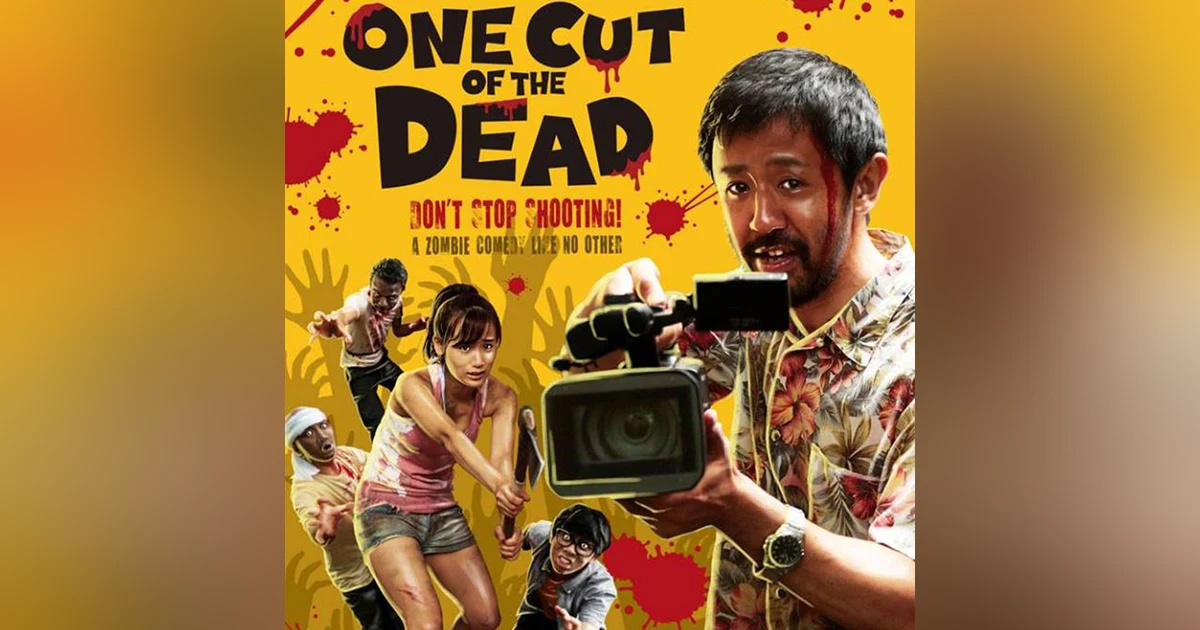
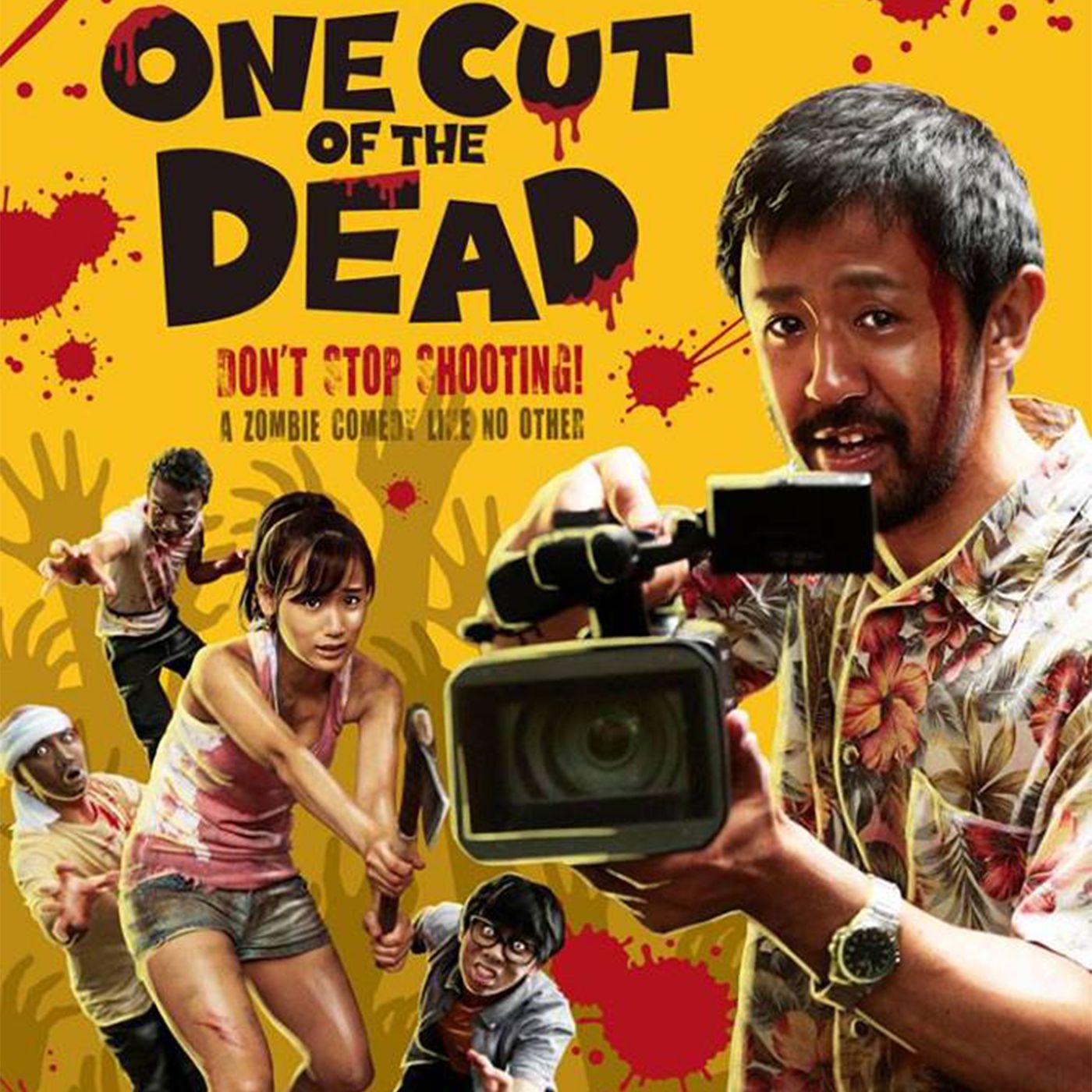
What starts as a scrappy Japanese zombie movie quickly becomes one of the most inventive, hilarious, and unexpectedly heartfelt horror-comedies of the last decade.
This week on Cutting Deep into Horror, Henrique Couto & Rachael Redolfi dive into One Cut of the Dead (2017), Shinichiro Ueda’s brilliant cult favorite about zombies, chaos, low-budget filmmaking, and the beautiful disaster of trying to make art when everything is falling apart.
At first glance, One Cut of the Dead looks like a strange, messy, low-budget zombie movie. But stick with it, because this is a film that rewards patience in a huge way. What unfolds is a clever, funny, deeply affectionate tribute to filmmakers, actors, crew members, and anyone who has ever tried to pull off something impossible with no time, no money, and way too much pressure.
Henrique and Rachael talk about what makes the movie’s structure so special, how it balances horror and comedy, why the film hits especially hard for anyone who has worked behind the camera, and how its chaotic energy turns into something genuinely joyful.
Inside this episode:
- Why One Cut of the Dead is best experienced knowing as little as possible
- How the movie transforms from zombie weirdness into filmmaking genius
- The joy, stress, and absurdity of independent film production
- Why the second half completely recontextualizes the first
- How Shinichiro Ueda turns a tiny movie into a massive crowd-pleaser
- Why this modern Japanese horror-comedy became such a beloved cult classic
https://www.amcplus.com/movies...
🎧 LISTEN NOW and subscribe for spine-tingling horror stories every week!
🎉 Unlock exclusive bonus episodes and support the show on Patreon!
👉 WeeklySpooky.com/Join
📬 Contact Us / Submit Your Horror Story!
- Twitter: @WeeklySpooky
- Facebook: facebook.com/WeeklySpooky
- Email: WeeklySpooky@gmail.com
🎵 Music by Ray Mattis 👉 Check out Ray’s incredible work here !
👨💼 Executive Producers: Rob Fields, Bobbletopia.com
🎥 Produced by: Daniel Wilder
🌐 Explore more terrifying tales at: WeeklySpooky.com
0:00 Boy, it sure is scary out here, isn't it. Yeah? I mean it's really dark and. Like this scary night outside of this abandoned old factory where all those orphans were turned into cat food. Yeah, how'd you find this place? Anyway? Oh? My friend is a real estate agent and also insane? Okay, yeah wow. And the stars are even out, which I guess Actually, isn't that weird for nighttime? Yeah? Now what's that over there? Though? Oh? Is that? Oh my, it's nothing? Oh okay, boy, it kind of looks like something though.
0:42 That's what I thought too. Sure would be awful if while we're standing out here just talking about unscripted things, some zombie cat orphans were to come and attack us. Sure would be awful. I don't what are you yelling to? Sure would be terrible. I mean, do you disagree it would be awful? If the zombie's queue to attack us was now, would be would be terrifying? Yeah, that would be really scary. You look like you're kind of waiting for something. Why does anybody ever make a fucking movie?
1:26 This podcast is about why horror scares us, what deep dark secrets scary cinema shines a light on. The discussions are frank and involve conversations about abuse, trauma, and mental health. There are also spoilers, so keep that in mind too. Now, sharpen your machetes and strap raisers, because this is cutting Deep into horror. Welcome back, my spookies to Cutting Deep into Horror. I'm, of course, your host Enrique Kuto here with my co host Rachel Ridolfi. Rachel, how are you.
2:12 I'm doing good? Yeah, yeah, that's great. Yeah, especially better than I was yesterday. Yeah, and most of the day before that. Yeah. Wow. Yeah, we're recording this. We usually try to do Cutting Deep episodes early ish, even like five days early, six days early. It just, you know, it makes things cushioned from chaos. Yeah. Yeah. So on Monday when we were supposed to record this, I was having a rough day. No, I know, that was before the rough day. I was just I was just in a good mood, and I felt like because of how much high stress has been going. On, because you've been traveling the past two weekends.
2:52 Yeah, yeah, I've been out of town and it's a lot to run the filmmaking side of my business and then also keep the podcast going. It can be a bit of a bear. It reminds me a lot of when I had a day job and was doing this stuff, you know, because there's stuff you have to do every single week no matter what. It's a lot more focused. But there are a lot of positives to that. So I'm not here to to bitch and moan about all the good problems to have I have. But so I was like, oh, we'll just push it off because like, no big deal. And then on when wait, when was the power? Wow? No, that was was that Monday? The power?
3:33 No? That was Monday? Yeah? That was yeah, that was because you were like, well, well because we all, yeah we only had like half power, right. That was yeah for like twelve hours? Yeah yeah. And then and then wait to. Bury the lead. I mean my point was, so we were hanging out Monday and we watched The Fog, which you had never seen John Carpenter's The Fog, and you really enjoyed it. And there was a huge thunderstorm up outside, so we had the windows open and we were like letting in like some of the ambience. Then you go to bed, and I'm like, I'm gonna keep, you know, watching scary movies a little longer. And whatever. And as I'm sitting there watching a movie, the wind starts pushing so hard through the screens of the windows that I'm like, uh oh, I got to close these because like stuff was getting knocked over. So I was like, that's not good, you know. So I'm closing windows, and then I go to the bathroom and like the lights are kind of like like they're going in and out a little bit, and I'm like, oh man, this is a bad storm.
4:35 And then at about I guess I'm about twelve thirty, the power starts going kaka cucko, and the power cuts out and then comes back on, and then it cuts out again, and eventually it settles on there only being half the electricity, which I had never experienced before. I was very worried that my home's power was messed up, that I was gonna have to get a new breaker box or have the place rewired, or something turns out. And I've had to explain this to a bunch of people. It's so funny because I tell people this, they either go what or they go, yeah, the leg is out, like it's one or the other. So most houses have two two hundred and forty vault legs that go to your power box, right, And that's for safety and stuff, and because every house, you know, if a house has stood for a long time, like this house hasn't been here that long, but it was built early in the late fifties, you know, over the years people have rewired and changed wiring and stuff, so you can't really predict like what is connected to what. But basically we had no HVAC and the garage for some reason was pulled out, and then the ceiling fixtures in the dining room in the dining room and kitchen were also just out, and all of the outlets to that side of the wall. Yeah, But then the other side of the living room, all of those outlets worked, yeah, which was really weird. Also really scary because when the power finally died on the half of the house, I was watching a scary movie
6:06 and a scene was happening where the music was like hitting the power cuts, but the projector is plugged into the wall behind me. Everything else is in the wall in front of me, which didn't lose power, So the projector cuts out, like what the and then the loud music hits because it was still playing while all this chaos is happening. You're asleep, no problem o. Until the power started fluctuating so bad that it was activating and deactivating the security system over and over again. Yeah, which when a security system goes off, you know you punch in the code and then it shuts off. Well, you can't do that if it's perpetually playing the startup chime. Yeah. Yeah. It was just really loud and scary.
6:48 Yeah. And it would, yeah, it would stop for like a second when the power would like. Oh that's adorable. It would stop for four or five minutes and then start again, just long enough for you to start to feel like okay and bed again. Because after the second time, I came to you and I was just like, you may want to just be up for a little while because it is not going to be I can't tell you what's going to happen. So you just sat up with me. And it was a little scary, it was. And again we watched, we watched like the smart bulbs all like flickering like that. That was nuts. Yeah. So because smart bulbs, you know, they're a little computer. They don't just flip on and off, you know, there's always like a delay. Yeah, you know, when you flip the switch, it comes on. Since the power was going out, we had these tree lights with smart bulbs all through them. They're all all the bulbs are cutting on and off in different intervals. It looked like a cheesy haunted house like effect. It was really it was really nuts. And it was happening on the fixtures behind us too.
7:44 Yeah, it was really those were the same bulbs. It was really weird and yeah, definitely freaky. So then the next day, get up. We still have half the power. Yeah, and and and it was miraculously like the half that mattered because you were able to sleep with your seapap you you still had like your office. Yeah, basically all the bedrooms had power. It was just like a and the kitchen still had power. Yeah except one yeah, one half of Yeah. Yeah. Yeah, it was really weird. I mean, so more than half the house. But I mean, but of course, from an electrical standpoint, the HVAC is like half of the house because that's you know, it pulls two hundred and twenty volts blah blah blah blah blah. So yeah, it was like it was like it sucked because we didn't have any heat or cooling, but it was actually not hot outside. So I was like, oh, I guess I'll just work. I just don't have any HVAC. But on the plus side, you know, I don't have to worry about the sound of the HVAC in the recordings.
8:43 But I had said something that everybody thought was so not not real. I had told Michelle and I had told my mom about it, and of course Michelle, being a home inspectory, she was like, oh, one of the legs went out. Yeah. My mom was like, you might want to call her electrician and have them take a look at it, you know, like what if it's you know, I was like, Mom, I think, oh yeah, because we found out our neighbors had half power too, and I was like, oh, thank goodness, we're gonna be okay. Apparently it was like our whole block. So I mean, just having that issue because there were I think the grand total is fifty five thousand people without power that morning anyway, so in the Dayton metropolitan Area or whatever it's called. So but I had said, like, I'm working in everything, but I'm nervous that when they fixed this, at some point it's gonna fully go out and Michelle was like, I don't think so come three pm, the power fully goes out and it wouldn't have been that big a deal. But I'm in a crunch right now because I'm naturally going out of town again, so I needed like, yeah, it just it just became a stress monster. And then it's like, you don't know how long the power's gonna be out. They keep telling you like soon, and then it ends up. It ended up being a little over twenty four hours the end of being like twenty nine hours of full power outage. Yeah, so I'm just trying to, like, you know, keep the food good in the fridge. I've got like a battery bank, but of course I never have enough power, So I ended up. I ended up on Tuesday night, after going
10:15 to see the Michael Jackson movie, which was really good, I come home and I'm like, I have the podcast. Literally, I was so lucky. Like the Weekly Spooky Show is the most production intensive podcast I do. The main show was done, but the thing at the beginning where I introduce it and talk a little bit, that's I do that last as its own thing, So I had to I had to. I finally decided to take one of my power banks and just hook it into my computer setup. So I'm sitting in my office and I even said it on the episode, like I kind of evented a little bit, but like I'm sitting there with a lantern lighting me, but my computer's just on, which felt really weird, and no internet and the hotspot internet the five G on our phones was crap because everybody in that area was using it.
11:00 Yeah, so I. Had to record it, output it the entire time, looking at the battery bank, trying to make sure I have enough power, and then I kept trying to use a hotspot to upload. It wouldn't work. It wouldn't work. So finally I just got in my car and drove. I was gonna go to my mother's house and just parking the driveway and use your Wi Fi for six minutes because it's the middle of the night, you know, I don't want to bug them. But I was just gonna use their WiFi for like six minutes. But as soon as I got a mile out of our neighborhood, the five G was super duper fast, so everything uploaded like instantly from my laptop. So I typed up the show notes and everything in the parking lot of the speedway near US, got it all scheduled, came home and it was like one thirty five in the morning, and I was just I was just done. Beat beats a good word for it, yeah, physically, beat brutally. So anyway, it was quite an adventure. And so now we're recording this the night before it airs, which I don't usually like to do because it can be a little I don't know, it's just like a little intense to have to like get it ready in time. But we love you guys, so that's why we we do this. Maybe, but we are here to talk about a movie.
12:11 Oh yeah, that's five we're here. Yeah, But I do want to also mention you, do you run most computers off of a three hundred one hour battery for like four hours? Because anybody's wondering. So yeah, I bought a second one so if this ever happens again, I can confidently run my computer setup for like seven hours seven hours. And but the refrigerator is another story. We got to figure that out. Yeah. Yeah. Wow, the freezer was fine. Yeah, that was that was nice that everything in the freezer survived well. Yeah, because I was able to run it for seven hours on battery, and then ran to the cigar lounge and charged, and they brought it back and ran it for another seven hours and then thank goodness, the power came back on. I thought we were going to be recording this in here because luckily this setup we're using here, I hope this isn't like painfully boring, but like it's not incredibly involved. I mean, it's two microphone os, roadcaster, you know, it's audio interface, and the laptop. So actually running all this off batteries would be nothing. It wouldn't take much power at all. So I was prepared for us to have to record this by lantern Light, and in hindsight, recording the one podcast by lantern Light was so like sweet spooky vibes. So I almost wish we were in here, like all just a lantern.
13:21 I mean, I couldn't go keep the baker. It's not the same fake it. It has to be. It has to be being done to us so that we're persevering. That's what makes it fun. Okay, you're the one who likes camping. I do. But luckily it wasn't hot out. That's that's really the TLDR is. If it had been hot, it would have been miserable. Yeah, but it was like sixty degrees. So we just opened the windows and let the house be whatever it was gonna be. So it was. It was actually kind of funny too, Like I came home at one point and like, all the neighbors and you were convened in the backyard. Yeah, just like talking. I'm like, well, ran out of things to do, so I guess we're gonna spend time outside for a while. I heard them talk, and I wanted to see what how everybody was doing. Yeah, so I got on my shoes and went outside because because the windows were open, so I heard them talking. Yeah, because I was in the middle of like packing a pipe and being angry.
14:10 So I was like this, quiet Night's glps, Quiet Night's tobacco. Can wait, I'm gonna go talk to these people. Actually, our neighbors are all really nice, Socky, We're lucky on that one. So anyway, tonight's film is from twenty seventeen, I believe. Yeah, twenty seventeen's one cut of the Dead, and it's a Japanese film. I almost tried to pronounce the Japanese title, but I'm gonna just I'm just gonna spare that for everybody. So, but it's it's a phenomenal film, a strange film, a very different kind of movie, and a different kind of film for the show too. But I trusted Rachel's judgment on this, and she knows I'm a massive lover of One Cut of the Dead.
15:00 Well, when you first saw it, like you were raving to me, Yeah, exactly how good it was. And kind of my thought, and this is this is jumping ahead a little bit, but kind of my thought was, while One Cut of the Dead is much more like a horror comedy, the filmmaking aspects of it, if you are a filmmaker that will evoke true terror. Well, and what you're really trying to get at is that this will be the laziest episode you ever have to do, because you can just be like camera batteries, Am I right? And then I'll talk for forty five minutes, you'll catch a nap, you'll play with the cat, you'll do whatever you're doing.
15:45 Yeah, this this episode pretty much just wrote itself. It's great, it makes its own gravy. Yeah, But if you want to watch One Cut of the Dead, which I highly recommend you do before we before you listen to us talk about it all the way through. It's available on Shutter with the subscription or on AMC Plus with a subscription you can get if you've never been a member of those before, you can get a free trial to check out one cut of the Dead. That is the best way to see it, because there is a kind of a big twist, but I don't think it would ruin the movie to know what the twist is. And we'll be bashing that twist into little pieces as soon as we get back from this break. So, but that's one cut of the Dead. You should watch it, and especially I know some of the folks who listen they're a little bit more sensitive to horror films for whatever reason. I'm, you know, as a filmmaker turned horror like scary story, true crime podcaster. I've been very surprised to see that a lot of the people there's a lot of lack of overlap. I mean a lot of people do like both horror movies and scary stories. Some people are like, I just listen to scary stories, like horror movies really bother me or scare me or or whatever.
16:48 I totally get it. So some people they tell us, like, you know, West, I listen and I like that. You break the movie down because I'm not gonna watch it, you know, or it'll tell me maybe I should watch it. Yeah, with this one, you could just watch it. It's mostly a comedy. It's really fun and it zooms right by. It's very very good. But we're gonna take a quick break and when we get back, we'll get into the weeds. On one cut of the Dead. One cut of the Dead, directed by Shinichiro yuaa Ua. I think it's how you say, I think I know it's shin Ichirochiro. I know that because of Godzilla movies. Thierro was a character in Godzilla's Revenge.
17:42 I like how I'm like, I know it from Godzilla, one of the worst ones that everybody don't doesn't like because it's a clip show with a with a mina baby Godzilla that has a Barney the Purple Dinosaur voice. But you love all Godzilla, I do, how much you love? That was my childhood favorite. I've ever shown you god'szill Is Revenge. Ah, I don't think you. Oh man, maybe we should watch that tonight. We Gotta we Got man, It's it's dumb. I love it so much. I used to go to sleep every night watching it until I was like ten. I'm serious, Like, oh, the theme song is awesome too, because it's jazz bad Danna. Now, the reason I'm talking about this is not, uh, for no reason, although I you know, I have my moments, It's because I have as silly as it can be to say, I've actually had an appreciation of Japanese cinema my entire life because of Godzilla movies.
18:40 Yeah. And while you know, there's you could say a lot about Godzilla movies, you could say a lot about like, well, they're cheesy and they and a lot of them were Americanized and blah blah blah. They were a cultural touchstone for Japan. They they made Japanese cinema a national conversation. That was the first thing. Yeah, and I love what Japanese filmmakers do with cinema. Because this may be a crazy take, but cinema is an American invention. And some people don't like you saying that, but I mean that literally. Thomas Edison invented it. He was an American. They invented it. In New Jersey basically give or take. So that's really what it comes down to, is like it's an American invention. Now.
19:25 You know, the Europeans did all kinds of fascinating things making it more of an art form. You know, they kind of encouraged that movement that came in the fifties and sixties where people were looking into the non narrative aspects of cinema. I think that's all awesome, the poetic aspects of cinema as well. The Japanese I in my opinion, one of the reasons that their films are so interesting and don't go wrong. I mean there's some stinkers, there are some clunkers, and there's some ones that just don't work for me or whatever reason. Usually it's cultural or it's literally And this is a funny thing about foreign movie too. Like sometimes I've put on like a Japanese movie or what have you, and I'll be like, I'm not really getting this, Like this is not really doing it for me. And then I look into it more, I'm like, oh, this is for sixteen year old girls.
20:12 I don't know. Like I just put on the I just heard there was this really good and sometimes that even that will transcend. But I mean I've watched ones where I was like, oh, this is literally not for me, this for Japanese children. Yeah, and I am not the audience, you know, so I'm not here to pick on it. But they've never been afraid of subversiveness, which is a really interesting thing because if you look at the way that the way cinema has been with Japan since the fall of the Japanese Empire, they've been really obviously tight knit with America and cinema was you know, started in America and kind of came over. Well, one thing that's been true of the Japanese culture for a very long time is they have always been movie fans, voracious consumers of films, and one of their superpowers, you know, for better or worse, because Japan, I mean, if you want to go through history of Japan has a lot of awful things you can bring up and stuff, but for better or worse, they've always had a strong sense of identity.
21:11 They've always had a strong sense of what matters to them, right, and Godzilla was literally a story born from the atomic bomb being dropped on them. Yeah, they took that and made it Godzilla. They're still making Godzilla movies. I mean it's and Godzilla, unlike a lot of Japanese cinema, became everywhere, you know. And this was before like the martial arts boom where movies from all of Southeast Asia were becoming national concepts, before Bruce Lee kind of brought the East Asian concepts more. Godzilla was first the first times people were like mainstream people were watching dubbed movies. It was Godzilla.
21:56 That's all I'm saying. So, but what I love about the Japanese film method is that mentality is that they they love movies, and they make movies that reference American films constantly, but their their ability to artfully shift it and change it is so great that it sometimes I have no idea. I remember I watched what was that movie I watched I can't think of the name right now, Dead or Alive, weird Japanese action horror ish movie. I'd never seen anything like it. And then I read an interview with the director and the director was like, I'm very inspired by Western films, the films of America, and I was like, okay, I thought that was the weirdest thing.
22:42 And I had nothing as ever I've ever seen has been like that before, Like it's just funny how that you know that goes? And Joe Bob Briggs put it really well. He said that in a way, Japanese culture is like that has always been like that, because like how do you make soy sauce? You bury soybeans and ferment them. And he said, in a way they like ferment concepts and then put the new twist where it's like this is a totally different flavor and it's great. And I do think that that's how Japanese cinema can work. And one Cut of the Dead is not just a Japanese horror movie. It's a Japanese horror movie about being a filmmaker, about making a Japanese horror movie. And that's where I think it really gets to set itself apart from everything else you could ever see in that I guess subgenre. I'm sure there are other Japanese movies about making movies, but I've not seen many of them personally.
23:36 So that's what makes this movie really special. The other thing that makes it really special is it is a super low budget movie. The estimates are between twenty five thousand dollars us and much much less. Damn, I would not be surprised if it was much much less. Yeah, but it works. They use that punk rock mentality, they use that wild energy and that rough around the edges andess to tell the story, and that's all you need, you know, I mean to tell a great story. So I yeah, I could rave about one Cut of the Dead forever. I just wanted to kind of set that up because we don't do a lot of so far, we haven't done a lot of like subtitled films. I mean, there's a dub version. I haven't watched it, but like there, we haven't done a lot of subtitle films, a lot of foreign movies. So I wanted to mention, like, this is a really special one, like a really special one, and when we get back, we'll actually start talking specifically about one Cut of the Dead right after this. So the first time I watched One Cut of the Dead was when Joe Bob Briggs showed it on the last drive in and he kind of build it up away.
25:00 I just did, actually, now they think about it, you got me amped to watch it, and then I was really into it, and I'm glad I was you were you? You weren't there when it was on Joebob were you? No? No, you showed it to me later, Okay, yeah, yeah. So what did you think when I made you sit down? I mean, because you've always liked foreign movies, oh yeah and stuff, so it wasn't like way outside your comfort zone or anything. Well, yeah, it was a really easy sell for me because the moment you were like, oh, yeah, it's a Japanese found footage, I was like, okay, I'm there. And the first time I watched it, I was immediately blown away by the pacing and then just how much heart the film has because you know, there's a few scares, but again mostly it's a comedy and the the laughs are all really good. It doesn't ever feel like there's anything that's played for like cheap laughs, and the emotion behind it, you know, just the heart of and the I guess the ethos of it is really really touching for anyone who is creative, but especially for filmmakers. And I remember just like when it when it got to the like the last scene, you and I were like just openly crying together, like I was. I don't know.
26:27 About you, but I was every time I watch it, I cry at the ending. I did do though, yeah you just copy me, but I get it. It just looks so good. But no, it is. It's a movie that speaks to creatives, but it also speaks to just the human element of it all. Yeah, for lack of a better term, it really is because it's it's a film where okay, so so basically what one Cut of the Dead is is for about what twenty minutes, twenty five minutes, thirty. Minutes, Yeah, the first I would say eighteen to twenty minute, yeah. Something like that. It is a the reason it is called one cut of the Dead. It is a single shot horror short film like zombie movie, where the camera never cuts. It just kind of follows the action. And it's not horrible. It has its moments that are kind of odd, and it's it's fine, and it has a pretty solid ending, and you know, it's got some good action, but mostly it rides high on that concept being one one camera shot never cutting away, which is hard, very hard to do and in general, especially when you're not hiding any cuts, which they didn't. It was legitimately all in one go. But when it ends, I mean, it's I mean, I don't feel like we need to run it down super intensely, but I mean, like a girl is fighting off a zombie guy and then and then we realize that it's a movie. Yes, some ofvie within
27:58 a movie within a movie. Yeah, it's the turd ducan of movies in that way. So then they're like killing time and then real zombies invade. That's basically the plot when it ends, with all the drama and the weirdness and the fun creepy stuff. When it ends, the credits roll and then the movie actually starts, and at film festivals people that were getting up and starting to leave because they thought the film was over. But to me, what the real film is is the story of making that film, which is fascinating for a lot of reasons.
28:39 And presenting it the way they did is just totally unheard of to just present it and then be like, here's how it was made. But it's not how it was made. It's a fictionalized version of how it was made. This is all movie. This is not none of this is documentary. Yeah, and the found footage element is nowhere once they once that part ends, weird, it's a weird movie. It crosses so many genres and bends all of them. It's great. I mean, I really love that about it. So we meet our main character and his name is oh oh yeah, his real name is the character's name, hake Yuki Higashi Higurashi, Yeah, Higashi Higarashi, who is really perfect in the role, and he is filming a commercial.
29:32 That's kind of how we meet him. He's filming a commercial of some sort. And Japanese commercials are I was gonna say a little. They're very different, not just well they do. They don't just do commercially. They do weird interstitials and things weird by our standards, like because what they're filming is like an old man in a wheelchair crying, and the commercials just like voiceover about life and that's gonna be on TV. Like they do different than what we do. Yeah, you know, as to where we would have Paris Hilt needing a cheeseburger, you know, they do that, so you know, which is more artistic. It's up for debate. But uh but no. So we meet him and we realize that he is a you know, a small time filmmaker who does commercials. He does whatever he's called upon to do.
30:14 Yeah, commercial like commercials and dramas and stuff. Yeah, drama, which is that's that's the thank you, that's the thing. So they call dramas are just short films is what they call them, basically. Yeah, And and they actually have like places to put short films other than YouTube because they air them on television a lot of stuff. So he's doing small stuff here and there, and he gets approached by an old buddy who's a producer because they're launching the Zombie Channel in Japan and they want him to make a drama for it, and he's excited. He's like, oh, yeah, that'd be great. What was that line he says, like I am. He says, I'm fast, cheap and average. An average, average, an average, which I love because when he meets the big wig at the Zombie Channel, all let's say say I'm fast, cheap and average. And I love that because well number one, because that's so Japanese, Like Japanese culture is not big on bragging anyhow, mm hmm, but like, I just love that. You you start to really see that this guy, he is a blue collar guy.
31:18 He makes movies because he loves making movies, but also because he loves feeding his family. Yeah, and I would say that that they're even. How much he loves feeding his family, how much he loves making movies is completely even. Yeah, he would never sacrifice you know, his family eating for a movie. You know. So he's told basically that they want this drama to be special because it's going to be one continuous take shown live. Yeah, a live, live broadcast. And that was when when we first watched it, when the producer said, oh, yeah, so we want to have this drama. It's going to be done all in one take, one cut.
32:01 One cut. You know, they don't have words that end on consonant sound yea, so like yeah, so like they add a you or an O or a or whatever to it. But when they when they said, okay, so it's all gonna be one take and then it's gonna be live broadcast as a as a like filmmaker. The first time I watched that, my heart like sank and I felt ice run in my veins. I was like, no fucking way. And Takayuki thinks he's he's like that's really funny, and they're like, no, that's what we want to do. And he's like, uh, yeah. And what what's great though, is like when he goes back to talk to his family about it, they're all he's like explaining. He's like, yeah, they came to me because like every other director, they came to passed it up because it's such an insane idea. And his wife's like, oh, yeah, so you told them that you're passing You tell.
32:55 Them yes, because you never tell anyone no. That's what she said. Yeah, you never tell anyone no. He's like, yeah, so I picked it up. Well, look in America, we have another we have a phrase for that. It's called the only thing I turned down is my caller. I've heard that from multiple people in the film business, actors and directors. And Uh, we're going to take a quick break and we'll dive into his family a little bit, which I feel really kind of elevates everything right after this.
33:38 So we we we meet his wife, uh, and then we are introduced to his daughter, and she is also a budding, aspiring filmmaker, but she's a bit more, a bit more intense than her dad. And I love and more perfectionists artiste. Yeah, and I love the juxtaposition of meeting them both because when he's directing his drama commercial thing. He's like instantly, we've got to get this take, so get out the tear drops for the actor and use the tear drops. But his daughter, yeah, like eye drops.
34:24 So but his daughter, she's directing a commercial of her own or like the makeup, and she's trying to get this little like six year old girl to just cry, to actually cry, and she's like sitting there like, no, you've got to reach into yourself and like don't you want to prove like what kind of a performer you are? And the mom's even like, uh, the director said, it's okay for us to use the eye drops. She's like, no, we can't sacrifice our vision. So it's really fun to see, like you kind of get the feeling that he sees himself in her very much. But he's trying to kind of show her the way of like you don't you don't have to be perfect all the time. Average is sometimes good because like look at me, look at like the jobs that I'm getting, you know, doing doing this, and.
35:19 She kind of looks down on his work. Yeah, she really, which I mean that's I mean, she's you know, she has to be nineteen twenty years old maximum and it's clear that she wants to, you know, differentiate herself from her dad. And you know, of course, when you're young, you have all the answers, and everybody who has all the experience just doesn't know what you happen to know somehow. So there's a lot of that in there too. And I love that dichotomy because, like you, I cannot tell you how hard it actually is to get a child actor to cry. Oh, I don't even want to think about it. I mean, the most famos I'm a story I know about getting a child actor to cry on command? Ish command is on Nightmare on Elm Street or on not nightmarre Elm Street. On the uh Wes Craven's New Nightmare Night mam'n l Street Part seven, they had this young kid playing Heather's son and he was supposed to cry.
36:18 There were a few times when he had to cry and they had Wess had tried like all the normal things, you know, to work it up and da da dah, and it just wasn't working. And his dad came up to him. He was like, so you need him to cry because they he's been in a bunch of movies a little kid. He's like, you need him to cry? He's like yeah, He's like, well, how important is it like that he cry? And he was like, well, it would be really great if we had this one of it, Like it would be really good for the film. And he was like, okay, well I have a way. I just don't like to do it very much. And he was like okay. So they do the scene and right before they roll, his dad just leans in and whispers something into the into the kid's head, and the kids pry six seven and then he walked way and the kid just starts crying, and they film it and they got it and they say cut. And afterward, when they were relaxing between takes, he asks his dad. He's like, what did you tell him? He was like, I told him his mother just died.
37:15 What the fuck? Man? And don't get me wrong, I don't think that's a great thing to do. But what I'm saying is you can't sit down with a seven year old and like talk about like life's challenges and stuff to get tears up. They life is too broad a Strokes. Life is hunger or being full, life is life or death. There's just the nuance. You haven't built nuance and yet, so like, yeah, that would be about the only way, you know. But I just love that He's like, I can do it, but I don't like to do it very much, so like we can only do it like once, and he was like, okay, yeah, So anyway, that's what I think of anytime I think about trying to get a child actor to cry. So yeah, so that, but my point is so her trying to like she has no idea how impossible of a task that was, but of course because she's young and she's like, oh, I can do it though.
38:12 Yeah. And as a producer, a producer, who when I when I do? When I produce for hire, when somebody just pays me a day rate to produce. Literally, the first time I got hired and I was being paid like more money than I thought I was worth, I realized about a day into it that they were literally paying me for my experience. I mean they were literally paying me to be there. Because I had been to so many sets and I would see that stuff. I would see somebody being like, oh we can you probably see me do it on set. Somebody will be like, I'm gonna do this I'd be like it'll you'll never get it, like it'll take forever and it will never work. I've done it, I've done it, like I've tried, like you just can't. Don't even yeah, like don't waste your time, just don't even fail. Just don't try that one. That's that's what That's what I imagine it was like, because she of course gets like in the director's face about it, like you know, saying like this should be good, and the mother gets bad, so she's about to take her kid away. And that's when her dad, who's just like he was spying on her because because his wife it said like are you off today? He's like yeah. She was like, well then you need to go like keep an eye on her. And it's great too because the way she says, she's like, uh, you know, we need to keep an eye on who she's I think she says like who she's out with or whatever. You think that she's referring to like friends, yeah, like she's partying or no I met like the cruise. She works on for these like TV dramas and commercials and stuff, which is extra funny. But her dad tries to smooth it over.
39:37 Yeah, he apologizes immediately and bows and you know, like. And it's great because that's the other thing is like her dad having done this job being cheap, you know, cheap, what was it? What was the cheap fast fast, cheap fast, And average is he's good at talking to people. He's good at smoothing things over and keeping the production going. You know. That's and that is your your biggest power when you're a director. In my opinion, your job is to make the day oh yeah, oh yeah, that is your entire job. And if you can't do that, you're not doing your job, you know, because people will be like, oh, well, you know, my job is to get like the best film. Mccannt, like, that's not your job. No, the moment that every that their schedule's made. Your job is to make the schedule work. Yeah, every day. That is your job. And if you don't do that, there will be no movie period. So I really like that, though, he like pulls her way and he's trying to tell her like, you know, sometimes average is okay, and she's just like, no, it's not. And yeah, and it pays off. Everything pays off so beautifully in this It.
40:39 Really does though, So yeah please. Oh well, I was just gonna say, like, this second act is like setting up the dominoes so that the third act you can watch them all topple down. Basically, I mean that's good storytelling. Yeah, yeah, in general, but they do, they do, They do a great job with it. And now we find out he's one hundred percent in to make this zombie drama live, which means an immense amount of rehearsal, an immense amount of careful casting, and of course oversight of the executives of this TV channel because his buddy is the producer. But of course he answers to the executives, which is mostly played by that one lady who I can't I don't know. I don't know her name, but she she's like in a million great Japanese movies. I think that might be her. Yeah, but she's great as the as the as the Big Big way, because she's like interested until she's not and then takes credit like that even takes credit, not in a negative way. She just kind of like looks up and goes, oh, yes, that's great, like we did it, you know, no no knowledge at all.
41:50 I especially love her line at the end. It's like, look, we pulled it off and nothing went wrong. Oh my godness. But that's and that There's so much I could say about that, But we're gonn to take a quick break and when we get back, we'll move into the pre production stage right after this. So our hero Taka Yuki is and I want to mention because we can't go through all of it, but there's a lot of elements of the film that we watch at the beginning that you start to notice little things like one of the characters was played by the woman who we see as his wife. He's playing the director in the movie that we watch. All of that is worth mentioning, but you really catch it when you're watching the film.
42:44 But now taka Yuki has written his script and we've noticed that his wife has read it, and we find out that his wife reads all of his scripts like a lot. And well, later on we find out she was an actress for a while and for multiple reasons. I also like that the argue the reason when when we get into it, like the reason she stopped being an actress wasn't to be a mother, it was it was other more personal, weird reasons, which I love that I loved it because because when we see her mom, their mom, she's a bit intense, but she's also like she's just really into hobbies because their daughter's grown, so she doesn't have as much to do.
43:24 Yeah, because that's that's one of the things. Something that pays off is, you know, in the in the first act, the you know found footage live broadcast, she does some like self defense tricks. Yeah boom boom, but she does she does some self defense tricks. So like in this second act she's constantly watching her self defense videos and like practicing her self defense and she's like really getting into it. So I just love how that pays off. Oh yeah, but yeah and and uh, her daughter has this great like ribbing moment when she catches mom reading the script. She's like, oh, you're reading it again? Like how many times has this now? And she's like, oh, it's getting close to a hundred. And that's when she starts talking like, oh, you should really consider getting back into acting, and the mom's just like, no, I can't, I can't. I can't get back to that part of me anymore, Like I can't do it. And then we start we start following the director as they're doing like line reading or table readings, and like some of the reversion the casting for the most part, which is fine because yeah, you can only the movie can only be so long.
44:39 But the group they've got together is really interesting. And one of my favorite elements was the old man From the first thing we see him filming the guy in the wheelchair with the fake tears and all that. He's there and what we start to realize is he's old friends with the director and he's been in a ton of his projects. He's also a bit of a drunk. He has a little bit of a problem with drinking. To stop shaking is what he says. Oh, yeah, just to stop shaking. And it's funny because it's like he just keeps an eye on it, like he just because at one point when they get asak, he just says, hide this until we're done, until we wrap, yeah, which is which is great. It's great, And I also like that there's one of the guys as soon as like the first thing he says when they start the table reading is he pulls one of the PA's aside and he's like, oh, I've noticed, like you didn't get me the special bottle of water that I ask for. It's important, Like it's crucial that you get this special bottle of water for me or else.
45:38 I'm gonna get like really bad Diaryeh, I get very very sick. And he's like and furious. He doesn't just say it like that. He's like, I sent an email. Yeah, he keeps saying I sent. An email, yeah, like I said. And I love that because again, with our experience, you realize how easy it is for something like that to get lost in the shuffle. Just there's so much to do making a movie that it is, it is, you know, sometimes difficult to keep those small details in order. Well, I think it's important to keep in mind that when you pull a film together, all you're doing is pulling a group of people together to do a thing. Mm hm, So you're going to have a varied experience, you know, dietary allergies, energy levels, I mean, like every person is different. So that, to me, that was like just a perfect example of like this guy has like a medical thing and he's not even being a jerk about it. I mean he's like, I sent an email.
46:36 I'm not springing this on you. I sent an email about it, Like I didn't, you know, And he's the boom operator. He's the sound guy. Well no, no, no, no, he plays the sound guy. Yeah, sorry, it gets confusing. He plays the sound guy in the movie. In the movie, and but yeah, yeah, he's like trying to like get that across. We also meet our leading lady, who it turns out is some kind of like teen idol acts or turning actress who seems very passionate about acting. She's definitely not just there to get on TV. At one point, Shiva mentions that she wishes her agency would let her do more adventurous things because there was something about vomit or something. She was like, I would like to be vomited on, you know, for the scene, but they won't let me. Yeah, and because I, you know, my Japanese is not great. I don't know if that was her like capin to like you know, hide like you know, oh I'm it's by agency, or if she meant it, But I got the vibe as I watched it more that she actually really wanted to be challenged.
47:36 Oh yeah, yeah. So and then we meet our leading man, and he is clearly a very talented actor, and he has the ego to go along with it. He has a lot of opinions. Yeah, because he clearly knows everything there is to know about making a movie. Well, he doesn't have to know anything about many movie. He has to know everything about his character and the story. That's that's where you're that's where you're a little off base. And yeah, but the problem with the the actors that always have an opinion isn't that their opinions aren't good or interesting. It's that they're they just they want all of your time. And the only thing that is a premium when you're doing a production is time and money.
48:22 Money is also in short supply, but time is the big one. And if they're every other minute, they're like, I thought, I have a thought about this in this it's just you're it's like you're killing the whole film, because that's like the the that's the worst. That's the first advice I give new directors is like, don't give your actors too much time of your time, and especially because they there's they you know, they aren't they're not doing it on purpose, but they'll like you know, they'll like they'll take you aside literally to just praise you great. Shut up, like great, but we got work to do, can we do? But they will, I mean, and it's because they're excited or you know, because it doesn't always have to be consciously self serving or anything. I mean, it can legitimately be just that they're excited, they're happy for the opportunity, and they appreciate you. Yeah, but they're sitting there talking and talking and talking. It's like I gotta make a movie, like you know, and you got to do it too, Like we don't have time for this.
49:21 So yeah, I think my new thing is I'll just tell people like if they want to praise me, like all praise should be submitted in writing, and then I'll walk away. But it really it's one of the first films I produced with a first time director. I warned him about that, and he almost and he fell into it. I had to go get him and pull him away from the actors who were all just going on about the script is so great and I love this character and I'm so excited to work with you. I'm not saying they're lying about any of it, but none of it is of value. Yeah, I mean, we're literally on set. This was not a read through. This was not a rehearsal. Yeah, this was we were filming a movie. Yeah, we got the cameras here that you're ready, And. I'd worn him about the and I warned him about actors showing up with like fifteen pairs of clothes. I warned about that too. I was like, don't spend more than five minutes looking at the clothes. Yeah. So those were like very basic tips that really help. But as far as his his team there, you know, he has a director of photography who or cameraman for people who don't know that term, who seems very experienced, very serious and a little bit of a no at all. That happens a lot with directors of photography. And but before we take this break, you want to I don't know if you've ever told you this one. There aren't a lot of movie set jokes, but this is a classic one.
50:42 Why don't cinematographers smoke cigarettes? I don't know why it takes them three hours to light one. We'll be right back. So, the the live broadcast is fast approaching. They are now doing uh, you know, increasing rehearsals. But unfortunately the actress playing the makeup artist and the actor playing the director both had to back out at the last minute.
51:25 And when you say fast approaching, by the way, you undersold what what we mean by that is like it's shooting in or it's airing live in like four or five hours. Yeah, like they are on sets in this abandoned plant factory thing like they just got the news. So so the the director, Hagarashi, he is like, okay, I'll I'll play the role of the director. He fits because he fits. He fits the I think they're like they look similar they do, and the characters based on him. Yeah, so because he clearly like wrote wrote the you know something, you write what you know so.
52:06 Well, it's a movie about making a movie. He's made by a movie maker. What I love about that is so he says that, and the producer, his old buddy, is just like that sounds good. That makes sense. And then when they're trying to for who have replaced the makeup artists with uh, take I feel bad. You can never rembers in take not Yami takei Yuki. Yeah he he his daughter says, my mom can do it. She's read the script a bunch, and her mom is just kind of like, I have read I do know all the parts. You know yeah, so her dad is kind of like uh, and then the producer's like, great, she's perfect, she plays perfect the role, get in the costumes. And I actually really liked that they didn't go with the kind of super obvious common element of like the producer like disagreeing or getting in the way or whatever. He's actually really gung ho. He just wants the production to go off. Well, so he's like, that sounds a good idea.
53:01 Let's go. That sounds a good idea. Let's go. Like he just wants to move it along, and I'm sure it all happens. So yeah, I I so now we have the director and his wife in the film as well, which I mean, stuff happens. I mean sometimes you are lucky enough to be able to pivot when an actor backs out. Sometimes you can't. Yeah, it varies a lot. Yeah, so it's just that's way too real. But I don't want to go on a diatribe about people dropping out, because sometimes it's a good reason, sometimes it's not. Sometimes it's just that they're not reliable. But our lead actor has something to say about it, because he doesn't like the idea that two of the main characters are no longer, you know, the actors they cast that they planned with, and he tells Takeyuki like we we should cancel, like we should just cancel the shoot because for art, yeah, I think even literally yeah the artist whatever. Yeah, And Takayuki uses a method that works on basically any actor, which is he says, well, we can't cancel it. I mean looks around and kind of like this is your show, like this is your drama, Like this showcases you more than anybody, So I don't think it even really matters who the other roles are. Works every time he eats it.
54:27 Up and he's like, oh yeah, and then he starts talking, actually, I've been thinking about like the underlying commentary about like the socio economicy. He says it's underlying commentary about race or something, because that that was brought up at the read read through. Because then one of the other actors, like I missed the part about yeahs racism. And he's just like just because one of the actors, he's got these big thick framed glasses on. That's how you really like tell him in a lineup immediately is he got these like super thick rimmed glasses. But he's clearly like the youngest, least experienced actor, because he's really really anxious and excited the whole time. That's just his thing. He's just like nervous and anxious and excited. So they've had to recast, they've had to kind of figure out what they're gonna do and to get it all to work. And now it's it's basically showtime because most of this is just the other side of them filming, yeah, or streaming, I guess really, but like it. I love everything about how they did it.
55:36 But this is and and this is like like I was talking about setting up the dominoes, so they're like they're literally moments like they're setting up the first shot, and the guy playing the boom operator, the sound guy, he goes to reach for a drink and he takes a big gulp of water and then looks at the water bottle and realizes he grabbed someone else's water. And now he's got like moments before things are going to go down. Yeah, so now before we're even actually fully beginning, he's knows that his stomach is going to be a nightmare this whole time. And that's where I feel like the movie really shines is in the diarrhea. But this is where it really shines because what the movie depicts by in my opinion, what the movie depicts by having it be live, is the sense of urgency that making a movie brings out. And that sense of urgency is what can really bring out the best in your crew and your cast. So having it be something like this, you know, because it would be a lot harder to depict, you know, getting through a day versus getting through twenty minutes. That has to be perfect, but the same concept. I mean, you keep going and keep you know, keep rolling, which he's constantly yelling keep rolling, keep rolling, which I love
57:09 because his character in the movie, like he just pops up and goes action. Yeah. He almost becomes like a tertiary monster jumping out of the corners. Oh, without a doubt. No, he is another. Monster, which is it's just beautiful because he'll even like take someone that's recently been zombified, throw them into the group of actors and then scream action. Yeah, yeah, it's so great. Well, and as the chaos ensues, as they're going live and all these things are going wrong, one of the first things we discover is that that that awkward scene where they were just kind of talking to each other about whatever in the in the actual movie was actually them waiting for a queue because nothing had happened because of the the actor playing the boom operator being outside using the bathroom, and it just it kills me because the reason I love the scene is because as they're sitting there and they're not sure what to do, the actress who's new, is kind of nervous, you know, worried that it's all about to collapse. And the experienced actor, who has been a bit of a snob and a bit of a pain, is the one who just starts improvising yeah, and will not let this this blow because he understands that there is no second take. Yeah, it just has to keep going. So he just starts saying like do you have any hobbies to the makeup artist who is the director's wife, and she's like huh.
58:38 He's like hobbies. Do you have any hobbies? And the actress is like, that's such a random thing to ask, and he's like, Oh, let's have some fun, which I like too because it's like, you're in the moment in your scene, you're literally just two actors hanging out with the makeup lady and you have nothing else to do. Yeah, so he's just making conversation and throughout this whole thing because we can't like nail every point. It would be impossible because the movie gets really dense. But one of my favorite things is that, like when you're watching the Little Movie at the beginning, there are parts where like there's long pauses or whatever, or where something happens and everybody looks over. But then when you're watching this version, like they hear a door slam and they look over and it's just an one of the crew people holding a piece of paper that tells them what is about to happen next or where to go when they're didn't see it, Like we had to rewrite the scene, please do this. My favorite was the one where the zombie walks by the woman because it's so creepy in the movie, like this gross leg passes by and it just doesn't see her and keeps walking. And then in this person, when it's walking up to her, it cuts to the wide shot and it's just one of the crew people.
59:37 They painted one of her legs and she's just holding a sign that says grab the axe when you walk out of the doorway, because as all this is happening, they have to figure out what we're gonna do. So there's you know, the producer and some people in the back and they're all sitting there with the script trying to figure out, like what are we gonna do? And one of my favorite things is that's when the daughter really kind of comes into her own. And we'll talk about that right after this, because now it's getting into the really nitty gritty good stuff and more diarrhea. So as the production is going haywire, they're debating putting up the technical difficulty screen and just botching it because it is what it is. And take Yuki's daughter is like, no, we can fix this, and she just on the fly, you know, figures out how they where they can start back up, Like how if they get the actors here in here, then we could be on page sixteen, yeah, and we could just keep going. And I love that because that is literally what you have to do. It's again, it's not in a twenty minute live stream, but that's pretty much what you do. Oh yeah, constantly rewriting, changing things.
1:00:58 I remember one time I was making the movie really tight schedule. They all do have tight schedules, but this was really tight. And I had an assistant who was a Right State film student, and I've met a lot of Right State is the big film school out here. It's a huge film school, and she wanted to learn. So I was like, yeah, you could be my assistant. And I've had a lot of bad experience with the Right State film students, just not having any gumption or anything. I'm sure there are good ones out there, and she wasn't a terrible assistant, but honestly, she was kind of not the best assistant until maybe the third movie she helped on, because she just didn't know anything about what she was doing. You know, that's what but we all have to start somewhere. But at one point we had something had happened with like the makeup was way late or something, and I just sat down at the kitchen table at the location and I was just crossing out entire sections of script and she was like, what are you doing? And I was like, I'm removing script from the movie and she was like, what do you mean.
1:02:02 I'm like, like, these don't exist anymore, because we don't will never be able to film these with the amount of time we have left. So if I cut this and this and this, hopefully the movie's run time will not be too short, like like you know. And she was like, oh, well, like was she asked something that was like painful? I like she didn't know what an awful question was to ask. She was like, well, it's nothing important. And I looked up at her and I was like, this is some of my favorite parts of the movie. And she was like oh, And I was like, I I have no choice, like make make it. I felt bad because we had I don't want to name them because I don't want to shame them. But we had a makeup artist who I'm very close with, and he was doing like a really cool effect, but he kept he he I don't know, he must have been in a bad mood that day, but he kept saying ten minutes, ten minutes, ten minutes, and after forty minutes, I just shot the scene without the effect, like I did it in a different way. And I didn't tell him because I was pissed. So when he said, like, it's just about ready, I was like, we already shot it.
1:03:00 You could just stop. I made him finished. I made him almost finish the work before. I told him, like, we're not showing it, so like even just stopping. He was mad and I was, and but it's funny. He was like, he was like, that's shitty, and I'm like, yeah, it was shitty that it was never ready too, like let's just let's just move on. Yeah, but I was pretty mad. But no. So, yeah, you're always thinking on your feet and you're always kind of figuring out how to get the day done. So I love that because she figures that solution out and then they make the final decision like we're not going to cut away. We're gonna keep going. We're gonna make this work. And I love it. Yeah. And then and I also love that they there were a few moments where they were like what's happening because there were they long pauses or whatever. And I love that the h they cut to the executive and like at first she's watched, She's like that's weird, and then like you saying, she's like okay, and then toward the end, when all the chaos is happening, she's just on her phone.
1:03:51 Yeah, and there's there's even some other executive because it's like one of the scenes that's like really dragging on, and one of the other executives even Hasser, like don't you think this is a little bit long? And she just looks up from her phone like a what. Yeah, what? It's so good. So all these crazy things are happening, I mean, like the boom operator guy is having diarrhea, and finally the directors like we can't wait any longer, and he orders the makeup ladies start making him up as a zombie while he's crapping outside. That's great, but I think that. His actor friend finally found the sake. Oh yeah, he's drunk, his hell. At one point, he's literally puppeting him as the zombie and he vomits on the guy for real. Super fun. I mean like it's such a great, hilarious thing, all of it. But I think that the person who really comes into their own in the movie the most is the lead actor guy Yeah, because he really rolls with every punch. He's all in, you know, when something goes wrong, he's just in it anyway.
1:04:57 But on top of all of the normal chaos, we find out why takea Yuki's wife stopped being an actress. I was hoping we were gonna get to those. Part because apparently on a film or a drama or whatever she was working on, she gets so into her characters she can't come out sometimes and she broke her co star's arm. But it's great because she says it with such pride and the people here that are like, so we have a maniac loose as well as everything else. And she does start to go kind of cuckoob and a nase. Yeah, like, oh my god.
1:05:38 She starts saying things like that are coming up. She starts quoting herself. Yeah, yeah, oh my god, I am calm. I'm dead, calm covered in blood. You know, like it is so great. But at one point, like as they're running around in the director because there were a couple of times when we talk about the director becomes like the tertiary monster action and he's always yelling action, which is so good too, because that's just all a director is. That's you know, I mean, I love that that that joke though, that that's just like, isn't that just what all the actor directors do is say action and cut kind of to an extent, I told her I had an actor who used to argue with me so much on this one movie that the only way I could get them to stop was I would say roll camera, because they would They were professional, so if I said roll camera, they would stop because they had to get ready. So it became the only way I could end a conversation. I wasn't happy with it because it would be complaining or or sometimes even just talking and it'd be like, we have to get we have to get back to work.
1:06:34 So I just roll camera and they just stop and whatever. And then by the time I said cut, if they tried to start up, I'd be like moving on, like like I was just like I got work to do, you know, like afterward we could go get burritos and talk for five fucking hours, but we cannot do it right now. We have a heart out from this location because a little old lady lives here and if she doesn't get her heart medicine, she'll die. That. But that's well, that's not literally what how it worked. That's how it feels sometimes like because people don't know what goes into every aspect, and they shouldn't. They should be privy to only what they need to because they need to be able to do their job to their best ability. But like, yeah, it's like you don't know. For all you know, like I borrowed this place from a terminal cancer patient and they really need to go to bed at ten thirty.
1:07:21 We can't run late for all, you know. That's the deal I made, So please just do what I say. I mean, yeah, because yeah, time is everything. And that's why I think why I so deeply believe it was brilliant to have it be live, Yeah, because then it gives you that sense of that insane urgency and seeing so now as things are getting crazier and crazier, and the crew members, you know, some of them are injured, some of them are sick, some of them are just confused or disgusted or whatever. All still like in it. They're all still in their heads, are in the game though.
1:08:03 They want to like get this thing done. They wanted to be successful. On top of all that, though, the director's wife is just like hitting people, mostly him though, yeah, because at one point he jumps out and tries to like stop her from chasing after them because her character is not supposed to be in that shot or whatever, and she just knees him right in the nuts and he doesn't even react. I mean he reacts as in pain, but he just gets back how he keeps going, He's like done if it matters, and that is that is the other thing about how productions feel is like if I got kicked in the nuts, I'd fall to the ground and I'd be like, Okay, I felt all the pain. I have time for I have to get the shot right now. Well, like that time we were filming and I got that giant what was it not a burr, but it was a giant thorn and I just pulled it out and I was like, uh, I'm just gonna put a band in on this that we got a we got running behind, but like it was one of those things where when I pulled it out of my leg, it just kept coming out and I was like, oh, that's really that's in the muscle. Okay, well let's get back to work, but we'll talk about more hilarious pain right after this. I want to take it back for a minute. So earlier, when we first meet taka Yuki and his family, we start to see these hints that taka Yuki is has a malaise going on because his
1:09:34 daughter's growing up, and we get the sense that I don't think they actually say she's moving away or anything, but she is and more so, she's not his little girl anymore. Yeah, and maybe I read too much into it, but I always kind of read it too as like we get the vibe that taka Yuki is the breadwinner of the household. He loves what he does, he loves making films. Obviously his daughter has caught that pas, but if he's the breadwinner, he's probably not around that much. And I feel like that's also maybe one of the reasons why, like his wife even notices like that he's like crying over a picture of her on his shoulders one of my favorite things ever, on his shoulders holding a cam quarterer.
1:10:17 Yeah, and I love that. I love that so much. But even she's kind of like taking it hard, huh, you know, because he's crying like these little girl pictures. And part of me wondered if maybe she took it less bad because you know, she got to spend you know, tons of lunches with her and tons you know, like as to where he would have to work late, because that's and that's not just like a gender thing, that's a Japanese cultural thing. Yeah, men tend to work. Well, everybody tends to work really long hours. So if you you know, you're gonna work long hours. So I kind of got that vibe too, that you know, he may be more than she did felt like it just was too fast. Yeah, which is a common parent struggle life. I would assume I don't. That's what I've heard. Well, we'll see how my mom reacts when I turned forty this year, the youngest son turns forty. Oh, dear only son and youngest son, but still but no, So you know that's a major element too, as we get this vibe that you know, he feels like they don't connect the way they used to because she's grown up and that time is kind of over for them to connect in that way. And I think that that is the heart and soul of the film that really sincerely separates it from most things, because it has this heart and soul of family and passion and love and is what makes the movie special. And in case those listening or maybe even you, don't realize how special the film is, do you know about how it did at the box office?
1:11:49 Oh, didn't it do like astounding at the box office? I would call it beyond astounding, so twenty five thousand dollars budget it made just in Japan, twenty seven ninety three million US dollars got three point one two billion yen and the film costs three million yen. Good Lord, good for them. It made box office history for earning one thousand times its budget, and then it made another about three million worldwide. Damn. So it was a mass It was massively beloved in Japan, and I think in part that was because it has a really beautiful story about life. Yeah, and you know, when you're when you're somebody like me who, as I mentioned it passively, I'm pushing forty. I'm about to turn forty.
1:12:36 I've dedicated my entire life to movies. When I see a movie that's about life, and also it takes place while making a movie, it's gonna hit me, it's gonna hit me hard, you know. So it's one of those weird things that where you wake up one day and you go, oh. For the last twenty years, I've been doing that thing I want. I was like doing as a not a goof, but almost as a lark when I was eighteen, and just now I've done it for longer than I've been than I was alive prior, like more of my life. I've been making movies than not, like by a substantial margin. So it's weird. It's weird. Math is weird. Math is hard, but so uh entropy, But so I love that element so and it's also extra special because you know, his daughter is really stepping up to the plate for him in this production. But now as we're heading towards the conclusion of the film, but also of the film. Inside the film, there are a few elements that are really important. At the ending, there's a big showdown finale, and then there's a crane shot at the end. Well, it's a jib shot, not a crane shot. A jib is a pole you put a camera on that has counterweights so you can lift the camera up and lower it down. They're much less popular now that the drones are so popular. But I've talked to people who were like, I'll just use a drone for this, and somebody's like, uh, you're gonna get it that You're gonna go inside and have it that close to people's heads. No, you're gonna use a jib because a jib is safe and secure. These jibs on it was pretty dangerous, but on like Dolly tracks, like I was wheeling it and I had the arm because you put enough counterweight on it so that you barely
1:14:08 touch it and it surprises. But they're heavy, they're bulky. They take a really long time to assemble. And the reason I'm mentioning the jib is that's a major part of what has about the movie. Yeah, and it's so taka Yuki. I get him, I do because he is realistic about what he's doing. He's realistic about his art, his career, everything. But that doesn't mean he doesn't care, or doesn't have passion, or doesn't have vision. It's just that he understands that the most important vision is to feed his family and do right by his crew. And that's something that this movie really expresses really well, is that when you have a good group of people together, I don't it's not in movies. People are just that way.
1:15:02 We band together quickly to help, often for no benefit other than the feeling of having helped. That's one of my favorite things about people, and on movies sets you get that a lot, even people with big egos, even people that have pissed you off forever. When they hear like, oh, like, if we can't do this, we can't you know, finish the movie, they step up. So while they're on top of the roof where the finale happens, trying to get everything ready, the jib gets knocked off the roof. Yeah, and it's in two pieces on the ground. And I want to mention because I do think that the live stream is to correlate making a movie with you know, how time is crunched. The jib is not broken, it's just busted up and it's off the roof. Yeah, jibs are modular. You could take it apart, you could fix it whatever, but it would take more than twe five minutes to piece it back out, get it back on the roof, and reassemble it.
1:16:05 Yeah, and they've got like two minutes before that scene's coming up. Maybe five. That's being kind, But you see my point though, Like, that's why I think that that's that's the what it's referencing by having the live stream is that it's basically showing you what how hard the time crunches are when you're making a movie. Because I've been working on a movie, I've worked on movies where I wanted Dolly a Dolly shot, and I had to literally sit down with the schedule and with my planning and be like, where can I find the twenty minutes to get the Dolly track assembled? Because only myself and my assistant director know how to put it together, and he can do most of it by himself, but I need him too, So like you have to start thinking outside the box of like, Okay, if we shoot this a little different so it's faster, and then if we shoot this in this way so we don't need him for that one part. But then I also have to make sure I remember to tell him, like go start assembling the Dolly track right now. Like that's the sheer amount of stuff that you have to think about. And in an eight to twelve hour day, twenty minutes can be a lot of time. Yeah, you know because on a lot of these, you know, on big budget movies, they might shoot a page or two a day, but on these films, I mean, an easy day is ten pages. Sometimes you're doing twenty. Yeah, so you have to make sacrifices. You have to make decisions about is this that important to me? You know, does it matter that much? Like, does it help the story.
1:17:38 Because one thing that I will say that's very useful when you're making movies is no one will ever know what you left out. They won't ye because they'll only know the movie as the movie. And this the reason that that is told so perfectly in this film is because there are a few really interesting moments in the movie that they're making that we see at the beginning that are in entirely because they were stalling for time, or they needed to come up with something on the fly that would work, or what what have you. That's what movie making is is like at the the ends will be the ends, and people will not even notice because even even the executive barely paying attention. I don't think that that's a commentary on executives. I think it's commentary on audiences that audiences don't really notice that much because they're not there to, you know, critique with their little mustaches and their even littler espresso as they sip away and say like, this film's miss un scene is off.
1:18:40 There are those people and hopefully one day they'll all be at the bottom of the ocean, but most audiences just want to have a good time. It's why when I when I do the show Popcorn Fodder, my motto was, remember there are no bad films, only bad audiences. Because you know, it's an audience member, it's your job to watch somewhat intent, pay attention and try to because I've I've put on movies by myself in the living room and I and late at night, and I've been mad at myself because about forty minutes and I realized I was not giving it attention. I was distracted or whatever, and I'm like, God, damn it. Now I don't even know if the movie's good or not. Yeah, it's not the movie's fault. No, it's not. It's my fault entirely. So. But with that being said, taka Yuki has come to the you know, the realization that his ending shot, which he was very excited about, is going to be put or is it.
1:19:34 We'll find out after this. So as taka Yuki realizes we won't be able to get this shot and it's a really cool shot, the jibs up and reveals the surviving final girl stand in the middle of a big pentagram on top of the building, which pints that earlier references to the place being haunted in a satanic cult and stuff are all true. Yeah, it's a cool ending. It's a cool enough ending because I really do think that the short drama is like a average to really fun, low budget Japanese horror movie, but the movie as a whole is a unbelievably excellent Japanese movie or Japanese horror drama comedy kind of thing. So as they're trying to figure out what to do.
1:20:33 Well, and I like that too. I like that too, because the producer even comes up to him as he's trying to figure out, like and explaining like we need this shot, like this is the shot that makes the whole movie. His producer friend even says, and he's not being mean or condescending, he's just being honest. He's like, your average will do. Yeah, he means that would love. He's saying like you're no matter what happens, you're going to do a good job. Yeah. Yes. But then daughter, Yeah, she comes up with a solution, and because because Takayuki's already come up with like, Okay, we're going to end on this shot instead and we'll do this in this which that alone is really hard. He came up with a new ending on the fly.
1:21:15 That's very hard to do. Yeah, as all the chaos is happening, we notice over by where that shot is supposed to happen, crew members are slowly gathering and take Yu's daughter is like running back and going you two, like the two women in the back room. They're like, you two, are you doing anything right now? Like are you done? Because the show's basically over, and they're like no, and she grabs them. They start forming a human pyramid because the camera needs to raise about seven or eight feet. Yeah, that's eight feet. So they start pulling together this human pyramid while all the chaos is going on. At one point, Takayuki literally puts his wife in a choke hold until she's unconscious so she'll stop terrorizing everybody. It's great, I mean, it's so so funny and so wild.
1:22:04 Ah. And at one point she wakes up from being choked out and pops up in the camera and he pulls her back down. Yeah, he tackles her down. Which is so funny because you saw that in the first part. And you're like, it just seemed like a jump scare because she had an axe in her head, so maybe she wasn't quite dead. It was like a like a nervous reaction or whatever, which honestly is not super uncommon in horror movie Japanese horror movies for people to like have like a horrible head wound to be alive for a second. Again. Yeah, So, as the we're heading towards the big finale, man, I was like, I'm not gonna cry when I talk about it, because I cried when we watched it. But as we look over and see all the actors and crew, most of them like trying to do this pyramid. One of the corners the pyramid keeps falling over, just doesn't have the balance. And then the lead actor, guy whose character died, had just died, he crawls away from you know where he's supposed to hidden.
1:23:05 After that you have the bloodspray and everything, and he asks that croopers to step aside, and he steps up to be a part of the human pyramid. And I know what you're thinking, if you're listening to this, you're like, why is he crying about a human pyramid? If you if cheerleading meant to you what it means to me, you do with that. But so all the cast crew, everybody available is making this human pyramid with the hope being, with the goal being to pass the camera up the pyramid to get the shot. Then as they're getting ready to put the camera up there, his daughter climbs up there, and he climbs up with her. Takayuki climbs up with his daughter, and to get the last bit of that shot, he puts her up on his shoulders, just like the photo of them to get Yeah, And that's not why I mean, I'm crying a little bit because of that, because that's a beautiful father daughter moment. But the reason I'm crying is because what that symbolizes is the reality of making a movie. Mm hmm. And that is that all the people you're working with, your team, your actors, your director, your actors, your producers, your your crew, they are there to lift you up higher than you can stand on your own so that you can have your movie.
1:24:30 And and the director made that literal yeah that at the end, literally everybody lifts him up. And then what does he do when they lift him up, He lifts his daughter even higher. And that really that emotionally hit me so hard the first time I watched it, I didn't even have to like think about it. I was just like, that's I remember the first time watching I started crying, like that's what It's exactly like. Yeah, they all they all lift you up so you could do what you need to do. And that was the beauty of that. This movie tells so much story without dialogue, about teamwork and how it works on a film, how people come together because they all want to be a part of a movie because everybody loves movies, and of course they love movies because movies are where we get to live a whole other life and live at a different time, and have friends we would never meet, and we get all these beautiful things from movies. It's why I'm sitting here talking about them right now, because movies are very special and that's what brings people together. And I'm sure it's that way with all kinds of other passionate things that I've not I have no involvement with.
1:25:35 But for me, it was an It's an incredible and beautiful moment and I've never seen it done better. Mm hmm. I've seen movies where about making movies where you know everybody, you know when it's time, everybody's game faces are on and stuff, but to literally lift you up, and like everybody's there, even like the uh, the actor who had gotten sick from being vomited on. He's in the pyramid and they're all and also I want to mention they're all incredibly uncomfortable and in pain because it's really difficult to make a human pyramid, really and they're all like struggling while they're holding them, but they're all like smiling because like it's the last shot. That's what making a movie's like, you you know, like I can't tell you how many times on the last day things got hard or super challenging or tight on time, and the only thing I could do was tell everybody like, look, I just need you to power through, because like when this is done, we're done, like we have it. And that motivates everybody when they hear like we're gonna be done, like like we have we have completed our task if we just eat shit for an hour and a half longer. Yeah, it's a beautiful thing. So yeah, I mean, like it made me cry my eyes out because it is truly beautiful and it's a truly wonderful gift. I mean, I could tell a lot of jokes and stories and anecdotes about crew people you know, being crummy sometimes or actors being whatever. But like, I mean, I'm very grateful for
1:27:06 the help I've received and the time that people have given me. Very much, and I would never undersell it. It's it's why i'm It's why I'm such a prick about time. Mm hmm. It's it's not because I'm a control freak. I don't actually think I am. I think I I think it's it's only a symptom of situation circumstances. I don't think that that's generally how I am. It's just you give me a task, I do it. So if the task is get the movie done, I'm gonna have to control things. I'm gonna have to be intense because I can be pretty laid back when nothing is really you know, dire, butugh. But like when people are late, it's it's like, don't you respect all these people's time? Don't you care that, like people are gonna be late getting home. That's why I try so hard to get things done. I've had I've had literally had Cruise tell me, like, dude, it's fine, we'll stay another half an hour relax. I've I've literally had people be like that and I'm like, no, my job is to whatever they're like, please know that none of us are mad. And I'm like, Okay, I don't believe you, but whatever. So yeah, that's kind of my my stance on it. We're gonna take a quick break and then you can you can, you know, point out that I lied about everything and in reality, I'm a horrible person. On set right after this, my diatribe was
1:28:40 a little intense, A little intense. I want to make sure I wasn't talking over you or anything or your insights, because I mean, you've been producing movies with me for you know, six seven years, you know, and you've seen a lot of challenging circumstances. Yeah, so I don't know. I mean, like, I want to hear your your perspective. Well, no, I I agree with everything that you said. Damn right, I'm the director. No I. I just remember it was after we had filmed, you know, after we had filmed a TV show together series. I.
1:29:23 I was meeting up with one of my cousins for coffee and she asked me like, oh, well, what what was it like? Like, what was it like working on a movie set and with like, I didn't even think about it, it just came out of my mouth. I was like, it's like warfare. Yeah, yeah, it's like a war. And she's like, what really, that sounds not great. I'm like, no, it's like but it's the best thing ever because you're all working together toward the same goal. Uh. And that's like you you you create a family out of your your cast and your crew, hopefully by the end.
1:30:03 Yeah, I mean usually usually. Yeah, in my experience, the more money a production has, the more people you never want to see again when it's over. I'm just being honest, Like, I mean, like the biggest budget movie I've ever worked on as a producer, Like, I don't want to see half of those people ever again. And the second biggest movie I ever did as producer, I'd like to never see like a fourth of them ever again. Yeah. Yeah, it's weird. I don't know. Maybe it's a passion thing. I don't know. I mean, as the man said, no money, more problems. That's true. It's true, great poet, but no, it is kind of like warfare. And you know, the funny thing is, like that's what they say in warfare. Is that like the best part is the guy next to you.
1:30:45 Yeah. Yeah, it's true, though. I mean, I'm not saying that we literally are war but it is a it's a You're facing tons of challenges and there's always a new one. I mean, do you know, I don't think we've ever talked about this on the show. The story of when I was filming Babysitter Massacre and the kid showed up at the front door. No, oh my god. Oh wait was that the kid that was asking how to tie it? Yeah? Yeah, no, go go oh yeah. So I was making the first Babysitter Massacre movie and I was at my buddy Chandra's house filming it there, and we had like a pretty decent sized crew, and I'm young in my career at that point, this is like twelve thirteen years ago, and everybody was asking me so many questions.
1:31:30 You know, it gets hard to answer everything. So I would steak to the bathroom if I needed a minute. Apiece. So I'm upstairs and most of the crews in the basement prepping it for filming, and as I'm like walking up, I'm getting asked makeup questions. And then there's a knock on Chandra's door and she's upstairs or something, so I just answer it and there's just a twelve year old boy or eleven year old boy standing in front of the at the door in a suit coat with a white button up shirt, collared shirt with an untied tie around his neck and he just goes, does anybody happen to know how to tie a tie? And I look around and behind him there's just his mom is just like sitting in a mini van and she's just kind of watching whatever. And I literally just went, uh, come here, and I just tied his tie and like said that not I was like, and he was like thank you know.
1:32:26 I was like, have a good day, and I closed the door and I went right back to work. And it was later that day in the evening that that it came up and I was like, yeah, this and this, and they were like, that's really weird. I was like, I guess it is. I was really just in the zone like that's but that's how it is. Like I didn't even question. I just went, yeah, I'll solve this problem. To I was just like, my job is to solve every problem that ever existed, So I'll solve this one too. But yeah, that's like, that's like, that's a thing. I thought about putting that in like a movie or something, and I was like, no one, I'll ever believe it. And it really happened. So but to get back to the film, after they get the shot and they get down, my favorite last touch is everybody is like celebrating together and they're all clearly better friends. And then there's just this beautiful, wholesome, wonderful shot of just Takayuki and his daughter looking at each other and smiling. Yeah, and it ends. Yeah, And you know what I always say, You know a lot about a movie by when it chooses to end.
1:33:28 So that movie was about love. Yeah, Yeah, that's. All That movie was about, one beautiful, bloody, diarrhea ridden love. Yeah. And that's why I love it because it's multi layered. It's it's about love for family, it's about love for your friends, it's about love for cinema, it's about love for your art. You know, it's it's just all in there. I always took it as you should do all things with love absolute. That that was the message I got from it. Yeah, it's rare, it's rare that a movie captures to me what I feel like being creative or being whatever is. It's why I'm obsessed with that movie Eddie Presley. Yeah, it's a movie about an Elvis in person here, but I think it's actually just a movie about what it's like to have a to have a burning rock in the middle of your chest, for something to have, like a all encompassing passion for creating that you have to let out. And the best part about Eddie Presley not a horror movie, but it's a phenomenal movie is being good at it. Be damned, it doesn't matter.
1:34:49 Eddie's actually not that good of an Elvis in personare because the movie is not about him becoming successful. The movie's about him existing in a world where he has to do his tribute to Elvis or he just isn't alive. And that's why that movie is stuck with me forever, because it's like, that's what it's like to have that song in you and you have to get it out. Is the way that movie depicts being a creative person and being in the world and trying to find your way and all that shit. But we're gonna take a break and we'll wrap up our thoughts on One Cut of the Dead. What an episode. I'm happy with it, But we'll talk all about that and wrap things up right after this. As we wrap up this very special episode about One Cut of the Dead, I hope anybody who's been listening this far in is desperate to watch it if they haven't seen it, or desperate to rewatch it.
1:35:56 It really is just a It's a great film and a really special movie in my in my heart. When I rewatched it with you recently, I was like, holy crap, I forgot just how much I love every second. It really is, like every second of it is just absolutely delightful. I had heard that they were doing a one cut. There wasn't a remake, was there. Yeah there's a remake. Yeah there was a there was a remake. Did it come out there? Yeah, there's a sequel one cut of the Dead spin off in Hollywood. Oh, I mean this is a it's a what's it? Can we call? It's a final cut? Is the name?
1:36:38 It's a remake? Oh? Oh okay, I'm looking at it now. Okay, French language remake titled Final Cut. Oh, they have a trailer and everything. I I mean, I might I don't think it's gonna I just don't think it could be as good. Yeah, yeah, but you know whatever, I'm not here to be negative. I'm here to be angry. No, but yeah, So, I mean, if there's anything you left to say, it's yours. I've said so much, so damn much. Well, I just want to say. I know that some of the films that we've covered are a little bit you know, tougher to get through, but I do want to encourage our audience members, like, this is very lighthearted, it's very fun. You really should give this a chance.
1:37:27 Yeah, come on, come on, come on. Don't don't let the subtitles scare you. No, I mean, well, it's not that scary of a movie. Hey yeah, but uh yeah, a phenomenal movie. I can't recommend it enough. Makes me cry like a baby every. Time, every single time. I can't think about it too much without them right. Oh yeah. I mean I'm that way with the end of plane screens and automobiles as well. But I like to cry at movies. I think it's uh, it's what they're for. It is so But without all that being said, yeah, one cut of the dead. So before we get out of here because I'm tired and hungry. Hmm and uh stuff, what are we going to be talking about next time?
1:38:07 Well, you actually brought this movie up. I think it was in our last show. Okay, we're going to be doing Cloverfield. Oh yeah, I'll be curious because I've only seen it like once or twice, and that was a long time. Ago, and it was it was the one that really got me into found footage. So like, I'm excited to revisit it because I've watched it so not so much that I can fall asleep during it. I I mean, I could fall asleep during anything if I'm tired. But you know, it was fair fair enough. Well that's not much of a brag for me anymore. But yeah, I was gonna bring that up. I was gonna let that one slide. But no, I'm curious to rewatch it. I always was like modest. I was like medium whelmed by it when I saw it the first time.
1:38:54 That's medium, Well medium whelmed. But I mean, but like I said, a ten Cloverfield Lane, phenomenal movie. Oh yes, it's got bits, But no. I'm sorry, I'm excited to revisit Cloverfield. And then we'll talk all about it very soon right here on cutting deep into horror. Yeah. So, and I want to remind you, guys if you want to email us to recommend a movie, or comment on something you've said, or point and laugh at me crying, or whatever it may be. Our email address is Weekly Spooky at gmail dot com and we would absolutely love to hear from you, so please send us an email. We're so lonely, so very lonely. Yeah.
1:39:36 Also, I want to mention, since I just finished recording it, that this Monday, coming Monday, we have a very awesome episode of Terrifying and True about the Fox Sisters, a two kids who grew into adults and basically launched the entire American spiritualist movement in the eighteen hundreds. Oh man, Okay, that's a really fascinating story. Yeah, lots of twists and turns, lots of twists and turns. At one point, one of them recanted everything they did and then reversed on the recantment, And then there was a hoax of sorts where true believers, years after they died, came back to their house where they first discovered the haunting and possibly planted animal bones to try and make it look like there was indeed a dead person under their house. It's a wild story this Monday on Terrifying and True right here on Weekly Spooky.
1:40:33 So make sure you are subscribed. But speaking of subscribed, that's the wrong button. But speaking of subscribed, still a bad segue. Thank you guys so much for listening cutting Deep in Horror. We'll be back very soon talking about more scary films that we adore. And if you love what we're doing here, make sure you subscribe on your favorite podcast app, and you can also go to Weeklyspooky dot com slash join and for as little as one dollar a month you can support the show get two bonus shows every month, and over five or six years now of exclusive creepypasta readings and audiobooks all at Weeklyspooky dot com slash Join. Really do appreciate the support. Weekly Spooky is about to hit episode four hundred and it is going to be a doozy. But now I leave you with this. Keep rolling
