


 Apple Podcasts

 Spotify

 Spreaker

 Audible

 Castro

 RSS Feed

 iHeartRadio
Terrifying & True | Lizzie Borden: The Axe Murders, Trial and Unsolved Mystery
Key Takeaways
- On August 4, 1892, Andrew and Abby Borden were brutally murdered hours apart inside their locked Fall River, Massachusetts home.
- Despite falling under immediate suspicion for the axe murders, Lizzie Borden was tried and ultimately acquitted of the crimes in 1893.
- Investigators struggled with a lack of conclusive forensic evidence, including no eyewitnesses, no definitively identified murder weapon, and no bloodstained clothing linking Lizzie to the attacks.
- The case remains one of America's most enduring true crime mysteries, permanently cemented into folklore by the famous nursery rhyme.
- Renewed public interest in the historical record continues to question whether Lizzie Borden committed the murders, escaped conviction due to reasonable doubt, or was an innocent bystander to an unsolved crime.
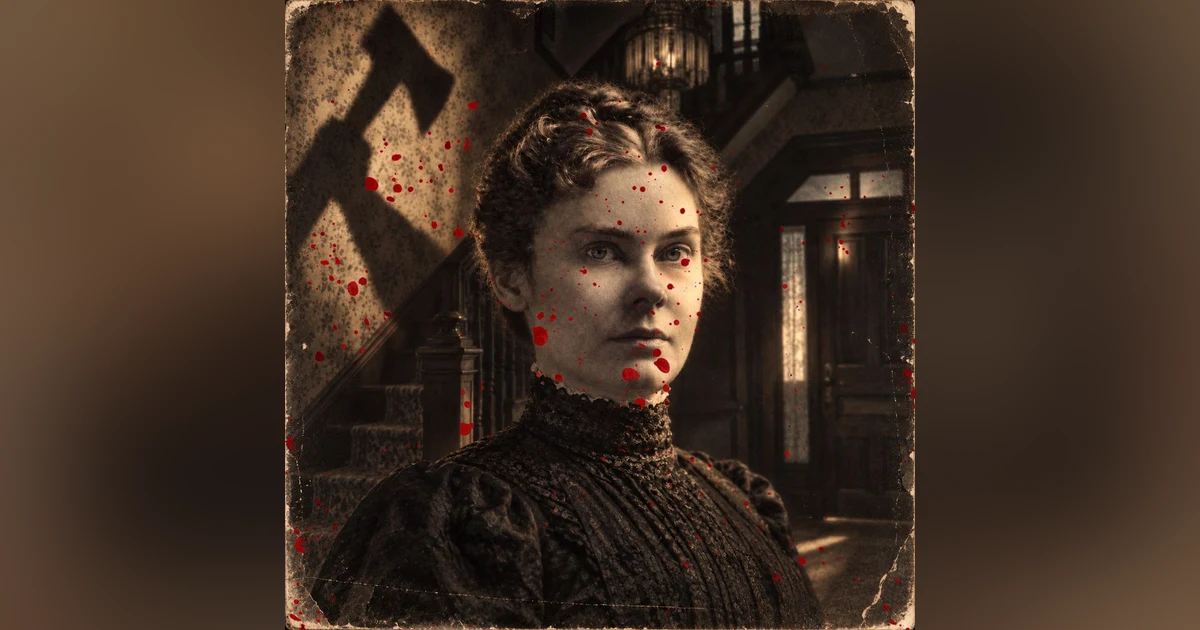
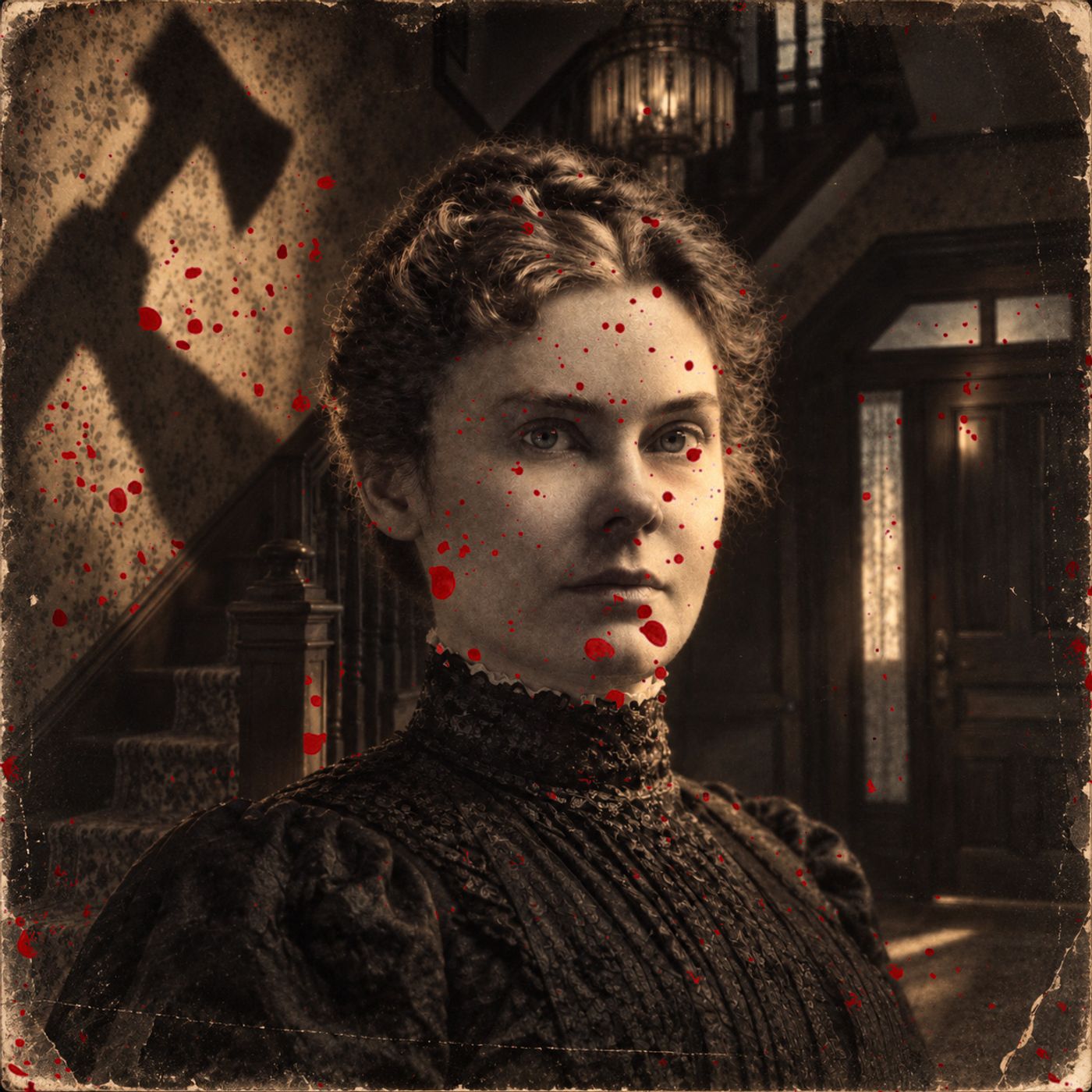
Lizzie Borden was acquitted of the 1892 axe murders, yet a notorious nursery rhyme still casts her as the killer. Terrifying & True returns to Fall River, Massachusetts, to examine the deaths of Andrew and Abby Borden and the evidence at her 1893 trial. From the disputed barn alibi and burned dress to the handleless hatchet, follow the clues that fueled suspicion without securing a conviction. Separate the historical record from folklore and competing theories. Why did suspicion survive the verdict—and why are the murders still unsolved? We're telling that story tonight.
Bonus episodes & support: https://weeklyspooky.com/join
More scary stories: https://weeklyspooky.com/
Story submissions: WeeklySpooky@gmail.com
Frequently Asked Questions
When did the Lizzie Borden murders happen?
The murders of Andrew and Abby Borden took place on August 4, 1892, in Fall River, Massachusetts.
Was Lizzie Borden convicted of the murders?
No, Lizzie Borden was tried in 1893 and acquitted of the murders of her father and stepmother.
What weapon was used in the Lizzie Borden case?
While the exact murder weapon was never conclusively identified, a handleless hatchet found in the basement became known as the alleged weapon, though no blood was found on it.
In Fall River, Massachusetts, Abby Borden lies murdered upstairs while her husband returns home and rests on the sofa below. Minutes later, Andrew Borden is dead too. No stranger is seen, no weapon is proven, and the only person ever tried walks free. So, who was inside the Borden's home? What you are about to hear is believed to be real. Based on witness accounts, testimonies, and public record, this is Terrifying and True. August 4th. 1892, Fall River, Massachusetts. The city hall bell has just struck 11 when Bridget Sullivan hears Lizzie Borden calling from below. Maggie, come quick!
Bridget has been lying fully dressed in her attic room, trying to escape a pounding headache and the heat. She runs downstairs. Lizzie is waiting near the back door. but she stops Bridget before she can enter the sitting room. Andrew Borden is on the sofa. He had returned from his morning walk only a short time earlier, carrying a small parcel. Now, he's dead, killed so violently that there can be no mistake about what happened. Someone entered his ordinary house in the middle of a busy city, approached a resting man and struck him again and again. Or perhaps the killer was already inside.
The front door had been locked three different ways. Bridget had spent much of the morning washing windows around the house and said she saw no stranger arrive. Lizzie said she had been in the barn. Emma Borden was away Abby Borden, Andrew's wife, was supposedly out visiting a sick friend. Then a neighbor climbs the stairs. From the landing, she can see beneath the bed in the guest room. A woman lies face down on the floor. Abby never left the house. Her body is cold. Andrew's is still warm. The same home has held two murder scenes for more than an hour, and during that interval, people have moved through its rooms without realizing that one of the dead was already upstairs.
There's no obvious intruder, no clear escape, no conclusive weapon, and the only person tried for the crime will walk free. More than a century later, the house still seems to ask the same question. Who was inside with the Bordens? Fall River in 1892 was a city built on cotton, steam, and sharp divisions. Mill whistles governed the working day. Immigrant laborers crowded into neighborhoods near the factories, where the city's established Yankee families measured one another by church, ancestry, property, and address. Wealth climbed uphill. The broad streets and larger homes of the fashionable district known simply as The Hill looked down toward the mills, the river, and the dense commercial center below.
Andrew Jackson Borden had enough money to live there. He had invested in real estate, banks, and mills, building a fortune through the same qualities that made him difficult to romanticize. Caution, discipline, and an almost aggressive dislike of waste. Yet, he remained at 92 2nd Street, only a block from the business district, in a narrow house that did not advertise what he owned. That decision mattered very much to his daughters. Emma Borden was 41. Lizzie was 32. Neither had married and both still lived under their father's roof. Their birth mother, Sarah, had died when Lizzie was a small child.
Andrew later married Abby Durfee Gray, who had spent nearly 27 years as their stepmother by the summer of 1892. Abby was 64 by then. She had kept the household, maintained family ties, and lived with the Borden daughters for most of Lizzie's remembered life. Popular retellings flatten the household into simply a miser, a hated second wife, and two trapped daughters waiting for an inheritance. The record is much less tidy. Bridget Sullivan, the family's only live-in servant, testified that she had not witnessed open warfare. Meals were shared. Ordinary conversation continued. Emma later insisted that relations were cordial, but cordial is not the same as close.
At some point, both daughters stopped calling Abby mother. Lizzie corrected people who used the word. She was Mrs. Borden. Money had sharpened the distance. Several years before the murders, Andrew bought an interest in a house for Abby's family. Emma admitted at the trial that the transaction caused trouble between Andrew, Abby, and the daughters. Andrew later gave Emma and Lizzie their grandfather's Ferry Street property, then bought it back from them shortly before the murders for $ 5, 000. No surviving record proves that inheritance was a murder motive. Andrew apparently left no will that anyone could produce, and his daughters were his natural heirs.
Still, property had become the language through which this family expressed fairness, loyalty, and resentment. In a house where feelings were rarely announced, deeds and keys could say plenty, and there were keys everywhere. The Second Street house had originally been built for two familiesâ The Bordens occupied the whole building, but its divided design remained. Rooms connected in awkward sequences. Bedrooms could be reached by one staircase, but blocked from another. Andrew and Abby kept their bedroom locked. Lizzie's room opened into Emma's. Bridget slept alone on the third floor. The exterior doors were guarded by Bolts, spring locks, hooks, and keys.
Bridget testified that the back door had two spring locks and a bolt. The front door could be secured three different ways. Some of this caution followed a daytime theft from the house in 1891 when cash and jewelry disappeared while family members were home. The result was a strange domestic fortress. crowded, compartmentalized, and full of people who could remain physically close while living in separate worlds. Bridget Sullivan had entered that world in 1889. She was an Irish immigrant, 26 years old at the time of the trial, and responsible for cooking, washing, ironing, sweeping, and much of the heavy work that kept the household running.
Emma and Lizzie called her Maggie, though her name was Bridget. On Wednesday, August 3rd, Bridget had reason to think something was wrong, but not necessarily of the criminal variety. Andrew and Abby were suffering from stomach trouble. Abby consulted Dr. Seabury Bowen, the physician across the street, telling him she feared they might have been poisoned. Bowen found no convincing signs of poison and suspected simply spoiled food. Later testing found nothing of concern in the victim's stomach or in the household milk. That evening, John Minicum Morse arrived to stay overnight. Morse was the brother of Lizzie and Emma's late mother.
His visit would later feed suspicion because... Any unexpected guest near an unsolved murder will of course attract theories. But Morse had visited before, and the available evidence places him away from the house during the killings. Lizzie spent part of that evening with her friend, Alice Russell. According to Russell's trial testimony, Lizzie spoke of an upcoming trip, but said she felt depressed. Something she believed was hanging over her. She talked about the household illness, her father's habit of dealing harshly with people, and her fear that someone might hurt him or burn the house down. Those words can sound like prophecy after the fact.
They can also sound like anxiety in a family that had been sick, robbed, and increasingly suspicious of outsiders. The distinction is very important. Russell remembered a foreboding conversation, but did not hear a confession. Morning arrived without resolution. Nothing in the quiet house announced that morning had become a macabre countdown. Bridget came downstairs shortly after six with a dull headache. She lit the stove, brought in the milk, and prepared breakfast. Abby appeared first and gave instructions. Andrew came down soon after. John Morse joined them. Lizzie did not. The meal was simple and, in hindsight, infamous. Mutton broth, mutton, Johnny Cakes, coffee, and cookies included.
It is often blamed for the household illness, but the exact cause was never established. Andrew, Abby, and Morse ate together. Lizzie came down later for coffee and cookies. It appeared like another ordinary Thursday. Morse left around nine to visit relatives across town. Andrew prepared for his usual morning round of business. Bridget began clearing the dining room. Abby told her to wash the windows. Bridget later said she last saw Mrs. Borden at about nine o'clock. Abby was dusting downstairs. Other testimony placed her next in the guest room, where she was straightening the bed Morse had used.
The room sat at the front of the second floor. separated from the rest of the family's private bedrooms by the peculiar architecture of the house. Lizzie's whereabouts during the next stretch of time were never established with certainty. Bridget took her pail and brush outside. She moved around the building, talking briefly across a fence and returning repeatedly to the barn for water. She saw Lizzie near the back entry, She did not see a stranger come to the house. But Bridget also admitted that a careful person could pass through the screen door without making enough noise to attract her attention.
That narrow possibility would become the opening through which every intruder theory had to squeeze. Inside, Abby entered the guest room. She began the small, ordinary work of straightening a bed used by a family visitor. Before Andrew returned home, another person was in that room. And the House of Locks failed to keep the danger out. No witnesses saw Abby Borden attacked. The physical evidence showed that the first blow came from behind, near the junction of her neck and back. She turned or fell. The remaining injuries were concentrated on her head as she lay face down between the bed and the dressing case.
That's as far as the record can take us. There is no reliable account of a struggle or documented cry heard by a neighbor in and no proof of what Abby saw before the attack began. The room itself suggested interruption. Pillow shams had been placed on the bed. Ordinary housework had stopped in the middle of an ordinary morning. The autopsy recorded 19 cutting injuries, one at the back of the neck and 18 to the head. It's terrible enough without the rhyme about adding 40 whacks. Medical witnesses later believed Abby died well before Andrew. Their estimates varied, but the condition of the bodies, the blood, and digestion all pointed toward a gap of roughly an hour to an hour and a half.
For most of that interval, Abby remained upstairs, undiscovered. Andrew Borden, meanwhile, was walking through Fall River, His movements were witnessed at banks, businesses, and shops. He conducted errands, spoke with acquaintances, and headed home sometime before 11. Nothing in that public routine suggested he knew his wife was dead or believed anyone in his household was in danger. When he reached 92 2nd Street, his key would not open the front door. Bridget was inside, washing the windows. She heard him trying the lock and went to help. The door was held by a spring lock, a bolt, and a key lock.
As she struggled with them, she muttered and irritated, Then Bridget heard Lizzie laugh from above. That moment has been argued over for more than a century. Bridget placed Lizzie either near the top of the stairs or in the upstairs entry. The guest room containing Abby's body was also on the second floor, but the house's divided plan prevented a simple conclusion about what Lizzie could see from where Bridget had heard her. It was suspicious. It was not, however, an eyewitness account of murder. Andrew entered carrying a small parcel. Lizzie came downstairs and asked whether he had brought in any mail.
Then, according to Bridget, Lizzie told him Abby had received a note summoning her to visit someone who was ill. No messenger was identified. No sick friend came forward. No note was ever found. The note solved an immediate problem for anyone who wanted Abby's absence to seem normal. It told Andrew not to go looking for his wife. It told Bridget that Mrs. Borden was away. Later, when Andrew was found dead and Abby could not be located, it delayed the realization that the house contained another victim. But the source of the story was Lizzie. Andrew went upstairs briefly, then returned to the sitting room.
He removed his outer coat and settled on the sofa. It was a short horsehair lounge, not quite long enough for him to stretch out comfortably. His head rested near the parlor doorway. Daylight entered through the freshly washed windows. Bridget continued working. Lizzie brought an ironing board into the dining room. She asked whether Bridget planned to go out that afternoon. She mentioned a sale on dress goods. The conversation was domestic, casual, and almost strangely ordinary. Bridget felt sick. The headache she had carried since waking had worsened, and she had already vomited outside earlier that morning. Once the windows were finished, She climbed to her attic room and lay down without removing her clothes.
The city hall clock struck eleven. Bridget said she remained awake. She heard no footsteps, no struggle, no opening door, and no screen door slam. A few minutes later... Lizzie called her downstairs. Andrew had been struck ten times on the left side of his face and head. There were no defensive wounds described on the rest of his body, and no sign that the sitting room had been ransacked. He appeared to have been resting, when the attack began. Lizzie stood near the back of the house. She did not lead Bridget to the body. In fact, she warned her not to enter the sitting room and sent her across the street for Dr.
Bowen. The doctor was away. Bridget returned, questioned whether she had left the screen door hooked, and later testified that Lizzie said she had been in the backyard, heard a groan, and found the door standing open. That account did not remain entirely stable. Lizzie would also say she discovered her father after returning from the barn, where she had gone to look for metal for fishing sinkers or a screen repair. The barn became her alibi and one of the prosecution's favorite targets. Police thought the loft was oppressively hot and its dust insufficiently disturbed. The defense produced workers who had recently been there, weakening the claim that the floor preserved a perfect record of movement.
Lizzie's exact purpose in the barn shifted in retelling, but changing language does not automatically prove a changing story. Witnesses summarize, Questioners rephrase and memory hardens unevenly, under pressure. What never changed was the narrow timeline. If Andrew died shortly after 11, there may have been only minutes between the final blows and Lizzie's call to Bridget. A killer inside the house needed to leave without being heard or hide while neighbors and doctors gathered. A guilty person remaining inside needed to conceal a bloodied weapon, remove or cover any stains, compose herself, and summon help. Both possibilities are difficult.
But neither is impossible. That tension is what drives the entire case. Neighbor Adelaide Churchill came over when she saw Lizzie in distress. Dr. Bowen soon arrived. Alice Russell was summoned. People entered, crossed rooms, moved objects, questioned Lizzie and began doing what frightened people do before anyone has established control of a newly discovered crime scene. At first, the emergency centered on Andrew. Then, someone asked where Abby was. Lizzie repeated that her stepmother had gone out after receiving a note saying, But she also suggested that Abby might have returned. Bridget and Mrs. Churchill went upstairs to look.
They did not have to enter the guest room to understand. As Mrs. Churchill reached the landing, her line of sight passed beneath the bed. On the far side, she could see a woman's clothing and the shape of a body on the floor. Abby had been only a few rooms away while Andrew came home, while Bridget fought with the locks, while Lizzie laughed upstairs, while the ironing board was opened, and while the household discussed shopping. The second body transformed the case. This was not a sudden attack on Andrew by someone slipping through an open door. The killer had struck once, waded through the rhythms of the house, and struck again.
Or two killers had entered the same locked home without being seen. There was no obvious theft, nothing to explain why a stranger would remain nearby after killing Abby. No one reported a bloodstained figure fleeing into a busy second street. Searches found axes and hatchets, but none could be conclusively tied to the wounds. Police had a house full of locks, an uncertain screen door, a missing note, and two separated windows of death. They also had one adult who appeared to be present for both. By nightfall, the question was no longer whether the danger had entered the Borden house or It was whether the danger had ever left.
The Fall River Police began with a problem modern investigators would recognize immediately. The scene was not secured. Relatives, neighbors, doctors, officers, and undertakers moved through the house... Lizzie changed into a rapper. Bridget ran errands, objects were touched, and the bodies were examined and moved. Searches unfolded in stages rather than under one controlled command. Critics at the time accused the department of hesitation and confusion. Some believed Lizzie received gentler treatment because she was a respectable Yankee woman. from a prominent family. Her supporters believed police had fixed on her because they couldn't find anyone else. Both complaints have a degree of truth to them.
Investigators searched for what such a crime ought to leave behind. Blood, a weapon, and a path of escape. They found almost none of it. Eyewitnesses who saw Lizzie after Andrew's discovery did not describe visible blood on her hair, face, hands, or clothing. Chemical testing found no blood on the blue dress, shoes, or stockings collected by police. A tiny spot on a white underskirt could not be identified conclusively and very well might have had an innocent explanation. That absence helped the defense, but deepened the mystery. Medical testimony suggested an assailant positioned close to the victims would probably receive splatter.
If Lizzie committed the murders, where were the clothes she wore? Where did she clean herself up? Where was the weapon? The cellar contained several axes and hatchets. One small hatchet head had no handle and appeared dusty or coated with ash. It became the object most commonly identified as the possible murder weapon. Yet testing found no blood on it. The break in the handle could not be reliably dated. An expert allowed that a tool might be cleaned thoroughly but said quickly removing blood from the Rough broken end would have been extremely difficult. Even the prosecution didn't prove that this hatchet killed Andrew and Abby.
The Fall River Historical Society still describes it accurately, the alleged murder weapon. Police returned again and again to Lizzie's account. She said she had been in the barn while Andrew was killed. She gave uncertain answers about what she sought there, how long she stayed, when she last saw Abby, and whether she had been upstairs before her father returned. Her inquest testimony contained reversals that look devastating on a printed page, but it came under unusual conditions. Lizzie was questioned for hours without her lawyer, She was already the focus of the investigation. Dr. Bowen had prescribed morphine beginning the day after the murders, doubled the dose on Saturday, and continued it through the inquest.
At trial, Bowen agreed that the drug could contribute to confusion or impaired memory. Morphine does not explain every contradiction. it does mean the transcript should not be read as a calm, voluntary interview recorded under modern safeguards. On August 11th, at the end of the inquest, Lizzie was arrested. She pleaded not guilty and was taken to jail in Taunton. The public story hardened quickly. Newspapers predicted rumors, character judgments, diagrams, motives, and theories about how a woman could kill without staining her clothes. Then came the dress. On Sunday morning, three days after the murders... Alice Russell entered the kitchen and saw Lizzie preparing to burn a light blue Bedford cord dress.
Lizzie said it was stained with paint. Russell warned her that destroying clothing would look suspicious. And it did. To prosecutors, the fire was consciousness of guilt, a blood-stained garment disappearing before police could seize it. To the defense, it was an inexpensive faded work dress damaged by paint. Emma testified that she had urged her sister to destroy it. The act was done openly after multiple searches of the house. There is no surviving fabric to test. The dress is therefore both one of the case's most suspicious facts and one of its least resolvable. Another allegation involved prussic acid, an old name for hydrogen cyanide.
A drugstore clerk said Lizzie tried to buy a small amount the day before the murders, supposedly to clean a seal-skin cape. He refused without a prescription. No poison was found in Andrew, Abby, or the milk they drank. The allegations suggested preparation, or at least an unexplained interest in a lethal substance, immediately before two deaths. Yet the trial judges excluded it after the prosecution failed to establish the necessary connection and foundation. The jury never heard it. The jury also never heard Lizzie's inquest answers. The three judges ruled that, although the proceeding was called an inquest, Lizzie was effectively being treated as a prisoner accused of murder.
She had been compelled to answer without counsel or a meaningful warning that she could remain silent. Her testimony was therefore not voluntary enough to place before the jury. Those rulings removed two of the prosecution's sharpest weapons. The prosecution could never recover from both. The trial opened in New Bedford on June 5, 1893. Lizzie entered a courtroom packed with reporters and spectators. Her defense included family attorney Andrew Jennings and former Massachusetts governor George Robinson. District attorney Hosea Knowlton and William Moody led the prosecution. The jury consisted of 12 men. The state built a case from accumulation.
Lizzie was present. She had opportunity. Her relationship with Abby was strained. She gave the false or unexplained story of a note. She placed herself in a barn police doubted she entered. She had spoken ominously the night before. She burned a dress. No credible intruder had been found. One fact alone might be innocent. Together, prosecutors argued, they formed a shape. But the defense kept breaking that shape apart. Bridget had admitted someone could enter quietly through the screen door while she worked outside. Witnesses reported unfamiliar men near the property, though none could be connected to the crime.
Recent visitors to the barn challenged the theory about untouched dust. Family conflict was real, but testimony about daily life was mixed. The note was missing, but that did not prove Lizzie invented it. The burned dress looked terrible, but the state could not show it carried blood. Most importantly, there was no direct witness, conclusive weapon, or meaningful blood evidence tying Lizzie to either body. The trial also revealed the assumptions of its era. Prosecutors had to persuade men that a church-going unmarried woman of Lizzie's class could carry out a ferocious physical attack. The defense benefited from the opposite belief.
Robinson spoke as though brutality itself made Lizzie an unnatural candidate. The presiding judge instructed jurors to consider her Christian character and reviewed the circumstantial case in language widely seen as favorable to the defense. Class, ethnicity, and gender did not erase the evidence. They shaped which evidence felt imaginable. At one of the trial's most disturbing moments, the victim's skulls were produced in court. Lizzie fainted. Reporters treated her collapse as sympathy, strategy, or proof according to the verdict they had already reached. Lizzie never testified before the jury. On June 20th, the jurors returned their decision. Not guilty.
The courtroom erupted. Lizzie wept and asked to go home. Legally, the result was not a declaration that nothing suspicious had happened. It was a judgment that suspicion, however powerful, had not become proof beyond a reasonable doubt. That was the correct question for the jury. It was not the question the country wanted answered. The verdict told Fall River that Lizzie Borden could not be punished for the murders. It did not, however, tell anyone who brutally killed Andrew and Abby. A not guilty verdict closed the prosecution, but it did not close the house. The case against Lizzie remained powerful because it begins with opportunity.
She was the person whose movements during both likely murder windows remained most substantially uncorroborated. She supplied the story that Abby had left after receiving a note. She gave inconsistent accounts of her movements. She burned a dress. She had acknowledged strain over family property, and no outsider was ever connected convincingly to the crime. Those facts explain suspicion. but they don't complete a murder case. No witness saw Lizzie attack anyone. No blood trail led from either victim to her room, the cellar, the barn, or a wash basin. No proven murder weapon was found. No one established where she could have hidden stained clothing and cleaned herself in the brief interval after Andrew's death.
The medical timeline was an informed estimate. not a stopwatch. An acquittal can be legally sound even when a defendant remains the strongest suspect. That uncomfortable space is where the Borden story lives. The intruder theory also survives because the house was not sealed as perfectly as its locks suggest. Bridget worked outside, crossed the yard, and admitted a careful person could enter through the screen door unseen the first killing could have occurred while Abby was upstairs and the household was scattered but then the theory becomes harder an intruder had to remain in or near the house while Andrew returned Bridget moved through rooms and Lizzie appeared on both floors the killer then had to attack Andrew and leave without being noticed on a busy street.
Nothing valuable appears to have been taken. No clear enemy, hired killer, or prowler was tied to both victims. Possible is not the same as persuasive. Other suspects have accumulated ever since. John Morse, Bridget Sullivan, unknown laborers, secret relatives... family enemies, and various combinations of accomplices. Most theories begin with a gap in evidence and then fill it in with a story. A strange alibi becomes a conspiracy. An immigrant servant becomes an invisible co-killer. A rumor repeated decades later becomes motive. The more dramatic explanationsâ incest, epilepsy, menstrual madness, a naked killer, a sexual affair between Lizzie and Bridgetâ lack reliable contemporary support.
They tell us more about what later generations needed the crime to mean thanâ what happened on August 4th. This doesn't make every theory equally impossible, though. It means the honest label remains unsolved. After her acquittal, Lizzie returned to Fall River with Emma. The sisters inherited their father's estate and bought the kind of house Andrew had declined to provide. A large residence on French Street, on the hill. They called it Maplecroft. Lizzie increasingly used the name Lisbeth. She furnished the house, employed servants, traveled, attended the theater, and formed friendships beyond the respectable circle that had defended her.
The move can be read as triumph, compensation, or simply a woman spending money that legally belonged to her. What it did not buy was acceptance. Fall River remembered. Children repeated the rhyme. Neighbors whispered. Invitations narrowed. The acquitted woman lived only a short distance from the scene, but the distance between Lisbeth Borden and the city around her became impossible to measure in blocks. Her friendship with stage actress Nance O'Neill attracted gossip. In 1905, Emma abruptly left Maplecroft. The sisters never reconciled publicly, and Emma never gave a complete explanation that settles the matter. Later, writers have connected the break to O'Neill, to Lizzie's social life, or even to a revelation about the murders.
None has been proved, and that uncertainty repeated the pattern of the case itself. An observable event, a missing explanation, and a crowd ready to supply one. Lizzie remained at Maplecroft until her death from pneumonia on June 1st, 1927. She was 66 years old. Emma died nine days later in New Hampshire. They were buried in the Borden family plot at Oak Grove Cemetery near Andrew and Abbey. Even death could not restore the family's private identities. Andrew became the father on the sofa. Abby became the stepmother beneath the bed. Emma became the sister who left. Bridget became Maggie, the maid in the attic.
And Lizzie became the woman with the axe. The nursery rhyme did most of the work. It changed Abby from stepmother to mother. transformed a likely hatchet into an axe, and inflated 29 documented cutting injuries into 81 wax. It gave the murders rhythm, simplicity, and a guilty verdict. A child could memorize in seconds what a jury had refused to declare after weeks of testimony. That's why the rhyme matters. It's not evidence. It's a machine for turning uncertainty into folklore. The Second Street house became part of that folklore as well. Visitors now come to study the rooms, sleep near the murder sites, and hear accounts of footsteps, voices, moving objects, and unseen presences.
Those experiences belong to witnesses and to tourism. They're not proof that Andrew or Abby remain in the building. The documented horror doesn't need a ghost. For more than an hour, one victim lay upstairs while ordinary life continued below. A door was unlocked. Windows were washed. A father came home. A servant climbed to her room. Someone moved through the house with knowledge no one else possessed. Every new adaptation rearranges those movements. Plays have made Lizzie repressed, liberated, monstrous, romantic, abused, rebellious, or wrongly condemned. Films have given her motives the trial never established. Books have convicted and acquitted her again.
In 2026, Netflix's Monsters The Lizzie Borden story brings the case to another enormous audience. Its official premise imagines a repressed daughter and rebellious maid escaping into fantasies of sex, power, and revenge before the murders. That is dramatic interpretation. The surviving record does not establish a romance or murder conspiracy between Lizzie and Bridgette. A series may explore that possibility. A documentary must keep the label attached. And perhaps that's the real reason Lizzie Borden never seems to disappear. The case offers just enough evidence to suspect and just enough absence to reinvent. You can make Lizzie a calculating killer, a trapped Victorian woman, a victim of prejudice, an emblem of female rage, or a monster built by newspapers.
The empty spaces accept almost any shape. But Andrew and Abby do not belong to those reinventions. They were two people killed in their home. Their murderer was never lawfully identified. Their injuries became a joke and a rhyme. Their rooms became attractions. and their deaths became supporting material in the legend of the daughter who survived them. Return finally to the landing. Look beneath the guest room. The most famous woman in the story is not there. Abby is. Downstairs, Andrew is still expected home. Bridget is still washing windows. The front door is still locked three ways. Somewhere within that short distance between the guest room and the sofa, the truth is moving through the house.
The jury let Lizzie Borden go. History never did. And the killer, whoever it was, left without a name. Lizzie Borden took an axe. and gave her mother forty whacks. When she saw what she had done, she gave her father forty-one. Andrew Borden now is dead. Lizzie hit him on the head. Up in heaven he will sing. On the gallows she will swing. Terrifying and True is narrated by Henrique Couto. It's executive produced by Rob Fields and bobbletopia.com and produced by Dan Wilder with original theme music by Ray Mattis. If you have a story you think we should cover on Terrifying and True, send us an email at weeklyspooky at gmail.com.
And if you want to support us for as. Little as $ 1 a month, go to weeklyspooky.com slash join. Your support for as little as $ 1 a month keeps. The show going. And speaking of, I want to say an extra special thank you to our Patreon podcast boosters, folks who pay a little bit more to hear their name at the end of the show. And they are Johnny Nix, Kate and Lulu, Jessica Fuller, Mike Eshkewi, Jenny Green, Amber Hansford, Karen Wemet, Jack Kerr, and Craig Cohen. Thank you all so much, and thank you for listening.
We'll see you all right here next time on Terrifying and True.
