


 Apple Podcasts

 Spotify

 Spreaker

 Audible

 Castro

 RSS Feed
Terrifying & True | Frau Perchta, the Christmas Witch: Alpine Folklore and Chilling Christmas Horror

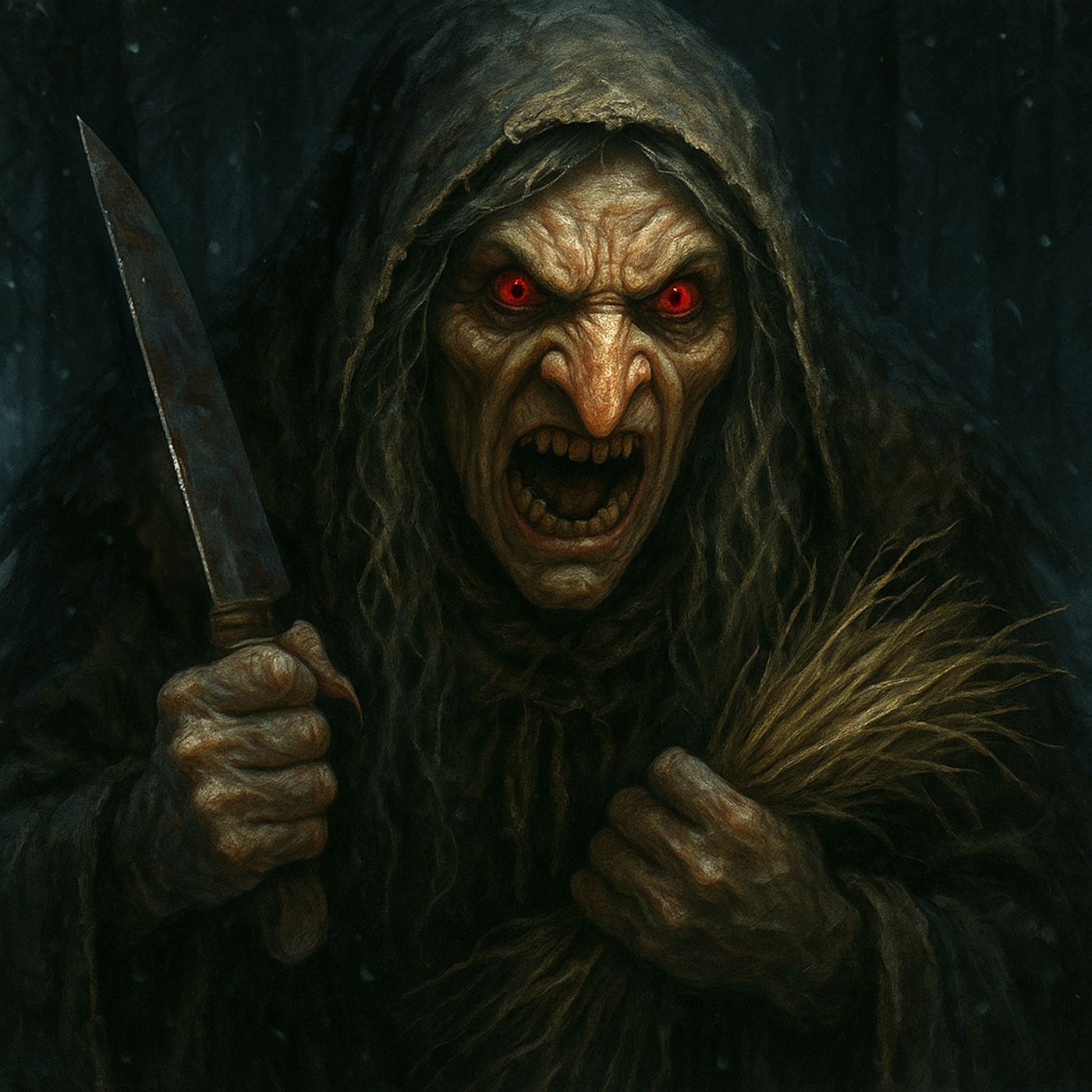
Terrifying & True returns with dark Christmas horror rooted in real Alpine folklore and chilling winter horror stories. Long before cozy Hallmark snowfalls, families in the high Alps spent the Twelve Nights of Christmas fearing a “Christmas Witch” who...
Terrifying & True returns with dark Christmas horror rooted in real Alpine folklore and chilling winter horror stories. Long before cozy Hallmark snowfalls, families in the high Alps spent the Twelve Nights of Christmas fearing a “Christmas Witch” who might reward your hard work… or split you open and stuff you with straw if you broke her rules. This is the terrifying legend of Frau Perchta and her horned horde, the Perchten – where festive lights, fasting days, and spinning wheels turn into a deadly checklist for survival.
In this holiday special, we dive into the eerie, mature side of winter tradition, where spooky stories, urban legends, and brutal morality tales kept entire villages in line through the darkest nights of the year.
- The rules of the Christmas Witch: Why Alpine families raced to finish their spinning, scrub their homes, and eat a strict Twelfth Night meal before Epiphany, terrified that one broken tradition could invite Perchta’s knife.
- Belly-Slitter punishments straight out of horror stories: From trampled weaving to the infamous eviscerations stuffed with straw and stones, we unpack how this gruesome myth drove real-world discipline in a brutal winter landscape.
- From Bright Goddess to winter monster: How a once-benevolent “Bright One” and Lady of Epiphany was demonized by the Church into a sinister Christmas hag, complete with goose-foot, ragged robes, and a curse-laden black cloth.
- Wild Hunts and haunted Alpine nights: The chilling tales of Perchta’s ghostly procession screaming across the winter sky, dragging lost souls and unbaptized children in her wake, and why villagers locked doors and clutched charms when the wind howled.
- The Perchten, Krampus, and other holiday terrors: Meet the beautiful and ugly Perchten, see how they inspired modern Krampus runs, and compare them to figures like Belsnickel and Père Fouettard in a full-blown Christmas rogues’ gallery.
- Living traditions in the spooky season: How today’s Perchtenläufe—massive parades of horned masks, cowbells, and towering headdresses—keep this eerie anthology of winter legends alive in the mountains, blending folk horror with festival fun.
This episode is
🎧 LISTEN NOW and subscribe for spine-tingling horror stories every week!
🎉 Unlock exclusive bonus episodes and support the show on Patreon!
👉 WeeklySpooky.com/Join
📬 Contact Us / Submit Your Horror Story!
- Twitter: @WeeklySpooky
- Facebook: facebook.com/WeeklySpooky
- Email: WeeklySpooky@gmail.com
🎵 Music by Ray Mattis 👉 Check out Ray’s incredible work here !
👨💼 Executive Producers: Rob Fields, Bobbletopia.com
🎥 Produced by: Daniel Wilder
🌐 Explore more terrifying tales at: WeeklySpooky.com
0:03 On the twelfth night in the Alps. They did not fear cold in their stockings. They feared a Christmas witch who might cut them open and fill them with straw. If your work wasn't finished, your house wasn't clean, or your family broke her rules, the Frau Perchta did more than just scolding. What you were about to beat is believed to be based on witness accounts, testableies, and public record.
0:46 This is terrifying and treat treat. This episode is sponsored by Cozy Earth, featuring some of the most comfy and soft bedding and loungewear perfect for snuggling up and learning about a certain Christmas Witch. If you head tocozyearth dot com right now and use promo code Spooky, you can save forty one percent on your first order, and not only that, the purchase supports weekly Spooky directly. So head tocozyearth dot com, get yourself or a loved one something warm and snugly and use promo code spooky to save forty one percent and support the show. Thank you spookies for checking out Cozy Earth, and thank you to Cozy Earth for the support. And now we have more to unwrap in the depths of winter high in the alpine mountains, Christmas was never just twinkling lights and gentle carols. For generations of villagers, the twelve nights after Christmas were a time of fear, nights when a mysterious witch was said
2:16 to walk the snow. They called her fraw Perchda. According to legend, she would appear as a radiant lady in white slipping a silver coin in the shoe of a hard working servant, or as a ragged crone with a hooked nose, a single strange foot, and a hidden knife. If your work was unfinished, your home untidy, or your family too greedy. At the holiday table, Perchta would not leave coal. She would slit your belly, pull out your insides, and pack you with straw and stones, before sowing you shut.
3:05 Some have claimed to hear her wild hunt raging across the winter sky, a phantom procession of demons and lost souls. Others swore they saw her followers, the horned and howling Perchden, stampeding through the dark to punish the lazy and reward the diligent. Was Frau Perchta, a demon invented to terrify children, a twisted remnant of an ancient winter goddess, or something even stranger, a living, breathing tradition that still stalks the Christmas season to this very day. The hour is late on a bitter twelfth night in the High Alps, a young girl hunches over her spinning wheel by the dying firelight, fingers raw and heart pounding. She dares not leave even a single strand of flax unspun. Midnight is approaching, and
4:41 she knows the rules. The cottage around her is spotless, every stray bit of dust swept away in the hearth's glow. A humble supper of fish and porridge simmers, the only meal aloud on this night of epiphany. She will eat sparingly, then set a heaping bowl of porridge on the doorstep before she bolts the door. It's an offering, a placation to something hungry roaming in the dark outside. The wind howls over the snow bound village. As the girl finally crawls into bed, she prays that she's done everything right, for even if one chore was neglected, if she broke even one tradition. Frau Perchta might come calling, and the belly slitter does not forgive. These are the rules to avoid fra perch does wrath. Number one finish all your spinning by the twelfth night. Any flax or wool left unspun by January sixth is a dangerous affront. Number two
6:19 eat only the traditional simple meal on Epiphany night and nothing else. In many regions this meant fish and a stodgy porridge or gruel rich or fancy food on Perchta's feast day is strictly forbidden. Number three, leave a portion of that meal as an offering for Perchda. A bowl of porridge, sometimes enriched with harring or dumplings, must be set out for her and her followers. Number four keep the house clean and orderly. Perchta will inspect the spinning room and hearth woe to the household that she finds to be in disarray. And the final rule, tell no lies.
7:22 Some tales say Perchta can tell if anyone has been dishonest or lazy during the year, and she loathes liars. Break any of these rules, and, according to legend, you invite a nightmare of retribution. Perhaps, if you're lucky, you'll only wake to find your unfinished weaving trampled or burned to ash. But if you've already angered thee so called Christmas Witch, you could be found eviscerated, belly split open, guts yanked out and replaced with straw and stones, sewn back together with an iron chain. In the Alpine folk imagination, the price of sloth or disobedience was nothing less than your entrails. It's the dead of winter in a remote alpine village, Snow piles high against timber cottages, and an eerie stillness hangs. In the long nights. Families huddle by
8:54 hearth fires, casting anxious glances at dark corner. For in these Rauchnachte, the twelve nights between Christmas and Epiphany, an old legend comes alive. They say. A woman in tattered garments may creep silently into homes. Perhaps you'll find a kindly figure in white leaving a silver coin in your shoe, or something far more horrifying. If the stories are indeed true, a witch goddess called Frau Perchta is abroad, judging each household, and woe to anyone found wanting, lazy, or disobedient, greedy or unkempt Fraw. Perched A's punishments are the stuff of nightmares.
9:59 On this chill December evening, we delve into the folklore of the Fraw and her demon entourage, the Perchtin. But let's not get ahead of ourselves just yet. That's a gift we'll unwrap in just a little bit. Frau perched As story reaches back into the mists of Alpine and Germanic tradition. In fact, the name Perchta, also called perched Berchta or Bertha, likely derives from an Old word for bright or shining, hinting at her ancient role as a goddess of light. Her name is even linked to birchton Tog, the feast of Epiphany on January sixth, a date that will become central to her legend. According to folklorists, Perchta may have begun as a benevolent Alpine goddess akin to Frau Holley in the North. Jakub Grimm, the famous nineteenth century collector of fairy tales and myths, described Perchta, whom he called Frau Berchta, Hollas or Holda's southern cousin a white robed spirit who oversaw spinning and weaving and domestic
11:33 order during the twelve Days of Christmas. It's worth noting that originally the twelve Days of Christmas actually began on December twenty fifth, as opposed to the more modern interpretation of the twelve days leading up to the holiday. In her original form, she was a nurturer, a guardian of animals and children, and even a psychopomp guiding the souls of those who died young. As Birchda the Bright One, she protected forests and wildlife, and cared for the souls of unbaptized infants sometimes called the Hindchen in the afterlife.
12:22 In many ways, she stood at the threshold of worlds, between life and death, between the old year and the new, between winter's darkness and the return of light. Yet if Perchta began as a benevolent winter mother, history did not permit her to remain so. By the Middle Ages, the spread of Christianity had transformed many pagan deities into feared witches or demons. The Catholic Church, uncomfortable with the persistent worship of a powerful female pagan figure, waged a campaign to reshape or erase perched A's image. Early church records complain of Alpine peasants leaving offerings for Frauine perched instead of praying to the Virgin Mary. In the account from the thirteenth century, a monk noted with dismay that on Christmas Eve people set at table for the quote queen of Heaven, whom they called frau Holda, hoping for her blessing.
13:52 Such customs earned stern condemnation from the pulpit. The church labeled Perchta a demon and warned that those who honored her were consorting with the devil. Medieval clerics railed against sinners who left food for Perchta on her night. In a series of fiery sermons, Martin Luther himself attacked this once goddess. He mocked frau Holde as an infernal impostor defying God. Quote here frau Holde steps forward with her big snout, defies her God and calls him a liar, Luther sneered in one tirade. The strategy was effective. By demonizing Perchta, the Church turned a benevolent lady of winter into a menacing hag, and, perhaps inadvertently prepared stated her legend.
15:02 In the process, the once bright Epiphany goddess was recast as a dark specter. By the sixteen and seventeen hundreds, she was widely known by a fearsome new nickname, the belly Slitter, a terrifying cron who dealt death to the disobedient. Despite the church's vilification, folklore remembers that Frau Perchta wears two faces. In some tales, she still appears as a radiant white lady, dressed in pure white and gliding through snowy forests on the twelfth Night. This benevolent aspect, sometimes called Bertha, is gentle and generous, bestowing blessed on those who honor her. True to her name, she can be as bright and beautiful as freshly fallen snow. A hard working servant might awaken to find a silver coin that Perchta left in a shoe or bucket as his or her reward. In these stories, Perchta remains the Lady of Epiphany, bringing luck and prosperity for the new year to the virtuous,
16:35 But Perchta's other face is hideous and cruel. Many describe her as an old crone wrinkled and wild haired, with a long hooked nose and ragged clothing. In some regions they say she has one large foot, sometimes called a goosefoot or swanfoot, that reveals her supernatural nature. Jakob Grimm interpreted this odd foot as a relic of her divine nature, a shape shifting swan maiden who cannot fully shed her animal form. Others more practically noted it might come from operating an old spinning wheels treatle all night long, giving her a splade spinning foot, as it was called. Whatever her form. When Perchta walks the winter roads as a hag, she strikes fear into mortal hearts. In Austrian folk tales, she lurks at the crossroads as a bent little witch with gleaming eyes. If a lonely traveler passes by, she might greet him with a friendly smile and offer a small piece of black cloth. Beware accepting this strange gift
18:12 is a fatal mistake, one old account warns quote when one approaches, she holds out to him a black cloth. If he takes it, he is done for and will certainly not survive the year. The only escape, they say is to recognize the crone as Dame Perchta and recite a protective prayer, show her a blessed cross, and command, Dame perched throw the cloth on the earth, and the black cloth will fall from her hand, its curse dispelled.
18:59 Only then will every joy and blessing come to your house instead turning Perchta's curse into a boon. Such is the dual nature of Frau Perchta, wondrous power over fate, yet utterly merciless to those who cross her. Folk tales reflected a mix of awe and dread. Villagers longed for her favor and feared her wrath in equal measure. As one Folklorus noted quote, men are fascinated by her, but their feelings are mixed, and fear is mingled with longing.
19:54 Perchta is a single being with a Janus face, evolent guardian on one side, vengeful witch on the other, And in her role as a midwinter judge, she embodied the old notion that as you sow, so shall you reap good or bad, diligent or lazy. In the bleak midwinter, Perchta would render to each their due more than anything frau Perchta's legend centers on domestic diligence. She is obsessively concerned with the state of the home, especially the spinning room.
20:46 In German, one of her nicknames was spin Steubenfrau, the spinning room lady. Throughout Alpine villages, girls and women were warned each year to finish all of their spinning by the twelfth night. When Christmas is over, the holiday lull ends, it's time to put thread to loom and begin weaving for the new year. This may seem quaint or odd, but in this time period, if your home was not clean and well kept, it could lead to certain death, especially for children and the elderly, and getting your weaving done could mean the difference between surviving a cold winter and freezing to death. Frau Perchta expects every spool of flax or wool to be spun, and every room to be tidied, with no unfinished skines lying about. If you were lazy or negligent, she would know. Woe betied the girl who failed to meet her quota. Imagine the horror of waking to find your year's work, the precious flax you left half done. Smoldering to ash on the distaff.
22:20 It was a dire warning do your work on time, or Perchta's anger will find you. But destroyed yarn and ruined work rooms were actually the milder penalties in Perchta's arsenal. Her legend is most infamous for a far more grisly punishment, one that earned her that infamous nickname, the belly slitter. If a household had been naughty, slovenly, or idle frau, Perchta would not have to cut people open in the dead of night. She might steal into the bedroom of a lazy child or maid, draw a long knife from under her skirts, and slid open the victim's abdomen. She would then reach in with clawed hands and pull out the stomach and guts. In the gaping cavity, Perchta would stuffed straw, pebbles and garbage before sowing the person back up like a grotesque ragdoll. What a chilling image and innocent lying in bed, disemboweled and packed with farmyard refuse a macabre tableau to greet the household in the morning.
23:54 This was the fate of those who earned Perchtah's ire as one nineteenth century source vividly recorded quote, whoever has partaken of other food on her day, she cuts his belly open, fills it with chopped straw, and sows up the gash with a plowshare for a needle, and an iron chain by way of thread. Little wonder that children grew up fearing this specter. The mere mention of Perchta will come and gut you was enough to keep many a youngster on their best behavior through Christmas time. What could provoke such nightmarish retribution? Several offenses are mentioned in lore Laziness's paramount, failing to complete one's allotted spinning or leaving the house in disarray. Perchta's described as quote pretty judgie about the state of your home. For a woman who dresses in rags, as one author quips, she cannot stand a messy house. Dishonesty could invite punishment as well.
25:18 Berchta was said to know if anyone in the household had told lies during the year, and interestingly, breaking certain rules on her feast day epiphany was a grave transgression. In many regions, a traditional simple meal was set for January sixth, and one was not to eat anything else that night. If someone dared to feast on richer fair, Berchta's vengeance was swift skip the prescribed meal or forget to leave her a serving of it, and you might just find yourself elf eviscerated by mourning. This element of the legend strongly suggests Perchta's roots in ancient ritual. The humble meal was likely an offering to her, a way to honor the old goddess with proper fare. Indeed, in some areas people did leave a bowl of porridge out for Frau Perchta, specifically, much as one might leave out milk and cookies for Santa Claus, though in Perchta's case the motive was fear rather than love. One regional custom held that on twelfth night you must set out a bowl of peshten milk, a rich milk porridge, for Perchta
26:54 and her followers. In Tyrol, it might be a dish of dumbs. In parts of Germany, herring and grits were customary. In Austria, there was a special dish specifically called perchten mirch, made of oatmeal and herring. The family would eat part of the simple supper and leave the rest as an offering on the doorstep or even on the roof for the roaming Perchta. If by the morning the offering was untouched, well perhaps Perchta was not pleased. Legend insists you mustn't forget One tale says that in Old Tyrol, if you neglected to leave her a portion quote, her rampaging will extend far beyond your slovenly spinning room, straight to your insides.
28:00 In short, remember the rules that I laid out at the beginning of the program, or be prepared to suffer the bloody consequences. These morbid inspections were said to occur during Zwolften, the twelve nights after Christmas. Folks believed Frau Perchta would slip into homes sometime between December twenty fifth and January sixth, but most especially on Epiphany Eve, the night of January fifth. As the holiday season ended, Perchta made her rounds think of her as a dark mirror to kindly old Saint Nicholas, where Saint Nick brings gifts in earth December or on Christmas, Perchta brings judgment. As the new year dawns, she arrives unannounced perhaps accompanied by a sudden gust of cold wind or the scrape of a broom against the threshold, and peeks into every corner.
29:25 She'll notice if the floors haven't been swept, if the flax bundle lies half spun. She'll know if the children have been disobedient, or if they've shirked their chores. In one hand, Perchta carries a small reward, that silver coin for the diligent. In the other, she conceals her deadly knife. It's the ultimate carrot and stick approach. Rendered Visceral parents could warn their offspring, finish your work and behave, or Frau Persta will cut you open and fill you with straw.
30:12 For centuries, this threat was taken seriously in Alpine villages. The imagery was gruesome, but it reinforced critical values in a harsh environment, industriousness, cleanliness, and respect for tradition. Winter in the Alps was unforgiving. A family's survival often depended on everyone doing their part, spinning thread for clothes, preserving enough food, keeping the home secure. The belly slitter became the embodiment of those high stakes slack off and pay in blood. Beyond the chores, and punishments. Frau Perchta's lore is woven with dark magic and ghostly phenomena. In some legends, she's not just a lone witch making house calls, but the leader of a phantom procession that rages across the winter skies. This trope, which is often referred to as the wild Hunt, is common in European folklore, a spectral cavalcade of spirits sweeping through the night, usually led by a supernatural figure. In Germany's North, it was said to
31:47 be led by Holda or even Odin. In the Alpine South, folks whispered that it was Perchta who led the wild Hunt, flying above the tree tops with an army of lost souls in her wake. During the deepest dark of winter, particularly the Raunachta people claimed they could sometimes hear perschdas furious host passing overhead. Just imagine a howling wind rises on a moonless January night, battering the shuddered cottages of some lonely alpine hamlet. An old farmer, remembering the tale of his youth, freezes in bed. Was that thunder or the rumble of distant hoofs the gale outside builds to a cacophony, and he realizes it's not mere wind at all, but screaming voices carried on the air. Through a crack in the shutters, he spies a flicker of movement against the sky, a ragged woman flying astride a broomstick or distaff,
33:24 leading a horde of shrieking figures around her swirl, misshapen demons, and the pale ghosts of unbaptized children, their pitiful wails mingling with the roar of the storm. One tiny specter at the tail of the host drags a pitcher that spills tears into the snow. The farmer's blood turns to ice. He fumbles for the sprig of blessed said herbs above his bed, Saint John's wart protection against evil, and clutches it tight, murmuring a prayer as the wild hunt of Frau Berchta screams overhead. In the morning, when the neighbors speak of the terrible winds, he alone will know what truly passed through that night. In many regions, people genuinely feared encountering this ghostly procession. Quote. If you hear the wind and thunder roaring through the mountains, on the Birchdel knights.
34:50 One folk tale says, you're really hearing the sounds of Perchta leading the wild hunt. At such times, sensible folk barred their doors and stayed inside, lest they be caught in the spectral onrush. The devout kept protective charms on hand. For instance, if Dame Perchta were to appear in your barn or stable, hanging consecrated herbs like the aforementioned Saint John's wart was said to ward her off. Otherwise your livestock may fall ill or drop dead in her wake.
35:40 Some families even left a small portion of their holiday supper on the doorstep as a little buffet for Perchta, hoping to appease the much dreaded lady and divert her wrath. Folklore collected in the early nineteen hundreds in Salzburg captures how real Perchta felt to the peasantry. An englishwoman who witnessed a traditional Perchdin festival wrote that the local people not only believed in Perchta, they feared her. They spoke of how she haunts the hohen Salzburg Castle, wandering its halls at midnight. They told of meeting Perchta on country roads.
36:39 That eerie Crossroads tale of the Cursed Black Cloth was among these stories showing how a traveler's clever use of a crucifix could turn Perchta's curse into a blessing. In those tellings, Perchta personified faith itself. Accept a gift from her and perish, or face her down with faith and earn fortune. It was a deadly gamble that spoke to Perchtah's uncanny allure. She was terrifying, absolutely, but also strangely enchanting in her power. One might almost want to see her to know that she's real, but pray that if you do, it's the benevolent white lady who appears, and not the crone with the knife. But now let's shift gears a bit and unwrap Frau Perchta's fearsome horde. The very name Dame Perchten is simply the plural of Perchta, and in folklore it came to denote the eerie creatures
38:10 in her entourage. Over time, the Perchten took on a life of their own. In local tradition, these beings were described as something between spirits and mortal folks. Inhabiting the wild places and only emerging around Yuletide and Epiphany. Like Perchta herself, they split into good and evil kinds. The Schunperchten or beautiful Perchten or bright benevolent creatures, envisioned as radiant, almost angelic figures or friendly forest sprites who bring luck and wealth. The schiacht Perchten or ugly Perchtin, by contrast, or vicious demonic beings with fanged masks, tusks, and horns.
39:13 In many depictions, these ugly Perchtin appeared as shaggy, goat horned monsters wielding whips or cowtails. In folk imagination, the chiach Perchen or genuinely frightening quote. They are more felt and heard than seen, wrote one Salzburg local, recognized by their weird screams and laughter, It was said that on the darkest winter nights, these malevolent beings would swarm down from the mountains, invisible except for the sound of their eerie screeching and cackling as they passed through the villages.
40:05 People claimed the ugly Perchtin loved to lure travelers off their paths with disorienting noises or to punish those guilty of misdeeds. Imagine walking home on a cold night and hearing unearthly laughter echoing in the woods behind you. Alpine villagers certainly did, and they knew it was the perchtin at mischief. On the other hand, the shun Patchten were welcomed whenever they chose to appear. These lovely spirits were believed to bestow blessings, health, prosperity, and fertility for the coming spring. Some tales even refer to Frau Perchta herself as the most beautiful percht and the devil as the most ugly, as if to personify the extremes of her retinue.
41:14 In essence, Perchta was the leader of both kinds of Perchtin, a mistress of dualities. By the fifteen and sixteen hundreds, we have records of people re enacting the Perchten as a folk practice. It seems communities started channeling their fear of Perchta and her hoarde into performative rituals. Young men would dress up as the shiacht Perchten, donning hideous wooden masks with horns, draping themselves in shaggy fur and rags, and go door to door, making a ruckus. The idea was to drive out evil spirits and perhaps even scare away fral Pershta herself or at least any malevolent forces she brought along. Essentially, they were fighting fire with fire, becoming monsters to ward off monsters. Very Halloween sowin vibes.
42:26 There In some areas, this mummery was explicitly done on the twelfth Night as a safeguarding ritual. Think of it as a rural exorcism meets carnival villagers donning demon masks, ringing bells, cracking whips, and shouting to chase away winter's darkness. Folklorists view this as a classic inverse ritual, taking the image of what you fear the perchten, and turning it into a communal celebration in order to neutralize that fear.
43:10 Not surprisingly, the Church frowned on these noisy pagan charades, and authorities sometimes tried to ban them as relics of heathenism, but the tradition persisted and adapted with the times. One remarkable eye witness account from nineteen o eight describes a Perchtenloff or perchten run in Salzburg, a folk procession that had seldom been performed in living memory. The festival began quietly until the distant jingle of bells and shuffling of feet announced the approach of strange visitors. First came the shoon Perchten, the Beautiful Perchtin, arriving with great fanfare. These were local lads dressed in fantastic finery, wearing towering headdresses, some reportedly ten or twelve feet high. The headpieces were marvels of craft, red velvet, draped in mirrors and silver ornaments glittering in the torchlight. On the very top of
44:41 each contraption sat a crown, above that a crescent moon, and above that a star. Some headdresses even featured enormous bird figures. One man's included dozens of stuff wild birds, topped by a giant outspread peacock. The Beautiful Perchten carried swords in one hand and led their partners, men dressed as women, in graceful looping dances. They represented the return of light and order, a pageant of good fortune for the new year. Villagers cheered and clapped in time with the music as these white clad figures twirled through the market. Square, their mirrored crowns tossing sparkles of light. But once the shoon Perchten had made their elegant display, the atmosphere would change, lurking at the edges of the torchlight where the ugly perchten waiting for their cue. Suddenly, a piercing shriek ripped through the night, then another and another. The crowd murmured
46:14 nervously from an alley burst the Schiachperton in all their terrifying glory. They wore horned devil masks with long snouts and snapping jaws. Their shoulders were draped in animal pelts. Cowbells clanged around their waists, announcing their every move with a deep metallic cacophony. These demons pranced and lunged at onlookers, feigning attacks. Children in the audience screamed and darted behind their parents, only to erupt into laughter when a particularly playful patch swatted someone's leg with a dried animal bladder or a broom of twigs. The village square became a scene of pandemonium, firelight and shadows, angelic figures and horned beasts, laughter and startled cries, all mixing together. It was cathartic in a controlled festive way. The community was confronting its darkest fears, scaring off the evil of winter so that spring could safely come. As one observer noted, the Perchtenlauf felt like the villagers were wearing out the hauntings of
47:47 Perchta's knights through noisy celebration, chasing away the gloom with a dose of ritualized terror. The legend the Frau Perchta might be one of the most violent Christmas Time folk tales, but she is not alone in Europe's pantheon of Yule Tide boogeymen. The Alpine regions in particular, team with sinister companions to Santa Claus. The most famous today is Crampus, often dubbed the Christmas Devil. Like the Perchton, Crampis is depicted as a horned harry demon who carries chains and birch switches to thrash naughty children or a basket to kidnap them away. Traditionally, Crampus accompanies Saint Nicholas on Crampis knocked the night of December fifth, visiting homes to punish the bad while Saint Nick rewards the good. In recent years, Crampus's popularity has surged worldwide. Parades of costumed Crampei participating in cramposlof now occur in many cities, and he's appeared in everything from greeting cards to horror films. Interestingly, Crampus
49:20 is a relatively late addition to the holiday cast. Some folklorists trace Crompus to pre Christian Alpine beliefs, but in his current form as Saint Nick's sidekick, his legend dates mostly to the nineteenth century. Perchtas Perchten, on the other hand, seem to be an older native custom, one that possibly inspired the very image of Crampus. Another figure, lesser known outside of certain communities is Belschnikel, origin doating in the German Palatinate and brought to America by Pennsylvania Dutch settlers.
50:07 Belschnikel is a crotchety, fur clad man who visits a week or two before Christmas. He carries both treats and birch switches. When he comes knocking, Belschnickel will barge through the door and quiz the children on their behavior. Those who can prove they've been good receive a handful of candies tossed on the floor, while the naughty or overly greedy feel the sting of his switch. Often it was just a neighbor in disguise putting on a raucous semi comical show, but the purpose was the same to scare the children into behaving. In France, a similar character, Perforta, or Father Whipper, has a very dark origin, which will be covering next week on the show. He's a dark clothed helper of Saint Nicholas who hands out coal or floggings to bad children. Even Santa Claus himself had a darker edge. In some older traditions. In parts of Central Europe, there were stories that Santa would stuff naughty kids into his sack and carry them away, a role later delegated to sinister companions like Crampus or Belsnickel. Compared to all
51:41 of these, however, Frau Berchta stands out for sheer ruthlessness. While Crampus might swat and Belschnikel merely scold, Berchta promised a far more gruesome fate to those who broke her rules. She is more akin to an outright witch or ogres from a dark fairy tale than a mere holiday sidekick. In the gallery of scary Christmas figures, Perchta easily earns a crown as one of the most frightening. The others are largely punitive sidekicks invented to support the Saint Nicholas legend.
52:27 Frau Perchta, by contrast, due to her dual identities, is both judge and giver in her own right, rooted in pre Christian nature worship, only later entwined with the Christmas season. This makes her a uniquely potent figure, a fusion of ancient deity and folk demon. One might think that in the twenty first century the tale of Frau Perchta would have faded into a quaint historical footnote, but not so.
53:13 In the Alpine regions of Austria and southern Germany, Perchta and Herperchten are alive and well in winter traditions. Far from being suppressed, the old practices have resurged as popular festivals equal parts cultural heritage and spooky fun. The most famous are the aforementioned perchenlof large processions that take place during the deep winter months in Austria's Pongau region, for instance, villages host processions featuring elaborate costumes. The beautiful Perchton Parade with their enormous ornate head pieces and symbolic props said to encourage good fortune and wealth. Right behind them come the ugly Perchton, clanging bells and growling through boar like masks.
54:12 Its a spectacle of light and dark. Picture a troop of haloed benevolent figures, followed by a horde of horned demons scaring the crowd, a literal pageant of duality. These events draw huge crowds. Today. What were once small village observances have in many cases become regional festivals and even tourist attractions. Towns proudly advertise their Perchtenlauf dates, and travelers come from afar to witness the wild men in beastly costumes clashing through the streets. Ski resorts in the Alps often incorporate p Rchton runs or Crampis runs into their holiday programs, adding a dash of thrilling folklore for winter visitors.
55:10 The Glockerloff in Upper Austria's Salzgamergut, for example, is a beautiful new year's tradition, on the eve of January sixth, dozens of men in white march at night, carrying enormous illuminated lanterns on their heads, ringing in the final Rauchnacht with light and sound. In some Pinsgau communities, the Trestorer dancers perform, likely an offshoot of the Schunperchten, featuring costumed young men on stilts or in fine attire enacting ritualized steps to bless homes and insure fertility. Each valley has its own twist on the theme, but all hark back to the core idea of banishing the dark and welcoming the light as the new year is born. Crucially, Frau Persta herself is not forgotten in these modern celebrations. In Salzburg, local still speak of her ghost roaming the Hoen Salzburg Fortress at night, the same castle she was said to haunt in old legends. She sometimes affectionately called the Christmas Witch in popular culture, and you might even find her name in holiday folklore books or local tour guides, positioned
56:44 as a sort of female counterpart to Crumpus, though as we noted, she's so much more than that. Storytellers and neo pagan practitioners today have also reclaimed hich does older identity. Rather than emphasizing the evil Hag, they celebrate her as an ancient goddess of the Alpine winter, a stern but protective figure who rewards the generous and punishes the wicked. Some contemporary Pagans will even leave out offerings to Frau Perchta on Epiphany Eve as a nod to the old ways, framing it as honoring a wise winter deity rather than merely placating a monster's wrath. Meanwhile, for many villagers, the meaning of Perchten festivities now is more cultural than spiritual.
57:47 It's about keeping local heritage alive and having a bit of winter fun. In a way, every perchtenlof parade, with its booming drums and costumed fiends, is an act of remembering that the spirit of Berchta remains despite centuries of change. The legend of Frau Perchta and the Perchten fascinatingly weaves history and horror. On one side. It preserves the echo of a pre Christian past, a time when a bright lady of winter was revered as a giver of prosperity and protection. On the other it embodies the deep seated winter fears that generations of Alpine folk lived, with long nights, hard toil, and the ever looming threat of hunger or misfortune if one's work was left undone. It's easy to see why such a stern figure as Perchta became the enforcer of good being behavior. To survive winter, you had to be diligent and prepared. Slacker's truly risked death, if not by a witch's knife, then by cold and starvation.
59:15 So the tail of the belly slitter, ghastly as it is carried practical wisdom wrapped in visceral fear. Even today, the story retains its grisly charm. It sends a shiver down our spines to imagine frawl Perchta creeping through a silent, dark house, sniffing out any signs of laziness. We can almost feel her bony fingers checking for dust on the shelves, or hear the clop of her uncanny foot as she prowls the spinning room floor. In a world where winter holidays have largely become soft and sweet, all jolly santas and sugar cookies. There's something oddly refreshing, if morbid, about an older Sharper tradition that warns behave yourself or else.
1:00:26 After all, what's a good fairy tale without a dose of horror. So this January, when the twelfth night comes around, take a bit of advice from our ancestors. Tidy your house, finish your work, Serve up a humble meal, and maybe set a bowl aside on the doorstep just in case. And as you settle into bed, spare a respectful thing thought for Frau Perchda, the bright one who turned winter witch.
1:01:08 She may be out there in the moonlight with her Perchtin in tow, peeking in to ensure that all is in order. May she find you hard working, truthful, and ready for the new year, so she doesn't have to reach for her knife. Sweet dreams and happy perchtin Talk. Terrifying and True is narrated by Enrique Kuto. It's executive produced by Rob Fields and bobble Topia dot Com and produced by Dan Wilder with original theme music by Ray Mattis.
1:01:52 If you have a story you think we should cover on Terrifying and True, send us an email at Weekly Spooky at gmail dot com and if you want to support us for as little as one dollar a month, go to Weeklyspooky dot com slash join. Your support for as little as one dollar a month keeps the show going. And speaking of I want to say an extra special thank you to our Patreon podcast boosters, folks who pay a little bit more to hear their name at the end of the show. And they are Johnny Nicks, Kate and Lulu, Jessica Fuller, Mike Scuey, Jenny Green, Amber Hansford, Karen Wee, met Jack Ker, and Craig Cohen. Thank you all so much and thank you for listening. We'll see you all right here next time on Terrifying and True
