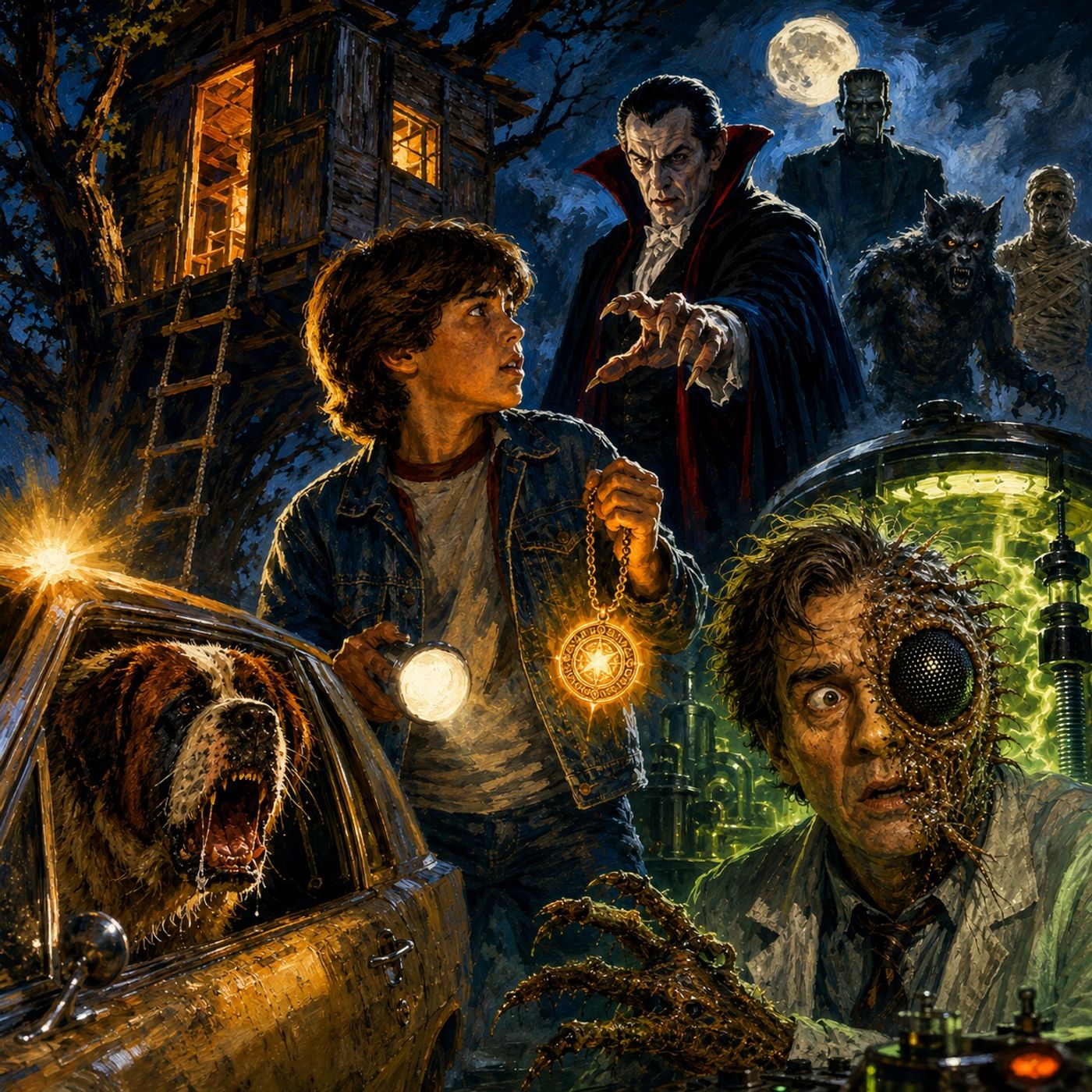
Why Universal's Monster Squad Remake Was Rejected in 1987
Discover why Universal Pictures ultimately rejected Fred Dekker and Shane Black's pitch to reboot their classic cinematic icons in 1987. This deep dive explores the copyright hurdles, design workarounds, and how a studio snub accidentally birthed one of the most beloved cult horror-comedy films of the decade.
Key Takeaways
- Fred Dekker and Shane Black originally envisioned their 1987 cult classic as an official Universal Monsters reboot.
- Universal Pictures passed on the script, forcing the production to legally alter the iconic character designs.
- Stan Winston's team successfully redesigned Dracula, the Wolfman, and the Mummy to evoke the classics without infringing on trademarks.
- The rejection led to independent financing and a creative freedom that an official studio picture might have stifled.
- The film's ultimate failure at the box office contrasted sharply with its legendary afterlife on cable TV and home video.
The Original Vision for a Universal Monster Revival
When writer-director Fred Dekker and co-writer Shane Black—who would soon conquer Hollywood with Lethal Weapon—sat down to pen a script about a treehouse club of kids fighting classic ghouls, they weren't just writing an original monster movie. They were writing a love letter to the golden age of Universal horror. In their minds, Dracula, Frankenstein's creature, the Wolf Man, the Mummy, and the Gill Man were the exact cinematic icons built by Universal in the 1930s and 1940s. They assumed the studio that owned the copyright to these legendary figures would jump at the chance to finance a modern, adventurous homage featuring a new generation of monster kids.
During the mid-1980s, horror was dominated by slasher franchises like Friday the 13th and A Nightmare on Elm Street. The classic gothic monsters had largely been relegated to Halloween costumes and vintage monster magazines. Dekker and Black wanted to bring them back to the forefront of pop culture by pitting them against adolescent suburban kids who had memorized every trope, rule, and weakness from monster lore. Unfortunately, Hollywood executives in the corporate offices of Universal Pictures did not share the enthusiasm of two young, passionate horror nerds.
Why Universal Pictures Said No
The precise reasons Hollywood studios pass on scripts are often shrouded in corporate mystery, but in the case of this 1987 cult favorite, the timing and tone played massive roles. Universal was navigating a tricky cinematic landscape in the 1980s. While they had tasted success with horror properties, a kid-centric action-adventure comedy featuring their sacred cinematic royalty felt like a risky gamble that did not align with their theatrical strategy at the time.
Furthermore, studio executives were wary of blending genuine terror with youthful comedic banter—a tonal tightrope that Dekker and Black executed brilliantly on the page. Fearing that the project might dilute the prestige of their historic monster library or simply fail to capture the teenage box office demographic that was currently flocking to slashers, Universal officially passed on the pitch. The rejection left the filmmakers scrambling for alternative financing, forcing them to take their ambitious horror-comedy elsewhere and completely rethink how the monsters would actually look on screen.
Designing Around the Copyrights
Getting rejected by Universal meant the production lost access to the iconic visual blueprints created by legendary makeup artists like Jack Pierce. You could not simply put Lon Chaney Jr.'s exact wolfman face or Boris Karloff's precise flat-headed Frankenstein bolt-neck on screen without inviting immediate legal action. This limitation turned into one of the most creatively liberating constraints in 1980s horror cinema.
Enter master special makeup effects artist Stan Winston. Tasked with bringing the gang together without violating copyright laws, Winston and his team engineered brilliant visual workarounds. Frankenstein's creature was given a rugged, stitched-together aesthetic that felt distinct from Karloff while retaining the tragic humanity. The Wolf Man was updated with a fierce, aggressive snarl and modern wardrobe sensibilities, while the Mummy and the Gill Man received terrifying new textures. They scratched every single itch a classic monster fan could possibly have while remaining entirely legally distinct from the Universal archive.
A Cult Classic Born From Resilience
Looking back, Universal's refusal to back the film may have been the best thing that could have happened to it. Unshackled from corporate studio mandates regarding PG-13 boundaries and brand protection, the production leaned heavily into the foul-mouthed charm, genuine stakes, and heartfelt earnestness that defined 80s adventure cinema. The kids felt authentic because they talked like real kids, complete with insults, treehouse club rules, and an unshakeable bond.
While the film struggled upon its initial theatrical release in August 1987, it found its true audience through late-night cable broadcasts and worn-out VHS tapes passed eagerly from one monster kid to the next. For a deep dive into how this cinematic gem fits into the broader timeline of terror, and to hear more about classic horror history, make sure to Listen to the full episode of Weekly Spooky for all the chilling details!
Frequently Asked Questions
Was the 1987 film originally supposed to be an official Universal monster movie?
Yes, writers Fred Dekker and Shane Black originally conceived the script as a direct reboot utilizing Universal's legendary cinematic monster library.
Who designed the new looks for the creatures after Universal passed?
Legendary special effects artist Stan Winston and his creature shop designed the updated, legally distinct looks for Dracula, the Wolf Man, the Mummy, the Gill Man, and Frankenstein's monster.
Did the movie perform well at the box office upon release?
No, despite its eventual status as a beloved cult classic, the film underperformed theatrically in August 1987 before finding massive success on home video and cable television.
How does the rejection relate to the film's unique tone?
Without studio interference from the copyright holders, the filmmakers retained complete creative control, resulting in an unfiltered blend of genuine scares, profanity, and heartfelt adolescent camaraderie.