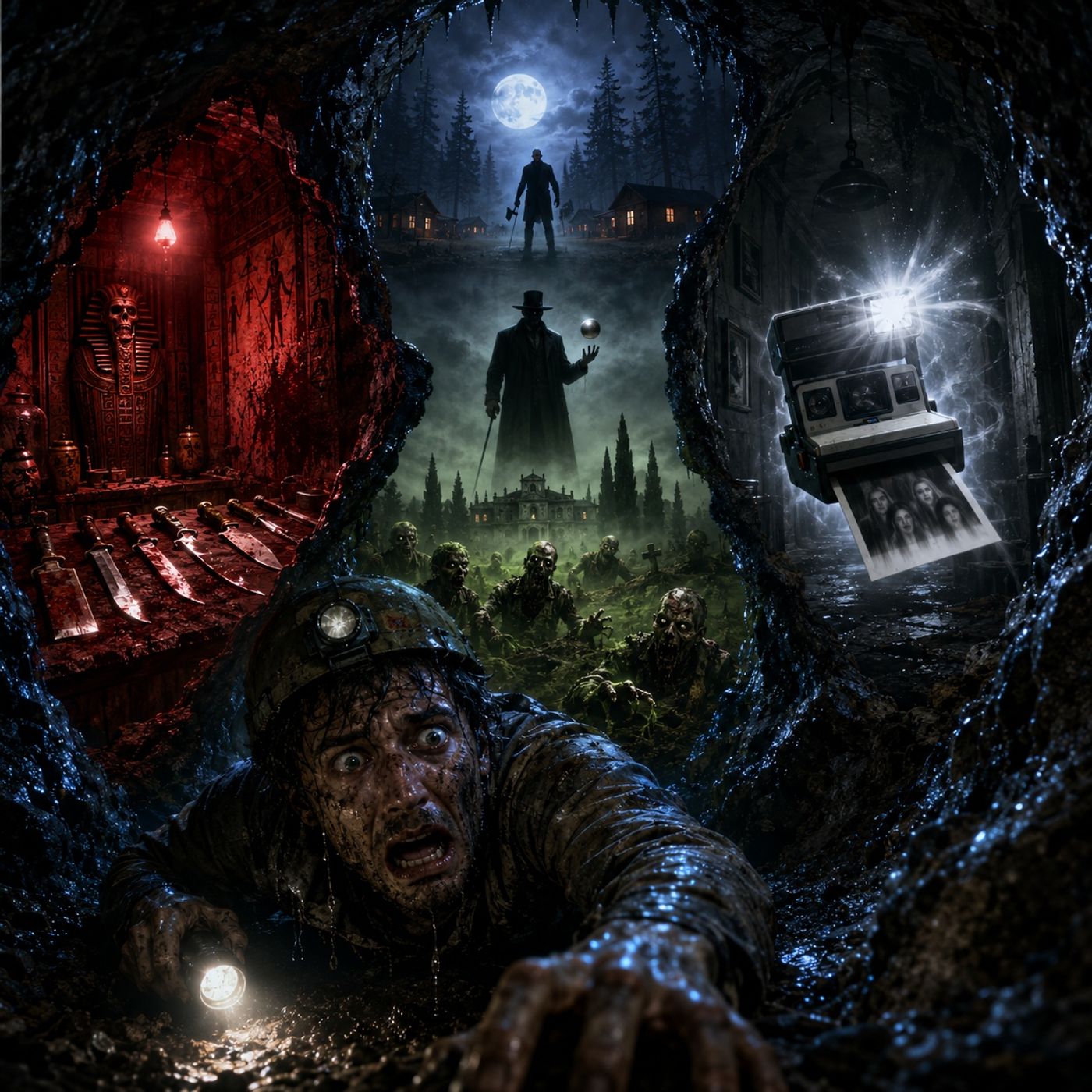
The Descent: How Claustrophobia Taps Into Primal Fear
Dive deep into the suffocating terror of The Descent. This film masterfully weaponizes its claustrophobic cave setting, transforming it into a visceral antagonist that preys on our most primal fears of confinement and the unknown. It's a chilling exploration of how environmental dread can amplify psychological horror.
Key Takeaways
- The claustrophobic cave environment in 'The Descent' functions as a primary antagonist, amplifying psychological horror.
- The film expertly fuses the terror of unseen creatures with the more intimate horror of human betrayal and desperation.
- Claustrophobia in horror cinema directly taps into a fundamental, instinctual fear related to safety and personal space.
- 'The Descent' utilizes grief and interpersonal conflict as potent triggers for escalating fear and survival instincts.
- The film illustrates that environmental limitations can often be more terrifying than any physical monster.
- The psychological impact of extreme confinement is a central theme, demonstrating how it erodes reason and fosters panic.
The Primal Terror of Being Trapped
In the vast landscape of horror cinema, Neil Marshall's 2005 film The Descent stands out not for its monstrous inhabitants, but for the profound, gut-wrenching terror it elicits from a far more relatable source: the crushing, inescapable reality of being trapped. While many horror films rely on external threats like slashers or ghosts, The Descent mines its dread from a deeply primal human fear – the fear of confinement. The film plunges its audience alongside the characters into a pitch-black, unmapped cave system, a setting that becomes an active participant in the unfolding nightmare. This isn't merely a backdrop; it's a suffocating character in itself, a labyrinth designed to disorient, dismember, and ultimately, to break its inhabitants.
The brilliance of The Descent lies in its meticulous construction of dread. From the moment the explorers begin their descent, the audience is made acutely aware of the shrinking world around them. The narrow passages, the oppressive darkness that swallows light whole, and the disorienting echoes create an immediate and palpable sense of unease. As the characters venture deeper, the feeling of being entombed intensifies. Every turn leads to more confined spaces, every rockfall threatens to seal their fate, and the dwindling air supply becomes a ticking clock counting down to oblivion. This environmental assault directly targets a fundamental human instinct: the need for open space and the feeling of security it provides. Deprivation of this space triggers a deep-seated anxiety, a feeling of vulnerability that transcends the physical threat of the cave itself.
Claustrophobia as a Character
Marshall masterfully personifies the claustrophobia, making the cave system an entity that actively works against the characters. The darkness is not just an absence of light; it's a tangible force that hides unseen horrors and fuels paranoia. The silence, when it falls, is deafening, amplifying the characters' breathing and heartbeats, making them acutely aware of their own fragile existence. The physical constraints of the cave – the tight squeezes, the treacherous climbs, the sheer drops – are constant reminders of their vulnerability and the impossibility of escape. This environmental hostility forces the characters to confront not only the external threats lurking in the shadows but also their own internal demons. Sarah's profound grief over the loss of her husband and daughter, a wound that festers throughout the film, is exacerbated by the extreme stress and isolation. The claustrophobic environment acts as a crucible, intensifying her pain and pushing her towards a primal state of survival.
The film’s narrative cleverly intertwines the external threat of the “crawlers” with the internal conflict among the human survivors. The dwindling hope and mounting terror caused by the confinement inevitably lead to frayed nerves, suspicion, and ultimately, betrayal. The cave forces the women into desperate situations, where survival instincts override morality and loyalty. The psychological toll of being trapped, of not knowing what lies around the next bend or if help will ever come, is as devastating as any physical attack. This relentless psychological pressure, amplified by the suffocating environment, is what makes The Descent such a potent and enduring example of how claustrophobia taps into our most basic fears. It’s a stark reminder that sometimes, the most terrifying monsters aren't the ones that lurk in the dark, but the ones that are bred by the dark and the confinement it represents.
The Unknown Within the Known
While the film’s creatures are terrifying in their own right, their effectiveness is magnified by the context of their discovery. They exist within an environment that is already inherently terrifying due to its claustrophobic nature. The unknown of what lurks in the absolute darkness of the caves is amplified by the known terror of the tight spaces, the fear of getting stuck, of running out of air, of being lost forever. This layered approach to fear-building is what makes The Descent so impactful. It doesn't just present a monster; it presents a monster within a scenario that already taps into deep-seated anxieties. The creatures are a horrifying manifestation of the unknown, but the true terror comes from the known dread of the environment itself, a dread that mirrors our own primal fears of being trapped and helpless.
Furthermore, the film uses Sarah's psychological state to further blur the lines between external threats and internal turmoil. Her grief and trauma manifest in ways that make her a less reliable narrator, adding another layer of disorientation for the audience. Are the creatures truly as horrific as they seem, or is her perception heightened by her psychological state? The claustrophobia of the caves works in tandem with her internal struggles, creating a feedback loop of terror. The more trapped she feels physically, the more she retreats into her grief and trauma, making her more susceptible to the external horrors. This psychological dimension, inextricably linked to the physical confinement, elevates The Descent beyond a simple creature feature into a profound exploration of primal fear and the human psyche under extreme duress. The film proves that the fear of enclosed spaces is not just a phobia, but a fundamental aspect of our survival instinct, and when that instinct is threatened, the horror becomes deeply personal and undeniably real.
A Masterclass in Environmental Horror
The Descent is a powerful testament to the effectiveness of environmental horror. By focusing on the terrifying potential of a confined space, Neil Marshall crafts a narrative that is both viscerally terrifying and psychologically unsettling. The film doesn't need elaborate monster designs or complex backstories to create fear; it leverages the inherent dread of being trapped in an unknown, hostile environment. The tight squeezes, the suffocating darkness, and the constant threat of collapse combine to create a relentless sense of pressure that mirrors the internal struggles of the characters. This is horror at its most primal, tapping into the instinctual fear of vulnerability and the desperate fight for survival when all other options are gone. The film’s enduring legacy lies in its ability to make audiences feel the crushing weight of the earth, the sting of the unknown, and the chilling realization that sometimes, the scariest place to be is deep within ourselves, amplified by the world around us.
For more terrifying tales and a deep dive into horror history, be sure to listen to the latest episode of Weekly Spooky! You can find it here: Weekly Spooky Episode Page.
Frequently Asked Questions
What makes the cave setting in 'The Descent' so terrifying?
The cave setting in 'The Descent' is terrifying because it weaponizes claustrophobia, presenting an environment that is physically constricting, disorienting, and offers no clear escape. This taps into primal fears of being trapped and vulnerable.
How does 'The Descent' use claustrophobia to amplify psychological horror?
'The Descent' amplifies psychological horror by making the claustrophobic environment a constant source of dread and pressure. It forces characters into extreme situations, exacerbating their fears, grief, and interpersonal conflicts, leading to a breakdown of their mental state.
Can claustrophobia in horror films be considered a primal fear?
Yes, claustrophobia is considered a primal fear because it relates to our instinctual need for safety and freedom of movement. Being trapped triggers a deep-seated anxiety associated with helplessness and potential danger, which is a fundamental survival response.
Does 'The Descent' suggest that internal fears are amplified by external environments?
Absolutely. 'The Descent' powerfully illustrates how external environments like the claustrophobic caves can act as catalysts, intensifying a character's internal fears, grief, and trauma, leading to a more profound and overwhelming sense of terror.