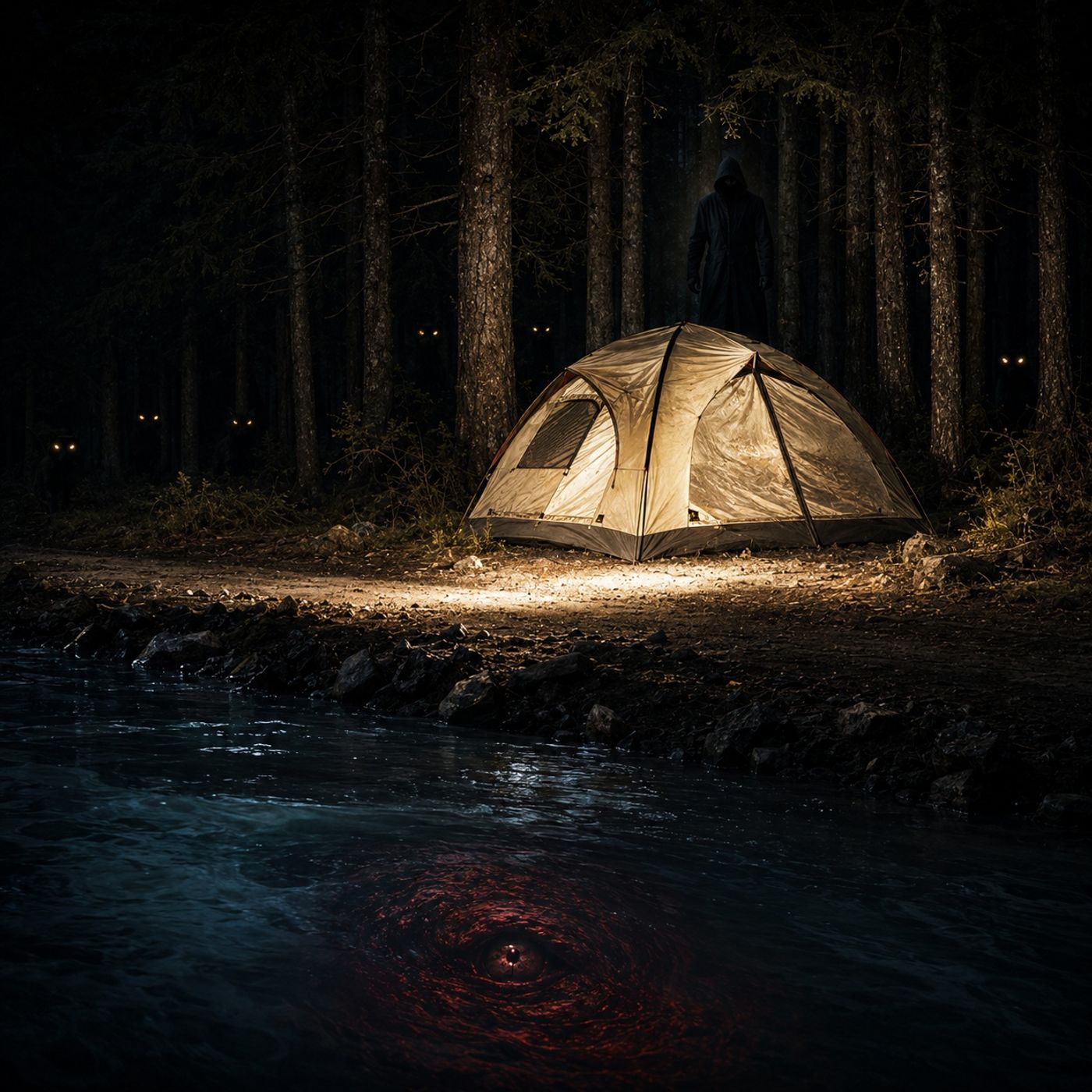
When the Woods Fall Silent: The Primal Horror of Sudden Quiet
The deepest dread in the wilderness doesn't always come with a roar. Sometimes, the most terrifying signal is the absolute, unnatural absence of sound. Discover the primal fear triggered by sudden silence in the woods and how it signals impending horror.
Key Takeaways
- Sudden, absolute silence in nature often precedes terrifying events or the presence of unseen threats.
- This chilling quiet taps into ancient survival instincts, signaling that something is fundamentally wrong with the environment.
- The cessation of normal forest sounds can be an instinctual warning of an apex predator or something far more unnatural lurking nearby.
- This trope amplifies dread in folklore and modern horror by exploiting our deepest fears of the unknown and vulnerability.
- Our subconscious minds are highly attuned to environmental shifts, with silence often triggering a primal fight-or-flight response before conscious awareness.
The Subconscious Alarm of Silence
The vastness of the wilderness offers a unique canvas for fear, often more potent than any man-made haunted space. Here, terror doesn't stem from ghosts or specters, but from a far more primal source: the overwhelming power of nature and the chilling unknown. It’s the humbling realization of insignificance against an indifferent, ancient ecosystem. In these moments, our senses, usually our guides, can become our betrayers. The absence of the familiar symphony of the wild—the birdsong, the rustling leaves, the drone of insects—isn't a sign of tranquility. Instead, it’s a profound omen, a universal signal that the established order of nature has been disrupted, replaced by something alien and potentially malevolent.
One of the most potent elements in deep woods horror, as alluded to in the Weekly Spooky's "Thursday Thrills" episode, is the phenomenon of sudden, unnatural silence. This is not merely a quiet moment; it is the complete and utter *cessation* of all ambient noise. Imagine being deep within a forest, accustomed to the constant murmur of life. Then, without warning, the avian chorus halts, the insect hum dies, and even the wind seems to cease its movement. This profound stillness is not peaceful; it's an urgent, instinctual alarm blaring in the deepest recesses of our psyche. It’s a primal scream that something significant and threatening is present.
Instinctual Warning Systems
This sudden quiet serves as a powerful instinctual warning system, honed over millennia of evolution. Animals, possessing a far more acute sense of their environment than humans, are often the first to react to impending danger. A rustle in the undergrowth might be a passing deer, but a forest that goes completely silent suggests a threat of a magnitude that silences all lesser creatures. This could be the subtle approach of a large predator, like a bear or a cougar, whose presence alone is enough to send smaller animals scrambling for cover or freezing in place. But it can also be something far more inexplicable.
Our own primal brains are wired to detect such anomalies. Even before we consciously register what’s happening, our bodies might react. Our heart rate might increase, our senses might sharpen, and a cold dread might wash over us. This is our ancient survival mechanism kicking in, a subconscious alarm system that has kept our ancestors alive. The sudden silence in the woods is a universal cue that the environment is no longer safe, that the natural order has been disrupted by something that commands absolute fear, compelling all other life to hold its breath in terrified anticipation.
The Psychology of Unnerving Quiet
The fear of sudden silence in the woods is deeply rooted in human psychology. It preys on our innate fear of the unknown and our vulnerability when separated from the comforts of civilization. When the familiar sounds of nature vanish, our brains are left to fill the void, and in a terrifying environment, our imagination often conjures the worst possible scenarios. This psychological effect is amplified in horror narratives because it taps into a universal human experience. We've all likely felt that prickle of unease when the world suddenly goes quiet.
This silence is more than just an absence of noise; it's an active presence of dread. It suggests that something is nearby that is so powerful, so terrifying, that it has silenced everything else. This could be an apex predator, yes, but in the realm of horror, it often implies something far more sinister – a creature, a presence, or an event that defies natural explanation. The lack of auditory cues leaves us disoriented and vulnerable, unable to anticipate the threat. Our visual sense becomes paramount, yet in the dense woods, it too can be limited, leaving us feeling exposed and helpless. This psychological vulnerability is a cornerstone of the "sudden silence in the woods horror" trope.
Silence as a Horror Trope
The trope of sudden silence in the woods is a powerful tool in the arsenal of horror storytellers, from folklore to modern films and literature. It’s a universally understood signal of impending danger, a way to instantly ramp up tension and dread. Think of campfire stories where the chirping crickets suddenly fall silent, or a hike turning ominous when the birds stop singing. These moments are often precursors to a terrifying encounter, a brief, chilling pause before the horror unfolds.
This narrative device works so effectively because it leverages our biological and psychological responses to environmental cues. The sudden cessation of ambient noise isn't just a plot device; it's a trigger for our innate fear response. It’s the moment where the familiar comfort of the natural world gives way to an unsettling unknown, signaling that we are no longer alone and that whatever is present is powerful enough to command the silence of all other living things. This is the essence of what makes "sudden silence in the woods horror" so effective and so enduring in our collective imagination.
For more chilling tales and deeper dives into the mysteries of the wild, check out the Weekly Spooky podcast episode "Cryptid Encounters & Deep Woods Horror: Firsthand Park Ranger Accounts | Thursday Thrills" here.
Frequently Asked Questions
What causes sudden silence in the woods?
Sudden silence in the woods can be caused by a number of factors, ranging from natural phenomena to the presence of predators or a perceived threat. Animals may fall silent when a large predator, like a bear or a pack of wolves, enters the area. In horror narratives, this silence often signifies the presence of something unnatural or malevolent that has instilled fear in all nearby creatures.
Why is sudden silence in the woods considered scary?
Sudden silence is scary because it signals an abrupt disruption of the natural environment. Our brains are wired to expect a certain level of ambient noise from nature. When this disappears, it triggers a primal alarm, suggesting danger is present. This lack of sensory input leaves us feeling vulnerable and primes us for a fight-or-flight response, as our imagination fills the void with potential threats.
Is sudden silence in the woods a real phenomenon?
Yes, sudden silence in the woods is a real phenomenon observed by hikers, campers, and wildlife researchers. While it can be attributed to natural causes like the approach of predators or shifts in weather, the *unnatural* and *absolute* nature of the silence often described in horror stories taps into a deeper, more instinctual fear.
How does sudden silence in the woods differ from natural peacefulness?
Natural peacefulness in the woods is characterized by a gentle symphony of natural sounds—rustling leaves, distant birdsong, buzzing insects. Sudden, unnatural silence is an abrupt and complete cessation of all these sounds, creating an unnerving void that feels heavy and expectant, signaling an anomaly rather than tranquility.