Why Rubber-Hose Animation Is Perfect for Unsettling Internet Horror
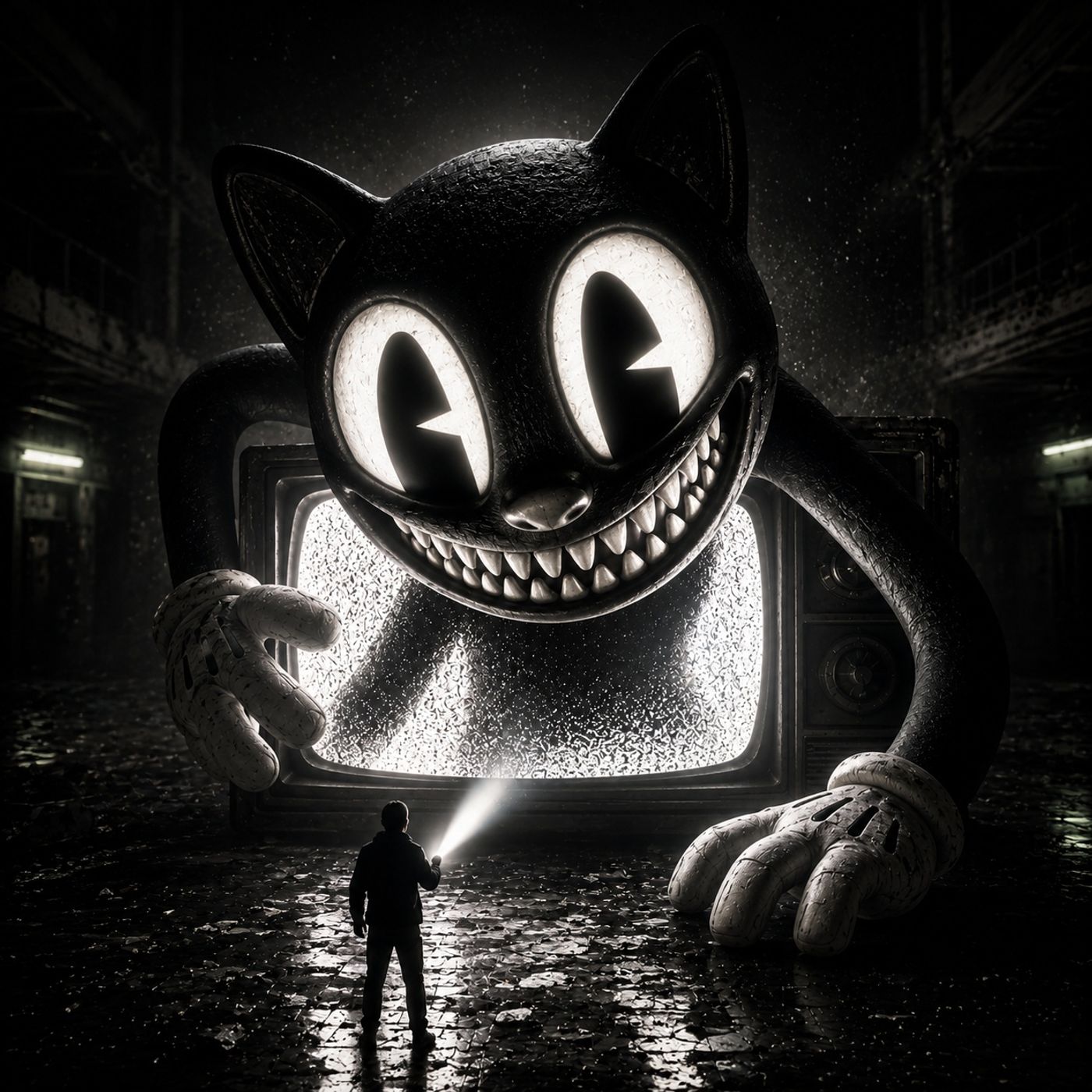
Rubber-hose animation, characterized by limb-less, fluid movement and expressive simplicity, has become a cornerstone of modern internet horror. This aesthetic utilizes nostalgia and dream logic to bypass our psychological defenses, making monsters like Trevor Henderson's creations feel deeply uncanny when their cheerful, flexible forms are subverted for sinister, rather than slapstick, purposes.
Key Takeaways
- The rubber-hose animation style from the 1920s inherently lacks skeletal constraints, which translates easily into body horror when applied to creatures that can stretch or distort.
- Nostalgia acts as a psychological Trojan horse, making audiences feel deceptively safe before the visual subversion occurs.
- The fixed, unchangeable smiles found in early animation provide a blank slate for existential dread when the context shifts to something malicious.
- Unlike traditional creature designs, rubber-hose style monsters rely on inconsistent anatomy, making them feel unpredictable and impossible to contain.
- Digital folklore thrives on this aesthetic because it is easily replicable and mimics the low-fidelity, grainy look of lost or forgotten media.
The Uncanny Valley of 1920s Animation
When we look at early animation styles, we are often seeing a form of pure, unbridled kinetic energy. Characters like those found in the early works of Fleischer Studios were defined by the absence of bones. Their limbs behaved like rubber hoses, their torsos inflated and deflated, and their bodies could be tied into knots without any long-term physical consequence. In a cartoon context, this is inherently playful and comedic. However, this lack of biological structure is exactly what makes the style so potent for horror.
When a creature is designed to defy the laws of physics, our brains struggle to categorize it. By stripping away the joints and defined skeleton, the design becomes fluid, alien, and deeply unsettling. When you see a character that looks like it belongs in a vintage film but is performing actions meant to threaten or stalk, the brain experiences a massive cognitive dissonance. It isn't just a monster; it is a violation of the safe, childlike imagery we were taught to associate with those specific visual cues.
Why Static Smiles Haunt Us
The hallmark of the rubber-hose character is the wide, expressive face—specifically the smile. In the 1920s, that smile was a tool for broad, pantomime-style comedy. In modern internet horror, that same frozen, unmoving grin becomes the perfect mask for a predatory entity. Because the smile never fluctuates with emotion, it feels hollow and artificial. When a creature is depicted standing in a dark room with the same joyous expression it had while juggling bowling pins, it suggests an entity that is not capable of empathy, but is instead wearing a facade designed to mimic human—or cartoon—happiness.
Nostalgia as a Horror Tool
Modern internet horror excels by hijacking our collective memories. Many viewers grew up with the visual language of 1930s-style cartoons. By leveraging this nostalgia, creators tap into a sense of familiarity that lowers the viewer's guard. We don't expect a cartoonish character to hold genuine threat because, in our experience, cartoons are harmless entertainment. When this expectation is shattered, the resulting fear is intensified. It is the feeling of a childhood memory being corrupted in real-time, effectively transforming a piece of pleasant Americana into a vessel for existential terror.
The Adaptability of the Formless Monster
The power of the rubber-hose monster lies in its inconsistency. Because these creatures do not adhere to fixed anatomical proportions, they can shift their shape to suit the environment. They can be small enough to hide behind a curtain or large enough to stretch the entire length of a hallway. This flexibility makes them feel omnipresent within a narrative. If a monster has no set shape, you can never truly be sure where it is or what it is capable of doing next. It becomes a manifestation of anxiety itself—a shapeless force that fits into the dark corners of our screens and our lives.
Conclusion
The intersection of vintage aesthetic and modern digital folklore creates a uniquely terrifying experience that feels both ancient and contemporary. By stripping the whimsy from rubber-hose animation, artists have unlocked a new lexicon of fear that speaks directly to our nostalgia and our deepest, most primal anxieties. If you want to understand more about how these creatures manipulate our perception, you should Listen to the full episode. Dive into the deep end of internet horror and subscribe to Weekly Spooky for your weekly dose of terror tales.
Frequently Asked Questions
Why do rubber-hose monsters lack joints?
The design is intentionally exaggerated to mimic 1920s animation, where character limbs functioned like flexible tubes. In a horror context, this lack of joints makes the entity feel non-human and fluid, allowing it to contort in ways that defy physical anatomy.
What makes a fixed cartoon smile scary?
A smile that never changes regardless of the context feels artificial and mask-like. It suggests that the creature is imitating human behavior rather than feeling actual emotion, which creates a sense of predatory hollow-ness.
How does nostalgia contribute to horror effectiveness?
Nostalgia lowers the audience's psychological defenses by invoking memories of safe, childhood media. When that familiar, positive imagery is twisted into something sinister, it creates a much stronger emotional reaction than a completely original or unfamiliar design would.