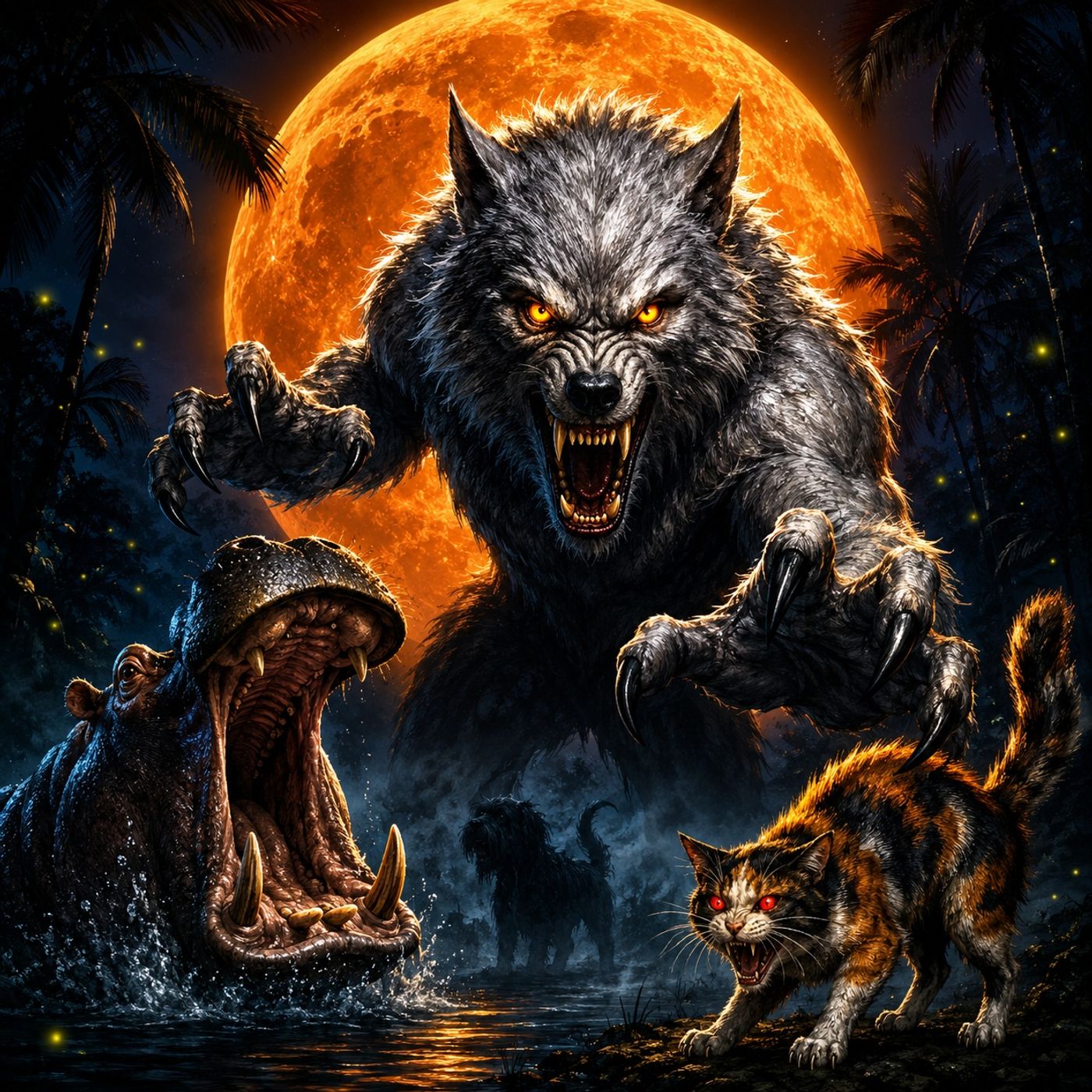
The Real History of Pablo Escobar's Cocaine Hippos in Horror Fiction
When infamous drug lord Pablo Escobar built his private zoo at Hacienda Nápoles in the 1980s, he inadvertently unleashed an ecological ticking time bomb into the Colombian jungle. Today, the legendary 'cocaine hippos' have multiplied into the hundreds, creating a bizarre true-crime phenomenon that blurs the line between reality and monster fiction.
Key Takeaways
- Pablo Escobar illegally imported four hippos in the 1980s for his private zoo at Hacienda Nápoles.
- Following his death, the abandoned animals escaped and multiplied rapidly in the Colombian Magdalena River basin.
- Without natural predators, their growing population transformed from an invasive nuisance into an ecological and physical threat.
- Fictional survival horror stories, like David O'Hanlon's 'Stay Hungry,' use these real-world beasts as apex predators in remote jungles.
The Origin of Pablo Escobar's Menagerie
During the height of his cartel empire, Pablo Escobar constructed a sprawling, luxurious estate complete with a private safari park. He imported exotic animals from all over the world, including giraffes, elephants, zebras, and four hippos. For a time, these creatures were symbols of unimaginable wealth and absolute power, roaming a landscape far removed from their native African savannas. However, Escobar's empire eventually crumbled, leaving the estate abandoned and its exotic residents largely neglected.
While most of the zoo animals were eventually transferred to official sanctuaries or zoos, the hippos proved too massive, dangerous, and expensive to capture and relocate. They were simply left behind in a climate that suited them far better than anyone anticipated. With no dry season to stunt their development, the hippos reached sexual maturity faster and began breeding unchecked, transforming a localized curiosity into a widespread wildlife population.
From Invasive Species to Apex Predators
In biology, an invasive species can radically disrupt local ecosystems, but the Colombian cocaine hippos took this disruption to a terrifying extreme. Unlike their African counterparts, which share habitats with lions, crocodiles, and severe droughts that naturally regulate their numbers, these South American interlopers faced zero natural predators. They quickly established dominance over the Magdalena River basin.
Local fishermen soon found their catches dwindling as the massive herbivores disrupted aquatic life. Furthermore, hippos are notoriously volatile, unpredictable, and surprisingly fast. As their numbers swelled toward the hundreds—with projections estimating thousands in the coming decades—conflicts with humans became inevitable. Their expanding territory turned remote riverbanks into hazard zones, proving that nature always reclaims what humanity tries to fence in.
Cocaine Hippos in Horror Fiction
It was only a matter of time before this bizarre real-world scenario bled into the horror genre. The inherent tension of a lush, suffocating jungle combined with an unpredictable, multi-ton mammalian tank makes for the ultimate creature feature setting. Writers and storytellers quickly recognized that you do not need to invent a mythical monster when real life has already provided a bloodthirsty, invasive giant.
In chilling survival fiction like David O'Hanlon's story "Stay Hungry," documentary crews and ruthless poachers alike venture deep into the uncharted territories of Colombia to track these beasts. The horror stems not just from the terrifying reality of a hippo attack, but from the grim realization that human greed and ecological disaster walk hand-in-hand. In these dark narratives, the jungle is a character of its own—one that strips away civilization and leaves unprotected travelers at the mercy of teeth, mud, and raw primordial rage.
Conclusion
The story of Pablo Escobar's cocaine hippos proves that reality is often stranger and more frightening than fiction. By merging true-crime history with monster lore, storytellers have tapped into a uniquely terrifying subgenre of horror. To hear a full dramatization of these cartel beasts brought to life through gripping audio fiction, make sure to Listen to the full episode. Subscribe to Weekly Spooky for more terrifying tales every Wednesday as we explore the darkest corners of nature and the supernatural.
Frequently Asked Questions
What are Pablo Escobar's cocaine hippos?
Cocaine hippos are the descendants of four hippopotamuses—one male and three females—illegally imported by drug lord Pablo Escobar in the 1980s for his private menagerie at Hacienda Nápoles in Colombia.
How many cocaine hippos are currently in Colombia?
While exact counts fluctuate, experts estimate that the population has grown to over 200 individuals, spreading far beyond their original enclosure into major waterways like the Magdalena River.
Why are cocaine hippos considered dangerous to the ecosystem?
Hippos are highly aggressive, territorial, and lack natural predators in South America. Their sheer size, waste output, and predatory behavior threaten native species like fish populations and American crocodiles.
How has the true story of the cocaine hippos inspired horror literature?
The bizarre reality of drug cartel animals running wild in isolated jungles provides a ready-made setting for creature features, survival horror, and eco-thrillers where humans become the prey.