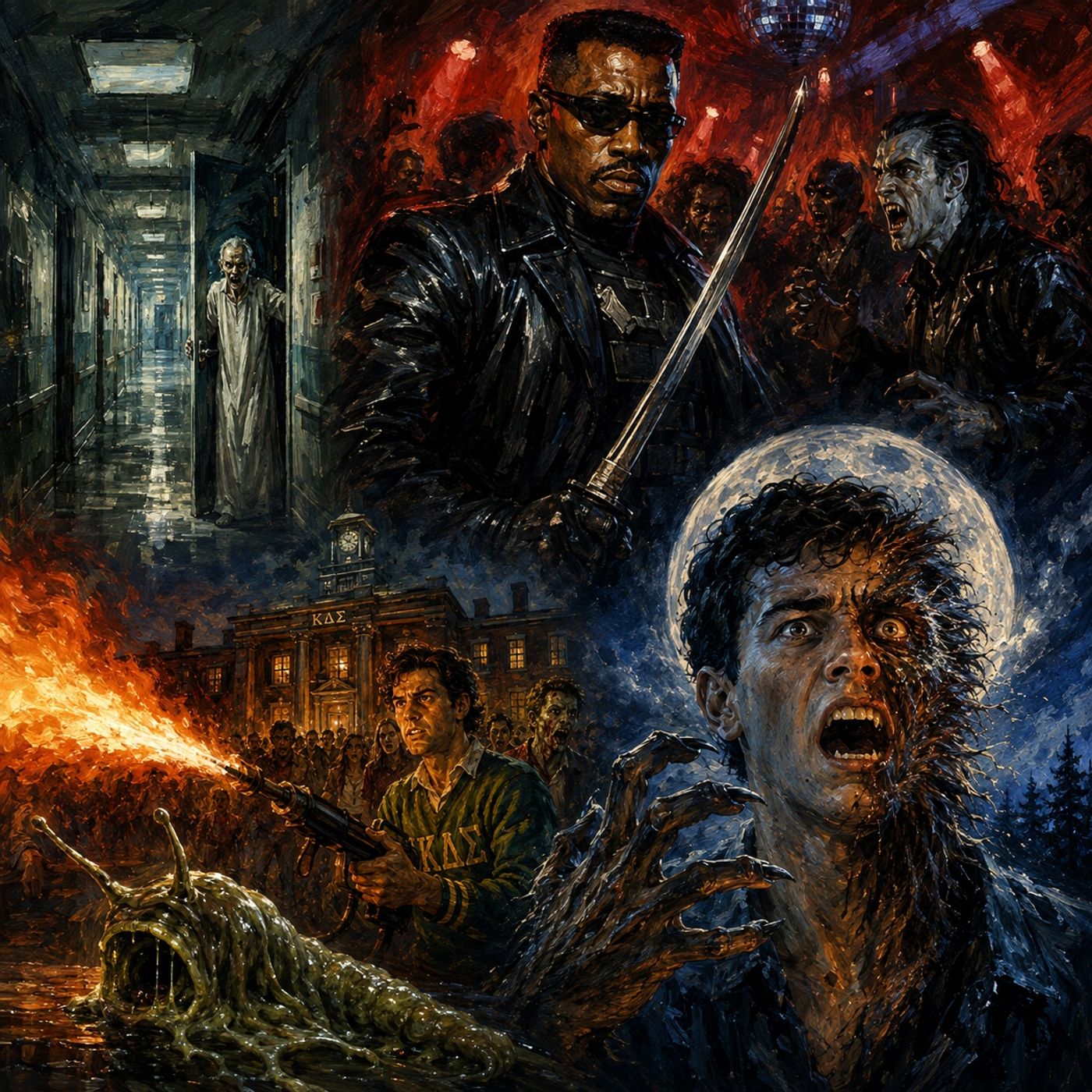
Why Rick Baker's An American Werewolf in London Transformation Still Rules
Rick Baker's iconic transformation sequence in John Landis's An American Werewolf in London redefined practical monster effects forever. By trading traditional shadowy jump cuts for a brightly lit, agonizingly slow metamorphosis, the film established a gold standard of physical horror that modern CGI still struggles to match.
Key Takeaways
- Rick Baker won the very first competitive Academy Award for Best Makeup in 1982 for his revolutionary work on An American Werewolf in London.
- Unlike previous monster movies that relied heavily on quick cuts and shadowy optical illusions, this film showcases the terrifying transformation in full, brightly lit view.
- The scene relies entirely on painstaking physical animatronics, bladders, and mechanical prosthetics rather than digital CGI, giving the sequence a visceral, painful realism.
- The physical agony of David Naughton's transformation mirrors the profound emotional and psychological tragedy of his curse.
The Evolution of Monster Makeup Before 1981
For decades, Hollywood horror operated under a strict unwritten rule: hide the monster as much as possible. From Universal Studios classics featuring Lon Chaney Jr. to 1950s creature features, filmmakers relied on clever lighting, heavy shadows, and rapid optical fades to disguise the limitations of rubber masks and pasted-on yak hair. Audiences accepted these conventions because technology simply could not support anything more complex. Makeup was viewed as a minor department rather than a narrative centerpiece, and certainly not something worthy of top-tier cinematic prestige.
That paradigm shifted overnight in August 1981. When John Landis unleashed his genre-blending masterpiece upon audiences, viewers were forced to confront a reality they had never seen on screen before. The creature was no longer a guy in a furry suit dodging the camera's gaze. Instead, the audience sat trapped in a brightly lit room alongside a terrified backpacker whose very skeleton rebelled against human anatomy.
Anatomy of a Nightmare: How Rick Baker Did It
Achieving the legendary transformation required a staggering level of engineering, patience, and artistic vision. Rick Baker and his young protégé Rob Bottin pushed physical materials to their absolute limits to simulate stretching skin, snapping bones, and sprouting fur in real time.
Mechanical and Prosthetic Magic
The secret to the scene's enduring terror lies in its tactility. Baker used a combination of custom mechanical molds, air hoses, and pneumatic bladders hidden just beneath the surface of latex skins. When actor David Naughton lay on the examination table—or when mechanical dummies stood in for wide shots—hidden technicians pumped compressed air and operated cables to force the prosthetic skin to bubble, lengthen, and tear outward.
Consider the lengthening of the snout and the agonizing reshaping of the feet. These were not optical tricks; they were physical sculptures expanding before the camera lens. The bones did not merely shift off-screen; viewers watched fingers snap backward and lengthen into claws while listening to the wet, sickening crunch of cartilage breaking under pressure.
Lighting and Audacity: Breaking the Rules of Horror
Perhaps the boldest choice Landis and Baker made was the lighting. Traditional horror directors hid imperfections in pitch darkness. Landis did the exact opposite, filming the sequence in a brightly lit, sterile London apartment where every single detail of the gore remained exposed to the audience.
This refusal to cut away or dim the lights forced the viewer into an uncomfortably intimate witness position. You cannot look away because the camera remains locked on David's face as human panic slowly gives way to feral desperation. The bright ambient light strips away any comforting layer of cinematic abstraction, making the horror feel grounded, immediate, and utterly inescapable.
The Birth of the Best Makeup Oscar Category
The impact of Baker's work extended far beyond the box office and into the history books of the Academy of Motion Picture Arts and Sciences. At the time, the Academy had no competitive category for makeup effects, occasionally awarding honorary statuettes for exceptional work like The 7th Voyage of Sinbad or Planet of the Apes.
The sheer brilliance of An American Werewolf in London forced the Academy's hand. Industry professionals recognized that ignoring Baker's achievement would be a glaring oversight. As a direct result of this film's groundbreaking technical execution, the Academy established the competitive Academy Award for Best Makeup, with Baker winning the very first one in 1982. Modern horror effects titans like Greg Nicotero, Tom Savini, and Stan Winston all trace a direct lineage back to the doors that Baker kicked open in 1981.
Conclusion
Decades after its theatrical debut, the transformation scene in An American Werewolf in London remains a masterclass in practical horror. It succeeds not merely because of rubber and mechanics, but because it ties every grotesque physical change to a deeply human tragedy. David is not just a monster; he is a likable young man suffering through a agonizing, unstoppable curse.
If you want to explore more iconic horror history moments like this, Listen to the full episode of Weekly Spooky for deep dives into classic creature features, terrifying cinematic anniversaries, and unforgettable dark stories. Subscribe today to ensure you never miss a single scare!
Frequently Asked Questions
When was the transformation scene in An American Werewolf in London filmed?
The complex sequence took weeks of meticulous preparation and several days of grueling physical shooting on set in London under John Landis's direction.
Did An American Werewolf in London win an Oscar for its makeup effects?
Yes, Rick Baker won the inaugural Academy Award for Best Makeup in 1982, a category specifically created because the Academy recognized the unprecedented achievement of his practical effects.
How did Rick Baker achieve the bone-stretching effects without CGI?
Baker utilized hidden mechanical cables, pneumatic bladders, and complex remote-controlled prosthetics operated beneath and inside custom-molded latex skins worn by David Naughton and dummy suits.
Why is the transformation scene considered so groundbreaking in horror history?
It shattered decades of cinematic tradition by refusing to hide the monster behind shadows or jump cuts, showing every cracking bone and growing hair in agonizing, brightly lit detail.