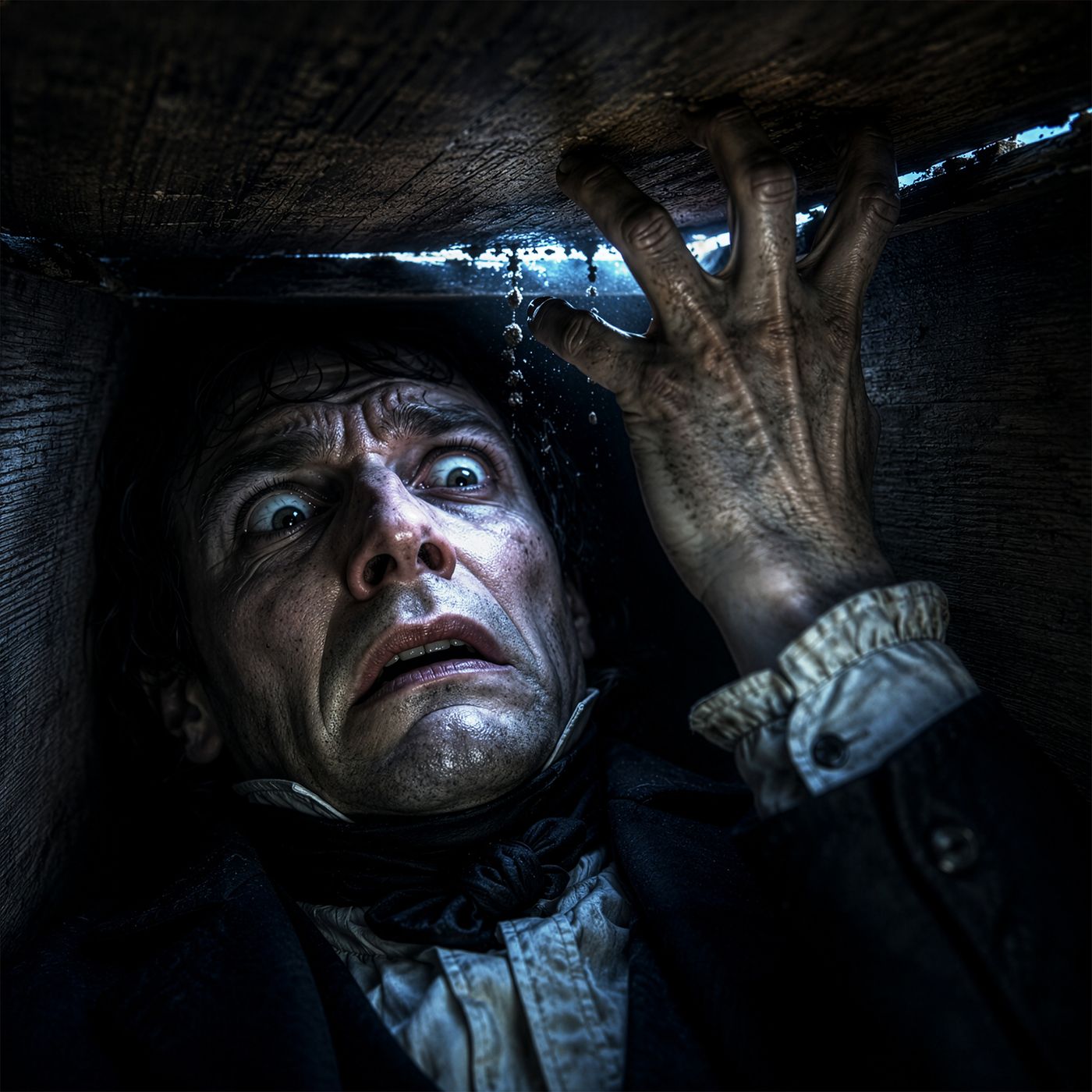
Victorian Taphophobia: Why the 19th Century Feared Being Buried Alive
Taphophobia, the irrational or pathological fear of being buried alive, reached a fever pitch during the Victorian era. Driven by medical uncertainty and the lack of reliable signs of death, this deep-seated anxiety influenced everything from mortuary design to the rise of safety coffins. Understanding this historical phenomenon explains why Edgar Allan Poe’s works on the subject resonated so profoundly with his contemporary audience.
Key Takeaways
- Taphophobia was not just a literary trope but a genuine cultural anxiety in the 19th century.
- The blurred lines between catalepsy, suspended animation, and true death made the fear medically plausible.
- "Safety coffins" were developed as a real technological response to the threat of living interment.
- Public distrust of medical diagnosis led to the implementation of waiting rooms for the dead.
- Poe used these real-world fears to craft his most unsettling and claustrophobic Gothic horror narratives.
The Medical Uncertainty Behind the Fear
In the 1800s, medical science lacked the precise tools we have today to declare death with absolute certainty. Conditions like catalepsy—which involves a temporary suspension of movement and responsiveness—were poorly understood and frequently misdiagnosed as expiration. When a patient fell into a deep trance, they often displayed pale skin, low body temperature, and undetectable pulses. To a grieving family and a baffled physician, these symptoms were indistinguishable from death, creating the horrifying potential for someone to be placed in a crypt while still conscious.
The Rise of "Safety Coffins"
As the fear of premature burial grew, inventors began designing "safety coffins" to provide a fail-safe for the wrongly declared dead. These macabre contraptions featured various mechanisms intended to alert the living if a person inside the casket regained consciousness. Common designs included bells attached to strings held by the deceased, air tubes to provide ventilation until rescuers arrived, and specialized lids that could be unlatched from within.
Why These Innovations Failed
While the intent was compassionate, these devices were rarely effective. The air tubes were often obstructed, the bell mechanisms would rust or jam, and the physical trauma of the initial burial would often leave a victim too exhausted or oxygen-deprived to operate them. However, their existence stands as a testament to how pervasive the anxiety was; citizens were willing to spend significant portions of their inheritance to ensure they would not wake up under six feet of soil.
Cultural Impact on Gothic Literature
Edgar Allan Poe was the master of tapping into the collective psyche, and his obsession with the macabre allowed him to document the terrifying reality of his age. In his stories, he treated the fear of being buried alive not as a supernatural ghost tale, but as a chilling logical inevitability of a flawed medical system. By focusing on the physiological sensations of the trapped victim—the stifling air, the darkness, and the silence—Poe turned a general public anxiety into a visceral, intimate horror experience for every reader. His work served to mirror the genuine paranoia felt by those who feared that their own life might one day be dismissed by a mistake in clinical judgment.
Conclusion
The history of taphophobia remains one of the most intriguing aspects of Victorian society, bridging the gap between medical ignorance and the intense psychological horrors of the Gothic genre. To dive deeper into these themes of suspended animation and the terrifying reality of early death definitions, you can Listen to the full episode of our dramatic reading of Poe's classic tale. Join us weekly for more stories that explore the darkness hidden in the history of human fears.
Frequently Asked Questions
What is taphophobia?
Taphophobia is the specific, intense fear of being placed in a grave or tomb while still alive, often stemming from the anxiety of being misdiagnosed as dead.
Why were Victorians so afraid of premature burial?
The era had limited medical diagnostic tools for determining brain death, and conditions like epilepsy or catalepsy could easily be mistaken for permanent expiration by physicians.
Did safety coffins actually save people?
There are very few documented instances of these devices successfully saving someone. Most were cumbersome, prone to failure, and often could not overcome the physical limitations of the buried person.