

 Apple Podcasts

 Spotify

 Spreaker

 Audible

 Castro

 RSS Feed

 iHeartRadio
Behind the Spooky #01 — Henrique Couto on Creating Weekly Spooky
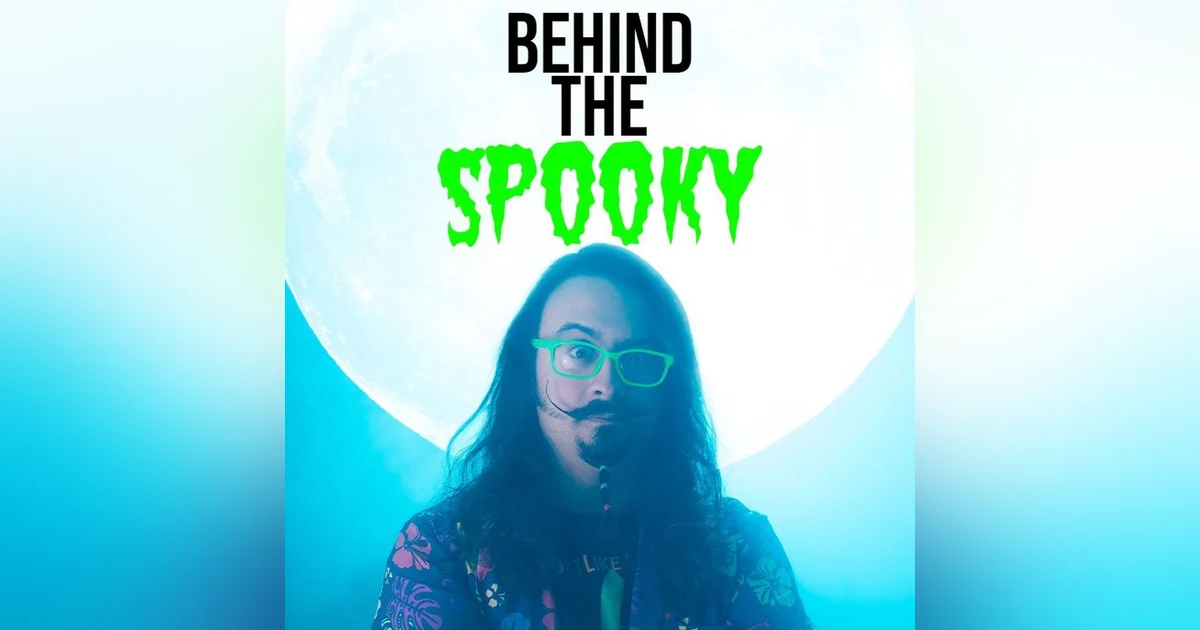

Weekly Spooky creator and host Henrique Couto opens the production room for a personal look at how the horror podcast began and how each episode comes together.
In the first installment of Behind the Spooky, Henrique introduces himself, reflects on his long relationship with podcasting, and explains why he created an audio-first home for horror stories. The conversation connects the show’s origin to the practical work behind its weekly release schedule, offering listeners context for the voice, editorial choices, and creative purpose that shape the series.
This behind-the-scenes episode is a useful starting point for anyone curious about the making of Weekly Spooky, independent horror podcast production, or the thinking that turns a written story into a finished listening experience. Rather than a fictional tale, it is a creator-focused companion to the main feed and the opening chapter of the Behind the Spooky interview series.
Featuring Weekly Spooky creator and host Henrique Couto.
This episode is sponsored by HenFlix: https://henflix.com/
🎧 LISTEN NOW and subscribe for spine-tingling horror stories every week!
🎉 Unlock exclusive bonus episodes and support the show on Patreon!
👉 WeeklySpooky.com/Join
📬 Contact Us / Submit Your Horror Story!
- Twitter: @WeeklySpooky
- Facebook: facebook.com/WeeklySpooky
- Email: WeeklySpooky@gmail.com
🎵 Music by Ray Mattis 👉 Check out Ray’s incredible work here !
👨💼 Executive Producers: Rob Fields, Bobbletopia.com
🎥 Produced by: Daniel Wilder
🌐 Explore more terrifying tales at: WeeklySpooky.com
Conversation transcript, edited from an automatic transcription. Minor transcription errors may remain; not checked word for word against the audio. Advertising and separate introductory promotional material omitted. Speaker changes are not individually labeled.
Hello, my friends, and welcome to the inaugural episode of Behind the Spooky, the Patreon-exclusive podcast about how we create your little bit of spooky on The Weekly. And I am, of course, your host, Henrique Couto, and I've been thinking a lot about what this first episode should be. In the future, we'll be interviewing authors, we'll be interviewing producers on the show, we'll be interviewing music composers, just everybody who helps us create the ambience that has allowed us to scare so many people and gain so much traction in podcasting in just 70 episodes.
But today I felt like maybe it should be a bit more intimate because if you listen to Weekly Spooky, you may notice that sometimes the intros and outros are a little bit caffeinated, for lack of a better term. They're a bit excitable. And part of that is just me. That is the way I talk. I get excited doing the show. I enjoy it a whole hell of a lot, but there's another reason.
And that is because I have a very specific amount of time that I am allowed to talk at the beginning and the end of any given episode. So I have a roughly minute and a half at the start and roughly two minutes at the end. And I have to stick to that because I don't want to take away from the scary stories too much. I don't want to blather forever. And believe me, if you know me personally, I can talk and talk and talk.
So after maybe, you know, 70 episodes, you may have started to piece together what kind of person I am. I do try to leave a little bit of flavor of myself in the show, you know, kind of as the host. But I thought maybe you guys might like a little dive into who I am, what I do, and why I do Weekly Spooky. As far as my career goes, other than being a podcaster, I'm a filmmaker.
I'm a director and producer. I've directed 16 feature films, and I've produced Roundabouts 25, but to be honest, once you break past the 20, it's kind of hard to keep track. So roundabouts 25 movies as producer. Also directed a TV series as well. So it's my, you know, my bread and butter. It's how I make my living. And it's something that I talk about a lot because it's a dream job for me.
You know, I get to make movies now. Granted, you know, in the last year, thanks to the global pandemic, I haven't really been able to make movies like I would like, but I've still been working. and Weekly Spooky has been my respite. It's been something I get to do and look forward to every single week that is creative and fun and, of course, scary because a large portion, not quite, just about half of the movies I've done are horror films because I've always loved horror.
I've always loved being scared. I've always loved scaring other people. So it was kind of a natural progression. But if we want to talk about, I mean, because that's the very nuts and bolts of my career. And you guys remember everything I talk about, by the way, I don't want to sidetrack too much, but everything I talk about on Behind the Spooky, you guys can interact with me on Patreon. Ask questions, you know, make recommendations.
Tell me what you think. I am there to hang out with you guys because you guys on Patreon are who are keeping me podcasting by helping me out financially. And I very much appreciate it, especially in this last pandemic where there were a couple of two or three months there where the only income I was able to bring in was my web store and my Patreon. And that was a, I'm very grateful is my point.
You know, I was very scared I wouldn't be able to pay my rent, wouldn't be able to pay my car payment. So thank you guys. But anyway, back to the point of this podcast. So with that all out of the way about my filmmaking history and my career, when it comes to podcasting, there's actually quite a history. And in order for us to delve into that, we have to go all the way back to 2005, when podcasting was first becoming a thing, when Adam Curry basically invented it.
And for those who don't know what the birth of podcasting was, basically we had internet radio at the time and we had people who would make audio recordings, which they called like audio lectures, which were MP3 files. But we didn't have a way to deliver them really so that people could enjoy them every day. So nowadays, you just have an app and it reads an RSS feed and that is how you get the newest episode of your favorite podcast.
But back then, most people didn't have the internet in their pocket, but they did have an iPod. So what the RSS feed would do is you would put it into your iTunes and it would read when there's a new episode. And if you were one of the people who would plug your iPod into your computer every morning, you could sync the latest episode into your iPod. And then when you got in your car or went on your run or headed to the gym or whatever it is you do, you could open up your podcast and be like, well, hey, there's a new episode of Blank. and there are a few podcasts I am still listening to that I used to listen to by downloading them and dropping them into my iPod and then taking them with me while I drive around, mostly in my 2000 Volkswagen Beetle with one of those little adapters so that I could play my iPod into my tape deck.
Boy, do I feel old as I talk about it. So I was really into podcasts from about the moment they started. Some of my favorite podcasts at the time were the Wayne and Toby show with Wayne Allen Harold and Toby Radloff. I was really into the Pacific Coast Hellway. I was really into the Distorted View show. There were a few others that are kind of escaping me because some of them no longer exist.
A few of them don't exist anymore. But I got fascinated by the idea because I'd always loved AM radio, which is weird to say, because in 2005, I was 18 years old, but I loved AM radio. I would listen to AM radio all the time on long car trips because you wouldn't lose the signal. So I could, you know, keep listening for hours as I drove through Pennsylvania or what have you.
So in 2005, I launched my first podcast, a show called The freak forum. The freak forum was, it was weird. It was a, um, a skeptical themed talk show. So it was a show that challenged things like religion and spirituality and, and politics really. And I did, I believe it was 127 episodes of the freak forum in a row every week. Um, I did this podcast And most of the time it was just me alone talking for 40 some minutes.
Looking back, I have no idea what I said or what I could have said to fill all that time. But then the show, the show evolved. It eventually turned into a live stream show where you could listen back later to the live stream on the podcast feed. It evolved a lot over the course of the three or so, three and a half years that it was on. And we had an okay audience size.
You know, we actually have a bigger audience on Weekly Spooky than we did back then. But of course, one thing that's really important to point out is nowadays when I tell people I have a podcast, they know what I mean. When I started podcasting in 2005, people had no idea what I was talking about. I had to say, oh, the internet radio show. that's what I have an internet radio show. And then they go, Oh, so what time are you on?
Okay. Not okay. So that was a big frustration with doing podcasts, but I always loved it. And over those years, I, and I mean, I'm 18, 19, 20, 21 doing this, this podcast every single week. I had a lot of fun and made a lot of friends and it kept me, you know, busy as I worked my day job, which oddly enough, my day job was in filmmaking. It was in a film distribution and I was living in New Jersey at the time.
So I had a good time with it. Uh, we also would do some video casts and stuff like that. Now, unfortunately, or maybe fortunately, nearly every episode of the freak forum is lost. Um, I kept the archive open four years after the show stopped until one day I just realized I couldn't afford to pay the $20 a month to host it when I was broke at the time. So I let it go.
And I'm sure that the episodes were fun. There's something a little terrifying about thinking that there were over 120 hours of me talking on the internet. It sounds like something you could use to torture people in Guantanamo Bay, especially for my age. But I was very proud of the show at the time, and I'm still proud of the show. And the fact that the episodes basically don't exist anymore is all the better because that means that all people have are their memories, which are memories are much kinder than the reality.
So, you know, forever people will be like, man, I remember those freak forum days. And there are a few of you listening who were around for the freak forum days. In fact, Rob Fields, one of our, uh, our most prolific authors who will be on this show very, very soon. Rob was a regular listener to the freak forum. Um, I've known Rob for an incredibly long time, but we'll talk more about that when I have him on, on the, uh, the podcast.
So I had the freak forum, but here's how bad the podcast bug had me when, uh, when podcasting was still super new, I then started a second podcast and I should mention, I mean, I have two podcasts right now. I have weekly spooky and a talk show called this show was awkward. So I started a second podcast, but this one was a music podcast because back in those days, that was another very popular type of podcast.
A music podcast was basically like an hour long snippet of radio. So you would do a music podcast and you would have like three or four songs and every now and then you'd interrupt them to do commentary or talk about your life or or whatever you wanted to do. Every show was different. And there was a service called the Podsafe Music Network, which is recently defunct. It's only been defunct for maybe three or four years.
And it was a place where artists, independent artists mostly, could go submit their music and sign a waiver saying, you can use our music on your podcast as long as you plug our band name and the name of the song. Very simple. So I had a podcast called The Hen House, which was fun because I got to goof around and play music and do skits and comedy things like that and believe it or not, I actually have a few little bits from the hen house and I actually found one little skit.
I actually just found it just now on an old hard drive. I have one skit that was created on the Freak Forum So I'm going to play the skit from the Freak Forum for you. It's kind of a comedy remix thing. And be gentle. An unlikely pair. I'm reaching into my pocket where I've got a balloon for you. My balloons, Regina. I love balloons. An even more unlikely love. All you have to do is come down here with me.
They all flow down here, Regina. Wow. This summer, Michael Bay presents... Oh, yes. Yeah? It is in love. Dimension Films, rated R. And the back story of that little skit is that we had a contest on the podcast where you could call in and talk with my co-host at the time, Regina. And one of the people who called in wanted to be the clown from It, Pennywise. So they did their exchange.
It was really bizarre and funny. And then I created that little trailer. That's why it still was, I was able to find it on a hard drive because it wasn't a part of a full episode. It was like a little piece that I had created. And as far as episodes of the hen house, they're pretty rough to listen to. And I don't have the rights to the music anymore. But if you guys really, really want me to post my, like the, like the two episodes of my old offensive podcast on Patreon, I will.
Again, this is an ongoing conversation with you guys who are my patrons because I'm incredibly grateful. So anyway, after about, I believe it was 130 some episodes of the Freak Forum, I decided I just couldn't do it anymore. I was tired of it. I wasn't loving it anymore. So I remember I chose the last episode the morning before I did it. So when I announced the live stream and got it ready, I just said like, and this is the last episode.
And everybody was just like, what? We did a two hour live stream and and that was it. You know, I ended the show and didn't podcast much after that, aside from maybe helping a few friends. My good buddy, Andrew Shearer, actually helped me with the freak forum on the rare occasions that I needed a week off. He would record episodes, which we called Freak Forum South because he's based in Georgia and those would air on occasion.
And they did about 60 or 70 episodes. They started publishing the shows on their own and Andrew got the podcasting bug. And now he hosts a podcast for online Athens, which is, uh, which is called the cinephile podcast, which I've appeared on a few times. It's a movie podcast for a newspaper in Athens, Georgia. uh, very proud of Andrew and so happy to be someone who got him to, uh, to try out podcasting.
And you know, it's funny, you know, the entire reason that, uh, I got him to try out podcasting was he's a funny guy and he was a musician. So he had microphones and that was, that was the entire impetus. So, uh, but lots of fun in my life came from podcasts. But after that, now we're talking about like 2008, 2009 era, I didn't podcast my podcast, my old podcast stayed up, but I wasn't doing it.
And then, uh, maybe I think it was in 2011. I brought back the freak forum really briefly, uh, in a totally different way. It became, uh, instead of being this formulated talk show with guests, it became a rant show. Uh, it became a show where I would, talk about something that confused, bothered, or excited me. Usually some kind of news story, something that's bizarre or what have you. And I would listen to voicemails and respond to them on the show.
So it was fun. And the funny thing is I have most of those because I recorded those much later in my podcasting career, quote unquote, because I was always like a half step away from recording a new podcast because I had the microphone. In fact, right now, as I'm talking to you, I'm on a different microphone now, a nicer, fancier microphone, because you guys deserve only the best. But my microphone is on this little retractable arm and it allows me to move the microphone up and down and side to side and push it out of the way.
And every desk I've had for the last 15 years that I've basically that I've been working, every desk I've had has this boom arm that allows me to just literally begin recording on a microphone anytime I want. Very convenient. So I did about, shockingly enough, I counted them. I didn't really, I did like 15 episodes. So that's like a full blown relaunch of the podcast. And eventually I lost interest in it.
I'm guessing it was, I was, that was during a really rough time in my life. That was during a time when I had been out of work for almost a full year. I had moved back to Ohio trying to get movies made and things like that. And it was really going very poorly. So, you know, it is what it is. But, uh, so after that, I pretty much left podcasting to the professionals.
I left it to my friends who had podcasts, who I would gladly appear on their shows. But every now and then I would get the bug and be like, man, I should be doing a podcast. I have, you know, I have a microphone and I have a mouth that will not stop, but I just kind of, I just kind of didn't, didn't go with it. I had gotten, you know, my thrills out of doing things like music.
Uh, I've recorded two full length music albums and they were really fun. I had a great time with them. I got to use the equipment I used to use on my podcast, but then something happened In October of 2011, something spooky happened. In 2011, I had just released my first musical album called Uke or Consequences because I played ukulele. Yeah, I know. I chose the most masculine instrument I could possibly play, and I did it well, if I do say so myself.
I'd had so much fun, so much unmitigated fun recording, and occasionally I would get the, of course, the bug to record something for people to listen to that wasn't music. Not quite podcasts, though. So I did a scary story album like the ones I used to listen to when I was a little kid. I've always loved listening to people read. So I decided, you know what? I'm going to write some very, very basic, you know, short, scary stuff that reminds me of those scary story books I read as a kid and those records I used to listen to.
And I'm going to make an album with four scary stories and one song right in the middle. So the first album was four scary stories and my cover of monster mash, which you actually heard on the Halloween special. If you haven't listened to the Halloween special, I highly recommend you go back and check it out. I think you'll really enjoy it. And then I was like, well, what am I going to do with these scary stories?
I mean, some people were buying CDs, but I mean, this is 2011. CDs are already on the way out. So I decided, you know what? I'm going to upload a couple of these to YouTube. So I slapped some scary video over top of the audio and just, you know, let it be out there. And I got hit up by a guy named Craig Groshek. And Craig was starting something called Chilling Tales for Dark Nights.
And I don't know if you, many of you may be familiar with that show. It's a scary story podcast and YouTube channel. Well, at the time, they were barely anything. They had not really grown. And now it's one of the biggest, uh, uh, scary story podcasts that there is. So he listened to my scary stories on my YouTube channel and asked me if I would be willing to narrate some scary stories for his channel.
Um, and I said, sure. It sounded like fun. I mean, there was no pay or anything like that. This was very early in his channel. So I read a few stories. I think I read some Edgar Allen Poe and I read a few other things and, uh, he and, uh, a couple of friends put, you know, scary music and ambience to it. Cause that's kind of their thing. They create like a big soundscape, kind of like the no sleep podcast does.
So I did podcasts for them. I had a lot of fun with it and that was kind of it. I just, I would do their recordings and things like that. And then I got really busy with making movies. And now we're talking 2013, 2014. Well, by 2015, 2016, I was making three movies a year, nearly four movies a year, and I started doing it full time. So I kind of let it go.
But there was a part of me that was always like, man, I want to read stories. I want to read scary stories. And then a little over a year ago, it hit me like a ton of bricks. It just smashed down on me. And I was like, why don't you just do a podcast? Like, you know, like Tales from the Crypt, every week we'll have a new story and you just narrate it and it'll be fun.
And most importantly, it's collaborative because I believe wholeheartedly, no man is an island. So doing a podcast all by myself, like I had done before many times, it was challenging, but most importantly, it was not sustainable. So that's when I started thinking, if this is a collaboration, if I'm narrating the stories and producing the audio experience, but I have people who are helping me find authors, and I have authors writing stories, and I have people helping me create the music, all of a sudden, I can really do this show every single week, consistently, and with a level of quality that I believe is important.
So I pulled together my collaborator on many of the films, Dan Wilder, who his background initially was in writing prose and things like that, and he introduced me to several author friends, and that was the beginning of what became Weekly Spooky. I don't want to go too into the authors, because in the coming months we're going to sit down with each author, hopefully all of them, and just talk about how they got involved and what their creative process is like and stuff like that.
But we were very fortunate. We had a group of authors who were excited and friendly and, most of all, prolific enough that we could do the show every week. So Halloween comes along and we launch the show with a story called Mischief Night by Shane Migliavaca, a name you will hear a lot when you listen to the podcast. And from there, every single week we did an episode. The hardest part of launching the show, honestly, was deciding on a name.
And honestly, I kept calling it Spooky Weekly, but I was like, well, that sounds like a horror newspaper. And then, of course, the other big challenge, if you've ever noticed that I don't say weekly spooky on the show very much, there's a reason. Because for the first few months, I couldn't say weekly spooky. I kept saying weekly spookly. So that's one of the reasons the line of bringing you some spooky on the weekly was born was because I didn't want to keep slipping up my turn of phrase.
So now that we've gotten through my history with podcasting and how we wound up here at Weekly Spooky, see, I did it right. Only one try. So here's what an average day working on the show is like. In the early days, we didn't have a lot of content to pick from because one of the biggest rules I have on the show is that we are not going to violate people's copyright. right?
We're not going to read stories without permission. We're not going to do that. We're not going to just pull stuff from Reddit and steal it for content. Now, I know that that's a morally gray area, but I just decided I didn't want to go that way. So luckily, we had access to a massive amount of content at a website called pennedinblood.com, which is run by Joe Salmo, another author we work with all the time.
And I'm looking forward to eventually talking with Joe on this program about, you know, PendinBlood.com and how it was the original lifeblood of Weekly Spooky because we would use a combination of stories from PendinBlood.com and stories written by Dan Wilder himself and stories written by a few of my friends. And quickly, I started to discover that I had a lot of friends who loved writing short fiction but had no outlet for it.
One of the biggest examples, the best examples, would be Rob Fields, who is so prolific in his writing that I can't even, I mean, I have so many stories of his yet to be read because Rob is so creative. He's ferociously creative. So as a backup, I actually had a folder full of public domain stories, stories that no longer have a copyright, stories by Edgar Allan Poe, which I did end up reading The Black Cat on the show.
Stories by Edgar Allan Poe, stories by Charles Dickens, people like that, you know, things that I like that are scary. It was like a backup, you know, like a parachute in case we didn't have a new story. Because some weeks, the show was always airing on Wednesdays, some weeks we didn't have the story until Tuesday morning. And those were some fun days. Let me tell you, some concerning days. Um, there was, I remember, you know, being like, forget editing it.
Let's just forget editing the story. Just send it to me and I'll correct the, uh, the typos and stuff as I read it out loud. That was the level of mania that the early days of weekly spooky were like probably the first 25 or 30 episodes. I was always like, where are we going to get stories from? But after 30, 40 episodes, people started submitting stories. People started getting excited. We actually have a thing we call the contributors crypt on Facebook where all of the authors hang out and, uh, and I'll do things like I'll post, you know, Hey guys, uh, people have been asking for a slasher episode.
Anybody want to write a slasher story? And we'll like, we'll, we'll talk about it, collaborate a little bit, come up with ideas and kind of go from there. It's really been an incredible experience getting to collaborate with all these people. So generally the way it works beyond that, that the beginnings where it was really stressful is I will sit down down on Tuesday morning the day before it's time to release the show I sit down and often I hate to admit this but often I pick the story that morning and it's usually based on a few elements like you know I don't want to read the same author's work back to back I want to make sure that it's it's you know divvied up a little bit and ideally I don't want to read like a ghost story back to back with another ghost story so I'll look at like the maybe 12 stories that I have available for Weekly Spooky, and I'll pick one.
Sometimes I pick them based on word count. If I'm having a really stressful week and I have a lot to get done in my day job, it will be down to like, these three stories look good, and it'll be like, well, I'm picking the one with the least amount of words because I need to get this done on a time frame. So I will sit down, record the story, usually give myself the creeps.
Uh, and then once I'm done recording it, I edited up, add in some musical stings and pieces of score from Ray Mattis, Ray Mattis, who, um, created the opening theme song for weekly spooky. And also like the creepy music you're hearing, uh, right now, as I'm talking to you, I met Ray doing movies. He has done the score on a bunch of my horror movies and comedy movies, super talented guy, another guy we're going to have on the show.
I lay in the music, pick the stings. Then after the story is recorded, after it's fresh in my mind, I sit down and I do the intro and outro. I find that that allows me to come up with the best intros possible. It lets me come up with the coolest kind of Rod Serling, you know, but what happens when da-da-da is really da-da-da? You know, it lets me really have fresh in my mind the essence of the story so that I can really knock it out of the park.
I also want to mention those are completely unscripted. The intros and outros are not scripted in any way. And another thing, full disclosure, because I'm pulling the curtain back, as the show has progressed and Dan Wilder is our producer, he is the man who helps me with everything I don't have time to do, sometimes on the show is the first time I've ever read the story. And I admit that to you guys because you are the real supporters and the real fans.
And I appreciate so much. I want to tell you that sometimes, oftentimes, I get to have all the fun along with you all because the stories are being revealed to me as I'm revealing them to you. And honestly, that's one element that's kept it so fun for me. so once that's done, I, uh, I take the file, I encode it and all that bull crap, and then I load it to the, to the podcast app and, uh, I make a, in Photoshop, a, uh, cool, you know, spooky piece of art, usually using some stock photos.
I have a subscription that pays for the stock photos. I come up with a, um, a blurb, you know, what happens when the grave robs you back, you know, stuff like that. I schedule it to release at midnight, 12 AM that next day on Wednesday. Then I prep it for YouTube, create a little video with a, you know, scary screen grab. I schedule that to publish at 12 AM on Wednesday. And then my friends, I'm done for yet another week so I can rest, sleep in my coffin or whatever it is I actually do until it's time to bring the spooky back to you.
So, uh, thank you guys so much for listening to this. I hope you enjoyed it. I hope it was insightful and it gave you an idea of like why I do this because I love the spoken word. I love scariness and I love podcasting and I can't believe I was just thinking last night. I can't believe it took me so long to marry the two because really it's really a peanut butter and chocolate kind of thing.
If you think about it. So they're two great tastes that taste great together. So my friends, I will see you next month, maybe a little sooner with the next episode of behind the spooky. So please, uh, write a comment and let me know what you thought of this first bonus episode. I can't wait to do more, uh, to bring you guys into the process, but until then, uh, stay well, stay safe and, uh, enjoy the scary stories coming in the month of March, 2021.
All right. I'll talk at you guys later.
